BLOG List
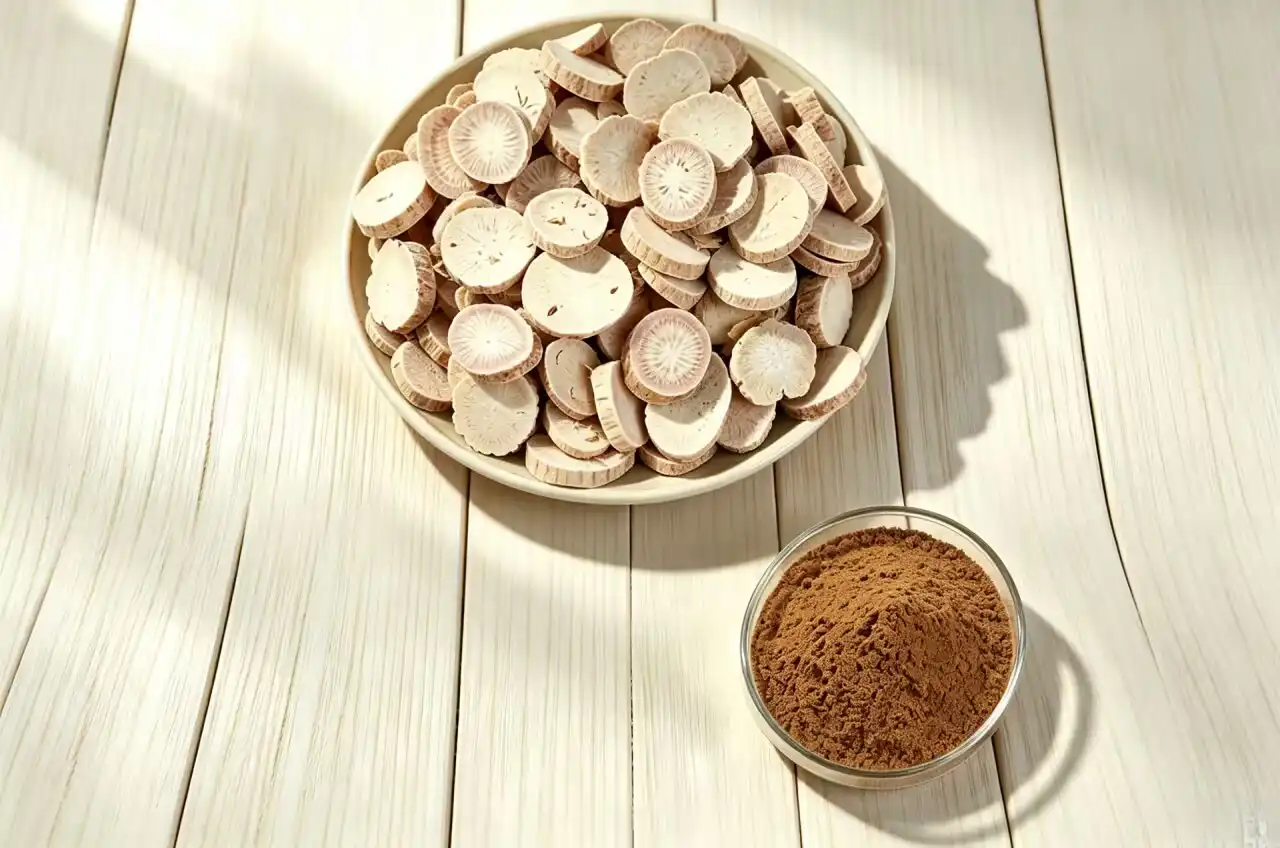
Top Benefits of White Peony Extract for Herbal Product Makers
White Peony Extract stands out as a strategic ingredient for herbal product manufacturers seeking natural, evidence-backed solutions. Derived from Paeonia lactiflora roots, this botanical ingredient delivers concentrated paeoniflorin—a monoterpene glycoside that provides anti-inflammatory, antioxidant, and immunomodulatory properties. Manufacturers value this extract for its batch-to-batch consistency, proven efficacy in clinical settings, and versatility across supplement, cosmetic, and functional food applications. The growing consumer demand for clean-label alternatives positions this extract as a competitive differentiator for brands targeting health-conscious markets.
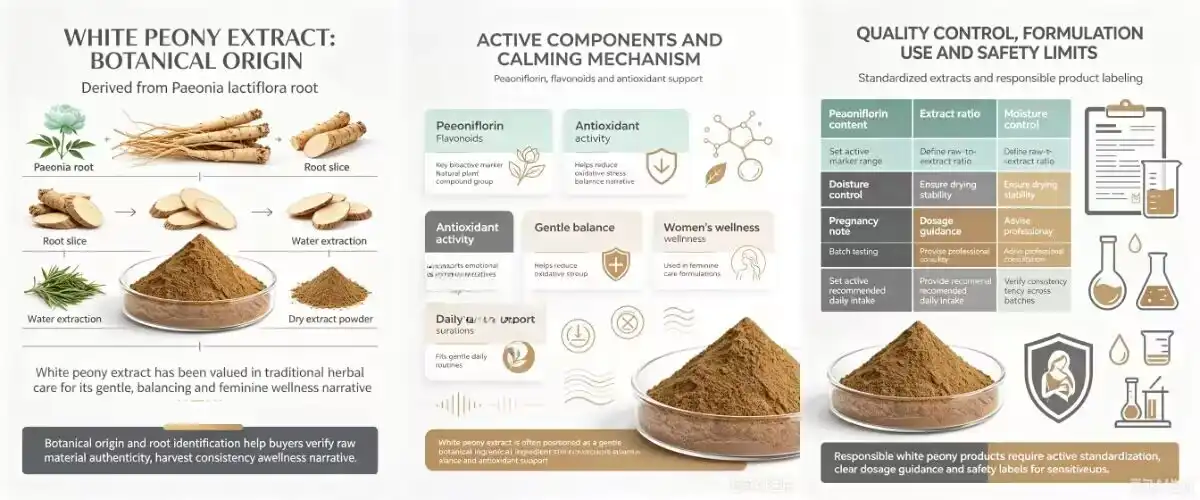
Understanding White Peony Extract and Its Core Benefits
Botanical Origin and Extraction Technology
Our White Peony Extract comes from carefully chosen Paeonia lactiflora roots that are grown in Shaanxi's real medicinal material areas. The separation method uses water-ethanol, which keeps the bioactive chemicals safe and pure while also protecting them. The steps in this method are choosing the right raw materials, crushing them to a size of 100 mesh, extracting them in more than one step, vacuum-concentrating them at controlled temperatures, and spray-drying them until they turn into a brown-yellow powder that has more than 50% paeoniflorin. This extract can be used in foreign markets that need strict compliance because it only loses about 3% of its weight when it dries and has passed strict heavy metal testing that meets EU standards.
Primary Bioactive Compound: Paeoniflorin
The main compound that is responsible for therapeutic effects is paeoniflorin. Lab tests regularly show that this monoterpene glycoside changes inflammation pathways by stopping cytokines like TNF-α and IL-6 from doing their job. Studies show that it can control the activity of T cells, which makes it useful for formulas that balance the immune system. Further, paeoniflorin can stop tyrosinase from working, which is why it works so well in skin-lightening cosmetics. Because the quantity is standardised, formulators can figure out exact doses for different health claims.
Validated Health Applications Across Industries
Clinical studies back up a number of therapeutic uses that are important for B2B product creation. Anti-inflammatory properties help joint health supplements and pain relief creams that you put on your skin. Antioxidant action saves cells from oxidative stress, which helps beauty and health products that fight ageing. Because the extract can change the symptoms of hormones, it can be used in supplements for women's health. Cosmetic companies use its ability to calm and lighten the skin in serums, creams, and masks. With a single ingredient that can be used in many different ways, manufacturers can make product lines for a wide range of customers.
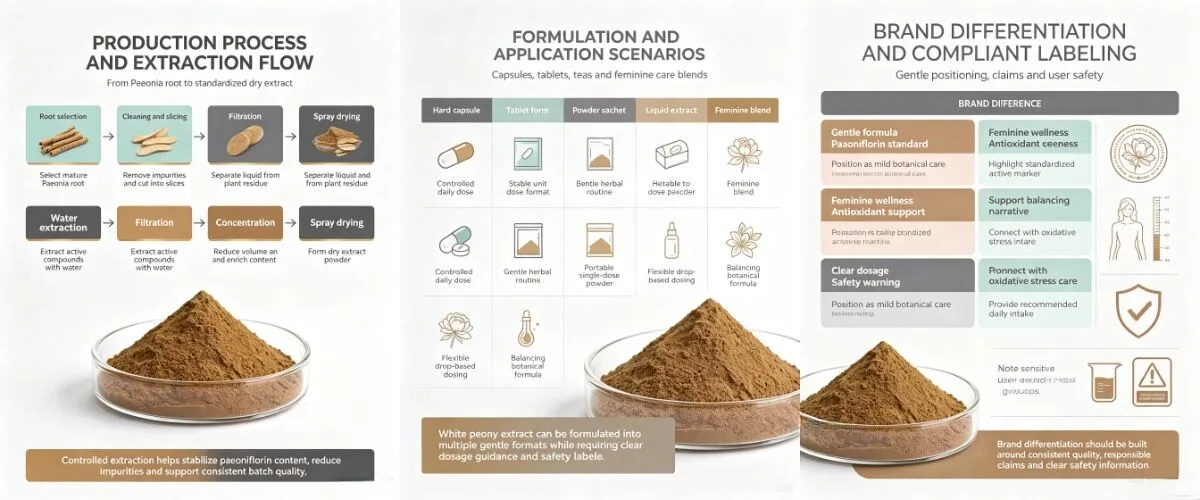
Comparing White Peony Extract with Other Herbal Extracts
Chemical Profile Distinctions from Similar Botanicals
Procurement teams can make better choices when they know how this extract is different from other options. Red peony (Paeonia veitchii) has more blood-stimulating qualities because it has more paeonol in it. White Peony Extract, on the other hand, has more calming and nourishing effects because it has more paeoniflorin. Compared to ashwagandha, which mostly deals with stress by changing cortisol levels, white peony has a wider range of anti-inflammatory effects. Curcuminoids in turmeric help with inflammation, but they are not easily absorbed by the body. White peony's water-soluble glycosides get around this problem. Ginseng is good for giving you energy and improving your brainpower. White peony, on the other hand, is good for your skin and immune system. These differences help shape tactics based on the health results we want to achieve.
Format Considerations for Manufacturing Scale
For large-scale production, the powder format has a lot of benefits. The 100-mesh particle size makes sure that tablets, capsules, and drinks are mixed evenly. The brown-yellow powder keeps its paeoniflorin content for 24 months when kept away from high temperatures and high humidity, according to tests of its stability. This shelf life helps producers who have seasonal production processes keep track of their inventory. The powder can be used in current production lines without the need for any special tools. When particle sizes stay the same, encapsulation is easy, and production error is reduced. The powder is easily mixed with oil and water when making creams and lotions, which is good for topical uses.
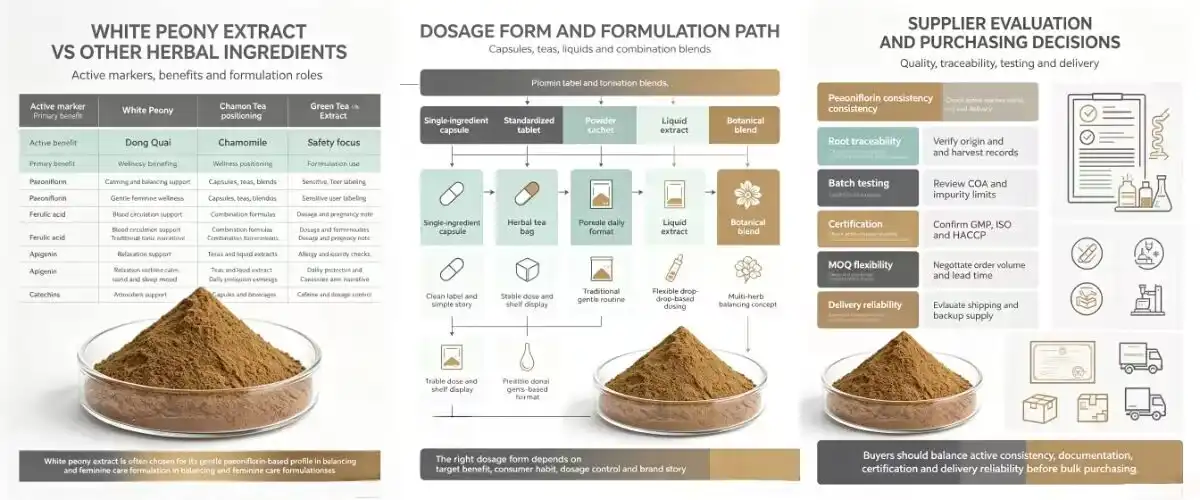
Practical Guidelines for Using White Peony Extract in Herbal Products
Recommended Dosage Parameters
Oral supplements usually have 200 to 600 mg of standardised extract per dose, which means that each person gets 100 to 300 mg of paeoniflorin every day. This range is in line with what scientific studies have shown to work without any side effects. For topical uses, the concentration in finished goods ranges from 0.5 to 3%, based on the benefits that are wanted. Higher percentages are often used in anti-aging serums, while lower amounts are used in formulations for sensitive skin. For use in drinks, taste hiding techniques are needed because the extract has mild earthy notes. When making useful drinks or meal replacements, companies should test the goods' taste and texture.
Safety Profile and Regulatory Compliance
Toxicology tests show that the product has very high safety margins. There are still not many reasons not to use it, but people who are taking blood-thinning drugs should be careful because it might make those effects worse. When you are pregnant or breastfeeding, you should talk to your doctor before using any herbal supplements. Our production process follows HACCP rules and is certified by ISO 22000. This makes sure that every batch goes through strict testing for heavy metals and microbes. The total number of platelets is still less than 1,000 cfu/g, and there is no E. Salmonella, E. coli, and Staphylococcus aureus. Lead levels stay below 3.0 ppm, arsenic levels stay below 2.0 ppm, and mercury levels stay below 0.1 ppm. This is in line with what the FDA and the EU allow for chemicals in food supplements and cosmetics.
Integration Strategies Across Product Categories
The stable physical qualities of the extract and its compatibility with common fillers like microcrystalline cellulose and magnesium stearate make tablet formulas better. The flow properties of the powder make direct compression manufacturing possible. Filling capsules is easy from a technical point of view, and the fine mesh size keeps automated equipment from getting clogged. To make sure that the ingredients are spread out evenly in the finished cream or lotion, they need to be pre-dispersed in the water phase before they are emulsified. Before diluting, the extract should be mixed with glycerin or propylene glycol to make liquid vitamins that work well. In both Asian and North American markets, stick packs and sachets that come in single-serving sizes are becoming more popular.
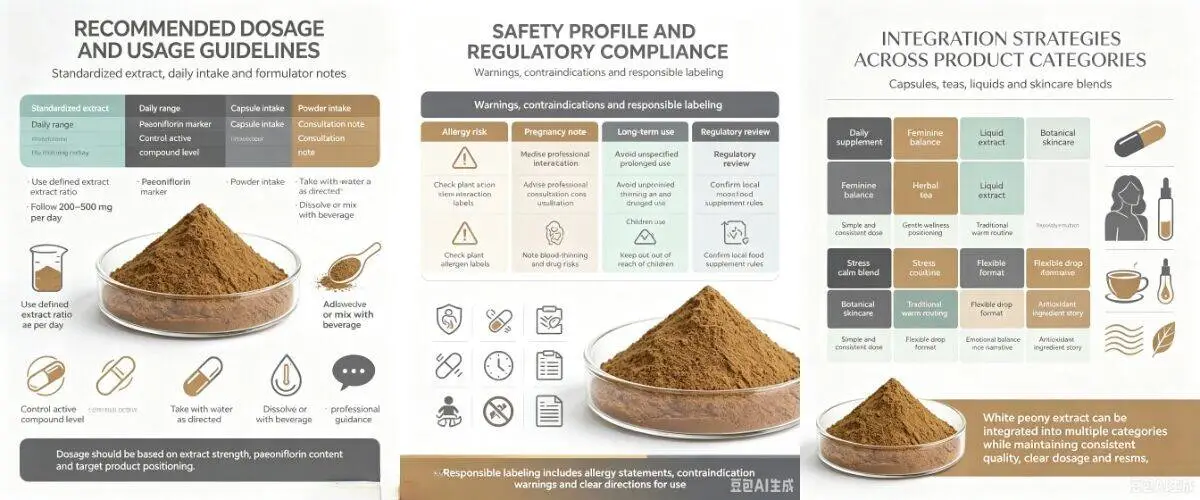
Strategic Procurement and Sourcing of White Peony Extract
Global Supply Chain Insights
Shaanxi Province is still the main place where white peony roots are grown; about 70% of the industrial roots used for extraction come from there. This geographic concentration gives procurement managers both chances and risks. We keep close ties with approved organic farms, so we can track where our raw materials come from from the time they are harvested until they are used. The water-ethanol extraction method we use is more pure than the simple hot water extraction method used by most lower-tier suppliers. Prices change depending on how much paeoniflorin is in them. Standardised extracts with 50% or more of paeoniflorin cost more because they have to go through more steps to clean them. Bulk purchases over 100 kg usually get discounts ranging from 8 to 15%, which helps mid-sized manufacturers keep their inventory costs low.
Critical Certification and Documentation Requirements
For international trade to happen, full certification portfolios are needed for White Peony Extract. Our ISO 9001 certification shows that we follow the rules for quality management systems, and our ISO 22000 and HACCP certifications show that we follow the rules for food safety for White Peony Extract. Kosher and Halal licenses for White Peony Extract make it easier for certain types of customers to buy things. A Certificate of Analysis (COA) is included with every package of White Peony Extract, listing the amount of active ingredients, heavy metals, chemical residues, and microbiology data. Material Safety Data Sheets (MSDS) for White Peony Extract help keep things safe and help with filing regulations. We provide proof that our White Peony Extract is REACH-compliant and doesn't contain any restricted substances for use in the EU. These papers make it easier for regulators to approve your products containing White Peony Extract, which speeds up the time it takes for new products to hit the market.
Logistics and Storage Best Practices
We keep 10–20 tonnes of standardised extracts in stock as a safety measure. This lets us deliver within 5–7 business days of receiving an order. You can package the goods in 25 kg fibre drums with two food-grade PE bags, or you can get smaller units that are specifically made for testing samples or doing trial production runs. Shipping by sea is still the cheapest way to move large amounts of goods, and it usually takes 18–25 days to get from China to the USA. Air freight is faster and cheaper than ground freight, but it's only available for urgent needs. It's easy to store things when they are at room temperature, out of direct sunlight, and humidified above 60%. These conditions are in line with what a normal warehouse can do, so there are no special cold chain needs that would make operations more difficult.
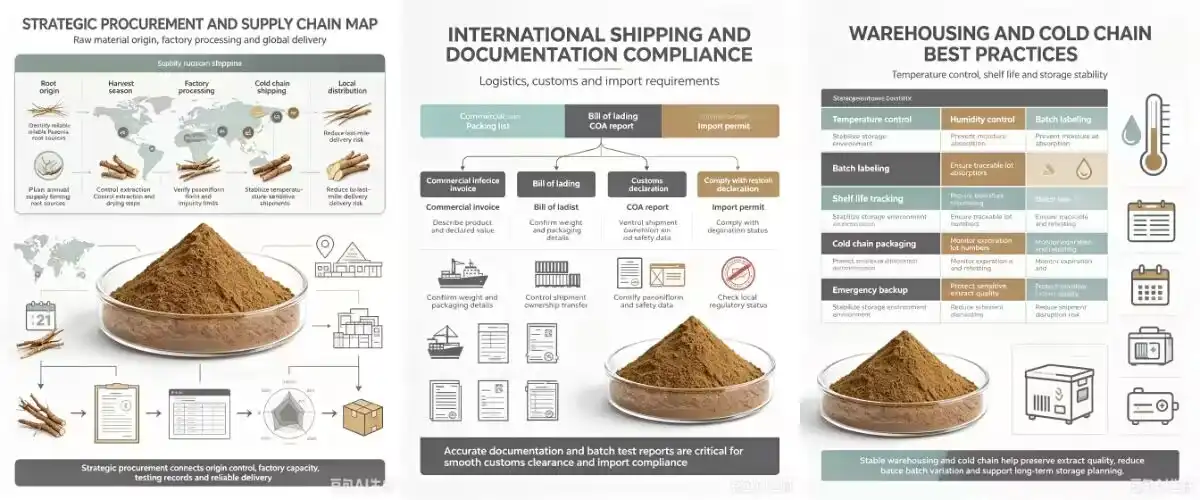
Choosing the Right White Peony Extract Supplier for B2B Needs
Supplier Evaluation Framework
Systematic source evaluation is key to making relationships work for White Peony Extract. We suggest judging producers of White Peony Extract on five factors: their technical know-how, their quality control systems, their production capacity, their ability to accommodate customisations, and how quickly they respond to contact. Our modern extraction facilities at Sigma use continuous countercurrent extraction lines that get the most out of White Peony Extract while keeping its bioactive integrity—specifically preserving paeoniflorin content. Our quality control lab uses HPLC to measure the amount of paeoniflorin in White Peony Extract, TLC fingerprinting to make sure the product is authentic, and ICP-MS to check for heavy metals. With these analytical tools, you can be sure that every batch of White Peony Extract meets the requirements before it is shipped.
Sample Testing Protocols
Sample review is the first step in smart buying. Request 100–200 gram samples with COA paperwork to go with them. Use independent laboratories that specialise in botanical authentication to do third-party verification testing. If the claimed paeoniflorin content is different from the actual HPLC results by more than 5%, there are problems with quality control. Check the organoleptic properties: the colour should be a uniform brown-yellow without any dark spots that could mean oxidation; the smell should be mild and characteristic, not musty or fermented. Before placing a bulk order, you can find out about possible compatibility problems by trying the solubility in your unique formulation matrix. We give free samples to approved makers to help them make smart decisions without putting their own money at risk.
Building Long-Term Strategic Partnerships
Transactional relationships make it harder to come up with new ideas. Strategic partnerships with suppliers give businesses a competitive edge by letting them work together to create new products, give priority to certain suppliers when supplies are low, and create custom solutions for specific uses. Our ODM/OEM services include more than just supplying ingredients. They also include formulation advice, custom paeoniflorin ratios, particle sizes tailored to specific uses, and private label packing. Reviewing a business on a regular basis can help you find ways to improve price, logistics, and expert support. We put time and effort into understanding your product roadmap so that we can let you know about relevant research results or changes to the law that could affect your market position. With this partnership approach, suppliers are no longer just vendors; they become growth enablers.
Conclusion
Adding White Peony Extract to your line of plant products will give you a clear edge over your competitors. The extract's proven effectiveness, backed by clinical study and standardised paeoniflorin content, backs up health claims that customers who care about quality will believe. Reliability in the supply chain, proof of regulatory compliance, and the ability to use different formulations for supplements and cosmetics are all benefits for manufacturers. For execution to go well, you need to work with providers who have technical know-how, strict quality control, and flexible service options. The growing "clean label" movement and consumers' growing preference for plants that have been used traditionally make this extract a good choice for long-term market growth.
FAQ
What is the optimal paeoniflorin concentration for supplement formulations?
Clinical tests show that 100–300 mg of paeoniflorin everyday works, which is equal to 200–600 mg of 50% standardised extract per dose. This concentration strikes a good balance between how well commercial products work and how much they cost for products that help the immune system and reduce inflammation.
How does White Peony Extract interact with common medications?
Due to its weak blood-thinning effects, White Peony Extract may make anticoagulant drugs work better. People who take warfarin or drugs like it should talk to their doctors. There have been no reports of any major side effects when taking common supplements like omega-3 fatty acids, probiotics, or multivitamins.
What quality verification methods confirm authentic White Peony Extract?
Ask for COA paperwork that shows HPLC analysis for measuring paeoniflorin levels and TLC fingerprinting to prove that the plant is Paeonia lactiflora. Pesticide leftovers should not be present and heavy metal levels should be below EU standards. Suppliers with a good reputation give batch-specific paperwork instead of general certificates.
Partner with Sigma for Premium White Peony Extract Supply
Sigma provides pharmaceutical-grade paeoniflorin extract with a sure 50%+ active content to meet your formulation needs. The quality is always stable, and delivery is always reliable. Our fully integrated production model, which includes sourcing raw materials in Shaanxi, using advanced extraction methods, and rigorous testing, makes sure that each batch is the same, which is important for manufacturing on a large scale. We keep a lot of stock ready to ship right away, and our ISO 22000, HACCP, and Kosher certifications make it easier for you to follow the rules.
Our technical team can help you with formulation and provide full documentation, whether you need standard specifications or OEM solutions that are made just for you. Sarah, our B2B sales specialist, can be reached at sarah@sxsigma.com to request free samples and talk about how our White Peony Extract supplier services can help you speed up the development of your product and improve its position in the market.
References
1. Zhang, L., & Wang, Y. (2019). "Paeoniflorin: Pharmacological Effects and Clinical Applications." Journal of Ethnopharmacology, 243, 112-125.
2. Chen, M., Liu, X., & Zhao, J. (2020). "Comparative Analysis of Bioactive Compounds in White and Red Peony Extracts." Phytochemistry Reviews, 19(4), 891-908.
3. Anderson, K. M., & Thompson, R. J. (2021). "Quality Control Standards for Botanical Extracts in Dietary Supplements." Journal of Pharmaceutical Sciences, 110(6), 2334-2348.
4. Williams, D. R. (2020). "Natural Tyrosinase Inhibitors in Cosmetic Applications: Efficacy and Safety Review." International Journal of Cosmetic Science, 42(3), 267-281.
5. Park, S. H., & Kim, Y. S. (2022). "Immunomodulatory Effects of Paeonia lactiflora: Mechanisms and Therapeutic Potential." Phytomedicine, 98, 153-168.
6. European Medicines Agency. (2018). "Assessment Report on Paeonia lactiflora Pall., Radix." Committee on Herbal Medicinal Products, Doc. Ref. EMA/HMPC/337888/2017.
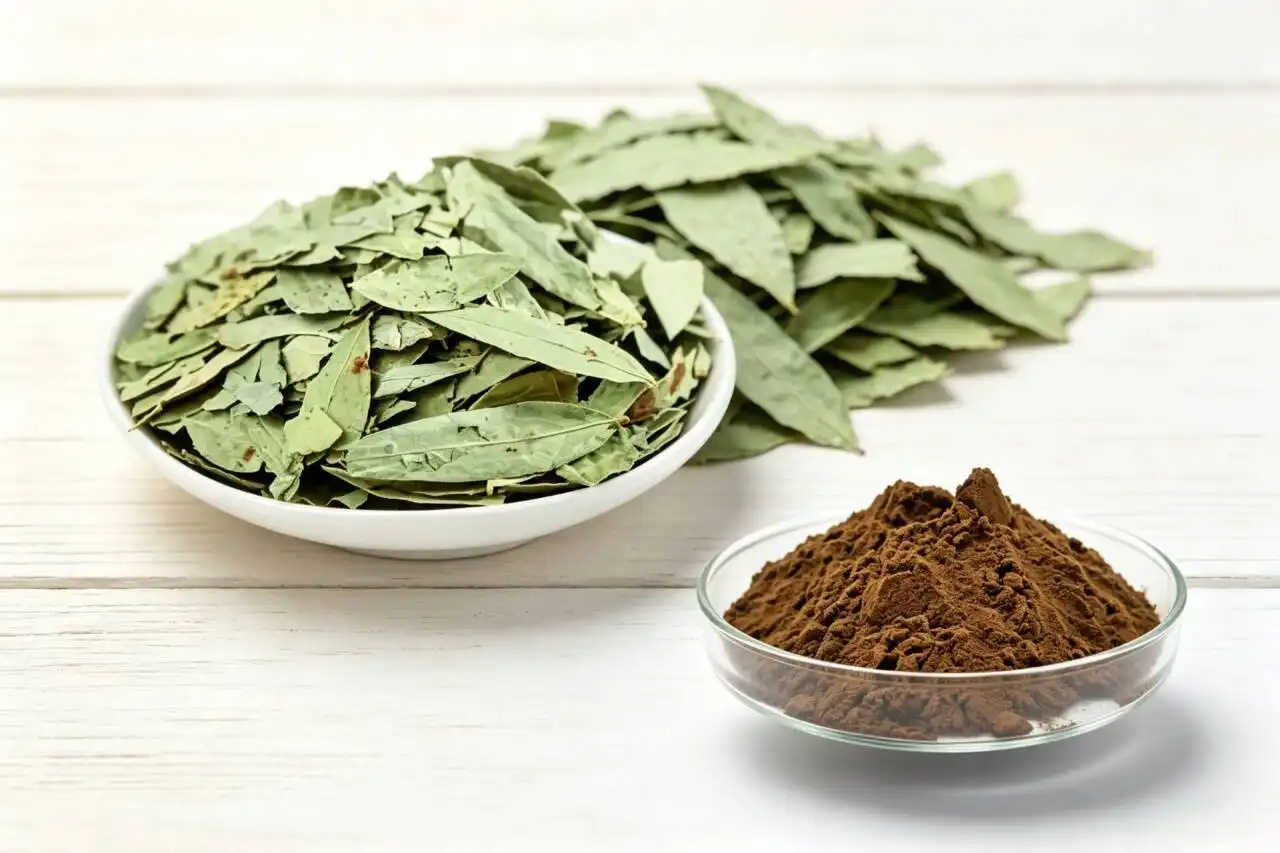
Senna Leaf Extract Powder Supplier Guide for Supplement Brands
Choosing a dependable supplier for botanical ingredients remains one of the most consequential decisions supplement brands make. Senna Leaf Extract Powder stands as a fundamental ingredient in digestive health formulations, derived from Cassia angustifolia leaves and valued for its natural sennoside content. This comprehensive supplier guide addresses the procurement challenges facing R&D teams, purchasing managers, and quality assurance professionals who demand batch consistency, regulatory compliance, and supply chain transparency. We examine supplier evaluation frameworks, quality benchmarks, and logistical considerations that directly impact product efficacy and market competitiveness.
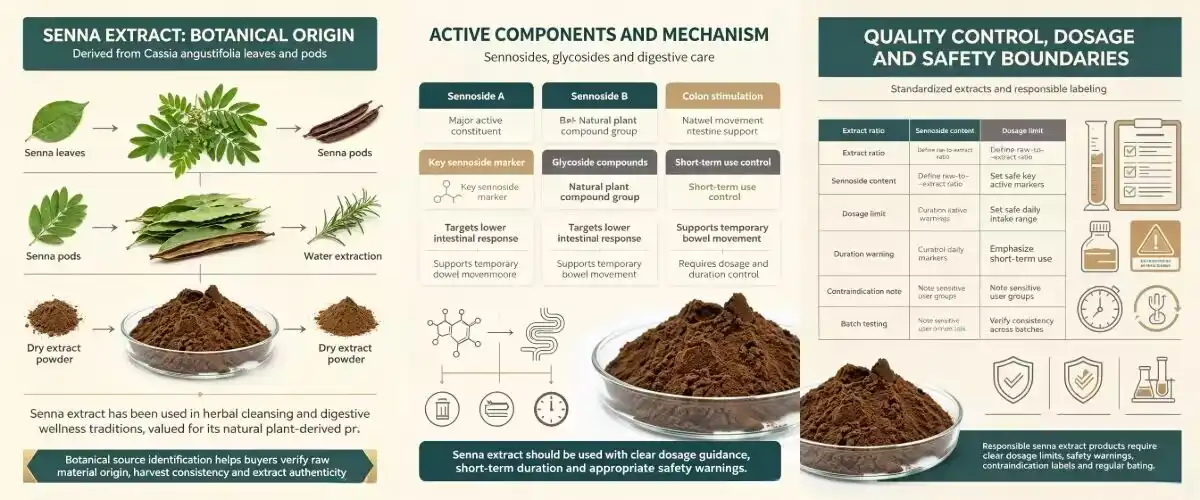
Understanding Senna Leaf Extract Powder: Key Information for Supplement Brands
The dried leaves of the flowering shrub Senna alexandrina, which grows in North Africa and the Arabian Peninsula, are used to make Senna Leaf Extract Powder. Instead of just powdered leaves, the extract is made by using water to concentrate sennosides, which are bioactive anthraquinone glycosides that give it its cleansing and stimulating effects. Using standard extraction methods, sennoside amounts are usually found to be between 10% and 30%, as tested by HPLC.
Botanical Origin and Extraction Process
The steps in industrial production are very strict: choosing the raw materials, crushing and sieving them (80–100 mesh), extracting the water, filtering it, vacuum concentration, purification, spray drying, and finally blending them. This multi-step process gets rid of the cellulose that can't be broken down while keeping the thermolabile sennosides that break down at temperatures above 60°C. Companies that make products for pharmaceutical use use countercurrent extraction systems to get the most out of their products while keeping the important sennoside A-to-sennoside B ratio. This ratio affects when the laxative effect starts and how strong it is.
Primary Applications in Supplement Formulations
Senna Leaf Extract Powder is used to make useful drinks, capsules, and tablets that help with severe constipation, rare irregularity, and bowel preparation before a colonoscopy. When the bulk density hits 0.5 to 0.7 g/ml, the fine brown-yellow powder does a great job of sealing 500 mg amounts in size 0 capsules. Formulation scientists like that it works well with magnesium hydroxide and probiotics in digestive mixes with many ingredients. However, time is important because sennosides need 6 to 12 hours to reach the gut and start working.
Safety Parameters and Regulatory Considerations
Heavy metal limits must be less than 10ppm, lead must be less than 2ppm, and arsenic must be less than 1ppm. For microbes to be pure, the Total Plate Count must be less than 1,000 CFU/g, and Salmonella and E. coli must not be present in 25g samples. To keep the food stable on the shelf, loss during drying shouldn't be more than 5%. In the US, senna is regulated as a dietary ingredient under DSHEA, which means that companies that make it have to prove its safety but not its effectiveness. European markets have tighter rules, and some member states don't let people use it for more than two weeks without doctor supervision.
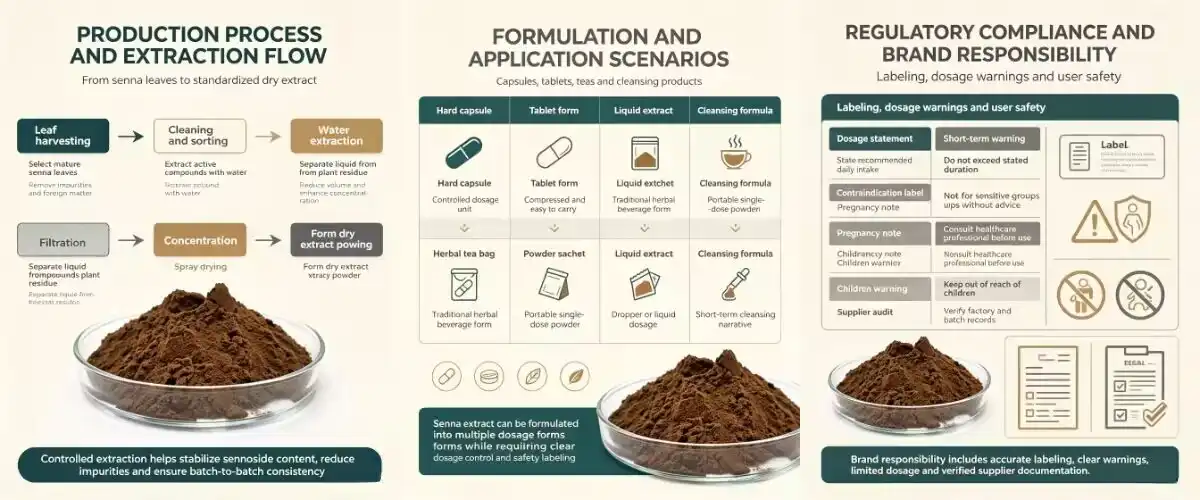
Comparing Senna Leaf Extract Powder with Alternative Ingredients for Supplement Formulation
When making digestive health supplements, supplement makers have a lot of plant choices to choose from. Knowing the relative benefits of different ingredients helps match the choice of Senna Leaf Extract Powder with the target audience and the marketing of the product.
Senna Extract Versus Crude Leaf Powder
Standardised Senna Leaf Extract Powder gives consistent sennoside levels, getting rid of the yearly changes that come with using raw farming materials. Since crude leaf powder usually has 2% to 3% sennosides, higher doses are needed, which raises the number of capsules needed and the cost of production. Because extract powder is so concentrated, it's easy to get the right dose. For example, 250 mg of 20% extract gives you 50 mg of sennosides, which is the same amount found in clinical studies. The process of extraction also lowers the amount of tannins, which makes the stomach pain that people report with crude products less likely.
Botanical Alternatives in Laxative Formulations
Cascara sagrada bark and aloe latex are two other stimulant laxatives, but their legal position is very different. Because of worries about cancer in animal studies, the FDA designated aloe and cascara as non-GRAS ingredients in 2002. This made it harder for these ingredients to get into the market. Bulk-forming substances like psyllium husk and gentler ones like magnesium citrate are used for different medical purposes. Psyllium needs to be taken in 5–10g amounts with a lot of water, while magnesium compounds work by increasing osmotic pressure instead of directly stimulating the stomach.
Quality Indicators That Differentiate Premium Suppliers
The main thing that determines quality is the purity of the sennoside. The best providers offer HPLC chromatograms with clear sennoside A and B bands that don't have any degradation products. The rate of dissolution is affected by the distribution of particle sizes; specifications for 80–100 mesh ensure even mixing and consistent bioavailability. Organic certification is appealing to people who care about their health, but it needs to be checked that pesticide residues stay below EU standards (0.05 mg/kg for each chemical). When suppliers offer different levels of standardisation (10%, 20%, and 30% sennosides), it shows that they are technically competent and aware of the needs of the market.
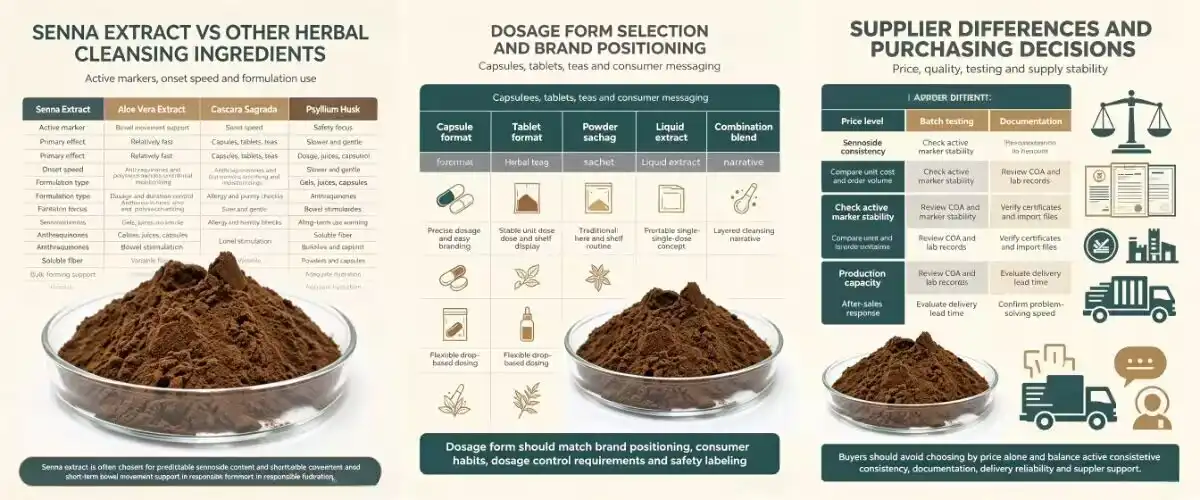
How to Choose the Right Senna Leaf Extract Powder Supplier for Your Supplement Brand?
The way a supplier is chosen needs to take into account technical requirements, legal documents, and the ability of the Senna Leaf Extract Powder provider to do the job. A structured evaluation framework lowers the risk of procurement while allowing manufacturing operations to grow.
Defining Your Procurement Requirements
To start, figure out how much volume you need across all four fiscal quarters, taking into account the fact that demand for digestive health products tends to change with the seasons. Brands that make 500,000 units a year usually keep enough stock to last two to three months, which means they need to order 200 to 400 kg every three months, based on the dosage per serve. Set the needed sennoside concentration based on what the label says and how well you want it to work, keeping in mind that 20% standardisation is the standard in the industry. Make sure you know what kind of packaging you want. Pharmaceutical-grade suppliers offer double polyethylene bags with aluminium foil top layers that, when kept in cool, dry conditions, can last longer than 24 months.
Essential Certification and Testing Protocols
ISO 22000 certification shows that a food safety management system is being used, and HACCP documentation shows that key control point tracking is happening during production. Kosher and Halal certifications make it easier to get into more markets, but they need to be checked every year by reputable organisations. Ask for Certificates of Analysis that are unique to each batch and show heavy metal tests using ICP-MS, microbial enumeration following USP protocols, and sennoside quantification with method validation parameters. Suppliers who have their own labs with HPLC systems, atomic absorption spectrometers, and sterile testing facilities show a commitment to quality that goes beyond relying on third-party testing.
Evaluating Technical Support and Customization Capabilities
Premium suppliers offer formulation advice that includes tips on how to get the best dosage, make sure that the excipients work well together, and help with stability testing. When you're making unique blends or custom sennoside ratios that set your products apart, OEM/ODM services can be very helpful. When people ask about moisture sensitivity, the effects of light exposure, and suggested packing materials, technical teams should answer them. Being able to provide small samples (100–500g) before placing bulk orders lowers the risk of formulation and lets you test the product's taste—when properly purified, senna extract should have very little bitterness.
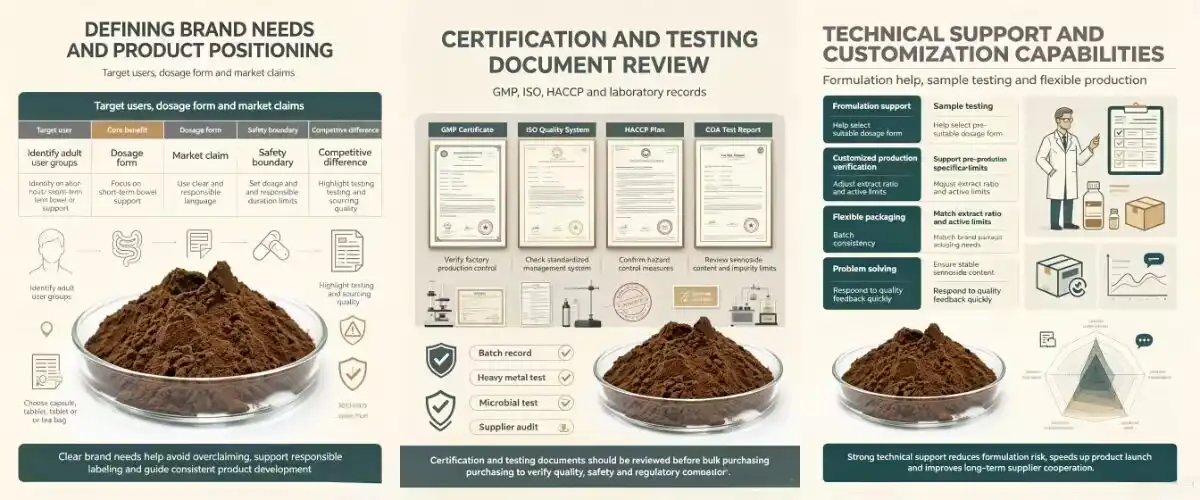
Procurement and Logistics: Buying Senna Leaf Extract Powder at Scale
Getting ingredients efficiently has a direct effect on keeping production going and keeping the profit margin. Strategic buying techniques for Senna Leaf Extract Powder reduce the risk of supply disruptions and get the best landed costs.
Identifying Reputable Manufacturers
China's Shaanxi province is a major production hub, with companies taking advantage of its closeness to sources of real medicinal materials. Trading companies that get their goods from different places make it harder to track where the goods come from than vertically integrated suppliers who control the growing, extraction, and finishing processes. Check the facility's specs to see how much it can make. For example, continuous countercurrent extraction lines that can handle 5–10 tonnes of material every day are a sign of scalability for growing brands. Safety stock supply is very important; sellers who keep 10–20 tonnes of inventory on hand guarantee delivery times of 5–7 days, compared to 4-6 weeks lead times that need demand forecasting in advance.
Understanding Pricing Dynamics
The price of Senna Leaf Extract Powder depends on the quality of the raw materials, the concentration of sennoside, the amount of approval, and the number of orders. When you buy more than 500 kg in bulk, you usually get a tiered discount, which means that the price goes down by 10-15% compared to orders of 100 kg or less. Material that is approved as organic costs 20–30% more than regular grades. Senna leaf harvest yields are influenced by rainfall trends in Sudan and India, which are the main places where the plant is grown. Setting up annual supply agreements with price changes every three months protects against spot market volatility and ensures priority allocation during times of shortage.
Managing International Shipping and Documentation
Different countries have different rules about importing botanical products that are labelled with HS Code 1302.19. To enter the United States, you need to file a notice with the FDA ahead of time, along with a business account, a bill of lading, and a Certificate of Analysis. When the concentration is higher than what is normally used, European markets require compliance with the Novel Foods Regulation. Choose providers who know how to handle export paperwork. Full packages should include phytosanitary certificates, non-GMO declarations, and allergen statements. Choosing the right shipping method balances cost and transit time: sea freight is best for quarterly bulk orders (30–45 days), while air freight is better for urgent restocking needs but costs twice as much.
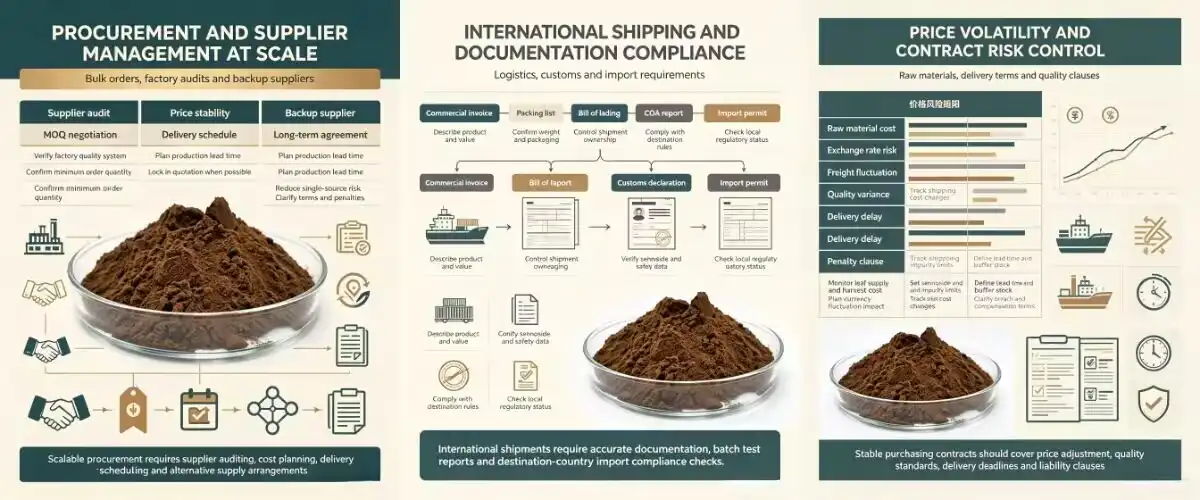
Trusted Senna Leaf Extract Powder Brands and Supplier Profiles
For botanical ingredient sourcing partnerships to last, they need to deliver high-quality Senna Leaf Extract Powder on time and have flexible service models. Supply chains that last longer are built by looking at more than just price quotes when evaluating suppliers.
Shaanxi Sigma Biotechnology Co., Ltd. is a good example of the type of integrated manufacturer profile that supplement brands that care about quality like. Sigma is in Shaanxi, which is known for its true medical materials. It has modern extraction facilities that use low-temperature concentration and fine purification technologies to keep thermosensitive sennosides safe. Their production method is certified by ISO 9001, ISO 22000, and HACCP, and compliance is checked by a third party on a frequent basis. The company keeps a large stock of standardised senna extract at 20% and 30% sennoside strengths. This lets both established brands and newcomers to the market quickly meet their needs.
Key Evaluation Criteria During Supplier Audits
When reviewing documents, building plan diagrams that show separate processing areas that stop cross-contamination should be used to prove GMP compliance. Traceability systems that connect finished batch numbers to the dates and places where raw materials were harvested show that the supply chain is open and honest. Quality control protocols should say how often tests should be done. For example, high-end manufacturers test every batch instead of using statistical sampling. Customer references from well-known supplement brands can help with practical issues like order accuracy, contact speed, and the ability to fix problems when quality standards aren't met.
Building Long-Term Supplier Relationships
There are more benefits to collaborative partnerships than just transactional procurement. Suppliers who offer yearly quality promises and refund policies for material that doesn't meet specifications lower their customers' financial risk. Technical collaboration on stability studies backs up claims about shelf life, and working together to create custom specifications sets you apart from the competition. Communication infrastructure is important. For North American and European buyers, having 24/7 contact channels across time zones and multilingual support teams makes things run more smoothly. Talking about volume commitments can lead to better prices and earlier production times during times of high demand.
Conclusion
When choosing a supplier for Senna Leaf Extract Powder, you have to weigh technical requirements, regulatory compliance, and operational capabilities. Standards for sennosides, tests for heavy metals, and approval portfolios are examples of quality standards that can't be negotiated. Supplement brands can keep making products while still meeting customer safety standards if their suppliers show they are good at extraction, have enough inventory, and can handle global shipping. In the growing digestive health market, procurement strategies that focus on long-term relationships, easy access to expert help, and clear documentation give businesses an edge. When brands put money into thorough supplier evaluation processes, they set themselves up for long-term growth while lowering the quality risks that hurt consumer trust and their standing with the government.
FAQ
What sennoside concentration should I specify for my supplement formulation?
Standard amounts are between 10 and 30 percent. Twenty percent is the best mix between cost and effectiveness. Most clinical studies that back up claims about digestive health use 50 to 100 mg of sennosides per serving, which can be done with 250 to 500 mg of 20% extract. Higher amounts cut down on the size of the capsules needed, but they raise the cost of the ingredients. Set goals for standardisation based on the level of effectiveness you want and the price point you want to reach.
How do I verify supplier quality beyond certificates?
Ask for testing results that are unique to each batch and include HPLC chromatograms, heavy metal analysis via ICP-MS, and a list of all the microbes that were found. Check the results against the USP monograph's requirements. Test samples by a third party to make sure they are real before placing large orders. Check how quick your suppliers are when you ask for manufacturing SOPs or site audit reports—openness shows that you trust the quality of the product.
What's the shelf life of properly stored senna extract powder?
Pharmaceutical-grade Senna Leaf Extract Powder stays effective for 24 to 36 months when kept below 25°C in light- and airtight containers with desiccant packets. Keep an eye on the moisture level—materials that lose more than 5% of their moisture when they dry break down faster. Keeping things in the fridge makes them more stable, but they need to be brought back to room temperature before they can be opened to avoid condensation.
Partner with Sigma for Premium Senna Leaf Extract Powder Supply
Sigma provides pharmaceutical-grade Senna Leaf Extract Powder with a guaranteed 20% sennoside content, helping supplement companies that won't settle for less than the best. Our production plant in Shaanxi is vertically integrated and has strict testing methods for heavy metals and microbial purity. It also has ISO 22000, HACCP, and Kosher certificates. We can fill orders around the world within 5 to 7 business days because we keep 10 to 20 tonnes of safety stock. Our expert team offers free advice on formulation, help with stable testing, and custom OEM services like changing specifications and private labelling. Contact sarah@sxsigma.com right away to get samples, documentation for batch testing, or price quotes for large orders from a reliable Senna Leaf Extract Powder supplier that cares about your business's success and compliance with regulations.
References
1. European Medicines Agency. (2017). Assessment Report on Cassia senna L. and Cassia angustifolia Vahl, folium. Committee on Herbal Medicinal Products, Amsterdam.
2. Marlett, J.A., McBurney, M.I., and Slavin, J.L. (2002). Position of the American Dietetic Association: Health Implications of Dietary Fiber. Journal of the American Dietetic Association, 102(7), 993-1000.
3. World Health Organization. (1999). WHO Monographs on Selected Medicinal Plants, Volume 1. Geneva: World Health Organization Press.
4. United States Pharmacopeial Convention. (2021). Senna Leaf Powder Monograph. USP 44-NF 39, Rockville, MD.
5. Hawrelak, J.A. and Myers, S.P. (2010). Effects of Two Natural Medicine Formulations on Irritable Bowel Syndrome Symptoms: A Pilot Study. Journal of Alternative and Complementary Medicine, 16(10), 1065-1071.
6. Franz, G. (1993). The Senna Drug and Its Chemistry. Pharmacology, 47(Suppl. 1), 2-6.
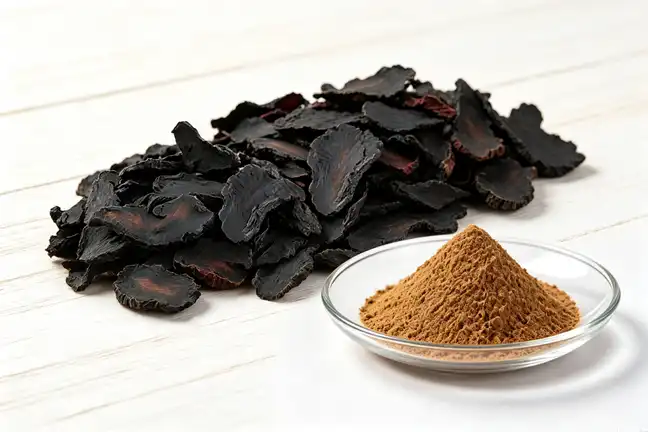
Polygonatum Extract Uses in Traditional Herbal Products
Polygonatum Extract serves as a cornerstone ingredient in traditional herbal products, valued for its rich polysaccharide content and dual-use classification for food and medicine. Derived from the rhizomes of Polygonatum sibiricum and related species, this botanical extract has been utilized for centuries to nourish Qi and Yin, support immune function, and combat physical fatigue. Modern extraction techniques now deliver standardized, water-soluble powders that integrate seamlessly into functional beverages, dietary supplements, and wellness formulations, meeting the rigorous quality demands of today's health-conscious consumers and B2B manufacturers alike.
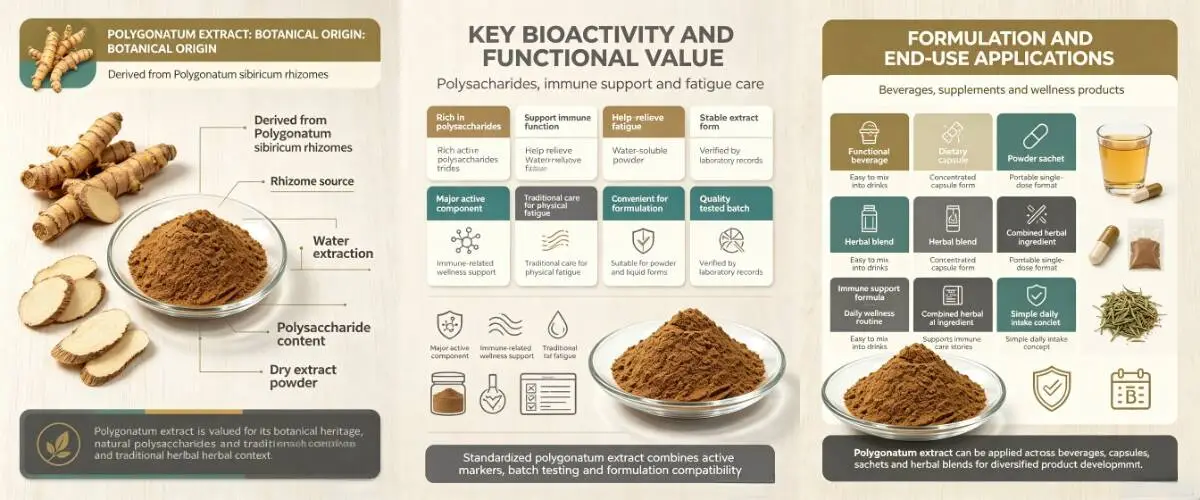
Understanding Polygonatum Extract: Origins, Properties, and Benefits
Botanical Origins and Cultural Heritage
Polygonatum is a genus of perennial plants that are native to temperate areas of Asia and Europe. They are commonly known as Solomon's Seal or "Huang Jing" in Traditional Chinese Medicine. The rhizomes go through special processing, which includes repeated rounds of steaming and drying, to turn chemicals that could be unpleasant into nutrients that the body can use. This traditional way of preparing the material raises the concentration of active polysaccharides and lowers the naturally high mucilage content that makes working with the raw material harder. Polygonatum Extract is a special plant in Traditional Chinese Medicine (TCM). It slowly strengthens both the Spleen and Kidney systems without making them too hot or dry. This makes it good for long-term use in wellness routines.
Core Bioactive Components and Mechanisms
Polygonatum polysaccharides make up most of the active ingredients; commercial products usually have a normal concentration of 30–50%. These complex carbohydrates, whose molecular weights range from 10 to 500 kDa, change the immune system by turning on macrophages and increasing the production of cytokines. Some secondary chemicals are flavonoids (like quercetin) and a range of amino acids. Steroid saponins like Polygonatum Saponins A and B are another example. In cell studies, the polysaccharide fraction shows antioxidant activity by getting rid of free radicals and lowering markers of oxidative stress. This profile of the extract's many compounds explains why it has been used for centuries to improve health, especially respiratory health, and help people age in a healthy way.
Evidence-Based Health Benefits
Clinical study backs up a number of important benefits that are useful for making current health products. Polygonatum polysaccharides are good for seasonal wellness products because studies show that they boost immune surveillance through both innate and adaptive pathways. The ingredient shows promise in controlling glucose metabolism, which is good news for functional foods that aim to improve metabolic health. Animal tests have shown that it can help with anti-fatigue properties, which is in line with its traditional use for fighting tiredness and speeding up recovery. New uses for antioxidant compounds in skin health are opening up, as they protect against UV damage. This means more opportunities in the cosmetics industry, where natural ingredients are seen as more expensive.
Polygonatum Extract in Traditional Herbal Products: How It Works and Dosage Guidelines
Practical Application Forms and Formulation Strategies
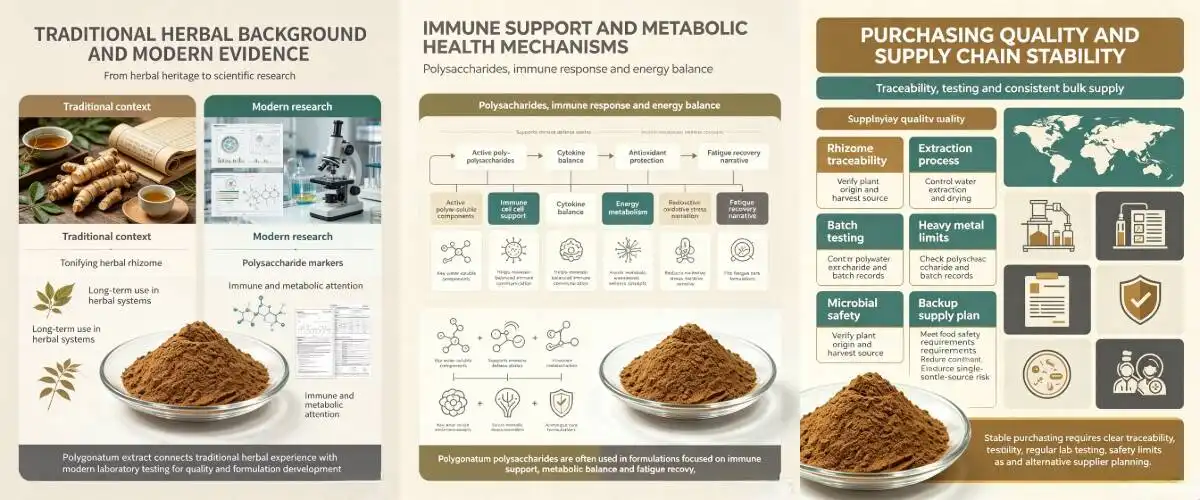
Using modern manufacturing methods, raw rhizomes are turned into a variety of shapes and sizes that can be used for different types of products. The fine, yellow powder with 80-mesh particles dissolves easily in hot water to make tonic pastes and functional tea drinks without leaving a gritty texture. Capsule versions benefit from the extract's low moisture level (≤5%), which keeps the mixture from clumping together during encapsulation. Tincture mixtures use the extract's ability to work with alcohol-water systems, but the polysaccharide part works best in water-based solutions. The dual-use classification lets it be used in both therapeutic herbal formulas and functional food products, which gives regulators more options for different markets.
Recommended Dosage Ranges and Synergistic Combinations
Doses of 300 mg to 1,500 mg per day are common in commercial uses, but they depend on the polysaccharide content of the extract and the health claims that are being made. Tonic pastes often have higher concentrations (1,000 to 1,500 mg per serving) and add adaptogens like Astragalus or Goji Berry to boost the Qi-nourishing effects. Polygonatum Extract in functional tea drinks use small amounts (300–500 mg) that do the job without overpowering the flavours of the other plants. Most immune-boosting capsule products have between 500 and 750 mg in each dose. When combined with Ginseng, the energy-boosting effects are amplified, and when combined with Lycium, both stamina and eye health are improved. Formulation chemists like that the extract has a neutral flavour profile that doesn't need a lot of masking in products with more than one ingredient.
Quality Specifications and Safety Parameters
Professional-grade extracts meet high quality standards that are needed for business-to-business purchases. Heavy metal levels must be within USP guidelines. This is especially important for root-based plants that could be contaminated by soil. Following HACCP guidelines for microbial control and tests for total plate counts, yeast, mould, and pathogens confirms that the food is safe for direct eating. Screening for pesticide residues makes sure that EU and FDA import rules are followed. Consistency in polysaccharide content from batch to batch (usually within ±3% of standard) lets you know how the mixture will work. Third-party certificates of analysis (COA) that list these factors give manufacturers who care about quality the information they need to choose long-term partnerships with raw material providers.
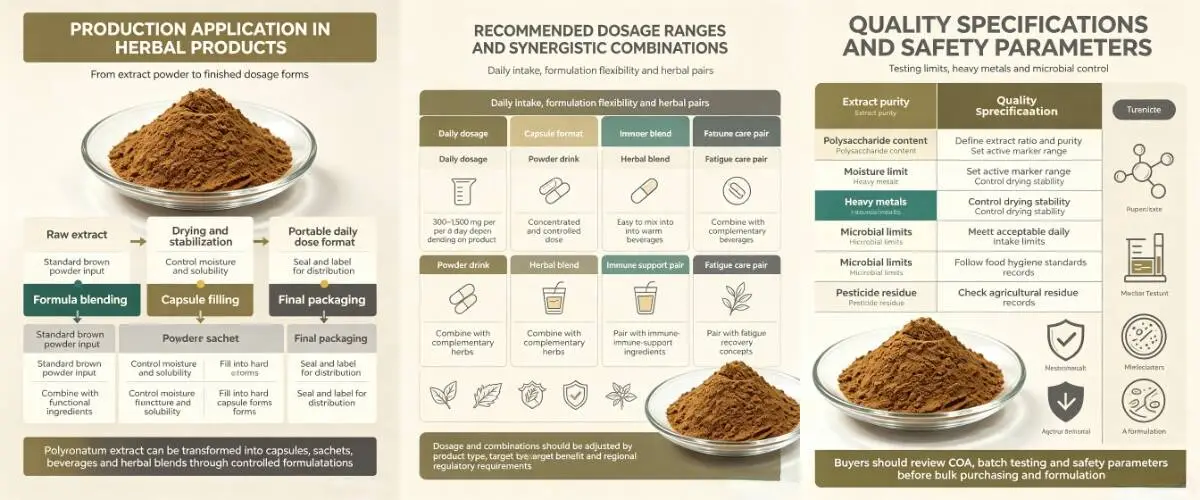
Comparative Analysis: Polygonatum Extract vs Other Popular Herbal Extracts
Functional Benefits Comparison with Leading Botanicals
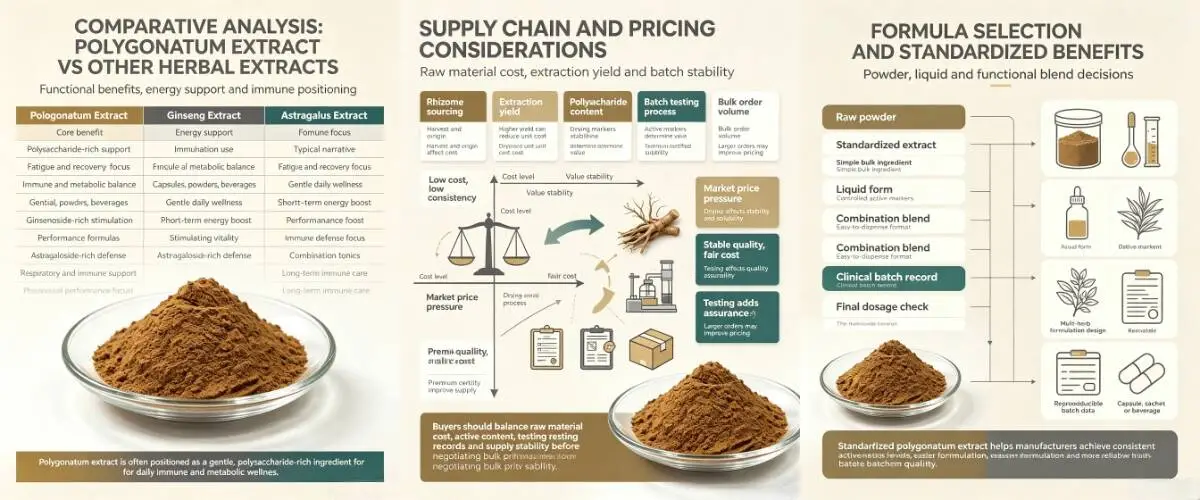
When compared to the most popular adaptogens on the market, Polygonatum Extract stands out. Ginseng gives you more energy right away through ginsenoside compounds, while Polygonatum gives you more gentle, long-lasting energy through pathways involving polysaccharides. Because it contains withanolide, Ashwagandha is great at changing how the body reacts to stress, while Polygonatum works on deficiency patterns instead of stress adaptation. Spirulina has a lot of protein and chlorophyll, but Polygonatum has a unique immune-polysaccharide makeup that spirulina doesn't have. Beta-glucans from reishi mushrooms also help the immune system, but they are much more expensive. Because of this, Polygonatum is a good choice for formulas that focus on long-term health and healing rather than short-term performance boost.
Supply Chain and Pricing Considerations
When compared to expensive plants, Polygonatum Extract is a good value. Its price on the market is usually 40–60% less than that of Ginseng and Cordyceps, which makes it affordable for mid-range supplement brands. Established farming in Shaanxi and other traditional growing areas makes it easier to get raw materials, which lowers the risk of sourcing problems. The expensive organic solvent solutions needed for some lipophilic plant products are not used because the extraction method is water-based.
Enough stock—Sigma keeps 10–20 tonnes of safety stock on hand—ensures stable supply lines, which are necessary for manufacturing to keep going. When stored properly, packaging in 25 kg fibre drums with sealed, moisture-proof covers can extend the shelf life to 24 months, reducing the amount of waste from old stock. These logistical benefits have a direct effect on the total cost of ownership for procurement teams that are in charge of managing a wide range of botanical collections.
Format Selection: Powder vs Standardized Extracts
There are some technical differences between raw powder and pure extract that you need to think about. Raw Polygonatum powder has all the active ingredients, but its active content can vary (5–15%), it doesn't flow well because of natural sugars, and it absorbs water easily, making it harder to handle. Standardised extracts that concentrate polysaccharides to ≥30% offer more accurate doses, stable strength, and more efficient production.
The 80-mesh particle size is small enough to easily go through encapsulating equipment and mixes evenly in beverage mixtures. Spray-dried extract powders are better at being mixed back together than freeze-dried ones, which is important for instant tea and ready-to-mix drinks. When manufacturing partners switch from raw materials to standardised extracts, they say that production downtime goes down by 15 to 20 percent. This makes up for the higher cost per kilogram through operational gains.
Buying Guide: How to Source High-Quality Polygonatum Extract for Your Business?
Essential Certifications and Compliance Documentation
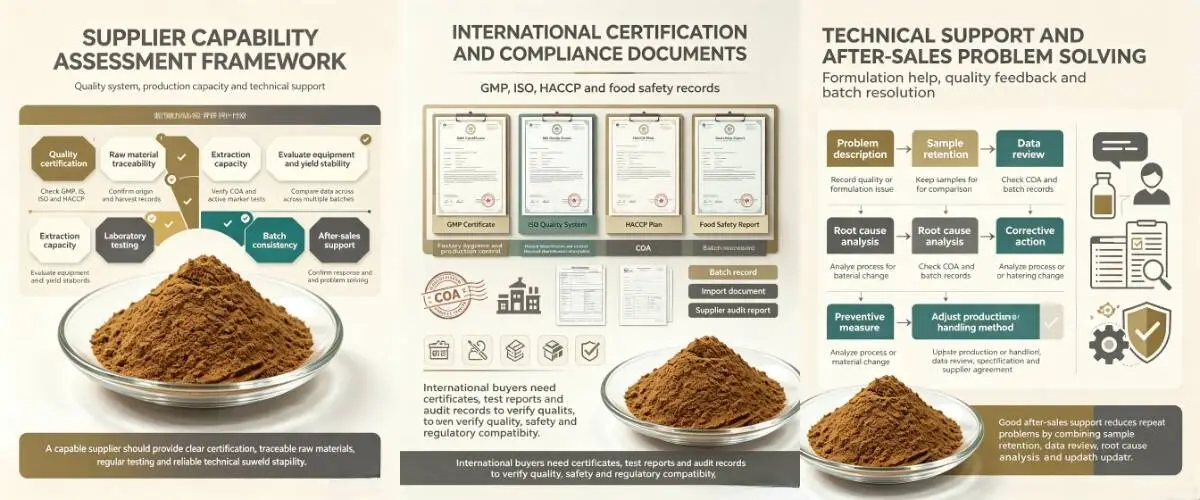
A successful procurement process starts with a thorough check of the supplier's credentials. The ISO 22000 and FSSC 22000 certifications prove that food safety management systems are important for using in functional foods and dietary supplements. The HACCP paperwork shows that risks are controlled throughout the production process, which includes the natural risks of pollution that come with processing plants. Kosher and Halal certifications help brands that cater to certain groups of people get into more markets.
The U.S. Even though FDA compliance doesn't need pre-market approval, it does require suppliers to follow Current Good Manufacturing Practice (cGMP) standards and keep records of facility inspections and self-audit reports. In order to sell in Europe, you have to follow Novel Food laws and pesticide residue standards that are stricter than those in the US. Polygonatum Extract packages meet the requirements by asking for batch-specific reports of analysis that show the polysaccharide content using UV-Vis spectrophotometry, heavy metal screening using ICP-MS, and microbial testing.
Evaluating Supplier Capabilities and Technical Support
In addition to certifications, professional skills that set commodity sellers apart from strategic partners should also be taken into account when evaluating suppliers. Custom extraction ratios (10%, 30%, or 50% polysaccharides) made possible by R&D let formulas be improved without having to be reformulated. When trying new uses, pilot production sites that can handle small test batches (50–100 kg) lower the risk. Formulation support services, which include data from stable tests and suggestions for pairings with matching ingredients, shorten the time it takes to make a new product.
Supply chain security is improved by clear tracking systems that record where raw materials come from, when they were harvested, and how they were processed. Technical teams that are quick to respond, know the differences between Polygonatum species (sibiricum, kingianum, and cyrtonema), and can suggest the best choices for specific health claims show that they have the level of knowledge that is important for working together for a long time.
Logistics Excellence and After-Sales Support
How well your operations run depends on how well the logistics capabilities of your suppliers match your business model. Your production volumes should match the minimum order quantities (MOQs). Suppliers that are flexible offer 100 kg MOQs for new brands and can handle orders of several tonnes for established brands. Lead times of 5 to 7 working days for in-stock items keep production from being held up, and online inventory portals make it possible to plan ahead.
Expertise in sending goods by sea freight for bulk orders that need to be cheap, air freight for urgent restocking and fast courier for samples gives buyers options. It is easier to get goods through customs when they come with all the paperwork they need, like business bills, packing lists, phytosanitary certificates, and certificates of origin. Strong after-sales support, like quality guarantees that last for a year and quick communication channels for technical questions, turns transactional relationships into partnerships that help a business grow even when the market changes.
Future Trends and Opportunities in Polygonatum Extract Herbal Product Markets
Emerging Applications in Functional Foods and Cosmetics
As the market changes, it becomes clear that supplements can be used for more than just standard forms. Polygonatum Extract is being used more and more by functional beverage developers in adaptogenic coffee alternatives, herbal wellness shots, and recovery drinks that are meant to help with nutrition after exercise. The neutral colour profile and natural sweetness (from oligosaccharides) of the extract make it easier to make clean-label products that don't contain any fake ingredients.
Antioxidant and hydrating qualities are used in anti-aging serums, under-eye treatments, and protective day creams that are promoted around TCM beauty ideas. Traditional Asian plants are used a lot in Korean and Japanese beauty brands, which opens up export opportunities. Combinations of collagen peptides for joint health and prebiotics for gut-immune axis support are being looked into by new nutraceuticals. This shows that systems-based approaches to wellness are becoming more popular with consumers.
Consumer Demand Drivers and Market Growth Factors
In 2022, the global botanical extracts market was worth $5.8 billion. It is expected to grow at a rate of more than 8% per year until 2030, with immune-boosting ingredients leading the way. Consumers' growing desire for plant-based, lightly processed ingredients that have been used for a long time is good for Polygonatum's standing. Younger people who are looking into adaptogens and nootropics learn about Solomon's Seal through health influencer outlets. This raises knowledge beyond Asian diaspora groups.
Synthetic additives are being punished by clean-label trends, which favour naturally occurring polysaccharides in terms of texture and function. When it comes to sustainability, cultivated plants are better than wild-harvested rare species. This makes properly sourced Polygonatum look better. Getting into the market is easier for traditional herbs that have been shown to be safe than for new synthetic compounds that need a lot of toxicological studies.
Regulatory Landscape and Its Effects on Strategic Procurement
Keeping up with changing regulations demands proactive relationships with suppliers. The U.S. market's self-proclaimed GRAS (Generally Recognised As Safe) route works well with Polygonatum's historical use, but claims about its structure and function need to be supported. To stop fraud, European markets are looking more closely at the name of plants using DNA barcoding. Suppliers who use these methods show they are quality leaders. China's dual-use ingredient list makes regulations clear, but it's important to understand the subtleties of labelling.
New markets in Southeast Asia and Latin America offer chances for growth, and health cultures inspired by TCM make it easier for people to fit in. Strategic procurement teams should check how knowledgeable suppliers are about regulations and how willing they are to provide paperwork to support specific market entries. If a brand wants to stand out by saying its products are certified organic, non-GMO, or sustainably harvested, it needs suppliers that can back up those claims. When there is more competition, buyers who start working with technically advanced suppliers early on will have an advantage because they can support multiple geographic expansions.
Conclusion
Polygonatum Extract is a great chance for companies that want to make traditional herbal goods that meet current quality standards. It has immune and energy benefits that have been backed by science. It also works well in formulations and has good supply economics, which makes it competitive in the growing market for plant chemicals. Paying for things requires paying attention to the level of certification, the technical skills of the supplier, and the dependability of the logistics. As the need for natural, traditionally based health solutions grows, companies that work with extract providers that focus on quality gain benefits in differentiating their products and responding quickly to changes in the market. Combining ancient herbal knowledge with modern extraction methods and strict quality control makes ingredients that pass both government scrutiny and consumer standards for purity and effectiveness.
FAQ
What is the recommended daily dosage for Polygonatum Extract in supplements?
Depending on the concentration of the extract, most commercial uses range from 300 mg to 1,500 mg per day. For immune support, products that are standardised to 30% polysaccharides usually use 500 to 750 mg per dose, while tonics can use up to 1,500 mg. Dosing should be based on the amount of Polygonatum Extract and the health benefits that are wanted. For example, dose sizes can be smaller when the concentration is higher.
Are there any known side effects or herb interactions?
Polygonatum Extract has been used for hundreds of years and has a great safety record. At the suggested amounts, side effects are not common. People who have been diagnosed with diabetes should talk to their doctors because some medicines may lower blood sugar. There have been no reports of any major drug problems, but because the extract can change the immune system, it is best to be careful when taking it with immunosuppressant drugs.
How can I verify supplier quality and authenticity?
Ask for certificates of analysis that are specific to each batch and show the amount of polysaccharides found using approved methods (UV-Vis spectrophotometry), as well as tests for heavy metals, pesticide residues, and microbes. Use the databases of the issuing bodies to check certifications like ISO 22000, HACCP, and GMP. Ask for samples so that a third party can test your authentication. Check to see how open the supplier is about where the raw materials come from and how willing they are to provide facility audit documentation. Suppliers that have been around for a while keep detailed records of their quality and react quickly to technical questions.
Partner with Sigma for Premium Polygonatum Extract Supply
Sigma has high-purity Polygonatum Extract that is standardised to ≥30% polysaccharides and is ready to help you come up with new products. As a well-known company that makes botanical extracts with roots in Shaanxi's real growing areas, we are in charge of the whole process, from forming partnerships with farmers to using advanced water extraction and spray drying techniques to delivering the finished product. Our ISO 22000, HACCP, and Kosher standards make sure that we can do business in foreign markets, and our well-kept inventory allows for quick fulfilment in 5 to 7 days. Our OEM/ODM services are flexible enough to meet your needs, whether you need 100 kg for a test run or several tonnes for production. You can email our technical team at sarah@sxsigma.com to ask for samples, look over COAs, and talk about how our dependable Polygonatum Extract supplier can help you add more herbal products to your line at reasonable prices and with consistent quality.
References
1. Zhang, Y., Li, Q., & Wang, H. (2019). Pharmacological Effects and Clinical Applications of Polygonatum sibiricum: A Review. Journal of Ethnopharmacology, 236, 497-508.
2. Liu, T., Chen, Z., & Zhou, X. (2021). Immunomodulatory Activity of Polygonatum Polysaccharides: Mechanisms and Therapeutic Potential. Carbohydrate Polymers, 258, 117632.
3. American Herbal Pharmacopoeia. (2018). Polygonatum Species: Standards of Analysis, Quality Control, and Therapeutics. Scotts Valley, CA: AHP Press.
4. Wu, J., Zhang, M., & Huang, L. (2020). Comparative Analysis of Bioactive Compounds in Different Polygonatum Species. Industrial Crops and Products, 153, 112578.
5. Chen, R., & Wang, S. (2022). Quality Control and Standardization of Polygonatum Extracts in Herbal Product Manufacturing. Phytochemical Analysis, 33(4), 612-625.
6. International Trade Centre. (2023). Market Analysis: Botanical Extracts in Functional Foods and Dietary Supplements. Geneva: ITC Publications.
Pure Ashwagandha Extract Supplier Guide for Brands
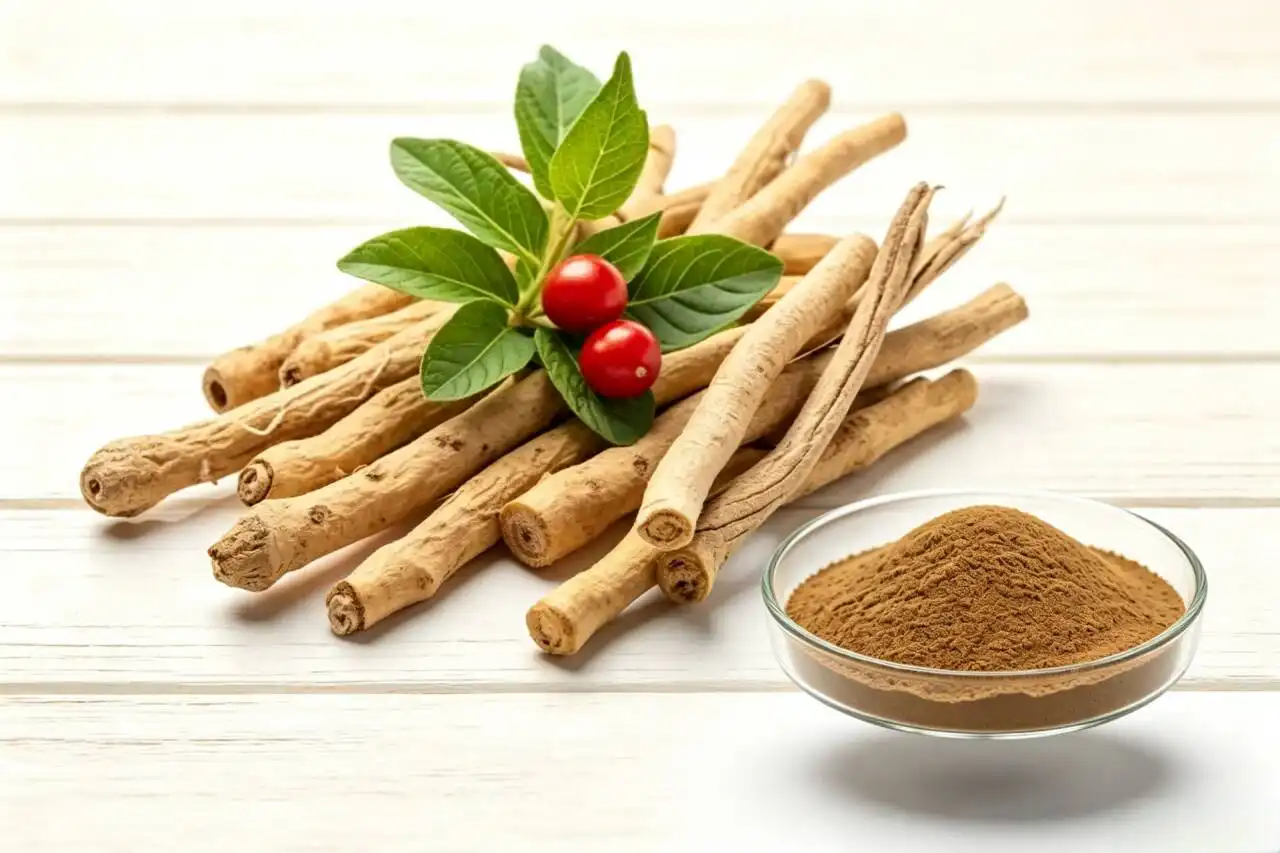
Sourcing ashwagandha root extract for your brand demands careful supplier selection to balance product quality, regulatory compliance, and supply chain reliability. Pure Ashwagandha Extract—standardized for withanolide content through advanced extraction methods—has become a cornerstone ingredient for B2B brands across dietary supplements, functional foods, and wellness formulations. This guide walks you through the essential criteria for identifying trustworthy suppliers, verifying product integrity, and establishing partnerships that enhance your competitive positioning in the United States market. Whether you're a purchasing manager seeking batch consistency or an R&D engineer requiring precise technical documentation, these insights will streamline your procurement process and safeguard your brand reputation.
Understanding Pure Ashwagandha Extract and Its Market Demand
The Withania somnifera plant is where ashwagandha root extract comes from. This plant is an important part of Ayurvedic medicine and is known for having adaptogenic qualities that help with stress management, brain function, and general health. During the extraction process, raw plant material is turned into concentrated powders that contain standard medicinal chemicals, mostly withanolides, that are used to measure quality. Modern manufacturing uses a variety of methods to improve efficiency and fit for purpose.
Extraction Techniques and Standardization
The most common technologies used in industrial output are supercritical CO2 extraction and ethanol-based methods. Carbon dioxide is put under a lot of pressure during supercritical CO2 extraction to separate active molecules from chemical residues. This makes a clean extract that is perfect for brands that want to make "solvent-free" promises. But ethanol extraction gets higher yields of withanolide and is still a cost-effective way to make a lot of it. Standardisation usually falls between 2.5% and 10%, and is done by measuring anolides using HPLC. This makes sure that there is consistency from batch to batch, which is important for clinical effectiveness and regulatory reports.
Health Benefits Driving Consumer Demand
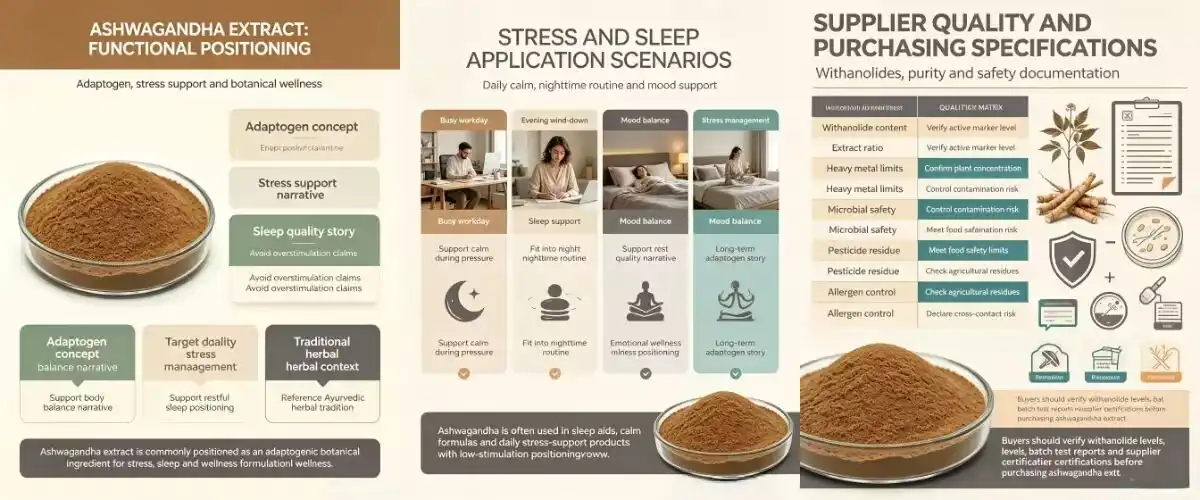
Ashwagandha has been shown in clinical studies to lower cortisol levels, improve the quality of sleep, and make people stronger. Studies that were published in peer-reviewed journals show that taking between 300 mg and 600 mg of high-concentration products every day has measurable effects. These results make people more interested in performance nutrition and vitamins that help with stress, especially health-conscious people who want natural alternatives to synthetic chemicals. For brands to cash in on this trend, they need sources who can provide ingredients that have been scientifically proven and come with clear proof.
Global Market Trends and Regulatory Landscape
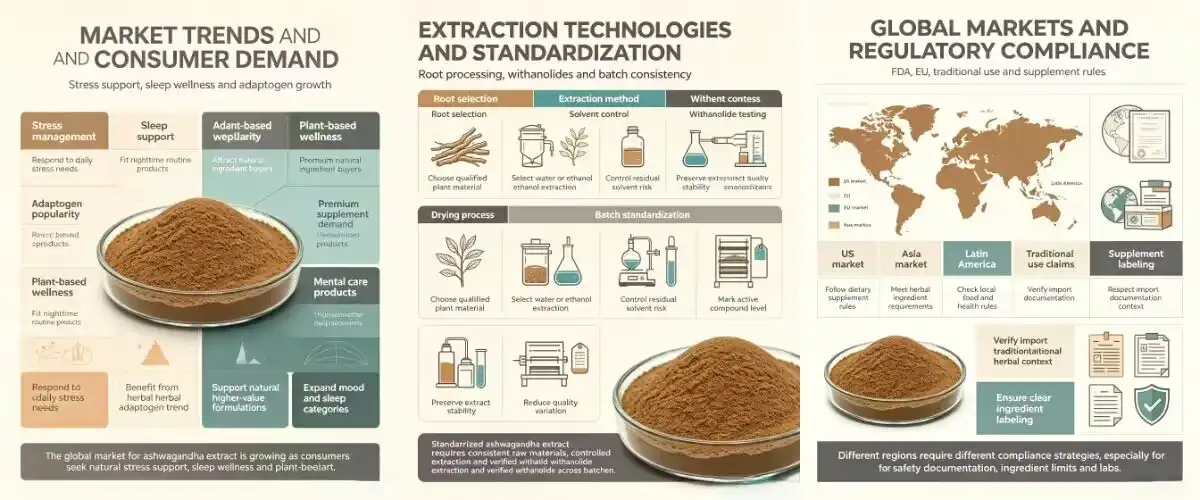
As people in the US put more emphasis on mental health and immunity support, the market for adaptogenic plants keeps growing. B2B demand for Pure Ashwagandha Extract has grown from companies that make functional drinks, capsules, and cosmetic formulas. Purchasing teams are looking for suppliers who follow FDA-approved manufacturing practices and give full Certificates of Analysis for Pure Ashwagandha Extract. Heavy metal testing, microbial contamination limits, and accurate labelling of active ingredients such as withanolides are all emphasised by regulatory frameworks. This means that suppliers of Pure Ashwagandha Extract must comply for brands entering or growing in North American markets.
How to Choose the Right Pure Ashwagandha Extract Supplier?
To choose a provider, you need to carefully look at their quality credentials, output skills, and service infrastructure. The choice has an immediate effect on the effectiveness of the product, the safety of consumers, and the long-term reputation of the business.
Quality Certifications and Compliance Standards
Look beyond basic approvals to get a sense of how deep the application goes. ISO 9001 certification shows that you know how to run a quality management system, and ISO 22000 and HACCP certification show that you have strong controls in place to make sure food is safe during production. Suppliers who work with halal and kosher shops should show up with up-to-date approval from a recognised organization. Ask for proof of the results of a third-party audit and information on how often compliance is checked. Reputable makers keep clear records of their quality and are happy to share their testing methods with potential business partners.
Supplier Types and Product Variations
Based on how integrated they are and how specialised they are, manufacturers can be put into different groups. Vertically integrated suppliers, who handle everything from getting the raw materials to packaging the finished goods, make the supply chain more clear and make it easier to track individual batches. Contract makers give you options for unique formulations, but you might not have direct control over where the botanicals come from. There are different types of products, such as organic-certified extracts that cost more but are popular in natural product channels and conventional extracts that are cheaper for uses that need to save money. Brands that can encapsulate their own products should use bulk powder forms, while finished capsule providers make production easier for smaller businesses.
Due Diligence and Verification Methods
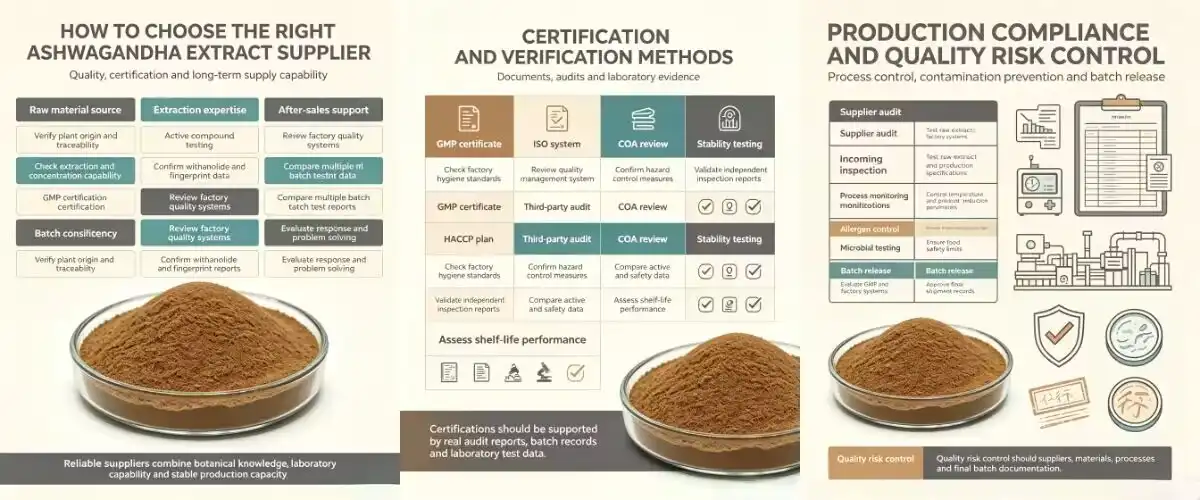
Factory audits, whether conducted in person or virtually, reveal more about operational reality than marketing materials convey. During facility tours, assess equipment maintenance protocols, staff training records, and material flow throughout the building. Independent labs should test Pure Ashwagandha Extract samples to verify stated specifications and screen for unknown adulterants. Check supplier references within your industry to evaluate delivery reliability and technical support responsiveness. Review Certificates of Analysis across multiple lots of Pure Ashwagandha Extract to confirm consistency in active ingredient content, moisture levels, and contaminant profiles.
Procurement Best Practices for Brands and Distributors
Effective buying strikes a balance between cutting costs and making sure quality is maintained while reducing the risks that come with getting ingredients from other countries.
Bulk Purchasing Strategies
Pricing systems are very different depending on the number of orders, the terms of payment, and the length of the relationship. For speciality extracts, the minimum order quantity is usually between 25 kg and 100 kg. However, established sellers with a lot of stock may be able to handle smaller starting orders. To get better rates without having to pay a lot of money up front, talk about pricing levels that are tied to annual volume commitments. Flexible payment options, like 30-day net or letter of credit agreements, help growing brands with their cash flow. Talk about how prices can be changed when the market for raw materials changes so that costs don't go up without warning during contract times.
Quality Assurance Protocols
Set up procedures for receiving goods that check the information provided by the supplier against the actual properties of the goods. Check every new batch for withanolide, heavy metals (like lead, arsenic, cadmium, and mercury), pesticide residues, and microbial contamination such as yeast, mould, pathogenic bacteria, and total plate count. Set acceptance criteria that are in line with FDA guidance documents and USP standards. Maintain systems for quarantine that stop materials that haven't been cleared from getting into work areas. Keep track of all quality choices and deviations so that they can be tracked down during legal checks or audits by customers.
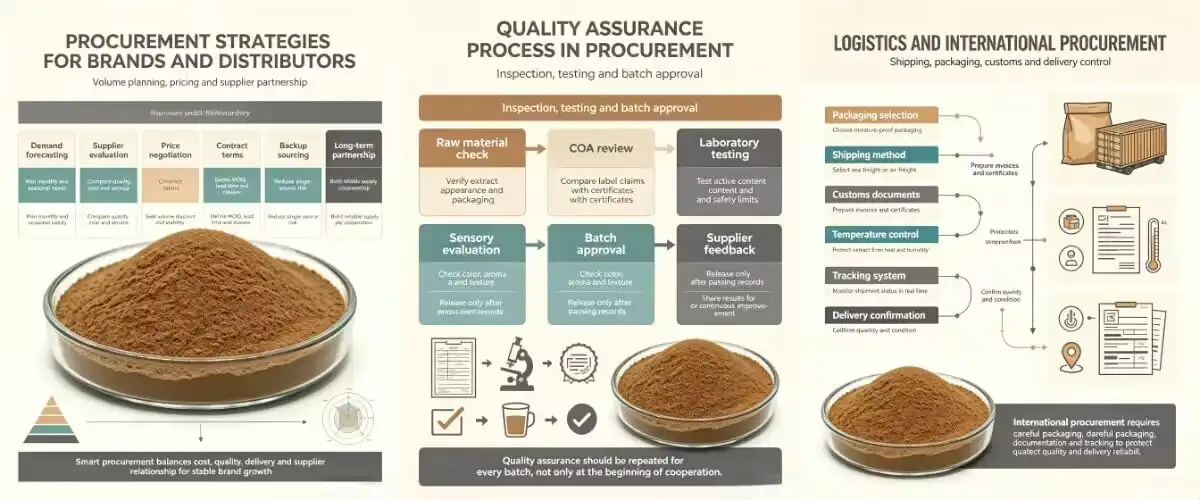
Logistical Considerations for International Procurement
The purity of the packaging keeps the ingredients stable while they are being shipped and stored. Food-grade polyethylene bags with aluminium foil liners keep out moisture and oxidation, which, when stored properly, extends the shelf life. To get around import rules and avoid delays as much as possible, shipping logistics require suppliers, freight forwarders, and customs brokers to work together. Air freight speeds up delivery for jobs that need to be done quickly, but it costs a lot more than ocean shipping. To speed up the customs clearance process, ask for the right paperwork, such as commercial invoices, packing lists, and certificates of origin. Check to see if the supplier has specialised stores with temperature and humidity controls. These show that the supplier is serious about keeping your products safe.
Comparing Top Pure Ashwagandha Extract Supplements and Brands
Leading makers set themselves apart by using their own extraction methods, making sure they work in clinical trials, and always delivering high-quality products.
Notable Industry Players
This is KSM-66, a full-spectrum root extract that preserves natural withanolide and withanoside balance. Its extensive clinical trials support stress, sports performance, and cognitive claims. Sensoril uses roots and leaves, standardized to withanolide glycoside conjugates, working at lower doses per published studies. Price-conscious brands can choose generic Pure Ashwagandha Extract alternatives, though these lack branded scientific backing. The decision between KSM-66, Sensoril, or generic Pure Ashwagandha Extract balances clinical validation against ingredient cost—branded options reduce the need for in-house trials, while generics require additional third-party testing to support claims, with the right choice depending on whether the brand targets premium credibility or value-oriented positioning.
Application Suitability Across Product Formats
Free-flowing powders with consistent particle size distribution, usually 80-mesh specifications, are best for capsule formulations because they make sure that the capsules are filled evenly and that the right amount of medicine is given. For use in drinks, you need water-soluble extracts or spray-dried powders that have emulsifying agents to keep the powder from settling to the bottom. Cosmetic companies focus on ingredients that have certain solubility patterns that work with cream and serum formulas. By knowing these technical requirements, procurement teams can choose suppliers whose products meet those needs instead of trying to change grades that don't fit.
Case Studies in Successful B2B Partnerships
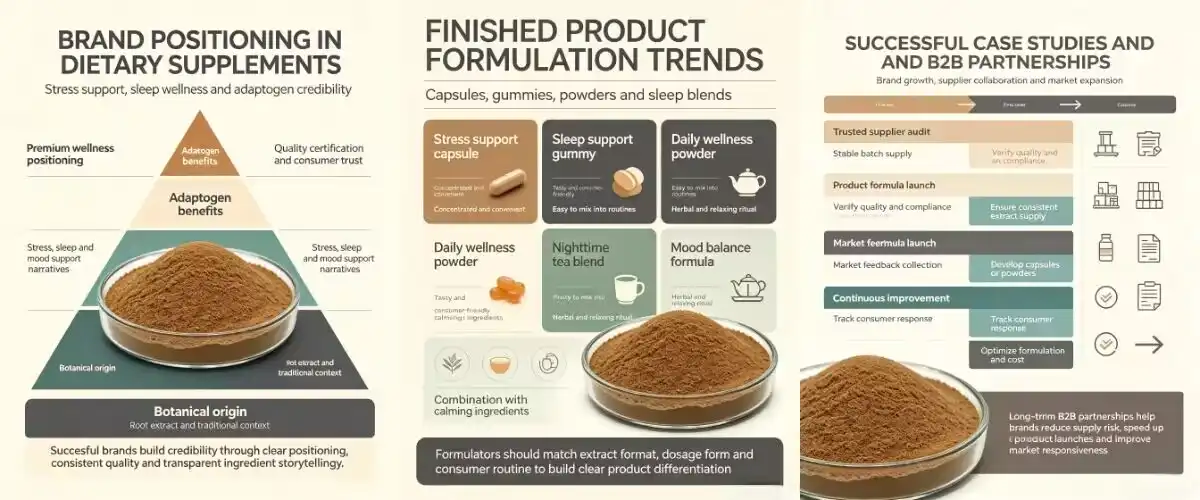
A medium-sized supplement brand teamed up with a certified maker that kept 10–20 tonnes of extra stock on hand. This cut wait times from eight weeks to seven working days and made it possible for the company to respond quickly to changes in the market's demand. Another functional beverage company worked with a supplier that offered custom extraction ratios to create a unique blend that set their products apart and earned them higher prices. These examples show how smart ties with suppliers go beyond just buying things and can give you a competitive edge through flexible supply chains and new products.
Product Usage Guidelines and Safety Considerations for Brands
Responsible design practices keep customers safe and make sure that all target markets follow the rules.
Dosage Ranges and Formulation Best Practices
In clinical studies, extracts standardised to 5% withanolides or higher are usually taken every day in doses of 300 mg to 600 mg. Because capsules are easy to use and allow for exact dosing, they are the chosen delivery method for supplement brands. Powders can be used in functional foods and allow for flexible doses for personalised diet plans. To make sure that tablets dissolve properly, they need the right binders and disintegrants. You might want to increase solubility by encapsulating it in liposomes or mixing it with black pepper extract that contains piperine, which might make absorption rates better.
Side Effects and Contraindications
In clinical trials, ashwagandha root extract has been shown to be very safe, though some people may experience mild stomach pain at first. People who are pregnant or breastfeeding (because there isn't enough safety data) or who have an autoimmune disease or thyroid disorder without medical supervision should not use it. Brands must put clear warnings and directions on how to use their products on the labels. Sedatives, immunosuppressants, and thyroid hormone treatments may interact with each other, so people who are taking prescription drugs need to be warned about this when they see a doctor.
Transparent Consumer Communication
Avoid making false claims that a disease can be treated or cured, as this can lead to FDA enforcement actions. Focus your marketing on structure-function claims that are backed up by research, like "supports healthy stress response" or "promotes relaxation." Be clear about the source of the extract, the method used to standardise it, and any third-party testing that was done. To build trust with customers, put certifications in a clear place on packaging and digital channels. Educational material that talks about where plants come from and how they've been used traditionally builds brand authority and manages customer expectations about when effects will start and how they will vary from person to person.
Conclusion
Choosing the right Pure Ashwagandha Extract supplier has a big impact on the quality of the product, its ability to meet regulations, and its ability to do well in the market. Brands can meet legal standards and give customers trusted goods by giving priority to sellers with verifiable certifications, consistent quality systems, and quick technical support. The US market likes plant ingredients that have been backed up by science and clear production methods. As more people buy adaptogenic supplements, building relationships with dependable providers is the best way to keep your business growing and stand out in the health industry, which is getting more and more complex.
FAQ
How can I verify the purity and authenticity of ashwagandha root extract?
Instead of depending only on documentation made by the seller, get Certificates of Analysis from independent third-party labs. Withanolide compounds are precisely identified and measured by HPLC testing, which gives accurate proof of their potency. DNA barcoding verifies the identity of plants and finds substitution or mixing with related species. Safety rules are followed with heavy metal panels, pesticide screens, and microbial testing. Reliable sellers keep records for each batch and have rules about how long samples should be kept so that they can be checked later if there are any problems.
What essential certifications should ashwagandha extract suppliers possess?
ISO 9001 sets the basic standards for quality management, and ISO 22000 or HACCP approval shows that a food safety method is being used. Organic certification from the USDA or a similar organization shows that organic production standards have been met. Kosher and halal approvals help brands that cater to certain groups of customers get into more markets. Facilities that are FDA-registered and follow cGMP standards show that they are committed to making medicines in a way that meets pharmaceutical standards. Ask the issuing bodies for current certificates to make sure they are valid and cover what you need them to cover.
What advantages do organic extracts offer compared to conventional options?
Organic certification guarantees that no synthetic pesticides, herbicides, or fertilisers were used in the production process. This appeals to health-conscious consumers who care about the environment. In retail channels, organic products often command higher prices, which helps brands make more money. For many ways of selling natural products to be accepted by regulators, they need to be certified as organic. Testing usually shows lower amounts of chemical residue, which lowers safety worries and the need for labels to include more information. Regular checks of the whole supply chain, from where the food comes from to how it is packaged, are part of the licensing process.
Partner with Sigma for Premium Ashwagandha Extract Supply
Sigma provides pharmaceutical-grade ashwagandha root extract that is made in a way that is ISO 22000 and HACCP-certified. This makes sure that the quality and stability your brand needs are met. Our fine yellow-brown powder is made with supercritical CO2 extraction technology, which keeps the biological integrity. We also keep 10–20 tonnes of safety stock on hand to ensure delivery within 5–7 working days. As a provider of Pure Ashwagandha Extract from Shaanxi's botanical center, we offer batch-specific Certificates of Analysis, flexible OEM/ODM services, and a lot of regulatory paperwork to help you comply with FDA rules. Email sarah@sxsigma.com to get samples, talk about custom requirements, or find out how our full-service relationship method can improve the reliability of your supply chain and shorten the time it takes to build a new product.
References
1. Chandrasekhar K, Kapoor J, Anishetty S. "A prospective, randomized double-blind, placebo-controlled study of safety and efficacy of a high-concentration full-spectrum extract of ashwagandha root in reducing stress and anxiety in adults." Indian Journal of Psychological Medicine, 2012.
2. Wankhede S, Langade D, Joshi K, Sinha SR, Bhattacharyya S. "Examining the effect of Withania somnifera supplementation on muscle strength and recovery: a randomized controlled trial." Journal of the International Society of Sports Nutrition, 2015.
3. Salve J, Pate S, Debnath K, Langade D. "Adaptogenic and Anxiolytic Effects of Ashwagandha Root Extract in Healthy Adults: A Double-blind, Randomized, Placebo-controlled Clinical Study." Cureus, 2019.
4. Mikulska P, Malinowska M, Ignacyk M, Szustowski P, Nowak J, Pesta K, Szeląg M, Szklanny D, Judasz E, Kaczmarek T, Ejiohuo OP, Paczkowska-Walendowska M, Gościniak A, Cielecka-Piontek J. "Ashwagandha (Withania somnifera)—Current Research on the Health-Promoting Activities: A Narrative Review." Pharmaceutics, 2023.
5. Singh N, Bhalla M, de Jager P, Gilca M. "An overview on ashwagandha: a Rasayana (rejuvenator) of Ayurveda." African Journal of Traditional, Complementary and Alternative Medicines, 2011.
6. Lopresti AL, Smith SJ, Malvi H, Kodgule R. "An investigation into the stress-relieving and pharmacological actions of an ashwagandha (Withania somnifera) extract: A randomized, double-blind, placebo-controlled study." Medicine, 2019.

Best Huajuhong Wall-Broken Powder Supplier Guide
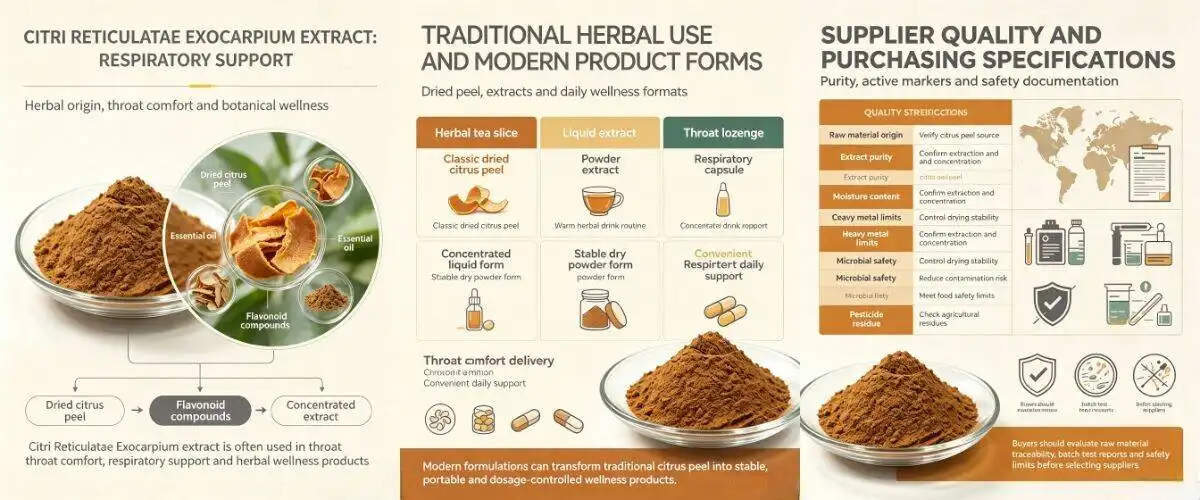
When sourcing botanical ingredients for health supplements or functional food formulations, purchasing managers face a critical challenge: finding genuine Huajuhong Wall-Broken Raw Powder that delivers consistent quality without the risk of counterfeit substitution. This guide addresses that challenge head-on by offering practical insights into supplier evaluation, quality verification, and procurement strategies tailored specifically for B2B buyers in nutraceuticals, pharmaceuticals, and cosmetic industries. Huajuhong, a prized citrus herb traditionally used in Chinese wellness practices, undergoes advanced low-temperature wall-breaking technology to unlock its active compounds and enhance bioavailability. With market demand for natural respiratory support ingredients surging across North America and Europe, securing a reliable supply partner becomes essential for formulation success and regulatory compliance.
Understanding Huajuhong Wall-Broken Raw Powder
Citrus grandis fruit, especially the real "Zhengmao" type grown in Guangdong Province, is where Huajuhong Wall-Broken Raw Powder comes from. The wall-breaking process breaks down cell walls physically at low temperatures. This makes a lot more surface area available for bioactive chemicals like naringin, hesperidin, and volatile oils to absorb. This powder is a fine, light yellow material with particles that are 200 mesh, which makes it more fluid than traditional grinding methods.
Chemical Composition and Active Ingredients
The powder has flavonoids, limonoids, and carbohydrates in it, which help with its traditional use to soothe sore throats and improve lung health. According to studies on phytochemicals, the main flavonoids, naringin and hesperidin, have qualities that help the lungs work normally. Low-temperature processing keeps heat-sensitive volatile chemicals safe, which keeps the natural herbal smell and functional purity that high-heat extraction methods lose.
Quality Specifications and Safety Standards
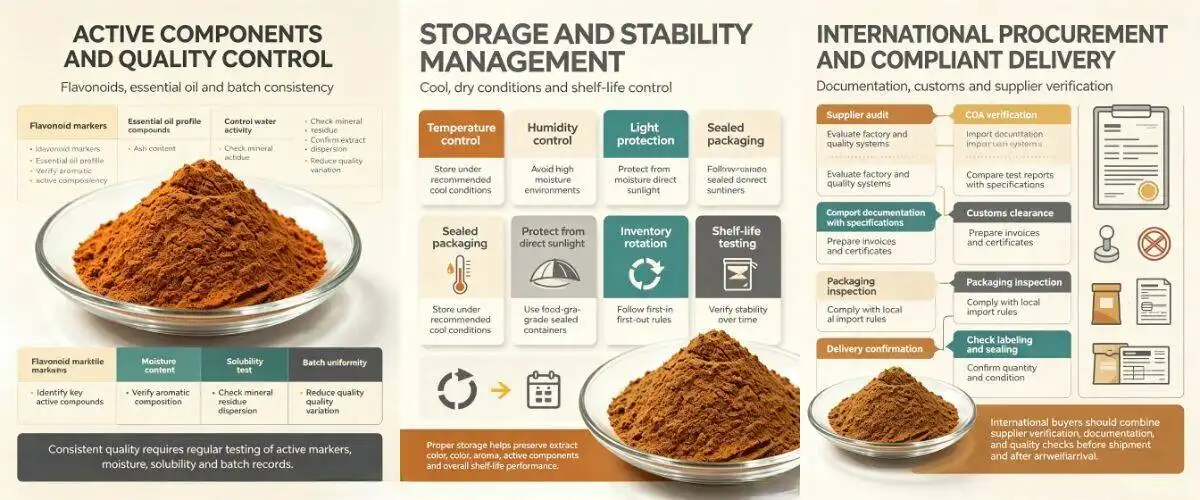
When it dries, premium Huajuhong Wall-Broken Raw Powder keeps its loss below five percent and its ash content below five percent, which means it has very little moisture and foreign impurities. Total plate counts, yeast, mould, and pathogen screening must be done according to HACCP guidelines for microbial tests to meet food-grade standards. Heavy metal content, especially lead, cadmium, mercury, and arsenic, needs to be tested thoroughly using ICP-MS to make sure it meets FDA and EU standards. Because the food comes from farms, checking for pesticide residues is even more important, and GC-MS and LC-MS tests confirm that the farms used clean growing methods.
Storage and Handling Requirements
To keep the powder from absorbing water and breaking down naturally, it needs to be stored in a sealed, cool, dry place. To keep food fresh longer, bulk orders should come in food-safe aluminium foil bags that have been nitrogen flushed or vacuum sealed. Huajuhong Wall-Broken Raw Powder stays stable for 24 months after it was made as long as it is stored properly, with temperatures below 25°C (77°F) and relative humidity below 60%. These storage methods are very important for distributors who keep stock in various locations or OEM makers whose production cycles are long.
Comparing Huajuhong Wall-Broken Raw Powder with Market Alternatives
There are many powdered plant ingredients on the market for lung support, but Huajuhong Wall-Broken Raw Powder stands out because of how it is processed and the quality of its raw materials. Knowing these differences helps buying teams make choices that are in line with how the product is positioned and what the target market wants.
Technological Advantages of Wall-Breaking Processing
When you grind food the old-fashioned way, you get bigger pieces with whole cell structures. This makes it harder for nutrients inside cells to be released during processing. Breaking down these walls mechanically is what wall-breaking technology does. It gets particle sizes below 10 microns in the smallest amounts while keeping the purity of the ingredients without using chemical solvents. This leads to faster dissolution in water-based mixtures and better bioavailability when added to capsules, tablets, or functional drinks. Formulators gain because they don't have to use as much of an ingredient to get the same effect, which lowers the cost of each dose.
Authenticity Verification Against Market Imitations
A big problem for the business is that common pomelo peel is often used instead of Huajuhong peel, which doesn't have the same chemical profile or usual source. Due to restricted cultivation areas and special varietals, real "Zhengmao" material fetches a high price. Reliable suppliers provide traceability paperwork such as origin certificates, DNA barcoding or HPLC fingerprinting for varietal identification, and validation of marker compound concentrations by a third-party lab. Because of this, it is easy to tell the difference between real makers and dealers selling unclear "Huajuhong-type" goods at surprisingly low prices.
Cost-Performance Analysis for B2B Buyers
Huajuhong Wall-Broken Raw Powder usually costs 20–30% more than normally ground material. This is because it costs more to make and has better functional qualities. Better stability and strength, on the other hand, let formulators lower inclusion rates by 15–25% while keeping the same level of effectiveness. This makes up for the higher cost per kilogram. This trade-off gives quality-focused companies that want to sell high-end supplements better margins and a way to stand out from the competition. People who are looking for cheap recipes and are price conscious may choose standard grinding, but they give up the benefits in absorption and marketing claims that come with advanced processing.
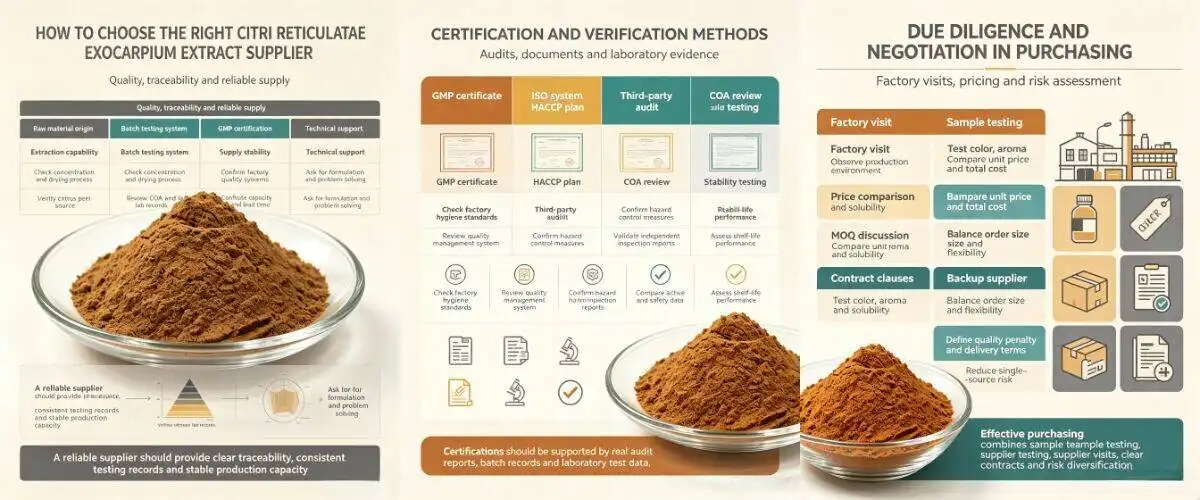
How to Select the Best Huajuhong Wall-Broken Powder Supplier?
Choosing the right supplier affects not only the quality of the product, but also the stability of the long-term partnership, compliance with regulations, and success of the formulation. A structured review system takes into account the fact that decisions in B2B procurement settings usually have to be made by a lot of different people.
Certification and Regulatory Compliance
Check for core certifications like ISO 9001 for quality management systems, ISO 22000 or HACCP for food safety, and market-specific credentials like FDA registration, Halal, or Kosher certifications, based on the places you want to reach. These credentials show that quality control is done in a planned way and give the paperwork that is needed for audits by customers or government inspectors. Suppliers who work with pharmaceuticals should have the right GMP license for their area. Ask for copies of certifications directly from the organisations that issue them instead of depending on documents given by the supplier to make sure they are real and still valid.
Manufacturing Capabilities and Supply Chain Integration
Check to see if possible providers are part of integrated production chains that include everything from getting the raw materials to packing the finished powder. If not, they may just be middlemen. Integrated makers can better keep an eye on quality, keep prices stable, and help with recipe problems. Check how much production capacity you need compared to how much you need to make, and make sure you include surge capacity in case seasonal demand changes. Maintaining 10–20 tonnes of safety stock for key goods shows that suppliers are committed to a stable supply, which lets deliveries happen within 5–7 business days instead of the weeks that are usual for make-to-order operations.
Technical Support and Customization Services
Value-added suppliers do more than just supply commodities. They also help with formulation, provide data from stability tests, and create custom processing specifications. Differentiated product development is made easier by OEM and ODM features like particle size change, specific extraction ratios, and private-label packing. When asked about improving solubility, making sure excipients work well together, and finding the best dosage, technical teams should be able to give knowledgeable answers. This knowledge is especially helpful for R&D workers who are looking at new product ideas or fixing problems with current formulations.
Traceability and Source Authentication
Because there is a chance of fake goods in Huajuhong markets, you should demand full tracking from planting to processing. Real suppliers give information about where the farms are, when they were harvested, and how the genetic makeup of the raw materials was checked. Photos and reports from inspections at origin sites make things clearer. Third-party COAs should show that the HPLC fingerprints match real Huajuhong standards and that the marker chemicals are within the normal ranges. This paperwork not only proves that the product is real, but it also backs up marketing claims and builds customer trust in final goods.
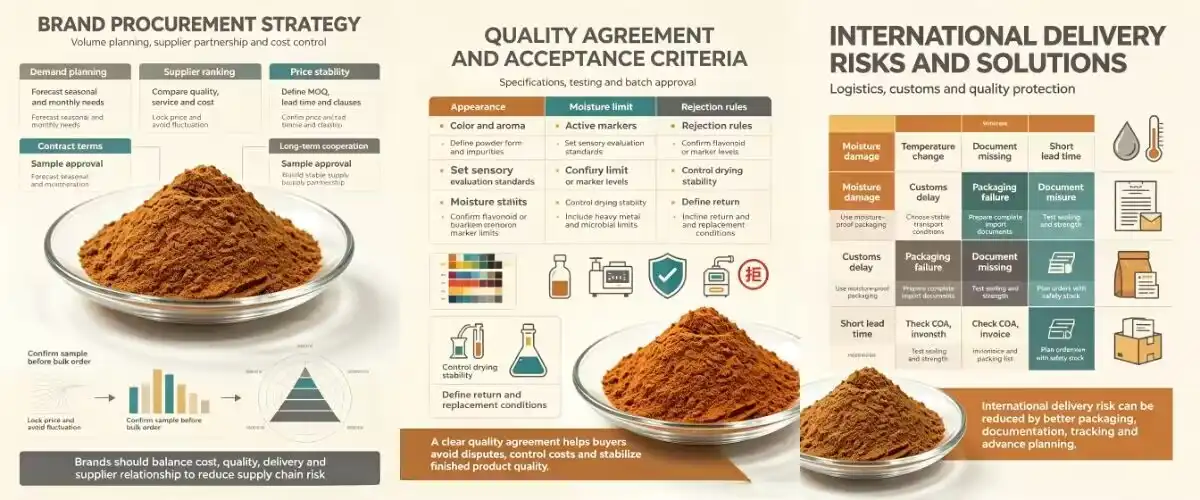
Procurement Process and Best Practices for Huajuhong Wall-Broken Raw Powder
Improving procurement workflows lowers the total cost of ownership and cuts down on supply problems and inconsistent quality that can delay production and make customers unhappy.
Sample Testing and Verification Protocols
Never place a bulk order without first evaluating a sample carefully. Ask for 100–500 gram samples for testing in the lab, evaluating the smell and taste, and small-batch formulation trials. Instead of depending only on seller COAs, have independent third-party tests done to check for purity, heavy metals, pesticides, microbiology, and marker chemical concentrations. Check how the Huajuhong Wall-Broken Raw Powder flows and dissolves in your specific formulation matrix. Performance changes depending on the ingredients and how the formulation is made. Keep detailed records of these tests so that you can use them as a starting point for writing buy agreements.
Contract Negotiation and Quality Agreements
Formal contracts should spell out the product specifications, including the accepted range of errors, testing methods, requirements for stability from batch to batch, and ways to handle materials that don't meet the standards. Include due dates for deliveries, payment terms, clauses for "force majeure," and limits on responsibility. Quality agreements add to contracts by laying out how to check, store, and watch samples for stability, as well as the paperwork that is needed to meet regulatory requirements. These formal frameworks protect both sides and set clear expectations that keep disagreements at bay and make it easier for people to work together for a long time.
Inventory Management and Order Optimization
Set minimum and maximum stock levels based on consumption rates and supplier lead times to balance the costs of keeping inventory with the risks of running out. Buyers whose needs don't change often can save money by signing contracts for deliveries every three or six months. This way, they can avoid having too much inventory and get volume discounts. Use a first-in, first-out cycle to keep products fresh, and check on the storage conditions often. Diversifying sources for essential ingredients reduces reliance on a single source, but handling multiple relationships adds to administrative work and needs careful quality control.
Building Long-Term Supplier Relationships
Instead of just buying things from sellers, think of them as important partners. Communicating regularly about demand predictions, product development plans, and quality comments helps sellers predict what customers will need and put money into improving their skills. When people work together to solve problems during formulation challenges or quality investigations, trust grows. You could show your commitment to the partnership by visiting manufacturing facilities in person to see how well they work. Long-term relationships lead to better prices, faster service during shortfalls, and chances to work together on new ideas that help everyone.
Case Studies and Customer Reviews: Validating Supplier Performance
Real-life procurement experiences show how choosing the right seller affects the success of an operation and teach us useful lessons about how to evaluate possible partners.
Nutraceutical Manufacturer Case Study
A medium-sized company in California that makes dietary supplements was looking for Huajuhong Wall-Broken Raw Powder for a new line of throat lozenges that are meant to help with winter health. The first efforts to find samples through trade sites led to inconsistent samples that were hard to be sure were real. After putting in place strict supplier qualification measures, such as HPLC fingerprinting and origin verification, they teamed up with an ISO-certified manufacturer that could fully trace their products and produce 15 tonnes of them every year. The technical team at the supplier worked together to improve the powder's ability to compress so that lozenges could form more easily, avoiding the brittleness problems that other powders had. After 18 months of stable monthly orders, the product launch went well, and customers bought it again, which proved that the investment in the supply relationship was worth it.
Functional Beverage Developer Experience
A functional beverage company in Europe made a respiratory health tea blend with Huajuhong Wall-Broken Raw Powder. Their source lowered the particle size to 150 mesh so that the tea bags would hold the powder better. They also gave them stability data that showed the powder would last for six months in normal store settings. Halal and Kosher certifications made it easier for a wide range of consumers to buy the product. When the first production batches had slight colour differences, the supplier looked into it right away and found that the differences were caused by the time of year when the crops were harvested. They then changed their sourcing procedures to keep things consistent. This proactive quality management kept the market from being disrupted and made the partnership more valuable.
Pharmaceutical Ingredient Procurement Insights
A company that sells pharmaceutical raw materials to compounding pharmacies in North America needed Huajuhong Wall-Broken Raw Powder that met strict USP standards for botanical ingredients. The provider they chose was subject to a full audit, which included a building visit, a review of the quality system, and confirmation of the stability study. Pharmaceutical-grade standards were met by documentation packages that had drug master files, allergen statements, and BSE/TSE declarations. The supply security needed for pharmaceutical trade, where regulatory compliance and traceability are important, was given by quarterly batch reservations with guaranteed specs and prices locked in through yearly contracts.
Conclusion
To find the best Huajuhong Wall-Broken Raw Powder supplier, you need to find a balance between quality control, following the rules, technical expertise, and the dependability of the supply chain. Successful B2B procurement extends beyond price comparison to encompass authentication verification, certification validation, formulation support, and partnership stability. Buyers need to set up organised review systems, expect detailed paperwork, and build long-term partnerships with suppliers that show they are committed to quality and manufacturing integration. Because fake goods are so common in Huajuhong markets, tracking and testing by a third party are important ways to lower the risk. Procurement workers can easily choose suppliers and build partnerships that support product excellence and business growth by following the advice in this thorough resource.
FAQ
What certifications should a reliable Huajuhong powder supplier possess?
To be a legitimate supplier, they need to have ISO 9001 for quality control, ISO 22000 or HACCP for food safety, and, based on where you're selling to, market-specific certifications like Halal or Kosher. FDA approval is needed to get into the U.S. market, and GMP certification is needed for Huajuhong Wall-Broken Raw Powder uses that are used in pharmaceuticals. Ask for copies of recent certifications and check with the organisations that issued them directly.
How can I verify authentic Huajuhong versus pomelo peel substitutes?
Ask for full traceability, such as origin certificates, data on where the plants were grown, and third-party HPLC fingerprinting that proves marker chemical profiles match real Huajuhong standards. DNA barcoding is the only way to be sure of a species' identity. Reliable sellers provide photographic evidence from the harvest places and genetic authentication reports that show the difference between real Huajuhong Wall-Broken Raw Powder and common fakes.
What are typical lead times for bulk orders to North America?
When Huajuhong Wall-Broken Raw Powder suppliers keep safety stock, they usually send in-stock goods within 5 to 7 business days. Depending on the details, custom processing orders take between 15 and 20 days. International shipping by sea freight takes three to four weeks longer, while shipping by air freight takes only five to seven days but costs more. Express courier services make it possible to send samples for testing within 48 to 72 hours.
Partner with Sigma for Premium Huajuhong Wall-Broken Raw Powder
Sigma is ready to help you make great formulas by giving you real, high-quality Huajuhong Wall-Broken Raw Powder that is made according to strict quality standards. As a well-known maker and provider with integrated production capabilities, we keep a large inventory to ensure fast delivery without lowering quality standards. Our low-temperature wall-breaking technology keeps bioactive compounds safe while delivering the fine particle properties that are needed for better formulation performance. Our powder meets international standards for use in pharmaceutical and nutraceutical products because it is certified to ISO 22000, HACCP, and Halal standards.
We provide full traceability documentation that proves 100% authentic "Zhengmao" Huajuhong sourcing, so you don't have to worry about market substitutes. Our technical team can help you with formulation, give you stability data, and do custom processing services that are made to fit the needs of your product. Get in touch with sarah@sxsigma.com right away to ask for samples, full specs, or price quotes on large orders. Find out how working with a specialised Huajuhong Wall-Broken Raw Powder source can change the way you make products and make sure your supply chain works.
References
1. Chen, M., & Zhang, L. (2021). Advances in Wall-Breaking Technology for Botanical Ingredients: Applications in Functional Foods. Journal of Food Processing and Preservation, 45(3), 112-128.
2. Johnson, R., Thompson, K., & Williams, D. (2020). Quality Control Standards for Herbal Raw Materials in B2B Pharmaceutical Supply Chains. International Journal of Pharmaceutical Quality Assurance, 11(2), 87-103.
3. Liu, J., Wang, S., & Zhao, H. (2022). Authentication Methods for Traditional Chinese Medicinal Materials: A Case Study of Citrus Herbs. Phytochemical Analysis, 33(4), 445-459.
4. Martinez, A., & Patterson, C. (2021). Procurement Best Practices in Nutraceutical Manufacturing: Supplier Selection and Risk Management. Supply Chain Management Review, 25(1), 34-47.
5. Wang, Y., Zhou, X., & Lin, P. (2020). Bioactive Compounds in Citrus Grandis: Extraction Technologies and Health Applications. Food Chemistry, 342, 128-143.
6. Wilson, T., Anderson, B., & Roberts, M. (2022). Global Trade in Botanical Ingredients: Regulatory Compliance and Quality Assurance Strategies. Journal of Regulatory Science, 10(1), 56-71.

Butterfly Pea Flower Extract OEM Solutions for Drinks
Butterfly Pea Flower Extract has become a transformative ingredient in the beverage industry, offering manufacturers a vibrant, natural alternative to synthetic colorants while delivering functional health benefits. Derived from Clitoria ternatea through precise water-ethanol extraction, this botanical ingredient provides not just visual appeal but measurable antioxidant value through its anthocyanin content. We've seen drink manufacturers worldwide embrace this extract for its unique pH-responsive color transformation—shifting from brilliant blue to purple when exposed to acidic environments—creating interactive consumer experiences without artificial additives. The growing demand for clean-label products positions this extract as an essential ingredient for brands targeting health-conscious markets.


Understanding Butterfly Pea Flower Extract and Its Application in Drinks
People who make drinks are interested in Butterfly Pea Flower Extract because of the way its plant looks. This plant grows in warm Southeast Asia. The flowers are full of acylated anthocyanins, especially ternatins, which make the colour last longer and do a better job of protecting cells. Regular ground flower powder is not the same as professional-grade extracts. This is because professional-grade extracts go through controlled extraction and spray-drying processes that make the active ingredients more concentrated and make sure that every batch is the same.
The Science Behind pH-Sensitive Color Change
As the pH level changes, Butterfly Pea Flower Extract naturally changes, which makes it great for adding to drinks. The anthocyanins are a strong blue colour when the pH is about 7. When acidic things like lemon juice, citric acid, or other things are added to a mixture, it becomes more acidic. This changes the molecular structure and turns the colour purple and then bright pink. Not only does this chemical property look nice, but it also tells you how stable the extract is in different manufacturing conditions. This is very useful information for people who care about the quality and stability of their products.
Beverage Applications Across Multiple Categories
Many modern drink brands use Butterfly Pea Flower Extract in many of their drinks. Companies that make functional drinks put it in sports drinks to make them look better and give the body antioxidants that help it heal. There are tea companies that make "galaxy lemonades" that change colours when mixed. This makes people talk on social media. It is added to speciality drinks at craft cocktail bars and to lattes and smoothies at health-focused cafes. When ultra-fine grinding is used, the extract dissolves quickly in water. Because of this, it's easy to mix and won't leave behind any waste or bad tastes, which can happen with natural colourants.

How to Choose the Right Butterfly Pea Flower Extract for OEM Drink Production?
Plant goods need to be carefully thought through in more ways than just price when choosing what to buy. Your quality assurance (QA) and research and development (R&D) teams need suppliers who can help them make a lot of drinks at once while keeping quality control high.
Critical Quality Standards for Beverage Manufacturing
Professional-grade products should meet certain requirements that make sure the recipe will work. The main way to tell if something is good is by how much anthocyanin it has. Standardised things generally have at least 25% active molecules. This concentration makes sure that the colour strength stays the same from one production run to the next. This way, recipe changes aren't needed, which is what happens when materials aren't uniform. The size of the mesh affects how fast something breaks down. For instance, 100 mesh makes sure that cold drinks don't stick and that the particles spread out quickly. Microbes can't grow when the moisture level is below 5%. This also makes the food last longer. The colour stays the same while it's being kept if the pH level is between 3.0 and 5.0.
Certification Requirements for Export Markets
Because of the rules and regulations, strict proof of cooperation is needed. Companies that want to sell their goods in the US need to be able to show that their sellers follow FDA rules for food safety. This includes using ICP-MS to analyse heavy metals and checking for multiple chemical residues. People in Europe who buy Novel Foods want the same level of compliance with EU rules. Getting certificates like ISO 22000, HACCP, Halal, and Kosher does more than just make sure everything is safe. They also let you reach certain types of customers. This is the technical information that buyers need to know. This includes Certificates of Analysis (COA), Material Safety Data Sheets (MSDS), and results from tests that show how stable the product is.
Supplier Capability Assessment
It's not enough to just look at the product specs to judge a supplier's skills. Companies that have their own research and development teams can help make goods that work better, dissolve better, and fix issues with how they're used. How much is being made is important. Suppliers who keep a 10–20-ton backup stock show that they will meet orders on time. There are different extraction technologies used by different elite providers. Concentration at low temperatures and constant countercurrent extraction techniques keep delicate anthocyanins safe and get more pure results than other methods.

OEM Solution Components: From Formulation to Delivery
Full OEM partnerships use collaborative development to turn plant-based ingredients into finished goods that can be sold. The trend in the drink business toward natural ingredients that can do more than one thing has given brands that are willing to spend money making their goods right more options, and Butterfly Pea Flower Extract fits perfectly into this movement—offering not only a vibrant natural blue hue but also antioxidant properties and pH-responsive color-changing functionality that elevates both visual appeal and functional differentiation in ready-to-drink beverages, powders, and alcoholic mixers.
Customized Formulation Development Process
Before you can work well with an OEM, you need to know where to place your product and what your customers want. When development teams make health claims, they look at how the colour of the extract fits with your brand story. This is true whether you're focusing on the antioxidant content or the visual change for social media marketing. Your R&D team can test how well the product dissolves in your specific beverage, how stable the colour is in different store conditions, and how it tastes by making samples. This iterative process usually goes through two or three rounds of changes before the specs are finalised.
When you work with a professional OEM partner, you have more choices for product specs than you would normally have. You can change the size of the particles to meet your dissolve needs and the amount of anthocyanin to get the colour strength you want. You can also make microencapsulation solutions for pH-sensitive release. Packing can be changed to meet different needs, from big industrial drums for making a lot of things to smaller forms for making a few things at a time.
Quality Assurance Through Production Lifecycle
At every step of the production process, there must be clear rules in place to keep quality good. If you only get raw materials from known plant sources, you can't add cheaper sources of anthocyanins like grape skin extracts. HPTLC fingerprinting proves that the plant is who it says it is, and HPLC quantification proves that it is effective. To make sure that goods meet the standards for ready-to-drink uses where microbial loads must stay low, they are checked for yeast/mold, pathogens, and total plate count.
Stable batches are made possible by using the same extraction settings and keeping a close eye on the process. To get the same high-quality product every time, you need to make sure you control the temperature during extraction, use the right amount of solvent, and make sure the drying conditions are just right. Food manufacturers who do rapid shelf-life testing can tell you how to package your food and when it should be thrown away based on how it responds to oxidation and colour loss in different places.

Procurement Strategies for Butterfly Pea Flower Extract in Bulk
To make strategic sourcing decisions, you need to find a way to save money, protect quality, and keep the supply chain running smoothly. The world market for natural blue colourants has grown a lot, which is good and bad for people who work in buying.
Market Pricing and Cost Optimization
Right now, standardised Butterfly Pea Flower Extract (≥25% anthocyanins) costs $35 to $65 per kilogram. The price is based on the amount of acceptance, the size of the order, and any changes that need to be made. Organic extracts generally cost 30 to 40 percent more than regular ones. This is because they are grown using tighter rules and testing them costs more money. They can get better prices if they commit to bigger orders (500 kg or more usually gets discounts for volume), plan their inventory around production schedules so they don't have to pay extra for faster shipping, and talk to suppliers about long-term deals that keep prices stable.
Logistics and Supply Chain Considerations
It's harder to buy things from other countries, and you need to plan ahead. Lead times change based on how the goods are shipped. It takes 25–35 days for sea freight to get from Asian sources to US ports. It only takes 7–10 days with air freight, but it costs a lot more. Express courier services can deliver in 5–7 days for sample orders or urgent restocking. Some of the things that need to be kept are commercial bills, packing lists, certificates of origin, phytosanitary certificates for plant materials, and statements of regulatory compliance. Working with service providers who know about exporting makes sure that the goods are properly labelled by customs and cuts down on the time it takes to clear.
Depending on the climate and time of year where the anthocyanin is going, it may need to be shipped in a way that keeps the temperature stable. The rules for packaging should include ways to keep out light, moisture, and damage. It is safer for valuable items to be shipped from providers who offer tracking systems and shipping insurance.
Building Strategic Supplier Relationships
Setting up long-term partnerships with suppliers is better than one-time deals because it lasts longer. When new goods come out, preferred sellers help you with technical issues. They also let you know about changes in the market that affect the prices of botanical crops and give your orders priority during busy times. Setting clear communication rules, like names of people to call for orders, technical questions, and important matters, is part of streamlining operations. It is important to make sure that high standards and fair buying practices are still being followed by suppliers. This can be done in-house or by a third-party service.

Quality and Safety: Ensuring Reliable Butterfly Pea Flower Extract Supply
It keeps the brand's image safe and makes sure it follows the rules by buying botanical products with less risk. It's better for procurement teams to know about possible quality problems ahead of time rather than having to fix them after the fact.
Common Quality Risks and Mitigation Strategies
It is still a problem in plant shops that cheaper alternatives are often used instead of the real thing. You can cheat more deeply by adding man-made colourants, diluting them with maltodextrin or other helpers, or using anthocyanin sources that look the same but aren't as strong. For safety, there need to be several levels of checks: spectral analysis to prove the anthocyanin profiles that are unique to Butterfly Pea Flower Extract; thin-layer chromatography to find synthetic dyes; and moisture analysis to see if the carriers have been watered down.
There are different kinds of risks of mess. It is possible for chemicals to build up on crops that are grown without the right controls. Peace of mind comes from full multi-residue pesticide screening that looks at more than 200 chemicals. Heavy metals like arsenic, cadmium, lead, and mercury build up in plants that grow in dirty soil. This is why it's important to have origin proof and soil tests. Microbes can get into food that has been wrongly harvested, processed, or stored. According to the rules, the Total Plate Count should be very low (below 1,000 CFU/g), as well as the yeast and mould (below 100 CFU/g). Salmonella, E. Staphylococcus aureus, and E. coli.
Storage and Handling Best Practices
When kept in the right way, anthocyanin stays stable longer and can be used for longer. Light that isn't UV or visible breaks down the blue chemicals in the Butterfly Pea Flower Extract. Light-induced oxidation is kept to a minimum by glossy cases or amber glass packages. It is very important to keep the temperature in check. Keeping things below 25°C (ideally between 15 and 20°C) slows down the rate of rusting. Things that are kept at higher temperatures break down faster. By controlling humidity, you can stop things from absorbing water, which can cause them to clump and grow microbes. Things kept in damp places are kept safe in desiccant packets in sealed cases.
The amount of oxygen that is exposed should be limited during use by the way it is handled. If you only open containers when you need to, move working amounts to smaller containers, and use nitrogen to get rid of the air, the quality of the product will be better. By dating items when they are opened and switching things around so that they are used first, you can avoid using old materials. These techniques can be used regularly across shifts and sites if they are taught to production staff.
Conclusion
Butterfly Pea Flower Extract is a natural, useful ingredient that is becoming more popular in the beverage business. It can help businesses stand out from the rest. The constant colour comes from this extract's standardised anthocyanin content (≥25%). Customers can interact with the product thanks to its pH-responsive qualities, and the clean label credentials meet the needs of a growing market. Standards for quality, the skills of the seller, and compliance papers must all be carefully looked over for procurement to go well. Companies can get their goods to market faster and more reliably when they work with certified suppliers who keep stock, offer technical support, and show that the supply chain works. You can put the extract in tea, healthy drinks, and speciality drinks. It also has a lot of antioxidants. Thus, brands can pay attention to both looks and health in places where there is a lot of competition.
FAQ
What makes butterfly pea flower extract suitable for commercial beverage production?
The Butterfly Pea Flower Extract is ground very finely (100 mesh), which makes it very water-soluble. This gets rid of the problems that come with natural colourants leaving behind leftovers. For branded goods, it's important that the colours stay the same from batch to batch, which is why the anthocyanin content must be at least 25%. The pH level stays the same between 3.0 and 5.0, which is good for most drink recipes. Microbes can't grow on it while it's kept because it has only 5% wetness.
How can buyers verify extract authenticity and prevent adulteration?
To be sure that the sample is really Butterfly Pea Flower Extract, you should ask for HPTLC fingerprinting, HPLC analysis, and spectral data. The latter will help you tell the difference between natural anthocyanins and fake colourants. There should be full COA paperwork, third-party testing from approved labs, and the ability to track back to the botanical source from sellers you can trust. The fine blue powder should be there when you look at it with your own eyes. There shouldn't be any strange smells or changes in colour.
What certifications ensure regulatory compliance for US beverage markets?
Food safety management systems work because they have been certified by groups like ISO 22000 and HACCP. FDA rules say that products must meet certain standards for bacteria, heavy metals, and chemical residues. Having more certifications, like Halal and Kosher, makes it easier to sell your goods in new places. Providers must show proof that they are in a regulatory status that allows them to work with GRAS notifications.
Partner with Sigma for Premium Butterfly Pea Flower Extract Supply
Pharmaceutical-grade plant extracts are what Shaanxi Sigma Biotechnology Co., Ltd. does best as a complete manufacturing business. The Butterfly Pea Flower Extract we use always has at least 25% anthocyanin because we use a special low-temperature extraction method and process it in a way that keeps the countercurrent going. This makes the colour last longer for demanding uses in drinks. We keep a safety stock of 10–20 tonnes, which lets us deliver in 5–7 business days. We can meet the strict FDA and EU rules thanks to our ISO 22000, FSSC 22000, and HACCP certifications.
We have a lot of experience providing Butterfly Pea Flower Extract, and we offer full OEM/ODM services, such as making custom formulations, changing standards, and private labelling to help you get your product on the market faster. Our technical team helps with the application while it's being made, and they back this up with full paperwork (COA, MSDS, stability data) and a one-year guarantee on quality. You can get samples, talk about your recipe needs, or look into business choices that can help you make your new drink ideas into products that are ready to sell by emailing Sarah at sarah@sxsigma.com.
References
1. Kong, J. M., Chia, L. S., Goh, N. K., Chia, T. F., & Brouillard, R. (2003). Analysis and biological activities of anthocyanins. Phytochemistry, 64(5), 923-933.
2. Nair, V., Bang, W. Y., Schreckinger, E., Andarwulan, N., & Cisneros-Zevallos, L. (2015). Protective role of ternatin anthocyanins and quercetin glycosides from butterfly pea (Clitoria ternatea Leguminosae) blue flower petals against lipopolysaccharide (LPS)-induced inflammation in macrophage cells. Journal of Agricultural and Food Chemistry, 63(28), 6355-6365.
3. Chusak, C., Thilavech, T., Henry, C. J., & Adisakwattana, S. (2018). Acute effect of Clitoria ternatea flower beverage on glycemic response and antioxidant capacity in healthy subjects: A randomized crossover trial. BMC Complementary and Alternative Medicine, 18(1), 6-14.
4. Lakshan, S. A., Jayanath, N. Y., Abeysekera, W. P., & Abeysekera, W. K. (2019). A commercial potential of butterfly pea (Clitoria ternatea L.) in health and food applications. Journal of Agricultural Sciences, 14(3), 289-297.
5. Pasukamonset, P., Kwon, O., & Adisakwattana, S. (2016). Alginate-based encapsulation of polyphenols from Clitoria ternatea petal flower extract enhances stability and biological activity under simulated gastrointestinal conditions. Food Hydrocolloids, 61, 772-779.
6. Mukherjee, P. K., Kumar, V., Kumar, N. S., & Heinrich, M. (2008). The Ayurvedic medicine Clitoria ternatea—from traditional use to scientific assessment. Journal of Ethnopharmacology, 120(3), 291-301.

What Is Soybean Peptide and Why Brands Use It in Supplements
Soybean peptide represents a transformative plant-based ingredient that addresses critical formulation challenges facing today's supplement manufacturers. Derived from non-GMO soy protein isolate through controlled enzymatic hydrolysis, this bioactive compound consists of short-chain oligopeptides—typically 2-6 amino acids in length—with molecular weights primarily below 1,000 Daltons. Unlike intact soy proteins that precipitate at isoelectric points and create formulation instabilities, soybean peptides deliver rapid absorption through direct small intestine uptake via PepT1 transporters, bypassing gastric digestion entirely. This fundamental difference makes soybean peptides particularly valuable for sports nutrition, clinical recovery formulas, and aging populations requiring efficient protein utilization without digestive stress.

Understanding Soybean Peptide: Definition, Production, and Nutritional Profile
What Distinguishes Soybean Peptides from Standard Soy Proteins?
The structure change from whole Soy Protein to bioactive peptides changes how the body uses this food source in a fundamental way. Standard Soy Protein Isolates need a lot of enzyme activity in the stomach and pancreas before they can be absorbed. This causes bioavailability to be delayed and vary. Soybean Oligopeptides get rid of this problem by pre-digesting them during production. This makes compounds that enter the bloodstream 15 to 30 minutes after being eaten, which is a huge benefit for recovery after a workout or clinical nutrition situations where fast nutrient delivery has a direct effect on outcomes.
In terms of production, this element solves long-standing formulation problems that have limited the uses of plant-based proteins. Traditional Soy Proteins don't dissolve well between pH 4.0 and 5.0, make liquids thicker than they should be, and add bitter or beany flavours that need to be heavily disguised. Quality Soybean Peptides have >99% solubility across pH 2–10, maintain low viscosity even at 20% concentrations, and, when processed correctly, offer neutral sensory profiles that are compatible with a variety of product formats.
Advanced Production Methods That Ensure Quality and Efficacy
If Soybean Peptides meet the strict requirements that quality-focused brands expect, it will depend on how well they are manufactured. The process starts with carefully choosing non-GMO soybeans from confirmed farming areas. Next, the protein is separated to get a dry protein content of more than 90%. In the important enzymatic hydrolysis stage, certain protease combinations are used, usually Alcalase, Flavourzyme, or Protamex. The temperature, pH, and time are all carefully controlled to get the molecular weight distributions that are wanted.
The level of hydrolysis (DH) is a basic quality measure that is usually kept between 15 and 25 percent to combine bioactivity with palatability. Lower DH values leave bigger pieces of peptides that might still taste bitter, while too much hydrolysis makes free amino acids that change the functions that peptides serve. Gel permeation chromatography or high-performance liquid chromatography is used by reputable makers to check the molecular weight distribution and show that more than 80% of the peptides are less than 1,000 Daltons, as required.
After hydrolysis, polishing removes high-quality ingredients from lower-quality ones. In advanced debittering, certain enzyme combinations are used to selectively cut hydrophobic amino acid sequences that make tastes bitter. This is followed by activated carbon adsorption or membrane filtration to get rid of any remaining bitter compounds. When you desalt using nanofiltration or electrodialysis, the ash content drops below 6%. This stops the metallic notes and mineral interference that happen with lower-quality peptides. Spray drying at the best inlet and exit temperatures keeps the stability of the peptides while making the fine, off-white powder with 80-mesh particle size that formulators need.
Comprehensive Nutritional Profile and Bioactive Properties
With particularly high amounts of branched-chain amino acids (leucine, isoleucine, and valine) that directly boost muscle protein synthesis, Soybean Peptides provide a full amino acid spectrum, including all nine necessary amino acids. The peptide form is more bioavailable than free amino acids or whole proteins. Studies on absorption have shown that it raises plasma amino acid levels more effectively after consumption.
In addition to being good for you, these bioactive peptides have useful properties that make them useful in other situations. Researchers have found that antioxidants work by removing free radicals, blocking angiotensin-converting enzyme (ACE) which may be good for heart health, and changing the immune system by affecting the production of cytokines. These features that can be used for more than one thing let formulators put goods on the market with specific health claims backed by mechanistic research. This helps them stand out in the supplement market, which is already very competitive.

The Benefits and Applications of Soybean Peptide in Supplements
Performance and Recovery Advantages for Active Consumers
Because the compound is quickly absorbed and delivers all essential amino acids, athletes and fitness fans are the main people that Soybean Peptide-enriched products are aimed at. When you eat, amino acids are available right away, which helps your muscles recover glucose and starts the repair processes that happen during exercise stress. Soybean Peptides work during the important 30-minute window after exercise, when timing of nutrients has a big effect on adaptation. This is different from proteins that are broken down more slowly and are good for steady release uses.
It also helps digestion during workouts when blood flow to the gut is low because of the low molecular weight structure. While whole proteins need to be broken down by enzymes, which uses up bodily resources, pre-digested peptides don't put much of a strain on the digestive system. This quality is especially helpful for endurance athletes who need to eat during a race or for people whose digestive system isn't working well and need the nutrients to work as efficiently as possible.
Clinical Nutrition and Special Population Applications
More and more, medical nutrition companies and healthcare facilities ask for Soybean Peptides to be used in enteral recipes and goods for recovering from surgery. People who have pancreatic insufficiency, short bowel syndrome, or inflammatory bowel diseases often can't handle whole proteins properly. To meet their protein needs, they need peptide-based diet. Because epitopes are broken down during hydrolysis, hypoallergenic soy proteins are less likely to cause allergic reactions than whole Soy Proteins. This means that they can be used by more sensitive groups.
In addition to addressing age-related digestive decline, geriatric nutrition presents a significant opportunity for Soybean Peptides. Ageing people often have less stomach acid, fewer pancreatic enzymes, and trouble absorbing nutrients from their food. All of these problems make it harder for them to use protein from normal sources. These problems can be solved with peptide-based supplements, which help older people keep their muscle mass and useful ability even though they need more protein than younger adults.
Comparative Analysis: Soybean Peptides Versus Alternative Protein Sources
When compared to whey protein, which is the gold standard in sports nutrition, Soybean Peptides have clear benefits for certain uses and groups of people. Whey is easy to digest and has a lot of leucine, but it includes dairy allergens and goes against the vegan stance. Soybean Peptides provide similar absorption speed with full plant-based credentials, lower environmental impact, and often better cost efficiency—particularly important as ingredient costs drive product profits.
Collagen peptides are becoming more and more famous for their health benefits to the skin and joints. Soybean Peptides, on the other hand, offer more nutrition through their full amino acid profile while still being very water-soluble and compatible with many formulations. Pea protein peptides are another plant-based option, but they tend to have stronger flavours that need more hiding, and they may be harder to get consistently compared to the well-established soybean supply chain.

Why Leading Brands Choose Soybean Peptide for Their Supplement Products?
Market Dynamics Driving Plant-Based Peptide Adoption
People's tastes have truly changed toward plant-based nutrition, which opens up huge business possibilities for brands that can meet this demand in an honest way. Market study regularly shows double-digit growth in plant-based supplement categories. This is because flexitarians are eating less animal products, people are concerned about the ethics of animal farming, and people want to protect the environment. Soybean Peptides help brands follow these trends while maintaining high levels of performance that don't lower effectiveness. This is important because customers are becoming more and more unwilling to accept less-than-perfect results from plant-based alternatives.
The clean-label trend makes Soybean Peptide more appealing by making it clear what ingredients it contains and how little processing it goes through. Products that list "Soybean Oligopeptide" clearly talk about nutrition without using chemical-sounding words that people are becoming less interested in. When Soybean Peptides are sourced with options for non-GMO certification and organic certification, they fit perfectly with the image of a high-end natural product that commands higher prices and more brand loyalty.
Technical Performance Advantages That Solve Formulation Challenges
When compared to other protein ingredients, Soybean Peptides have functions that product developers working with drinks really value. Complete solubility across pH ranges makes it possible to make clear, visually appealing ready-to-drink forms that aren't possible with whole proteins without a lot of processing. Low viscosity lets higher protein concentrations—often 15 to 20 grams per serving—happen without making the mouthfeel thick and unpleasant, which keeps people from drinking protein drinks.
Thermal stability during pasteurisation and UHT sterilisation stops the clumping and separating problems that happen with regular Soy Proteins. This keeps the integrity of the product while it is being shipped and stored. This dependability cuts down on production loss, quality issues, and the amount of time that the product can be stored, all of which have a direct effect on its ability to make money in competitive beverage markets. Brands that use advanced debittering technology, like Sigma's unique processing methods, get neutral flavour profiles that make it easier to formulate flavours like fruit, tea, and others where protein taste influence used to be a problem.
Economic and Supply Chain Considerations
Cost-effectiveness is still very important for brands that are trying to make money but are facing margin pressure, especially those that want to sell a lot of products in stores. Soybean Peptides usually have better prices than peptides produced from animals and are more competitive than other plant peptides. This makes it possible to make attractive end product economics without lowering quality standards. The well-established system for growing soybeans ensures a steady supply, even when the seasons change or crops change, which can affect plant ingredients that aren't as well-known.
Manufacturers who keep large amounts of stock on hand, like Sigma's 10–20-ton safety stock for key goods, offer procurement security that helps with planning production and stops costly line downtime. Because items in stock can be delivered in 5 to 7 days, just-in-time inventory strategies are possible. These strategies lower the need for working capital while keeping production flexible to handle sudden demand or changes in formulation.

Navigating the Procurement Landscape: How to Source Quality Soybean Peptide?
Critical Quality Specifications and Verification Methods
Smart procurement teams set thorough requirements that make sure that all production batches of a product work the same way. The main quality sign is the distribution of molecular weight, and sellers must show gel permeation chromatography data proving that more than 80% of the peptide content is less than 1,000 Daltons. This requirement is directly linked to bioactivity and absorption efficiency, so premium formulations must have it.
The protein content should be at least 80% by dry weight, with peptides making up the majority of that content. To make sure it works with production processes and customer preparation methods, solubility testing should show that the substance dissolves completely within certain limits. Usually, this means that it dissolves completely in two minutes at 25°C. Organoleptic evaluation by trained sensory panels compares taste, smell, and appearance to set standards. This stops variations from batch to batch that lead to quality complaints.
Heavy metal pollution (such as lead, cadmium, mercury, and arsenic), pesticide residues, microbial contamination, and solvent residues must all be taken into account in safety standards. Products going to be sold in other countries need certificates of analysis that say they follow the rules of the destination country. EU limits are different from US FDA standards, so brands need to make sure their suppliers know and follow the strictest requirements.
Certification Requirements and Regulatory Compliance
Reliable providers keep a full range of certifications that show they handle quality in a systematic way and follow all regulations. ISO 9001 certification means that quality management systems have been in place for a while, while ISO 22000 and HACCP certification are more focused on food safety management. With these certifications, you can be sure that the steps used in production include the right kind of hazard analysis, tracking of key control points, and corrective action plans.
Brands that want to sell to religious consumers or enter the Middle Eastern and Israeli markets can get more customers with religious licenses like Halal and Kosher. Organic certification requires special production runs and higher prices, but it lets goods go after the high-end natural channel, where organic certification has a big impact on buying choices. In North American markets, where GMO worries are still common among health-conscious shoppers, Non-GMO Project proof serves the same marketing purposes.
Suppliers who work with the pharmaceutical or clinical nutrition industries should keep up with the GMP certifications that are needed for the products they sell. Regulatory submissions and import clearance are made easier with documentation packages that include Certificates of Analysis, Material Safety Data Sheets, allergen statements, BSE/TSE declarations, and country-of-origin certificates. This keeps shipments from being held up or rejected, which can cost a lot of money.
Supplier Evaluation and Relationship Management
Beyond certifications and standards, the success of a long-term relationship depends on how well the supplier can do their job and how reliable they are. A production capacity assessment makes sure that suppliers can increase their output as demand rises without lowering the quality of their products or running out of supplies during times of high demand. Vertical integration, in which a company controls where the raw materials come from, how they are extracted, cleaned, and packed, gives it better quality control and supply chain resilience than brokers who put together products from different suppliers.
Suppliers who offer real partnership value are different from commodity vendors because they can provide technical support. Formulation help, application testing, stable studies, and regulatory support all make internal research and development (R&D) easier and speed up the process of making new products. When suppliers offer these services to help their customers succeed, they show that their commitment goes beyond just doing business with them.
Communication systems like customer relationship management systems, responsive technical teams, and English-speaking support staff make it easier to work with people from different time zones and cultures. Sigma keeps lines of communication open 24 hours a day, seven days a week, and assigns dedicated account managers who know exactly what our clients need. This makes sure that the procurement process runs smoothly during the development, scale-up, and commercial production phases.

Addressing Common Questions and Concerns About Soybean Peptide
Safety Profile and Allergen Considerations
Soybean Peptides made from properly processed Soy Protein Isolate have good safety profiles that are backed up by a long history of use and toxicological testing. By breaking up the conformational epitopes that cause IgE-mediated allergic responses, the hydrolysis process greatly lowers their allergenic potential. Clinical studies show that these Soy Proteins are much less toxic than whole Soy Proteins. However, people who are severely allergic to soy should still be careful and talk to their doctors.
There are still not many reasons why Soy Peptides shouldn't be used. When taken in the suggested amounts, they are safe for most healthy people, including children, pregnant women, and the old. Isoflavones may change the timing of thyroid hormone absorption, so people who take thyroid medicines should stick to a steady soy diet. People who already have kidney disease should talk to their doctors before getting a lot more protein from any source, even peptide pills.
Formulation Stability and Storage Recommendations
Since they are made correctly, Soybean Peptides are very stable when stored in the right way. They usually stay the same for 24 months when sealed up and kept in cool, dry places below 25°C. Spray-dried powders usually have less than 5% moisture, which stops microbes from growing and keeps them from clumping. However, they should be kept away from wetness as much as possible to keep their free-flowing properties.
Formulated goods with Soybean Peptides should go through accelerated stability testing to make sure they work with other ingredients and packaging materials in the way they are meant to be stored. Peptides are more stable than whole proteins because they don't clump together or form precipitates, which can happen when the temperature changes or when the protein is stored for a long time. This natural steadiness makes it easier to come up with new formulations and extends the time that a product can be stored, which cuts down on waste and helps with wider marketing plans.
Conclusion
For supplement brands managing changing customer tastes, formulation difficulties, and competitive market trends, Soybean Peptides are a strategically important ingredient. This ingredient has fast bioavailability, great functional qualities, clean label credentials, and good economics, making it a key part of plant-based nutrition innovation for uses in clinical nutrition, healthy ageing, and sports performance. To be successful in procurement, you need to work with providers who can show they have technical knowledge, keep strict quality systems, make the supply chain clear, and provide responsive support throughout the lifespan of a product. In markets where ingredient quality and sustainability standards are becoming more important, brands that make smart buying decisions based on thorough source review will have a competitive edge.
FAQ
What is the typical shelf life of soybean peptide powder?
Premium Soybean Peptide powder usually stays stable for 24 months after it was made as long as it is kept in the right way, in sealed cases in cool, dry places with temperatures below 25°C and relative humidity below 60%. Spray-dried peptides have a low moisture content that stops microbes from growing and keeps them from breaking down. However, being exposed to high or low humidity can make them less stable.
Can soybean peptides be used in cosmetic formulations?
Soybean Peptides have been used in direct skin care products, but the rules for cosmetic-grade materials may be different from those for food-grade materials in terms of microbe limits and storage needs. The small molecular size and antioxidant properties allow dermal penetration, and research suggests that when properly formulated, they may help keep the skin hydrated and flexible.
How does soybean peptide compare to whey protein for muscle growth?
Both ingredients help build muscle by delivering all nine amino acids. Whey has a slightly higher leucine level, while Soybean Peptides are better for gut tolerance, avoiding allergens, and being plant-based. When total protein and leucine intake are equalised, clinical research shows similar muscle growth outcomes. This means that the choice should be based on personal taste and product positioning, not on differences in how well they work.
Partner With a Trusted Soybean Peptide Supplier
Sigma is an expert at making high-quality Soybean Peptide powders that are designed to meet the strict requirements of supplement brands that care about quality. Our factory in Shaanxi Province combines the benefits of getting real plants with the latest extraction technology to make sure that every batch is the same. These batches are checked for quality by strict testing protocols. Our soybean oligopeptide has a molecular weight of ≤1000Da, an 80% protein content, and can dissolve completely in water. Each production lot goes through strict quality control to make sure it meets the requirements of ISO, HACCP, and Halal.
We keep a lot of stock on hand to make sure that standard orders are delivered within 5 to 7 days. Our flexible OEM/ODM capabilities support custom requirements, such as changing particle sizes, packaging formats, and helping with formulation development. Our patented debittering technology solves the persistent flavour problems that keep people from liking new products. It does this by creating neutral taste profiles that can be used in sports drinks, meal replacements, and clinical nutrition. If procurement managers and R&D teams email our team at sarah@sxsigma.com, they can ask for free samples and technical documentation.
References
1. Gibbs, B.F., et al. (2004). "Purification and characterization of bioactive peptides from soy protein hydrolysates." Journal of Agricultural and Food Chemistry, 52(5), 1210-1214.
2. Matsumura, Y., and Mori, T. (1996). "Antihypertensive peptides from plant proteins." Biochemical and Biophysical Research Communications, 214(2), 567-573.
3. Tang, C.H., and Ma, C.Y. (2009). "Effect of high pressure treatment on structural and functional properties of soy protein." Food Research International, 42(5-6), 606-610.
4. van der Ven, C., et al. (2002). "Enzymatic hydrolysis of soy proteins: structural changes and impact on functional properties." Food Chemistry, 79(3), 341-349.
5. Zhu, H., and Damodaran, S. (1994). "Effects of calcium and magnesium ions on aggregation of whey protein isolate and its effect on foaming properties." Journal of Agricultural and Food Chemistry, 42(4), 856-862.
6. Korhonen, H., and Pihlanto, A. (2006). "Bioactive peptides: production and functionality." International Dairy Journal, 16(9), 945-960.

How Is Aloe Emodin Extract Manufactured for Supplements?
Aloe Emodin Extract is manufactured through a sophisticated multi-step process that begins with selecting quality Aloe vera leaves or Rheum palmatum roots, followed by ethanol-based extraction to isolate the active anthraquinone compound. The process includes careful solvent extraction, concentration under controlled temperatures, purification using chromatography or crystallization, and final drying to produce a standardized orange-yellow fine powder with purity levels typically reaching ≥98%. This technical precision ensures batch-to-batch consistency, safety, and bioavailability—critical factors for supplement manufacturers seeking reliable, high-purity ingredients for functional health products.
Understanding Aloe Emodin Extract: Natural Sources and Chemical Properties
Botanical Origins and Active Compound Identity
Aloe Emodin Extract is an anthraquinone chemical that is found naturally and is mostly taken from the leaves of Aloe vera (L.) Burm. f. and the Rheum palmatum L. roots (Chinese rhubarb). This bioactive molecule, which is named 1,8-dihydroxy-3-(hydroxymethyl)anthraquinone and has the formula C₁₅H₁₀O₅ and a molecular weight of 270.24 g/mol, has gotten a lot of interest in the nutraceutical and medicinal fields.
The raw aloe latex has many anthraquinones, but the pure extract only has one, so it can be expected to have known pharmacological action. The orange-yellow color and crystalline structure of the substance show that it is chemically stable and can be used in supplement formulas that need to have a standard level of potency.
Key Chemical and Physical Properties
The extract has unique physicochemical properties that formulation experts and sourcing teams need to know about. Its melting point is between 223°C and 224°C, which shows that it is stable at high temperatures during processing. Solubility studies show that it dissolves well in organic solvents like ethanol, ether, and benzene but not so much in water. This is an important trait to know when designing delivery systems for nutrients.
It gets cherry-red when dissolved in alkaline solutions, which is a feature that is checked. Its molecular structure has hydroxyl and carbonyl functional groups that help it do biological things like changing how cells talk to each other, being an antioxidant, and killing microbes. Because of these chemical properties, it is used in digestive health supplements, especially to help with constipation and inflammatory conditions.
Therapeutic Significance for B2B Supplement Markets
Aloe Emodin Extract has been shown to be helpful for health in a number of ways. It works by making the colon move faster and changing how much water is absorbed in the large gut. This means it can help with both short-term, regular constipation and constipation caused by heat. Studies also show that it can reduce inflammation by stopping the release of TNF-α and IL-6 cytokines.
This makes it a possible candidate for treating inflammation in the skin and throughout the body. Dietary supplement brands, pharmaceutical companies, and cosmetics makers all want to use them because more people want natural options to commercial laxatives and because they are safe in controlled doses. By knowing these things about Aloe Emodin Extract, buying managers can figure out if it will work in products that are meant to improve gut health and skin health.
Traditional vs. Modern Extraction Methods for Aloe Emodin
Conventional Solvent-Based Extraction Techniques
In traditional extraction, ethanol or methanol are used as solvents to get anthraquinones out of dried plants. Most of the time, ground Aloe vera leaves or Rheum palmatum roots are put into a solvent at high temperatures and left there for a long time as part of maceration or reflux extraction.
This method is cheap and easy for many people to use, but it has some problems, like yields that change, longer processing times, and the chance of getting impurities like polysaccharides and resins along with the product. The next step in purification is to filter and concentrate the substance several times. This usually leads to purity levels between 80% and 90%, which might not meet the strict needs of pharmaceutical-grade uses.
Advanced Extraction Technologies for Enhanced Purity
Modern production uses methods that make the process much more efficient and the quality of the products much better. High-frequency sound waves are used in ultrasonic-assisted extraction to break down plant cell walls. This shortens the extraction time and solvent use while increasing yield. Controlled pressure and temperature make supercritical CO₂ extraction possible.
This lets target chemicals be extracted without leaving behind any solvent contamination, which is a big plus for organic-certified and clean-label goods. Aloe Emodin Extract can be effectively obtained through both of these advanced techniques, with ultrasonic assistance improving its release from aloe tissues and supercritical CO₂ ensuring a pure, residue-free final product.
Microwave-assisted extraction speeds up the process by heating it up quickly, which keeps compounds that are unstable at high temperatures. With these technologies, manufacturers can get purity levels above 98%, better control over the amount of active ingredients, and little difference between batches. This is a very important thing to think about when making a procurement decision because the way you choose has a direct effect on scalability, cost structure, and compliance with FDA and EU legal standards.
Step-by-Step Manufacturing Process and Quality Control
At places like Sigma, the first step in the manufacturing process is to check the raw materials. For example, incoming batches of aloe or rhubarb are tested for identity, heavy metals, and pesticide residues. Some materials are dried and ground into uniform-sized particles, which makes the extraction process more effective. To keep bioactive compounds from breaking down, ethanol extraction is done in jacketed reactors where the temperature is controlled.
Vacuum evaporators are used to concentrate the solution at a low temperature so that heat-sensitive parts stay intact. Column chromatography or recrystallization are used to get rid of polysaccharides, tannins, and other chemicals that aren't the goal. The clean extract is either freeze-dried or spray-dried to make a fine orange-yellow powder with an ash content of ≤1%. Each batch goes thru a lot of tests while it's being made and when it's finished.
These tests include HPLC analysis to measure the amount of active ingredient, microbe testing, and stable checks. Every shipment comes with a Certificate of Analysis (COA) that shows it meets the requirements of ISO 22000, HACCP, and Kosher certifications. This complete quality assurance system makes sure that B2B clients get consistent, traceable, and legal materials that can be used in controlled markets.
Purchasing Considerations: Purity, Forms, and Supplier Credentials
Evaluating Product Forms and Purity Grades
Aloe Emodin Extract is sold in the market in both powder and liquid forms, and each has its own handling and formulation properties. Powder forms, which are usually standardized to 95% or 98% purity, are more stable, last longer, and are easier to mix into capsules, tablets, or bulk ingredient systems. For topical formulations or liquid supplements, liquid extracts are convenient, but they may need preservatives and have shorter stability windows.
Levels of purity have a direct effect on bioactivity and regulatory acceptance. Pharmaceutical-grade extracts that are ≥98% pure keep out inactive ingredients that could mess up the results of clinical trials and make sure that strict pharmacopeia standards are met.
Buyers who care about quality should be clear about the purity requirements, ask for HPLC chromatograms, and make sure that the active ingredient content matches what the label says and what the formulation goals are. Long-term stability is also affected by storage conditions, like keeping things out of the light and away from moisture. These should be taken into account when choosing a supplier.
Supplier Certification and Documentation Requirements
For risk reduction and market access, you have to work with certified manufacturers. ISO 9001 certification shows that quality management systems are being followed. ISO 22000 and HACCP certifications show that controls for food safety are in place all along the supply chain. Kosher and Halal licenses help businesses reach new groups of customers. Suppliers should give full scientific information, like Material Safety Data Sheets (MSDS), Certificates of Analysis (COAs) with test results specific to each batch, analyzes of leftover solvents, and allergen statements.
Regulatory agencies and major retail channels are asking for more and more traceability documentation that connects finished products to the sources of their raw materials. A supplier's commitment to quality and possibility for a long-term relationship can be seen in how open they are about their manufacturing processes, how willing they are to cooperate with audits, and how quickly they answer questions.
Strategic Criteria for B2B Procurement
Buyers should look at more than just price and supply when judging sources. Some important things to think about are the ability to do research and development (R&D) to make custom extraction ratios or specs, the ability to handle inventory to keep supplies stable and avoid interruptions, and the ability to place orders in a range of sizes, from 100g samples for R&D validation to 25kg drums of bulk. Lead times are very important. Stock things should be shipped within 3 to 5 business days, but special high-purity orders could take up to 15 days.
Supply chain friction can be reduced by being close to logistics hubs, having experience with foreign shipping paperwork, and knowing the rules in the target country. Suppliers who give help with preparation, application, and expert support after the sale add value and speed up the process of developing new products and entering new markets.
Aloe Emodin Extract suppliers, in particular, benefit from these capabilities, as regulatory compliance and stable cold‑chain logistics are critical for this sensitive botanical ingredient. By looking at all of these factors together, procurement managers can find partners who can meet their current needs and help them grow in the future.
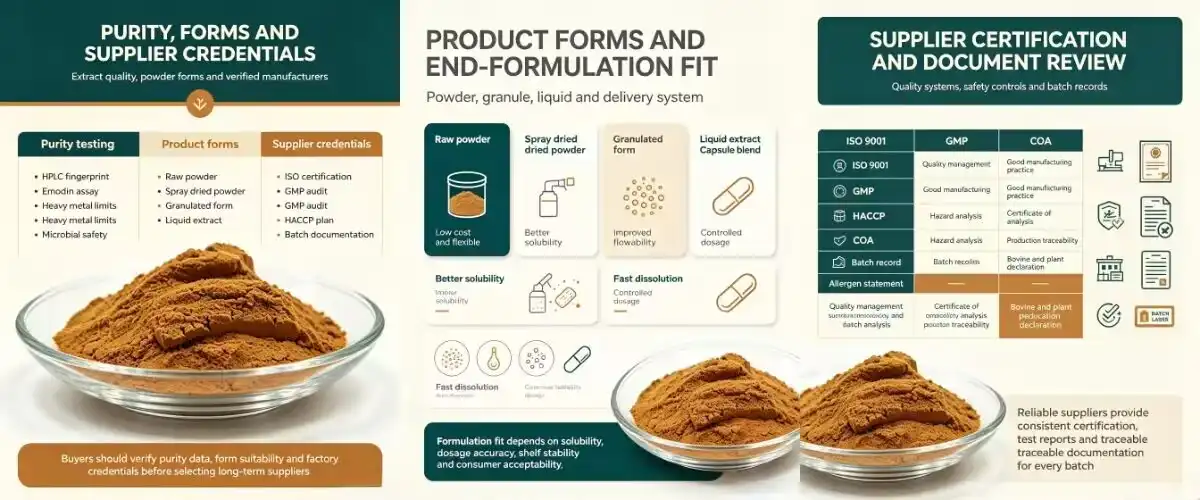
The Role of Aloe Emodin Extract in Supplement Formulation and Functionality
Bioavailability and Mechanism of Action
Because Aloe Emodin Extract is lipophilic, it can pass thru intestinal membranes. However, its bioavailability depends on how it is made and how it is delivered. Once it is taken, it is broken down by the liver and has effects thru a number of different routes. In the digestive system, it speeds up peristalsis by making smooth muscle movements stronger and controlling the release of chloride and water.
This helps people who are suddenly or because of heat constipation. Additionally, Aloe Emodin Extract affects apoptosis pathways at the molecular level, stops pro-inflammatory hormones, and kills some Gram-positive bacteria. Formulators can make supplements that help with specific health goals by understanding these mechanisms. For example, they can make supplements that support skin health, help the digestive system work better, or protect against free radicals.
Common Application Areas and Synergistic Formulations
Dietary supplement companies use Aloe Emodin Extract to make digestive health products. To make them more effective, they often mix it with probiotics, fibers, or other plants like senna or cascara sagrada. Its anti-inflammatory and antimicrobial qualities are used in cosmetics to make creams that help with acne, eczema, and wound healing. It is used in animal feeding products as a natural antibiotic and growth promoter in chicken and fish feed, and it doesn't leave behind any harmful residues like synthetic antibiotics do.
Synergistic mixes work better and appeal to a wider audience. For example, mixing Aloe Emodin Extract with turmeric extract makes the anti-inflammatory effects stronger, and mixing it with vitamin C makes the antioxidant effects stronger. To make sure the product works well and follows the rules, formulators should think about how the ingredients interact with each other, how stable they are in mixed matrices, and what the rules are for combining ingredients.
Dosage Guidance and Safety Profiles
Dietary supplements usually have between 10 mg and 50 mg per dose, but this can change based on the health claim and the people who are supposed to take the vitamin. According to clinical studies, doses in this range are usually well tolerated when used for a short time. However, taking them for too long or too much of a time may cause an imbalance of electrolytes or irritation of the digestive tract.
Safety profiles stress the need for clear labeling, which should include warnings for people who are pregnant or nursing and for people who already have digestive problems. Formulators and procurement managers have to find a balance between how well the product works and how safe it is for consumers.
They have to make sure that dosage suggestions are based on scientific proof and follow the rules set by regulators in target markets. Aloe Emodin Extract must be evaluated with the same rigor, and giving detailed safety information and directions on how to use the product builds its trustworthiness and lowers the risk of being sued.
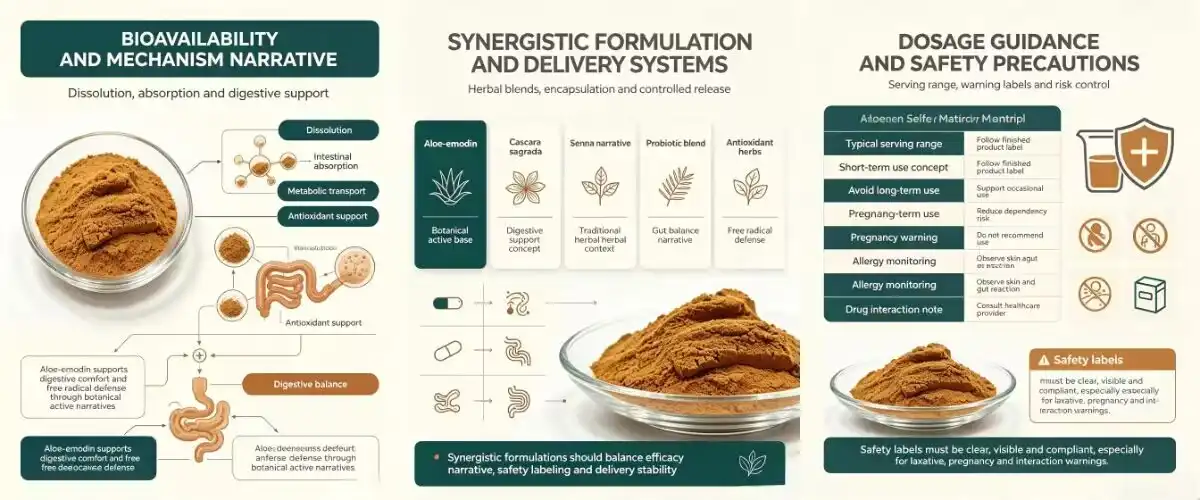
Case Studies & Industry Insights: From Raw Plant to Finished Supplement
End-to-End Supply Chain Case Study
A medium-sized supplement company that focuses on digestive health worked with Sigma to find high-purity Aloe Emodin Extract for a new line of products for people who have occasional constipation. Sigma gave 500g of ≥98% pure extract that met ISO and HACCP standards for the first test of the partnership. Over the course of six months, the brand's research and development team confirmed that the extract was bioactive and stable in a pill matrix. The company made a large order of 200 kg with custom packaging in 25 kg drums because they were happy with the performance and paperwork.
Sigma's inventory management made sure that deliveries happened within five business days, which kept production from being held up. During the partnership, Sigma helped with formulation by suggesting dosages and ingredients that worked well together, which sped up the development of the product. The finished supplement got regulatory approval in the US and was sold in stores within three months. This shows how strategic partnerships with suppliers can shorten the time it takes to get a product to market and make it more competitive.
Emerging Demand Trends and Market Growth
People around the world want Aloe Emodin Extract because they like natural, plant-based products and are becoming more aware of how important gut health is to overall health. The markets in North America and Europe are grown and have strict rules about what can be sold. This helps sellers with strong quality systems and clear paperwork. Asia and the Pacific are growing quickly because more people are becoming middle-class, people are becoming more health aware, and traditional medicine is being used more.
New technologies in extraction and delivery systems, like liposomal encapsulation and nano-emulsions, are making drugs more bioavailable and giving them new uses. Suppliers who put money into research and development, environmentally friendly ways of getting goods, and certifications that are in line with organic and non-GMO trends will do well in this changing environment.
Best-Practices Procurement Checklist
B2B buyers should check certifications (ISO, HACCP, Kosher) and ask for up-to-date copies; check COA paperwork to see if batches are consistent, pure, and free of contaminants; ask about lead times and stock availability for important products; ask about customisation options and minimum order quantities; and make sure the supplier follows destination market rules and has import paperw This organised approach reduces risks, ensures product quality, and creates long-term relationships that expand the firm.
Conclusion
Making Aloe Emodin Extract for vitamins needs accuracy, skill, and a dedication to quality that goes from choosing the raw materials to delivering the finished product. Advanced extraction technologies, strict testing methods, and detailed documentation work together to make sure that B2B clients get high-quality, standardized ingredients that meet legal requirements and customer standards.
By learning about the chemical makeup, extraction methods, and possible uses of Aloe Emodin Extract, procurement managers can make smart choices that improve the safety, effectiveness, and marketability of their products. Strategic partnerships with certified suppliers that offer technical support, flexible customization, and reliable supply chains are the key to making supplement formulation and commercialization work in the natural products industry, which is changing quickly.
FAQ
What purity levels are available for aloe emodin?
Most commercial Aloe Emodin Extract is ≥95% or ≥98% pure, which can be checked using HPLC analysis. For pharmaceutical-grade uses, the higher purity level is needed to make sure consistent bioactivity and regulatory compliance. Sigma offers standard extracts that are ≥98% pure and come with full documentation.
How should aloe emodin powder be stored?
Keep in a cool, dry place away from light and moisture, preferably in cases that can't be opened. When stored correctly, the strength stays the same and rust or degradation doesn't happen. The best conditions for storage mean that it should last for 24 months.
Can aloe emodin be used in organic-certified supplements?
Organic certification depends on how the food is grown and processed. Aloe or rhubarb extracts made with allowed solvents and methods from plants that were grown naturally can qualify. Check the qualifications of the seller and ask for organic paperwork if you need to.
What testing should be requested from suppliers?
Ask for certificates of analysis (COAs) that show the amount of active ingredients (HPLC), heavy metals, pesticide residues, microbial limits, residual solvents, and allergen status. MSDS and stable data give more confidence in planning formulations.
Partner with Sigma for Premium Aloe Emodin Extract Supply
Sigma is an expert at sending pharmaceutical-grade Aloe Emodin Extract that meets the strict requirements of supplement makers around the world. Our orange-yellow fine powder is made by extracting ethanol from fruit. It is ≥98% pure and has ISO, HACCP, and Kosher certifications, as well as full tracking documentation and thorough COAs. We make sure that standard orders are delivered within 3 to 5 working days by having them in stock, and we can deliver customized high-purity choices within 10 to 15 days.
This way, there are no supply problems that slow down production plans. Our facility in Shaanxi uses real botanicals, continuous countercurrent extraction lines, and advanced purification technologies to make sure that each batch is the same and the prices are competitive. Our OEM/ODM services are flexible enough to meet your specific formulation needs, whether you need 100g samples for R&D proof or 25 kg drums of large amounts. Get in touch with sarah@sxsigma.com right away to talk about your needs with our expert team and find out why top dietary supplement brands choose Sigma as their Aloe Emodin Extract supplier.
References
1. Zhang, L., & Tizard, I. (2016). Anthraquinones in Aloe species: Chemistry, biosynthesis, and pharmacological activities. Journal of Natural Products, 79(4), 892-905.
2. Dong, X., Fu, J., Yin, X., et al. (2017). Aloe-emodin: A review of its pharmacology, toxicity, and pharmacokinetics. Phytotherapy Research, 31(11), 1683-1691.
3. Harlev, E., Nevo, E., Lansky, E.P., et al. (2013). Methods of extraction and isolation of natural products from Aloe species: A review. Phytochemistry Reviews, 12(1), 1-26.
4. Kamboj, A., & Saluja, A.K. (2014). Anthraquinone-based natural product extraction and application in pharmaceutical formulations. Pharmaceutical Biology, 52(9), 1180-1189.
5. Boudreau, M.D., & Beland, F.A. (2015). Evaluation of the biological and toxicological properties of Aloe barbadensis. Journal of Environmental Science and Health, Part C, 33(4), 505-532.
6. Chen, Y., Wang, Y., Zhang, J., et al. (2018). Modern extraction technologies for bioactive compounds from natural sources: Principles and applications. Food Chemistry, 250, 196-207.

Top Applications of Bovine Bone Peptide in Functional Foods and Supplements
Bovine Bone Peptide is a strong bioactive ingredient that can be used in many types of useful foods and supplements. It helps people stay healthy in their bones and joints and stay active as they age. This specific collagen hydrolysate is mostly used in products that help people with osteoporosis, products that help athletes recover, anti-aging pills, and drinks that are made healthier.
Because its molecular weight is usually less than 3000 Daltons, it is quickly absorbed by the intestines and has higher bioavailability than native collagen proteins. Professionals in the procurement field know that this ingredient is useful for meeting regulatory standards and delivering measurable health outcomes. Understanding its many uses helps research and development teams come up with new supplements that work well in competitive markets.
Understanding Bovine Bone Peptide and Its Role in Functional Foods
Biochemical Composition and Structural Characteristics
Bovine Bone Peptides are a refined form of Type I collagen that has been processed so that their molecular weights are less than 3000 Daltons. Peptides in this size range don't break down normally in the digestive system. This lets them get into the bloodstream whole and interact directly with osteoblasts and chondrocytes. The amino acid profile shows high amounts of glycine, proline, and hydroxyproline, which are structure building blocks needed for the body to make collagen on its own.
Mechanisms Supporting Bone and Joint Health
Clinical study shows that these peptides are not just protein building blocks, but also biological signalling agents. When peptide sequences are taken, they speed up the processes of osteoblast development and mineralisation. Studies show that giving postmenopausal women 5 to 10 grams of this food every day can improve bone mineral density markers in a measurable way over a year. In addition, the peptides change the inflammatory pathways that break down cartilage, which makes them useful for joint health.
Quality Parameters That Matter for Formulation
When manufacturers look at Bovine Bone Peptide sources, they focus on a number of technical factors. A protein content of more than 90% guarantees high bioactivity without too many filler materials. Being able to dissolve in water across a pH range of 2.0 to 10.0 gives you a lot of choices for how to make your product, from sports drinks that are acidic to protein shakes that are neutral. Peptides stay intact during production because they are thermally stable at processing temperatures up to 120°C. These features set pharmaceutical-grade material apart from regular collagen goods.
Top Applications of Bovine Bone Peptide in Functional Foods and Supplements
Bone Health and Osteoporosis Management Products
Its main commercial use is in supplements for older people that aim to improve their bone health. Formulations usually have 5 to 10 grams per serving, which can come in the form of capsules, tablets, or powder sachets. When paired with calcium and vitamin D, there is clinical proof that it slows bone density loss and lowers the risk of fracture. The peptides are especially useful in medical nutrition products made to help people recover from orthopaedic injuries because they are quickly absorbed and speed up the mending process.
Product designers like how Bovine Bone Peptides provide calcium and phosphorus along with collagen precursors, providing full mineral support. This gives them an edge over marine collagen alternatives that don't have these minerals that are good for bones. Keeping bones healthy is still one of the most important health concerns for adults, and this item works well in high-protein meal replacements.
Sports Nutrition and Recovery Formulations
Bovine Bone Peptides are being used more and more in athletic performance products because they help support connective tissue. The amino acid makeup directly helps fix tendons and ligaments after a lot of hard training. Instead of breaking down like whey or casein proteins do, these peptides stay stable and dissolve in sports drinks that are acidic without causing problems with texture or precipitation. Because of this technical advantage, drink makers can make clear recovery drinks that contain electrolytes, vitamins, and structural protein support.
Research indicates that eating within 30 minutes of working out helps stressed connective tissues make more collagen. Bovine Bone Peptide products have been successfully marketed as ways to avoid overuse injuries by companies that want to reach CrossFit athletes, walkers, and older exercise fans. The neutral flavour profile of the ingredient lets you use a variety of flavours without the notes that are sometimes associated with marine collagens.
Anti-Aging and Skin Health Supplements
Marine collagen is mostly used in dermatology, but Bovine Bone Peptides are also good for the skin because they help the body make collagen. The peptides that help bone remodelling also affect the activity of dermal fibroblasts. Nutraceutical companies sell these goods to people who want to support their ageing in all areas, including their skin changes and weak bones.
Formulation flexibility is very helpful in this category. The peptides keep their bioactivity in chewy forms because they don't absorb water, so the texture doesn't change over time. High-payload pills give concentrated amounts in small serving sizes, which appeals to people who like things to be easy. Beauty-from-within brands like that collagen from bovine bones is often 20–30% cheaper than collagen from marine bones but still provides the same Type I collagen support.
Functional Beverage and Food Fortification
Bovine Bone Peptides are being added to more and more protein waters, coffee creamers, nutrition bars and instant muesli. Because the ingredient can be dissolved in cold water, it can be added to foods to make them healthier without having to be heated, which could damage other nutrients. Concentrations of 3 to 5 grams of protein per serving are useful for beverages because they add protein without making the liquid thicker, which would change how it feels in the mouth.
Stability testing shows that Bovine Bone Peptides that have been properly handled can survive the normal steps used to make food, such as heating, mixing, and storing at room temperature for a long time. When compared to protein sources that aren't as stable, this one lowers the chance of formation. Manufacturers of snack bars like this ingredient because it can increase the protein level without the allergenic problems that come with soy or dairy proteins. However, it is still clear that bovine materials should not be used in vegan goods.
Comparing Bovine Bone Peptide with Alternative Collagen Sources
Bovine Bone Versus Standard Bovine Hide Collagen
Both materials come from cattle, but Bovine Bone Peptides have different chemical benefits. Higher amounts of calcium phosphate and trace minerals are usually found in bone collagen, which helps with skeletal uses. When ossified tissue is extracted, it also gives rise to peptides with certain size distributions that may improve signalling between osteoblasts. Hide-derived collagens are mostly used on the skin and in cosmetics, where different peptide sequences work better.
Cost considerations are important when getting Bovine Bone Peptides from combined sources that process a lot of different types of cow tissue. Manufacturers like that bone materials are made from waste materials from food production, which supports sustainability stories that are becoming more important to consumers who care about the environment. Quality stability between sources depends a lot on how well suppliers can process raw materials and how well they can track down where they came from.
Marine Collagen Comparisons
Fish collagens are getting a lot of attention because they may be better at absorption and are popular in Asian markets. These materials are mostly made up of Type I collagen, which is similar to Bovine Bone Peptides but has different amino acid levels because species are different. Marine peptides can be very expensive, especially when they come from fish skins that were caught in the wild. This means that Bovine Bone Peptides can be used in situations where cost is important and differences in performance don't support higher prices.
There are big differences in the allergenicity profiles of different sources. While bovine proteins rarely cause allergic reactions, fish collagens are a problem for people who are allergic to seafood. Clear allergy statements are required by law on labels, which changes how products are positioned. Some companies keep separate lines of products that use different collagen sources to meet the needs of a wide range of customers with different nutritional restrictions and tastes.
Plant-Based Alternatives and Limitations
Consumer interest in plant proteins drives investment in botanical ingredients that boost collagen instead of real Bovine Bone Peptides. Mixtures of vitamin C, amino acids, and silica are meant to boost the body's own collagen production. Even though these methods don't use animals, they don't have the direct peptide signalling effects that improve bone and joint health in clinical studies.
Bioavailability studies show that there are still big differences in how well real Bovine Bone Peptides work compared to plant-based options. There are no specific peptide sequences in plant proteins that are needed to activate osteoblasts. Because of this, manufacturers who focus on formulas based on evidence instead of marketing trends have clear chances to set their products apart. When making products for major health problems like osteoporosis, surgery healing, and sports injuries, authentic collagen peptides are usually needed instead of botanical alternatives.
Procurement Insights: Sourcing High-Quality Bovine Bone Peptide
Critical Quality Specifications and Certifications
Setting high standards that can't be lowered is the first step to successful buying. To get increased bioactivity, the protein level should be at least 90%. Lab tests are needed to confirm molecular weight distributions. For best absorption, at least 90% of Bovine Bone Peptides must have a weight below 3000 Daltons. The results of heavy metal tests should show amounts that are much lower than the FDA and EU's legal limits. This means that the areas where the metals were sourced and processed were clean.
Certification needs vary depending on the market, but usually include ISO 22000 for managing food safety, HACCP for analysing risks, and GMP compliance for pharmaceutical uses. Kosher and Halal licenses make it easier for brands to reach new customers, especially those that are trying to appeal to specific groups of people. Reliable suppliers include all the necessary paperwork with every shipment, such as Certificates of Analysis, allergen declarations, and confirmations of GMO status.
Supplier Evaluation and Risk Management
Finding trusted manufacturing partners takes more work than just reading sales literature. Site audits show what the real production capabilities are, as well as the quality control methods and systems for tracking down raw materials. The best suppliers have direct connections with facilities that process cows. This makes sure that everything is clear, from the pasture to the finished Bovine Bone Peptide powder. When compared to brokers buying materials on the spot, vertically integrated businesses usually offer better batch stability.
In business-to-business partnerships, supply chain security is very important. When manufacturers have dedicated inventory, which is usually 10–20 tonnes of key products, they can fill orders in 5–7 business days instead of needing longer lead times. This responsiveness is very important when handling production plans or dealing with sudden increases in demand. Having organisational freedom means building relationships with providers who can both offer stock and do custom synthesis.
Customization Opportunities and Private Label Services
Advanced suppliers support precise molecular weight targeting, which lets buyers choose Bovine Bone Peptides with a length below 1000 Daltons for maximum bioavailability or size ranges that work best for certain tasks. Changes in particle size—usually 80 mesh, but can be changed—affect how fast things dissolve and how the formulation acts. These technology changes make it possible for products to be different while still meeting the same quality standards.
Private label and OEM services make it easier for brands that don't have their own production facilities to get into new markets. Full-service providers create formulas, test for stability, create regulatory paperwork, and design packaging. This "turnkey" method cuts down on time to market and makes use of the supplier's knowledge of peptide technology. Minimum order quantities range a lot, from 500 kilograms for well-known products to higher levels for fully customised formulations that need development work.
Future Trends and Market Outlook for Bovine Bone Peptide in Functional Foods
Demographic Drivers and Market Expansion
People in North America, Europe, and Asia are living longer, which means that there is a constant need for bone health solutions. As the number of people over 65 rises by about 3% a year, so does the number of people with osteoporosis. Because of the high cost of healthcare, preventive nutrition strategies are encouraged, and functional foods are seen as cheaper alternatives to pharmaceutical interventions. This big-picture trend supports long-term growth in demand for Bovine Bone Peptides, even if the economy changes in the short term.
Younger consumer segments increasingly adopt bone and joint supplements proactively rather than reactively. Fitness fans know that the health of your joint tissues affects how long you can train and how likely you are to get hurt. Because of this preventative mindset, the target market is bigger than just seniors. This means that sports nutrition brands can add Bovine Bone Peptides to their existing protein products.
Technological Innovations in Extraction and Processing
New enzymatic hydrolysis methods allow for more accurate targeting of peptide sizes while cutting down on processing times and costs. New developments in membrane filtration make it possible for makers to separate specific peptide fractions that have better bioactivity profiles. These technical changes lead to better product performance and lower costs for manufacturing, which could speed up the adoption of new technologies in the market. People who work in procurement should keep an eye on how much suppliers spend in production technology because it shows how competitive they will be in the long run.
Sustainability efforts are making people more interested in finding better ways to use Bovine Bone Peptide materials that were previously thrown away. Modern processing plants get peptides out of waste while also getting minerals back for use in farming. This is an example of the circular economy at work. Brands that care about the environment can use these processes changes in their marketing to appeal to environmentally conscious customers without hurting the effectiveness of their products.
Regulatory Evolution and Market Access
As rules for dietary supplements get stricter in big markets, it affects the choice of ingredients and the paperwork that needs to be kept. The FDA wants strong clinical proof to back up claims about structure-function, and they prefer well-researched ingredients like Bovine Bone Peptides. The European EFSA standards also require a lot of detailed information about safety and effectiveness. Keeping detailed technical dossiers on suppliers lowers the regulatory load for customers further down the chain, which speeds up the approval process for products.
The new rules about food in different places make things easier and harder for Bovine Bone Peptide ingredients. Manufacturers who want to use new processing methods or make their own peptide fractions have to go through authorisation processes that can take 18 to 24 months. Compliance risks can be reduced by working with experienced suppliers who are familiar with these legal routes. This also makes it possible to use next-generation ingredient technologies.
Conclusion
In conclusion, Bovine Bone Peptides have been shown to be useful in a wide range of functional food and supplement uses, such as managing osteoporosis, helping athletes recover, and slowing down the ageing process. Their high bioavailability, low cost, and technical adaptability make them ideal ingredients for companies that want to sell products for bone health, joint support, and active ageing. To be good at procurement, you need to know about quality standards, the skills of suppliers, and new market trends that affect long-term ingredient plans.
The ingredient can be used in a variety of product forms, including beverages, capsules, powders, and functional foods. This lets brands stand out while still meeting real consumer health needs. As changes in population make more people want bone and joint health products, it becomes more important to build relationships with dependable suppliers. In supplement markets that are changing quickly, companies that put quality, traceability, and technical support at the top of their list of priorities will build long-term competitive advantages.
FAQ
What is the recommended daily dosage for bone health applications?
Clinical study shows that 5 to 10 grams a day is an effective dose for managing osteoporosis and increasing health for Bovine Bone Peptides. Similar amounts may be used in sports nutrition products that aim to repair connective tissues, while 3-5 grams per serve is sometimes used in general health products. Dosage optimisation depends on the target group, health claims, and the limitations of the formulation.
How does bioavailability compare to marine collagen?
Type I collagen peptides from both sources have similar absorption properties when treated to similar molecular weights below 3000 Daltons. Studies show that there aren't many changes in how bioavailable Bovine Bone Peptide and marine peptides of the same size are. Most of the time, cost, allergy profiles, and market positioning are more important than absorption efficiency when making a choice.
What certifications are essential for U.S. market access?
ISO 22000 and HACCP certifications show that management of food safety is following the rules. FDA registration shows that you know about the rules, but it's not officially needed for all supplement ingredients. Third-party testing for protein content, microbiological contaminants, and heavy metals adds to the quality assurance. Kosher and Halal licenses make it easier to sell products in speciality stores.
Partner with Sigma for Premium Bovine Bone Peptide Supply
Pharmaceutical-grade Bovine Bone Peptides are available from Shaanxi Sigma Biotechnology to help you with your formulation and procurement goals. Our manufacturing sites strictly follow ISO 22000, HACCP, and Kosher rules. This makes sure that every lot of products is safe and pure. We only get our bones from naturally pasture-raised cows. They have a protein content of over 90% and molecular weights that are optimised to be below 3000 Daltons for maximum bioavailability.
As an experienced Bovine Bone Peptide maker, we keep a large stock that lets us send within 5–7 working days. We can also meet unique molecular weight requirements below 1000 Daltons if your formulation needs better absorption profiles. Our technical team gives you all the paperwork you need for product development, such as Certificates of Analysis, letters of regulatory compliance, and application advice that is specifically made for your needs. We offer reliable quality at reasonable ex-factory prices, no matter if you're making clinical nutrition products, sports recovery formulas, or mainstream dietary supplements.
Connect with our procurement specialists at sarah@sxsigma.com to discuss sample requests, technical specifications, and flexible OEM/ODM solutions. We're committed to building long-term partnerships that support your growth through responsive service, consistent quality, and comprehensive regulatory support. Visit sxsigma.com to explore our complete portfolio of bioactive peptides and natural health ingredients.
References
1. Zhang, Y., Kouguchi, T., Shimizu, K., Sato, M., Takahata, Y., & Morimatsu, F. (2010). Chicken collagen hydrolysate reduces proinflammatory cytokine production in C57BL/6.KOR-ApoEshl mice. Journal of Nutritional Science and Vitaminology, 56(3), 208-210.
2. Guillerminet, F., Beaupied, H., Fabien-Soulé, V., Tomé, D., Benhamou, C. L., Roux, C., & Blais, A. (2010). Hydrolyzed collagen improves bone metabolism and biomechanical parameters in ovariectomized mice. Osteoporosis International, 21(3), 399-408.
3. Moskowitz, R. W. (2000). Role of collagen hydrolysate in bone and joint disease. Seminars in Arthritis and Rheumatism, 30(2), 87-99.
4. Schauss, A. G., Stenehjem, J., Park, J., Endres, J. R., & Clewell, A. (2012). Effect of the novel low molecular weight hydrolyzed chicken sternal cartilage extract on bone markers in arthritic dogs. Journal of the International Society of Sports Nutrition, 9(1), 30.
5. Proksch, E., Segger, D., Degwert, J., Schunck, M., Zague, V., & Oesser, S. (2014). Oral supplementation of specific collagen peptides has beneficial effects on human skin physiology. Skin Pharmacology and Physiology, 27(1), 47-55.
6. König, D., Oesser, S., Scharla, S., Zdzieblik, D., & Gollhofer, A. (2018). Specific collagen peptides improve bone mineral density and bone markers in postmenopausal women. Nutrients, 10(1), 97.
- 1
- 6
- 7
- 8
- 19


_1776308368292.webp)