Pure Ashwagandha Extract Supplier Guide for Brands
Sourcing ashwagandha root extract for your brand demands careful supplier selection to balance product quality, regulatory compliance, and supply chain reliability. Pure Ashwagandha Extract—standardized for withanolide content through advanced extraction methods—has become a cornerstone ingredient for B2B brands across dietary supplements, functional foods, and wellness formulations. This guide walks you through the essential criteria for identifying trustworthy suppliers, verifying product integrity, and establishing partnerships that enhance your competitive positioning in the United States market. Whether you're a purchasing manager seeking batch consistency or an R&D engineer requiring precise technical documentation, these insights will streamline your procurement process and safeguard your brand reputation.
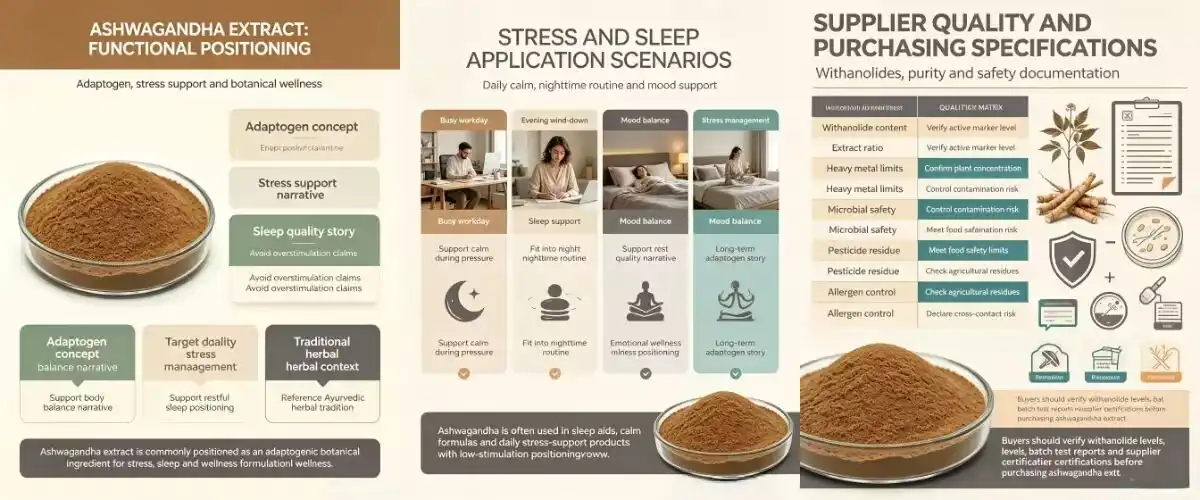
Understanding Pure Ashwagandha Extract and Its Market Demand
The Withania somnifera plant is where ashwagandha root extract comes from. This plant is an important part of Ayurvedic medicine and is known for having adaptogenic qualities that help with stress management, brain function, and general health. During the extraction process, raw plant material is turned into concentrated powders that contain standard medicinal chemicals, mostly withanolides, that are used to measure quality. Modern manufacturing uses a variety of methods to improve efficiency and fit for purpose.
Extraction Techniques and Standardization
The most common technologies used in industrial output are supercritical CO2 extraction and ethanol-based methods. Carbon dioxide is put under a lot of pressure during supercritical CO2 extraction to separate active molecules from chemical residues. This makes a clean extract that is perfect for brands that want to make "solvent-free" promises. But ethanol extraction gets higher yields of withanolide and is still a cost-effective way to make a lot of it. Standardisation usually falls between 2.5% and 10%, and is done by measuring anolides using HPLC. This makes sure that there is consistency from batch to batch, which is important for clinical effectiveness and regulatory reports.
Health Benefits Driving Consumer Demand
Ashwagandha has been shown in clinical studies to lower cortisol levels, improve the quality of sleep, and make people stronger. Studies that were published in peer-reviewed journals show that taking between 300 mg and 600 mg of high-concentration products every day has measurable effects. These results make people more interested in performance nutrition and vitamins that help with stress, especially health-conscious people who want natural alternatives to synthetic chemicals. For brands to cash in on this trend, they need sources who can provide ingredients that have been scientifically proven and come with clear proof.
Global Market Trends and Regulatory Landscape
As people in the US put more emphasis on mental health and immunity support, the market for adaptogenic plants keeps growing. B2B demand for Pure Ashwagandha Extract has grown from companies that make functional drinks, capsules, and cosmetic formulas. Purchasing teams are looking for suppliers who follow FDA-approved manufacturing practices and give full Certificates of Analysis for Pure Ashwagandha Extract. Heavy metal testing, microbial contamination limits, and accurate labelling of active ingredients such as withanolides are all emphasised by regulatory frameworks. This means that suppliers of Pure Ashwagandha Extract must comply for brands entering or growing in North American markets.
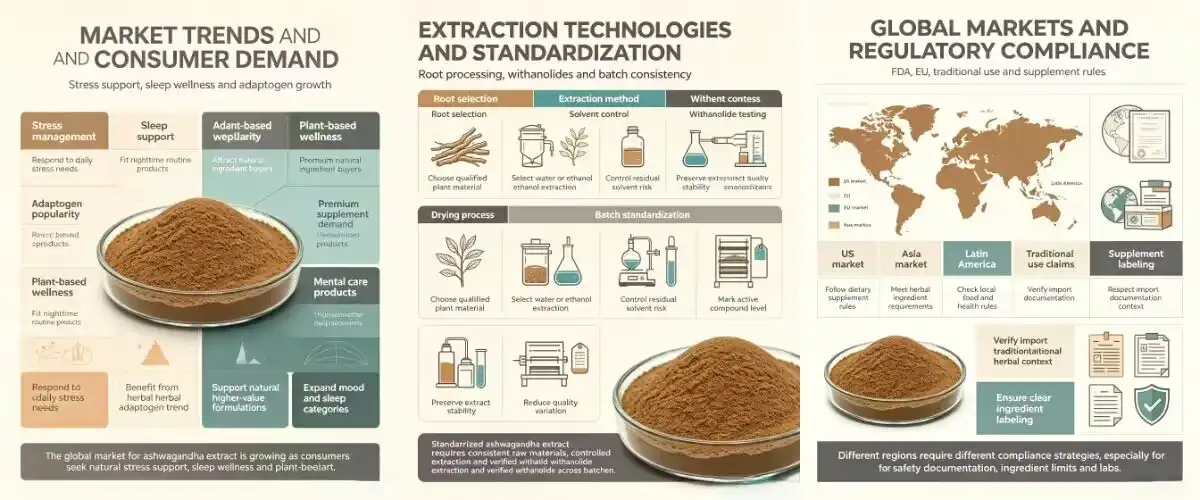
How to Choose the Right Pure Ashwagandha Extract Supplier?
To choose a provider, you need to carefully look at their quality credentials, output skills, and service infrastructure. The choice has an immediate effect on the effectiveness of the product, the safety of consumers, and the long-term reputation of the business.
Quality Certifications and Compliance Standards
Look beyond basic approvals to get a sense of how deep the application goes. ISO 9001 certification shows that you know how to run a quality management system, and ISO 22000 and HACCP certification show that you have strong controls in place to make sure food is safe during production. Suppliers who work with halal and kosher shops should show up with up-to-date approval from a recognised organization. Ask for proof of the results of a third-party audit and information on how often compliance is checked. Reputable makers keep clear records of their quality and are happy to share their testing methods with potential business partners.
Supplier Types and Product Variations
Based on how integrated they are and how specialised they are, manufacturers can be put into different groups. Vertically integrated suppliers, who handle everything from getting the raw materials to packaging the finished goods, make the supply chain more clear and make it easier to track individual batches. Contract makers give you options for unique formulations, but you might not have direct control over where the botanicals come from. There are different types of products, such as organic-certified extracts that cost more but are popular in natural product channels and conventional extracts that are cheaper for uses that need to save money. Brands that can encapsulate their own products should use bulk powder forms, while finished capsule providers make production easier for smaller businesses.
Due Diligence and Verification Methods
Factory audits, whether conducted in person or virtually, reveal more about operational reality than marketing materials convey. During facility tours, assess equipment maintenance protocols, staff training records, and material flow throughout the building. Independent labs should test Pure Ashwagandha Extract samples to verify stated specifications and screen for unknown adulterants. Check supplier references within your industry to evaluate delivery reliability and technical support responsiveness. Review Certificates of Analysis across multiple lots of Pure Ashwagandha Extract to confirm consistency in active ingredient content, moisture levels, and contaminant profiles.
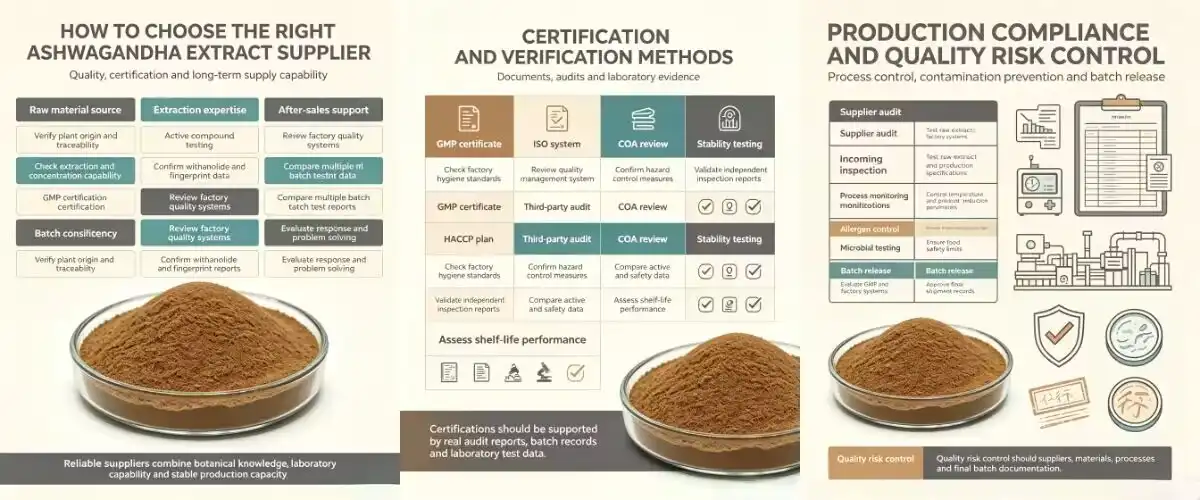
Procurement Best Practices for Brands and Distributors
Effective buying strikes a balance between cutting costs and making sure quality is maintained while reducing the risks that come with getting ingredients from other countries.
Bulk Purchasing Strategies
Pricing systems are very different depending on the number of orders, the terms of payment, and the length of the relationship. For speciality extracts, the minimum order quantity is usually between 25 kg and 100 kg. However, established sellers with a lot of stock may be able to handle smaller starting orders. To get better rates without having to pay a lot of money up front, talk about pricing levels that are tied to annual volume commitments. Flexible payment options, like 30-day net or letter of credit agreements, help growing brands with their cash flow. Talk about how prices can be changed when the market for raw materials changes so that costs don't go up without warning during contract times.
Quality Assurance Protocols
Set up procedures for receiving goods that check the information provided by the supplier against the actual properties of the goods. Check every new batch for withanolide, heavy metals (like lead, arsenic, cadmium, and mercury), pesticide residues, and microbial contamination such as yeast, mould, pathogenic bacteria, and total plate count. Set acceptance criteria that are in line with FDA guidance documents and USP standards. Maintain systems for quarantine that stop materials that haven't been cleared from getting into work areas. Keep track of all quality choices and deviations so that they can be tracked down during legal checks or audits by customers.
Logistical Considerations for International Procurement
The purity of the packaging keeps the ingredients stable while they are being shipped and stored. Food-grade polyethylene bags with aluminium foil liners keep out moisture and oxidation, which, when stored properly, extends the shelf life. To get around import rules and avoid delays as much as possible, shipping logistics require suppliers, freight forwarders, and customs brokers to work together. Air freight speeds up delivery for jobs that need to be done quickly, but it costs a lot more than ocean shipping. To speed up the customs clearance process, ask for the right paperwork, such as commercial invoices, packing lists, and certificates of origin. Check to see if the supplier has specialised stores with temperature and humidity controls. These show that the supplier is serious about keeping your products safe.
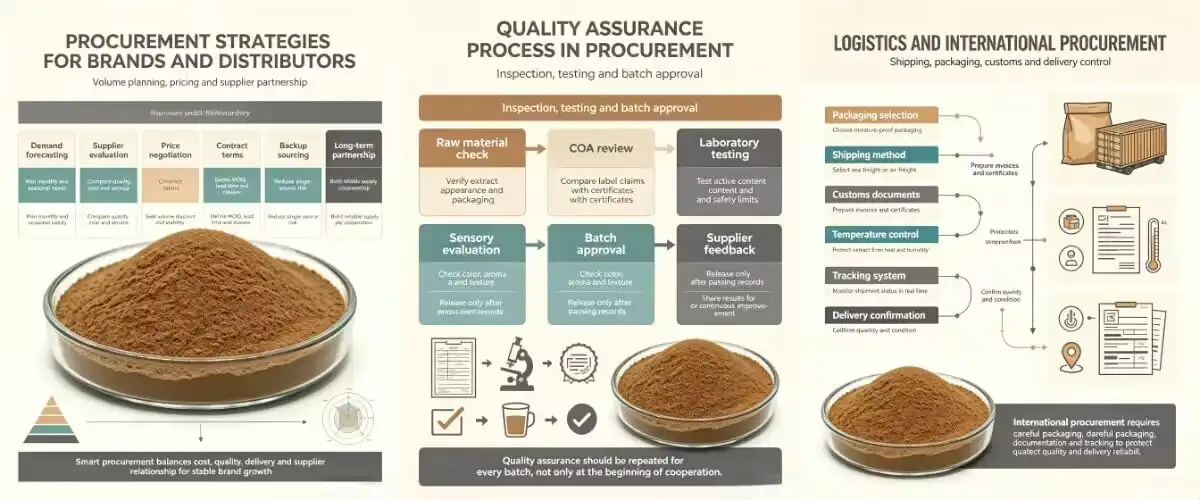
Comparing Top Pure Ashwagandha Extract Supplements and Brands
Leading makers set themselves apart by using their own extraction methods, making sure they work in clinical trials, and always delivering high-quality products.
Notable Industry Players
This is KSM-66, a full-spectrum root extract that preserves natural withanolide and withanoside balance. Its extensive clinical trials support stress, sports performance, and cognitive claims. Sensoril uses roots and leaves, standardized to withanolide glycoside conjugates, working at lower doses per published studies. Price-conscious brands can choose generic Pure Ashwagandha Extract alternatives, though these lack branded scientific backing. The decision between KSM-66, Sensoril, or generic Pure Ashwagandha Extract balances clinical validation against ingredient cost—branded options reduce the need for in-house trials, while generics require additional third-party testing to support claims, with the right choice depending on whether the brand targets premium credibility or value-oriented positioning.
Application Suitability Across Product Formats
Free-flowing powders with consistent particle size distribution, usually 80-mesh specifications, are best for capsule formulations because they make sure that the capsules are filled evenly and that the right amount of medicine is given. For use in drinks, you need water-soluble extracts or spray-dried powders that have emulsifying agents to keep the powder from settling to the bottom. Cosmetic companies focus on ingredients that have certain solubility patterns that work with cream and serum formulas. By knowing these technical requirements, procurement teams can choose suppliers whose products meet those needs instead of trying to change grades that don't fit.
Case Studies in Successful B2B Partnerships
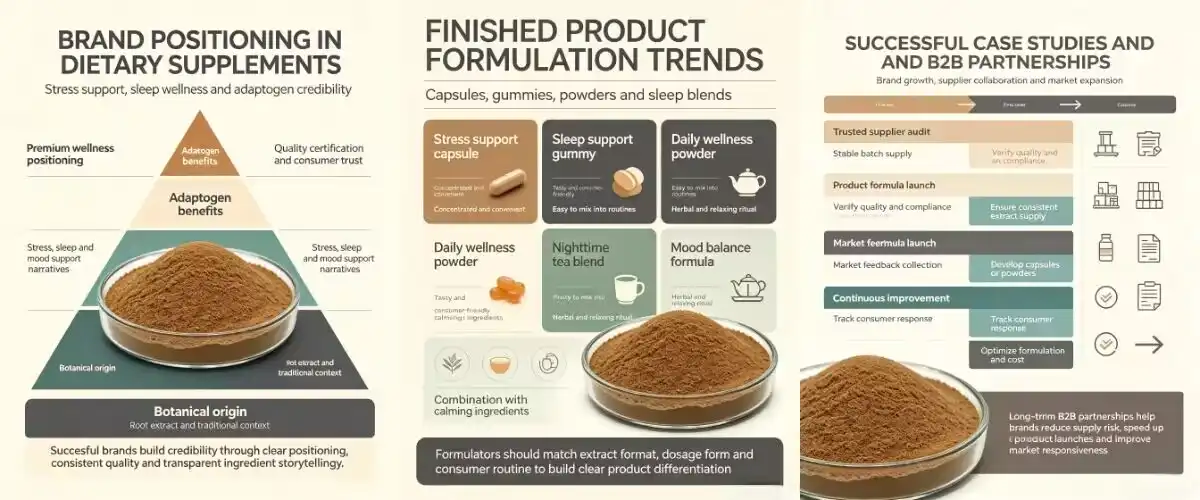
A medium-sized supplement brand teamed up with a certified maker that kept 10–20 tonnes of extra stock on hand. This cut wait times from eight weeks to seven working days and made it possible for the company to respond quickly to changes in the market's demand. Another functional beverage company worked with a supplier that offered custom extraction ratios to create a unique blend that set their products apart and earned them higher prices. These examples show how smart ties with suppliers go beyond just buying things and can give you a competitive edge through flexible supply chains and new products.
Product Usage Guidelines and Safety Considerations for Brands
Responsible design practices keep customers safe and make sure that all target markets follow the rules.
Dosage Ranges and Formulation Best Practices
In clinical studies, extracts standardised to 5% withanolides or higher are usually taken every day in doses of 300 mg to 600 mg. Because capsules are easy to use and allow for exact dosing, they are the chosen delivery method for supplement brands. Powders can be used in functional foods and allow for flexible doses for personalised diet plans. To make sure that tablets dissolve properly, they need the right binders and disintegrants. You might want to increase solubility by encapsulating it in liposomes or mixing it with black pepper extract that contains piperine, which might make absorption rates better.
Side Effects and Contraindications
In clinical trials, ashwagandha root extract has been shown to be very safe, though some people may experience mild stomach pain at first. People who are pregnant or breastfeeding (because there isn't enough safety data) or who have an autoimmune disease or thyroid disorder without medical supervision should not use it. Brands must put clear warnings and directions on how to use their products on the labels. Sedatives, immunosuppressants, and thyroid hormone treatments may interact with each other, so people who are taking prescription drugs need to be warned about this when they see a doctor.
Transparent Consumer Communication
Avoid making false claims that a disease can be treated or cured, as this can lead to FDA enforcement actions. Focus your marketing on structure-function claims that are backed up by research, like "supports healthy stress response" or "promotes relaxation." Be clear about the source of the extract, the method used to standardise it, and any third-party testing that was done. To build trust with customers, put certifications in a clear place on packaging and digital channels. Educational material that talks about where plants come from and how they've been used traditionally builds brand authority and manages customer expectations about when effects will start and how they will vary from person to person.
Conclusion
Choosing the right Pure Ashwagandha Extract supplier has a big impact on the quality of the product, its ability to meet regulations, and its ability to do well in the market. Brands can meet legal standards and give customers trusted goods by giving priority to sellers with verifiable certifications, consistent quality systems, and quick technical support. The US market likes plant ingredients that have been backed up by science and clear production methods. As more people buy adaptogenic supplements, building relationships with dependable providers is the best way to keep your business growing and stand out in the health industry, which is getting more and more complex.
FAQ
How can I verify the purity and authenticity of ashwagandha root extract?
Instead of depending only on documentation made by the seller, get Certificates of Analysis from independent third-party labs. Withanolide compounds are precisely identified and measured by HPLC testing, which gives accurate proof of their potency. DNA barcoding verifies the identity of plants and finds substitution or mixing with related species. Safety rules are followed with heavy metal panels, pesticide screens, and microbial testing. Reliable sellers keep records for each batch and have rules about how long samples should be kept so that they can be checked later if there are any problems.
What essential certifications should ashwagandha extract suppliers possess?
ISO 9001 sets the basic standards for quality management, and ISO 22000 or HACCP approval shows that a food safety method is being used. Organic certification from the USDA or a similar organization shows that organic production standards have been met. Kosher and halal approvals help brands that cater to certain groups of customers get into more markets. Facilities that are FDA-registered and follow cGMP standards show that they are committed to making medicines in a way that meets pharmaceutical standards. Ask the issuing bodies for current certificates to make sure they are valid and cover what you need them to cover.
What advantages do organic extracts offer compared to conventional options?
Organic certification guarantees that no synthetic pesticides, herbicides, or fertilisers were used in the production process. This appeals to health-conscious consumers who care about the environment. In retail channels, organic products often command higher prices, which helps brands make more money. For many ways of selling natural products to be accepted by regulators, they need to be certified as organic. Testing usually shows lower amounts of chemical residue, which lowers safety worries and the need for labels to include more information. Regular checks of the whole supply chain, from where the food comes from to how it is packaged, are part of the licensing process.
Partner with Sigma for Premium Ashwagandha Extract Supply
Sigma provides pharmaceutical-grade ashwagandha root extract that is made in a way that is ISO 22000 and HACCP-certified. This makes sure that the quality and stability your brand needs are met. Our fine yellow-brown powder is made with supercritical CO2 extraction technology, which keeps the biological integrity. We also keep 10–20 tonnes of safety stock on hand to ensure delivery within 5–7 working days. As a provider of Pure Ashwagandha Extract from Shaanxi's botanical center, we offer batch-specific Certificates of Analysis, flexible OEM/ODM services, and a lot of regulatory paperwork to help you comply with FDA rules. Email sarah@sxsigma.com to get samples, talk about custom requirements, or find out how our full-service relationship method can improve the reliability of your supply chain and shorten the time it takes to build a new product.
References
1. Chandrasekhar K, Kapoor J, Anishetty S. "A prospective, randomized double-blind, placebo-controlled study of safety and efficacy of a high-concentration full-spectrum extract of ashwagandha root in reducing stress and anxiety in adults." Indian Journal of Psychological Medicine, 2012.
2. Wankhede S, Langade D, Joshi K, Sinha SR, Bhattacharyya S. "Examining the effect of Withania somnifera supplementation on muscle strength and recovery: a randomized controlled trial." Journal of the International Society of Sports Nutrition, 2015.
3. Salve J, Pate S, Debnath K, Langade D. "Adaptogenic and Anxiolytic Effects of Ashwagandha Root Extract in Healthy Adults: A Double-blind, Randomized, Placebo-controlled Clinical Study." Cureus, 2019.
4. Mikulska P, Malinowska M, Ignacyk M, Szustowski P, Nowak J, Pesta K, Szeląg M, Szklanny D, Judasz E, Kaczmarek T, Ejiohuo OP, Paczkowska-Walendowska M, Gościniak A, Cielecka-Piontek J. "Ashwagandha (Withania somnifera)—Current Research on the Health-Promoting Activities: A Narrative Review." Pharmaceutics, 2023.
5. Singh N, Bhalla M, de Jager P, Gilca M. "An overview on ashwagandha: a Rasayana (rejuvenator) of Ayurveda." African Journal of Traditional, Complementary and Alternative Medicines, 2011.
6. Lopresti AL, Smith SJ, Malvi H, Kodgule R. "An investigation into the stress-relieving and pharmacological actions of an ashwagandha (Withania somnifera) extract: A randomized, double-blind, placebo-controlled study." Medicine, 2019.


_1776308368292.webp)