Top Applications of Bovine Bone Peptide in Functional Foods and Supplements
Bovine Bone Peptide is a strong bioactive ingredient that can be used in many types of useful foods and supplements. It helps people stay healthy in their bones and joints and stay active as they age. This specific collagen hydrolysate is mostly used in products that help people with osteoporosis, products that help athletes recover, anti-aging pills, and drinks that are made healthier.
Because its molecular weight is usually less than 3000 Daltons, it is quickly absorbed by the intestines and has higher bioavailability than native collagen proteins. Professionals in the procurement field know that this ingredient is useful for meeting regulatory standards and delivering measurable health outcomes. Understanding its many uses helps research and development teams come up with new supplements that work well in competitive markets.
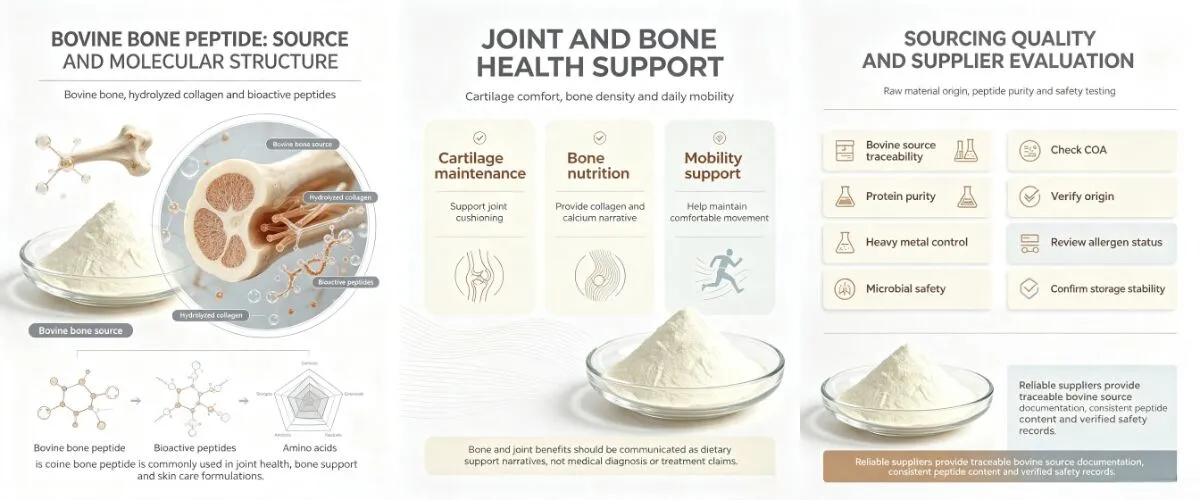
Understanding Bovine Bone Peptide and Its Role in Functional Foods
Biochemical Composition and Structural Characteristics
Bovine Bone Peptides are a refined form of Type I collagen that has been processed so that their molecular weights are less than 3000 Daltons. Peptides in this size range don't break down normally in the digestive system. This lets them get into the bloodstream whole and interact directly with osteoblasts and chondrocytes. The amino acid profile shows high amounts of glycine, proline, and hydroxyproline, which are structure building blocks needed for the body to make collagen on its own.
Mechanisms Supporting Bone and Joint Health
Clinical study shows that these peptides are not just protein building blocks, but also biological signalling agents. When peptide sequences are taken, they speed up the processes of osteoblast development and mineralisation. Studies show that giving postmenopausal women 5 to 10 grams of this food every day can improve bone mineral density markers in a measurable way over a year. In addition, the peptides change the inflammatory pathways that break down cartilage, which makes them useful for joint health.
Quality Parameters That Matter for Formulation
When manufacturers look at Bovine Bone Peptide sources, they focus on a number of technical factors. A protein content of more than 90% guarantees high bioactivity without too many filler materials. Being able to dissolve in water across a pH range of 2.0 to 10.0 gives you a lot of choices for how to make your product, from sports drinks that are acidic to protein shakes that are neutral. Peptides stay intact during production because they are thermally stable at processing temperatures up to 120°C. These features set pharmaceutical-grade material apart from regular collagen goods.
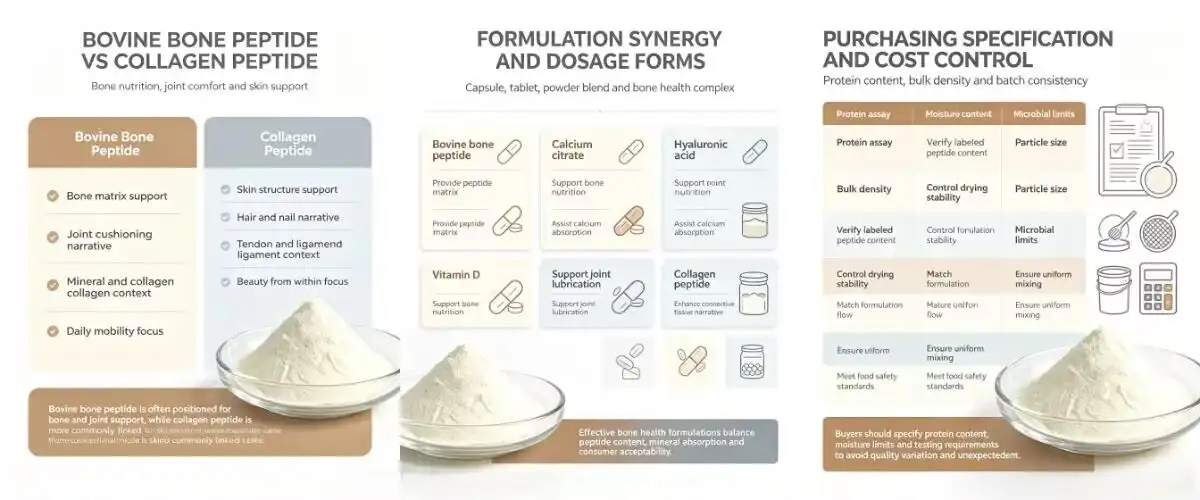
Top Applications of Bovine Bone Peptide in Functional Foods and Supplements
Bone Health and Osteoporosis Management Products
Its main commercial use is in supplements for older people that aim to improve their bone health. Formulations usually have 5 to 10 grams per serving, which can come in the form of capsules, tablets, or powder sachets. When paired with calcium and vitamin D, there is clinical proof that it slows bone density loss and lowers the risk of fracture. The peptides are especially useful in medical nutrition products made to help people recover from orthopaedic injuries because they are quickly absorbed and speed up the mending process.
Product designers like how Bovine Bone Peptides provide calcium and phosphorus along with collagen precursors, providing full mineral support. This gives them an edge over marine collagen alternatives that don't have these minerals that are good for bones. Keeping bones healthy is still one of the most important health concerns for adults, and this item works well in high-protein meal replacements.
Sports Nutrition and Recovery Formulations
Bovine Bone Peptides are being used more and more in athletic performance products because they help support connective tissue. The amino acid makeup directly helps fix tendons and ligaments after a lot of hard training. Instead of breaking down like whey or casein proteins do, these peptides stay stable and dissolve in sports drinks that are acidic without causing problems with texture or precipitation. Because of this technical advantage, drink makers can make clear recovery drinks that contain electrolytes, vitamins, and structural protein support.
Research indicates that eating within 30 minutes of working out helps stressed connective tissues make more collagen. Bovine Bone Peptide products have been successfully marketed as ways to avoid overuse injuries by companies that want to reach CrossFit athletes, walkers, and older exercise fans. The neutral flavour profile of the ingredient lets you use a variety of flavours without the notes that are sometimes associated with marine collagens.
Anti-Aging and Skin Health Supplements
Marine collagen is mostly used in dermatology, but Bovine Bone Peptides are also good for the skin because they help the body make collagen. The peptides that help bone remodelling also affect the activity of dermal fibroblasts. Nutraceutical companies sell these goods to people who want to support their ageing in all areas, including their skin changes and weak bones.
Formulation flexibility is very helpful in this category. The peptides keep their bioactivity in chewy forms because they don't absorb water, so the texture doesn't change over time. High-payload pills give concentrated amounts in small serving sizes, which appeals to people who like things to be easy. Beauty-from-within brands like that collagen from bovine bones is often 20–30% cheaper than collagen from marine bones but still provides the same Type I collagen support.
Functional Beverage and Food Fortification
Bovine Bone Peptides are being added to more and more protein waters, coffee creamers, nutrition bars and instant muesli. Because the ingredient can be dissolved in cold water, it can be added to foods to make them healthier without having to be heated, which could damage other nutrients. Concentrations of 3 to 5 grams of protein per serving are useful for beverages because they add protein without making the liquid thicker, which would change how it feels in the mouth.
Stability testing shows that Bovine Bone Peptides that have been properly handled can survive the normal steps used to make food, such as heating, mixing, and storing at room temperature for a long time. When compared to protein sources that aren't as stable, this one lowers the chance of formation. Manufacturers of snack bars like this ingredient because it can increase the protein level without the allergenic problems that come with soy or dairy proteins. However, it is still clear that bovine materials should not be used in vegan goods.
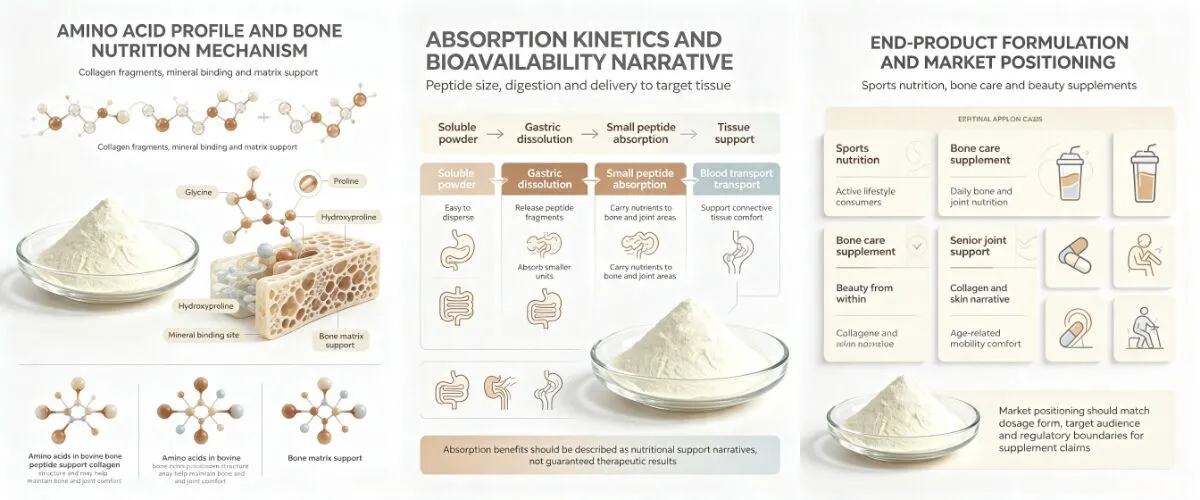
Comparing Bovine Bone Peptide with Alternative Collagen Sources
Bovine Bone Versus Standard Bovine Hide Collagen
Both materials come from cattle, but Bovine Bone Peptides have different chemical benefits. Higher amounts of calcium phosphate and trace minerals are usually found in bone collagen, which helps with skeletal uses. When ossified tissue is extracted, it also gives rise to peptides with certain size distributions that may improve signalling between osteoblasts. Hide-derived collagens are mostly used on the skin and in cosmetics, where different peptide sequences work better.
Cost considerations are important when getting Bovine Bone Peptides from combined sources that process a lot of different types of cow tissue. Manufacturers like that bone materials are made from waste materials from food production, which supports sustainability stories that are becoming more important to consumers who care about the environment. Quality stability between sources depends a lot on how well suppliers can process raw materials and how well they can track down where they came from.
Marine Collagen Comparisons
Fish collagens are getting a lot of attention because they may be better at absorption and are popular in Asian markets. These materials are mostly made up of Type I collagen, which is similar to Bovine Bone Peptides but has different amino acid levels because species are different. Marine peptides can be very expensive, especially when they come from fish skins that were caught in the wild. This means that Bovine Bone Peptides can be used in situations where cost is important and differences in performance don't support higher prices.
There are big differences in the allergenicity profiles of different sources. While bovine proteins rarely cause allergic reactions, fish collagens are a problem for people who are allergic to seafood. Clear allergy statements are required by law on labels, which changes how products are positioned. Some companies keep separate lines of products that use different collagen sources to meet the needs of a wide range of customers with different nutritional restrictions and tastes.
Plant-Based Alternatives and Limitations
Consumer interest in plant proteins drives investment in botanical ingredients that boost collagen instead of real Bovine Bone Peptides. Mixtures of vitamin C, amino acids, and silica are meant to boost the body's own collagen production. Even though these methods don't use animals, they don't have the direct peptide signalling effects that improve bone and joint health in clinical studies.
Bioavailability studies show that there are still big differences in how well real Bovine Bone Peptides work compared to plant-based options. There are no specific peptide sequences in plant proteins that are needed to activate osteoblasts. Because of this, manufacturers who focus on formulas based on evidence instead of marketing trends have clear chances to set their products apart. When making products for major health problems like osteoporosis, surgery healing, and sports injuries, authentic collagen peptides are usually needed instead of botanical alternatives.

Procurement Insights: Sourcing High-Quality Bovine Bone Peptide
Critical Quality Specifications and Certifications
Setting high standards that can't be lowered is the first step to successful buying. To get increased bioactivity, the protein level should be at least 90%. Lab tests are needed to confirm molecular weight distributions. For best absorption, at least 90% of Bovine Bone Peptides must have a weight below 3000 Daltons. The results of heavy metal tests should show amounts that are much lower than the FDA and EU's legal limits. This means that the areas where the metals were sourced and processed were clean.
Certification needs vary depending on the market, but usually include ISO 22000 for managing food safety, HACCP for analysing risks, and GMP compliance for pharmaceutical uses. Kosher and Halal licenses make it easier for brands to reach new customers, especially those that are trying to appeal to specific groups of people. Reliable suppliers include all the necessary paperwork with every shipment, such as Certificates of Analysis, allergen declarations, and confirmations of GMO status.
Supplier Evaluation and Risk Management
Finding trusted manufacturing partners takes more work than just reading sales literature. Site audits show what the real production capabilities are, as well as the quality control methods and systems for tracking down raw materials. The best suppliers have direct connections with facilities that process cows. This makes sure that everything is clear, from the pasture to the finished Bovine Bone Peptide powder. When compared to brokers buying materials on the spot, vertically integrated businesses usually offer better batch stability.
In business-to-business partnerships, supply chain security is very important. When manufacturers have dedicated inventory, which is usually 10–20 tonnes of key products, they can fill orders in 5–7 business days instead of needing longer lead times. This responsiveness is very important when handling production plans or dealing with sudden increases in demand. Having organisational freedom means building relationships with providers who can both offer stock and do custom synthesis.
Customization Opportunities and Private Label Services
Advanced suppliers support precise molecular weight targeting, which lets buyers choose Bovine Bone Peptides with a length below 1000 Daltons for maximum bioavailability or size ranges that work best for certain tasks. Changes in particle size—usually 80 mesh, but can be changed—affect how fast things dissolve and how the formulation acts. These technology changes make it possible for products to be different while still meeting the same quality standards.
Private label and OEM services make it easier for brands that don't have their own production facilities to get into new markets. Full-service providers create formulas, test for stability, create regulatory paperwork, and design packaging. This "turnkey" method cuts down on time to market and makes use of the supplier's knowledge of peptide technology. Minimum order quantities range a lot, from 500 kilograms for well-known products to higher levels for fully customised formulations that need development work.
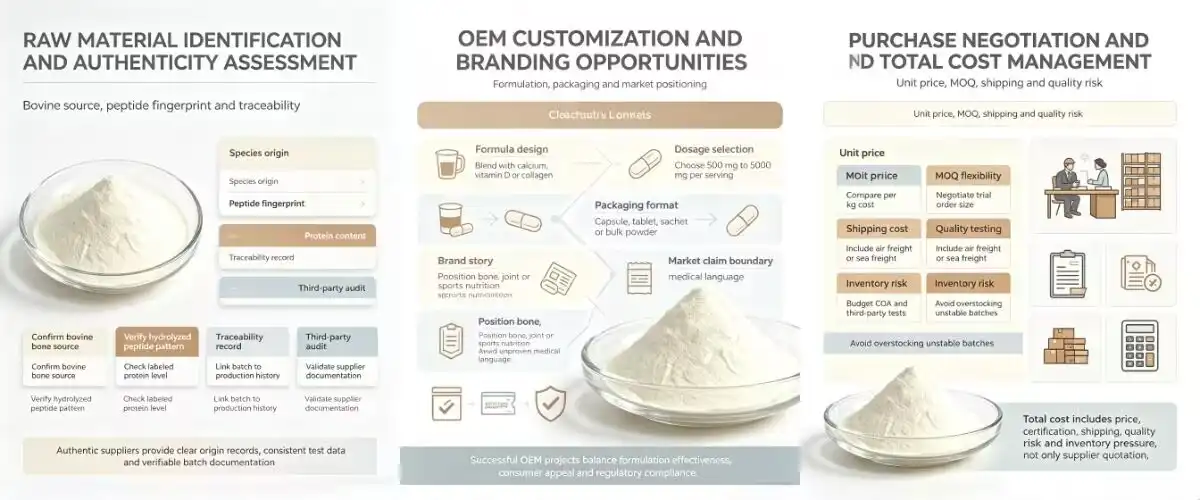
Future Trends and Market Outlook for Bovine Bone Peptide in Functional Foods
Demographic Drivers and Market Expansion
People in North America, Europe, and Asia are living longer, which means that there is a constant need for bone health solutions. As the number of people over 65 rises by about 3% a year, so does the number of people with osteoporosis. Because of the high cost of healthcare, preventive nutrition strategies are encouraged, and functional foods are seen as cheaper alternatives to pharmaceutical interventions. This big-picture trend supports long-term growth in demand for Bovine Bone Peptides, even if the economy changes in the short term.
Younger consumer segments increasingly adopt bone and joint supplements proactively rather than reactively. Fitness fans know that the health of your joint tissues affects how long you can train and how likely you are to get hurt. Because of this preventative mindset, the target market is bigger than just seniors. This means that sports nutrition brands can add Bovine Bone Peptides to their existing protein products.
Technological Innovations in Extraction and Processing
New enzymatic hydrolysis methods allow for more accurate targeting of peptide sizes while cutting down on processing times and costs. New developments in membrane filtration make it possible for makers to separate specific peptide fractions that have better bioactivity profiles. These technical changes lead to better product performance and lower costs for manufacturing, which could speed up the adoption of new technologies in the market. People who work in procurement should keep an eye on how much suppliers spend in production technology because it shows how competitive they will be in the long run.
Sustainability efforts are making people more interested in finding better ways to use Bovine Bone Peptide materials that were previously thrown away. Modern processing plants get peptides out of waste while also getting minerals back for use in farming. This is an example of the circular economy at work. Brands that care about the environment can use these processes changes in their marketing to appeal to environmentally conscious customers without hurting the effectiveness of their products.
Regulatory Evolution and Market Access
As rules for dietary supplements get stricter in big markets, it affects the choice of ingredients and the paperwork that needs to be kept. The FDA wants strong clinical proof to back up claims about structure-function, and they prefer well-researched ingredients like Bovine Bone Peptides. The European EFSA standards also require a lot of detailed information about safety and effectiveness. Keeping detailed technical dossiers on suppliers lowers the regulatory load for customers further down the chain, which speeds up the approval process for products.
The new rules about food in different places make things easier and harder for Bovine Bone Peptide ingredients. Manufacturers who want to use new processing methods or make their own peptide fractions have to go through authorisation processes that can take 18 to 24 months. Compliance risks can be reduced by working with experienced suppliers who are familiar with these legal routes. This also makes it possible to use next-generation ingredient technologies.
Conclusion
In conclusion, Bovine Bone Peptides have been shown to be useful in a wide range of functional food and supplement uses, such as managing osteoporosis, helping athletes recover, and slowing down the ageing process. Their high bioavailability, low cost, and technical adaptability make them ideal ingredients for companies that want to sell products for bone health, joint support, and active ageing. To be good at procurement, you need to know about quality standards, the skills of suppliers, and new market trends that affect long-term ingredient plans.
The ingredient can be used in a variety of product forms, including beverages, capsules, powders, and functional foods. This lets brands stand out while still meeting real consumer health needs. As changes in population make more people want bone and joint health products, it becomes more important to build relationships with dependable suppliers. In supplement markets that are changing quickly, companies that put quality, traceability, and technical support at the top of their list of priorities will build long-term competitive advantages.
FAQ
What is the recommended daily dosage for bone health applications?
Clinical study shows that 5 to 10 grams a day is an effective dose for managing osteoporosis and increasing health for Bovine Bone Peptides. Similar amounts may be used in sports nutrition products that aim to repair connective tissues, while 3-5 grams per serve is sometimes used in general health products. Dosage optimisation depends on the target group, health claims, and the limitations of the formulation.
How does bioavailability compare to marine collagen?
Type I collagen peptides from both sources have similar absorption properties when treated to similar molecular weights below 3000 Daltons. Studies show that there aren't many changes in how bioavailable Bovine Bone Peptide and marine peptides of the same size are. Most of the time, cost, allergy profiles, and market positioning are more important than absorption efficiency when making a choice.
What certifications are essential for U.S. market access?
ISO 22000 and HACCP certifications show that management of food safety is following the rules. FDA registration shows that you know about the rules, but it's not officially needed for all supplement ingredients. Third-party testing for protein content, microbiological contaminants, and heavy metals adds to the quality assurance. Kosher and Halal licenses make it easier to sell products in speciality stores.
Partner with Sigma for Premium Bovine Bone Peptide Supply
Pharmaceutical-grade Bovine Bone Peptides are available from Shaanxi Sigma Biotechnology to help you with your formulation and procurement goals. Our manufacturing sites strictly follow ISO 22000, HACCP, and Kosher rules. This makes sure that every lot of products is safe and pure. We only get our bones from naturally pasture-raised cows. They have a protein content of over 90% and molecular weights that are optimised to be below 3000 Daltons for maximum bioavailability.
As an experienced Bovine Bone Peptide maker, we keep a large stock that lets us send within 5–7 working days. We can also meet unique molecular weight requirements below 1000 Daltons if your formulation needs better absorption profiles. Our technical team gives you all the paperwork you need for product development, such as Certificates of Analysis, letters of regulatory compliance, and application advice that is specifically made for your needs. We offer reliable quality at reasonable ex-factory prices, no matter if you're making clinical nutrition products, sports recovery formulas, or mainstream dietary supplements.
Connect with our procurement specialists at sarah@sxsigma.com to discuss sample requests, technical specifications, and flexible OEM/ODM solutions. We're committed to building long-term partnerships that support your growth through responsive service, consistent quality, and comprehensive regulatory support. Visit sxsigma.com to explore our complete portfolio of bioactive peptides and natural health ingredients.
References
1. Zhang, Y., Kouguchi, T., Shimizu, K., Sato, M., Takahata, Y., & Morimatsu, F. (2010). Chicken collagen hydrolysate reduces proinflammatory cytokine production in C57BL/6.KOR-ApoEshl mice. Journal of Nutritional Science and Vitaminology, 56(3), 208-210.
2. Guillerminet, F., Beaupied, H., Fabien-Soulé, V., Tomé, D., Benhamou, C. L., Roux, C., & Blais, A. (2010). Hydrolyzed collagen improves bone metabolism and biomechanical parameters in ovariectomized mice. Osteoporosis International, 21(3), 399-408.
3. Moskowitz, R. W. (2000). Role of collagen hydrolysate in bone and joint disease. Seminars in Arthritis and Rheumatism, 30(2), 87-99.
4. Schauss, A. G., Stenehjem, J., Park, J., Endres, J. R., & Clewell, A. (2012). Effect of the novel low molecular weight hydrolyzed chicken sternal cartilage extract on bone markers in arthritic dogs. Journal of the International Society of Sports Nutrition, 9(1), 30.
5. Proksch, E., Segger, D., Degwert, J., Schunck, M., Zague, V., & Oesser, S. (2014). Oral supplementation of specific collagen peptides has beneficial effects on human skin physiology. Skin Pharmacology and Physiology, 27(1), 47-55.
6. König, D., Oesser, S., Scharla, S., Zdzieblik, D., & Gollhofer, A. (2018). Specific collagen peptides improve bone mineral density and bone markers in postmenopausal women. Nutrients, 10(1), 97.


_1776308368292.webp)