Polygonatum Extract Uses in Traditional Herbal Products
Polygonatum Extract serves as a cornerstone ingredient in traditional herbal products, valued for its rich polysaccharide content and dual-use classification for food and medicine. Derived from the rhizomes of Polygonatum sibiricum and related species, this botanical extract has been utilized for centuries to nourish Qi and Yin, support immune function, and combat physical fatigue. Modern extraction techniques now deliver standardized, water-soluble powders that integrate seamlessly into functional beverages, dietary supplements, and wellness formulations, meeting the rigorous quality demands of today's health-conscious consumers and B2B manufacturers alike.
Understanding Polygonatum Extract: Origins, Properties, and Benefits
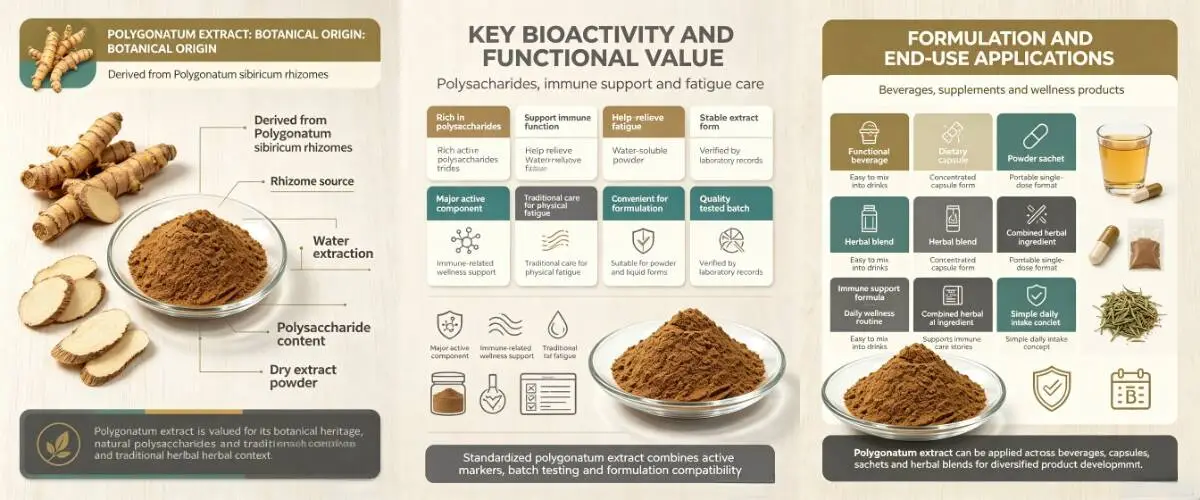
Botanical Origins and Cultural Heritage
Polygonatum is a genus of perennial plants that are native to temperate areas of Asia and Europe. They are commonly known as Solomon's Seal or "Huang Jing" in Traditional Chinese Medicine. The rhizomes go through special processing, which includes repeated rounds of steaming and drying, to turn chemicals that could be unpleasant into nutrients that the body can use. This traditional way of preparing the material raises the concentration of active polysaccharides and lowers the naturally high mucilage content that makes working with the raw material harder. Polygonatum Extract is a special plant in Traditional Chinese Medicine (TCM). It slowly strengthens both the Spleen and Kidney systems without making them too hot or dry. This makes it good for long-term use in wellness routines.
Core Bioactive Components and Mechanisms
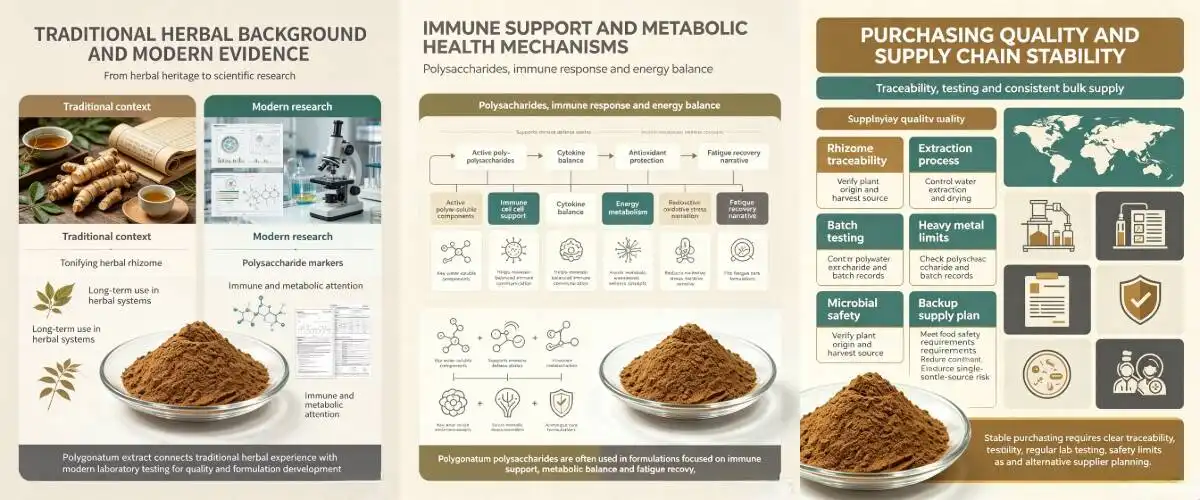
Polygonatum polysaccharides make up most of the active ingredients; commercial products usually have a normal concentration of 30–50%. These complex carbohydrates, whose molecular weights range from 10 to 500 kDa, change the immune system by turning on macrophages and increasing the production of cytokines. Some secondary chemicals are flavonoids (like quercetin) and a range of amino acids. Steroid saponins like Polygonatum Saponins A and B are another example. In cell studies, the polysaccharide fraction shows antioxidant activity by getting rid of free radicals and lowering markers of oxidative stress. This profile of the extract's many compounds explains why it has been used for centuries to improve health, especially respiratory health, and help people age in a healthy way.
Evidence-Based Health Benefits
Clinical study backs up a number of important benefits that are useful for making current health products. Polygonatum polysaccharides are good for seasonal wellness products because studies show that they boost immune surveillance through both innate and adaptive pathways. The ingredient shows promise in controlling glucose metabolism, which is good news for functional foods that aim to improve metabolic health. Animal tests have shown that it can help with anti-fatigue properties, which is in line with its traditional use for fighting tiredness and speeding up recovery. New uses for antioxidant compounds in skin health are opening up, as they protect against UV damage. This means more opportunities in the cosmetics industry, where natural ingredients are seen as more expensive.
Polygonatum Extract in Traditional Herbal Products: How It Works and Dosage Guidelines
Practical Application Forms and Formulation Strategies
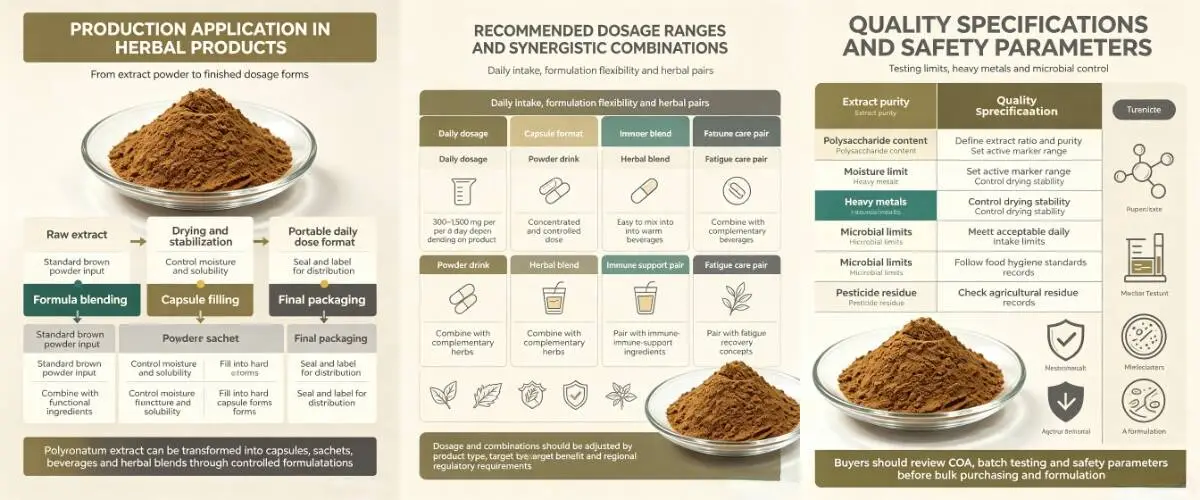
Using modern manufacturing methods, raw rhizomes are turned into a variety of shapes and sizes that can be used for different types of products. The fine, yellow powder with 80-mesh particles dissolves easily in hot water to make tonic pastes and functional tea drinks without leaving a gritty texture. Capsule versions benefit from the extract's low moisture level (≤5%), which keeps the mixture from clumping together during encapsulation. Tincture mixtures use the extract's ability to work with alcohol-water systems, but the polysaccharide part works best in water-based solutions. The dual-use classification lets it be used in both therapeutic herbal formulas and functional food products, which gives regulators more options for different markets.
Recommended Dosage Ranges and Synergistic Combinations
Doses of 300 mg to 1,500 mg per day are common in commercial uses, but they depend on the polysaccharide content of the extract and the health claims that are being made. Tonic pastes often have higher concentrations (1,000 to 1,500 mg per serving) and add adaptogens like Astragalus or Goji Berry to boost the Qi-nourishing effects. Polygonatum Extract in functional tea drinks use small amounts (300–500 mg) that do the job without overpowering the flavours of the other plants. Most immune-boosting capsule products have between 500 and 750 mg in each dose. When combined with Ginseng, the energy-boosting effects are amplified, and when combined with Lycium, both stamina and eye health are improved. Formulation chemists like that the extract has a neutral flavour profile that doesn't need a lot of masking in products with more than one ingredient.
Quality Specifications and Safety Parameters
Professional-grade extracts meet high quality standards that are needed for business-to-business purchases. Heavy metal levels must be within USP guidelines. This is especially important for root-based plants that could be contaminated by soil. Following HACCP guidelines for microbial control and tests for total plate counts, yeast, mould, and pathogens confirms that the food is safe for direct eating. Screening for pesticide residues makes sure that EU and FDA import rules are followed. Consistency in polysaccharide content from batch to batch (usually within ±3% of standard) lets you know how the mixture will work. Third-party certificates of analysis (COA) that list these factors give manufacturers who care about quality the information they need to choose long-term partnerships with raw material providers.
Comparative Analysis: Polygonatum Extract vs Other Popular Herbal Extracts
Functional Benefits Comparison with Leading Botanicals
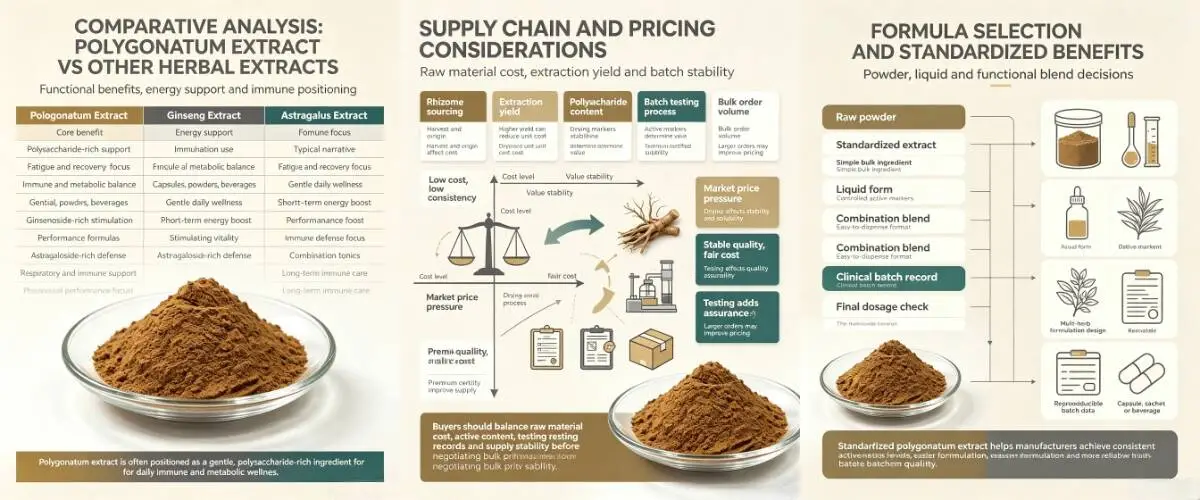
When compared to the most popular adaptogens on the market, Polygonatum Extract stands out. Ginseng gives you more energy right away through ginsenoside compounds, while Polygonatum gives you more gentle, long-lasting energy through pathways involving polysaccharides. Because it contains withanolide, Ashwagandha is great at changing how the body reacts to stress, while Polygonatum works on deficiency patterns instead of stress adaptation. Spirulina has a lot of protein and chlorophyll, but Polygonatum has a unique immune-polysaccharide makeup that spirulina doesn't have. Beta-glucans from reishi mushrooms also help the immune system, but they are much more expensive. Because of this, Polygonatum is a good choice for formulas that focus on long-term health and healing rather than short-term performance boost.
Supply Chain and Pricing Considerations
When compared to expensive plants, Polygonatum Extract is a good value. Its price on the market is usually 40–60% less than that of Ginseng and Cordyceps, which makes it affordable for mid-range supplement brands. Established farming in Shaanxi and other traditional growing areas makes it easier to get raw materials, which lowers the risk of sourcing problems. The expensive organic solvent solutions needed for some lipophilic plant products are not used because the extraction method is water-based.
Enough stock—Sigma keeps 10–20 tonnes of safety stock on hand—ensures stable supply lines, which are necessary for manufacturing to keep going. When stored properly, packaging in 25 kg fibre drums with sealed, moisture-proof covers can extend the shelf life to 24 months, reducing the amount of waste from old stock. These logistical benefits have a direct effect on the total cost of ownership for procurement teams that are in charge of managing a wide range of botanical collections.
Format Selection: Powder vs Standardized Extracts
There are some technical differences between raw powder and pure extract that you need to think about. Raw Polygonatum powder has all the active ingredients, but its active content can vary (5–15%), it doesn't flow well because of natural sugars, and it absorbs water easily, making it harder to handle. Standardised extracts that concentrate polysaccharides to ≥30% offer more accurate doses, stable strength, and more efficient production.
The 80-mesh particle size is small enough to easily go through encapsulating equipment and mixes evenly in beverage mixtures. Spray-dried extract powders are better at being mixed back together than freeze-dried ones, which is important for instant tea and ready-to-mix drinks. When manufacturing partners switch from raw materials to standardised extracts, they say that production downtime goes down by 15 to 20 percent. This makes up for the higher cost per kilogram through operational gains.
Buying Guide: How to Source High-Quality Polygonatum Extract for Your Business?
Essential Certifications and Compliance Documentation
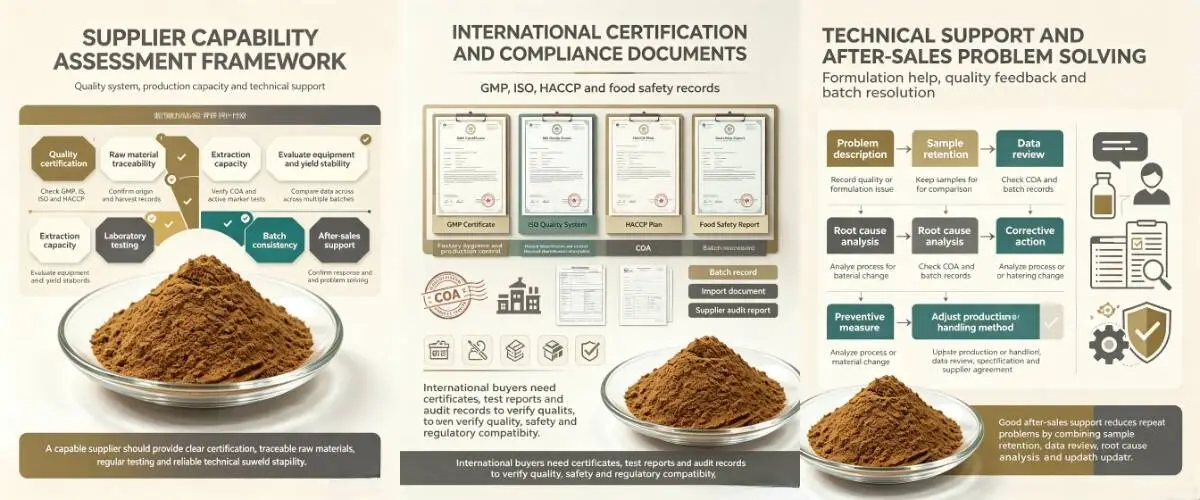
A successful procurement process starts with a thorough check of the supplier's credentials. The ISO 22000 and FSSC 22000 certifications prove that food safety management systems are important for using in functional foods and dietary supplements. The HACCP paperwork shows that risks are controlled throughout the production process, which includes the natural risks of pollution that come with processing plants. Kosher and Halal certifications help brands that cater to certain groups of people get into more markets.
The U.S. Even though FDA compliance doesn't need pre-market approval, it does require suppliers to follow Current Good Manufacturing Practice (cGMP) standards and keep records of facility inspections and self-audit reports. In order to sell in Europe, you have to follow Novel Food laws and pesticide residue standards that are stricter than those in the US. Polygonatum Extract packages meet the requirements by asking for batch-specific reports of analysis that show the polysaccharide content using UV-Vis spectrophotometry, heavy metal screening using ICP-MS, and microbial testing.
Evaluating Supplier Capabilities and Technical Support
In addition to certifications, professional skills that set commodity sellers apart from strategic partners should also be taken into account when evaluating suppliers. Custom extraction ratios (10%, 30%, or 50% polysaccharides) made possible by R&D let formulas be improved without having to be reformulated. When trying new uses, pilot production sites that can handle small test batches (50–100 kg) lower the risk. Formulation support services, which include data from stable tests and suggestions for pairings with matching ingredients, shorten the time it takes to make a new product.
Supply chain security is improved by clear tracking systems that record where raw materials come from, when they were harvested, and how they were processed. Technical teams that are quick to respond, know the differences between Polygonatum species (sibiricum, kingianum, and cyrtonema), and can suggest the best choices for specific health claims show that they have the level of knowledge that is important for working together for a long time.
Logistics Excellence and After-Sales Support
How well your operations run depends on how well the logistics capabilities of your suppliers match your business model. Your production volumes should match the minimum order quantities (MOQs). Suppliers that are flexible offer 100 kg MOQs for new brands and can handle orders of several tonnes for established brands. Lead times of 5 to 7 working days for in-stock items keep production from being held up, and online inventory portals make it possible to plan ahead.
Expertise in sending goods by sea freight for bulk orders that need to be cheap, air freight for urgent restocking and fast courier for samples gives buyers options. It is easier to get goods through customs when they come with all the paperwork they need, like business bills, packing lists, phytosanitary certificates, and certificates of origin. Strong after-sales support, like quality guarantees that last for a year and quick communication channels for technical questions, turns transactional relationships into partnerships that help a business grow even when the market changes.
Future Trends and Opportunities in Polygonatum Extract Herbal Product Markets
Emerging Applications in Functional Foods and Cosmetics
As the market changes, it becomes clear that supplements can be used for more than just standard forms. Polygonatum Extract is being used more and more by functional beverage developers in adaptogenic coffee alternatives, herbal wellness shots, and recovery drinks that are meant to help with nutrition after exercise. The neutral colour profile and natural sweetness (from oligosaccharides) of the extract make it easier to make clean-label products that don't contain any fake ingredients.
Antioxidant and hydrating qualities are used in anti-aging serums, under-eye treatments, and protective day creams that are promoted around TCM beauty ideas. Traditional Asian plants are used a lot in Korean and Japanese beauty brands, which opens up export opportunities. Combinations of collagen peptides for joint health and prebiotics for gut-immune axis support are being looked into by new nutraceuticals. This shows that systems-based approaches to wellness are becoming more popular with consumers.
Consumer Demand Drivers and Market Growth Factors
In 2022, the global botanical extracts market was worth $5.8 billion. It is expected to grow at a rate of more than 8% per year until 2030, with immune-boosting ingredients leading the way. Consumers' growing desire for plant-based, lightly processed ingredients that have been used for a long time is good for Polygonatum's standing. Younger people who are looking into adaptogens and nootropics learn about Solomon's Seal through health influencer outlets. This raises knowledge beyond Asian diaspora groups.
Synthetic additives are being punished by clean-label trends, which favour naturally occurring polysaccharides in terms of texture and function. When it comes to sustainability, cultivated plants are better than wild-harvested rare species. This makes properly sourced Polygonatum look better. Getting into the market is easier for traditional herbs that have been shown to be safe than for new synthetic compounds that need a lot of toxicological studies.
Regulatory Landscape and Its Effects on Strategic Procurement
Keeping up with changing regulations demands proactive relationships with suppliers. The U.S. market's self-proclaimed GRAS (Generally Recognised As Safe) route works well with Polygonatum's historical use, but claims about its structure and function need to be supported. To stop fraud, European markets are looking more closely at the name of plants using DNA barcoding. Suppliers who use these methods show they are quality leaders. China's dual-use ingredient list makes regulations clear, but it's important to understand the subtleties of labelling.
New markets in Southeast Asia and Latin America offer chances for growth, and health cultures inspired by TCM make it easier for people to fit in. Strategic procurement teams should check how knowledgeable suppliers are about regulations and how willing they are to provide paperwork to support specific market entries. If a brand wants to stand out by saying its products are certified organic, non-GMO, or sustainably harvested, it needs suppliers that can back up those claims. When there is more competition, buyers who start working with technically advanced suppliers early on will have an advantage because they can support multiple geographic expansions.
Conclusion
Polygonatum Extract is a great chance for companies that want to make traditional herbal goods that meet current quality standards. It has immune and energy benefits that have been backed by science. It also works well in formulations and has good supply economics, which makes it competitive in the growing market for plant chemicals. Paying for things requires paying attention to the level of certification, the technical skills of the supplier, and the dependability of the logistics. As the need for natural, traditionally based health solutions grows, companies that work with extract providers that focus on quality gain benefits in differentiating their products and responding quickly to changes in the market. Combining ancient herbal knowledge with modern extraction methods and strict quality control makes ingredients that pass both government scrutiny and consumer standards for purity and effectiveness.
FAQ
What is the recommended daily dosage for Polygonatum Extract in supplements?
Depending on the concentration of the extract, most commercial uses range from 300 mg to 1,500 mg per day. For immune support, products that are standardised to 30% polysaccharides usually use 500 to 750 mg per dose, while tonics can use up to 1,500 mg. Dosing should be based on the amount of Polygonatum Extract and the health benefits that are wanted. For example, dose sizes can be smaller when the concentration is higher.
Are there any known side effects or herb interactions?
Polygonatum Extract has been used for hundreds of years and has a great safety record. At the suggested amounts, side effects are not common. People who have been diagnosed with diabetes should talk to their doctors because some medicines may lower blood sugar. There have been no reports of any major drug problems, but because the extract can change the immune system, it is best to be careful when taking it with immunosuppressant drugs.
How can I verify supplier quality and authenticity?
Ask for certificates of analysis that are specific to each batch and show the amount of polysaccharides found using approved methods (UV-Vis spectrophotometry), as well as tests for heavy metals, pesticide residues, and microbes. Use the databases of the issuing bodies to check certifications like ISO 22000, HACCP, and GMP. Ask for samples so that a third party can test your authentication. Check to see how open the supplier is about where the raw materials come from and how willing they are to provide facility audit documentation. Suppliers that have been around for a while keep detailed records of their quality and react quickly to technical questions.
Partner with Sigma for Premium Polygonatum Extract Supply
Sigma has high-purity Polygonatum Extract that is standardised to ≥30% polysaccharides and is ready to help you come up with new products. As a well-known company that makes botanical extracts with roots in Shaanxi's real growing areas, we are in charge of the whole process, from forming partnerships with farmers to using advanced water extraction and spray drying techniques to delivering the finished product. Our ISO 22000, HACCP, and Kosher standards make sure that we can do business in foreign markets, and our well-kept inventory allows for quick fulfilment in 5 to 7 days. Our OEM/ODM services are flexible enough to meet your needs, whether you need 100 kg for a test run or several tonnes for production. You can email our technical team at sarah@sxsigma.com to ask for samples, look over COAs, and talk about how our dependable Polygonatum Extract supplier can help you add more herbal products to your line at reasonable prices and with consistent quality.
References
1. Zhang, Y., Li, Q., & Wang, H. (2019). Pharmacological Effects and Clinical Applications of Polygonatum sibiricum: A Review. Journal of Ethnopharmacology, 236, 497-508.
2. Liu, T., Chen, Z., & Zhou, X. (2021). Immunomodulatory Activity of Polygonatum Polysaccharides: Mechanisms and Therapeutic Potential. Carbohydrate Polymers, 258, 117632.
3. American Herbal Pharmacopoeia. (2018). Polygonatum Species: Standards of Analysis, Quality Control, and Therapeutics. Scotts Valley, CA: AHP Press.
4. Wu, J., Zhang, M., & Huang, L. (2020). Comparative Analysis of Bioactive Compounds in Different Polygonatum Species. Industrial Crops and Products, 153, 112578.
5. Chen, R., & Wang, S. (2022). Quality Control and Standardization of Polygonatum Extracts in Herbal Product Manufacturing. Phytochemical Analysis, 33(4), 612-625.
6. International Trade Centre. (2023). Market Analysis: Botanical Extracts in Functional Foods and Dietary Supplements. Geneva: ITC Publications.


_1776308368292.webp)