How Is Aloe Emodin Extract Manufactured for Supplements?
Aloe Emodin Extract is manufactured through a sophisticated multi-step process that begins with selecting quality Aloe vera leaves or Rheum palmatum roots, followed by ethanol-based extraction to isolate the active anthraquinone compound. The process includes careful solvent extraction, concentration under controlled temperatures, purification using chromatography or crystallization, and final drying to produce a standardized orange-yellow fine powder with purity levels typically reaching ≥98%. This technical precision ensures batch-to-batch consistency, safety, and bioavailability—critical factors for supplement manufacturers seeking reliable, high-purity ingredients for functional health products.
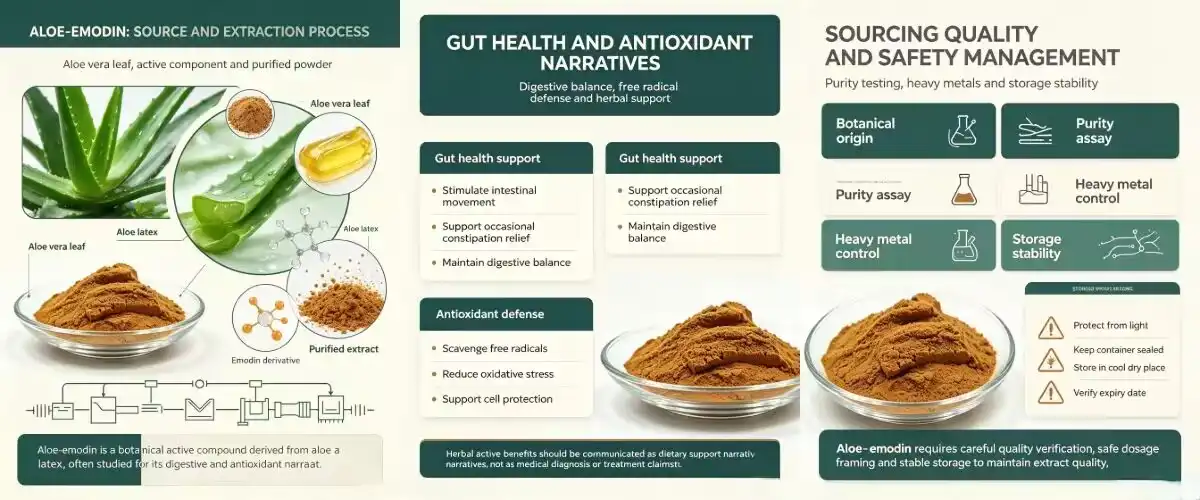
Understanding Aloe Emodin Extract: Natural Sources and Chemical Properties
Botanical Origins and Active Compound Identity
Aloe Emodin Extract is an anthraquinone chemical that is found naturally and is mostly taken from the leaves of Aloe vera (L.) Burm. f. and the Rheum palmatum L. roots (Chinese rhubarb). This bioactive molecule, which is named 1,8-dihydroxy-3-(hydroxymethyl)anthraquinone and has the formula C₁₅H₁₀O₅ and a molecular weight of 270.24 g/mol, has gotten a lot of interest in the nutraceutical and medicinal fields.
The raw aloe latex has many anthraquinones, but the pure extract only has one, so it can be expected to have known pharmacological action. The orange-yellow color and crystalline structure of the substance show that it is chemically stable and can be used in supplement formulas that need to have a standard level of potency.
Key Chemical and Physical Properties
The extract has unique physicochemical properties that formulation experts and sourcing teams need to know about. Its melting point is between 223°C and 224°C, which shows that it is stable at high temperatures during processing. Solubility studies show that it dissolves well in organic solvents like ethanol, ether, and benzene but not so much in water. This is an important trait to know when designing delivery systems for nutrients.
It gets cherry-red when dissolved in alkaline solutions, which is a feature that is checked. Its molecular structure has hydroxyl and carbonyl functional groups that help it do biological things like changing how cells talk to each other, being an antioxidant, and killing microbes. Because of these chemical properties, it is used in digestive health supplements, especially to help with constipation and inflammatory conditions.
Therapeutic Significance for B2B Supplement Markets
Aloe Emodin Extract has been shown to be helpful for health in a number of ways. It works by making the colon move faster and changing how much water is absorbed in the large gut. This means it can help with both short-term, regular constipation and constipation caused by heat. Studies also show that it can reduce inflammation by stopping the release of TNF-α and IL-6 cytokines.
This makes it a possible candidate for treating inflammation in the skin and throughout the body. Dietary supplement brands, pharmaceutical companies, and cosmetics makers all want to use them because more people want natural options to commercial laxatives and because they are safe in controlled doses. By knowing these things about Aloe Emodin Extract, buying managers can figure out if it will work in products that are meant to improve gut health and skin health.
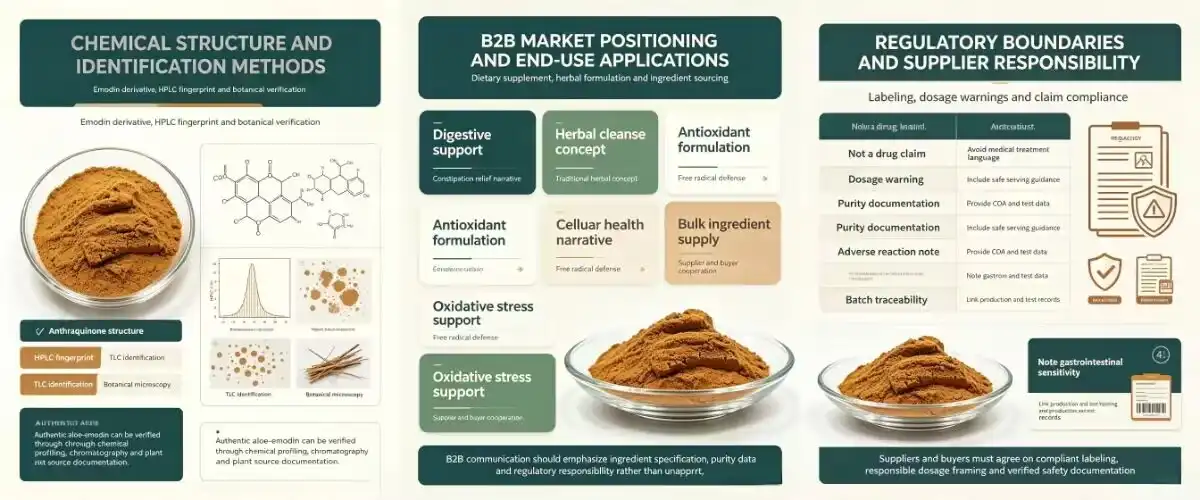
Traditional vs. Modern Extraction Methods for Aloe Emodin
Conventional Solvent-Based Extraction Techniques
In traditional extraction, ethanol or methanol are used as solvents to get anthraquinones out of dried plants. Most of the time, ground Aloe vera leaves or Rheum palmatum roots are put into a solvent at high temperatures and left there for a long time as part of maceration or reflux extraction.
This method is cheap and easy for many people to use, but it has some problems, like yields that change, longer processing times, and the chance of getting impurities like polysaccharides and resins along with the product. The next step in purification is to filter and concentrate the substance several times. This usually leads to purity levels between 80% and 90%, which might not meet the strict needs of pharmaceutical-grade uses.
Advanced Extraction Technologies for Enhanced Purity
Modern production uses methods that make the process much more efficient and the quality of the products much better. High-frequency sound waves are used in ultrasonic-assisted extraction to break down plant cell walls. This shortens the extraction time and solvent use while increasing yield. Controlled pressure and temperature make supercritical CO₂ extraction possible.
This lets target chemicals be extracted without leaving behind any solvent contamination, which is a big plus for organic-certified and clean-label goods. Aloe Emodin Extract can be effectively obtained through both of these advanced techniques, with ultrasonic assistance improving its release from aloe tissues and supercritical CO₂ ensuring a pure, residue-free final product.
Microwave-assisted extraction speeds up the process by heating it up quickly, which keeps compounds that are unstable at high temperatures. With these technologies, manufacturers can get purity levels above 98%, better control over the amount of active ingredients, and little difference between batches. This is a very important thing to think about when making a procurement decision because the way you choose has a direct effect on scalability, cost structure, and compliance with FDA and EU legal standards.
Step-by-Step Manufacturing Process and Quality Control
At places like Sigma, the first step in the manufacturing process is to check the raw materials. For example, incoming batches of aloe or rhubarb are tested for identity, heavy metals, and pesticide residues. Some materials are dried and ground into uniform-sized particles, which makes the extraction process more effective. To keep bioactive compounds from breaking down, ethanol extraction is done in jacketed reactors where the temperature is controlled.
Vacuum evaporators are used to concentrate the solution at a low temperature so that heat-sensitive parts stay intact. Column chromatography or recrystallization are used to get rid of polysaccharides, tannins, and other chemicals that aren't the goal. The clean extract is either freeze-dried or spray-dried to make a fine orange-yellow powder with an ash content of ≤1%. Each batch goes thru a lot of tests while it's being made and when it's finished.
These tests include HPLC analysis to measure the amount of active ingredient, microbe testing, and stable checks. Every shipment comes with a Certificate of Analysis (COA) that shows it meets the requirements of ISO 22000, HACCP, and Kosher certifications. This complete quality assurance system makes sure that B2B clients get consistent, traceable, and legal materials that can be used in controlled markets.
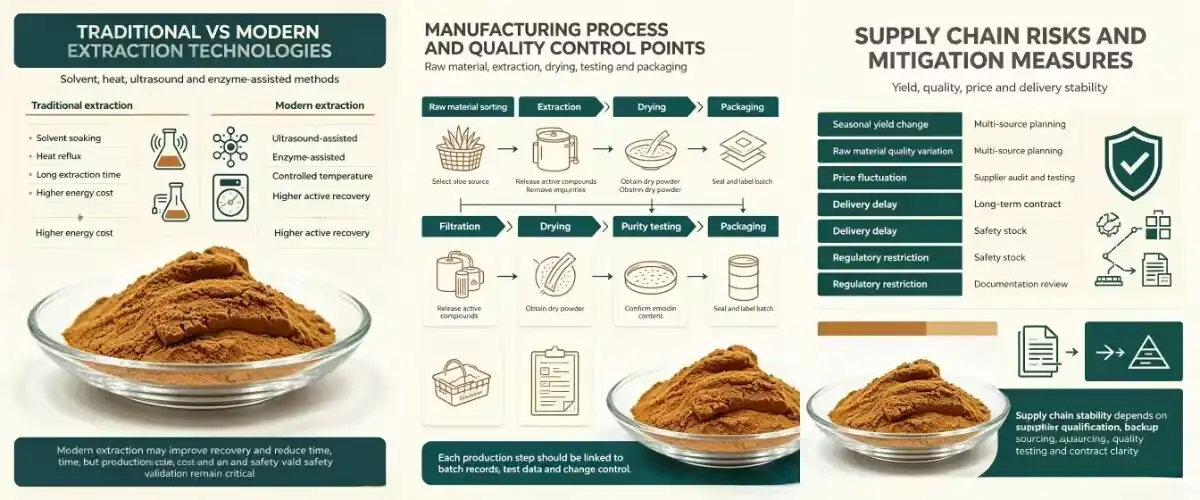
Purchasing Considerations: Purity, Forms, and Supplier Credentials
Evaluating Product Forms and Purity Grades
Aloe Emodin Extract is sold in the market in both powder and liquid forms, and each has its own handling and formulation properties. Powder forms, which are usually standardized to 95% or 98% purity, are more stable, last longer, and are easier to mix into capsules, tablets, or bulk ingredient systems. For topical formulations or liquid supplements, liquid extracts are convenient, but they may need preservatives and have shorter stability windows.
Levels of purity have a direct effect on bioactivity and regulatory acceptance. Pharmaceutical-grade extracts that are ≥98% pure keep out inactive ingredients that could mess up the results of clinical trials and make sure that strict pharmacopeia standards are met.
Buyers who care about quality should be clear about the purity requirements, ask for HPLC chromatograms, and make sure that the active ingredient content matches what the label says and what the formulation goals are. Long-term stability is also affected by storage conditions, like keeping things out of the light and away from moisture. These should be taken into account when choosing a supplier.
Supplier Certification and Documentation Requirements
For risk reduction and market access, you have to work with certified manufacturers. ISO 9001 certification shows that quality management systems are being followed. ISO 22000 and HACCP certifications show that controls for food safety are in place all along the supply chain. Kosher and Halal licenses help businesses reach new groups of customers. Suppliers should give full scientific information, like Material Safety Data Sheets (MSDS), Certificates of Analysis (COAs) with test results specific to each batch, analyzes of leftover solvents, and allergen statements.
Regulatory agencies and major retail channels are asking for more and more traceability documentation that connects finished products to the sources of their raw materials. A supplier's commitment to quality and possibility for a long-term relationship can be seen in how open they are about their manufacturing processes, how willing they are to cooperate with audits, and how quickly they answer questions.
Strategic Criteria for B2B Procurement
Buyers should look at more than just price and supply when judging sources. Some important things to think about are the ability to do research and development (R&D) to make custom extraction ratios or specs, the ability to handle inventory to keep supplies stable and avoid interruptions, and the ability to place orders in a range of sizes, from 100g samples for R&D validation to 25kg drums of bulk. Lead times are very important. Stock things should be shipped within 3 to 5 business days, but special high-purity orders could take up to 15 days.
Supply chain friction can be reduced by being close to logistics hubs, having experience with foreign shipping paperwork, and knowing the rules in the target country. Suppliers who give help with preparation, application, and expert support after the sale add value and speed up the process of developing new products and entering new markets.
Aloe Emodin Extract suppliers, in particular, benefit from these capabilities, as regulatory compliance and stable cold‑chain logistics are critical for this sensitive botanical ingredient. By looking at all of these factors together, procurement managers can find partners who can meet their current needs and help them grow in the future.
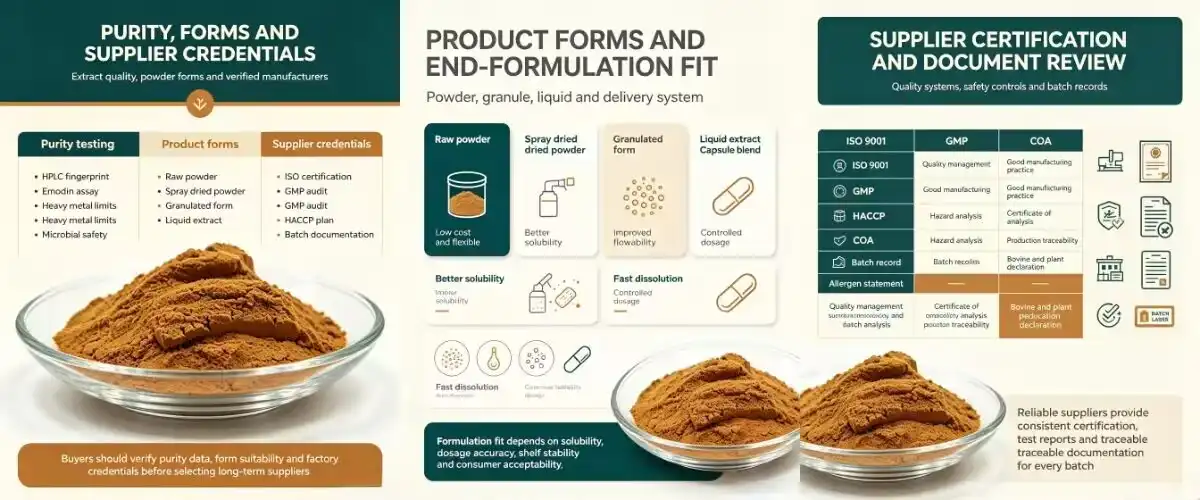
The Role of Aloe Emodin Extract in Supplement Formulation and Functionality
Bioavailability and Mechanism of Action
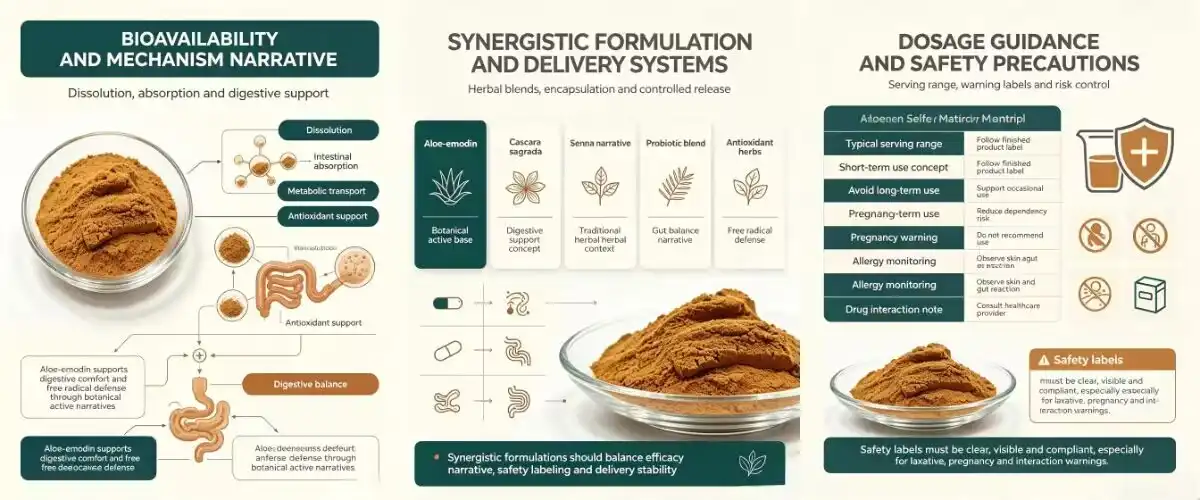
Because Aloe Emodin Extract is lipophilic, it can pass thru intestinal membranes. However, its bioavailability depends on how it is made and how it is delivered. Once it is taken, it is broken down by the liver and has effects thru a number of different routes. In the digestive system, it speeds up peristalsis by making smooth muscle movements stronger and controlling the release of chloride and water.
This helps people who are suddenly or because of heat constipation. Additionally, Aloe Emodin Extract affects apoptosis pathways at the molecular level, stops pro-inflammatory hormones, and kills some Gram-positive bacteria. Formulators can make supplements that help with specific health goals by understanding these mechanisms. For example, they can make supplements that support skin health, help the digestive system work better, or protect against free radicals.
Common Application Areas and Synergistic Formulations
Dietary supplement companies use Aloe Emodin Extract to make digestive health products. To make them more effective, they often mix it with probiotics, fibers, or other plants like senna or cascara sagrada. Its anti-inflammatory and antimicrobial qualities are used in cosmetics to make creams that help with acne, eczema, and wound healing. It is used in animal feeding products as a natural antibiotic and growth promoter in chicken and fish feed, and it doesn't leave behind any harmful residues like synthetic antibiotics do.
Synergistic mixes work better and appeal to a wider audience. For example, mixing Aloe Emodin Extract with turmeric extract makes the anti-inflammatory effects stronger, and mixing it with vitamin C makes the antioxidant effects stronger. To make sure the product works well and follows the rules, formulators should think about how the ingredients interact with each other, how stable they are in mixed matrices, and what the rules are for combining ingredients.
Dosage Guidance and Safety Profiles
Dietary supplements usually have between 10 mg and 50 mg per dose, but this can change based on the health claim and the people who are supposed to take the vitamin. According to clinical studies, doses in this range are usually well tolerated when used for a short time. However, taking them for too long or too much of a time may cause an imbalance of electrolytes or irritation of the digestive tract.
Safety profiles stress the need for clear labeling, which should include warnings for people who are pregnant or nursing and for people who already have digestive problems. Formulators and procurement managers have to find a balance between how well the product works and how safe it is for consumers.
They have to make sure that dosage suggestions are based on scientific proof and follow the rules set by regulators in target markets. Aloe Emodin Extract must be evaluated with the same rigor, and giving detailed safety information and directions on how to use the product builds its trustworthiness and lowers the risk of being sued.
Case Studies & Industry Insights: From Raw Plant to Finished Supplement
End-to-End Supply Chain Case Study
A medium-sized supplement company that focuses on digestive health worked with Sigma to find high-purity Aloe Emodin Extract for a new line of products for people who have occasional constipation. Sigma gave 500g of ≥98% pure extract that met ISO and HACCP standards for the first test of the partnership. Over the course of six months, the brand's research and development team confirmed that the extract was bioactive and stable in a pill matrix. The company made a large order of 200 kg with custom packaging in 25 kg drums because they were happy with the performance and paperwork.
Sigma's inventory management made sure that deliveries happened within five business days, which kept production from being held up. During the partnership, Sigma helped with formulation by suggesting dosages and ingredients that worked well together, which sped up the development of the product. The finished supplement got regulatory approval in the US and was sold in stores within three months. This shows how strategic partnerships with suppliers can shorten the time it takes to get a product to market and make it more competitive.
Emerging Demand Trends and Market Growth
People around the world want Aloe Emodin Extract because they like natural, plant-based products and are becoming more aware of how important gut health is to overall health. The markets in North America and Europe are grown and have strict rules about what can be sold. This helps sellers with strong quality systems and clear paperwork. Asia and the Pacific are growing quickly because more people are becoming middle-class, people are becoming more health aware, and traditional medicine is being used more.
New technologies in extraction and delivery systems, like liposomal encapsulation and nano-emulsions, are making drugs more bioavailable and giving them new uses. Suppliers who put money into research and development, environmentally friendly ways of getting goods, and certifications that are in line with organic and non-GMO trends will do well in this changing environment.
Best-Practices Procurement Checklist
B2B buyers should check certifications (ISO, HACCP, Kosher) and ask for up-to-date copies; check COA paperwork to see if batches are consistent, pure, and free of contaminants; ask about lead times and stock availability for important products; ask about customisation options and minimum order quantities; and make sure the supplier follows destination market rules and has import paperw This organised approach reduces risks, ensures product quality, and creates long-term relationships that expand the firm.
Conclusion
Making Aloe Emodin Extract for vitamins needs accuracy, skill, and a dedication to quality that goes from choosing the raw materials to delivering the finished product. Advanced extraction technologies, strict testing methods, and detailed documentation work together to make sure that B2B clients get high-quality, standardized ingredients that meet legal requirements and customer standards.
By learning about the chemical makeup, extraction methods, and possible uses of Aloe Emodin Extract, procurement managers can make smart choices that improve the safety, effectiveness, and marketability of their products. Strategic partnerships with certified suppliers that offer technical support, flexible customization, and reliable supply chains are the key to making supplement formulation and commercialization work in the natural products industry, which is changing quickly.
FAQ
What purity levels are available for aloe emodin?
Most commercial Aloe Emodin Extract is ≥95% or ≥98% pure, which can be checked using HPLC analysis. For pharmaceutical-grade uses, the higher purity level is needed to make sure consistent bioactivity and regulatory compliance. Sigma offers standard extracts that are ≥98% pure and come with full documentation.
How should aloe emodin powder be stored?
Keep in a cool, dry place away from light and moisture, preferably in cases that can't be opened. When stored correctly, the strength stays the same and rust or degradation doesn't happen. The best conditions for storage mean that it should last for 24 months.
Can aloe emodin be used in organic-certified supplements?
Organic certification depends on how the food is grown and processed. Aloe or rhubarb extracts made with allowed solvents and methods from plants that were grown naturally can qualify. Check the qualifications of the seller and ask for organic paperwork if you need to.
What testing should be requested from suppliers?
Ask for certificates of analysis (COAs) that show the amount of active ingredients (HPLC), heavy metals, pesticide residues, microbial limits, residual solvents, and allergen status. MSDS and stable data give more confidence in planning formulations.
Partner with Sigma for Premium Aloe Emodin Extract Supply
Sigma is an expert at sending pharmaceutical-grade Aloe Emodin Extract that meets the strict requirements of supplement makers around the world. Our orange-yellow fine powder is made by extracting ethanol from fruit. It is ≥98% pure and has ISO, HACCP, and Kosher certifications, as well as full tracking documentation and thorough COAs. We make sure that standard orders are delivered within 3 to 5 working days by having them in stock, and we can deliver customized high-purity choices within 10 to 15 days.
This way, there are no supply problems that slow down production plans. Our facility in Shaanxi uses real botanicals, continuous countercurrent extraction lines, and advanced purification technologies to make sure that each batch is the same and the prices are competitive. Our OEM/ODM services are flexible enough to meet your specific formulation needs, whether you need 100g samples for R&D proof or 25 kg drums of large amounts. Get in touch with sarah@sxsigma.com right away to talk about your needs with our expert team and find out why top dietary supplement brands choose Sigma as their Aloe Emodin Extract supplier.
References
1. Zhang, L., & Tizard, I. (2016). Anthraquinones in Aloe species: Chemistry, biosynthesis, and pharmacological activities. Journal of Natural Products, 79(4), 892-905.
2. Dong, X., Fu, J., Yin, X., et al. (2017). Aloe-emodin: A review of its pharmacology, toxicity, and pharmacokinetics. Phytotherapy Research, 31(11), 1683-1691.
3. Harlev, E., Nevo, E., Lansky, E.P., et al. (2013). Methods of extraction and isolation of natural products from Aloe species: A review. Phytochemistry Reviews, 12(1), 1-26.
4. Kamboj, A., & Saluja, A.K. (2014). Anthraquinone-based natural product extraction and application in pharmaceutical formulations. Pharmaceutical Biology, 52(9), 1180-1189.
5. Boudreau, M.D., & Beland, F.A. (2015). Evaluation of the biological and toxicological properties of Aloe barbadensis. Journal of Environmental Science and Health, Part C, 33(4), 505-532.
6. Chen, Y., Wang, Y., Zhang, J., et al. (2018). Modern extraction technologies for bioactive compounds from natural sources: Principles and applications. Food Chemistry, 250, 196-207.


_1776308368292.webp)