Best Huajuhong Wall-Broken Powder Supplier Guide
When sourcing botanical ingredients for health supplements or functional food formulations, purchasing managers face a critical challenge: finding genuine Huajuhong Wall-Broken Raw Powder that delivers consistent quality without the risk of counterfeit substitution. This guide addresses that challenge head-on by offering practical insights into supplier evaluation, quality verification, and procurement strategies tailored specifically for B2B buyers in nutraceuticals, pharmaceuticals, and cosmetic industries. Huajuhong, a prized citrus herb traditionally used in Chinese wellness practices, undergoes advanced low-temperature wall-breaking technology to unlock its active compounds and enhance bioavailability. With market demand for natural respiratory support ingredients surging across North America and Europe, securing a reliable supply partner becomes essential for formulation success and regulatory compliance.
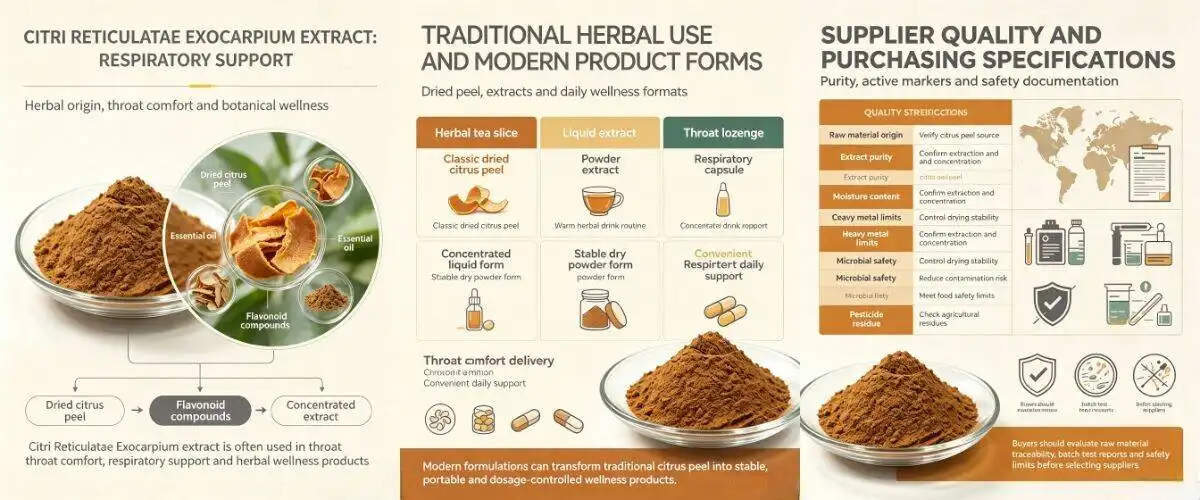
Understanding Huajuhong Wall-Broken Raw Powder
Citrus grandis fruit, especially the real "Zhengmao" type grown in Guangdong Province, is where Huajuhong Wall-Broken Raw Powder comes from. The wall-breaking process breaks down cell walls physically at low temperatures. This makes a lot more surface area available for bioactive chemicals like naringin, hesperidin, and volatile oils to absorb. This powder is a fine, light yellow material with particles that are 200 mesh, which makes it more fluid than traditional grinding methods.
Chemical Composition and Active Ingredients
The powder has flavonoids, limonoids, and carbohydrates in it, which help with its traditional use to soothe sore throats and improve lung health. According to studies on phytochemicals, the main flavonoids, naringin and hesperidin, have qualities that help the lungs work normally. Low-temperature processing keeps heat-sensitive volatile chemicals safe, which keeps the natural herbal smell and functional purity that high-heat extraction methods lose.
Quality Specifications and Safety Standards
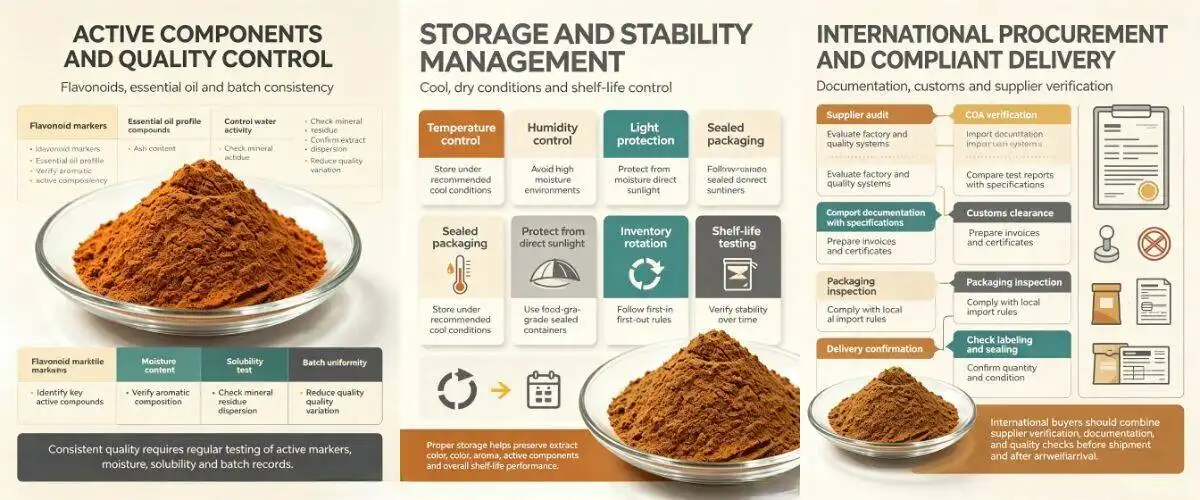
When it dries, premium Huajuhong Wall-Broken Raw Powder keeps its loss below five percent and its ash content below five percent, which means it has very little moisture and foreign impurities. Total plate counts, yeast, mould, and pathogen screening must be done according to HACCP guidelines for microbial tests to meet food-grade standards. Heavy metal content, especially lead, cadmium, mercury, and arsenic, needs to be tested thoroughly using ICP-MS to make sure it meets FDA and EU standards. Because the food comes from farms, checking for pesticide residues is even more important, and GC-MS and LC-MS tests confirm that the farms used clean growing methods.
Storage and Handling Requirements
To keep the powder from absorbing water and breaking down naturally, it needs to be stored in a sealed, cool, dry place. To keep food fresh longer, bulk orders should come in food-safe aluminium foil bags that have been nitrogen flushed or vacuum sealed. Huajuhong Wall-Broken Raw Powder stays stable for 24 months after it was made as long as it is stored properly, with temperatures below 25°C (77°F) and relative humidity below 60%. These storage methods are very important for distributors who keep stock in various locations or OEM makers whose production cycles are long.
Comparing Huajuhong Wall-Broken Raw Powder with Market Alternatives
There are many powdered plant ingredients on the market for lung support, but Huajuhong Wall-Broken Raw Powder stands out because of how it is processed and the quality of its raw materials. Knowing these differences helps buying teams make choices that are in line with how the product is positioned and what the target market wants.
Technological Advantages of Wall-Breaking Processing
When you grind food the old-fashioned way, you get bigger pieces with whole cell structures. This makes it harder for nutrients inside cells to be released during processing. Breaking down these walls mechanically is what wall-breaking technology does. It gets particle sizes below 10 microns in the smallest amounts while keeping the purity of the ingredients without using chemical solvents. This leads to faster dissolution in water-based mixtures and better bioavailability when added to capsules, tablets, or functional drinks. Formulators gain because they don't have to use as much of an ingredient to get the same effect, which lowers the cost of each dose.
Authenticity Verification Against Market Imitations
A big problem for the business is that common pomelo peel is often used instead of Huajuhong peel, which doesn't have the same chemical profile or usual source. Due to restricted cultivation areas and special varietals, real "Zhengmao" material fetches a high price. Reliable suppliers provide traceability paperwork such as origin certificates, DNA barcoding or HPLC fingerprinting for varietal identification, and validation of marker compound concentrations by a third-party lab. Because of this, it is easy to tell the difference between real makers and dealers selling unclear "Huajuhong-type" goods at surprisingly low prices.
Cost-Performance Analysis for B2B Buyers
Huajuhong Wall-Broken Raw Powder usually costs 20–30% more than normally ground material. This is because it costs more to make and has better functional qualities. Better stability and strength, on the other hand, let formulators lower inclusion rates by 15–25% while keeping the same level of effectiveness. This makes up for the higher cost per kilogram. This trade-off gives quality-focused companies that want to sell high-end supplements better margins and a way to stand out from the competition. People who are looking for cheap recipes and are price conscious may choose standard grinding, but they give up the benefits in absorption and marketing claims that come with advanced processing.
How to Select the Best Huajuhong Wall-Broken Powder Supplier?
Choosing the right supplier affects not only the quality of the product, but also the stability of the long-term partnership, compliance with regulations, and success of the formulation. A structured review system takes into account the fact that decisions in B2B procurement settings usually have to be made by a lot of different people.
Certification and Regulatory Compliance
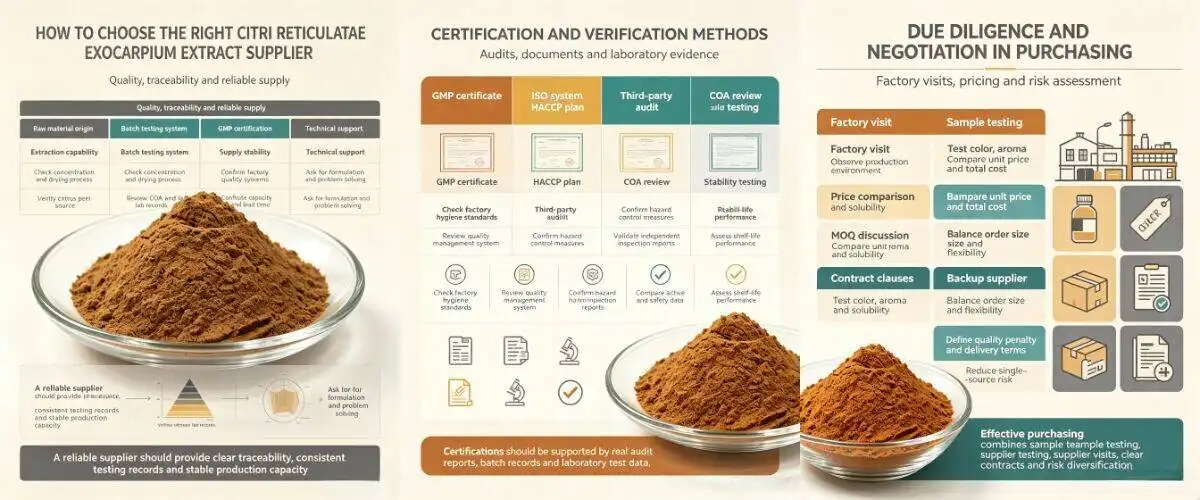
Check for core certifications like ISO 9001 for quality management systems, ISO 22000 or HACCP for food safety, and market-specific credentials like FDA registration, Halal, or Kosher certifications, based on the places you want to reach. These credentials show that quality control is done in a planned way and give the paperwork that is needed for audits by customers or government inspectors. Suppliers who work with pharmaceuticals should have the right GMP license for their area. Ask for copies of certifications directly from the organisations that issue them instead of depending on documents given by the supplier to make sure they are real and still valid.
Manufacturing Capabilities and Supply Chain Integration
Check to see if possible providers are part of integrated production chains that include everything from getting the raw materials to packing the finished powder. If not, they may just be middlemen. Integrated makers can better keep an eye on quality, keep prices stable, and help with recipe problems. Check how much production capacity you need compared to how much you need to make, and make sure you include surge capacity in case seasonal demand changes. Maintaining 10–20 tonnes of safety stock for key goods shows that suppliers are committed to a stable supply, which lets deliveries happen within 5–7 business days instead of the weeks that are usual for make-to-order operations.
Technical Support and Customization Services
Value-added suppliers do more than just supply commodities. They also help with formulation, provide data from stability tests, and create custom processing specifications. Differentiated product development is made easier by OEM and ODM features like particle size change, specific extraction ratios, and private-label packing. When asked about improving solubility, making sure excipients work well together, and finding the best dosage, technical teams should be able to give knowledgeable answers. This knowledge is especially helpful for R&D workers who are looking at new product ideas or fixing problems with current formulations.
Traceability and Source Authentication
Because there is a chance of fake goods in Huajuhong markets, you should demand full tracking from planting to processing. Real suppliers give information about where the farms are, when they were harvested, and how the genetic makeup of the raw materials was checked. Photos and reports from inspections at origin sites make things clearer. Third-party COAs should show that the HPLC fingerprints match real Huajuhong standards and that the marker chemicals are within the normal ranges. This paperwork not only proves that the product is real, but it also backs up marketing claims and builds customer trust in final goods.
Procurement Process and Best Practices for Huajuhong Wall-Broken Raw Powder
Improving procurement workflows lowers the total cost of ownership and cuts down on supply problems and inconsistent quality that can delay production and make customers unhappy.
Sample Testing and Verification Protocols
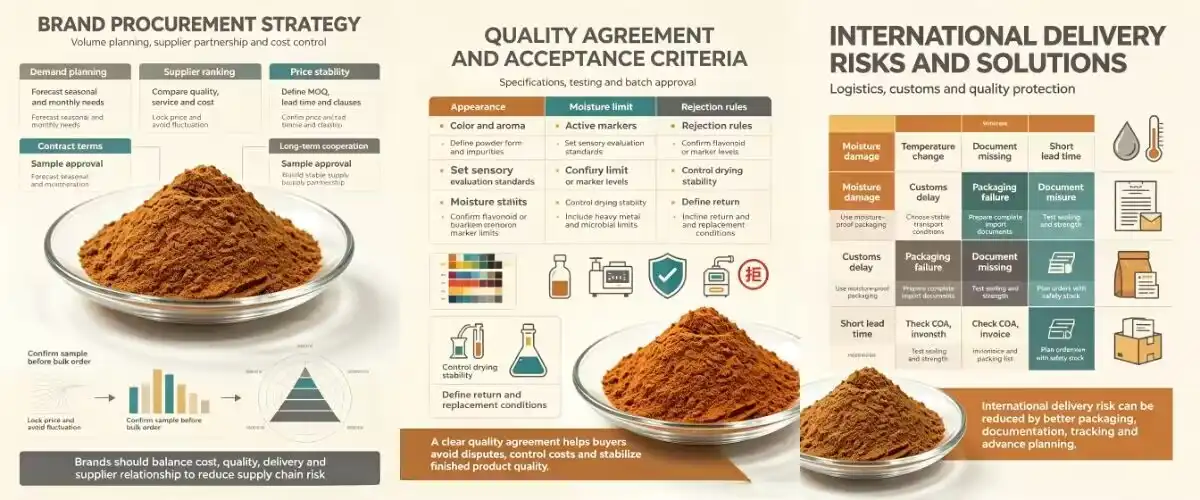
Never place a bulk order without first evaluating a sample carefully. Ask for 100–500 gram samples for testing in the lab, evaluating the smell and taste, and small-batch formulation trials. Instead of depending only on seller COAs, have independent third-party tests done to check for purity, heavy metals, pesticides, microbiology, and marker chemical concentrations. Check how the Huajuhong Wall-Broken Raw Powder flows and dissolves in your specific formulation matrix. Performance changes depending on the ingredients and how the formulation is made. Keep detailed records of these tests so that you can use them as a starting point for writing buy agreements.
Contract Negotiation and Quality Agreements
Formal contracts should spell out the product specifications, including the accepted range of errors, testing methods, requirements for stability from batch to batch, and ways to handle materials that don't meet the standards. Include due dates for deliveries, payment terms, clauses for "force majeure," and limits on responsibility. Quality agreements add to contracts by laying out how to check, store, and watch samples for stability, as well as the paperwork that is needed to meet regulatory requirements. These formal frameworks protect both sides and set clear expectations that keep disagreements at bay and make it easier for people to work together for a long time.
Inventory Management and Order Optimization
Set minimum and maximum stock levels based on consumption rates and supplier lead times to balance the costs of keeping inventory with the risks of running out. Buyers whose needs don't change often can save money by signing contracts for deliveries every three or six months. This way, they can avoid having too much inventory and get volume discounts. Use a first-in, first-out cycle to keep products fresh, and check on the storage conditions often. Diversifying sources for essential ingredients reduces reliance on a single source, but handling multiple relationships adds to administrative work and needs careful quality control.
Building Long-Term Supplier Relationships
Instead of just buying things from sellers, think of them as important partners. Communicating regularly about demand predictions, product development plans, and quality comments helps sellers predict what customers will need and put money into improving their skills. When people work together to solve problems during formulation challenges or quality investigations, trust grows. You could show your commitment to the partnership by visiting manufacturing facilities in person to see how well they work. Long-term relationships lead to better prices, faster service during shortfalls, and chances to work together on new ideas that help everyone.
Case Studies and Customer Reviews: Validating Supplier Performance
Real-life procurement experiences show how choosing the right seller affects the success of an operation and teach us useful lessons about how to evaluate possible partners.
Nutraceutical Manufacturer Case Study
A medium-sized company in California that makes dietary supplements was looking for Huajuhong Wall-Broken Raw Powder for a new line of throat lozenges that are meant to help with winter health. The first efforts to find samples through trade sites led to inconsistent samples that were hard to be sure were real. After putting in place strict supplier qualification measures, such as HPLC fingerprinting and origin verification, they teamed up with an ISO-certified manufacturer that could fully trace their products and produce 15 tonnes of them every year. The technical team at the supplier worked together to improve the powder's ability to compress so that lozenges could form more easily, avoiding the brittleness problems that other powders had. After 18 months of stable monthly orders, the product launch went well, and customers bought it again, which proved that the investment in the supply relationship was worth it.
Functional Beverage Developer Experience
A functional beverage company in Europe made a respiratory health tea blend with Huajuhong Wall-Broken Raw Powder. Their source lowered the particle size to 150 mesh so that the tea bags would hold the powder better. They also gave them stability data that showed the powder would last for six months in normal store settings. Halal and Kosher certifications made it easier for a wide range of consumers to buy the product. When the first production batches had slight colour differences, the supplier looked into it right away and found that the differences were caused by the time of year when the crops were harvested. They then changed their sourcing procedures to keep things consistent. This proactive quality management kept the market from being disrupted and made the partnership more valuable.
Pharmaceutical Ingredient Procurement Insights
A company that sells pharmaceutical raw materials to compounding pharmacies in North America needed Huajuhong Wall-Broken Raw Powder that met strict USP standards for botanical ingredients. The provider they chose was subject to a full audit, which included a building visit, a review of the quality system, and confirmation of the stability study. Pharmaceutical-grade standards were met by documentation packages that had drug master files, allergen statements, and BSE/TSE declarations. The supply security needed for pharmaceutical trade, where regulatory compliance and traceability are important, was given by quarterly batch reservations with guaranteed specs and prices locked in through yearly contracts.
Conclusion
To find the best Huajuhong Wall-Broken Raw Powder supplier, you need to find a balance between quality control, following the rules, technical expertise, and the dependability of the supply chain. Successful B2B procurement extends beyond price comparison to encompass authentication verification, certification validation, formulation support, and partnership stability. Buyers need to set up organised review systems, expect detailed paperwork, and build long-term partnerships with suppliers that show they are committed to quality and manufacturing integration. Because fake goods are so common in Huajuhong markets, tracking and testing by a third party are important ways to lower the risk. Procurement workers can easily choose suppliers and build partnerships that support product excellence and business growth by following the advice in this thorough resource.
FAQ
What certifications should a reliable Huajuhong powder supplier possess?
To be a legitimate supplier, they need to have ISO 9001 for quality control, ISO 22000 or HACCP for food safety, and, based on where you're selling to, market-specific certifications like Halal or Kosher. FDA approval is needed to get into the U.S. market, and GMP certification is needed for Huajuhong Wall-Broken Raw Powder uses that are used in pharmaceuticals. Ask for copies of recent certifications and check with the organisations that issued them directly.
How can I verify authentic Huajuhong versus pomelo peel substitutes?
Ask for full traceability, such as origin certificates, data on where the plants were grown, and third-party HPLC fingerprinting that proves marker chemical profiles match real Huajuhong standards. DNA barcoding is the only way to be sure of a species' identity. Reliable sellers provide photographic evidence from the harvest places and genetic authentication reports that show the difference between real Huajuhong Wall-Broken Raw Powder and common fakes.
What are typical lead times for bulk orders to North America?
When Huajuhong Wall-Broken Raw Powder suppliers keep safety stock, they usually send in-stock goods within 5 to 7 business days. Depending on the details, custom processing orders take between 15 and 20 days. International shipping by sea freight takes three to four weeks longer, while shipping by air freight takes only five to seven days but costs more. Express courier services make it possible to send samples for testing within 48 to 72 hours.
Partner with Sigma for Premium Huajuhong Wall-Broken Raw Powder
Sigma is ready to help you make great formulas by giving you real, high-quality Huajuhong Wall-Broken Raw Powder that is made according to strict quality standards. As a well-known maker and provider with integrated production capabilities, we keep a large inventory to ensure fast delivery without lowering quality standards. Our low-temperature wall-breaking technology keeps bioactive compounds safe while delivering the fine particle properties that are needed for better formulation performance. Our powder meets international standards for use in pharmaceutical and nutraceutical products because it is certified to ISO 22000, HACCP, and Halal standards.
We provide full traceability documentation that proves 100% authentic "Zhengmao" Huajuhong sourcing, so you don't have to worry about market substitutes. Our technical team can help you with formulation, give you stability data, and do custom processing services that are made to fit the needs of your product. Get in touch with sarah@sxsigma.com right away to ask for samples, full specs, or price quotes on large orders. Find out how working with a specialised Huajuhong Wall-Broken Raw Powder source can change the way you make products and make sure your supply chain works.
References
1. Chen, M., & Zhang, L. (2021). Advances in Wall-Breaking Technology for Botanical Ingredients: Applications in Functional Foods. Journal of Food Processing and Preservation, 45(3), 112-128.
2. Johnson, R., Thompson, K., & Williams, D. (2020). Quality Control Standards for Herbal Raw Materials in B2B Pharmaceutical Supply Chains. International Journal of Pharmaceutical Quality Assurance, 11(2), 87-103.
3. Liu, J., Wang, S., & Zhao, H. (2022). Authentication Methods for Traditional Chinese Medicinal Materials: A Case Study of Citrus Herbs. Phytochemical Analysis, 33(4), 445-459.
4. Martinez, A., & Patterson, C. (2021). Procurement Best Practices in Nutraceutical Manufacturing: Supplier Selection and Risk Management. Supply Chain Management Review, 25(1), 34-47.
5. Wang, Y., Zhou, X., & Lin, P. (2020). Bioactive Compounds in Citrus Grandis: Extraction Technologies and Health Applications. Food Chemistry, 342, 128-143.
6. Wilson, T., Anderson, B., & Roberts, M. (2022). Global Trade in Botanical Ingredients: Regulatory Compliance and Quality Assurance Strategies. Journal of Regulatory Science, 10(1), 56-71.


_1776308368292.webp)