Senna Leaf Extract Powder Supplier Guide for Supplement Brands
Choosing a dependable supplier for botanical ingredients remains one of the most consequential decisions supplement brands make. Senna Leaf Extract Powder stands as a fundamental ingredient in digestive health formulations, derived from Cassia angustifolia leaves and valued for its natural sennoside content. This comprehensive supplier guide addresses the procurement challenges facing R&D teams, purchasing managers, and quality assurance professionals who demand batch consistency, regulatory compliance, and supply chain transparency. We examine supplier evaluation frameworks, quality benchmarks, and logistical considerations that directly impact product efficacy and market competitiveness.
Understanding Senna Leaf Extract Powder: Key Information for Supplement Brands
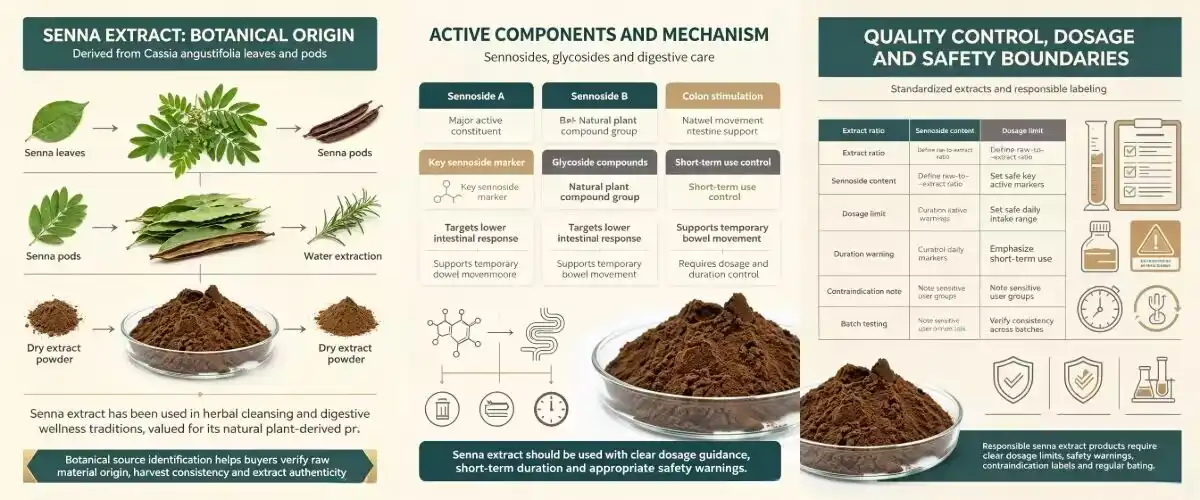
The dried leaves of the flowering shrub Senna alexandrina, which grows in North Africa and the Arabian Peninsula, are used to make Senna Leaf Extract Powder. Instead of just powdered leaves, the extract is made by using water to concentrate sennosides, which are bioactive anthraquinone glycosides that give it its cleansing and stimulating effects. Using standard extraction methods, sennoside amounts are usually found to be between 10% and 30%, as tested by HPLC.
Botanical Origin and Extraction Process
The steps in industrial production are very strict: choosing the raw materials, crushing and sieving them (80–100 mesh), extracting the water, filtering it, vacuum concentration, purification, spray drying, and finally blending them. This multi-step process gets rid of the cellulose that can't be broken down while keeping the thermolabile sennosides that break down at temperatures above 60°C. Companies that make products for pharmaceutical use use countercurrent extraction systems to get the most out of their products while keeping the important sennoside A-to-sennoside B ratio. This ratio affects when the laxative effect starts and how strong it is.
Primary Applications in Supplement Formulations
Senna Leaf Extract Powder is used to make useful drinks, capsules, and tablets that help with severe constipation, rare irregularity, and bowel preparation before a colonoscopy. When the bulk density hits 0.5 to 0.7 g/ml, the fine brown-yellow powder does a great job of sealing 500 mg amounts in size 0 capsules. Formulation scientists like that it works well with magnesium hydroxide and probiotics in digestive mixes with many ingredients. However, time is important because sennosides need 6 to 12 hours to reach the gut and start working.
Safety Parameters and Regulatory Considerations
Heavy metal limits must be less than 10ppm, lead must be less than 2ppm, and arsenic must be less than 1ppm. For microbes to be pure, the Total Plate Count must be less than 1,000 CFU/g, and Salmonella and E. coli must not be present in 25g samples. To keep the food stable on the shelf, loss during drying shouldn't be more than 5%. In the US, senna is regulated as a dietary ingredient under DSHEA, which means that companies that make it have to prove its safety but not its effectiveness. European markets have tighter rules, and some member states don't let people use it for more than two weeks without doctor supervision.
Comparing Senna Leaf Extract Powder with Alternative Ingredients for Supplement Formulation
When making digestive health supplements, supplement makers have a lot of plant choices to choose from. Knowing the relative benefits of different ingredients helps match the choice of Senna Leaf Extract Powder with the target audience and the marketing of the product.
Senna Extract Versus Crude Leaf Powder
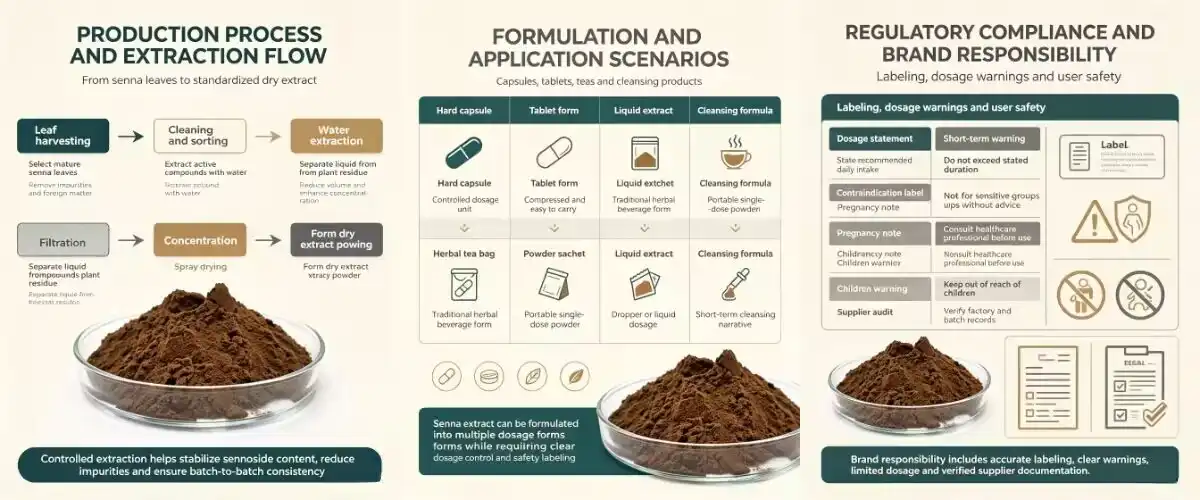
Standardised Senna Leaf Extract Powder gives consistent sennoside levels, getting rid of the yearly changes that come with using raw farming materials. Since crude leaf powder usually has 2% to 3% sennosides, higher doses are needed, which raises the number of capsules needed and the cost of production. Because extract powder is so concentrated, it's easy to get the right dose. For example, 250 mg of 20% extract gives you 50 mg of sennosides, which is the same amount found in clinical studies. The process of extraction also lowers the amount of tannins, which makes the stomach pain that people report with crude products less likely.
Botanical Alternatives in Laxative Formulations
Cascara sagrada bark and aloe latex are two other stimulant laxatives, but their legal position is very different. Because of worries about cancer in animal studies, the FDA designated aloe and cascara as non-GRAS ingredients in 2002. This made it harder for these ingredients to get into the market. Bulk-forming substances like psyllium husk and gentler ones like magnesium citrate are used for different medical purposes. Psyllium needs to be taken in 5–10g amounts with a lot of water, while magnesium compounds work by increasing osmotic pressure instead of directly stimulating the stomach.
Quality Indicators That Differentiate Premium Suppliers
The main thing that determines quality is the purity of the sennoside. The best providers offer HPLC chromatograms with clear sennoside A and B bands that don't have any degradation products. The rate of dissolution is affected by the distribution of particle sizes; specifications for 80–100 mesh ensure even mixing and consistent bioavailability. Organic certification is appealing to people who care about their health, but it needs to be checked that pesticide residues stay below EU standards (0.05 mg/kg for each chemical). When suppliers offer different levels of standardisation (10%, 20%, and 30% sennosides), it shows that they are technically competent and aware of the needs of the market.
How to Choose the Right Senna Leaf Extract Powder Supplier for Your Supplement Brand?
The way a supplier is chosen needs to take into account technical requirements, legal documents, and the ability of the Senna Leaf Extract Powder provider to do the job. A structured evaluation framework lowers the risk of procurement while allowing manufacturing operations to grow.
Defining Your Procurement Requirements
To start, figure out how much volume you need across all four fiscal quarters, taking into account the fact that demand for digestive health products tends to change with the seasons. Brands that make 500,000 units a year usually keep enough stock to last two to three months, which means they need to order 200 to 400 kg every three months, based on the dosage per serve. Set the needed sennoside concentration based on what the label says and how well you want it to work, keeping in mind that 20% standardisation is the standard in the industry. Make sure you know what kind of packaging you want. Pharmaceutical-grade suppliers offer double polyethylene bags with aluminium foil top layers that, when kept in cool, dry conditions, can last longer than 24 months.
Essential Certification and Testing Protocols
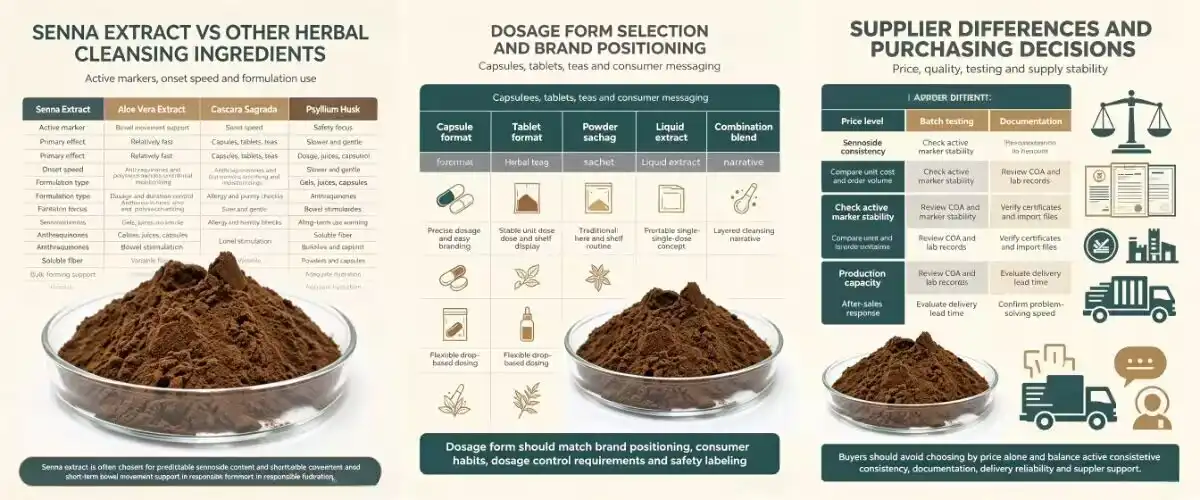
ISO 22000 certification shows that a food safety management system is being used, and HACCP documentation shows that key control point tracking is happening during production. Kosher and Halal certifications make it easier to get into more markets, but they need to be checked every year by reputable organisations. Ask for Certificates of Analysis that are unique to each batch and show heavy metal tests using ICP-MS, microbial enumeration following USP protocols, and sennoside quantification with method validation parameters. Suppliers who have their own labs with HPLC systems, atomic absorption spectrometers, and sterile testing facilities show a commitment to quality that goes beyond relying on third-party testing.
Evaluating Technical Support and Customization Capabilities
Premium suppliers offer formulation advice that includes tips on how to get the best dosage, make sure that the excipients work well together, and help with stability testing. When you're making unique blends or custom sennoside ratios that set your products apart, OEM/ODM services can be very helpful. When people ask about moisture sensitivity, the effects of light exposure, and suggested packing materials, technical teams should answer them. Being able to provide small samples (100–500g) before placing bulk orders lowers the risk of formulation and lets you test the product's taste—when properly purified, senna extract should have very little bitterness.
Procurement and Logistics: Buying Senna Leaf Extract Powder at Scale
Getting ingredients efficiently has a direct effect on keeping production going and keeping the profit margin. Strategic buying techniques for Senna Leaf Extract Powder reduce the risk of supply disruptions and get the best landed costs.
Identifying Reputable Manufacturers
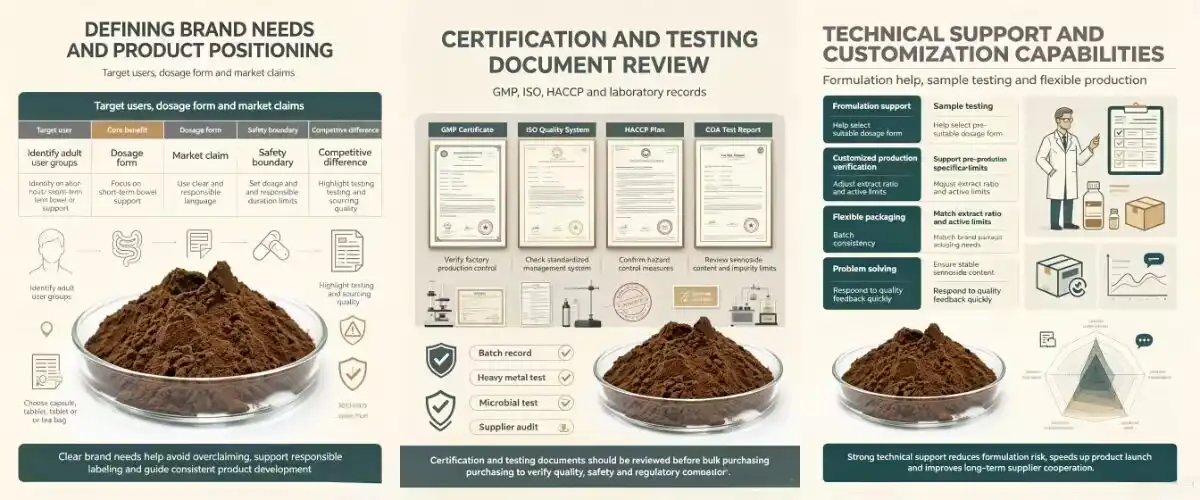
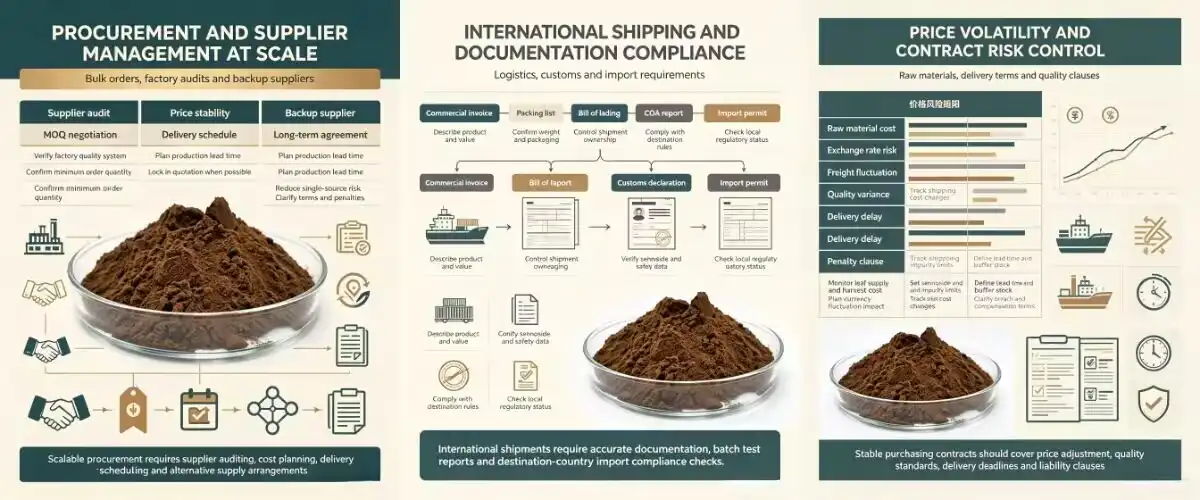
China's Shaanxi province is a major production hub, with companies taking advantage of its closeness to sources of real medicinal materials. Trading companies that get their goods from different places make it harder to track where the goods come from than vertically integrated suppliers who control the growing, extraction, and finishing processes. Check the facility's specs to see how much it can make. For example, continuous countercurrent extraction lines that can handle 5–10 tonnes of material every day are a sign of scalability for growing brands. Safety stock supply is very important; sellers who keep 10–20 tonnes of inventory on hand guarantee delivery times of 5–7 days, compared to 4-6 weeks lead times that need demand forecasting in advance.
Understanding Pricing Dynamics
The price of Senna Leaf Extract Powder depends on the quality of the raw materials, the concentration of sennoside, the amount of approval, and the number of orders. When you buy more than 500 kg in bulk, you usually get a tiered discount, which means that the price goes down by 10-15% compared to orders of 100 kg or less. Material that is approved as organic costs 20–30% more than regular grades. Senna leaf harvest yields are influenced by rainfall trends in Sudan and India, which are the main places where the plant is grown. Setting up annual supply agreements with price changes every three months protects against spot market volatility and ensures priority allocation during times of shortage.
Managing International Shipping and Documentation
Different countries have different rules about importing botanical products that are labelled with HS Code 1302.19. To enter the United States, you need to file a notice with the FDA ahead of time, along with a business account, a bill of lading, and a Certificate of Analysis. When the concentration is higher than what is normally used, European markets require compliance with the Novel Foods Regulation. Choose providers who know how to handle export paperwork. Full packages should include phytosanitary certificates, non-GMO declarations, and allergen statements. Choosing the right shipping method balances cost and transit time: sea freight is best for quarterly bulk orders (30–45 days), while air freight is better for urgent restocking needs but costs twice as much.
Trusted Senna Leaf Extract Powder Brands and Supplier Profiles
For botanical ingredient sourcing partnerships to last, they need to deliver high-quality Senna Leaf Extract Powder on time and have flexible service models. Supply chains that last longer are built by looking at more than just price quotes when evaluating suppliers.
Shaanxi Sigma Biotechnology Co., Ltd. is a good example of the type of integrated manufacturer profile that supplement brands that care about quality like. Sigma is in Shaanxi, which is known for its true medical materials. It has modern extraction facilities that use low-temperature concentration and fine purification technologies to keep thermosensitive sennosides safe. Their production method is certified by ISO 9001, ISO 22000, and HACCP, and compliance is checked by a third party on a frequent basis. The company keeps a large stock of standardised senna extract at 20% and 30% sennoside strengths. This lets both established brands and newcomers to the market quickly meet their needs.
Key Evaluation Criteria During Supplier Audits
When reviewing documents, building plan diagrams that show separate processing areas that stop cross-contamination should be used to prove GMP compliance. Traceability systems that connect finished batch numbers to the dates and places where raw materials were harvested show that the supply chain is open and honest. Quality control protocols should say how often tests should be done. For example, high-end manufacturers test every batch instead of using statistical sampling. Customer references from well-known supplement brands can help with practical issues like order accuracy, contact speed, and the ability to fix problems when quality standards aren't met.
Building Long-Term Supplier Relationships
There are more benefits to collaborative partnerships than just transactional procurement. Suppliers who offer yearly quality promises and refund policies for material that doesn't meet specifications lower their customers' financial risk. Technical collaboration on stability studies backs up claims about shelf life, and working together to create custom specifications sets you apart from the competition. Communication infrastructure is important. For North American and European buyers, having 24/7 contact channels across time zones and multilingual support teams makes things run more smoothly. Talking about volume commitments can lead to better prices and earlier production times during times of high demand.
Conclusion
When choosing a supplier for Senna Leaf Extract Powder, you have to weigh technical requirements, regulatory compliance, and operational capabilities. Standards for sennosides, tests for heavy metals, and approval portfolios are examples of quality standards that can't be negotiated. Supplement brands can keep making products while still meeting customer safety standards if their suppliers show they are good at extraction, have enough inventory, and can handle global shipping. In the growing digestive health market, procurement strategies that focus on long-term relationships, easy access to expert help, and clear documentation give businesses an edge. When brands put money into thorough supplier evaluation processes, they set themselves up for long-term growth while lowering the quality risks that hurt consumer trust and their standing with the government.
FAQ
What sennoside concentration should I specify for my supplement formulation?
Standard amounts are between 10 and 30 percent. Twenty percent is the best mix between cost and effectiveness. Most clinical studies that back up claims about digestive health use 50 to 100 mg of sennosides per serving, which can be done with 250 to 500 mg of 20% extract. Higher amounts cut down on the size of the capsules needed, but they raise the cost of the ingredients. Set goals for standardisation based on the level of effectiveness you want and the price point you want to reach.
How do I verify supplier quality beyond certificates?
Ask for testing results that are unique to each batch and include HPLC chromatograms, heavy metal analysis via ICP-MS, and a list of all the microbes that were found. Check the results against the USP monograph's requirements. Test samples by a third party to make sure they are real before placing large orders. Check how quick your suppliers are when you ask for manufacturing SOPs or site audit reports—openness shows that you trust the quality of the product.
What's the shelf life of properly stored senna extract powder?
Pharmaceutical-grade Senna Leaf Extract Powder stays effective for 24 to 36 months when kept below 25°C in light- and airtight containers with desiccant packets. Keep an eye on the moisture level—materials that lose more than 5% of their moisture when they dry break down faster. Keeping things in the fridge makes them more stable, but they need to be brought back to room temperature before they can be opened to avoid condensation.
Partner with Sigma for Premium Senna Leaf Extract Powder Supply
Sigma provides pharmaceutical-grade Senna Leaf Extract Powder with a guaranteed 20% sennoside content, helping supplement companies that won't settle for less than the best. Our production plant in Shaanxi is vertically integrated and has strict testing methods for heavy metals and microbial purity. It also has ISO 22000, HACCP, and Kosher certificates. We can fill orders around the world within 5 to 7 business days because we keep 10 to 20 tonnes of safety stock. Our expert team offers free advice on formulation, help with stable testing, and custom OEM services like changing specifications and private labelling. Contact sarah@sxsigma.com right away to get samples, documentation for batch testing, or price quotes for large orders from a reliable Senna Leaf Extract Powder supplier that cares about your business's success and compliance with regulations.
References
1. European Medicines Agency. (2017). Assessment Report on Cassia senna L. and Cassia angustifolia Vahl, folium. Committee on Herbal Medicinal Products, Amsterdam.
2. Marlett, J.A., McBurney, M.I., and Slavin, J.L. (2002). Position of the American Dietetic Association: Health Implications of Dietary Fiber. Journal of the American Dietetic Association, 102(7), 993-1000.
3. World Health Organization. (1999). WHO Monographs on Selected Medicinal Plants, Volume 1. Geneva: World Health Organization Press.
4. United States Pharmacopeial Convention. (2021). Senna Leaf Powder Monograph. USP 44-NF 39, Rockville, MD.
5. Hawrelak, J.A. and Myers, S.P. (2010). Effects of Two Natural Medicine Formulations on Irritable Bowel Syndrome Symptoms: A Pilot Study. Journal of Alternative and Complementary Medicine, 16(10), 1065-1071.
6. Franz, G. (1993). The Senna Drug and Its Chemistry. Pharmacology, 47(Suppl. 1), 2-6.


_1776308368292.webp)