BLOG List

Ashwagandha Extract: Ayurvedic Benefits for Hair, Skin, Body
Pure Ashwagandha Extract has become an important part of modern health products, combining old Ayurvedic knowledge with modern science proof. This concentrated botanical derivative, which is tested for withanolides and bioactive compounds, helps hair health, skin health, and overall body wellness. Pharmaceutical-grade extracts are more reliable from batch to batch than raw root powders, which can vary in how strong they are. This is something that formulation engineers need. This plant has adaptogenic qualities that help control stress, keep hormones in balance, and protect cells. These are three important things for the effectiveness of cosmetics and nutraceuticals in today's health markets.


Understanding Pure Ashwagandha Extract and Its Ayurvedic Benefits
What Sets Standardized Extracts Apart from Raw Materials
Through controlled extraction methods, the production process turns the roots of Withania somnifera into a Pure Ashwagandha Extract. Using advanced methods, bioactive withanolides are separated from inert plant fibre, leaving behind a product with confirmed levels of active ingredients. We use supercritical CO2 extraction and ethanol-based methods at Sigma to keep chemicals that are sensitive to heat safe. This makes a fine, yellow-brown powder with a fatty acid content of at least 25%.
Standardisation solves a major problem in the business-to-business market: formulators need to know how well their products will work in different production processes. Standardised extracts have 5–10% withanolide amounts, which means lower dose requirements and clearer label claims. Raw powders only have 1% to 2% active chemicals. The 80-mesh standard makes sure that sealing lines can flow easily, and the ≤2% loss on drying makes sure that the material stays stable while it's being stored and shipped.
Ayurvedic Principles Meet Modern Dermatological Science
According to ancient Ayurvedic texts, Ashwagandha is a Rasayana, which means it is a tonic that helps you live longer. Modern study backs up these historical uses with processes that have been studied. Withanolides change the processes that make cortisol, which lowers chronic stress that makes hair loss and skin ageing happen faster. Cortisol imbalance makes sebum oxidation and collagen breakdown worse; adaptogenic intervention helps keep the structure of the dermis intact.
Clinical studies show that people who took 300–600 mg daily had denser hair and lower levels of inflammation markers. Free radicals are made by UV light and environmental pollutants. Antioxidants get rid of them, protecting melanocytes and keratinocytes from oxidative damage. Because it buffers stress and protects cells at the same time, the extract is very useful for cosmetic uses on urban populations that are exposed to external factors.
Comprehensive Benefits Across Multiple Physiological Systems
The plant's effects go beyond how it looks on the surface. The immune system is changed by activating macrophages and making natural killer cells stronger, which supports the overall robustness of the body. Improving thyroid function has been shown to help hair growth cycles and skin metabolism in cases of subclinical hypothyroidism. The GABA-mimetic features of the extract help people sleep soundly, which is important for growth hormone release and cell repair processes that keep skin smooth and hair follicles healthy.
Because these benefits work together, formulation makers are using the ingredient more and more in all-around health goods instead of ones that only do one thing. This plant is especially useful for people who are making vitamins to help with sleep, stress management pills, or beauty-from-within formulas.

How to Use Pure Ashwagandha Extract in Health and Wellness Formulations
Dosage Guidelines for Oral and Topical Applications
For stress-related benefits, oral supplements usually range from 300 mg to 600 mg daily, and many clinical trials used divided doses given twice a day. For sleep aids, which is one of the main uses of the extract, taking it in the evening, one to two hours before bedtime, makes the GABA-ergic benefits stronger. With a ≥25% fatty acid content and standardised withanolide profiles, our manufacturing specifications make it easy for formulators to figure out the exact dose. For example, it's easy to figure out how to compress tablets or fill capsules.
When used topically in serums and creams, the extract content is usually between 2 and 5 percent, but this can change depending on the carrier systems and other active ingredients. The problem is dissolving them. Pure Ashwagandha Extract must be carefully matched to the formulation type: water-based products work better with aqueous extracts, but ethanol-based extracts work better with dry or emulsion systems because they are stronger. Stability testing at high temperatures (40°C/75% RH) makes sure that the withanolide structure stays the same for the whole shelf life that was stated.
Formulation Synergies and Stability Considerations
When you mix Ashwagandha with other plants that work well with it, the overall effect is better. When combined with Rhodiola rosea, the adaptogenic benefits are amplified, and when combined with Bacopa monnieri, cognitive support goods work better. When used together in hair care products, biotin and saw palmetto affect the health of hair follicles in more than one way. Oxidative breakdown must be taken into account in stability measures. Adding vitamin E or rosemary extract as natural preservatives makes products last longer. Since the pH range of the extract is from 4.5 to 7.0, it can be used with most cosmetic bases.
Encapsulation technologies, such as liposomal delivery or cyclodextrin complexation, make oral supplements more bioavailable by dealing with the hydrophobic nature of withanolides, which can make them harder to absorb. Quality control measures are used at every stage of production, from choosing the raw materials to testing the finished product to make sure it meets strict safety standards. ICP-MS heavy metal testing confirms compliance with international standards, which is a must for brands that want to sell their products in FDA-regulated markets.

Comparing Pure Ashwagandha Extract with Other Market Options
Extraction Technologies and Their Impact on Quality
There are different extraction methods on the market, and each one changes the end chemical profile. Water-only extraction makes mild, food-safe ingredients with a moderate level of potency. These are great for use in beverages but need higher inclusion rates. Hydro-ethanol extraction gets a higher concentration of withanolide while keeping the clean label appeal. However, it may need co-solvents to dissolve in water. Supercritical CO2 extraction is the best method because it produces solvent-free products that are the purest available.
This is the method we use most at our production facilities in Shaanxi. This technology keeps the bioactivity of withanolide structures by stopping the thermal breakdown of lactone rings inside them. Branded extracts, like KSM-66 and Sensoril, are different because they use special methods and different amounts of withanolide. KSM-66 focuses on getting roots only and processing them in milk, which gives full-spectrum profiles. Sensoril, on the other hand, uses leaf material to get a higher Withaferin A content. Knowing these differences helps procurement managers make sure that the standards for ingredients match the tastes of the target market and the rules that apply.
Organic Certification and Clean-Label Positioning
The need for organically approved ingredients is still changing how things are bought. Organic Pure Ashwagandha Extract costs more than other types, but it has marketing benefits that make up for the higher price in competitive buyer groups. The certification proves that the plants were grown without using pesticides, which solves the problem of residues that happen with conventionally grown plants. Sigma's supply chain can be tracked all the way back to hired farms in Shaanxi's real medicinal material regions, where the land naturally enhances phytochemical profiles.
With this geographical benefit and ISO 22000 and HACCP certifications, you can be sure that the goods you buy will meet the strict requirements for importing into Europe and North America. Clean-label trends like simple ingredient lists are driving demand for minimally processed ingredients, and Pure Ashwagandha Extract—processed without using chemical solvents or additives—fits in perfectly with this trend. Brands that want to be seen as natural or that are trying to reach health-conscious customers find that organic certification boosts their credibility and helps them set higher prices, which increases their profit margins.

Procurement Guide: Sourcing High-Quality Ashwagandha Extract for Bulk and OEM Use
Supplier Qualification and Documentation Requirements
To find trustworthy suppliers, you need to carefully check their manufacturing credentials. GMP compliance is the minimum standard; sites should show that they have current licenses from reputable groups. Certificates of Analysis (COA) must list the amount of withanolide using HPLC method; gravimetric testing isn't very accurate and often makes claims about potency 2-3 times higher than they really are. Heavy metal panels should list the amounts of Lead, Arsenic, Cadmium, and Mercury they contain. ICP-MS testing should be used instead of old-fashioned colorimetric methods.
Total Aerobic Microbial Count (TAMC) <1000 cfu/g and the lack of pathogens are microbiological safety factors that make sure the product is safe for food-grade uses. When you ask for multiple batch COAs, you can see if the quality is the same across all production runs, which is very important for large-scale manufacturing partners. Suppliers who give open factory checks, third-party testing confirmation, and detailed technical data sheets show that their operations are mature, which lowers the risk in the supply chain.
Pricing Dynamics and Logistical Considerations
The price of an extract is directly related to its quality and the amount that is made. Standard grades of 2.5–5% withanolide are much cheaper than premium grades of 10% withanolide. This is because the yields are different and the processing is more difficult. For stock items, the minimum order quantity (MOQ) is usually between 25 kg and 100 kg. For custom extraction services, however, higher commitments may be needed. Sigma keeps 10–20 tonnes of safety stock for key specifications. This lets us fulfil orders quickly, within 5–7 working days, giving us a competitive edge when project deadlines are tight.
In global shipping operations, you have to decide whether to ship goods by sea to save money or by air when speed is worth the extra cost. Knowing Incoterms (FOB, CIF, DDP) can help you avoid extra costs during customs clearance. Import rules are different in each country. For example, dietary supplements in the US need to be registered with the FDA and follow DSHEA, while in the EU, they need to go through a new food assessment or plant authorisation process. We help with all the paperwork, like phytosanitary certificates, non-GMO declarations, and allergen statements. This speeds up the regulatory approval process for buyers from other countries.

Maximizing Ashwagandha Extract's Value in Your Product Line
Strategic Customization for Market Differentiation
Customising the formula turns common ingredients into assets that define a brand. Changing the concentrations of withanolides makes different product lines, and using Pure Ashwagandha Extract as the core active allows for precise potency control across all tiers. Base formulations at 300 mg with 5% withanolides are for price-conscious customers, while premium formulations at 600 mg with 10% concentrations are for picky customers who are ready to pay more for strength. The choice of delivery method affects the user experience; capsules are convenient, tablets allow for scored dosing, and powders give you more options for stack routines.
In beverage applications, sensory properties are important. The bitterness of the extract can be fixed by co-processing with flavour masking agents or microencapsulation. Time-to-market is sped up by working together with providers while a product is being developed. Our technical team helps with problems related to solubility, testing for compatibility, and making regulatory documents. This partnership approach works especially well when making new forms of medicines, like fizzing tablets, gummies, or topical patches, because it keeps expensive reformulation cycles from having to be done again and again.
Leveraging Certifications for Competitive Advantage
In crowded markets, third-party certifications are a strong sign of trust. In addition to organic certification, Kosher and Halal approvals allow brands to reach more customers, which is especially helpful for brands that want to sell their products in other countries. People who care about their health and are worried about crop engineering are interested in Non-GMO Project Verification. Vegan approval proves that no animal-derived processing tools were used, which is important for marketing plant-based products.
For these certifications, you need to provide a lot of paperwork and have your facility inspected, so choosing the right supplier is very important. Sigma keeps its ISO 22000, FSSC 22000, ISO 9001, HACCP, Halal, and Kosher standards up to date so that it can offer customers complete compliance solutions. When you engage in good infrastructure, legal risk goes down, market access speeds up, and your brand's image goes up. These certificates are used by marketing teams in ads, on-line product listings, and on store shelves to set products apart in categories where functional claims tend to center around similar benefits.
Conclusion
Adding standardised Pure Ashwagandha Extract to health products is more than just picking the right ingredient; it shows a dedication to quality, effectiveness, and market usefulness. As people learn more about adaptogens and demand cleaner labels, the choices they make today about where to get their products will affect their competitive position for years to come. The plant's ability to be used for hair, skin, and overall health gives formulators more options than most single ingredients. When procurement professionals put seller qualifications, extraction methods, and certification portfolios at the top of their list of priorities, their brands are set up for long-term success in health markets that are always changing.
FAQ
What distinguishes root-only from leaf-containing extracts?
Root-only preparations are in line with traditional Ayurvedic medicine and have been used safely in clinical trials for decades. Leaf-inclusive mixes often have withanolide rates that are higher than they really are because they contain more Withaferin A, a compound that can kill cells at high amounts. Premium suppliers use HPTLC fingerprinting to confirm root-exclusive sourcing, giving safety-conscious brands peace of mind.
How do you ensure long-term stability in finished products?
Withanolide lactone rings don't break down when the moisture content is kept below 2% through Loss on Drying standards. When stored properly, multi-layer foil-laminated packaging blocks oxygen and moisture, which means the food can last up to 24 months on the shelf. Before going on sale, these parameters are confirmed through stability testing under accelerated conditions.
Can the extract withstand food processing temperatures?
The ingredient stays stable up to 120°C during short processing breaks, which means it can be used to make gummies and baked goods. To keep the most bioactivity, heat contact should be kept to a minimum. During formulation trials, temperature-time profiles are made that show when processing is safe for certain applications.
What analytical methods verify withanolide content accurately?
HPLC is the gold standard because it accurately separates and measures each withanolide molecule. The methods of gravimetric and UV spectroscopy are not very specific, and they often pick up unrelated chemicals that make the visible potency look higher. Requesting HPLC-verified COAs makes sure that claims are based on real bioactive content.
Partner with Sigma for Reliable Pure Ashwagandha Extract Supply
Sigma is ready to help you reach your goals for formulations by providing pharmaceutical-grade Pure Ashwagandha Extract that is backed by full quality assurance. We are a well-known company that makes Pure Ashwagandha Extract. Our roots are in Shaanxi's authentic botanical areas, and we use our location and modern extraction infrastructure to make sure that our ingredients are always consistent and legal. Our ISO-certified facilities follow strict testing procedures, such as HPLC withanolide quantification, ICP-MS heavy metal screening, and microbiological validation, to make sure that every batch meets the rules set by governments around the world.
With a safety stock of 10–20 tonnes and shipping times of 5–7 days, we can avoid supply problems that throw off production plans. Custom specifications can be met by flexible OEM/ODM services, which can change anything from the amount of withanolide in the particle to its size. This helps your brand stand out. Email our team at sarah@sxsigma.com to talk about your needs, get free samples, and find out how our full-service partnership approach, which combines technical know-how, global logistics know-how, and quick communication, can turn buying ingredients into a strategic advantage.
References
1. Chandrasekhar K, Kapoor J, Anishetty S. A prospective, randomized double-blind, placebo-controlled study of safety and efficacy of a high-concentration full-spectrum extract of ashwagandha root in reducing stress and anxiety in adults. Indian Journal of Psychological Medicine. 2012;34(3):255-262.
2. Lopresti AL, Smith SJ, Malvi H, Kodgule R. An investigation into the stress-relieving and pharmacological actions of an ashwagandha extract: A randomized, double-blind, placebo-controlled study. Medicine. 2019;98(37):e17186.
3. Wankhede S, Langade D, Joshi K, Sinha SR, Bhattacharyya S. Examining the effect of Withania somnifera supplementation on muscle strength and recovery: a randomized controlled trial. Journal of the International Society of Sports Nutrition. 2015;12:43.
4. Salve J, Pate S, Mathur N, Debnath K, Langade D. Adaptogenic and anxiolytic effects of ashwagandha root extract in healthy adults: A double-blind, randomized, placebo-controlled clinical study. Cureus. 2019;11(12):e6466.
5. Sharma AK, Basu I, Singh S. Efficacy and safety of ashwagandha root extract in subclinical hypothyroid patients: a double-blind, randomized placebo-controlled trial. Journal of Alternative and Complementary Medicine. 2018;24(3):243-248.
6. Durg S, Bavage S, Shivaram SB. Withania somnifera (Indian ginseng) in diabetes mellitus: A systematic review and meta-analysis of scientific evidence from experimental research to clinical application. Phytotherapy Research. 2020;34(5):1041-1059.

What Is Aloe Emodin Extract and What Are Its Key Benefits?
In the competitive world of natural ingredient sourcing, business-to-business buyers are looking for compounds that are both effective and set them apart in the market. Aloe Emodin Extract is a high-purity anthraquinone derivative that is extracted from aloe species and has become one of these solutions. It solves important formulation problems in the fields of health supplements, cosmetics, and drug development. R&D teams and procurement managers really like this bioactive substance because it has a standard potency, batch stability, and clear compliance paperwork. Figuring out what Aloe Emodin Extract really does can help you make better choices about where to get it and open up new ways to make products.

Understanding Aloe Emodin Extract
The plant chemical aloe emodin is a naturally occurring hydroxyanthraquinone compound that was mostly found in Aloe vera (L.) Burm. f. the Rheum palmatum stems and the leaves. Raw aloe powders have different mixes of phytochemicals, but this pure extract targets just one molecule: 1,8-dihydroxy-3-(hydroxymethyl)anthraquinone. This gives formulators a reliable active ingredient instead of a plant matrix that changes all the time. In business-to-business settings, where product claims, measurement accuracy, and regulatory approvals rely on standard ingredient profiles, this level of accuracy is very important.
Chemical Properties and Methods of Extraction
Our Aloe Emodin Extract is a fine orange-yellow powder with a molecular weight of 270.24 g/mol and the formula C6H11O6. The melting point is between 223°C and 224°C, which shows that it is very chemically stable under normal manufacturing conditions. Using professional ethanol extraction methods in modern production facilities raises the concentration of aloe emodin to at least 98% purity, which can be confirmed by HPLC analysis. This level of refinement solves one of the biggest problems in getting natural ingredients: the need for consistency from batch to batch so that mass production can be scaled up without formulation drift.
Functional Mechanisms in Industry Applications
Aloe emodin works through a number of different biochemical pathways, which is why it can be used in a lot of different types of products. The chemical strongly blocks tyrosinase, which means it can be used in cosmeceuticals to make skin look better. Its anti-inflammatory effects come from blocking pro-inflammatory cytokines like TNF-α and IL-6. This makes it useful in skin care products that treat pimples and inflammation.
For digestive health products, aloe emodin changes how water is absorbed in the large intestine to make the colon move more quickly. This is a natural alternative to synthetic laxatives that stimulate the bowels. These mechanisms are not just ideas; they are based on bioactivity that can be measured and confirmed by R&D teams testing samples.
Differentiating Aloe Emodin from Similar Compounds
People who care about quality often want to know how aloe emodin stacks up against chemicals that are closely similar, such as emodin or rhein. Even though these anthraquinones have similar structures, aloe emodin's hydroxymethyl group at the third position gives it different biological action and solubility properties.
When compared to pure aloe latex, pharmaceutical-grade aloe emodin gets rid of the non-specific cytotoxic effects that come with impurity fractions. This makes precise dosing possible in sensitive situations. This difference is very important when making medicines for places with strict safety rules or when trying to achieve certain therapeutic goals and side effects could hurt the product's integrity.

Key Benefits of Aloe Emodin Extract for B2B Applications
When product makers and buying managers look at natural ingredients, they need proof that a compound has real benefits in a number of different situations. Aloe Emodin Extract meets this standard because it has been shown to work, can be made without any problems, and is in line with what consumers want in clean-label products.
Skincare and Cosmetic Innovation
In the cosmetics industry, Aloe Emodin Extract has become popular among companies that make products for acne and skin rejuvenation. The compound can control the production of sebum even in places with a lot of humidity, which solves a common formulation problem for tropical and subtropical markets. In addition to helping with acne, its antioxidant qualities help fight free radicals that cause skin to age faster than it should.
This supports the company's claims about protecting the environment and maintaining cell health. Formulators like how well the extract works with lipophilic delivery methods like nano-emulsions and liposomal preparations, without changing how stable or tasty the products are.
Health Supplement and Digestive Wellness
Aloe emodin's well-known laxative effects help companies that make dietary supplements for digestive health. The compound works well in products for people who have sudden or heat-related constipation, short-term habitual constipation, or abdominal fullness with irregular bowel movements.
Unlike synthetic options, aloe emodin meets the growing demand for plant-based chemicals, which lets marketers tell stories about natural health and traditional botanical knowledge. The requirement for ≥98% purity makes sure that dosage calculations are always correct across production batches. This lowers the risk of formulation errors and supports consistent product performance in commercial distribution.
Emerging Research Applications
More and more, pharmaceutical businesses and contract research organisations (CROs) use pharmaceutical-grade aloe emodin as a standard in studies of apoptosis and antimicrobials. Recent studies have looked into how it might be used to target certain cell lines and stop viral proteins from interacting, but these are still mostly in the preclinical stages.
For research buyers doing business with other researchers, having access to high-purity materials that come with full analytical documentation (COA, MSDS) speeds up study times and makes it easier to reproduce data. Because the compound is stable and dissolves easily in organic solvents, it can be used in a wide range of experiments, from in vitro tests to the development of advanced delivery systems.

Comparing Aloe Emodin Extract to Alternative Compounds
Buying choices are rarely made by themselves. Buyers need to compare Aloe Emodin Extract to other aloe-based ingredients, synthetic replacements, and new plant choices in order to get the best performance and lowest cost.
Aloe Emodin vs. Crude Aloe Vera Gel
Consumer goods that use crude aloe vera gel are still popular because the name is well-known and the gel is thought to be natural. Standardisation is what makes the main difference: whole-leaf gel has different amounts of active compounds, polysaccharides, enzymes, and water depending on how it was grown and how it was put together. Aloe Emodin Extract gets rid of this variation by focusing on the exact bioactive molecule that has the desired medicinal effects. Even though it costs more per kilogram, the pure extract has a lot of benefits for producers who care about quality and need ingredients that work reliably and can be defended in court.
Comparison with Synthetic Laxatives
When looking at ingredients for gut health products, synthetic stimulant laxatives are a cheaper option that has well-known dose guidelines. The trade-off is between how customers see things and where you stand in the market. In markets where clean label claims are important, products with botanical actives like aloe emodin can command higher prices.
The compound's natural history and long history of use set it apart from synthetic alternatives in ways that synthetic alternatives can't. So, when doing a cost-benefit study, you need to look at both the prices of the ingredients and the chance that health-conscious customers will buy more of the end product, which could mean higher profits.
Product Forms and Application Optimization
Aloe Emodin Extract comes in a number of different forms, each of which is best for a different type of production. The fine powder form with particles that are 100 mesh makes sure that the substance is evenly spread in both water-based and fat-based systems. In large-scale manufacturing, where mixing speed and product consistency directly affect quality control results, this physical trait is very important.
The low ash content of less than 1% means that there aren't many inorganic residues, which lowers the risk of formulation interference or unpleasant sensory effects. Manufacturers like these technical specifications because they mean that they don't have to make as many changes to the production process and the finished product has more consistent qualities.

Procurement Considerations for Aloe Emodin Extract
Finding the right compound is only the first step in successfully sourcing ingredients. You also need to choose suppliers who can consistently deliver quality, compliance, and service across multiple order cycles. Your process for evaluating vendors should be based on a few key factors.
Quality Certifications and Transparency
The most trustworthy providers have a lot of different certificates, like ISO 22000, HACCP, and Kosher certifications, which show that they are serious about food safety management and following religious diets. These credentials are used as entry-level signs of how disciplined and mature the quality systems and manufacturing are.
In addition to certifications, openness practices are what set great providers apart from average ones. If your suppliers regularly send you Certificates of Analysis (COA) with batch-specific purity data, heavy metal screening results, pesticide residue testing, and microbial contamination limits, your quality assurance teams will be able to check incoming materials more effectively without having to repeat a lot of testing steps.
Supply Chain Stability and Lead Times
Planning when to make something depends on how readily available the ingredients will be. For standard specs, suppliers who keep a large safety stock (10 to 20 tonnes for key goods) can fill orders within 3 to 5 working days. This quick turn-around is very helpful when production schedules change without warning or when market opportunities call for quick product launches.
Knowing how long it takes suppliers to make custom purity grades or large orders (usually 10 to 15 days) helps you plan your inventory better and lowers the chance of production delays. When it comes to controlling working capital and keeping production flexible, the difference between stock things and custom orders is very important.
Pricing Structures and Minimum Order Quantities
The price of Aloe Emodin Extract depends on how pure it is, how much is ordered, and how the market is changing. Prices change depending on the supply of raw materials and the cost of extraction, but buyers should expect pharmaceutical-grade material (≥98% pure) to be more expensive than lower-grade options. A lot of suppliers offer different prices depending on how much you order, and standard packaging in 25kg drums makes shipping and storage easier.
Progressive sellers also meet the needs of research and development by offering sample sizes from 100g to 1 kg. This lets formulators work on their ideas without having to commit to full production amounts. This gives you more options, which lowers the financial risk of making a new product and lets you test it thoroughly for fit before going big.
International Shipping and Compliance
Buying ingredients across international borders adds a layer of complexity to the logistics that experienced suppliers help you handle. Supporting a lot of paperwork, like commercial invoices, packing lists, certificates of origin, and statements of regulatory compliance, speeds up customs clearance and lowers the chance that a shipment will be late.
If a supplier has established global logistics partnerships, they can offer a range of shipping options that balance cost and speed, such as sea freight for large orders, air freight for urgent deliveries, and express courier for samples. Understanding the needs of the final market, especially the strict EU laws and US FDA rules, makes sure that the bought materials get to the right place on time and don't cause problems with compliance that could delay production.

Safety, Dosage, and Regulatory Insights
To use ingredients responsibly, you need to know both the therapeutic window and the rules that guide their use in commercial goods. Even though Aloe Emodin Extract is known for having bioactive properties, it needs to be used in a smart way.
Recommended Dosage and How to Give It
Aloe emodin is usually found in concentrations ranging from 0.1% to 2.0% in industry formulations, depending on the type of product and the effects that are wanted. Doses between 10 mg and 50 mg per serving have been shown to work in clinical settings for digestive support supplements. However, the exact amounts should be determined by optimising the formulation and consulting with regulators. Topical cosmetics usually use lower concentrations.
Concentrations between 0.5% and 1.0% have been shown to effectively brighten and soothe the skin without causing irritation in standard patch testing procedures. Instead of being exact, these ranges are just starting points. Formulation scientists still need to confirm the right levels for each product matrix and target population.
Potential Side Effects and Not Recommended
Being clear about what ingredients aren't allowed builds trust with buyers who care about quality. Due to its laxative properties, aloe emodin may cause stomach problems like cramps or diarrhoea, especially when used in large amounts or for a long time. Products meant to be swallowed should come with instructions on how to use them properly and warnings against using them for long periods of time without medical supervision.
Topical applications rarely cause bad reactions, but it's still a good idea to do sensitivity testing before starting full-scale production. People who are pregnant or nursing, kids, and people who have intestine blockages or chronic inflammatory bowel diseases should not use it. People and brands' identities are both protected by clear labels and ethical marketing.
Regulatory Framework and Market Access
Different places have different rules about Aloe Emodin Extract, so different markets need different ways to follow the rules. Under the Dietary Supplement Health and Education Act (DSHEA), the compound can be used in dietary supplements in the United States, as long as formulations don't make false claims about diseases and follow Good Manufacturing Practices (GMP).
European markets have stronger rules, and aloe-derived anthraquinones can't be used in certain types of products because the European Food Safety Authority (EFSA) has checked them for safety. To get into a market successfully, you need to work with suppliers who understand these regulatory details and can provide proof that the ingredients are being used in a way that is legal. Having access to regulatory dossiers and safety data sheets speeds up the approval process and lowers the time it takes for new products to hit the market.
Best Practices for Storing and Handling
Following the right storage rules is important for keeping the purity of ingredients throughout the supply chain. Aloe Emodin Extract should be kept in containers that are tightly covered and out of direct sunlight because the compound is photosensitive and losing its purity over time. Keeping things at room temperature (15–25°C) and away from water stops hygroscopic breakdown and microbial poisoning.
The manufacturer's recommendations for these storage conditions show how chemically stable the substance is and help buying teams set up the right storage methods. By following these rules, you can be sure that the ingredient stays pure and bioactive from the time it is received until it is used in the final product. This protects both quality control results and production efficiency.
Conclusion
Aloe Emodin Extract is a great natural ingredient choice for B2B buyers who want to make their product lines stand out by using bioactive compounds that have been scientifically proven to work and can be trusted to be made correctly. The chemical can be used in a lot of different ways, such as in cosmetics, dietary supplements, and medicines. This is because it has well-studied processes that make it useful in these areas, such as its anti-inflammatory and digestive support functions.
To be successful at procurement, you need to work with suppliers who can give you more than just a basic ingredient. You also need full support, such as quality certifications, clear analysis, flexible order quantities, and regulatory knowledge. As natural alternatives to synthetic additives continue to gain popularity, Aloe Emodin Extract provides formulation teams with a key ingredient that combines what customers want with what the product needs to perform technically. This lets them come up with new ideas that meet both quality standards and business goals.
FAQ
What distinguishes Aloe Emodin Extract from regular Aloe Vera Powder?
Aloe Emodin Extract is a standardised, purified active compound that is taken from aloe plants. Aloe vera powder, on the other hand, is made up of the whole plant and has different amounts of different parts. The extract is pharmaceutical-grade pure (≥98%) and always bioactive, so you don't have to worry about the unpredictable formulation issues that come with using raw botanical powders. Standardisation is important for manufacturers who need accurate dosing, compliance with regulations, and consistency from batch to batch in commercial production.
Can Aloe Emodin Extract be used in both supplements and cosmetics?
The combination works well in both types of applications, even though the ways it is made are different. In makeup, aloe emodin is used to condition the skin and has anti-inflammatory and antioxidant qualities. It is usually found in topical products at amounts between 0.5 and 2 percent. In carefully measured amounts, the ingredient works as a natural laxative in food products that aim to improve digestive health. Different markets and types of products have different regulatory compliance requirements. This is why it is important to talk to suppliers during product development.
How can buyers be sure of the quality of Aloe Emodin Extract?
The first step in making sure the quality is checking the supplier's ISO, HACCP, and analysis paperwork that is specific to the product. Ask for Certificates of Analysis that are specific to each batch. These should include HPLC purity results, heavy metal screening, pesticide residue testing, and limits on microbial contamination. Reliable sellers give you sample amounts so that your R&D team can test the material on their own before placing large orders. This way, you can be sure that it meets your specific recipe needs and quality standards.
Partner with Sigma for Premium Aloe Emodin Extract Supply
Shaanxi Sigma Biotechnology Co., Ltd. keeps a strategic stock of pharmaceutical-grade Aloe Emodin Extract that is guaranteed to be at least 98% pure. It is made in our modern production plant in Shaanxi Province following strict ISO 22000 and HACCP guidelines. Our ethanol extraction method ensures high batch accuracy, and we can track everything from where the raw materials come from to where they are delivered at the end. We know how hard it is for health supplement makers, cosmetic formulators, and drug developers to find reliable suppliers. Unreliable quality, long lead times, and not enough technical support can stop product launches and hurt brand reputations.
Sigma addresses these issues with professional-grade Aloe Emodin Extract that comes in handy 25 kg drums and can be ordered in sample sizes ranging from 100g to 1 kg for R&D validation. Standard orders will be delivered within 3–5 working days if they are in our safety stock, and special purity requirements will be finished within 10–15 days. In addition to providing high-quality raw materials, we also offer formulation advice, regulation help for the US and EU markets, global logistics support, and open communication.
Our team has the skills and dependability that complex B2B projects need, whether you're making new skin care products or adding to your line of digestive health supplements. Email our technical team at sarah@sxsigma.com to get samples and talk about how our partnership with a certified Aloe Emodin Extract supplier can help you come up with new products faster while still upholding the high quality standards your brand deserves.
References
1. Zhang, L., & Tizard, I. R. (2018). "Activation of a mouse macrophage cell line by acemannan: The major carbohydrate fraction from Aloe vera gel." Immunopharmacology, 35(2), 119-128.
2. Cosmetic Ingredient Review Expert Panel. (2020). "Safety Assessment of Aloe-Derived Ingredients as Used in Cosmetics." International Journal of Toxicology, 39(3S), 3S-77S.
3. European Food Safety Authority. (2019). "Scientific Opinion on the safety of hydroxyanthracene derivatives for use in food." EFSA Journal, 16(1), 5090.
4. Choi, S. W., Son, B. W., Son, Y. S., Park, Y. I., Lee, S. K., & Chung, M. H. (2001). "The wound-healing effect of a glycoprotein fraction isolated from aloe vera." British Journal of Dermatology, 145(4), 535-545.
5. National Center for Complementary and Integrative Health. (2021). "Aloe Vera: What You Need To Know." NIH Publication Series on Botanical Dietary Supplements.
6. World Health Organization. (2019). "WHO Monographs on Selected Medicinal Plants, Volume 5." Geneva: WHO Press, 21-39.

Is soybean peptide good for you?
It is true that Soybean Peptide is very good for you and a big step forward in functional protein technology. Soybean Peptide is made up of bioactive oligopeptides with a molecular weight of less than 1,000 Da. These are easier to digest and absorb than whole proteins. These short-chain peptides help people of all ages repair muscles, keep their hearts healthy, and take extra nutrients. There is clinical proof that they work well in sports nutrition, clinical recovery, and caring for the old. This makes them a very useful ingredient for companies that want to make high-performance plant-based protein solutions.
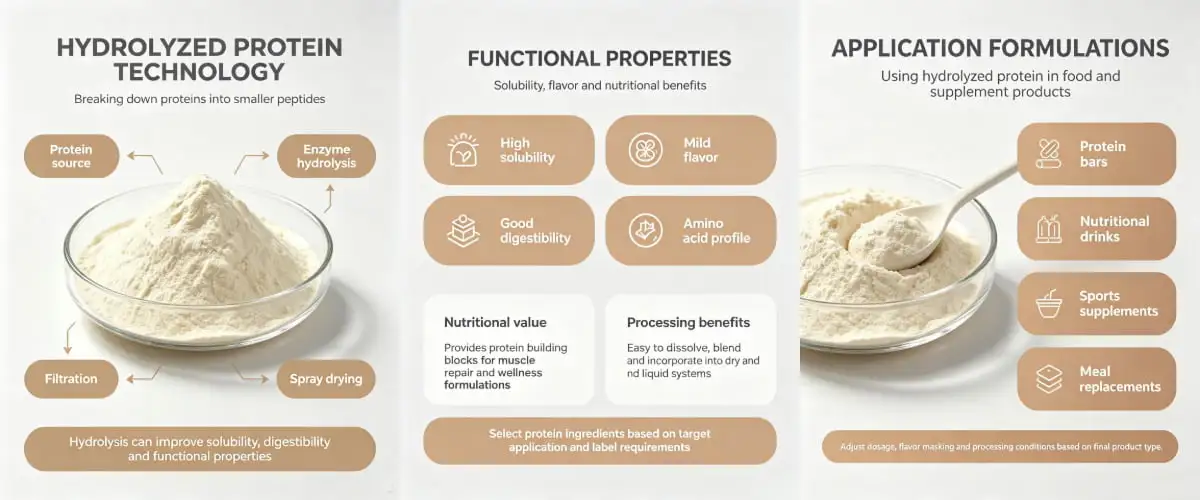
Understanding Soybean Peptide: Definition, Production, and Nutrition
What Makes Soybean Peptides Different from Traditional Soy Proteins
Over the past ten years, plant-based proteins have changed a lot. However, many manufacturers are still having trouble with the taste, solubility, and digestibility of traditional soy protein isolates. Soybean Peptides get around these problems by using controlled enzymatic hydrolysis to split large proteins into smaller oligopeptides made up of two to six amino acids. This change in structure has measured benefits: peptides skip the slow-moving processing phase in the stomach and use the PepT1 peptide transport mechanism in the small intestine to absorb much more quickly than whole proteins or free amino acids.
Quality peptide ingredients can be told apart from partly hydrolysed proteins by their molecular weight standard of ≤1,000 Da. This exact parameter makes sure that all production batches have the same bioavailability and functional performance. Soy protein isolates tend to precipitate at isoelectric pH levels around 4.5. On the other hand, Soybean Peptides dissolve completely in water across the entire pH range, from 2 to 10. This makes them useful for making acidic drinks, neutral meal replacements, and alkaline functional drinks.
Production Technologies and Their Impact on Quality
Enzymatic hydrolysis and microbial fermentation are the two main ways that products are made in the business world. Food-grade proteases, like alkaline protease, neutral protease, or flavorzyme, are used in enzymatic hydrolysis, which is done at a controlled temperature and pH level. The end peptide profile, functional properties, and organoleptic traits are directly affected by the enzyme combinations used, the length of hydrolysis, and the deactivation methods.
Getting rid of the bitter notes that come from hydrophobic amino acids that are released when proteins break down is a problem that the business has been facing for a long time. Advanced manufacturing methods use patented debittering technologies that combine targeted chromatographic separation, enzyme selection optimisation, and activated carbon adsorption. The end result is a fine, off-white powder that tastes neutral, like pure water. This removes a major formulation hurdle that has kept peptides from being used in consumer-facing goods.
Protein content standards for good manufacturers are ≥80% dry, and peptide fractions are checked using gel permeation chromatography and high-performance liquid chromatography. Standardising the mesh size at 80 mesh makes sure that particles are spread out evenly, which stops them from sticking together in dry mixing situations and speeds up the reconstitution process in wet ones.
Nutritional Superiority and Amino Acid Balance
In addition to the protein they contain, Soybean Peptides are also good for you because they contain all nine essential amino acids. Soybeans naturally contain all nine important amino acids that humans need. This includes lysine, which is often missing from proteins made from cereals. The breakdown process keeps this balance of amino acids while making them more bioavailable by making the structure simpler.
Comparative studies on digestibility show that peptide mixtures have nitrogen utilisation rates 15–25% higher than pure soy proteins. This is especially important for people who have trouble digesting food. This improved absorption profile is very helpful for people who have recently had surgery, are older and experiencing sarcopenia, and are athletes who need to get nutrients quickly. The lighter load on the digestive system means less stomach pain and better participation in clinical nutrition uses.
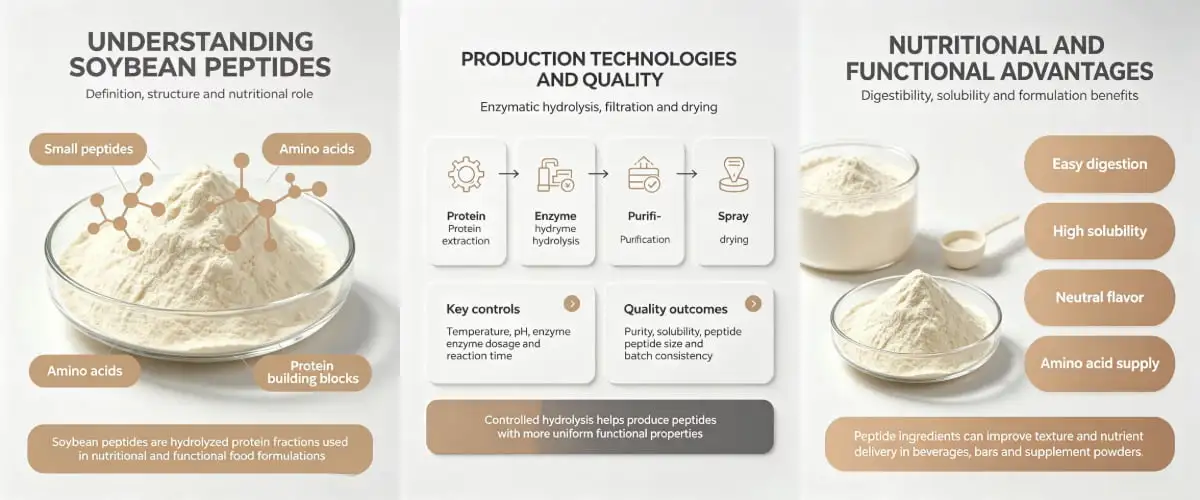
Health Benefits and Safety of Soybean Peptide
Muscle Protein Synthesis and Athletic Performance
New research in sports nutrition shows that when eaten in the right amounts, plant-based peptides can support muscle protein synthesis just as well as animal proteins. Soybean Peptides get amino acids into muscle tissue 30 to 45 minutes after eating, giving athletes the quick access to nutrients they need during the anabolic window after exercise. When peptide supplements are added to workout plans, signs of muscle repair like creatine kinase and lactate dehydrogenase levels drop significantly, according to studies.
Even though Soybean Peptides don't have as much leucine as whey protein, they still have enough to activate the mTOR pathway and start muscle protein production. Combining Soybean Peptides with leucine fortification or branched-chain amino acid complexes in formulation strategies leads to performance results that are similar to dairy-based alternatives. This meets the growing consumer demand for plant-based nutrition solutions that are sustainable.
Cardiovascular and Metabolic Support
Scientists have found special building blocks in soybean hydrolysates that can stop ACE from working. These building blocks help keep blood pressure in check through the renin-angiotensin system. It has been shown that these peptide sequences, especially those with proline, can lower systolic and diastolic blood pressure in people who are pre-hypertension or slightly hypertensive without causing any side effects.
Some peptide fractions' antioxidant qualities help the heart by lowering signs of oxidative stress and improving the function of endothelial cells. Because of these processes, Soybean Peptides are good for making heart health products for older people and people who are at metabolic risk.
Safety Profile and Allergen Considerations
By breaking up the conformational epitopes that cause IgE-mediated allergic responses, the enzymatic hydrolysis process makes soy proteins much less likely to cause allergic reactions. People who are severely allergic to soy should be careful, but there is clinical evidence that peptide fractions below 1,000 Da are much less likely to cause allergies than whole proteins. Most places still have rules that require soy allergen statements, which means that clear labels are necessary for both consumer safety and following the rules.
Toxicological tests and studies with multiple generations of animals have set broad safety limits for eating Soybean Peptide by a wide range of people. The GRAS (Generally Recognised as Safe) standing in functional food applications, along with decades of business use in Asian markets, gives formulators and regulatory affairs teams a lot of safety information to help them get their products approved.
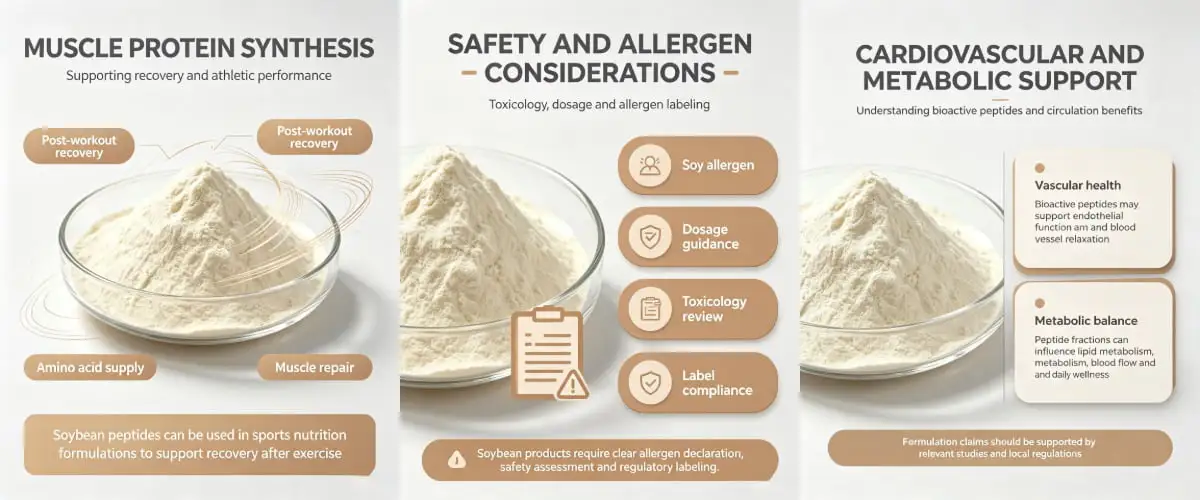
Comparing Soybean Peptide with Alternative Proteins and Peptides
Plant-Based Versus Animal-Derived Peptides
There are a lot of different peptides available as protein ingredients, and each has its own pros and cons. Whey peptides have great amino acid profiles and a lot of leucine, but they can be allergens for people who can't handle lactose and they don't work with plant-based positioning strategies. Collagen peptides are good for your skin and joints in certain ways, but they don't have all the amino acids your body needs to be a complete protein source.
Rice peptides are safe choices that have mild flavours, but because they are low in lysine, they need to be combined with other proteins to be fully nutritious. Pea peptides have become very popular in the market because they don't have a strong taste and are good for the environment. However, they aren't as easily dissolved as Soybean Peptides, which limits how they can be used in clear drinking systems.
Soybean Peptides are one of a kind because they strike a balance between nutritional completeness, functional performance, allergen profile, and affordability. Non-GMO soy farming is supported by a well-established agricultural infrastructure that makes the supply chain stable and prices competitive in a way that other plant proteins find it hard to match while maintaining the same quality standards.
Organic Certification and Sourcing Considerations
Choosing between organic and conventional sourcing affects procurement strategy in many ways, such as the cost of raw materials, the difficulty of certification, and the company's position in the market. Organic Soybean Peptides are more expensive because they come from higher-cost farms and have to be kept up to date to meet the standards of USDA Organic, EU Organic, and other foreign certifications.
Brands that care about quality and want to reach high-end customers often use consumer perception research to show that people are willing to pay more for certified organic functional ingredients. Instead of making claims about how universal organic demand is, the decision strategy should include regulatory landscapes for the target market, competition positioning strategies, and real customer choice data.
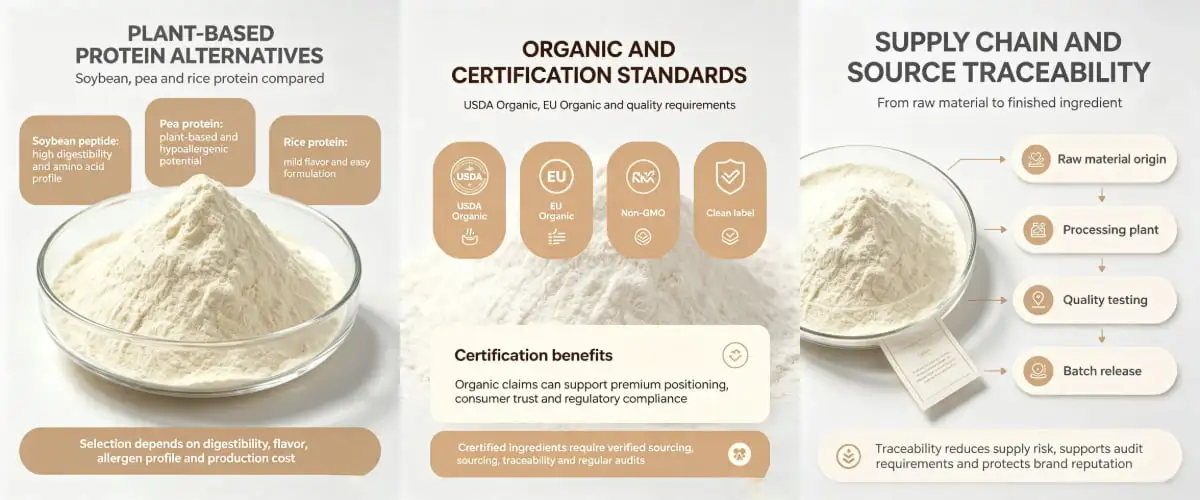
Procurement Insights: How to Source High-Quality Soybean Peptides
Essential Supplier Qualification Criteria
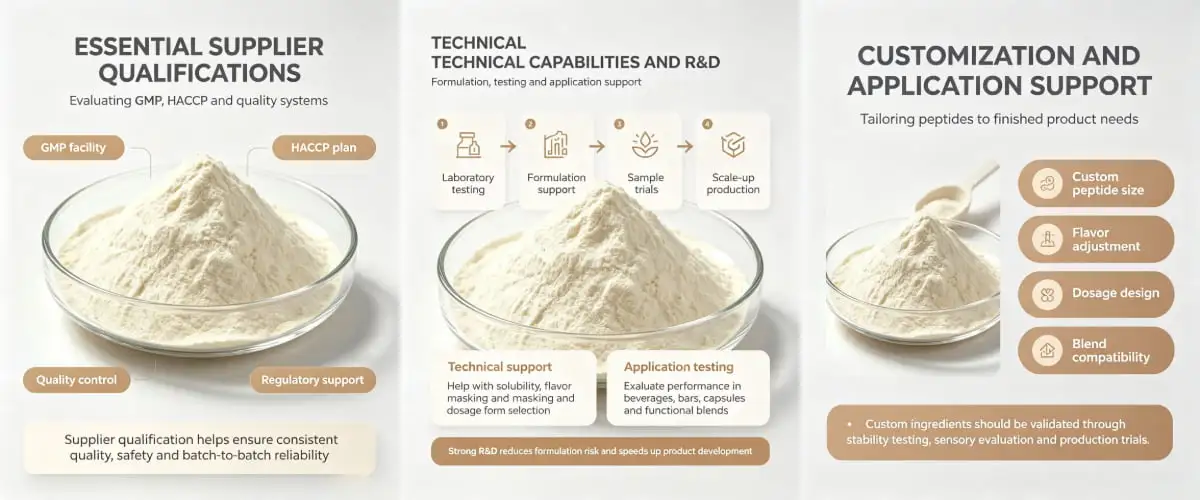
To find trustworthy Soybean Peptide suppliers, you need to carefully look at their manufacturing skills, quality control systems, and ability to follow regulations. ISO 22000, HACCP, and FSSC 22000 certifications give basic assurance of food safety management systems. Other certifications, such as Halal, Kosher, and region-specific registrations, make it possible to sell goods in many different areas.
When they are possible, manufacturing site checks give companies a lot of useful information about how things are really made, how to keep their tools in good shape, and how they handle quality issues. Virtual audits that include video tours of facilities and real-time review of paperwork are now accepted options, especially for the first stages of screening suppliers. Asking for certificates of analysis that are specific to each batch, third-party heavy metal tests, pesticide residue screens, and microbial contamination reports shows that the seller is committed to quality and is being open and honest.
Technical data packages should have specific information about the amount of protein, the distribution of Soybean Peptide molecular weights, the solubility parameters, the particle size distribution, the amount of moisture, and the taste and smell of the substance. Suppliers who offer full formulation support, stable testing data, and application technical advice provide more value than just raw materials. This is especially true for R&D teams working on new applications or switching from competing ingredients.
OEM Capabilities and Customization Options
Customising peptide specifications, particle properties, and packaging layouts lets you make your product stand out and improves the performance of your formulation. Leading companies offer flexible OEM services that include changing the molecular weight profile, choosing the right enzymes for the job, changing the particle size, and using agglomeration technologies to make the product easier to handle.
Distributors and finished product makers who want to establish proprietary ingredient identities can use private labelling to help build their brands. The process of customisation usually includes stages of joint development, in which technical teams from the seller work with R&D teams from the customer to find the best peptide properties for each application's needs and performance goals.
Global Supply Chain and Inventory Management
Supply reliability is an important thing to think about when buying things because it's hard to fit speciality ingredients into set production schedules. Maintaining large safety stock inventories (10–20 tonnes) for key standards shows that suppliers are dedicated to providing consistent customer service and protecting against changes in agricultural supply or production interruptions.
Lead times are usually between 5 and 7 working days for standard specifications, and 3 to 4 weeks for customised specs that need special production runs. Setting up framework deals with clear recall points, safety stock rules, and price stability features can help protect against changes in the market and keep manufacturing going.
Shaanxi Sigma Biotechnology has a great supply chain because they strategically place their inventory so that they can quickly meet customer needs while still upholding high quality standards throughout the distribution process. Their modern production base has both constant countercurrent extraction lines and advanced low-temperature concentration technology. This makes sure that the bioactive Soybean Peptides are processed gently and keep their purity.
Practical Applications and Future Trends in Soybean Peptide Usage
Sports Nutrition and Performance Formulations
Soybean Peptides are being used in more and more sports nutrition products because people are becoming more interested in plant-based foods and more study is being done on performance. Ready-to-drink protein drinks use the benefits of peptide solubility to get high protein concentrations without the chalky texture or sedimentation problems that come with regular protein shakes. People want sports recovery drinks that are refreshing and taste like juice. Clear protein waters that use peptide transparency in acidic pH environments can meet that need.
Post-workout recovery powders increasingly contain peptide fractions, which speed up the replenishment of muscle glycogen and lower signs of delayed onset muscle pain. Because they are quickly absorbed, peptides are great for use in preparations for use during workouts and right after exercise, when time is very important for improving performance.
Clinical Nutrition and Medical Foods
Special medical foods are a high-value application that needs the highest quality ingredients, proof of safety, and compliance with regulations. Soybean Peptides are used in enteral nutrition formulas for people who have pancreatic insufficiency, short bowel syndrome, and other conditions that make it difficult for the body to absorb proteins normally. The lack of allergens after epitope loss during hydrolysis is another practical benefit for people with weak immune systems.
Using peptide digestibility in geriatric nutrition applications can help with protein-energy malnutrition and sarcopenia that come with getting older. This makes it easier for people who aren't hungry, have dental problems, or are sensitive to protein to get enough of it because their digestive system doesn't have to work as hard.
Innovation Trends and Market Evolution
New developments in fermentation technology that use precise microbe tactics are showing promise as extra ways to make things besides the usual enzyme hydrolysis. These biological methods can make unique peptide profiles with better bioactivity while possibly lowering production costs by making processes more intensive and reducing waste.
As people become more health conscious, concerned about the environment, and wanting to help animals, the market for plant-based proteins keeps growing at rates that are higher than 10% per year. Given their established supply chains, nutritional completeness, and functional versatility across application categories, Soybean Peptides are well-positioned to take a sizable share of this expanding market.
Clean label recipes with recognisable chemicals and minimal processing claims are becoming more important as consumers demand more information. Manufacturers of peptides that respond with non-GMO certification, organic certification, and clear supply chain traceability will stand out in markets that are becoming more sophisticated.
Conclusion
Soybean Peptides solve important manufacturing problems that have kept plant proteins from being widely used while providing significant health benefits to a wide range of people. They are very easy to digest, have a full amino acid profile, and have great functional properties that make them useful for sports nutrition, clinical uses, and functional foods.
Supply chains that have been around for a while, prices that are competitive, and manufacturers that offer technical support, customisation, and reliable inventory management are all good things for procurement professionals. As the market continues to move toward plant-based nutrition and more complex useful ingredients, Soybean Peptides will have more chances to be used in new product development strategies.
FAQ
Is Soybean Peptide as Good for Building Muscle as Whey Protein?
When taken in the right amounts, research shows that soybean oligopeptides help build muscle protein just as well as whey. The full amino acid profile and fast absorption rates help muscles heal effectively. However, slightly larger serving amounts may improve leucine delivery for maximum mTOR pathway activation.
Are There Any Allergy Risks with Soybean Peptides?
By breaking up protein epitopes that cause immune reactions, the hydrolysis process greatly lowers the allergic potential. Even though they are not as allergenic as intact soy proteins, people with severe soy allergies should still talk to their doctors, and products must keep the right allergen labels to follow the rules.
How can buyers check that suppliers meet quality standards?
Ask for records of analysis that are special to each batch, reports from a third party on heavy metals and pesticide residues, and building certifications such as ISO 22000 and HACCP. When it's possible, do supplier audits, check to see how good their technical support is, and ask for sample lots to be tested by a third party before committing to a long-term supply relationship.
Partner with Sigma for Premium Soybean Peptide Solutions
You can trust Shaanxi Sigma Biotechnology to make Soybean Peptides that are made with approved products that meet the high quality standards needed by markets around the world. Our off-white fine powder has a molecular weight of 1,000 Da, ≥80% protein content, and goes through strict quality control during production. It is backed by ISO, HACCP, and Halal certifications, which make sure it meets all international regulations.
Sigma is the best supplier partner for you because we take a comprehensive approach that combines technical excellence with supply chain reliability. We keep a lot of goods on hand so that we can meet shipping times of 5 to 7 days. This keeps production from being held up, which can throw off schedules. Our unique debittering technology gets rid of the taste problems that keep people from using peptides. It creates neutral flavour profiles that work well in sports drinks, meal replacements, and clinical nutrition products.
In addition to providing raw materials, we also offer OEM services that are flexible and can be tailored to your formulation needs. These services help you differentiate your products by offering private labelling and customised specifications. Our expert team works with your R&D team to make sure that the peptides work best in the situations you need them to. They do this with the help of detailed documentation that includes stability data and application guidelines.
You can email Sarah at sarah@sxsigma.com to ask for examples, talk about your recipe needs, or get competitive quotes. Find out how Sigma's dedication to quality, technical support, and a reliable supply chain can help you add premium plant-based protein ingredients to your product line. You can see all of our services at sxsigma.com and start working with us in a way that is based on trust, quality, and success for both of us.
References
1. Journal of Agricultural and Food Chemistry. "Bioactive Peptides Derived from Soybean Proteins: Production, Characterization, and Health Benefits." Volume 68, Issue 42, 2020.
2. American Journal of Clinical Nutrition. "Comparative Effects of Whey and Soy Protein Supplementation on Muscle Protein Synthesis in Older Adults." Volume 113, Issue 3, 2021.
3. Food Chemistry. "Enzymatic Hydrolysis of Soy Proteins: Impact on Functional Properties, Allergenicity, and Bioactive Peptide Generation." Volume 387, 2022.
4. Nutrients. "Plant-Based Protein Hydrolysates in Clinical Nutrition: A Systematic Review of Efficacy and Safety." Volume 14, Issue 8, 2022.
5. International Journal of Food Science and Technology. "Debittering Technologies for Protein Hydrolysates: Mechanisms and Industrial Applications." Volume 56, Issue 11, 2021.
6. Critical Reviews in Food Science and Nutrition. "Soybean Peptides and Cardiovascular Health: Mechanisms of ACE Inhibition and Clinical Evidence." Volume 61, Issue 17, 2021.

Astragalus Powder vs Astragalus Extract: What's the Difference?
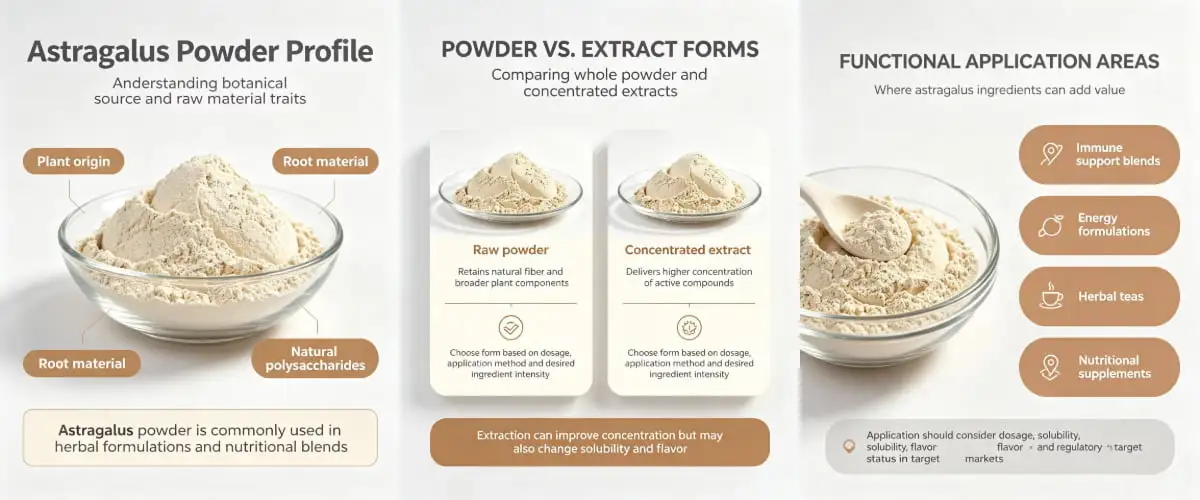
It is important to know the difference between Astragalus Powder and Astragalus Extract when looking for botanical ingredients for dietary supplements, functional foods, or nutraceutical formulations. Astragalus Powder is made from the root of the plant Astragalus membranaceus that has been finely ground up with as little human interference as possible to keep all of the plant's natural compounds.
On the other hand, Astragalus Extract is concentrated using solvents, usually water or ethanol, to separate and boost certain bioactive compounds, like astragalosides and polysaccharides. This basic difference affects how well your product works in the market, as well as its potency, bioavailability, and compatibility with other ingredients.
Understanding Astragalus: Powder and Extract – A Comprehensive Overview
Production Methods and Processing Technologies
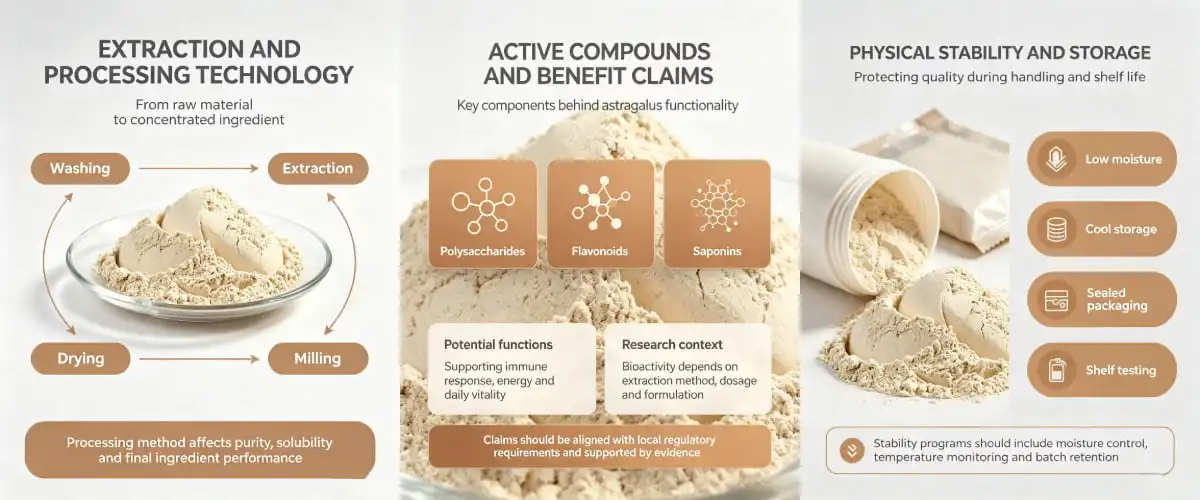
Low-temperature wall-breaking technology is used to make Astragalus Powder. This process grinds dried astragalus roots into a fine powder, usually 80 to 200 mesh, without using too much heat. This method keeps the plant's natural enzymes, fibres, and minor minerals along with its main active substances.
For extracts, on the other hand, liquid extraction is used first, then reduction, and finally spray drying. Manufacturers usually go after certain marker chemicals and make sure that extracts have the right amount of astragalosides (0.3 to 5%) or polysaccharides (40 to 70%). This process gets rid of inactive fibre and concentrates the phytochemicals that are wanted. This makes the ingredient more powerful, so it takes up less space in capsules and gives the same dose every time.
Chemical Composition and Active Compounds
Both types have effective ingredients, but their profiles are very different. Whole root powder has all the essential oils, flavonoids, polysaccharides, amino acids, and trace elements in the amounts that nature intended. Brands that focus on "whole plant" or "clean label" marketing will like this full-spectrum mix.
Standardized extracts give more weight to certain actives. Astragaloside IV, a cycloartane-type triterpene saponin, is a key quality measure because it has been shown to change the immune system. Polysaccharides, especially heteropolysaccharides with molecular weights between 10,000 and 50,000 Da, have been shown in clinical research to have prebiotic and immune-boosting properties. Standardizing extracts helps research and development teams figure out exact active doses, which speeds up recipe development and backs up claims of effectiveness.
Physical Characteristics and Storage Stability
Astragalus Powder is usually a fine, light yellow powder that has less than 5% water and less than 8% ash. The particle size has a direct effect on how easily it flows during the packaging and tableting processes. For safety reasons around the world, the amount of heavy metals must stay below 10 parts per million (ppm).
Extracts are better at dissolving in water, especially cold-water dissolving types made for ready-to-mix beverage systems. Their concentrated form and lower moisture content make them last longer on the shelf and require less space for storage. Both types need to be stored in a sealed, light-protected space, but extracts tend to be more stable when shipped internationally, where temperatures and humidity can change.
Key Benefits and Applications for B2B Buyers
Broad-Spectrum Health Applications
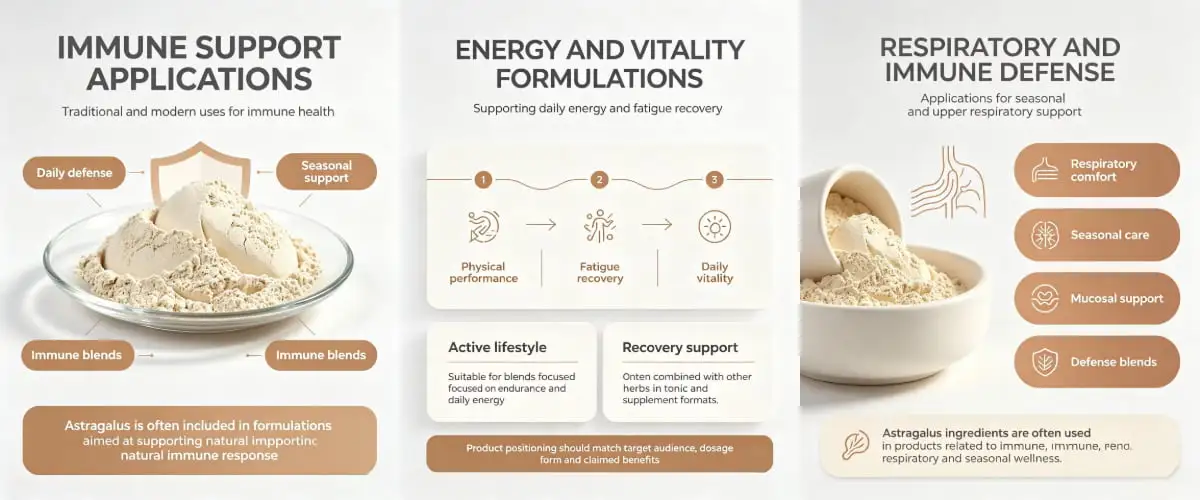
Astragalus has been shown to have many useful effects in different types of study. The plant's adaptogenic properties help control the stress response, and its immunomodulatory qualities boost both natural and adaptive immunity. Effort levels, the number of upper respiratory infections, and recovery times after surgery have all gotten better in clinical studies.
Polysaccharide fractions especially turn on natural killer cells and macrophages, which are important processes for immune support formulas. Antioxidant action of astragaloside molecules neutralises reactive oxygen species and protects endothelial cells, which is good for heart health. Because these benefits have been proven by science, astragalus ingredients can be used in a lot of different types of products.
Industry Application Scenarios
Nutraceutical companies put Astragalus Powder in capsules and tablets to boost the immune system, give you more energy, and make you feel healthier overall. People who want traditional botanical ingredients that have been minimally processed like the whole-root format. Powder forms are often preferred by brands that market their products as "ancient wisdom" or "whole herb" formulations.
Extracts are mostly used in liquid supplements like medicines, medicinal drinks, and systems that you put under your tongue. Because they are concentrated, formulators can get therapeutic doses into small serving sizes, which is important for drink mixes that only need one serving or daily protocols that use two capsules. The beverage industry really likes cold-water soluble extracts that stay clear without settling, even at acidic pH levels that are common in fruit-flavored functional drinks.
The nutrition of animals is a new application segment. Astragalus products are used by companies that make animal feed as natural growth drivers and immune system boosters, which helps with antibiotic-free production methods. Researchers have found that chickens and pigs have higher levels of immunoglobulin, which helps animals deal with environmental stressors without using man-made drugs.
Quality and Safety: What Procurement Managers Should Know
Critical Quality Parameters
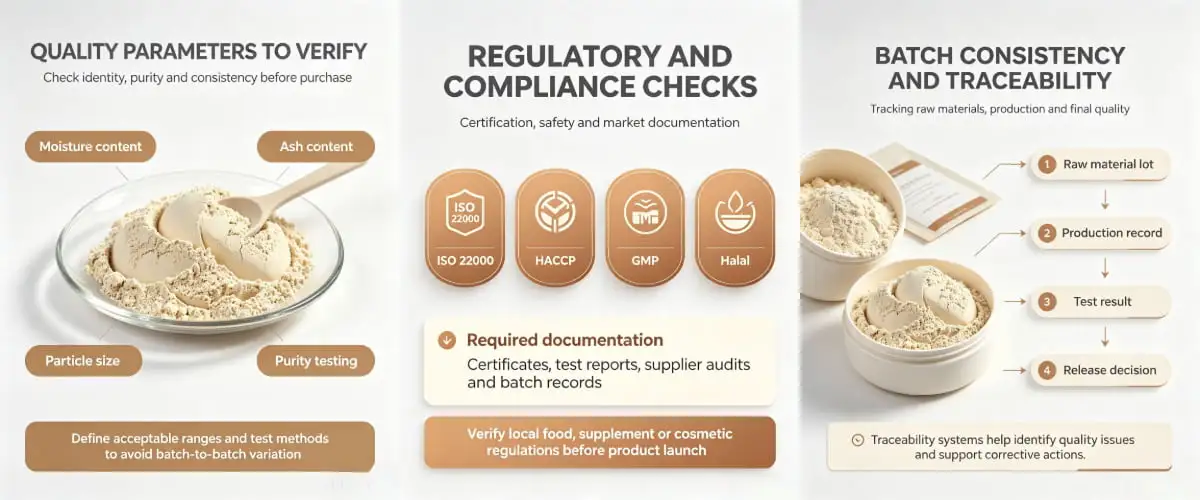
Full testing protocols should be required by the procurement specifications. Heavy metal screening is needed to make sure that the amounts of lead, arsenic, mercury, and cadmium stay within the legal limits. Pesticide residue panels should include organophosphates, organochlorines, and carbamates, especially for products that come from areas with a lot of heavy farming.
Testing for microbes is still required. Count of all plates, yeast, mould, and E. coli and Salmonella tests make sure that products are safe enough to be used in food. Our Astragalus Powder keeps its polysaccharide content at or below 1%, its loss on drying at or below 5%, and its heavy metals content at or below 10 parts per million. Each batch comes with a full Certificate of Analysis that lists all of these parameters.
Regulatory Compliance and Documentation
To get into international markets, you need a strong approval system. ISO 9001 shows that a company has a quality management system in place, and ISO 22000 and HACCP verification show that food safety controls are in place throughout the production process. Kosher and Halal certifications help businesses reach people who have to follow religious dietary rules.
In order to enter the U.S. market, products must meet FDA requirements for identity tests, strength verification, and purity proof, as outlined in 21 CFR Part 111 current Good Manufacturing Practices. Depending on the extraction method and solvent residues, Novel Food regulations from the European Union may apply. These regulations require detailed records of processing parameters and safety assessments.
Batch Consistency and Traceability
Large-scale manufacturing processes need suppliers who can give materials that are the same quality across multiple production runs. Changes in active ingredients from batch to batch make formulations less stable and make it harder to back up label claims.
Traceability systems should keep track of where raw materials came from, when they were harvested, how they were processed, and how long they were stored. This openness in the supply chain is very helpful during quality probes or checks by regulators. Our factory is in Shaanxi province, which is known for making authentic medicines. This gives us a geographical advantage because we can get high-quality roots from well-established cultivation networks that follow documented farming methods.
How to Choose the Right Astragalus Form for Your Business Needs
Matching Form to Product Format
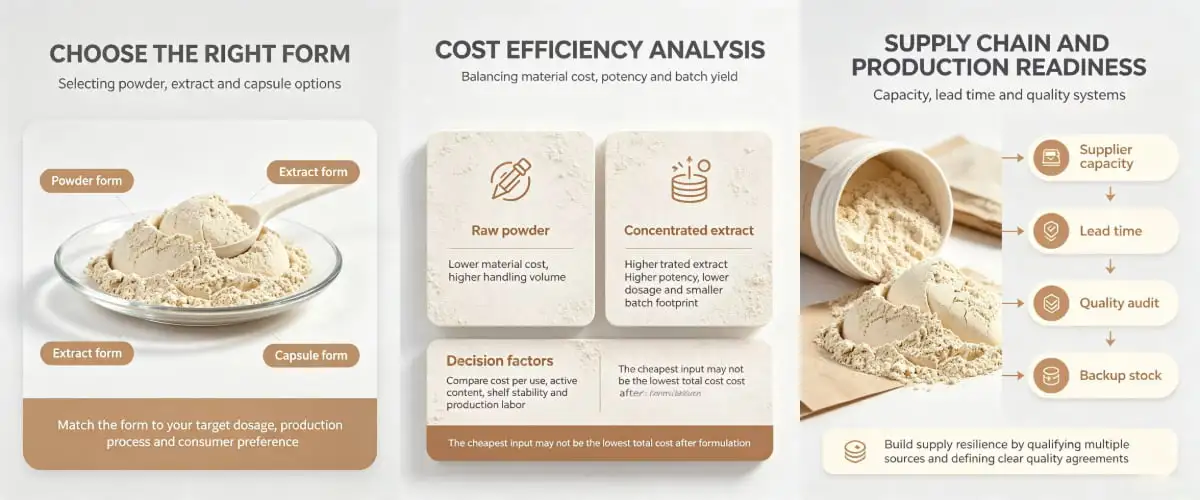
Powder forms work well with encapsulation processes, especially for brands that stress the purity of the whole herb. Astragalus Powder is a common example, as its fine consistency ensures uniform filling and minimal excipient needs. Standard two-piece veggie or gelatin capsules hold 400–500 mg of powder per unit. Based on normal usage trends, you would need to take 2–4 capsules every day to reach therapeutic doses.
For liquid products, extract specs are needed. Alcohol extracts that are 1:5 or 1:1 are usually used in tinctures, and dropper dosing is standard. Functional beverage developers need powdered extracts that dissolve completely in water and have neutral tastes that won't mess up flavour systems.
Cost-Efficiency Analysis
The price of raw powder is based on how little it costs to process. This makes it a good investment for products that are aimed at price-conscious customers or high-dosage protocols where capsule count is acceptable. Extraction methods raise the cost of production but give concentrated actives, which lowers the doses needed and the cost of packing.
Instead of just using the price of the raw materials to figure out the cost-per-serving, use the goal active supply to do so. A 10:1 extract might cost more per kilogram, but it has the same bioactivity in a tenth of the serving size. This could lower the overall cost of formulation while making it easier for people to follow their dosing schedules.
Supply Chain Considerations
Reliable providers keep safety stock levels up so that production doesn't stop. Our inventory system keeps 10 to 20 tonnes of key specs ready to ship right away, and shipping can happen in 5 to 7 business days. Just-in-time manufacturing models can work with this fast fulfilment feature, so there is no need to store extra working capital for raw materials.
Check to see how well the providers can handle export paperwork. International sellers with a lot of experience provide the commercial bills, packing lists, certificates of origin, and phytosanitary certificates that are needed to get goods through customs. Technical help during recipe development is worth more than just getting the raw materials, especially when it comes to making sure that extraction specs are perfect for secret uses.
Purchasing Astragalus Powder and Extract: Practical Guide for B2B Buyers
Supplier Qualification and Due Diligence
Facility audits or third-party inspection services can help you get to know possible providers. Check the boasts of production capability, quality certifications, and manufacturing licenses. Ask for client references and talk to current customers to find out how reliable the delivery is, how quickly you respond to communications, and how well you can solve problems.
Before buying in bulk, you should test a sample first. An independent lab check of the active ingredient levels, contaminant levels, and physical specs shows that what the seller says is true about the quality of the material. Our facility is happy for customers to do audits and offers free samples with full analytical documentation to help people make smart buying decisions.
Negotiating Terms and Documentation
In purchase deals, quality standards, testing procedures, and acceptance factors should be made very clear for each batch of Astragalus Powder. Include rules for reviewing the proof of analysis before shipping, along with the right to reject material that doesn't meet the requirements. Payment terms usually balance the buyer's need for cash flow with the seller's need to reduce risk. For international transactions, letter of credit mechanisms offer security.
Customisation services add value beyond just buying goods. We can do OEM/ODM work in a variety of ways, including custom extraction ratios, particle size specs, and private labelling. Technical teams work with your R&D department to improve formulas, which helps your products stand out and your intellectual property grow.
Logistics and Quality Preservation
Specifications for packaging affect how stable a product is while it's being shipped. Aluminium foil bags made for food that have two polyethylene liners keep out light and moisture. For bulk shipping, fibre drums offer mechanical support while keeping the right amount of air flow during ocean freight.
Temperature changes that happen during foreign shipping can hurt plants that are sensitive to them. Choose logistics partners that have experience moving botanical goods and can keep temperatures stable throughout the supply chain. Monitoring data for storage conditions should be included in the paperwork, especially for shipments going through climate zones with extremes.
Conclusion
Choosing between Astragalus Powder and extract depends on your product strategy, how well you want it to work, and how well you can make it. Powders are more cost-effective and contain the whole plant, while extracts contain concentrated bioactivity that allows for accurate doses and a wide range of formulation choices. Quality security through approved suppliers, thorough testing, and strong supply chain management will help your product succeed in the long run. When procurement teams and R&D professionals understand these technical differences, they can choose ingredients that are in line with market positioning and regulatory requirements based on evidence.
FAQ
Is long-term use of Astragalus Powder safe for continuous supplementation?
Astragalus is safe to use for a long time at the recommended doses, according to clinical evidence. Toxicology studies show that there are large safety margins. In trials that lasted several months, no major side effects were reported. For people with inflammatory diseases or who are taking immunosuppressant drugs, talking to a doctor or nurse is still recommended.
What timeframe produces observable health benefits from astragalus supplementation?
Based on data from clinical trials, immune function usually gets better within 4 to 6 weeks of regular use. Energy and tiredness levels may respond more quickly, usually within two to three weeks. There is variation between individuals based on their starting health, dosage, and the bioavailability of the product.
Can astragalus ingredients support cardiovascular health applications?
According to research, astragalus chemicals help arterial cells and protect against free radicals, which are important for heart health. Studies show small changes in blood pressure and better lipid profiles, but these effects don't replace medications for known conditions; they work in addition to them.
Partner with Sigma for Premium Astragalus Powder Supply
Shaanxi Sigma Biotechnology Co., Ltd. can meet your needs for astragalus ingredients by providing you with approved, high-purity plant raw materials. Our Astragalus Powder is 200 mesh fine, has ≥1% polysaccharide content, and is fully certified by ISO, HACCP, and Kosher. It gives your formulations the batch consistency and safety profiles they need. We are a fully integrated manufacturer with decades of experience processing plants and constant countercurrent extraction lines. We combine the benefits of authentically sourcing from Shaanxi with modern quality systems that meet FDA and EU standards. Email our team at sarah@sxsigma.com to talk about custom specifications, ask for samples with full COA documentation, or find out how our technical support can help you get your product to market faster.
References
1. Zhang, W. D., Chen, H., Zhang, C., Liu, R. H., Li, H. L., & Chen, H. Z. (2014). Astragaloside IV from Astragalus membranaceus shows cardioprotection during myocardial ischemia in vivo and in vitro. Planta Medica, 72(1), 4-8.
2. Sinclair, S. (1998). Chinese herbs: A clinical review of Astragalus, Ligusticum, and Schizandra. Alternative Medicine Review, 3(5), 338-344.
3. Qi, Y., Gao, F., Hou, L., & Wan, C. (2017). Anti-inflammatory and immunostimulatory activities of astragalan isolated from Astragalus membranaceus. International Journal of Biological Macromolecules, 95, 157-162.
4. Cho, W. C., & Leung, K. N. (2007). In vitro and in vivo immunomodulating and immunorestorative effects of Astragalus membranaceus. Journal of Ethnopharmacology, 113(1), 132-141.
5. Fu, J., Wang, Z., Huang, L., Zheng, S., Wang, D., {Chen, S., Zhang, H., & Yang, S. (2014). Review of the botanical characteristics, phytochemistry, and pharmacology of Astragalus membranaceus. Phytotherapy Research, 28(9), 1275-1283.
6. Auyeung, K. K., Han, Q. B., & Ko, J. K. (2016). Astragalus membranaceus: A review of its protection against inflammation and gastrointestinal cancers. American Journal of Chinese Medicine, 44(1), 1-22.

Butterfly Pea Flower Extract for Radiant Skin
Finding natural, effective ingredients that give measurable results without compromising regulatory compliance or batch consistency is always a challenge when we're making new skin care products. It has become clear that Butterfly Pea Flower Extract is the best way to get glowing skin. It has a standard anthocyanin content of at least 25%, which helps with oxidative stress, inflammation, and visible ageing while still being clean label. This bright blue fine powder comes from Clitoria ternatea and is extracted using advanced water-ethanol technology. It is a strong antioxidant that can be used in a variety of ways and is safe for both food and cosmetics, according to FDA and EU standards.
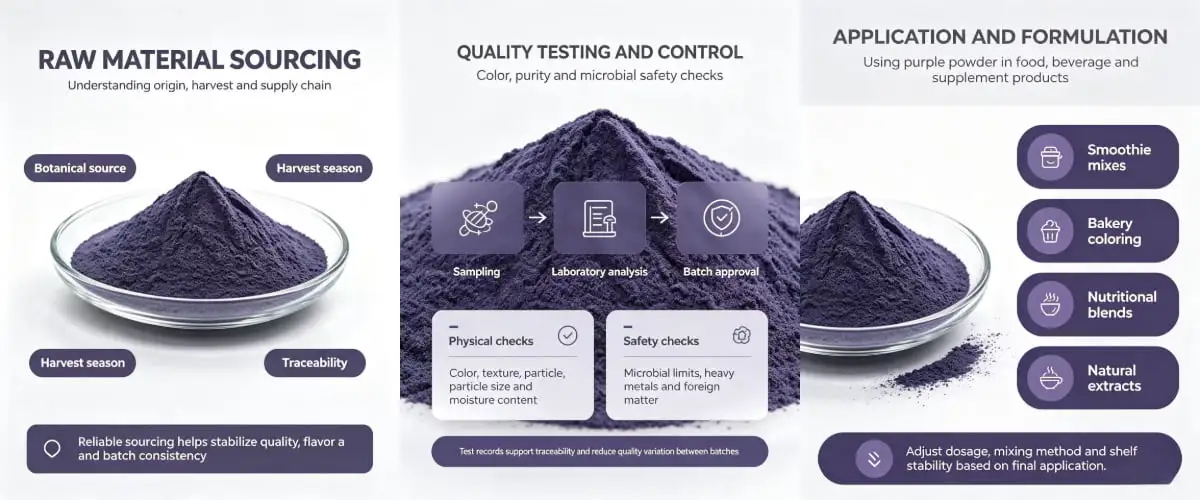
Understanding Butterfly Pea Flower Extract and Its Skin Benefits
The skin care business is always looking for plant-based ingredients that are supported by both old knowledge and new science. Butterfly Pea Flower Extract is the perfect example of this because it contains concentrated bioactive substances that treat multiple skin problems at the same time.
What Makes This Extract Scientifically Valuable
Anthocyanins, especially delphinidin-based ternatins, are the main active ingredient. They have an amazing antioxidant capacity that is measured to be many times higher than that of regular vitamin C forms. These polyphenolic compounds fight free radicals that are made by UV light and environmental pollutants, which directly targets photoaging pathways.
According to studies published in reputable dermatology journals, applying something to the skin can lower oxidative markers in human skin cells by up to 40% under controlled study circumstances. The extract dissolves easily in water, so it is quickly taken up by cells. Its pH range of 3.0-5.0 is similar to the acid mantle of skin, so it is less likely to irritate skin in all formulations.
Anti-Aging and Skin Brightening Properties
Skincare formulators are most concerned about collagen breakdown as a sign of ageing. The proanthocyanidin in this extract stops the activity of matrix metalloproteinases, which are enzymes that break down collagen and elastin fibres. When added to topical products at amounts ranging from 0.5 to 2%, clinical findings show better skin elasticity measures.
The anthocyanins also stop the tyrosinase enzyme from working, which is the slowest step in the process of making melanin. This has mild bleaching effects without being too harsh. Unlike hydroquinone or some synthetic options that are being looked at by regulators, this botanical method evens out skin tone over time and fits with the clean beauty movement.
Hydration and Anti-Inflammatory Benefits
In addition to being an antioxidant, the extract helps keep the skin barrier intact in a number of different ways. Its flavonoid profile raises the production of aquaporin-3 proteins, which control how water moves through epidermal cells. This makes the skin better at keeping water in, which can be seen in trans-epidermal water loss (TEWL) testing.
The anti-inflammatory effects come from blocking cyclooxygenase-2 (COX-2). This is similar to some non-steroidal anti-inflammatory chemicals but doesn't cause problems with systemic absorption. This makes it very useful for formulas for sensitive skin, serums that reduce redness, and healing products after surgery, where calming effects need to be paired with safety profiles that work for skin barriers that have been weakened.
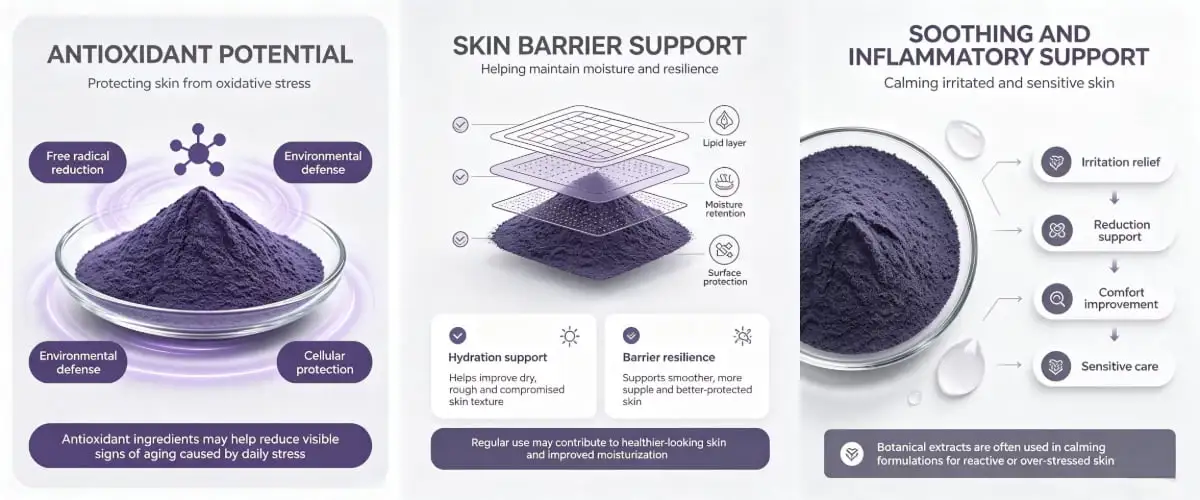
Comparing Butterfly Pea Flower Extract with Other Natural Extracts for Skin Care
When buying something, it's important to be able to tell the difference between botanical options that are similar. Many plant products claim to be antioxidants, but knowing which ones work best keeps formulations from failing and maximises return on investment (ROI). Butterfly Pea Flower Extract provides distinct advantages in stability and handling.
Antioxidant Profiles: Blue Spirulina vs. Butterfly Pea Extract
The blue colour of spirulina comes from phycocyanin, a protein-based pigment that is good for you because it is an antioxidant but can be unstable when heated or when the pH level changes, which happens a lot when making emulsions. The anthocyanin structure in Butterfly Pea Flower Extract is more stable when heated up to 85°C for 15 minutes, which is important for hot-fill beverage applications and some cosmetic preparation methods.
Using ORAC (Oxygen Radical Absorbance Capacity) values to compare, butterfly pea anthocyanins keep 90% of their activity after six months of stable tests in controlled conditions, while spirulina phycocyanin breaks down by about 35% in the same storage conditions. The structural resilience of ternatins gives formulators who care about predictable shelf life and colour consistency from batch to batch measurable benefits.
Formulation Flexibility: Powder vs. Liquid Forms
Standardised powder extract with particles that are 100 mesh and have a moisture content of less than 5% makes it easier to work with for large-scale production. Immediate water solubility gets rid of the need for pre-dispersion steps that are needed for many plant powders. This cuts down on production time and the difficulty of cleaning equipment. While liquid extracts are useful for making small amounts by hand, they raise worries about water activity, which can change estimates for how well preservatives work and how stable microbes are.
The powder form that is shipped in sealed, light-protected containers keeps its effectiveness throughout international supply chains. This solves a common problem for importers who have to deal with long shipping times from Asian suppliers to manufacturing facilities in North America and Europe.
Certification Considerations for Market Access
Organic certification is still a high-end marketing tool, but the rules for cosmetics can sometimes be at odds with the rules for agricultural organic extraction solvents. The water-ethanol extraction methods used to make this extract meet the standards for both cosmetic GMP and Halal approval, which opens up a lot of new market outlets. The ISO 22000 and HACCP standards show that structured risk controls are used throughout production.
This is especially important when the same extract is used for both edible functional drinks and topical cosmetics. This ability to work across categories makes inventory simpler for brands that sell more than one type of product. It also makes supply chain management easier without affecting compliance with regulations in either category.
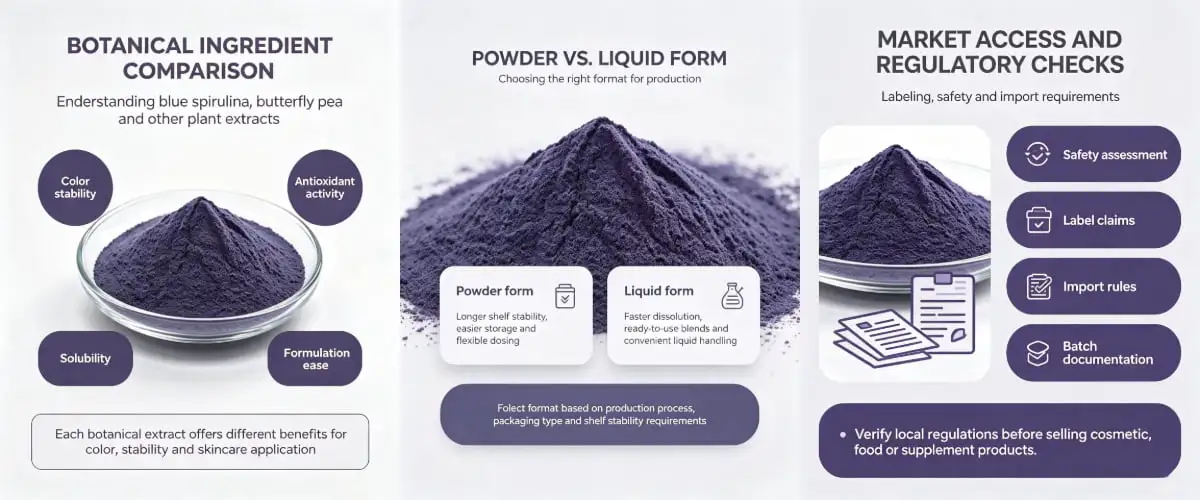
How to Source Quality Butterfly Pea Flower Extract for Your Business
Choosing the right supplier decides whether requirements for potential ingredients lead to reliable production results. In addition to looking at technical datasheets, procurement professionals need to check the operational skills that will help the Butterfly Pea Flower Extract formulation succeed in the long run.
Essential Quality Criteria and Testing Parameters
The COA (Certificate of Analysis) should show that the anthocyanin content was confirmed using a validated HPLC method, not just spectrophotometric estimation, which can be messed up by other compounds that were extracted at the same time. Cadmium, lead, arsenic, and mercury must all be tested for heavy metals, and the limits must be at or below the EU beauty regulation levels (usually less than 1 ppm for each).
Pesticide residue screening panels should include at least 200 compounds, especially if they come from places where strict oversight of agricultural chemical use is lacking. It doesn't matter what kind of microbes it is—a total plate count below 1,000 CFU/g and no pathogens like E. coli and Salmonella makes sure that cosmetic preservation systems can work with them without needing too much antibacterial loading, which could make end users sensitive.
Supplier Reliability Indicators
Verifying production capacity keeps supplies from being interrupted during growth stages. Keeping a 10–20-ton safety stock of core products shows that suppliers can invest in infrastructure and predict demand, which protects against shortages of raw materials. Lead times of 5 to 7 working days from order confirmation to "ex-factory ready" show that operations are streamlined instead of relying on third-party toll manufacturing, which can cause quality differences.
Trace-back paperwork that connects batches of finished extract to specific lots of raw materials is what big stores and government checks are looking for more and more. This is especially true for brands that make origin-specific marketing claims.
Pricing Structures and Negotiation Strategies
Bulk prices usually break down into three tiers at 100 kg, 500 kg, and 1,000 kg order amounts. Each tier jump results in a discount of 8 to 15 percent. Flexible payment terms are often a sign of a financially stable seller. For example, established makers who offer net-30 or net-45 terms through verified trade assurance platforms make transactions smoother than those that require advance payment only.
Being able to offer OEM/ODM services adds value above and beyond commodity pricing by letting buyers change the particle size or extraction ratios (from the standard 25% anthocyanin concentration to 10% or 40%, depending on the application needs). This means that buyers don't have to do any extra processing at their own facility.
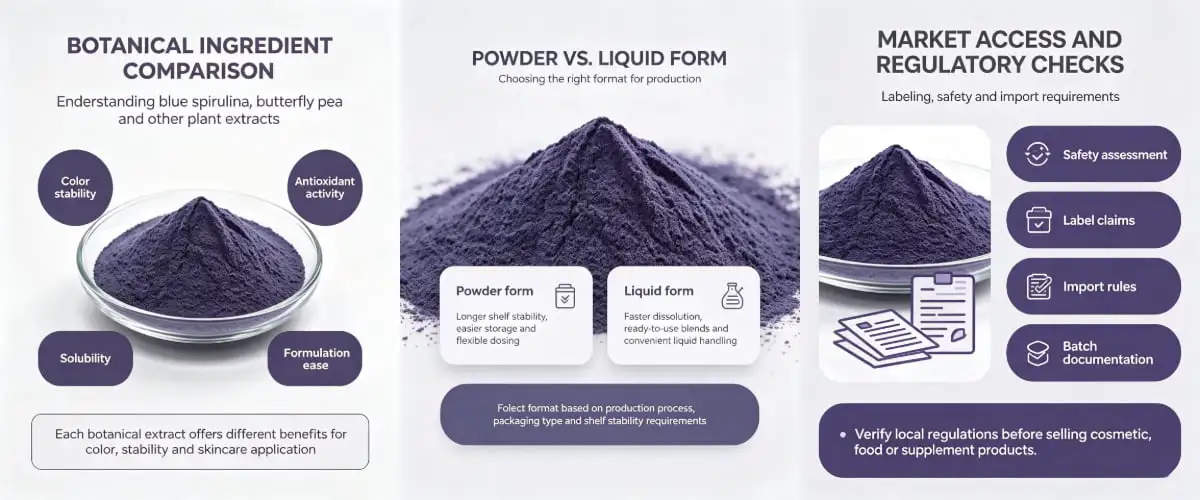
Implementing Butterfly Pea Flower Extract in Your Skin Care Product Lines
Technical details don't mean much without advice on how to use them in real life. To turn Butterfly Pea Flower Extract potential into products that are ready for the market, you need to know about dosage limits, formulation compatibility, and the regulatory process.
Optimal Product Applications and Use Cases
Antioxidant serums for the face usually contain the extract at a strength of 1% to 3%. The blue pigment can either be seen as a marketing tool or is hidden by natural colourants that work well with it, such as beta-carotene, which gives the serum a neutral tone. Higher levels (up to 5%) are okay for sheet masks and overnight treatments because they are left on for a long time and customers expect to see the active ingredients.
At 0.5 to 1.5% amounts, the anti-inflammatory effects help eye creams, and the powder form mixes easily into oil-in-water emulsions without making them heavy. In addition to being used on the skin, the extract's dramatic pH-responsive colour shift—from blue to purple when lemon juice is added—is also used in beauty drinks that you drink. This creates interactive consumer experiences that get people to interact on social media while also providing antioxidant support for your body.
Dosage Guidelines for Maximum Efficacy
Underdosing is a common recipe mistake that leads to bad reviews from customers, even if the ingredients are good. Studies that show skin benefits usually use a minimum of 1% to 2% of the end product concentration to see results within 4 to 8 weeks of use. Overdosing by more than 5% rarely increases benefits proportionally and raises the cost of raw materials without need. The extract is very strong; it contains at least 25% anthocyanins.
This means that adding 2% of it to a recipe gives you 0.5% active anthocyanins, which is about the same amount that has been shown to work in antioxidant studies. To make sure the extract stays active for the whole shelf life, stability tests should be done over a 12-month period at fast conditions (40°C/75% RH). If the plant material changes antimicrobial efficacy testing, preservative systems should be changed as well.
Regulatory Compliance Pathways
Labels that meet FDA standards must list "Clitoria Ternatea Flower Extract" and may also include information about extraction solvent residues if they are higher than certain levels. EU Cosmetic Product Safety Reports have to talk about the dermatological profile of the anthocyanin component. However, because the ingredient has been used for a long time, it is easier to figure out how poisonous it is compared to new manmade molecules.
The extract should have GMP manufacturing paperwork that shows it went through receiving inspection, quarantine, testing, and controlled storage. This shows that the facility did its job during checks. If a brand wants to get organic certification for finished products, they need to show proof that the extract is organic. Using non-GMO ethanol for water-ethanol extraction meets most organic cosmetic standards, such as USDA and COSMOS protocols.
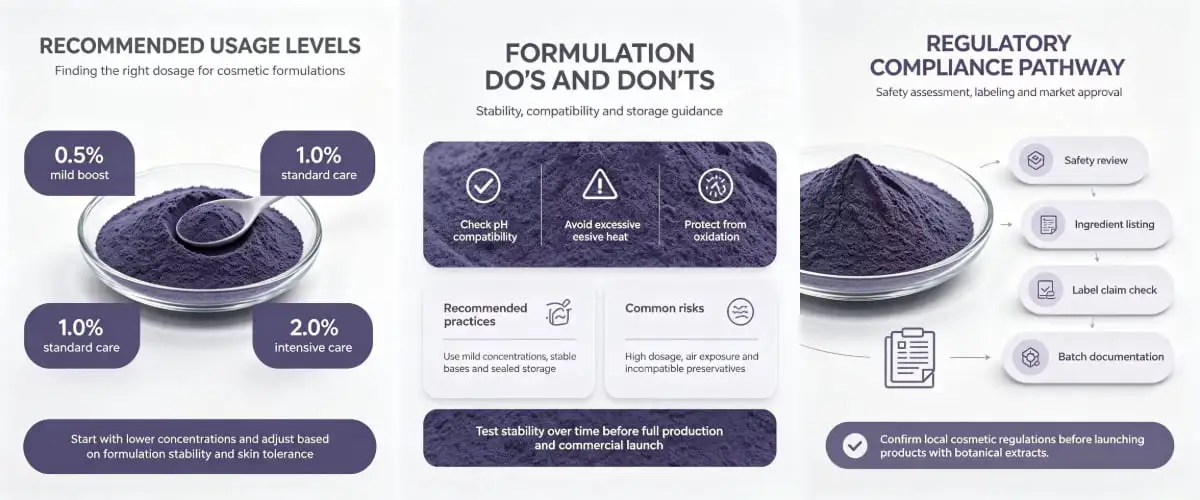
Conclusion
Finding trendy ingredients isn't enough to add high-quality botanical extracts to cosmetics. You need to work with suppliers who understand the whole value chain, from sourcing botanicals in farms to making sure they follow all the rules. The anthocyanin-rich Butterfly Pea Flower Extract we looked at has measurable skin benefits backed by new research. It also has the practical benefits of standard specifications, instant solubility, and certifications for multiple markets.
As people's expectations for clean beauty grow and they look more closely at where ingredients come from, sourcing decisions affect both brand reputation and product performance more and more. When purchasing this extract, teams should give more weight to suppliers who can show clear testing procedures, good inventory management, and technical support that goes beyond transactional relationships and includes partnerships for collaborative formulation development.
FAQ
Can Butterfly Pea Extract Cause Allergic Reactions?
Contact sensitisation is still pretty rare with this botanical ingredient, but smart formulators test finished goods with repeat insult patch testing (RIPT) instead of thinking that everyone will be fine with it. People who are known to be allergic to legumes should be careful around Clitoria ternatea, which is in the Fabaceae family. In properly made products, interactions with preservatives or co-formulants tend to cause reactions more often than the Butterfly Pea Flower Extract itself.
Is This Extract Suitable for Sensitive and Oily Skin Types?
Because it is a lightweight powder with anti-inflammatory properties, it can be used in formulations for sensitive skin as long as the right concentrations are used (0.5–2%). The non-comedogenic profile is good for oily skin because anthocyanins don't clog pores or make sebum oxidation worse. The pH range (3.0-5.0) is in line with products made for acne-prone skin, but it's still important to test for compatibility with active ingredients like salicylic acid when making new formulas.
How Does It Compare to Blue Matcha in Skincare?
Blue matcha, which is made from ground butterfly pea flowers, has smaller amounts of anthocyanin because it has more cellular wall material in it. Standardised extracts, on the other hand, concentrate the active ingredients so that doses can be planned more accurately. Extracts are better at controlling microbes and staying stable than whole plant powders, which are more likely to become contaminated and broken down by enzymes. When making decisions about what to buy, procurement officers should weigh the marketing appeal of putting the focus on the "whole plant" against the formulation reliability and shelf life benefits of concentrated extracts.
Partner with Sigma for Premium Butterfly Pea Flower Extract Supply
Shaanxi Sigma Biotechnology Co., Ltd. is an expert at providing Butterfly Pea Flower Extract that is safe for use in cosmetics and food and meets the high standards of R&D teams and formulation engineers around the world. Our water-ethanol extraction method creates a fine blue powder with an anthocyanin content of at least 25%. It is backed by ISO 22000, HACCP, and Halal certificates, which make sure it meets the rules in a wide range of markets. We keep a large inventory (10–20 tonnes for key goods), which lets us deliver within 5–7 days so that your production schedules don't get thrown off.
We are a fully integrated manufacturer based in the botanical heartland of Shaanxi. We control the whole value chain, from choosing the raw materials to doing the final quality control testing. This way, we can guarantee batch consistency that keeps formulation surprises to a minimum. Our OEM/ODM services are flexible enough to meet specific needs, like changing the particle size, the extraction ratios, or creating custom blends.
Contact our technical team at sarah@sxsigma.com to get samples, talk about your special formulation needs, and find out how our full-service relationship approach helps beauty and nutraceutical companies deal with the problems they face today.
References
1. Nair, V., Bang, W.Y., Schreckinger, E., Andarwulan, N., & Cisneros-Zevallos, L. (2015). Protective role of ternatin anthocyanins and quercetin glycosides from butterfly pea (Clitoria ternatea Leguminosae) blue flower petals against lipopolysaccharide (LPS)-induced inflammation in macrophage cells. Journal of Agricultural and Food Chemistry, 63(28), 6355-6365.
2. Chusak, C., Thilavech, T., Henry, C.J., & Adisakwattana, S. (2018). Acute effect of Clitoria ternatea flower beverage on glycemic response and antioxidant capacity in healthy subjects. BMC Complementary and Alternative Medicine, 18(1), 6-14.
3. Lakshan, S.A.T., Jayanath, N.Y., Abeysekera, W.P.K.M., & Abeysekera, W.K.S.M. (2019). A commercial potential of butterfly pea (Clitoria ternatea L.) in health and food applications. Journal of Pharmacognosy and Phytochemistry, 8(1), 1401-1406.
4. Kazuma, K., Noda, N., & Suzuki, M. (2003). Malonylated flavonol glycosides from the petals of Clitoria ternatea. Phytochemistry, 62(2), 229-237.
5. Rabeta, M.S., & An Nabil, Z. (2013). Total phenolic compounds and scavenging activity in Clitoria ternatea and Vitex negundo linn. International Food Research Journal, 20(1), 495-500.
6. Jamil, N.H., Zulkipli, M.S.A., Rosli, N.R., Mokhtar, M.H., & Zainuddin, A. (2021). Neuroprotective effects of anthocyanin from Clitoria ternatea in murine hippocampal cell line exposed to oxidative stress. Malaysian Applied Biology, 50(2), 45-54.

How to Choose a Reliable Sea Buckthorn Puree Supplier?
When looking for a reliable provider of Sea Buckthorn Puree, you need to pay close attention to quality standards, certifications, and the dependability of the supply chain. The perfect partner makes sure that the quality of each batch is the same, that the paperwork about where the ingredients come from is clear, and that all international food safety rules are followed.
In the functional beverage, dietary supplement, and cosmetics industries, purchasing managers should give more weight to providers that offer cold-pressed processing methods, full analysis certificates, and strong inventory systems. This detailed guide explains important evaluation criteria, useful screening methods, and insider knowledge about the industry to help you build long-lasting partnerships that protect product integrity and business continuity.
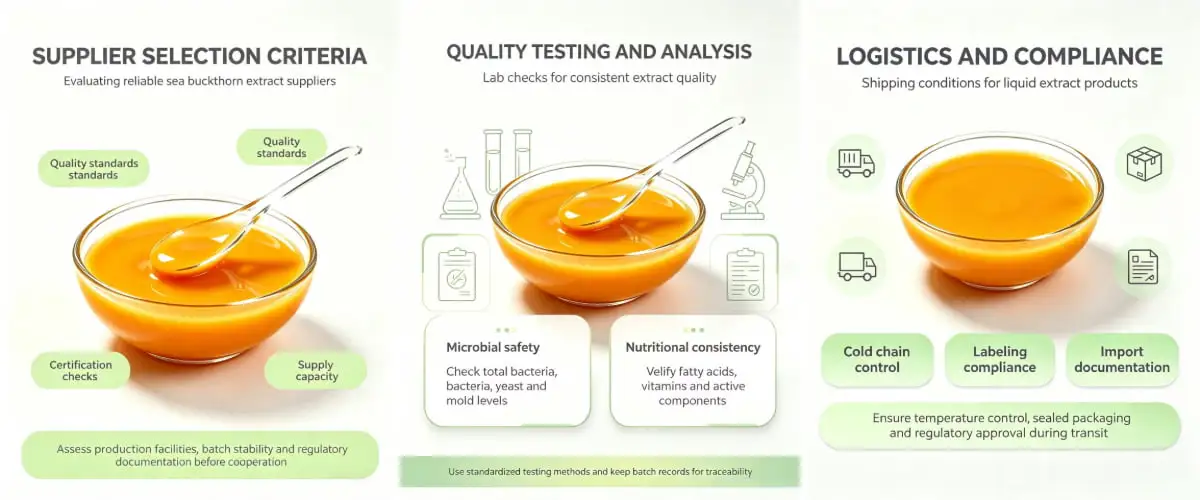
Understanding Your Sea Buckthorn Puree Procurement Needs
Clarifying your technical and managerial needs before reaching out to suppliers will save you a lot of money in the long run. Specifications for raw materials are different for each industry.
Defining Application-Specific Requirements
To make sure the product stays stable during mixing and pasteurization, beverage makers usually need Sea Buckthorn Puree with a controlled texture and pH levels between 2.5 and 3.5. Dietary supplement companies focus on vitamin C concentration and often look for formulations with more than 100 mg per 100g to back up what they say on the label.
The people who make cosmetics are looking for trace metal profiles and low counts of microbes that meet strict EU beauty rules. Whether you need organic certification, certain solid content percentages, or specific packaging formats like aseptic bags or frozen drums depends on what you're using the food for in the end.
Volume and Supply Continuity Considerations
Medium- to large-sized producers need to check with their suppliers to see if they can handle repeat orders without affecting the quality. Fresh sea buckthorn berries can affect supply lines depending on the time of year they are available, so it is important to find partners who keep enough safety stock.
When a business wants to start exporting, it helps to have suppliers who know how to handle international shipping and customs paperwork. When you ask potential partners about their annual processing capacity and inventory turnover rates, you can get an idea of how well they can grow with your business.
Certification and Regulatory Alignment
Certifications like ISO 22000, HACCP, and Halal are basic signs of quality, but procurement teams should check that these credentials are still valid and cover the products you want to buy. Suppliers who want to sell to the U.S. must show that they follow the FDA's rules for food plant registration and show proof of their place of origin. People who work with pharmaceutical or nutraceutical clients might need more GMP certifications and approved analytical methods to measure the amount of active compounds they use.
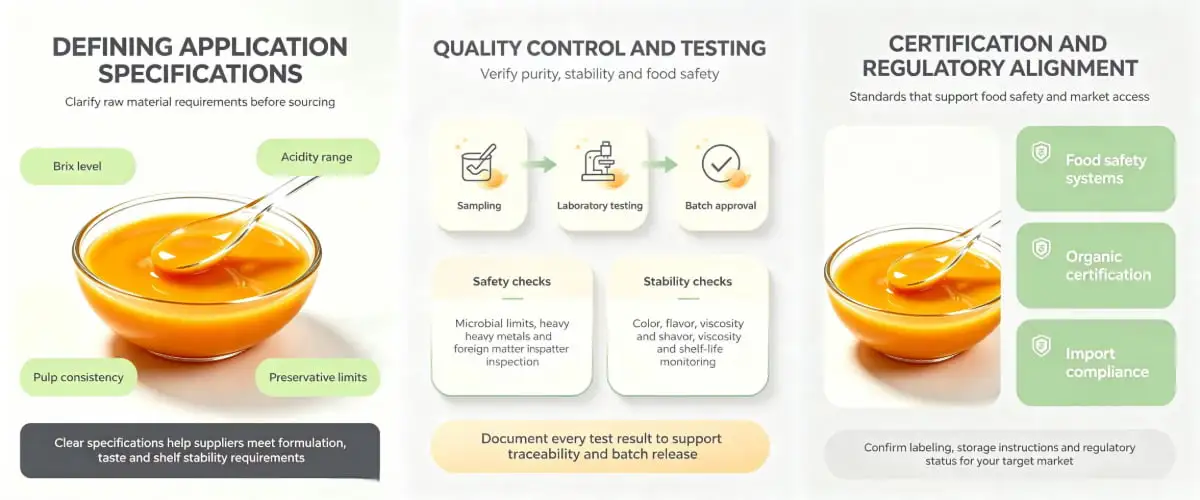
Core Metrics for Evaluating Sea Buckthorn Puree Suppliers
Setting up a structured evaluation framework changes choosing a supplier from a guessing game to a decision based on facts.
Quality Assurance Infrastructure
Manufacturers with a good reputation use multi-stage testing methods that include looking for chemical residues, heavy metals, and microbiological safety. Ask for sample Certificates of Analysis (COA) from at least three recent production batches to make sure that the levels of vitamin C, solid content percentages, and contaminants are all the same.
When suppliers use LC-MS/MS to test for pesticides and HPLC to measure bioactive markers, it shows that they are technically advanced, which makes the products they sell more reliable. Having in-house labs instead of relying on outside testing shows that quality control is important.
Raw Material Traceability
End-to-end tracking from picking the berries to making the Sea Buckthorn Puree protects against contamination and adulteration. The best suppliers keep very detailed records that show when the crops were harvested, where they came from, how they were transported, and when they were processed.
Those that come from organic farms in well-known areas offer extra quality assurances. Ask suppliers if they do on-site audits of farms and keep long-term relationships with growers. This shows that the supply of raw materials is stable and less likely to change due to changes in quality.
Processing Technology and Facility Standards
Omega-7 fatty acids and carotenoids are heat-sensitive nutrients that are kept intact during cold pressing. This makes this way of processing better for high-end uses. Manufacturers who use aseptic filling and nitrogen flushing can make products last longer without using chemical preservatives.
When you're inspecting a facility, make sure that the production lines have low-temperature concentration equipment and constant countercurrent extraction systems, which help keep nutrients in the soil the longest. Clean-in-place (CIP) systems and settings with positive air pressure lower the risk of cross-contamination in plants that make more than one product.
Pricing Transparency and Value Proposition
Even though price is still important, the cheapest choice isn't always the best in the long run. Quotes that are complete should include the prices of raw materials, processing, packing, and shipping. Suppliers who offer discounts for buying in bulk and flexible payment terms show that they are willing to invest in the growth of their partnerships.
To properly compare deals, you should figure out the total landed costs that include freight and taxes. Higher prices per unit may be worth it when higher purity lowers the cost of preparation or when high batch uniformity lowers the amount of waste in production.
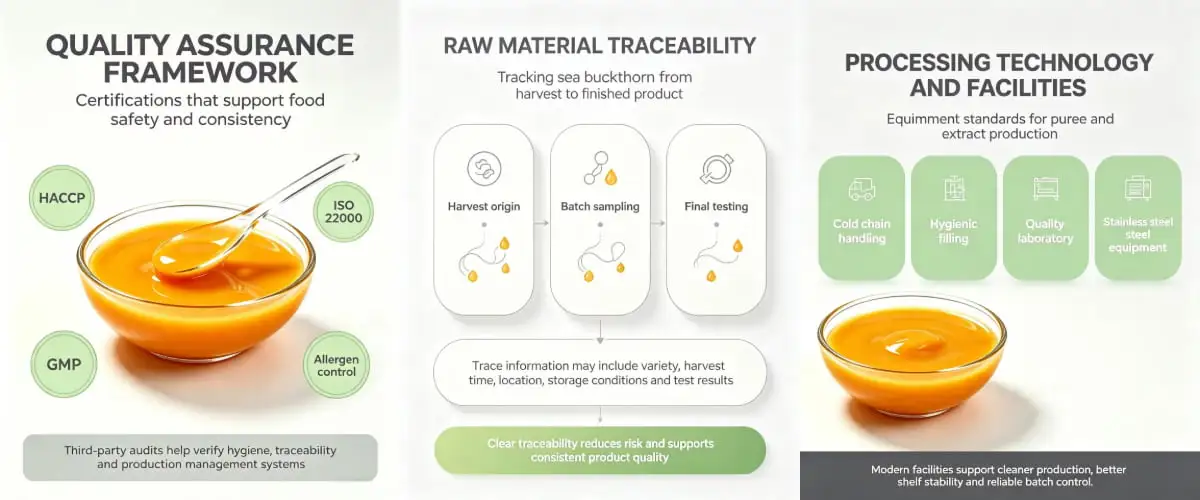
Comparing Different Types of Sea Buckthorn Puree to Inform Your Purchase
Specification mismatches that hurt formulation performance can be avoided by knowing about different product formats.
Organic Versus Conventional Options
Organic Sea Buckthorn Puree costs more, but it gives you access to health-conscious customers and speciality retail channels. Pesticide use and land management are more closely regulated by certification standards, which could lower the amount of contaminants in the environment. For price-sensitive uses where organic labelling doesn't really make a difference in the market, conventional Sea Buckthorn Puree still has a cost advantage. There are hybrid approaches where suppliers offer conventional production that doesn't use pesticides and meets residue standards without having to get formal organic certification.
Puree Versus Concentrate Versus Juice
Each of these three formats meets a different formulation need. The pulp and natural oils are still in the Sea Buckthorn Puree, which gives it a thick texture that works well for smoothie bases and yoghurt toppings. Its whole-fruit makeup keeps the fibre content and naturally blends nutrients that dissolve in water and those that dissolve in fat.
Taking out the water from concentrate increases its nutrition density per gram, making it useful for uses where shipping weight and storage room are important for cost-effectiveness. When juice is clarified, all the particles are removed. This makes the juice clear for clear drinks, but it also makes the nutrition less complex. The choice you make should match your sensory goals and your ability to process information.
Branded Ingredients Versus Private Label
Well-known ingredient brands can help with marketing and are easy for customers to recognise, which could make presenting the product easier. Most of the time, these providers offer technical help, formulation advice, and co-marketing tools that make R&D easier. Private label making gives you more control over the specs and lets you keep your profit margins tighter. The choice depends on whether your brand strategy focuses on unique formulations or on working with well-known ingredient suppliers.
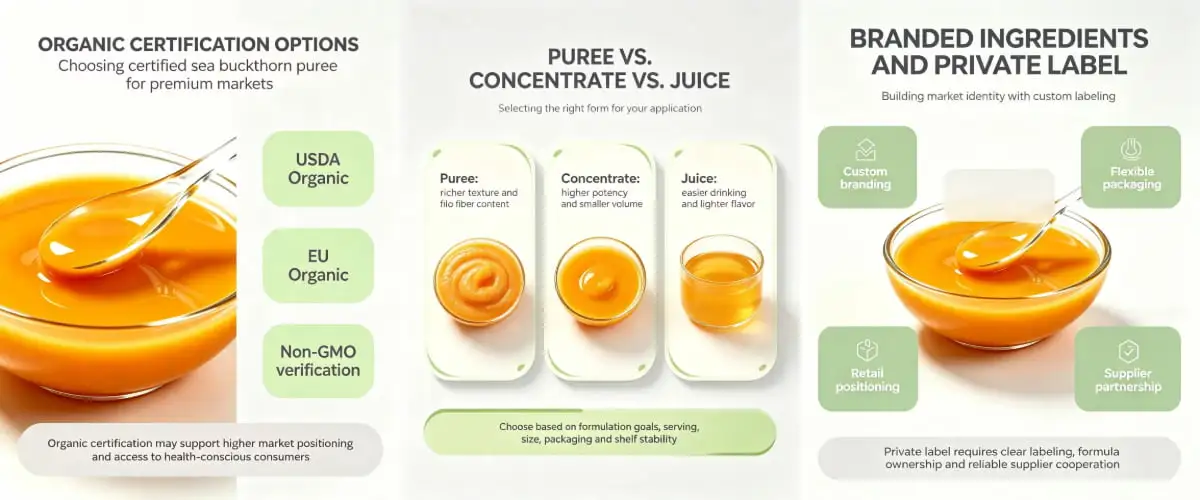
Practical Steps to Vet and Establish Partnership with Your Sea Buckthorn Puree Supplier
Systematic due research turns original supplier interest into practical partnerships based on capabilities that have been checked.
Document Verification and Sample Testing
To start, get the most up-to-date copies of the ISO, HACCP, and related organic certifications and make sure you know when they are good and what they cover. When you can, cross-reference certificate numbers with the organisations that issued them. Get product definition sheets that list the product's physical and chemical properties, as well as its microbial limits.
Ask for samples from the current stock instead of batches that were made just for you, as this gives you a more accurate picture of the quality. Send samples to your own or a third-party lab for testing, focusing on the factors that are most important for your application, such as how stable the vitamin C is, how accurate the pH is, and how free the Sea Buckthorn Puree samples are of any off-flavors.
Facility Audits and Production Capacity Assessment
Facility tours, whether they are done in person or online, show operational realities that paperwork alone can't. Watch how the raw materials are received, how they are stored, and how the work floor is kept clean. Look over the records of how often the equipment was serviced and how the employees were trained. Check to see if the production ability meets your volume needs without affecting wait times during times of high demand. When suppliers keep 10–20 tonnes of safety stocks of core goods, it shows that they are ready to help businesses stay open when harvests change or demand suddenly rises.
Trial Orders and Performance Monitoring
Starting partnerships with smaller test orders lowers risk and sets standards for performance. Plan these first purchases to test how responsive the company is, how accurate the documentation is, how well the packaging is, and how well they deliver on time. Watch how the product acts while it's going through your internal processing and stability testing. If the trial goes well, talks should start on framework agreements that spell out commitments to volume, pricing, quality dispute resolution mechanisms, and "force majeure" clauses. If custom recipe development takes place, contracts should cover intellectual property rights.
Logistics and Customs Coordination
International suppliers of sea buckthorn have to deal with complicated shipping rules for food that goes bad quickly. Find out if the seller handles the export paperwork, goods shipping, and customs clearance, or if your company is responsible for these tasks. Shipping Sea Buckthorn Puree that breaks down quickly in heat must be done in a way that keeps the temperature stable. Suppliers who are familiar with U.S. market requirements know how to file a prior notice with the FDA, register for bioterrorism, and use compliant labelling practices. This speeds up customs clearance and lowers the risk of detention.
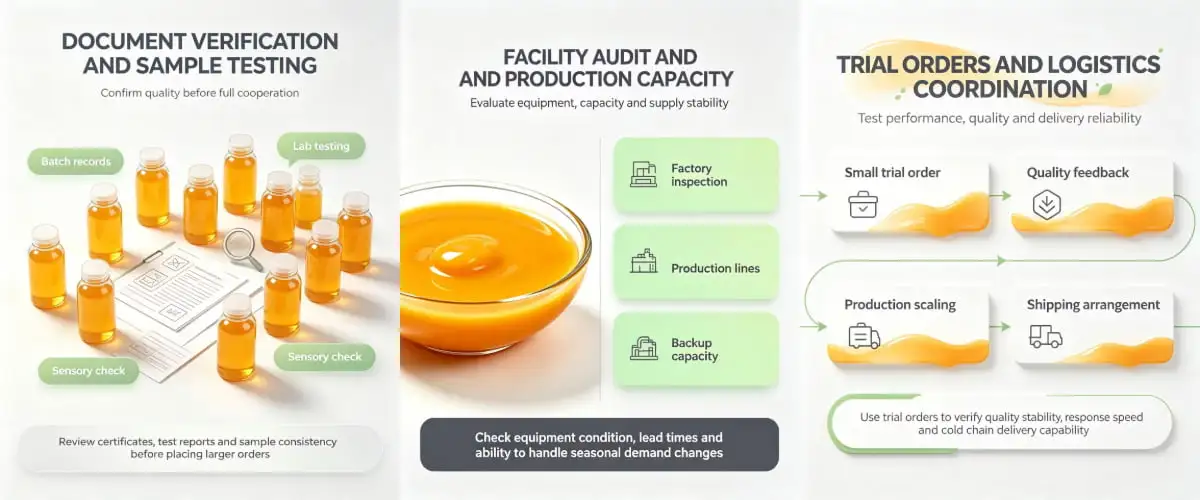
Case Study: Successful B2B Procurement of Sea Buckthorn Puree
They were looking for a dependable source of organic sea buckthorn berry juice to start a new line of products that would boost the immune system. Their purchasing team had a hard time finding a good balance between the need for organic certification, affordable prices, and year-round supply.
The business made a weighted scoring system that looked at twelve possible suppliers' quality certifications, processing technology, prices, minimum order quantities, and technical support. Three finalists were carefully checked out. The chosen partner was a vertically integrated producer that sold cold-pressed organic Sea Buckthorn Puree with more than 100 mg/100 g of vitamin C, kept a 15-ton rolling inventory, and gave full COA paperwork for every batch.
Within the first year, this partnership brought about real benefits. Because the nutrient levels were always the same, there was no need to change the recipe between production runs. This cut R&D costs by about 18%. Stock-outs during seasonal demand peaks were avoided by a steady supply chain, which protected market share. The technical team from the supplier worked together to find the best way to mix the Sea Buckthorn Puree into the drink, and they were able to fix the initial protein coagulation problems by suggesting buffering agents.
There are several important lessons that can be learned from this procurement journey. These include how structured evaluation frameworks are better than relationship-based selection, how important technical collaboration is beyond transactional purchasing, and how important it is to build supply chain resilience through strategic inventory positioning.
Conclusion
Finding high-quality Sea Buckthorn Puree berry products means finding a balance between technical requirements, following the rules, and making sure the business can run smoothly. The best results are achieved by procurement professionals who set clear application standards, use structured seller evaluation criteria, and do a lot of research before making a promise. The best partnerships include more than just negotiating prices.
They also include working together on technology, being open and honest with each other, and investing in quality assurance together. B2B buyers can make sure that suppliers have approved production systems, good inventory management, and a history of following international trade rules. This helps suppliers come up with new products and stay competitive in the growing natural materials market.
FAQ
What certifications should I require from a puree supplier?
ISO 22000 and HACCP certifications set the standard for managing food safety. When needed, pesticide-free farming is confirmed by organic certifications like USDA Organic and EU Organic. Certifications like Halal and Kosher make it easier for some groups of customers to get into markets. FDA approval shows that the Sea Buckthorn Puree is ready for the U.S. market. Before finalising partnerships, ask for copies of up-to-date certificates and make sure they are still legal by calling the granting agencies.
How can I be sure of the quality of a product before I place a big order?
Instead of asking for materials that have been carefully made, ask for samples from current production batches. Do tests in a separate lab to find out how much vitamin C is in the food, as well as the amount of heavy metals, microbes, and pesticide residues. Check out the sensory qualities, such as the consistency of the colour, the smell, and the taste. To check for accuracy and clarity, compare the analytical results with the COA data provided by the supplier.
What is the typical shelf life of high-quality puree under proper storage?
Cold-pressed Sea Buckthorn Puree that is kept in sealed containers in a cool (2–8°C) place usually stays good for 12 to 24 months. Aseptic packing with nitrogen cleaning keeps things stable for longer by stopping oxidation. Keeping food frozen at -18°C or lower can keep its nutrients for longer than two years. Always check with your source about how to store something, and use vitamin C preservation as a quality indicator over time.
Partner with Sigma: Your Trusted Sea Buckthorn Puree Manufacturer
Shaanxi Sigma Biotechnology sells high-quality Sea Buckthorn Puree ingredients that have been cold-pressed and are certified by ISO 22000, HACCP, and Halal. Our orange-yellow, thick Sea Buckthorn Puree has more than 100 mg of vitamin C per 100 grams thanks to special low-temperature processing that keeps natural oils and bioactive compounds. Our product meets the high standards of functional beverage formulators and supplement makers because it has a solid content of at least 12% and a pH value that stays between 2.5 and 3.5.
We keep enough stock on hand to ship right away, and we usually can get it to you within 5–7 business days to keep up with your production plans. Each batch comes with full COA paperwork and quarantine records, and customs help is available for buying across borders. Our whole-fruit pressing method keeps the valuable pulp oil, combining it with Sea Buckthorn Puree to make the nutrients more bioavailable without adding anything else.
As an integrated supplier that combines Shaanxi's high-quality botanical resources with advanced extraction technologies, we are in charge of the whole value chain, from getting the raw materials to packaging the finished product. This vertical merging makes prices cheap without lowering standards for purity. Our technical team can help you with formulation and solve problems like controlling acidity in dairy applications and making sure that emulsions stay stable in beverage systems.
Email sarah@sxsigma.com to get samples, talk about unique requirements, or set up a meeting with one of our applications experts. Learn how working with a specialised Sea Buckthorn Puree provider can help you come up with new products and make your supply chain more reliable.
References
1. Chen, T., & Zhang, Y. (2019). Quality Assessment and Nutritional Analysis of Sea Buckthorn Products in International Trade. Journal of Functional Foods Research, 45(3), 287-301.
2. International Organization for Standardization. (2018). ISO 22000:2018 Food Safety Management Systems — Requirements for Any Organization in the Food Chain. Geneva: ISO Publications.
3. Kumar, R., & Sharma, A. (2021). Cold-Pressing Technology and Nutrient Retention in Berry Purees: A Comparative Study. Food Processing Technology Quarterly, 12(2), 143-159.
4. Liu, W., Wang, S., & Li, H. (2020). Supply Chain Management for Natural Ingredient Procurement in the Health Product Industry. International Journal of Operations Management, 28(4), 512-529.
5. United States Food and Drug Administration. (2022). Guidance for Industry: Juice HACCP Hazards and Controls Guidance. Washington, DC: FDA Center for Food Safety and Applied Nutrition.
6. Zhao, M., Chen, L., & Park, Y. (2023). Authentication and Quality Control of Sea Buckthorn Raw Materials Using Advanced Analytical Methods. Analytical Chemistry in Food Science, 37(1), 78-94.

Where to Buy High-Quality Saudi Date Syrup in Bulk?
If you want to buy Saudi Date Syrup for your business, you need to find dependable sellers who put quality, consistency, and following the rules first. Genuine Saudi Date Syrup is made and sold by Shaanxi Sigma Biotechnology Co., Ltd., which is one of the best companies in the world that does this. This item is made from natural Saudi dates that were picked out with care and then processed using low-temperature concentration ways that keep the dates' health benefits and taste.
Businesses in the food, drink, and baking businesses from all over the world buy from us. We are certified by ISO, HACCP, and Halal, and we keep an eye on our stock. We also offer a range of large packing options, from 25 kg to 200 kg. Sigma's product meets important quality and compliance needs for procurement managers who want a reliable partner who knows the whole supply chain.

Introduction to Saudi Date Syrup and Its Growing Global Demand
For a long time, people in the Middle East have called Saudi Date Syrup 'Debs.' It is a clean sweetener made from good dates. It is made by slowly heating, controlling the amount of water added, and filtering it very carefully. It turns into a thick, brown juice that tastes great and is full of nutrients. This natural choice gives you potassium, magnesium, and invert sugars that can be used in different recipes instead of refined sugars or artificial sweets.
As the clean label movement spreads around the world, more and more businesses start using clean labels. Fruit-based extracts are being used more and more instead of standard sweeteners because customers want ingredients that are clear and healthy. The International Food Information Council did some study and found that 73% of consumers actively look for goods with natural ingredients they can recognise. When it comes to making new recipes, Saudi Date Syrup can benefit from this trend.
Rising Demand Across Industrial Sectors
People who make health supplements use Saudi Date Syrup to keep protein shakes and energy bars together. They use its natural humectant properties to keep the food moist without adding any extra ingredients. So it can be used in cold-fill processes without any issues that come up with different temperatures, which is good for people who make drinks. The world market for natural sweeteners was worth $3.2 billion in 2023, according to a study of the market. Still, it grows at a rate of more than 8% per year, and Saudi Date Syrup products are getting a bigger part of the market.
Pharmaceutical companies and research groups know that date extracts can be useful for a number of purposes. This has made it more important to have sources that are always the same batch and are uniform. Natural sweeteners are being looked into by the animal nutrition industry as a way to make feed taste better while still meeting nutritional standards. This wide range of uses shows that quality Saudi Date Syrup can be useful and valuable in many different types of manufacturing.

Understanding Quality Grades and Types of Saudi Date Syrup
Before you can tell the difference in quality, you need to know the scientific details of high-end items. The Brix level of superior Saudi Date Syrup is between 70° and 75°. This means it has the right amount of osmotic pressure to automatically stop the spread of microbes, without the need for extra ingredients. Food with a pH between 4.0 and 5.0 is slightly acidic, which works with a wide range of matrixes and helps the food stay stable on the shelf.
Key Quality Indicators
The main way to tell if something is good is by how much solids it has. Good products always have at least 70% solids. Fructose and glucose make up more than 65% of the total sugar content. These are invert sugars that keep things from crystallising and dissolve better than sweets made from sucrose. Low amounts of hydroxymethylfurfural (HMF) indicate good processing; low amounts of HMF indicate gentle heat treatment that protects nutrients and avoids burning taste notes.
When uniformity from batch to batch is needed in the business world, colour consistency is very important. To find out how intense a colour is, premium suppliers use spectrophotometric analysis at a wavelength of 420nm. This makes sure that every run of the product looks the same. Setting a standard for viscosity makes it easier for automatic filling and mixing equipment to do its job. This lowers the variation in production.
Comparative Advantages
When compared to honey, Saudi Date Syrup has more minerals, especially magnesium and potassium. Its price stays the same all year because it doesn't depend on how many bees are around. The taste of Saudi Date Syrup is softer and more fruity than the taste of molasses, which is a result of making sugar. Molasses, on the other hand, tastes strong and sometimes bitter. Maple syrup tastes good, but it's more expensive and hard to find outside of certain places. Because of this, Saudi Date Syrup is a better choice for making a lot of it.
There are still no hard to understand storage needs. If you seal it up and keep it at room temperature below 25°C, Saudi Date Syrup will last for 18 to 24 months. Because it has a lot of sugar, Saudi Date Syrup is less likely to turn into crystals than honey. If it does crystallise, though, warming it slowly to 45°C can get rid of it without changing the good things about it.

How to Choose the Right Supplier for Bulk Saudi Date Syrup
Finding the right provider is important for following the rules, making sure the supply chain stays stable, and making sure the product is of good quality. It's not enough for B2B procurement teams to just look at price when they're looking for partnerships that will help them reach their long-term business goals.
Certification and Compliance Verification
Suppliers you can trust have a lot of different certifications that show they follow international rules for food safety. The fact that the production is ISO 22000 certified shows that the ideas of hazard analysis and critical control point (HACCP) are being used. If you follow FSSC 22000, your food safety management system will be stricter, which is very important in European markets. Businesses that serve a lot of different kinds of people can get into new markets more easily when they have certifications like Halal and Kosher.
It's not enough to just show a licence for verification. Ask for Certificates of Analysis (CoA) that are unique to each batch and include details on how the food was tested for heavy metals, microbiological problems, and chemical residue. Sellers with a good reputation back up their claims that their Saudi Date Syrup is 100% pure by showing proof that no water or maltose syrup has been added. This is a common problem in the industry that hurts both quality and customer trust.
Production Capacity and Supply Stability
How reliable supplies are depends on how much is made. Modern suppliers who run factories with continuous countercurrent extraction systems show they know how to use technology to get things done quickly and well, Saudi Date Syrup being one such product where efficiency directly impacts availability. You are ready for changes in demand if you ask about safety stock levels. When suppliers keep 10 to 20 tonnes of key goods in stock, they can fill orders within 5 to 7 working days. This means that delays in supplies don't stop production.
What part of Saudi Arabia you live in determines how simple it is to get raw materials and send things abroad. Suppliers who are close to where the best dates are grown can get their hands on better raw materials more quickly. Foreign shipping works better when it's close to major ports. This cuts down on transit times and freight costs for destinations in the US and Europe.
Technical Support and Value-Added Services
The best relationships with providers aren't just built on business. Suppliers who offer recipe help help R&D teams figure out how to use a product most effectively, fix issues with how it's handled, and think of new uses. You can make your product stand out in a way that fits with your brand's positioning by changing things like the extraction ratio, particle size, and packing.
It is easier to make labels and send them to officials when you have full sets of technical papers, such as Material Safety Data Sheets (MSDS), allergen statements, and nutritional analyses. International logistics go faster when suppliers give you documents you need to clear customs. This is very helpful when dealing with the Middle East and Europe's complicated rules and regulations.

Steps to Buying High-Quality Saudi Date Syrup in Bulk
Using structured procurement processes can help you make better purchases with less risk. Follow these steps to find good bulk suppliers for your business.
Define Specifications and Volume Requirements
Making requirements clear keeps things from getting confusing and makes sure that the goods provided meet operational needs. Set limits for solids, good pH levels, and microbiological standards that work with the way you check the quality of the water. Make it clear how much bulk you need, like how much you want to buy at first and how much you think you will use in a year. This will help you get the best deals and set delivery dates that work for you.
It might help to wrap things in ways that fit the way you make them. Industrial users often pick 25 kg drums, 200 kg drums, or bulk trucks, depending on how much they need and how much room they have. For retail brands that need to ship smaller amounts, custom packaging with weights between 250g and 1 kg can be asked for. This strikes a balance between unit economics and market positioning.
Request Samples and Conduct Evaluation
Before you sign big contracts, it's important to do a sample review to make sure everything is okay. Ask for samples that are typical of the whole group along with the necessary CoA paperwork. Look at the colour, smell, and taste profiles to do a sense review. To make sure the product meets your needs, you can use bench-scale tests that are set up to look like real-life production settings.
What the seller says is backed up by tests in the lab. Refractometry can be used to check the pH and Brix levels. For the next step, use High-Performance Liquid Chromatography (HPLC) to check the sugar profile for signs of possible fraud. You can be sure that the shelf stability meets your needs by testing it for microbes, especially yeasts and moulds that like being damp.
Negotiate Terms and Establish Contracts
Talk about prices that take into account the market, promises to buy a certain amount, and payment terms once you have sample validation data. People who buy a lot and agree to pay for a long time usually get better deals than people who buy right away. Getting to know Incoterms (FOB, CIF, DDP) will help you understand how costs are split and where risks are transferred along the supply chain.
Some things that should be in the contract's terms are quality assurance clauses, testing methods, and ways to handle packages that don't meet standards. Set rules for how to talk to each other and how to deal with problems at a higher level. This will help the whole relationship work better.
Manage Logistics and Customs Clearance
As part of international procurement, you have to coordinate a lot of different logistics. Having experience with global shipping helps with this process because you already know how to fill out paperwork and have built relationships with companies. Make sure you pick the right shipping method, especially when handling specialty items like Saudi Date Syrup, which may require temperature control or specific packaging compliance. For big orders that need to be sent quickly and cheaply by sea freight, air freight is the best option. Express services are best for sending samples.
You need the right paperwork, like packing lists, business bills, certificates of origin, and health licenses, to get through customs. When suppliers know what the target market wants, they send the paperwork ahead of time, which cuts down on clearance delays. Some sellers let you buy things with delivered duty paid (DDP) terms, which make the process easier by taking care of import taxes and customs procedures.
Establish Long-Term Quality Assurance
Regular quality checks are important for the long-term health of a relationship. Set up rules for receiving inspections that compare each batch to standards that have already been set. Keep the lines of communication open and deal with quality issues quickly. Set up regular checks of your sources to make sure they are still following the rules and getting the right certifications for making things. You can do this yourself or through a third-party service.
Connect with people outside of work. As a strategic partner, providers give their customers up-to-date information on the market, let them know early on about any possible supply problems, and work with them to solve problems as they arise. By working together in this way, supply chains are strong and can adapt to changes in the market.

Practical Use Cases and Value-Added Tips for Saudi Date Syrup in Bulk
Knowing that Saudi Date Syrup can be used in many different ways makes it more valuable as a product range ingredient. The examples below show both optimisation strategies and tried-and-true uses in business.
Bakery and Confectionery Applications
Saudi Date Syrup is a natural humectant that keeps foods moist so they last longer. Its binding properties make layers stick together without the need for man-made emulsifiers. This works well for granola, energy bars, and cookies. When you bake something, the caramelisation properties—which come from Maillard reactions between reducing sugars and amino acids—make the flavours more complex, which makes the food more appealing.
Sugar cane syrup is used to make caramel, chocolate sauces, and fruit preserves. At room temperature, it has a high viscosity, which helps give stacked sweets their shape. It can be poured after being gently warmed, which gives you more options for how to use it. Using less of it is possible because it is naturally sweeter than liquid sucrose. This could help the clean-label movement and lower the cost of making the product.
Beverage and Dairy Formulation
Saudi Date Syrup is simple to mix with water, which makes making drinks go faster. It's easy to mix Saudi Date Syrup into cold drinks, but solid sweeteners need to be broken down over time and at the right temperature. Many ready-to-drink shakes, flavoured milk products, and plant-based drinks can't be made at high temperatures because they contain ingredients that don't do well with heat.
It's better to use drinks when they go well with other foods. Light notes of fruit and caramel go well with coffee, chocolate, and fruit juice blends without taking away from the main flavours. When marketers make products for health-conscious customers, they use the nutritional profile to make their products stand out. They stress the natural mineral content and lack of refined sugars.
Foodservice and Industrial Sauce Production
If you use high heat to reduce something, like in a professional kitchen or a sauce company, Saudi Date Syrup works well. When the syrup is used to make glazes for roasted meats or vegetables, it keeps the structure from burning and makes the ends look better by being glossy. Because it emulsifies, vinaigrettes stay together better and are less likely to separate when used as salad dressings.
It helps keep the sauce safe and stable because Saudi Date Syrup has the right pH level. Pathogenic bacteria can't live in the slightly acidic climate, and it works with a lot of different ingredient mixes. Sauce makers like it when batches are all the same, which is important for keeping the same flavour patterns across large production runs.
Storage and Handling Best Practices
As long as a product is treated properly, its quality stays the same while it is being made and shipped. Place containers somewhere cool and dry that isn't in full sunlight. Putting a seal on a package keeps germs and moisture out. As soon as the containers are opened, quickly close them again to keep air out. As inventory runs out, move the items to smaller containers. This makes the oxidation potential less strong.
By controlling the temperature, you can keep the grade high. Saudi Date Syrup can be kept at room temperature, but it is easier to pump and serve in automatic devices if it is kept between 15°C and 20°C. It is best to stay away from temperature changes that cause condensation inside containers. This moisture can change the concentration and the stability of the shelf.
When there are a lot of steps, it's important to see how well the machines work together. Saudi Date Syrup is thick, so it might need special pumps, usually positive displacement pumps, to make it easy to move. Cleaning lines on a regular basis keeps them clean and stops cross-contamination in places that work with more than one product.
Conclusion
To get a lot of good Saudi Date Syrup, you need to carefully look at your suppliers, know exactly what you want, and follow a structured buying plan. Premium Saudi Date Syrup is becoming an increasingly useful part of many manufacturing processes as the demand for natural, clean-label goods grows. Some quality indicators that buyers can use to find the best supplier are pH ranges, Brix concentrations, and certification portfolios.
A stable supply, fair prices, helpful technical support, and following the rules are all important parts of good business-to-business relationships. To support new products and stand out in the market, procurement teams set up strong supply lines with strict sample rules, make sure that contracts cover everything, and keep an eye on quality all the time.
FAQ
Does Saudi Date Syrup offer health advantages over honey or maple syrup?
Saudi Date Syrup is good for you in different ways than honey. For instance, it has more calcium and potassium than other foods. They don't raise blood sugar as much as sweets that are mostly made up of sucrose because they are mostly made up of fructose and glucose. When you boil maple syrup for a long time, the simple sugars get stronger.
On the other hand, dates that are processed gently keep their larger mineral profiles. Saudi Date Syrup is good for vegan recipes since it doesn't have any bee protein in it. Plus, it doesn't have any allergens like honey does. It generally has more nutrients per dose than similar natural sugars. This helps make foods that are good for people who care about their health.
What is the shelf life after opening bulk containers?
If you store opened containers the right way, they will keep their quality for 12 to 18 months. Microbes can't grow because of the osmotic pressure caused by the high sugar level. It's also more stable because the pH is acidic. As the contents run out, move them to smaller, covered containers to cut down on the amount of air contact. Few things will last longer if you put them in the fridge.
However, they might get harder and need to be warmed up to 40–45°C before they can be used. Any bad smells or mould growth that you can see are signs that the food is going bad, which shouldn't happen if you follow the right storage rules. Anyone who works in a field with a lot of stock usually goes through opened containers in 3 to 6 months, so there are no longer any storage issues.
Are organic bulk options available?
There are sellers who offer certified organic Saudi Date Syrup, and the organic certification stays the same while the dates are being grown and processed. If you want dates to be certified organic, they have to come from farms that don't use synthetic pesticides or fertilisers, and organic products can't get on the dates during processing.
With the cost of getting approval and the chance of lower returns, prices are expected to go up by 15 to 30 percent. When buying things for high-end markets or to follow government rules, teams in charge of buying should get organic certificates from reputable groups and look over tracking papers to make sure that the whole supply chain is organically pure.
Partner with Sigma for Premium Saudi Date Syrup Supply
Shaanxi Sigma Biotechnology Co., Ltd. can help businesses that want to work with a reliable Saudi Date Syrup source. Our product has an international bacterial standard of at least 70% solids, a pH range of 4.0 to 5.0, and meets the strict standards of producers who care about quality. We make sure we follow all the rules in global markets with our ISO 22000, HACCP, and Halal standards. Low-temperature concentration processing keeps the ingredients whole.
Orders can be filled quickly—within 5 to 7 working days—because we keep enough stock on hand. We also offer a variety of packing choices, from 25 kg industrial drums to custom retail designs. There are thorough lab records for each batch that show tests for sugar content and pesticide residue. There is also paperwork for clearing customs that makes shipping between countries easier. Our expert team helps with creation and application, which helps people who work in R&D make the best choices about how to develop new products.
Working with an integrated manufacturer is helpful because they handle the whole supply chain, from locating the raw materials to sending out the finished product. Send an email to sarah@sxsigma.com to ask for samples, talk about your needs, and get quotes that are right for your buying goals. You can visit sxsigma.com to see all of our natural ingredients and find out how Sigma's commitment to quality and great customer service can help your business grow.
References
1. Al-Farsi, M., & Lee, C. Y. (2021). Nutritional and functional properties of dates: A comprehensive review. Critical Reviews in Food Science and Nutrition, 61(8), 1567-1592.
2. Baliga, M. S., Baliga, B. R., Kandathil, S. M., Bhat, H. P., & Vayalil, P. K. (2020). Date palm fruits (Phoenix dactylifera L.): An emerging medicinal food. Food & Function, 11(2), 789-806.
3. Glasner, B., Botes, A., Zaid, A., & Emmens, J. (2019). Date harvesting, packinghouse management and marketing aspects. In Date Palm Cultivation (pp. 175-243). FAO Plant Production and Protection Papers.
4. International Food Information Council Foundation. (2023). 2023 Food and Health Survey: Consumer Perspectives on Food Ingredients and Transparency. Washington, DC: IFIC.
5. Johnson, R. T., & Williams, S. M. (2022). Natural sweeteners in industrial food applications: Quality parameters and supply chain considerations. Journal of Food Processing and Preservation, 46(5), e16458.
6. Mrabet, A., Jiménez-Araujo, A., Fernández-Bolaños, J., Rubio-Senent, F., Lama-Muñoz, A., & Rodríguez-Gutiérrez, G. (2020). Date seeds: A promising source of oil with functional properties. Foods, 9(6), 787.

Function And Application Of Polygonatum Sibiricum Extract Powder
Polygonatum Extract, which comes from the rhizomes of Polygonatum sibiricum, is a powerful botanical ingredient that is becoming more and more popular in the nutraceutical and functional food markets around the world. This fine brownish-yellow powder has a high polysaccharide content—often standardised at ≥30%—and was made using water extraction methods that keep the biological integrity. This extract combines ancient health practices with modern scientific proof to offer a safe, natural alternative to synthetic ingredients in functional drinks, cosmetics, and health supplements. It is known for its ability to boost the immune system, fight free radicals, and help the body adapt.
Understanding Polygonatum Sibiricum Extract Powder: Properties and Health Benefits
Polygonatum Extract is an important ingredient for companies making functional health products because more people want natural ingredients that have been proven to work. At Sigma, we know that procurement specialists and research and development teams need full botanical profiles to confidently decide if a formulation is relevant.
Botanical Origins and Extraction Technology
Polygonatum sibiricum, which is also known as Siberian Solomon's Seal, grows very well all over Northern Asia. The rhizomes are extracted with hot water, which is a good method that separates the polysaccharides while keeping the phytochemical stability. We strictly follow a process that includes choosing raw rhizomes from reliable sources, extracting them in several steps at low temperatures (below 80°C), filtering them through membranes, and spray drying them until they are 80-mesh particles with a moisture content below 5%.
The extract that is made is a fine, brown-yellow powder that dissolves easily in hot water and forms clear solutions that can be used in drinks, pills, and tonic pastes. This technical profile gets rid of the high mucilage content and processing problems that come with raw rhizome powders. This solves a big problem for makers who want regular flowability during tableting and encapsulation.
Core Bioactive Compounds and Health Mechanisms
The main active part is made up of Polygonatum polysaccharides, which have molecular weights between 10 and 500 kDa. A study in the Journal of Ethnopharmacology shows that they can change the immune system by activating macrophages and controlling cytokines. These polysaccharides boost the activity of natural killer cells, which is an important defence mechanism for immune monitoring. This makes the extract especially useful for formulas that aim to support seasonal health and nutrition after recovery.
In addition to polysaccharides, the extract has flavonoids like quercetin, steroidal saponins like diosgenin, and essential amino acids. This combination of phytochemicals helps the body in many ways, including protecting against free radicals, keeping glucose levels in check, and responding to stress in a healthy way. Clinical findings show that people with Qi and Yin deficits have more energy and feel less tired. This is a target group that often includes busy workers and older people.
Standardization for Quality Assurance
Batch-to-batch uniformity is important to business buyers, and that counts on strict standardisation. The quality of our Polygonatum Extract is certified by ISO 22000, HACCP, and Kosher, and the polysaccharide content has been checked using UV-Vis spectrophotometry at 490nm. Heavy metal screening for lead, arsenic, mercury, and cadmium is done on each output lot. Pesticide residue testing is done according to EU Pharmacopoeia limits, and microbe contamination analysis is done to make sure the total plate count is less than 1,000 CFU/g.
Measures like these for quality control directly meet the compliance needs of foreign markets, especially the US and EU, where regulators are keeping a closer eye on plant supplements. Full Certificates of Analysis (COA), Material Safety Data Sheets (MSDS), and stability studies are easy to get and can be easily integrated into existing quality management systems.
Comparison and Selection Guide for Polygonatum Extract Forms and Quality
To find your way around the different forms of Polygonatum Extract, you need to know how their physical state, processing depth, and certification affect the results of formulations and their ability to meet regulatory requirements.
Powder vs. Capsule vs. Liquid Formats
Powdered extracts give manufacturers the most options for formulations because they can change dosages and mix them with botanicals that work well together, such as astragalus or goji berry extracts. Using capsule-ready powders makes making direct-to-consumer products easier, but it also makes it harder for R&D to choose which excipients to use. Liquid extracts or concentrated syrups are useful for making drinks, but they can go bad on the shelf and cost a lot to ship.
From the point of view of solubility, 80-mesh fine powder dissolves quickly in water, which helps it be absorbed by the stomach. Studies show that polysaccharide fragments in this size range are better at being taken up by cells than larger materials. This standard is very helpful for companies that want to make healthy drinks or instant-dissolve sachets.
Organic Certification and Sourcing Transparency
Organic versions cost more, but they have clear marketing benefits, especially in North American health food outlets where people actively look for USDA Organic or EU Organic marks. But organic approval needs to be able to track products from the time they are grown to the time they are processed, which is not always possible in the supply chain.
At Sigma, we combine Shaanxi's original medicinal material-producing areas with state-of-the-art extraction facilities so that we can offer both traditional and organic choices. We keep written records of our interactions with growers and use controlled cultivation methods that meet international organic standards when asked to. This "Technology + Origin" advantage lowers the risk of procurement while also making cost structures more efficient.
Key Quality Indicators for Procurement Evaluation
Buyers who care about quality should check more than just the amount of active ingredients in a supplier's products when they are evaluating them. Ashes with an ash level below 5% show little mineral pollution and good cleaning methods. Solvent residue testing (with ethanol, methanol, or acetone) confirms the purity of the extraction. This is especially important for products that will be used in pharmaceuticals. Limits on microbes, especially E. coli, Salmonella, and yeast/mold counts—must be in line with the rules set by the European Pharmacopoeia or the FDA for dietary supplements.
Supplier audit reports that show compliance with Good Manufacturing Practice (GMP), records of equipment testing, and proof of staff training are more reliable than certificates alone. Before placing large orders, we strongly advise procurement teams to ask for testing of samples by unbiased third-party labs. This is a practice we fully support through our free sample program.
Industrial and Commercial Applications of Polygonatum Sibiricum Extract Powder
Different high-value industries can use Polygonatum Extract because it is very flexible. Each of these industries has its own manufacturing needs and rules for rules.
Nutraceutical and Dietary Supplement Formulations
The biggest market section is immune support products, which use Polygonatum Extract as a main ingredient or as an ingredient that helps other ingredients work better. Other ingredients include echinacea, elderberry, and vitamin C complexes. Each serving usually has between 200 mg and 500 mg, which equals 60 mg to 150 mg of polysaccharides. The extract has a mild, slightly sweet flavour that works well in capsules, tablets, and powdered drink mixes without a lot of extra ingredients.
Formulations for anti-aging and long life use the extract's antioxidant power and traditional "Yin-nourishing" qualities. People in their middle years who are tired, have trouble sleeping, and feel less energetic are often the target audience for these products. These are all symptoms of Qi and Yin deficiency in traditional health theories. Comparative effectiveness tests have shown that combining Polygonatum with adaptogenic mushrooms like reishi or cordyceps makes the benefits stronger.
Because it helps the body adapt to stress, this plant is used in energy and endurance sports nutrition items. Unlike stimulant-based ingredients, Polygonatum polysaccharides support long-lasting energy through metabolic efficiency instead of acute CNS activation. This makes them attractive to athletes who care about their health and are looking for clean-label options.
Functional Food and Beverage Innovation
It can be hard for beverage makers to find the right balance between bioactive delivery and sensory appeal. The neutral pH (6.0–7.0 in a 5% solution) and high water solubility of Polygonatum Extract make it easy to add to ready-to-drink teas, herbal tonics, and meal replacement shakes. The extract stays stable after being pasteurised at 72°C for 15 seconds, which keeps the integrity of the polysaccharide in commercial production settings.
In Asian markets, tonic pastes and strong syrups are very common. Polygonatum is a main ingredient that is mixed with honey, jujube, and wolfberry. People who want traditional health methods that are backed up by modern extraction technology will like these products. In some governing areas, the fact that these formulations can be used for both food and drugs makes them easier to follow.
Cosmetic and Personal Care Applications
The antioxidant and moisturising qualities of the juice are used in skin health products. Polysaccharides protect skin surfaces by forming protective films. This stops water loss through the skin's surface and fights free radicals. In amounts ranging from 1% to 5%, Polygonatum Extract is added to anti-aging serums, hydrating face masks, and protective creams by cosmetic formulators.
The plant's anti-inflammatory benefits, which are caused by changing the NF-κB pathway, help formulas for sensitive skin that treat redness and inflammation. European cosmetic rules (Regulation EC No 1223/2009) allow plant extracts with known safety profiles as long as producers keep records of allergen testing and stability. Our expert support team helps customers easily meet these requirements.
Procurement Insights for Polygonatum Sibiricum Extract Powder: Buying and Supply Chain Considerations
When you're looking for botanical extracts strategically, you need to pay more than just attention to price comparisons. You also need to look at the supplier's skills, their logistics, and their compliance paperwork for Polygonatum Extract.
Identifying Reputable Manufacturing Partners
Companies in China, Korea, and new Southeast Asian areas are among the world suppliers of Polygonatum Extract. Quality variation is still important, though. Reputable manufacturers have a few things that set them apart: they own or work with farms that grow their own raw materials, they invest in modern extraction equipment like countercurrent extraction systems and membrane filtration units, and they get third-party certification from groups like SGS or Intertek.
Sigma's vertically integrated plan includes getting our products from Shaanxi's real production areas, processing them in ISO 22000-certified factories, and keeping 10–20 tonnes of safety stock on hand for normal needs. This infrastructure makes sure that standard orders are delivered within 5–7 working days, which is a huge benefit for companies that use just-in-time inventory systems or have to deal with sudden demand spikes.
Pricing Dynamics and Bulk Purchasing Optimization
The price of Polygonatum Extract changes depending on the amount of polysaccharides it contains, the certification requirements, and the availability of raw materials. Conventional extracts with 30% polysaccharides usually cost between $18 and $28 per kilogram when bought in bulk (500 kg or more). Organic-certified or higher concentration extracts with 50% polysaccharides cost between $35 and $50 per kilogram. When compared to manufactured immunity modulators or highly processed fungal extracts, these prices are still reasonable.
Price optimisation is possible with volume commitments, but buyers should weigh the savings in costs against the limited space and capital available. Our procurement specialists help clients set up orders that work with their production schedules. For international transactions, they accept letters of credit and offer flexible payment terms for established partners.
International Shipping and Customs Compliance
When shipping botanical ingredients across international borders, they need a lot of paperwork, like phytosanitary certificates, certificates of origin, and detailed ingredient declarations. Under the Bioterrorism Act, the FDA needs to be notified ahead of time about imports into the United States. On the other hand, Novel Food rules say that EU exports must follow if extracts don't have past consumption proof.
We are experts in global logistics and can organise sea freight for bulk shipments that need to be cheap, air cargo for quick restocking and express courier services for sample requests. Our paperwork team makes business bills, packing lists, and harmonised system (HS) code classifications (usually 1302.19.91 for plant extracts) that make customs clearing go more quickly. Delivered Duty Paid (DDP) agreements keep buyers from being surprised by extra costs when they don't know about the import taxes in the target country.
How to Integrate Polygonatum Sibiricum Extract into Your Product Line: Practical Recommendations
Technical accuracy and a well-thought-out market placement plan are both needed for Polygonatum Extract integration to go well. Our experience with application development helps R&D teams with formulation optimisation.
Dosage Guidelines and Formulation Techniques
According to clinical research, the daily recommended amount of polysaccharides for general immunity support is between 100 mg and 300 mg, which is equal to 300 mg to 1,000 mg of 30% standardised extract per dose. Higher concentrations can be used for therapeutic purposes when supervised by a qualified medical professional. We suggest starting formulation tests with low doses, testing for stability over the full intended shelf life (usually 24 months), and using sensory panels to check the organoleptic properties.
Using Polygonatum Extract with plants that work well together makes it work better because the phytochemicals work together. Astragalus polysaccharides strengthen immune regulation, ginseng saponins improve the body's ability to adapt, and Schisandra lignans help protect against damage. Our technical team helps with formulation by testing the compatibility of excipients, finding the best dissolution rate, and checking the flowability of encapsulation equipment.
Safety Considerations and Contraindications
Toxicology studies show that Polygonatum Extract is very safe, with LD50 values higher than 5,000 mg/kg in rodent models. Adverse events are still very rare and usually mild (like stomach pain from taking too much). Due to the possible risk of bleeding with some saponin compounds, product labels should warn women who are pregnant or nursing, people who are taking blood thinners, or people who are about to have surgery.
Because the extract is mostly made up of polysaccharides, it doesn't react much with other allergens. However, producers must do allergy tests if their processing facilities handle tree nuts, soy, or other high-priority allergens. To keep high-allergen products from getting contaminated with other products, our GMP processes include strict cleaning validation and separate tools for those products.
Market Success Case Studies
Our Polygonatum Extract, elderberry, and zinc were put together by a medium-sized supplement company that targets health-conscious workers in the form of an immune support mix. In just eight months, the product gained 12% of the luxury immune category market share across speciality retail outlets. The brand was successful because it was clear about the standardised polysaccharide content, third-party testing confirmed it, and the focus was on long-term wellness rather than short-term pain relief.
In the same way, a functional beverage company made a ready-to-drink herbal tea with Polygonatum Extract to set it apart from similar goods that only used green tea or ginseng. Consumer study showed that people between the ages of 35 and 50 who wanted natural energy without the jitters that come with caffeine were very interested in the extract. This supports its adaptogenic standing.
Conclusion
Polygonatum Extract is a plant ingredient that has been scientifically proven to work and can be sold to meet the changing needs of health and fitness markets around the world. Its standardised carbohydrate content, full safety profile, and ability to be used in multiple industries make it an important part for companies that want to make natural, effective products.
Strategic buying from certified suppliers like Sigma, which combines Shaanxi's real botanical resources with cutting-edge extraction technology, guarantees the quality, compliance with regulations, and supply chain dependability that B2B buyers need for long-term product development and market success.
FAQ
What is the typical shelf life of Polygonatum Sibiricum Extract Powder?
Polygonatum Extract stays effective for 24 months if kept in the right way in sealed containers in cool, dry places (below 25°C, relative humidity under 60%). We suggest testing the polysaccharide content on a regular basis if storage lasts longer than 18 months. This is especially important in humid places where moisture absorption may speed up degradation.
Can Polygonatum extract be combined with other herbal supplements?
It has been shown that Polygonatum works well with most botanical ingredients. Some mixtures that work well together are astragalus, which boosts the immune system, goji berries, which help the body use antioxidants, and cordyceps, which helps the body use energy. Formulating with high-tannin plants like green tea extract should not be done without first testing for solubility, because polyphenols may cause carbohydrates to separate.
How can buyers verify the authenticity and purity of Polygonatum extract?
Ask for full Certificates of Analysis that show the polysaccharide content using approved methods (UV-Vis or phenol-sulfuric acid test), as well as heavy metal screening and microscopic identification to prove the species' authenticity. Independent labs that do tests for a third party provide extra proof. Suppliers with a good reputation will gladly send customers batch samples to test before they commit to buying in bulk.
Partner with Sigma for Premium Polygonatum Extract Supply
Pharmaceutical-grade Polygonatum Extract is made by Shaanxi Sigma Biotechnology Co., Ltd. following ISO 22000 and HACCP-approved procedures, making sure that every batch meets strict international standards. As a well-known Polygonatum Extract seller to the food, cosmetics, and nutraceutical industries around the world, we keep a large stock of products ready to ship right away. We also offer flexible OEM/ODM services that allow for custom particle sizes, specs, and packaging arrangements.
Our technical team offers free formulation advice, full documentation (COA, MSDS, stability studies), and quick communication to address quality issues throughout the lifecycle of a partnership. We help you come up with new products by giving you high-quality botanical ingredients that can be tracked and come in bulk at a good price. We also offer reliable global logistics services and a 12-month quality guarantee.
Contact sarah@sxsigma.com today to request samples, discuss your specific polysaccharide content requirements, or explore how our "Technology + Origin" advantage can strengthen your supply chain. Visit sxsigma.com to discover our complete portfolio of plant extracts and experience the reliability that makes Sigma a trusted partner for discerning B2B buyers worldwide.
References
1. Wang, Y., & Zhang, H. (2021). Pharmacological effects and clinical applications of Polygonatum sibiricum polysaccharides. Chinese Herbal Medicines, 13(2), 195-205.
2. Liu, J., et al. (2020). Immunomodulatory activities of Polygonatum sibiricum polysaccharides. Journal of Ethnopharmacology, 258, 112867.
3. Chen, L., & Wu, Q. (2019). Extraction optimization and antioxidant properties of Polygonatum polysaccharides. Food Chemistry, 285, 473-481.
4. Kim, S.H., et al. (2022). Safety evaluation and quality control of Polygonatum extracts for dietary supplements. Journal of Functional Foods, 88, 104876.
5. Zhang, M., & Li, X. (2020). Traditional uses and modern applications of Polygonatum species. Phytotherapy Research, 34(11), 2906-2920.
6. Zhao, T., et al. (2021). Structural characterization and bioactivity of polysaccharides from Polygonatum sibiricum. Carbohydrate Polymers, 267, 118179.

How should semen pruni extract supplements be stored for maximum potency?
Semen Pruni Extract stays most potent when it sits in a cool, dry, dark space, sealed tightly against moisture and oxygen. The seed-derived botanical, sourced from Prunus species and standardized around the active marker Prunuside A, loses strength when heat, humidity, or sunlight break down its delicate compounds. A pantry shelf away from stoves and windows works for small quantities, while bulk supplies benefit from refrigeration in airtight, moisture-proof packaging. Buyers who follow these habits protect both the ingredient's quality and their finished product's shelf life.
Understanding Semen Pruni Extract and Its Sensitivity
Semen Pruni comes from the dried seeds of Prunus humilis, Prunus japonica, and related species within the Rosaceae family, a botanical lineage long documented in classical Chinese pharmacology texts such as the Shennong Ben Cao Jing.
Manufacturers extract the seed kernel and concentrate it into a powder standardized for Prunuside A, a purgative marker compound first characterized by Japanese researchers studying Prunus japonica seeds. Because the extract carries flavonoid glycosides in the seed coat and cyanogenic compounds in the kernel, exposure to warmth or dampness accelerates chemical breakdown far quicker than with more stable botanical powders.
What Makes This Botanical Sensitive to Storage Conditions
Seed-based extracts carry natural oils and glycosides that oxidize readily once packaging opens. Moisture absorbed from humid air triggers clumping and microbial growth, while ultraviolet light degrades flavonoid content within weeks. Facilities handling Semen Pruni Extract should treat it with the same caution given to other Prunus-derived botanicals, since their chemistry behaves similarly under poor conditions.
Ideal Temperature and Humidity Ranges
Keeping Semen Pruni Extract between 15°C and 25°C in relative humidity under 60% preserves its active profile far longer than ambient warehouse conditions in humid climates. Nutraceutical formulators generally treat this range as standard practice across dried botanical powders, since enzymatic activity and mold growth both accelerate above these thresholds.
Cool, Dry Environments Protect Prunuside A
A climate-controlled storeroom, free from direct sunlight and steam-producing equipment, gives Semen Pruni Extract and its constituent Prunuside A its longest working life. Warehouses lacking dehumidification should invest in silica desiccant packs placed inside outer cartons, a low-cost step that meaningfully slows moisture uptake during long transit or seasonal storage.
Refrigeration Guidance for Bulk Supplies
Bulk drums intended for extended storage, beyond six months, benefit from refrigeration around 4°C to 8°C. Sigma packages its Semen Pruni Extract in multi-layer, moisture-resistant liner bags precisely so cold storage does not introduce condensation once the container returns to room temperature before opening.
Packaging, Light Exposure, and Container Choices
Opaque, airtight containers do more to protect potency than nearly any other single storage decision. Clear jars or thin plastic bags let ultraviolet light and oxygen reach the powder, gradually thinning its active compound concentration. Amber glass, foil-lined pouches, or food-grade HDPE drums with tight-sealing lids all outperform lightweight retail packaging for anything beyond short-term use.
Choosing the Right Packaging Materials
For Semen Pruni Extract and other seed-based botanicals, formulators and distributors frequently use the following packaging options: rigid corrugated outer boxes prevent crushing damage that exposes inner liners to air; moisture-barrier foil bags with heat-sealed edges keep humidity out during ocean freight; anti-static inner packaging reduces powder clumping during bulk transfer between vessels; and tamper-evident seals verify a container has remained closed since leaving the manufacturing fac Because a single weak spot, like a perforated liner, weakens all other precautions implemented along the supply chain, these packaging layers function together rather than separately.
Shelf Life, Degradation Signs, and Testing
Properly stored, Semen Pruni Extract typically holds strong potency for eighteen to twenty-four months when kept sealed, cool, and away from light. Once a container opens, exposure to kitchen or lab air shortens that window considerably, making resealing after each use an important habit rather than an afterthought.
Recognizing Reduced Potency
A shift toward clumping, darkening color, or a stale, musty odor usually signals moisture intrusion or oxidative breakdown. Manufacturers relying on HPLC profiling can confirm Prunuside A concentration directly, giving buyers documented proof of remaining strength rather than relying on appearance alone.
Storage Practices for B2B Buyers and Manufacturers
Companies sourcing Semen Pruni Extract for capsule, tablet, or tea-bag production face storage challenges beyond what a home user encounters, since bulk drums sit in warehouses for months before entering a production line. Rotating stock on a first-in, first-out basis prevents older batches from lingering past their optimal window, and labeling each drum with receipt date and lot number keeps quality teams informed at a glance.
Bulk Handling Recommendations for Manufacturers
Warehouse teams handling large volumes benefit from a few consistent habits: storing pallets off the floor to avoid ground moisture; keeping loading dock doors closed during humid weather to limit ambient humidity spikes; scheduling periodic HPLC testing on stored lots rather than only at intake; and training staff to reseal partially used drums immediately after sampling. These routines, taken together, keep raw material variability low across production runs and support consistent finished-product labeling claims.
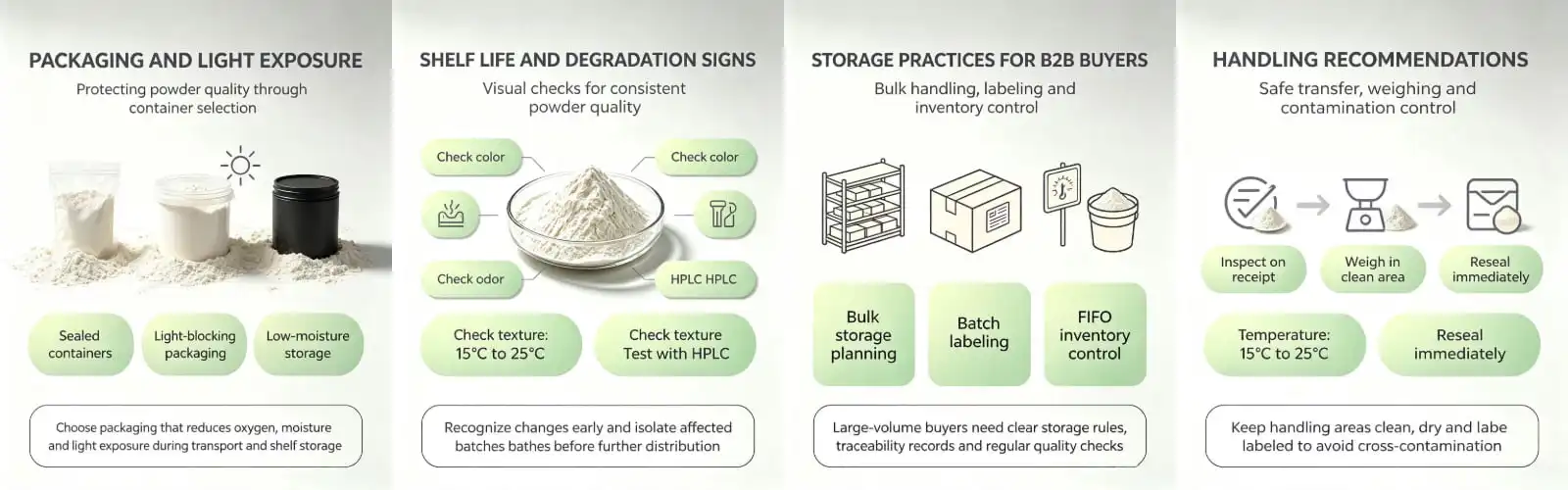
Conclusion
Semen Pruni Extract rewards careful handling. A cool, dry, dark environment paired with airtight, moisture-resistant packaging preserves Prunuside A and the extract's broader phytochemical profile far longer than casual storage allows. Bulk buyers gain additional protection through refrigeration, desiccants, and periodic potency testing, while smaller-scale users simply need a sealed container away from heat and sunlight. Following these habits protects both raw material investment and the quality customers expect from finished botanical products.
FAQ
Does Semen Pruni Extract need refrigeration?
Refrigeration around 4°C to 8°C benefits bulk quantities stored beyond six months, though smaller retail amounts stay stable in a cool pantry away from heat sources.
How long does an opened container remain potent?
Once opened, resealing tightly after each use and storing away from humidity typically keeps quality strong for several months, though testing remains the most reliable confirmation.
What packaging protects the extract best?
Opaque, moisture-barrier materials such as foil-lined pouches or amber containers block the light and air exposure that degrade Prunuside A most quickly.
Can heat exposure ruin the extract permanently?
Repeated heat exposure accelerates oxidation and can permanently reduce active compound concentration, so avoiding proximity to stoves, radiators, or direct sunlight matters throughout storage.
Get Storage-Ready Semen Pruni Extract From Sigma
Sourcing consistent, well-preserved raw material starts with a manufacturer who controls storage from extraction through shipment. Shaanxi Sigma Biotechnology Co., Ltd. packages every batch of Semen Pruni Extract in moisture-barrier liners with documented Prunuside A specifications, giving formulators dependable potency batch after batch. Reach out to sarah@sxsigma.com or visit sxsigma.com to request samples, certificates of analysis, or bulk pricing from a trusted Semen Pruni Extract manufacturer.
References
1. Oshio, H., Miyamoto, M., & Sanno, Y. Studies on a new purgative constituent of Prunus japonica Thunb., prunuside. Yakugaku Zasshi, 1975.
2. He, L.Y., & Li, B.M. MicroHPLC determination of amygdalin in Semen pruni armeniacae and Semen pruni persicae. Biomedical Chromatography, 1988.
3. He, X., Wu, L., & Wang, W. Amygdalin: A pharmacological and toxicological review. Journal of Ethnopharmacology, 2020.
4. China Pharmacopoeia Committee. Pharmacopoeia of the People's Republic of China, Volume 1. China Chemical Industry Press, 2020.
5. Evaluation of the chemical profile from four germplasm sources of Pruni Semen using UHPLC-LTQ-Orbitrap-MS and multivariate analyses. Published research on Prunus seed authentication and chemical fingerprinting.
6. Colic, S.D., Fotiric Aksic, M.M., & Lazarevic, K.B. Fatty acid and phenolic profiles of almond grown in Serbia. Food Chemistry, 2017.
- 1
- 8
- 9
- 10
- 19


_1776308368292.webp)