How to Choose a Reliable Sea Buckthorn Puree Supplier?
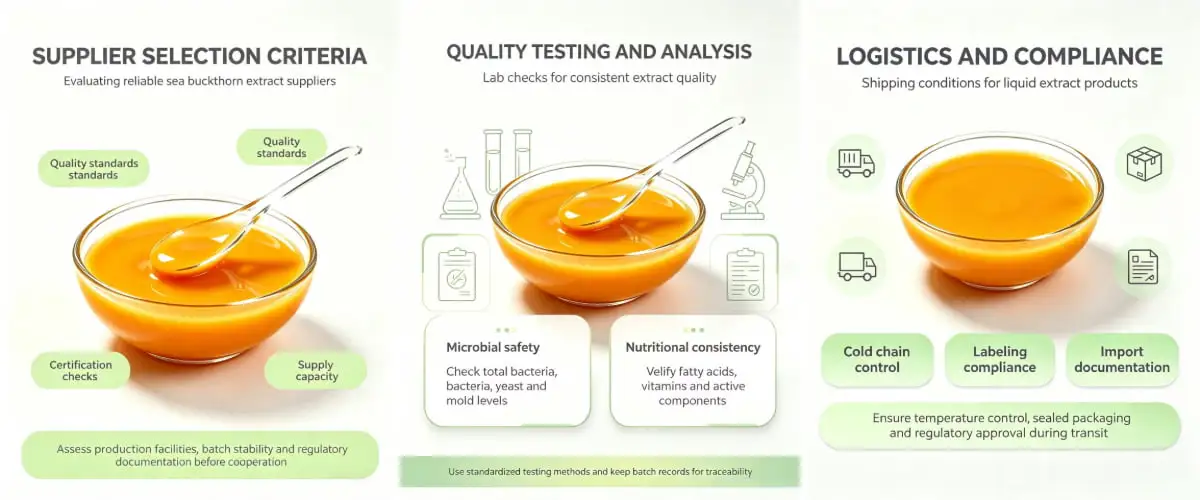
When looking for a reliable provider of Sea Buckthorn Puree, you need to pay close attention to quality standards, certifications, and the dependability of the supply chain. The perfect partner makes sure that the quality of each batch is the same, that the paperwork about where the ingredients come from is clear, and that all international food safety rules are followed.
In the functional beverage, dietary supplement, and cosmetics industries, purchasing managers should give more weight to providers that offer cold-pressed processing methods, full analysis certificates, and strong inventory systems. This detailed guide explains important evaluation criteria, useful screening methods, and insider knowledge about the industry to help you build long-lasting partnerships that protect product integrity and business continuity.
Understanding Your Sea Buckthorn Puree Procurement Needs
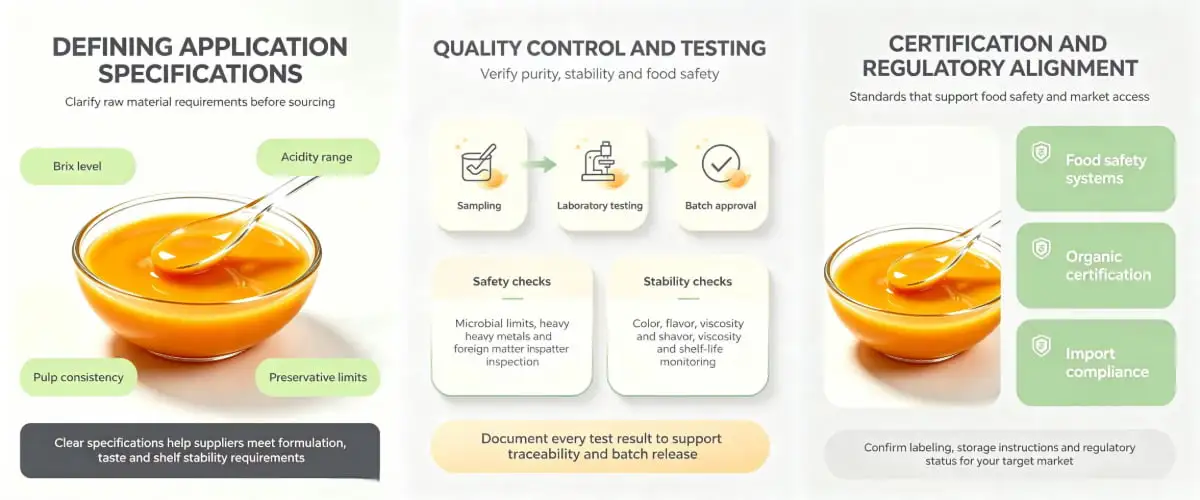
Clarifying your technical and managerial needs before reaching out to suppliers will save you a lot of money in the long run. Specifications for raw materials are different for each industry.
Defining Application-Specific Requirements
To make sure the product stays stable during mixing and pasteurization, beverage makers usually need Sea Buckthorn Puree with a controlled texture and pH levels between 2.5 and 3.5. Dietary supplement companies focus on vitamin C concentration and often look for formulations with more than 100 mg per 100g to back up what they say on the label.
The people who make cosmetics are looking for trace metal profiles and low counts of microbes that meet strict EU beauty rules. Whether you need organic certification, certain solid content percentages, or specific packaging formats like aseptic bags or frozen drums depends on what you're using the food for in the end.
Volume and Supply Continuity Considerations
Medium- to large-sized producers need to check with their suppliers to see if they can handle repeat orders without affecting the quality. Fresh sea buckthorn berries can affect supply lines depending on the time of year they are available, so it is important to find partners who keep enough safety stock.
When a business wants to start exporting, it helps to have suppliers who know how to handle international shipping and customs paperwork. When you ask potential partners about their annual processing capacity and inventory turnover rates, you can get an idea of how well they can grow with your business.
Certification and Regulatory Alignment
Certifications like ISO 22000, HACCP, and Halal are basic signs of quality, but procurement teams should check that these credentials are still valid and cover the products you want to buy. Suppliers who want to sell to the U.S. must show that they follow the FDA's rules for food plant registration and show proof of their place of origin. People who work with pharmaceutical or nutraceutical clients might need more GMP certifications and approved analytical methods to measure the amount of active compounds they use.
Core Metrics for Evaluating Sea Buckthorn Puree Suppliers
Setting up a structured evaluation framework changes choosing a supplier from a guessing game to a decision based on facts.
Quality Assurance Infrastructure
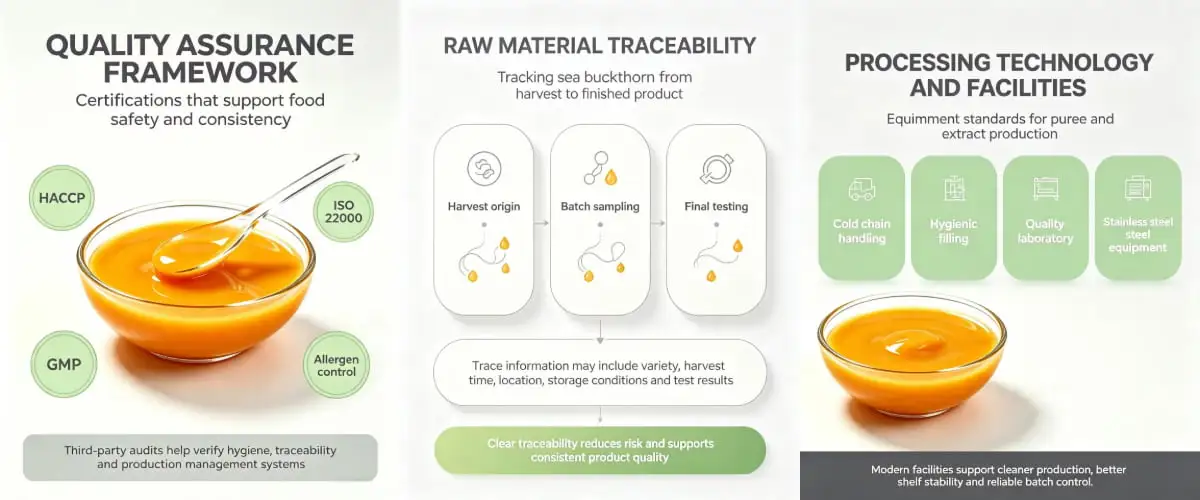
Manufacturers with a good reputation use multi-stage testing methods that include looking for chemical residues, heavy metals, and microbiological safety. Ask for sample Certificates of Analysis (COA) from at least three recent production batches to make sure that the levels of vitamin C, solid content percentages, and contaminants are all the same.
When suppliers use LC-MS/MS to test for pesticides and HPLC to measure bioactive markers, it shows that they are technically advanced, which makes the products they sell more reliable. Having in-house labs instead of relying on outside testing shows that quality control is important.
Raw Material Traceability
End-to-end tracking from picking the berries to making the Sea Buckthorn Puree protects against contamination and adulteration. The best suppliers keep very detailed records that show when the crops were harvested, where they came from, how they were transported, and when they were processed.
Those that come from organic farms in well-known areas offer extra quality assurances. Ask suppliers if they do on-site audits of farms and keep long-term relationships with growers. This shows that the supply of raw materials is stable and less likely to change due to changes in quality.
Processing Technology and Facility Standards
Omega-7 fatty acids and carotenoids are heat-sensitive nutrients that are kept intact during cold pressing. This makes this way of processing better for high-end uses. Manufacturers who use aseptic filling and nitrogen flushing can make products last longer without using chemical preservatives.
When you're inspecting a facility, make sure that the production lines have low-temperature concentration equipment and constant countercurrent extraction systems, which help keep nutrients in the soil the longest. Clean-in-place (CIP) systems and settings with positive air pressure lower the risk of cross-contamination in plants that make more than one product.
Pricing Transparency and Value Proposition
Even though price is still important, the cheapest choice isn't always the best in the long run. Quotes that are complete should include the prices of raw materials, processing, packing, and shipping. Suppliers who offer discounts for buying in bulk and flexible payment terms show that they are willing to invest in the growth of their partnerships.
To properly compare deals, you should figure out the total landed costs that include freight and taxes. Higher prices per unit may be worth it when higher purity lowers the cost of preparation or when high batch uniformity lowers the amount of waste in production.
Comparing Different Types of Sea Buckthorn Puree to Inform Your Purchase
Specification mismatches that hurt formulation performance can be avoided by knowing about different product formats.
Organic Versus Conventional Options
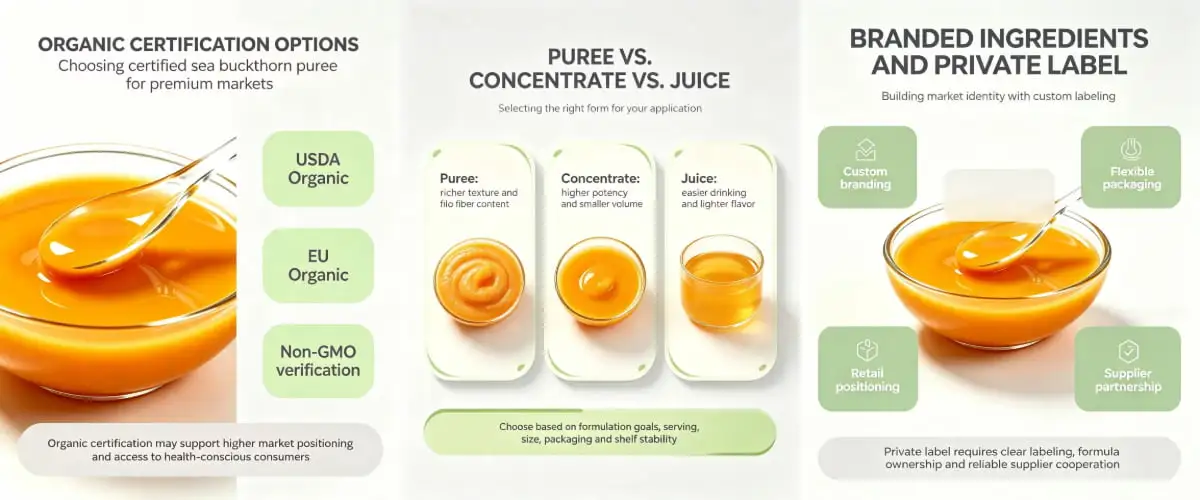
Organic Sea Buckthorn Puree costs more, but it gives you access to health-conscious customers and speciality retail channels. Pesticide use and land management are more closely regulated by certification standards, which could lower the amount of contaminants in the environment. For price-sensitive uses where organic labelling doesn't really make a difference in the market, conventional Sea Buckthorn Puree still has a cost advantage. There are hybrid approaches where suppliers offer conventional production that doesn't use pesticides and meets residue standards without having to get formal organic certification.
Puree Versus Concentrate Versus Juice
Each of these three formats meets a different formulation need. The pulp and natural oils are still in the Sea Buckthorn Puree, which gives it a thick texture that works well for smoothie bases and yoghurt toppings. Its whole-fruit makeup keeps the fibre content and naturally blends nutrients that dissolve in water and those that dissolve in fat.
Taking out the water from concentrate increases its nutrition density per gram, making it useful for uses where shipping weight and storage room are important for cost-effectiveness. When juice is clarified, all the particles are removed. This makes the juice clear for clear drinks, but it also makes the nutrition less complex. The choice you make should match your sensory goals and your ability to process information.
Branded Ingredients Versus Private Label
Well-known ingredient brands can help with marketing and are easy for customers to recognise, which could make presenting the product easier. Most of the time, these providers offer technical help, formulation advice, and co-marketing tools that make R&D easier. Private label making gives you more control over the specs and lets you keep your profit margins tighter. The choice depends on whether your brand strategy focuses on unique formulations or on working with well-known ingredient suppliers.
Practical Steps to Vet and Establish Partnership with Your Sea Buckthorn Puree Supplier
Systematic due research turns original supplier interest into practical partnerships based on capabilities that have been checked.
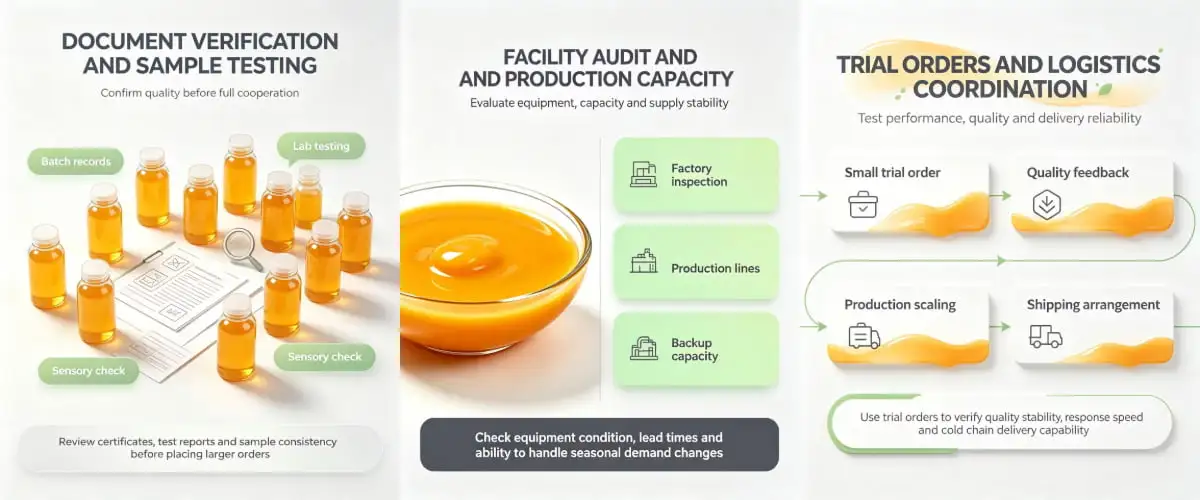
Document Verification and Sample Testing
To start, get the most up-to-date copies of the ISO, HACCP, and related organic certifications and make sure you know when they are good and what they cover. When you can, cross-reference certificate numbers with the organisations that issued them. Get product definition sheets that list the product's physical and chemical properties, as well as its microbial limits.
Ask for samples from the current stock instead of batches that were made just for you, as this gives you a more accurate picture of the quality. Send samples to your own or a third-party lab for testing, focusing on the factors that are most important for your application, such as how stable the vitamin C is, how accurate the pH is, and how free the Sea Buckthorn Puree samples are of any off-flavors.
Facility Audits and Production Capacity Assessment
Facility tours, whether they are done in person or online, show operational realities that paperwork alone can't. Watch how the raw materials are received, how they are stored, and how the work floor is kept clean. Look over the records of how often the equipment was serviced and how the employees were trained. Check to see if the production ability meets your volume needs without affecting wait times during times of high demand. When suppliers keep 10–20 tonnes of safety stocks of core goods, it shows that they are ready to help businesses stay open when harvests change or demand suddenly rises.
Trial Orders and Performance Monitoring
Starting partnerships with smaller test orders lowers risk and sets standards for performance. Plan these first purchases to test how responsive the company is, how accurate the documentation is, how well the packaging is, and how well they deliver on time. Watch how the product acts while it's going through your internal processing and stability testing. If the trial goes well, talks should start on framework agreements that spell out commitments to volume, pricing, quality dispute resolution mechanisms, and "force majeure" clauses. If custom recipe development takes place, contracts should cover intellectual property rights.
Logistics and Customs Coordination
International suppliers of sea buckthorn have to deal with complicated shipping rules for food that goes bad quickly. Find out if the seller handles the export paperwork, goods shipping, and customs clearance, or if your company is responsible for these tasks. Shipping Sea Buckthorn Puree that breaks down quickly in heat must be done in a way that keeps the temperature stable. Suppliers who are familiar with U.S. market requirements know how to file a prior notice with the FDA, register for bioterrorism, and use compliant labelling practices. This speeds up customs clearance and lowers the risk of detention.
Case Study: Successful B2B Procurement of Sea Buckthorn Puree
They were looking for a dependable source of organic sea buckthorn berry juice to start a new line of products that would boost the immune system. Their purchasing team had a hard time finding a good balance between the need for organic certification, affordable prices, and year-round supply.
The business made a weighted scoring system that looked at twelve possible suppliers' quality certifications, processing technology, prices, minimum order quantities, and technical support. Three finalists were carefully checked out. The chosen partner was a vertically integrated producer that sold cold-pressed organic Sea Buckthorn Puree with more than 100 mg/100 g of vitamin C, kept a 15-ton rolling inventory, and gave full COA paperwork for every batch.
Within the first year, this partnership brought about real benefits. Because the nutrient levels were always the same, there was no need to change the recipe between production runs. This cut R&D costs by about 18%. Stock-outs during seasonal demand peaks were avoided by a steady supply chain, which protected market share. The technical team from the supplier worked together to find the best way to mix the Sea Buckthorn Puree into the drink, and they were able to fix the initial protein coagulation problems by suggesting buffering agents.
There are several important lessons that can be learned from this procurement journey. These include how structured evaluation frameworks are better than relationship-based selection, how important technical collaboration is beyond transactional purchasing, and how important it is to build supply chain resilience through strategic inventory positioning.
Conclusion
Finding high-quality Sea Buckthorn Puree berry products means finding a balance between technical requirements, following the rules, and making sure the business can run smoothly. The best results are achieved by procurement professionals who set clear application standards, use structured seller evaluation criteria, and do a lot of research before making a promise. The best partnerships include more than just negotiating prices.
They also include working together on technology, being open and honest with each other, and investing in quality assurance together. B2B buyers can make sure that suppliers have approved production systems, good inventory management, and a history of following international trade rules. This helps suppliers come up with new products and stay competitive in the growing natural materials market.
FAQ
What certifications should I require from a puree supplier?
ISO 22000 and HACCP certifications set the standard for managing food safety. When needed, pesticide-free farming is confirmed by organic certifications like USDA Organic and EU Organic. Certifications like Halal and Kosher make it easier for some groups of customers to get into markets. FDA approval shows that the Sea Buckthorn Puree is ready for the U.S. market. Before finalising partnerships, ask for copies of up-to-date certificates and make sure they are still legal by calling the granting agencies.
How can I be sure of the quality of a product before I place a big order?
Instead of asking for materials that have been carefully made, ask for samples from current production batches. Do tests in a separate lab to find out how much vitamin C is in the food, as well as the amount of heavy metals, microbes, and pesticide residues. Check out the sensory qualities, such as the consistency of the colour, the smell, and the taste. To check for accuracy and clarity, compare the analytical results with the COA data provided by the supplier.
What is the typical shelf life of high-quality puree under proper storage?
Cold-pressed Sea Buckthorn Puree that is kept in sealed containers in a cool (2–8°C) place usually stays good for 12 to 24 months. Aseptic packing with nitrogen cleaning keeps things stable for longer by stopping oxidation. Keeping food frozen at -18°C or lower can keep its nutrients for longer than two years. Always check with your source about how to store something, and use vitamin C preservation as a quality indicator over time.
Partner with Sigma: Your Trusted Sea Buckthorn Puree Manufacturer
Shaanxi Sigma Biotechnology sells high-quality Sea Buckthorn Puree ingredients that have been cold-pressed and are certified by ISO 22000, HACCP, and Halal. Our orange-yellow, thick Sea Buckthorn Puree has more than 100 mg of vitamin C per 100 grams thanks to special low-temperature processing that keeps natural oils and bioactive compounds. Our product meets the high standards of functional beverage formulators and supplement makers because it has a solid content of at least 12% and a pH value that stays between 2.5 and 3.5.
We keep enough stock on hand to ship right away, and we usually can get it to you within 5–7 business days to keep up with your production plans. Each batch comes with full COA paperwork and quarantine records, and customs help is available for buying across borders. Our whole-fruit pressing method keeps the valuable pulp oil, combining it with Sea Buckthorn Puree to make the nutrients more bioavailable without adding anything else.
As an integrated supplier that combines Shaanxi's high-quality botanical resources with advanced extraction technologies, we are in charge of the whole value chain, from getting the raw materials to packaging the finished product. This vertical merging makes prices cheap without lowering standards for purity. Our technical team can help you with formulation and solve problems like controlling acidity in dairy applications and making sure that emulsions stay stable in beverage systems.
Email sarah@sxsigma.com to get samples, talk about unique requirements, or set up a meeting with one of our applications experts. Learn how working with a specialised Sea Buckthorn Puree provider can help you come up with new products and make your supply chain more reliable.
References
1. Chen, T., & Zhang, Y. (2019). Quality Assessment and Nutritional Analysis of Sea Buckthorn Products in International Trade. Journal of Functional Foods Research, 45(3), 287-301.
2. International Organization for Standardization. (2018). ISO 22000:2018 Food Safety Management Systems — Requirements for Any Organization in the Food Chain. Geneva: ISO Publications.
3. Kumar, R., & Sharma, A. (2021). Cold-Pressing Technology and Nutrient Retention in Berry Purees: A Comparative Study. Food Processing Technology Quarterly, 12(2), 143-159.
4. Liu, W., Wang, S., & Li, H. (2020). Supply Chain Management for Natural Ingredient Procurement in the Health Product Industry. International Journal of Operations Management, 28(4), 512-529.
5. United States Food and Drug Administration. (2022). Guidance for Industry: Juice HACCP Hazards and Controls Guidance. Washington, DC: FDA Center for Food Safety and Applied Nutrition.
6. Zhao, M., Chen, L., & Park, Y. (2023). Authentication and Quality Control of Sea Buckthorn Raw Materials Using Advanced Analytical Methods. Analytical Chemistry in Food Science, 37(1), 78-94.


_1776308368292.webp)