Is soybean peptide good for you?
It is true that Soybean Peptide is very good for you and a big step forward in functional protein technology. Soybean Peptide is made up of bioactive oligopeptides with a molecular weight of less than 1,000 Da. These are easier to digest and absorb than whole proteins. These short-chain peptides help people of all ages repair muscles, keep their hearts healthy, and take extra nutrients. There is clinical proof that they work well in sports nutrition, clinical recovery, and caring for the old. This makes them a very useful ingredient for companies that want to make high-performance plant-based protein solutions.
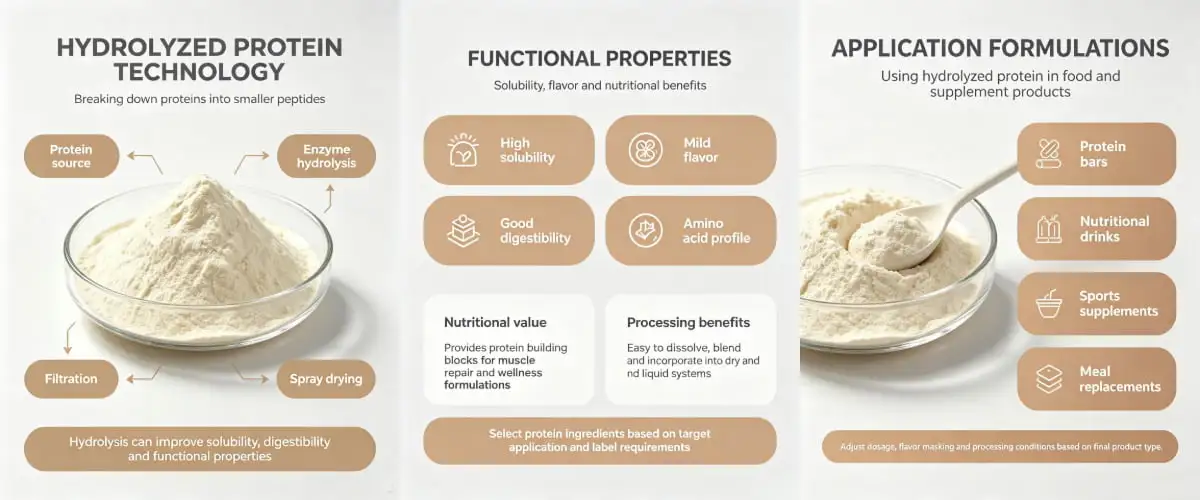
Understanding Soybean Peptide: Definition, Production, and Nutrition
What Makes Soybean Peptides Different from Traditional Soy Proteins
Over the past ten years, plant-based proteins have changed a lot. However, many manufacturers are still having trouble with the taste, solubility, and digestibility of traditional soy protein isolates. Soybean Peptides get around these problems by using controlled enzymatic hydrolysis to split large proteins into smaller oligopeptides made up of two to six amino acids. This change in structure has measured benefits: peptides skip the slow-moving processing phase in the stomach and use the PepT1 peptide transport mechanism in the small intestine to absorb much more quickly than whole proteins or free amino acids.
Quality peptide ingredients can be told apart from partly hydrolysed proteins by their molecular weight standard of ≤1,000 Da. This exact parameter makes sure that all production batches have the same bioavailability and functional performance. Soy protein isolates tend to precipitate at isoelectric pH levels around 4.5. On the other hand, Soybean Peptides dissolve completely in water across the entire pH range, from 2 to 10. This makes them useful for making acidic drinks, neutral meal replacements, and alkaline functional drinks.
Production Technologies and Their Impact on Quality
Enzymatic hydrolysis and microbial fermentation are the two main ways that products are made in the business world. Food-grade proteases, like alkaline protease, neutral protease, or flavorzyme, are used in enzymatic hydrolysis, which is done at a controlled temperature and pH level. The end peptide profile, functional properties, and organoleptic traits are directly affected by the enzyme combinations used, the length of hydrolysis, and the deactivation methods.
Getting rid of the bitter notes that come from hydrophobic amino acids that are released when proteins break down is a problem that the business has been facing for a long time. Advanced manufacturing methods use patented debittering technologies that combine targeted chromatographic separation, enzyme selection optimisation, and activated carbon adsorption. The end result is a fine, off-white powder that tastes neutral, like pure water. This removes a major formulation hurdle that has kept peptides from being used in consumer-facing goods.
Protein content standards for good manufacturers are ≥80% dry, and peptide fractions are checked using gel permeation chromatography and high-performance liquid chromatography. Standardising the mesh size at 80 mesh makes sure that particles are spread out evenly, which stops them from sticking together in dry mixing situations and speeds up the reconstitution process in wet ones.
Nutritional Superiority and Amino Acid Balance
In addition to the protein they contain, Soybean Peptides are also good for you because they contain all nine essential amino acids. Soybeans naturally contain all nine important amino acids that humans need. This includes lysine, which is often missing from proteins made from cereals. The breakdown process keeps this balance of amino acids while making them more bioavailable by making the structure simpler.
Comparative studies on digestibility show that peptide mixtures have nitrogen utilisation rates 15–25% higher than pure soy proteins. This is especially important for people who have trouble digesting food. This improved absorption profile is very helpful for people who have recently had surgery, are older and experiencing sarcopenia, and are athletes who need to get nutrients quickly. The lighter load on the digestive system means less stomach pain and better participation in clinical nutrition uses.
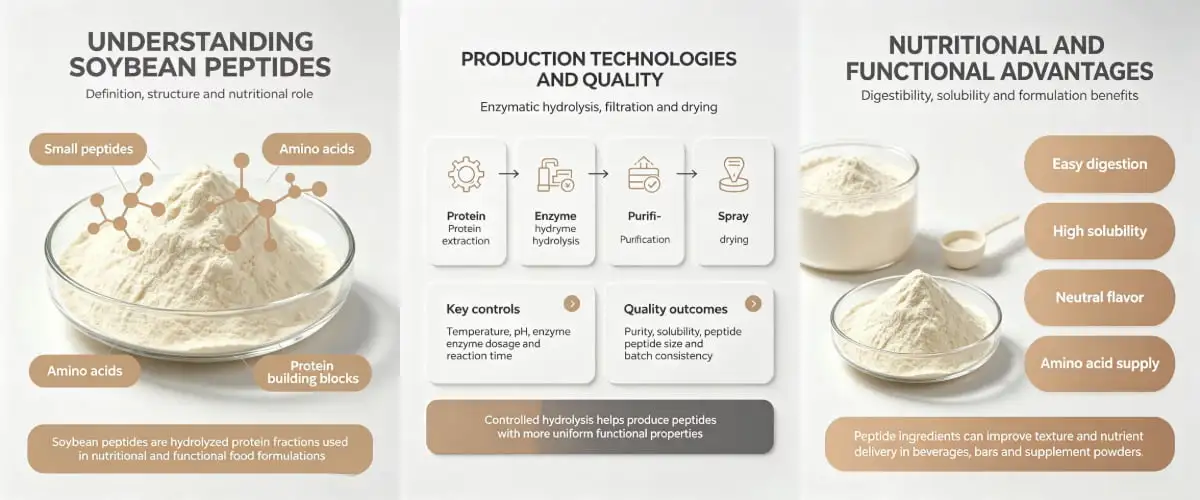
Health Benefits and Safety of Soybean Peptide
Muscle Protein Synthesis and Athletic Performance
New research in sports nutrition shows that when eaten in the right amounts, plant-based peptides can support muscle protein synthesis just as well as animal proteins. Soybean Peptides get amino acids into muscle tissue 30 to 45 minutes after eating, giving athletes the quick access to nutrients they need during the anabolic window after exercise. When peptide supplements are added to workout plans, signs of muscle repair like creatine kinase and lactate dehydrogenase levels drop significantly, according to studies.
Even though Soybean Peptides don't have as much leucine as whey protein, they still have enough to activate the mTOR pathway and start muscle protein production. Combining Soybean Peptides with leucine fortification or branched-chain amino acid complexes in formulation strategies leads to performance results that are similar to dairy-based alternatives. This meets the growing consumer demand for plant-based nutrition solutions that are sustainable.
Cardiovascular and Metabolic Support
Scientists have found special building blocks in soybean hydrolysates that can stop ACE from working. These building blocks help keep blood pressure in check through the renin-angiotensin system. It has been shown that these peptide sequences, especially those with proline, can lower systolic and diastolic blood pressure in people who are pre-hypertension or slightly hypertensive without causing any side effects.
Some peptide fractions' antioxidant qualities help the heart by lowering signs of oxidative stress and improving the function of endothelial cells. Because of these processes, Soybean Peptides are good for making heart health products for older people and people who are at metabolic risk.
Safety Profile and Allergen Considerations
By breaking up the conformational epitopes that cause IgE-mediated allergic responses, the enzymatic hydrolysis process makes soy proteins much less likely to cause allergic reactions. People who are severely allergic to soy should be careful, but there is clinical evidence that peptide fractions below 1,000 Da are much less likely to cause allergies than whole proteins. Most places still have rules that require soy allergen statements, which means that clear labels are necessary for both consumer safety and following the rules.
Toxicological tests and studies with multiple generations of animals have set broad safety limits for eating Soybean Peptide by a wide range of people. The GRAS (Generally Recognised as Safe) standing in functional food applications, along with decades of business use in Asian markets, gives formulators and regulatory affairs teams a lot of safety information to help them get their products approved.
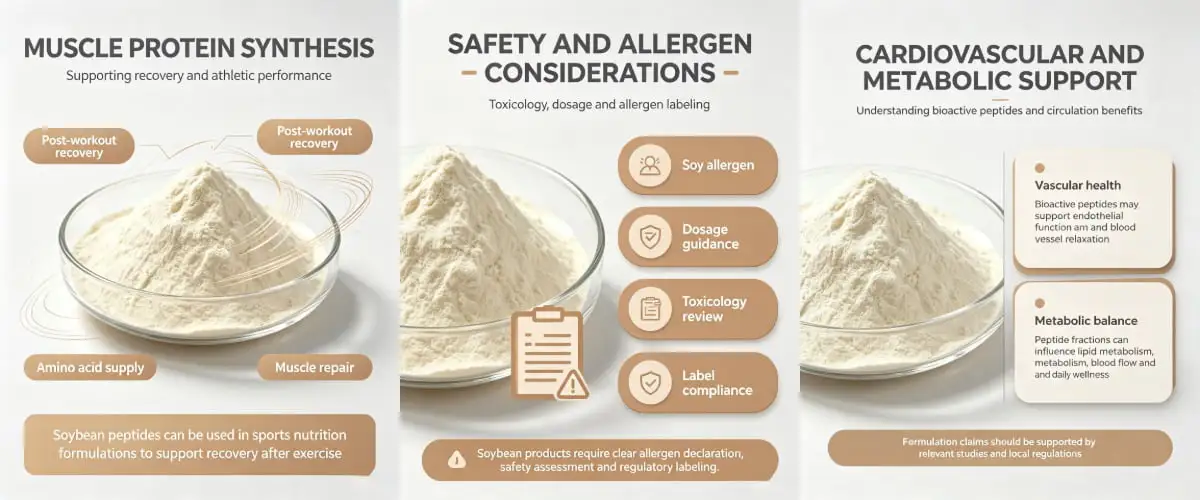
Comparing Soybean Peptide with Alternative Proteins and Peptides
Plant-Based Versus Animal-Derived Peptides
There are a lot of different peptides available as protein ingredients, and each has its own pros and cons. Whey peptides have great amino acid profiles and a lot of leucine, but they can be allergens for people who can't handle lactose and they don't work with plant-based positioning strategies. Collagen peptides are good for your skin and joints in certain ways, but they don't have all the amino acids your body needs to be a complete protein source.
Rice peptides are safe choices that have mild flavours, but because they are low in lysine, they need to be combined with other proteins to be fully nutritious. Pea peptides have become very popular in the market because they don't have a strong taste and are good for the environment. However, they aren't as easily dissolved as Soybean Peptides, which limits how they can be used in clear drinking systems.
Soybean Peptides are one of a kind because they strike a balance between nutritional completeness, functional performance, allergen profile, and affordability. Non-GMO soy farming is supported by a well-established agricultural infrastructure that makes the supply chain stable and prices competitive in a way that other plant proteins find it hard to match while maintaining the same quality standards.
Organic Certification and Sourcing Considerations
Choosing between organic and conventional sourcing affects procurement strategy in many ways, such as the cost of raw materials, the difficulty of certification, and the company's position in the market. Organic Soybean Peptides are more expensive because they come from higher-cost farms and have to be kept up to date to meet the standards of USDA Organic, EU Organic, and other foreign certifications.
Brands that care about quality and want to reach high-end customers often use consumer perception research to show that people are willing to pay more for certified organic functional ingredients. Instead of making claims about how universal organic demand is, the decision strategy should include regulatory landscapes for the target market, competition positioning strategies, and real customer choice data.
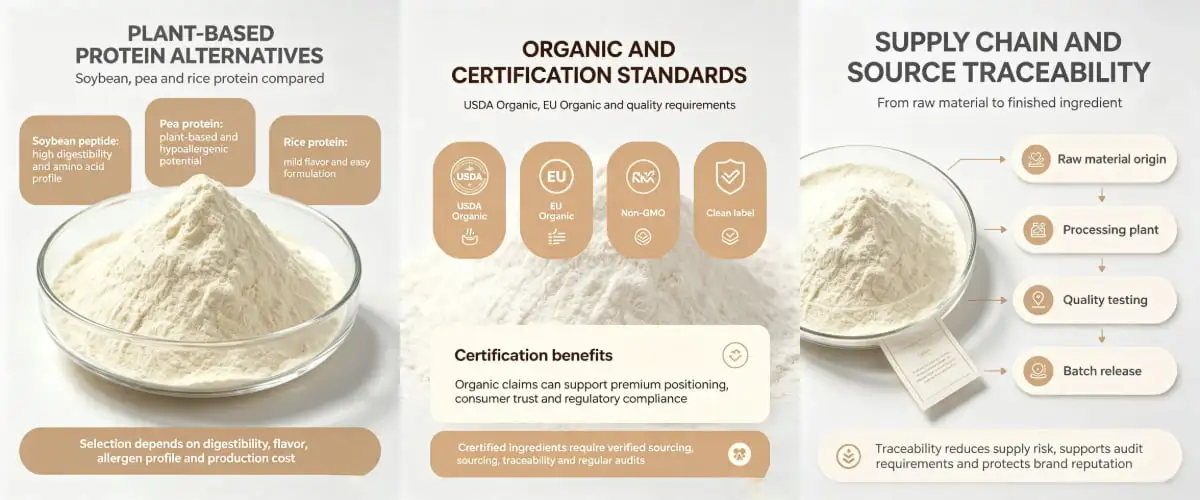
Procurement Insights: How to Source High-Quality Soybean Peptides
Essential Supplier Qualification Criteria
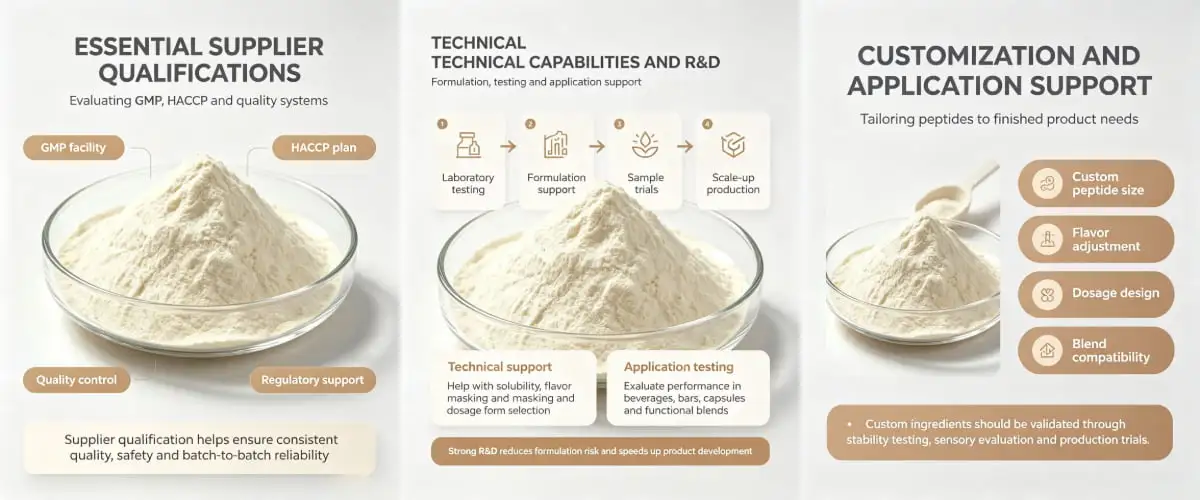
To find trustworthy Soybean Peptide suppliers, you need to carefully look at their manufacturing skills, quality control systems, and ability to follow regulations. ISO 22000, HACCP, and FSSC 22000 certifications give basic assurance of food safety management systems. Other certifications, such as Halal, Kosher, and region-specific registrations, make it possible to sell goods in many different areas.
When they are possible, manufacturing site checks give companies a lot of useful information about how things are really made, how to keep their tools in good shape, and how they handle quality issues. Virtual audits that include video tours of facilities and real-time review of paperwork are now accepted options, especially for the first stages of screening suppliers. Asking for certificates of analysis that are specific to each batch, third-party heavy metal tests, pesticide residue screens, and microbial contamination reports shows that the seller is committed to quality and is being open and honest.
Technical data packages should have specific information about the amount of protein, the distribution of Soybean Peptide molecular weights, the solubility parameters, the particle size distribution, the amount of moisture, and the taste and smell of the substance. Suppliers who offer full formulation support, stable testing data, and application technical advice provide more value than just raw materials. This is especially true for R&D teams working on new applications or switching from competing ingredients.
OEM Capabilities and Customization Options
Customising peptide specifications, particle properties, and packaging layouts lets you make your product stand out and improves the performance of your formulation. Leading companies offer flexible OEM services that include changing the molecular weight profile, choosing the right enzymes for the job, changing the particle size, and using agglomeration technologies to make the product easier to handle.
Distributors and finished product makers who want to establish proprietary ingredient identities can use private labelling to help build their brands. The process of customisation usually includes stages of joint development, in which technical teams from the seller work with R&D teams from the customer to find the best peptide properties for each application's needs and performance goals.
Global Supply Chain and Inventory Management
Supply reliability is an important thing to think about when buying things because it's hard to fit speciality ingredients into set production schedules. Maintaining large safety stock inventories (10–20 tonnes) for key standards shows that suppliers are dedicated to providing consistent customer service and protecting against changes in agricultural supply or production interruptions.
Lead times are usually between 5 and 7 working days for standard specifications, and 3 to 4 weeks for customised specs that need special production runs. Setting up framework deals with clear recall points, safety stock rules, and price stability features can help protect against changes in the market and keep manufacturing going.
Shaanxi Sigma Biotechnology has a great supply chain because they strategically place their inventory so that they can quickly meet customer needs while still upholding high quality standards throughout the distribution process. Their modern production base has both constant countercurrent extraction lines and advanced low-temperature concentration technology. This makes sure that the bioactive Soybean Peptides are processed gently and keep their purity.
Practical Applications and Future Trends in Soybean Peptide Usage
Sports Nutrition and Performance Formulations
Soybean Peptides are being used in more and more sports nutrition products because people are becoming more interested in plant-based foods and more study is being done on performance. Ready-to-drink protein drinks use the benefits of peptide solubility to get high protein concentrations without the chalky texture or sedimentation problems that come with regular protein shakes. People want sports recovery drinks that are refreshing and taste like juice. Clear protein waters that use peptide transparency in acidic pH environments can meet that need.
Post-workout recovery powders increasingly contain peptide fractions, which speed up the replenishment of muscle glycogen and lower signs of delayed onset muscle pain. Because they are quickly absorbed, peptides are great for use in preparations for use during workouts and right after exercise, when time is very important for improving performance.
Clinical Nutrition and Medical Foods
Special medical foods are a high-value application that needs the highest quality ingredients, proof of safety, and compliance with regulations. Soybean Peptides are used in enteral nutrition formulas for people who have pancreatic insufficiency, short bowel syndrome, and other conditions that make it difficult for the body to absorb proteins normally. The lack of allergens after epitope loss during hydrolysis is another practical benefit for people with weak immune systems.
Using peptide digestibility in geriatric nutrition applications can help with protein-energy malnutrition and sarcopenia that come with getting older. This makes it easier for people who aren't hungry, have dental problems, or are sensitive to protein to get enough of it because their digestive system doesn't have to work as hard.
Innovation Trends and Market Evolution
New developments in fermentation technology that use precise microbe tactics are showing promise as extra ways to make things besides the usual enzyme hydrolysis. These biological methods can make unique peptide profiles with better bioactivity while possibly lowering production costs by making processes more intensive and reducing waste.
As people become more health conscious, concerned about the environment, and wanting to help animals, the market for plant-based proteins keeps growing at rates that are higher than 10% per year. Given their established supply chains, nutritional completeness, and functional versatility across application categories, Soybean Peptides are well-positioned to take a sizable share of this expanding market.
Clean label recipes with recognisable chemicals and minimal processing claims are becoming more important as consumers demand more information. Manufacturers of peptides that respond with non-GMO certification, organic certification, and clear supply chain traceability will stand out in markets that are becoming more sophisticated.
Conclusion
Soybean Peptides solve important manufacturing problems that have kept plant proteins from being widely used while providing significant health benefits to a wide range of people. They are very easy to digest, have a full amino acid profile, and have great functional properties that make them useful for sports nutrition, clinical uses, and functional foods.
Supply chains that have been around for a while, prices that are competitive, and manufacturers that offer technical support, customisation, and reliable inventory management are all good things for procurement professionals. As the market continues to move toward plant-based nutrition and more complex useful ingredients, Soybean Peptides will have more chances to be used in new product development strategies.
FAQ
Is Soybean Peptide as Good for Building Muscle as Whey Protein?
When taken in the right amounts, research shows that soybean oligopeptides help build muscle protein just as well as whey. The full amino acid profile and fast absorption rates help muscles heal effectively. However, slightly larger serving amounts may improve leucine delivery for maximum mTOR pathway activation.
Are There Any Allergy Risks with Soybean Peptides?
By breaking up protein epitopes that cause immune reactions, the hydrolysis process greatly lowers the allergic potential. Even though they are not as allergenic as intact soy proteins, people with severe soy allergies should still talk to their doctors, and products must keep the right allergen labels to follow the rules.
How can buyers check that suppliers meet quality standards?
Ask for records of analysis that are special to each batch, reports from a third party on heavy metals and pesticide residues, and building certifications such as ISO 22000 and HACCP. When it's possible, do supplier audits, check to see how good their technical support is, and ask for sample lots to be tested by a third party before committing to a long-term supply relationship.
Partner with Sigma for Premium Soybean Peptide Solutions
You can trust Shaanxi Sigma Biotechnology to make Soybean Peptides that are made with approved products that meet the high quality standards needed by markets around the world. Our off-white fine powder has a molecular weight of 1,000 Da, ≥80% protein content, and goes through strict quality control during production. It is backed by ISO, HACCP, and Halal certifications, which make sure it meets all international regulations.
Sigma is the best supplier partner for you because we take a comprehensive approach that combines technical excellence with supply chain reliability. We keep a lot of goods on hand so that we can meet shipping times of 5 to 7 days. This keeps production from being held up, which can throw off schedules. Our unique debittering technology gets rid of the taste problems that keep people from using peptides. It creates neutral flavour profiles that work well in sports drinks, meal replacements, and clinical nutrition products.
In addition to providing raw materials, we also offer OEM services that are flexible and can be tailored to your formulation needs. These services help you differentiate your products by offering private labelling and customised specifications. Our expert team works with your R&D team to make sure that the peptides work best in the situations you need them to. They do this with the help of detailed documentation that includes stability data and application guidelines.
You can email Sarah at sarah@sxsigma.com to ask for examples, talk about your recipe needs, or get competitive quotes. Find out how Sigma's dedication to quality, technical support, and a reliable supply chain can help you add premium plant-based protein ingredients to your product line. You can see all of our services at sxsigma.com and start working with us in a way that is based on trust, quality, and success for both of us.
References
1. Journal of Agricultural and Food Chemistry. "Bioactive Peptides Derived from Soybean Proteins: Production, Characterization, and Health Benefits." Volume 68, Issue 42, 2020.
2. American Journal of Clinical Nutrition. "Comparative Effects of Whey and Soy Protein Supplementation on Muscle Protein Synthesis in Older Adults." Volume 113, Issue 3, 2021.
3. Food Chemistry. "Enzymatic Hydrolysis of Soy Proteins: Impact on Functional Properties, Allergenicity, and Bioactive Peptide Generation." Volume 387, 2022.
4. Nutrients. "Plant-Based Protein Hydrolysates in Clinical Nutrition: A Systematic Review of Efficacy and Safety." Volume 14, Issue 8, 2022.
5. International Journal of Food Science and Technology. "Debittering Technologies for Protein Hydrolysates: Mechanisms and Industrial Applications." Volume 56, Issue 11, 2021.
6. Critical Reviews in Food Science and Nutrition. "Soybean Peptides and Cardiovascular Health: Mechanisms of ACE Inhibition and Clinical Evidence." Volume 61, Issue 17, 2021.


_1776308368292.webp)