Function And Application Of Polygonatum Sibiricum Extract Powder
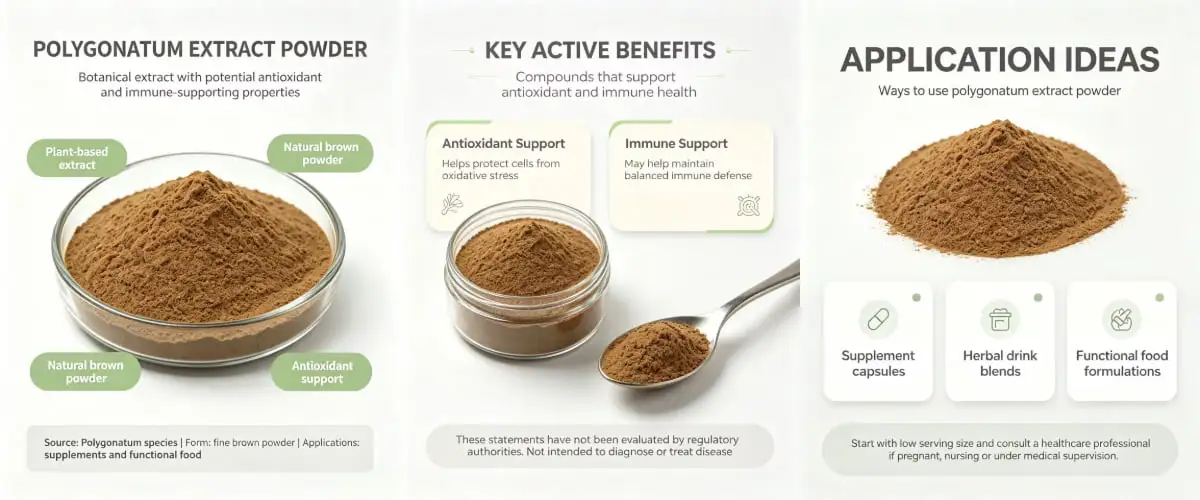
Polygonatum Extract, which comes from the rhizomes of Polygonatum sibiricum, is a powerful botanical ingredient that is becoming more and more popular in the nutraceutical and functional food markets around the world. This fine brownish-yellow powder has a high polysaccharide content—often standardised at ≥30%—and was made using water extraction methods that keep the biological integrity. This extract combines ancient health practices with modern scientific proof to offer a safe, natural alternative to synthetic ingredients in functional drinks, cosmetics, and health supplements. It is known for its ability to boost the immune system, fight free radicals, and help the body adapt.
Understanding Polygonatum Sibiricum Extract Powder: Properties and Health Benefits
Polygonatum Extract is an important ingredient for companies making functional health products because more people want natural ingredients that have been proven to work. At Sigma, we know that procurement specialists and research and development teams need full botanical profiles to confidently decide if a formulation is relevant.
Botanical Origins and Extraction Technology
Polygonatum sibiricum, which is also known as Siberian Solomon's Seal, grows very well all over Northern Asia. The rhizomes are extracted with hot water, which is a good method that separates the polysaccharides while keeping the phytochemical stability. We strictly follow a process that includes choosing raw rhizomes from reliable sources, extracting them in several steps at low temperatures (below 80°C), filtering them through membranes, and spray drying them until they are 80-mesh particles with a moisture content below 5%.
The extract that is made is a fine, brown-yellow powder that dissolves easily in hot water and forms clear solutions that can be used in drinks, pills, and tonic pastes. This technical profile gets rid of the high mucilage content and processing problems that come with raw rhizome powders. This solves a big problem for makers who want regular flowability during tableting and encapsulation.
Core Bioactive Compounds and Health Mechanisms
The main active part is made up of Polygonatum polysaccharides, which have molecular weights between 10 and 500 kDa. A study in the Journal of Ethnopharmacology shows that they can change the immune system by activating macrophages and controlling cytokines. These polysaccharides boost the activity of natural killer cells, which is an important defence mechanism for immune monitoring. This makes the extract especially useful for formulas that aim to support seasonal health and nutrition after recovery.
In addition to polysaccharides, the extract has flavonoids like quercetin, steroidal saponins like diosgenin, and essential amino acids. This combination of phytochemicals helps the body in many ways, including protecting against free radicals, keeping glucose levels in check, and responding to stress in a healthy way. Clinical findings show that people with Qi and Yin deficits have more energy and feel less tired. This is a target group that often includes busy workers and older people.
Standardization for Quality Assurance
Batch-to-batch uniformity is important to business buyers, and that counts on strict standardisation. The quality of our Polygonatum Extract is certified by ISO 22000, HACCP, and Kosher, and the polysaccharide content has been checked using UV-Vis spectrophotometry at 490nm. Heavy metal screening for lead, arsenic, mercury, and cadmium is done on each output lot. Pesticide residue testing is done according to EU Pharmacopoeia limits, and microbe contamination analysis is done to make sure the total plate count is less than 1,000 CFU/g.
Measures like these for quality control directly meet the compliance needs of foreign markets, especially the US and EU, where regulators are keeping a closer eye on plant supplements. Full Certificates of Analysis (COA), Material Safety Data Sheets (MSDS), and stability studies are easy to get and can be easily integrated into existing quality management systems.
Comparison and Selection Guide for Polygonatum Extract Forms and Quality
To find your way around the different forms of Polygonatum Extract, you need to know how their physical state, processing depth, and certification affect the results of formulations and their ability to meet regulatory requirements.
Powder vs. Capsule vs. Liquid Formats
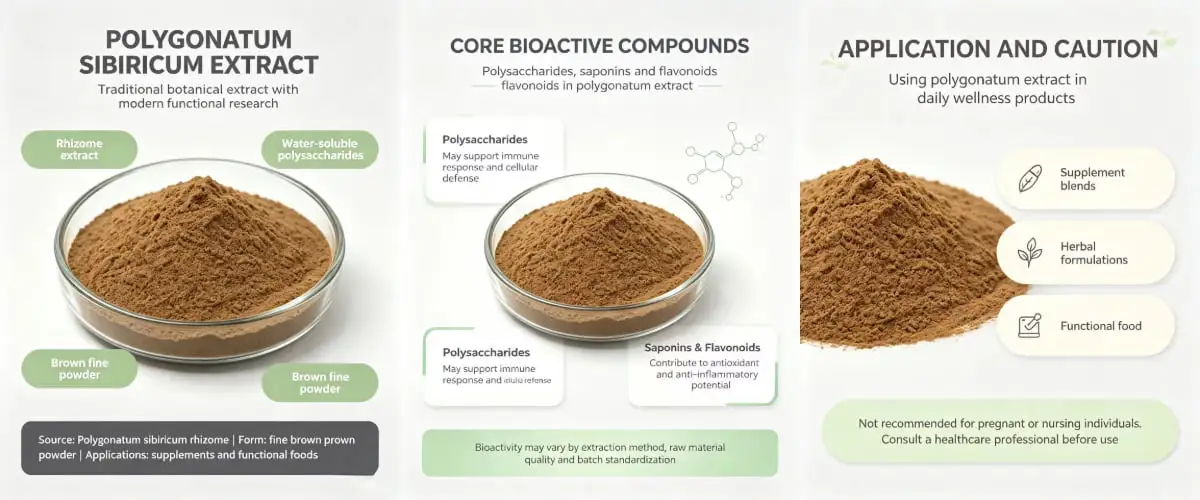
Powdered extracts give manufacturers the most options for formulations because they can change dosages and mix them with botanicals that work well together, such as astragalus or goji berry extracts. Using capsule-ready powders makes making direct-to-consumer products easier, but it also makes it harder for R&D to choose which excipients to use. Liquid extracts or concentrated syrups are useful for making drinks, but they can go bad on the shelf and cost a lot to ship.
From the point of view of solubility, 80-mesh fine powder dissolves quickly in water, which helps it be absorbed by the stomach. Studies show that polysaccharide fragments in this size range are better at being taken up by cells than larger materials. This standard is very helpful for companies that want to make healthy drinks or instant-dissolve sachets.
Organic Certification and Sourcing Transparency
Organic versions cost more, but they have clear marketing benefits, especially in North American health food outlets where people actively look for USDA Organic or EU Organic marks. But organic approval needs to be able to track products from the time they are grown to the time they are processed, which is not always possible in the supply chain.
At Sigma, we combine Shaanxi's original medicinal material-producing areas with state-of-the-art extraction facilities so that we can offer both traditional and organic choices. We keep written records of our interactions with growers and use controlled cultivation methods that meet international organic standards when asked to. This "Technology + Origin" advantage lowers the risk of procurement while also making cost structures more efficient.
Key Quality Indicators for Procurement Evaluation
Buyers who care about quality should check more than just the amount of active ingredients in a supplier's products when they are evaluating them. Ashes with an ash level below 5% show little mineral pollution and good cleaning methods. Solvent residue testing (with ethanol, methanol, or acetone) confirms the purity of the extraction. This is especially important for products that will be used in pharmaceuticals. Limits on microbes, especially E. coli, Salmonella, and yeast/mold counts—must be in line with the rules set by the European Pharmacopoeia or the FDA for dietary supplements.
Supplier audit reports that show compliance with Good Manufacturing Practice (GMP), records of equipment testing, and proof of staff training are more reliable than certificates alone. Before placing large orders, we strongly advise procurement teams to ask for testing of samples by unbiased third-party labs. This is a practice we fully support through our free sample program.
Industrial and Commercial Applications of Polygonatum Sibiricum Extract Powder
Different high-value industries can use Polygonatum Extract because it is very flexible. Each of these industries has its own manufacturing needs and rules for rules.
Nutraceutical and Dietary Supplement Formulations
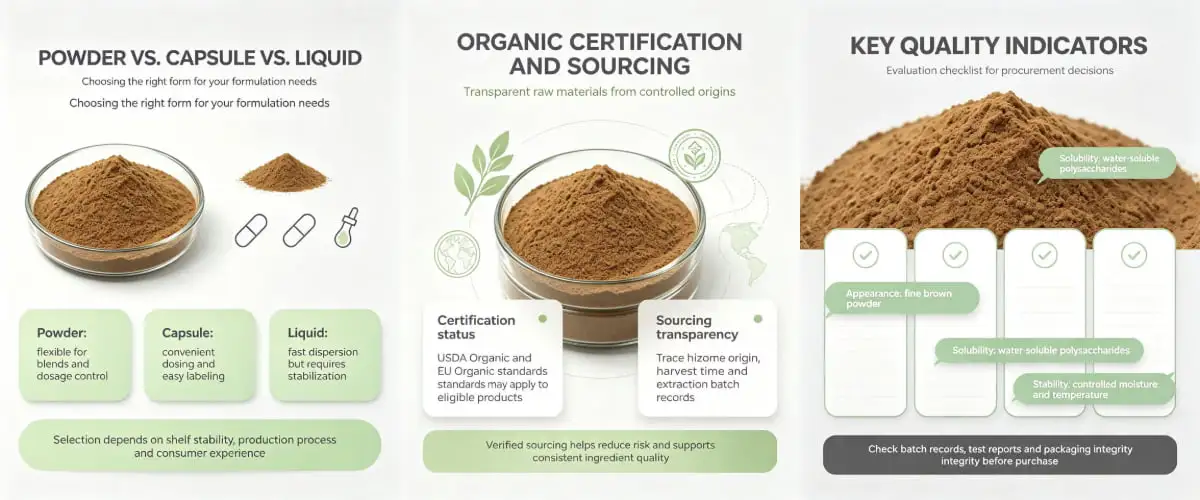
The biggest market section is immune support products, which use Polygonatum Extract as a main ingredient or as an ingredient that helps other ingredients work better. Other ingredients include echinacea, elderberry, and vitamin C complexes. Each serving usually has between 200 mg and 500 mg, which equals 60 mg to 150 mg of polysaccharides. The extract has a mild, slightly sweet flavour that works well in capsules, tablets, and powdered drink mixes without a lot of extra ingredients.
Formulations for anti-aging and long life use the extract's antioxidant power and traditional "Yin-nourishing" qualities. People in their middle years who are tired, have trouble sleeping, and feel less energetic are often the target audience for these products. These are all symptoms of Qi and Yin deficiency in traditional health theories. Comparative effectiveness tests have shown that combining Polygonatum with adaptogenic mushrooms like reishi or cordyceps makes the benefits stronger.
Because it helps the body adapt to stress, this plant is used in energy and endurance sports nutrition items. Unlike stimulant-based ingredients, Polygonatum polysaccharides support long-lasting energy through metabolic efficiency instead of acute CNS activation. This makes them attractive to athletes who care about their health and are looking for clean-label options.
Functional Food and Beverage Innovation
It can be hard for beverage makers to find the right balance between bioactive delivery and sensory appeal. The neutral pH (6.0–7.0 in a 5% solution) and high water solubility of Polygonatum Extract make it easy to add to ready-to-drink teas, herbal tonics, and meal replacement shakes. The extract stays stable after being pasteurised at 72°C for 15 seconds, which keeps the integrity of the polysaccharide in commercial production settings.
In Asian markets, tonic pastes and strong syrups are very common. Polygonatum is a main ingredient that is mixed with honey, jujube, and wolfberry. People who want traditional health methods that are backed up by modern extraction technology will like these products. In some governing areas, the fact that these formulations can be used for both food and drugs makes them easier to follow.
Cosmetic and Personal Care Applications
The antioxidant and moisturising qualities of the juice are used in skin health products. Polysaccharides protect skin surfaces by forming protective films. This stops water loss through the skin's surface and fights free radicals. In amounts ranging from 1% to 5%, Polygonatum Extract is added to anti-aging serums, hydrating face masks, and protective creams by cosmetic formulators.
The plant's anti-inflammatory benefits, which are caused by changing the NF-κB pathway, help formulas for sensitive skin that treat redness and inflammation. European cosmetic rules (Regulation EC No 1223/2009) allow plant extracts with known safety profiles as long as producers keep records of allergen testing and stability. Our expert support team helps customers easily meet these requirements.
Procurement Insights for Polygonatum Sibiricum Extract Powder: Buying and Supply Chain Considerations
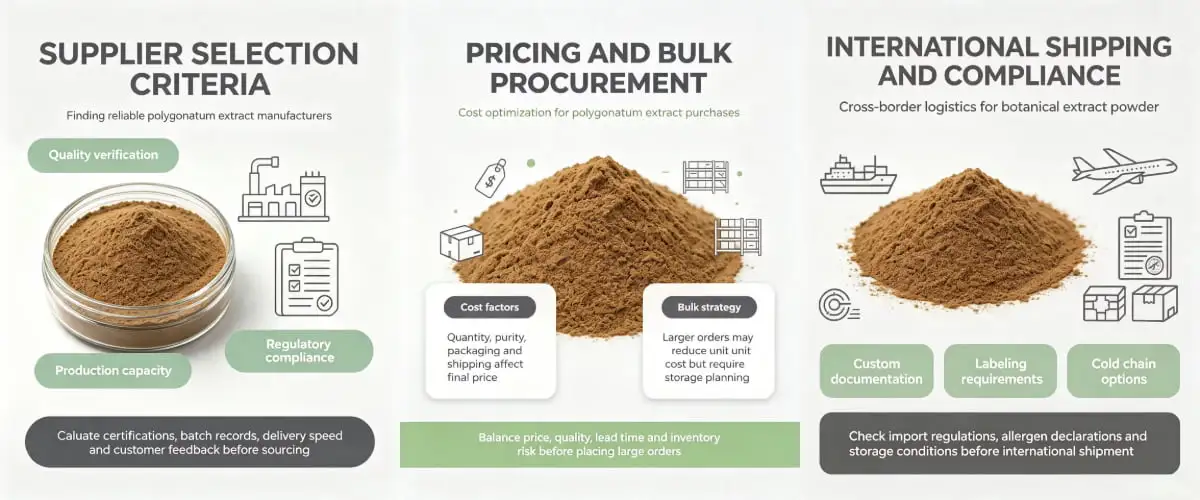
When you're looking for botanical extracts strategically, you need to pay more than just attention to price comparisons. You also need to look at the supplier's skills, their logistics, and their compliance paperwork for Polygonatum Extract.
Identifying Reputable Manufacturing Partners
Companies in China, Korea, and new Southeast Asian areas are among the world suppliers of Polygonatum Extract. Quality variation is still important, though. Reputable manufacturers have a few things that set them apart: they own or work with farms that grow their own raw materials, they invest in modern extraction equipment like countercurrent extraction systems and membrane filtration units, and they get third-party certification from groups like SGS or Intertek.
Sigma's vertically integrated plan includes getting our products from Shaanxi's real production areas, processing them in ISO 22000-certified factories, and keeping 10–20 tonnes of safety stock on hand for normal needs. This infrastructure makes sure that standard orders are delivered within 5–7 working days, which is a huge benefit for companies that use just-in-time inventory systems or have to deal with sudden demand spikes.
Pricing Dynamics and Bulk Purchasing Optimization
The price of Polygonatum Extract changes depending on the amount of polysaccharides it contains, the certification requirements, and the availability of raw materials. Conventional extracts with 30% polysaccharides usually cost between $18 and $28 per kilogram when bought in bulk (500 kg or more). Organic-certified or higher concentration extracts with 50% polysaccharides cost between $35 and $50 per kilogram. When compared to manufactured immunity modulators or highly processed fungal extracts, these prices are still reasonable.
Price optimisation is possible with volume commitments, but buyers should weigh the savings in costs against the limited space and capital available. Our procurement specialists help clients set up orders that work with their production schedules. For international transactions, they accept letters of credit and offer flexible payment terms for established partners.
International Shipping and Customs Compliance
When shipping botanical ingredients across international borders, they need a lot of paperwork, like phytosanitary certificates, certificates of origin, and detailed ingredient declarations. Under the Bioterrorism Act, the FDA needs to be notified ahead of time about imports into the United States. On the other hand, Novel Food rules say that EU exports must follow if extracts don't have past consumption proof.
We are experts in global logistics and can organise sea freight for bulk shipments that need to be cheap, air cargo for quick restocking and express courier services for sample requests. Our paperwork team makes business bills, packing lists, and harmonised system (HS) code classifications (usually 1302.19.91 for plant extracts) that make customs clearing go more quickly. Delivered Duty Paid (DDP) agreements keep buyers from being surprised by extra costs when they don't know about the import taxes in the target country.
How to Integrate Polygonatum Sibiricum Extract into Your Product Line: Practical Recommendations
Technical accuracy and a well-thought-out market placement plan are both needed for Polygonatum Extract integration to go well. Our experience with application development helps R&D teams with formulation optimisation.
Dosage Guidelines and Formulation Techniques
According to clinical research, the daily recommended amount of polysaccharides for general immunity support is between 100 mg and 300 mg, which is equal to 300 mg to 1,000 mg of 30% standardised extract per dose. Higher concentrations can be used for therapeutic purposes when supervised by a qualified medical professional. We suggest starting formulation tests with low doses, testing for stability over the full intended shelf life (usually 24 months), and using sensory panels to check the organoleptic properties.
Using Polygonatum Extract with plants that work well together makes it work better because the phytochemicals work together. Astragalus polysaccharides strengthen immune regulation, ginseng saponins improve the body's ability to adapt, and Schisandra lignans help protect against damage. Our technical team helps with formulation by testing the compatibility of excipients, finding the best dissolution rate, and checking the flowability of encapsulation equipment.
Safety Considerations and Contraindications
Toxicology studies show that Polygonatum Extract is very safe, with LD50 values higher than 5,000 mg/kg in rodent models. Adverse events are still very rare and usually mild (like stomach pain from taking too much). Due to the possible risk of bleeding with some saponin compounds, product labels should warn women who are pregnant or nursing, people who are taking blood thinners, or people who are about to have surgery.
Because the extract is mostly made up of polysaccharides, it doesn't react much with other allergens. However, producers must do allergy tests if their processing facilities handle tree nuts, soy, or other high-priority allergens. To keep high-allergen products from getting contaminated with other products, our GMP processes include strict cleaning validation and separate tools for those products.
Market Success Case Studies
Our Polygonatum Extract, elderberry, and zinc were put together by a medium-sized supplement company that targets health-conscious workers in the form of an immune support mix. In just eight months, the product gained 12% of the luxury immune category market share across speciality retail outlets. The brand was successful because it was clear about the standardised polysaccharide content, third-party testing confirmed it, and the focus was on long-term wellness rather than short-term pain relief.
In the same way, a functional beverage company made a ready-to-drink herbal tea with Polygonatum Extract to set it apart from similar goods that only used green tea or ginseng. Consumer study showed that people between the ages of 35 and 50 who wanted natural energy without the jitters that come with caffeine were very interested in the extract. This supports its adaptogenic standing.
Conclusion
Polygonatum Extract is a plant ingredient that has been scientifically proven to work and can be sold to meet the changing needs of health and fitness markets around the world. Its standardised carbohydrate content, full safety profile, and ability to be used in multiple industries make it an important part for companies that want to make natural, effective products.
Strategic buying from certified suppliers like Sigma, which combines Shaanxi's real botanical resources with cutting-edge extraction technology, guarantees the quality, compliance with regulations, and supply chain dependability that B2B buyers need for long-term product development and market success.
FAQ
What is the typical shelf life of Polygonatum Sibiricum Extract Powder?
Polygonatum Extract stays effective for 24 months if kept in the right way in sealed containers in cool, dry places (below 25°C, relative humidity under 60%). We suggest testing the polysaccharide content on a regular basis if storage lasts longer than 18 months. This is especially important in humid places where moisture absorption may speed up degradation.
Can Polygonatum extract be combined with other herbal supplements?
It has been shown that Polygonatum works well with most botanical ingredients. Some mixtures that work well together are astragalus, which boosts the immune system, goji berries, which help the body use antioxidants, and cordyceps, which helps the body use energy. Formulating with high-tannin plants like green tea extract should not be done without first testing for solubility, because polyphenols may cause carbohydrates to separate.
How can buyers verify the authenticity and purity of Polygonatum extract?
Ask for full Certificates of Analysis that show the polysaccharide content using approved methods (UV-Vis or phenol-sulfuric acid test), as well as heavy metal screening and microscopic identification to prove the species' authenticity. Independent labs that do tests for a third party provide extra proof. Suppliers with a good reputation will gladly send customers batch samples to test before they commit to buying in bulk.
Partner with Sigma for Premium Polygonatum Extract Supply
Pharmaceutical-grade Polygonatum Extract is made by Shaanxi Sigma Biotechnology Co., Ltd. following ISO 22000 and HACCP-approved procedures, making sure that every batch meets strict international standards. As a well-known Polygonatum Extract seller to the food, cosmetics, and nutraceutical industries around the world, we keep a large stock of products ready to ship right away. We also offer flexible OEM/ODM services that allow for custom particle sizes, specs, and packaging arrangements.
Our technical team offers free formulation advice, full documentation (COA, MSDS, stability studies), and quick communication to address quality issues throughout the lifecycle of a partnership. We help you come up with new products by giving you high-quality botanical ingredients that can be tracked and come in bulk at a good price. We also offer reliable global logistics services and a 12-month quality guarantee.
Contact sarah@sxsigma.com today to request samples, discuss your specific polysaccharide content requirements, or explore how our "Technology + Origin" advantage can strengthen your supply chain. Visit sxsigma.com to discover our complete portfolio of plant extracts and experience the reliability that makes Sigma a trusted partner for discerning B2B buyers worldwide.
References
1. Wang, Y., & Zhang, H. (2021). Pharmacological effects and clinical applications of Polygonatum sibiricum polysaccharides. Chinese Herbal Medicines, 13(2), 195-205.
2. Liu, J., et al. (2020). Immunomodulatory activities of Polygonatum sibiricum polysaccharides. Journal of Ethnopharmacology, 258, 112867.
3. Chen, L., & Wu, Q. (2019). Extraction optimization and antioxidant properties of Polygonatum polysaccharides. Food Chemistry, 285, 473-481.
4. Kim, S.H., et al. (2022). Safety evaluation and quality control of Polygonatum extracts for dietary supplements. Journal of Functional Foods, 88, 104876.
5. Zhang, M., & Li, X. (2020). Traditional uses and modern applications of Polygonatum species. Phytotherapy Research, 34(11), 2906-2920.
6. Zhao, T., et al. (2021). Structural characterization and bioactivity of polysaccharides from Polygonatum sibiricum. Carbohydrate Polymers, 267, 118179.


_1776308368292.webp)