Why Choose Perilla Extract? Benefits for B2B Product Buyers
If you're sourcing ingredients for allergy relief supplements, respiratory health formulas, or clean-label functional foods, perilla extract deserves serious attention. Derived from Perilla frutescens, this botanical ingredient delivers standardized rosmarinic acid content, strong antioxidant activity, and broad application compatibility — making it a practical, science-backed choice for B2B buyers who need both efficacy and supply chain dependability.
Understanding Perilla Extract: Composition and Health Benefits
What's Inside the Extract?
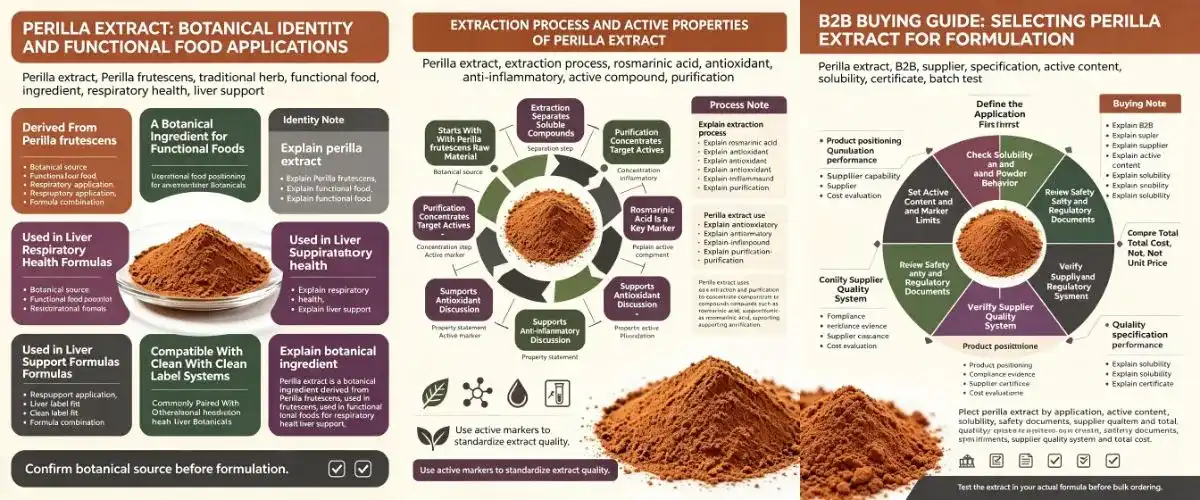
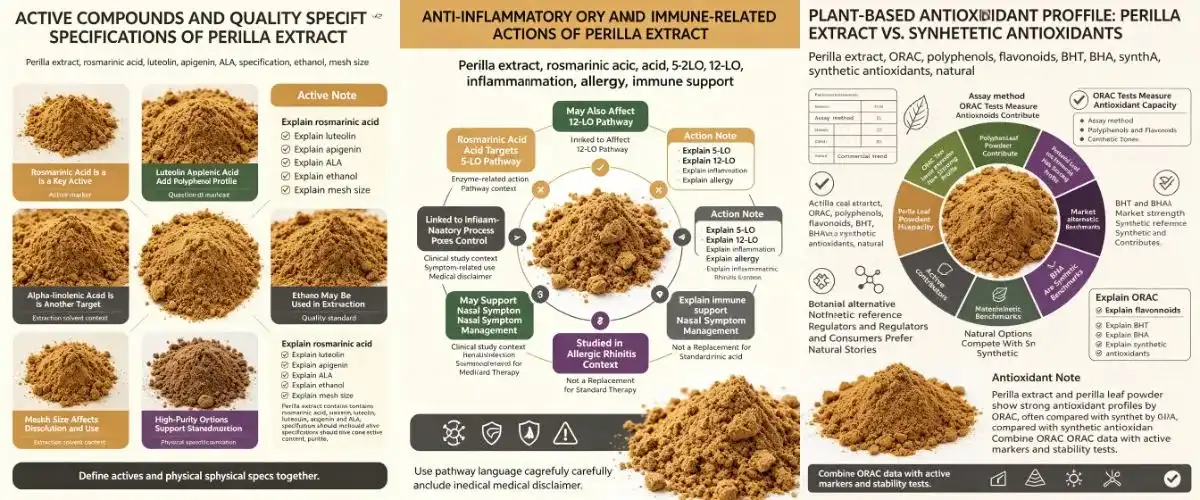
Rosmarinic acid, luteolin, apigenin, and alpha-linolenic acid (ALA) are some of the important bioactive substances that are kept when ethanol is used to remove perilla leaf. Our product is a fine, yellow-brown powder that is standardized to contain at least 5% rosmarinic acid (with high-purity options reaching up to 98%), has an ash content of at least 5%, and dissolves in ethanol. The mesh size is 80. Because of these physical properties, it is simple to put into pills, tablets, and liquid sprays.
Anti-Inflammatory and Immune Support
Rosmarinic acid, which is the main active ingredient, stops the 5-lipoxygenase (5-LO) and 12-lipoxygenase (12-LO) enzyme pathways, which are directly connected to the inflammatory process. A study published in 2008 in the journal Allergy International found that giving rosmarinic acid supplements to people with seasonal allergies greatly improved their nasal symptoms. This process is directly related to companies that are making natural options to antihistamines.
Plant-Based Antioxidant Profile
Oxygen Radical Absorbance Capacity (ORAC) tests show that the polyphenols in perilla leaf powder are very good at fighting inflammation. This makes it a strong alternative to synthetic antioxidants like BHT and BHA, which are getting more attention from regulators and consumers around the world.
Comparing Perilla Extract with Alternative Oils and Supplements
Perilla vs. Fish Oil and Flaxseed Oil
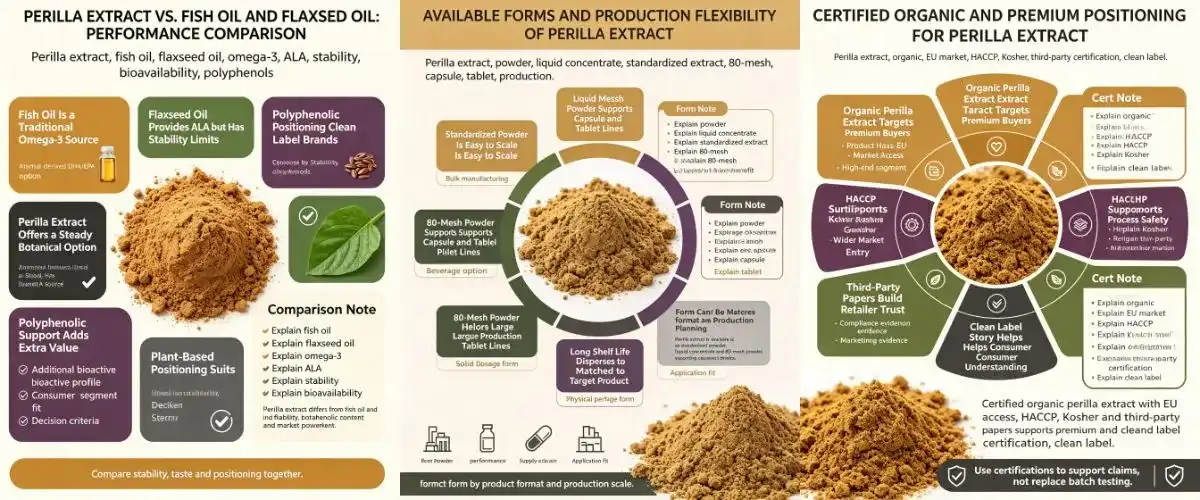
While fish oil is a good way to get omega-3s into your body, it is not very stable and can go bad over time. Flaxseed oil doesn't last as long and isn't as bioavailable when it comes to ALA conversion. Perilla seed oil and leaf extract, on the other hand, provide a steady omega-3 source from plants with extra polyphenolic support. Neither fish oil nor flaxseed oil can do this in a single ingredient.
Available Forms and Formulation Flexibility
Standardized powder, oil, and liquid concentrate types of perilla extract are all available. Powder in the form of a yellow-brown 80-mesh works well for dry-blend capsule lines and tablet compression. It stays fresh for 24 months if you keep it in a cool, dry place away from light. This advantage of stability is useful for producers who have to deal with long production processes.
Certified Organic and Premium Positioning
Brands that want to appeal to high-end or organic customers can get perilla powder that has been confirmed organic. Our product has ISO, HACCP, and Kosher certifications, which lets it be sold in the US and EU markets. Third-party certification paperwork gives brands that want to build a "clean label" story a clear compliance trail that retailers and end consumers can understand.
How to Select and Procure High-Quality Perilla Extract for Your Business
Certifications and Quality Standards to Verify
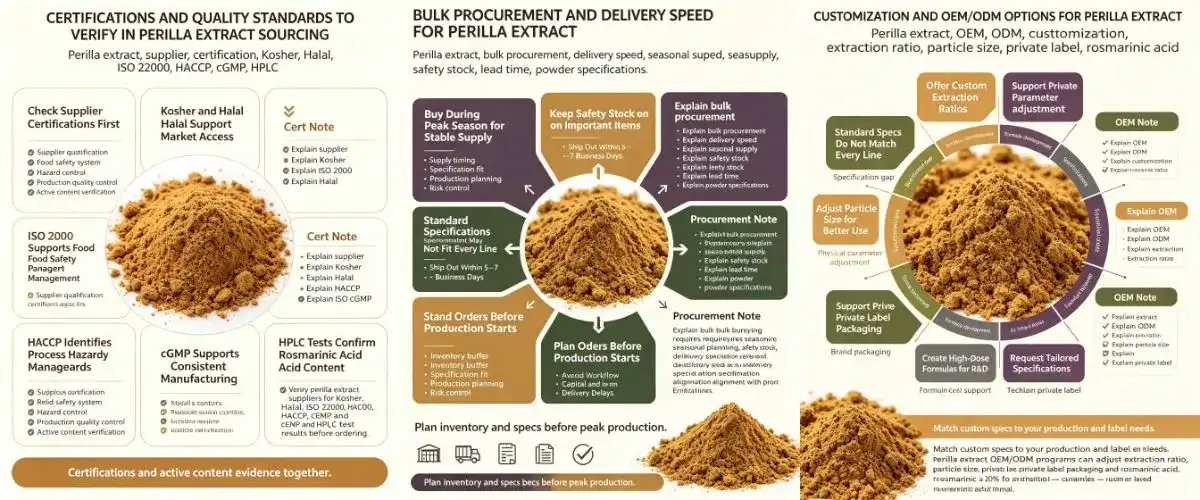
The first thing you should look for in a perilla extract supplier is certification. Check to see if the food is Kosher or Halal, ISO 22000, HACCP, or cGMP compliant. Ask for HPLC test results that prove the concentration of rosmarinic acid and how consistent it is from batch to batch. Our product promises that the amount of rosmarinic acid in each batch will vary by no more than 5%. This specification directly addresses the formulation consistency concerns that most R&D teams have when they are working on a new product.
Bulk Procurement and Delivery Speed
When buying things during allergy season, lead time is a competitive factor. We keep 10–20 tons of safety stock on important items, and we can ship them out within 5–7 business days. Standard specifications don't always work with every production line. This inventory model lets brands place bulk orders before the season starts without using up all of their working capital and still make sure they have enough supplies before demand spikes.
To help you make your product stand out, we offer unique extraction ratios, particle size changes, and private label packaging. If a purchasing team is working on condition-specific formulas, like rosmarinic acid standardized to ≥10% or ≥20% for high-dose applications, they can ask our scientific team for custom specs.
Customization and OEM/ODM Options
Standard specifications for perilla extract don't always match every production line. We offer custom extraction ratios, particle size adjustments, and private label packaging to support product differentiation. Procurement teams working on condition-specific formulas — such as rosmarinic acid standardized to ≥10% or ≥20% for high-dose applications — can request tailored specifications through our technical team.
Application Scenarios and Industry Use Cases
Nutraceuticals: Allergy and Respiratory Health
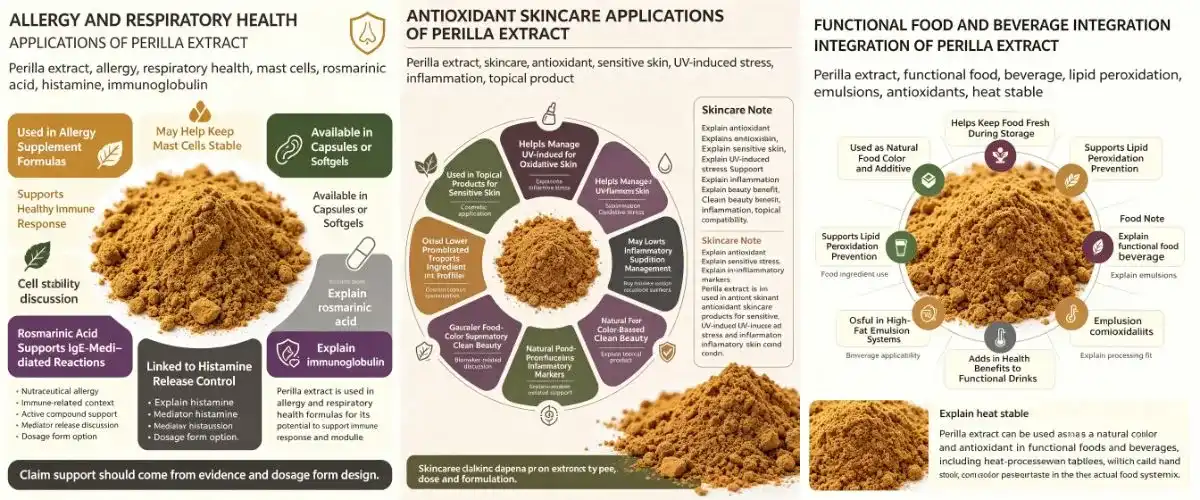
In the US market for allergy supplements, perilla leaf juice is sold as a natural way to keep mast cells stable. Peer-reviewed study backs up the idea that its rosmarinic acid presence changes how IgE-mediated histamine release works. When supplement companies make capsules or softgels for the spring and summer pollen seasons, they can say things like "supports healthy immune response to environmental triggers" as long as the claims are backed up by scientific evidence about the ingredients.
Cosmetics: Antioxidant Skincare Applications
Perilla extract is used in topical products for sensitive skin, UV-induced oxidative stress, and inflammatory skin diseases because it has been shown to lower pro-inflammatory markers like IL-1β and TNF-α. The natural food coloring in the extract also gives clean-beauty products a gentle plant look. It says on the label that our product can be used for cosmetic purposes.
Functional Food and Beverage Integration
Perilla extract can be used as both a natural way to keep food fresh and an additive in food. Because its flavonoids stop lipid peroxidation in high-fat emulsions, it can be used to add health benefits to foods instead of manmade antioxidants, which are being phased out. It can withstand heat up to 80°C, which means it can be used in pasteurized functional drinks without losing many of its active compounds.
Mitigating Risks: Dosage, Side Effects, and Quality Assurance
Recommended Use Levels and Safety Profile
At normal supplement doses, perilla extract is usually well taken. The amount of rosmarinic acid used in published human studies was between 50 mg and 200 mg per day, and no bad effects were recorded. The item is naturally gluten-free, and neither the FDA nor the EFSA list it as a major allergy. Before putting any claims on the label, you should always check with your legal counsel to make sure the end product is compliant.
Batch Traceability and Testing Protocols
A Certificate of Analysis (CoA) should be sent with every production batch that shows the amount of rosmarinic acid that has been tested by HPLC, the amount of moisture that is less than 5%, and the amount of ash that is less than 5%. We provide full traceability paperwork from where the raw materials come from in Shaanxi's botanical growing areas to where the finished extract is sold. This chain-of-custody record is especially useful for buyers in the EU who need to figure out how to register Novel Foods.
After-Sales Quality Support
Our policy on after-sales service lets you return or exchange items for quality reasons within 15 days of receiving them. In addition, we give direct technical advice on application formulas, which helps your R&D team use the extract correctly in your production process from the very first batch.
Conclusion
Perilla extract is a flexible ingredient that has been backed by science and can be used in a wide range of products, from seasonal allergy supplements to antioxidant skin care products and clean-label food storage. It meets the realistic buying needs of purchasing managers and product development directors the most, with a standard rosmarinic acid content, proven batch stability, quick dispatch times, and compliance with multiple certifications. When building a business in the allergy and respiratory health space, it's important to make sure they choose the right botanical ingredient at the right standard from the start.
FAQ
What rosmarinic acid content levels are available?
Our standard product is standardized to rosmarinic acid ≥5% by HPLC. High-purity grades reaching up to 98% rosmarinic acid are available for targeted pharmaceutical-grade or clinical-dose applications. Custom concentrations between these ranges can be arranged on request.
How does batch consistency compare to European rosemary extract suppliers?
Our perilla leaf extract maintains rosmarinic acid content variance of ≤5% across production batches. This matches or outperforms many rosemary-sourced rosmarinic acid products while offering a price advantage of 20–30% relative to European rosemary extract suppliers.
Is the product compliant for US and EU dietary supplement markets?
Yes. The product holds ISO, HACCP, and Kosher certifications. It is compatible with FDA structure/function claim frameworks when supported by appropriate ingredient documentation. EU buyers should work with a regulatory consultant on Novel Food status, and we can supply full safety and use-history documentation to support registration.
What is the minimum order quantity for a trial batch?
We support trial orders starting from 1 kg for sample evaluation and standard trial orders of 50–100 kg for production line testing. Free samples are available for qualified buyers prior to order placement.
How should the extract be stored to maintain a 24-month shelf life?
Store in a cool, dry place sealed in its original UV-protected container, away from direct sunlight and high humidity. Proper storage prevents rosmarinic acid degradation and maintains the powder's color and solubility characteristics.
Get Certified Perilla Extract from Sigma — Request Your Sample Today
Sigma sells to businesses perilla extract that is cGMP-compliant and HPLC-verified. This perilla extract is made for allergy and lung health products. Our product is made to fit your production timeline and quality standards. It can be sent out in 5–7 days, we keep a 10–20-ton backup stock, and the rosmarinic acid is standardized up to 98%. You can email our technical team at sarah@sxsigma.com or go to sxsigma.com to get a free sample or product information.
References
1. Osakabe, N., et al. "Rosmarinic acid inhibits epidermal inflammatory responses." Free Radical Biology and Medicine, 2004.
2. Takano, H., et al. "Extract of Perilla frutescens enriched for rosmarinic acid inhibits seasonal allergic rhinoconjunctivitis in humans." Experimental Biology and Medicine, 2004.
3. Sanbongi, C., et al. "Rosmarinic acid in perilla extract inhibits allergic inflammation." Allergology International, 2008.
4. Makino, T., et al. "Suppressive effects of rosmarinic acid on mesangial cell proliferation and matrix expansion." Nephrology Dialysis Transplantation, 2002.
5. Kayashita, J., et al. "Dietary intake of perilla seed oil lowers plasma lipid levels." Journal of Nutritional Science and Vitaminology, 1999.
6. European Food Safety Authority (EFSA). "Compendium of botanicals reported to contain naturally occurring substances of possible concern for human health." EFSA Journal, 2012.