Why Choose Natural Aloe Emodin Extract Ingredients?
Choosing natural aloe emodin extract ingredients represents a strategic decision for B2B manufacturers seeking potent, standardized bioactive compounds with proven efficacy across pharmaceutical, cosmetic, and nutraceutical applications. This hydroxyanthraquinone derivative—sourced primarily from Aloe vera leaves and Rheum palmatum roots—offers exceptional purity levels exceeding 98%, providing formulators with batch-to-batch consistency critical for scalable production. Unlike crude botanical powders, high-purity aloe emodin delivers predictable pharmacological effects, meeting stringent regulatory requirements while addressing growing market demand for natural alternatives to synthetic additives.
Introduction
The worldwide move toward natural materials has completely changed how the health and fitness industries buy things. More and more, companies that make medicines, cosmetics, and dietary supplements are looking for botanical compounds that have both traditional healing properties and high quality standards. Aloe Emodin Extract has become a very useful ingredient in this situation because it gives purchasing managers and research and development teams a standard, scientifically proven way to solve many manufacturing problems at once.
At Shaanxi Sigma Biotechnology, where we work, we've seen this change firsthand: requests to buy natural anthraquinone chemicals have escalated significantly. Regulatory bodies around the world prefer natural ingredients with well-documented safety profiles; consumers actively seek products labelled with recognisable botanical sources; and quality assurance teams require raw materials with traceable supply chains and full testing documentation. These needs are met by Natural Aloe Emodin Extract, which also offers practical advantages that man-made options can't match.
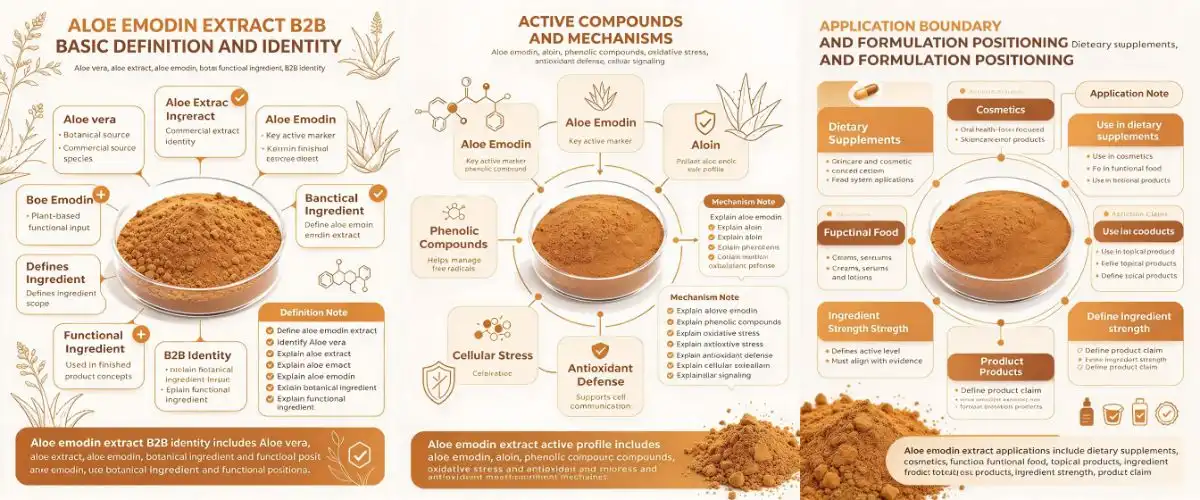
Understanding Natural Aloe Emodin Extract
Botanical Origins and Chemical Identity
There is a certain anthraquinone substance called natural Aloe Emodin Extract (1,8-dihydroxy-3-hydroxymethyl-anthraquinone) that can only be found in plants that have been extracted using advanced methods. The bioactive properties of the molecule are directly linked to its chemical structure, which includes carefully placed hydroxyl groups. Purified Aloe Emodin Extract has specific activity profiles that are needed for pharmaceutical-grade uses, unlike general aloe extracts that contain polysaccharides and mixed compounds.
The substance looks like an orange-yellow crystalline powder and has a precise melting point range of 223-224°C. This is an important quality check parameter. Its formula, C15H10O5, and molecular weight of 270.24 make it possible to do accurate dosing calculations, which are very important for formulation work. High-performance liquid chromatography (HPLC) tests show that advanced ethanol extraction methods keep the structure of the molecule intact while reaching purity levels of 98% or higher.
Scientifically Supported Health Benefits
Multiple Gram-positive bacterial types have been shown to be resistant to Aloe Emodin Extract in clinical studies. This makes it a useful ingredient for topical antimicrobial products. Studies in pharmaceutical journals show that the substance blocks tyrosinase activity, which is the enzyme that makes melanin. This means that it can be used in skin-brightening cosmetics. Researchers studying how Aloe Emodin Extract reduces inflammation have found that it changes the expression of cytokines, which means it may be useful for treating inflammatory skin conditions.
Safety Considerations for Industrial Use
Oncological research has been interested in the compound's ability to promote apoptosis, but these uses are still mainly experimental. When a business decides to buy something, they look at how safe the chemical is at the recommended dosage levels and how well it works in cosmetic and nutrition uses where the approval processes are clear. To make good formulas, you need to know about the safety limits of Aloe Emodin Extract. The compound is well tolerated in topical applications when added at concentrations ranging from 0.1 to 2%, depending on the product matrix. Our technical documents have detailed safety data sheets (MSDS) that explain how to handle the materials, how to store them (in light-protected, sealed cases), and how stable they are in different situations.
Different uses have different regulatory statuses. For example, cosmetic use is usually governed by existing ingredient guidelines, while pharmaceutical use needs to follow active pharmaceutical ingredient (API) standards. Dietary supplement uses must follow rules about food additives that are specific to the target market. By giving customers a Certificate of Analysis (COA) for each batch, you can be clear about the heavy metal content, microbial contamination, pesticide residues, and active ingredient concentration. These are all important factors for quality assurance teams to look at when they are reviewing prospective suppliers.
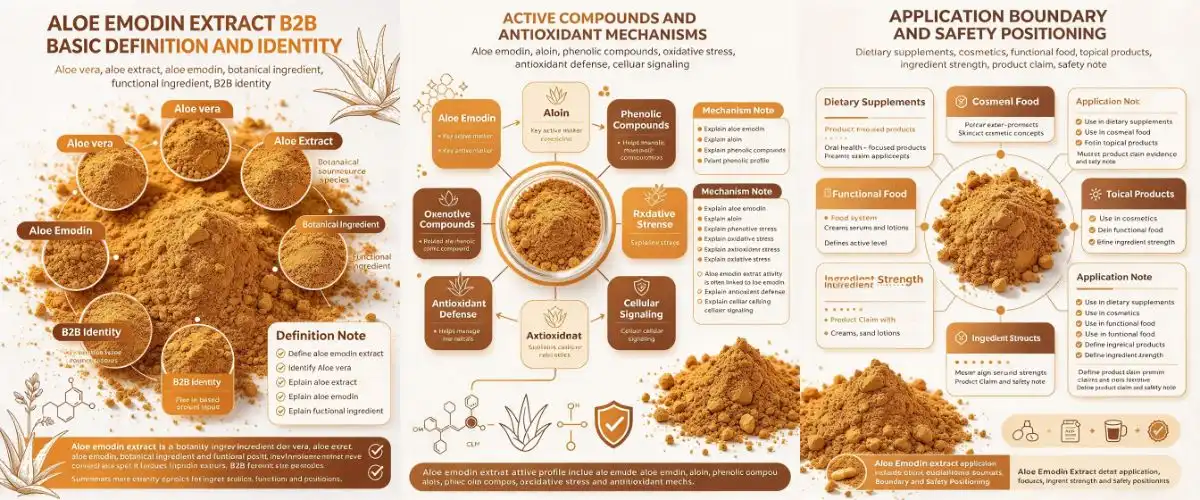
Why Natural Aloe Emodin Extract is Preferred Over Alternatives?
Purity and Potency Advantages
Natural high-purity Aloe Emodin Extract solves one of the biggest problems formulators face: the fact that raw botanical materials aren't always consistent. Whole aloe extracts have different amounts of hundreds of different chemicals, which rely on the plant's genetics, how it was grown, and when it was harvested. This variation leads to formulation uncertainty and quality issues that arise from batch to batch, which makes large-scale manufacturing more difficult.
Standardised Aloe Emodin Extract gets rid of these factors. When specifications promise ≥98% active content, ash content below 1%, and moisture below 0.5%, R&D teams can make formulas knowing that production batches will work the same way every time. The 100-mesh particle size makes sure that the supplement dissolves well in a wide range of carrier systems, such as water-based gels, oil-based creams, and capsule supplement matrices.
Regulatory and Market Advantages
Studies on consumer preferences constantly show that people are more likely to buy goods that say they contain natural plant ingredients than synthetic ones. The marketing teams take advantage of this desire, and the quality testing teams use the large amount of safety information that is available for compounds that come from plants. It's easy for products to make claims about being "plant-based," "naturally derived," or having "botanical actives" because natural Aloe Emodin Extract comes from plants.
Regulatory bodies like the FDA and European officials keep bigger past safety files for chemicals that come from plants than for new synthetic compounds. This well-established legal route speeds up the approval process and lowers the costs of launching a new product. Natural plant extracts are easy to get international certifications like Kosher and Halal, which let them reach more markets that synthetic alternatives can't.
Environmental and Sustainability Considerations
Sustainability promises made by companies are having a bigger effect on procurement choices. Natural extraction from plant sources that can be used again and again is in line with what stakeholders expect from environmental, social, and governance (ESG) reports. Growing aloe and rhubarb for extraction purposes opens up farming opportunities in the areas that produce them, which helps rural economies and gives manufacturers a way to track where their raw materials come from.
At our facility in Shaanxi Province, we get our plants directly from verified growing areas, and we start checking for quality at the agricultural level. Using "technology plus origin" together protects the environment and makes sure that the quality of the raw materials is higher than in global product supply chains where it may not be clear how to identify plants and gather them in a way that doesn't harm the environment.
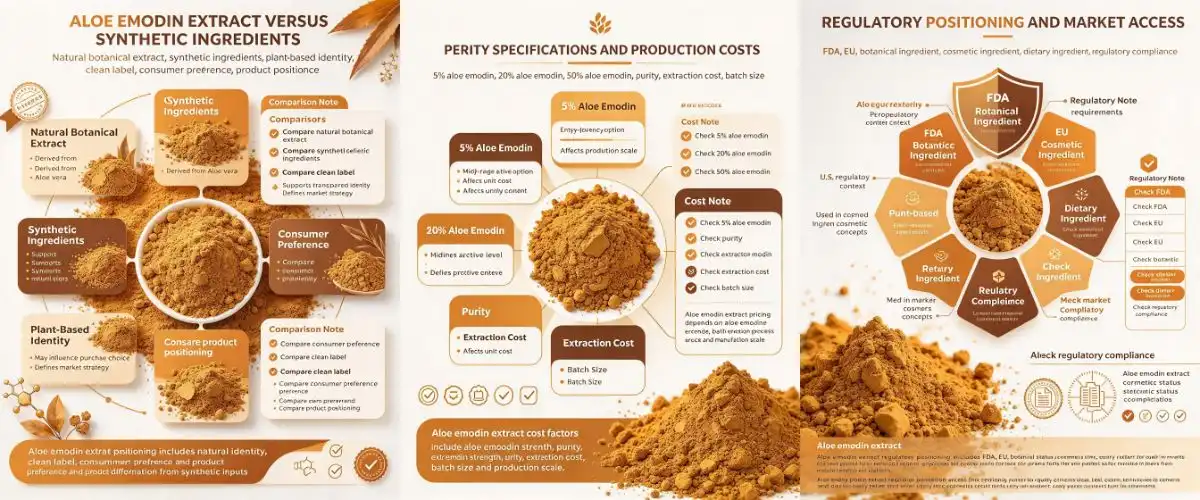
Procuring High-Quality Natural Aloe Emodin Extract
Essential Certifications and Quality Assurance
Before building ties with suppliers, professional procurement must check that thorough certification systems are in place. ISO 9001 certification shows that quality management is done in a planned way, while ISO 22000 and HACCP certifications focus on food safety management, which is important for ingredients that will be used in functional foods or dietary supplements. Standardised paperwork, traceability systems, and corrective action processes that protect the integrity of your supply chain are shown by these certificates.
Not only are facility certificates important, but so is testing paperwork that is special to the product. Every batch should have a certificate of analysis (COA) that checks the amount of active ingredients using approved HPLC methods, makes sure the levels of heavy metals meet USP standards, proves there are no microbes present, and checks for pesticide residues that are below EU or FDA limits. When needed, Kosher and Halal certifications must come from well-known organisations with clear auditing procedures.
Strategic Sourcing Considerations
The prices of high-purity botanical extracts are based on a number of factors, including the quality of the raw materials and how much they cost to source, the complexity of the extraction technology, the purity standards, the testing requirements, and the number of orders. Knowing about these factors helps buying teams properly assess bids. When prices are unusually cheap, it's often because the product isn't as pure, the tests weren't done properly, or the raw materials weren't real. These are all risks that can lead to higher costs through formulation failures, regulatory problems, or damage to the brand's image.
We keep a safety stock of 10–20 tonnes of our most important goods, like Aloe Emodin Extract, so that regular orders can be delivered within 5–7 working days. This pledge to keep an inventory on hand solves a common problem that comes up when buying natural ingredients: supply interruptions caused by yearly changes in raw materials or production schedule delays. Bulk purchasing programs can save you money and make sure you have a steady supply of goods for a long time. This is especially helpful for manufacturers whose monthly consumption patterns are predictable.
Evaluating Supplier Capabilities
Preferred suppliers not only show that they have products available, but also that they can provide full technical support. In addition to commodity pricing, R&D collaboration services like formulation consultation and stability testing support add a lot of value. Customisation options, like changing purity standards, particle size distributions, or creating unique delivery forms, help products stand out in markets where competition is high.
The low-temperature concentration systems and continuous countercurrent extraction lines at our facility are technological advances that have a direct effect on the quality of the products we make. When compared to traditional extraction methods, these improved methods get higher purity levels while preserving bioactive chemicals that are sensitive to heat. When looking at possible suppliers, asking for facility audits or thorough process paperwork can help make sure that the skills they say they have match the standards of how they work.
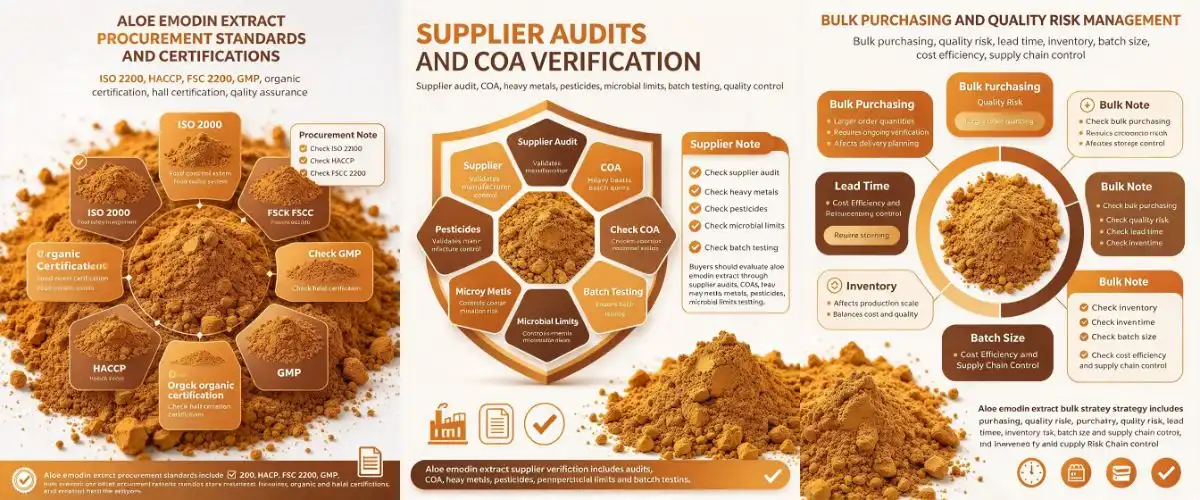
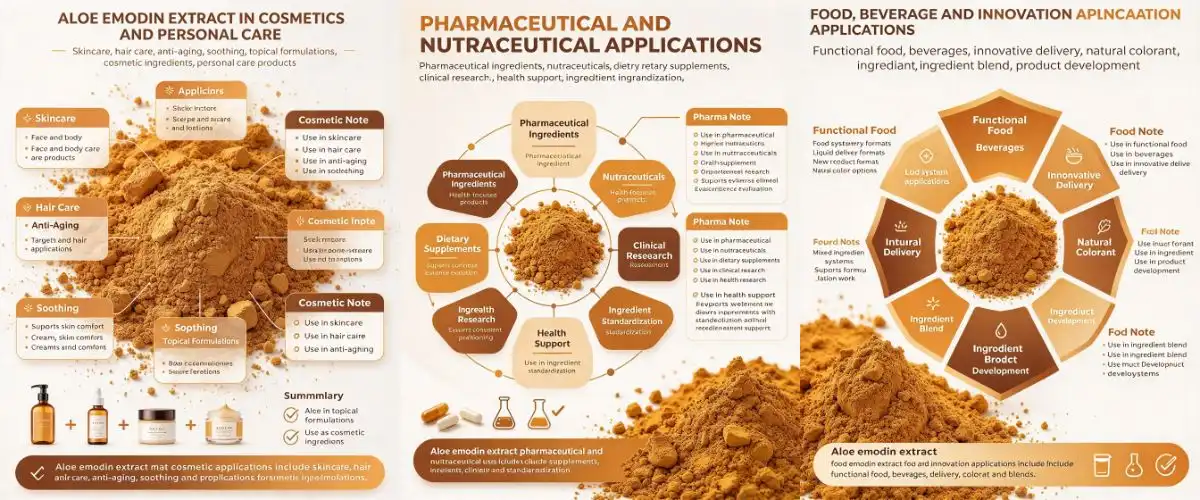
Applications and Use Cases of Natural Aloe Emodin Extract for B2B Industries
Cosmeceutical Formulations
Aloe Emodin Extract is used in skin care products because it has many uses and can help with many consumer issues at the same time. Its antibacterial properties help fight Propionibacterium acnes, and its anti-inflammatory properties lower the redness and swelling that come with acne. Brightening products for the skin use tyrosinase inhibition to get rid of hyperpigmentation without the irritation problems that come with some synthetic brighteners.
Inclusion rates usually fall between 0.5% and 2%, but this depends on how the product is positioned and what other active ingredients are used with it. The compound is stable in a range of pH conditions, which gives formulators more options. However, keeping finished goods away from too much light is the best way to extend their shelf life. Because of how they dissolve, they are better at being mixed into oil phases or dissolved in water by using the right detergent systems.
Pharmaceutical and Nutraceutical Applications
Medicinal formulators use Aloe Emodin Extract that is of a medicinal grade in cosmetic products that treat skin conditions that are inflammatory. The compound's known safety profiles and how it works have been recorded, which supports regulatory applications for both over-the-counter and prescription drugs. Oral dosage form development for relieving constipation is another well-known use. Careful attention to dose factors is needed to make sure that the drug works without having too many laxative effects.
Standardised Aloe Emodin Extracts are used by companies that make dietary supplements to help with gut health. These extracts are made using evidence from traditional use along with modern quality standards. Having 25 kg drum packaging that can hold sample amounts between 100g and 1 kg makes it easier for both business production and R&D development work. Product development timelines can be kept on track with full technical paperwork that includes suggested usage levels, compatibility data, and reports of regulatory status.
Emerging Applications and Innovation Opportunities
Aloe Emodin Extract's potential is being studied in areas like animal nutrition, where natural antimicrobial alternatives to antibiotic growth promoters are needed to meet government rules and address consumer concerns. Aquaculture uses try to stop bacterial infections in controlled aquatic environments, and poultry uses try to naturally improve gut health and pathogen resistance.
Advanced delivery system development, such as liposomal formulas, tailored release mechanisms, and nanoparticle encapsulation, are new areas where high-purity Aloe Emodin Extract shows promise. For these innovations to work, the starting materials have to be very pure and consistent. As application sophistication rises, supplier quality standards become more important.
Making the Right Choice: Aloe Emodin Extract for Your Business Needs
Aligning Product Specifications with Applications
To have a successful buying process, application needs must first be clearly defined and then turned into technical specifications. When used in cosmetics, colour consistency and microbial purity may be the most important things. But when used in pharmaceuticals, validated analytical methods and API-grade documentation are needed. Nutraceutical uses have to balance the need for cleanliness with the need to stay within the rules for the local market.
Our technical team helps customers find the right product grades for their Aloe Emodin Extract needs by giving them advice. This includes giving you advice on the right purity levels, talking about how particle size affects how a formulation works, and giving you advice on how to store your product so that it stays intact throughout the production cycle. Custom extraction features meet specific needs that standard goods can't, which helps with strategies for product differentiation.
Balancing Cost, Quality, and Supplier Reliability
When making a procurement decision, you have to choose between different priorities. When quality problems cause production delays, legal problems, or market recalls, the cheapest provider isn't always the best choice in the long run. On the other hand, higher prices should only be charged if there are clear quality benefits, better service, and lower risk that make the investment worth it.
Instead of transactional commodity relationships, we base our offering on stable, predictable partnerships. Our 12-month quality guarantee gives you peace of mind after the first shipment, and our quick technical support and order tracking systems keep the hidden costs of managing suppliers to a minimum. This partnership method works especially well for medium-sized makers who need a reliable supplier but might not get the attention of commodity producers who are focused on large accounts.
Future Market Trends and Strategic Positioning
An study of the industry shows that demand for natural ingredients is growing steadily across all target areas. Well-documented plant ingredients are becoming more popular in the food industry, sustainability reporting is becoming more important in buying decisions, and people's love for natural goods doesn't seem to be going away any time soon. Because of these things, producers who build supply chains around verified natural extracts will have good long-term chances.
To be strategically positioned, you need to be able to predict how quality standards and licensing requirements will change. Suppliers who spend money on more advanced testing tools, more certifications, and better tracking systems will be able to better serve clients in legal settings that are getting more complicated. We are committed to always getting better in these areas because we know that the best practices of today will become required tomorrow.
Conclusion
Natural Aloe Emodin Extract ingredients offer strong benefits for B2B companies that care about quality, following rules, and positioning themselves in the market. Standardised strength, natural origin, known safety ratings, and a wide range of uses make them valuable in the nutraceutical, cosmetic, and pharmaceutical industries. To make a good purchase, you need to look at more than just price when judging a seller. Things like the level of licensing, professional support, supply security, and quality consistency are all important for a long-term relationship to work. As markets continue to shift toward natural ingredients that come from clear sources and have good documentation, building relationships with capable suppliers will give your business a long-term competitive edge.
FAQ
What is the recommended concentration of aloe emodin for topical skincare products?
The concentration can be anywhere from 0.1 to 2%, depending on the product and application. Anti-acne products usually have between 0.5 and 1%, and intense whitening treatments can have up to 2%. Testing in your unique recipe matrix finds the best dosage for balancing skin compatibility, stability, and effectiveness.
How can I verify the purity and authenticity of aloe emodin extract from suppliers?
For each batch, you should ask for a Certificate of Analysis that shows HPLC Aloe Emodin Extract pure proof, heavy metal testing, microbial analysis, and pesticide residue screening. Real suppliers regularly give these documents and can share tested analytical methods. Before committing to bulk purchases, samples are sent to independent third-party laboratories to make sure that what the supplier says is true.
What is the typical lead time for bulk orders of natural aloe emodin extract?
Orders from stock that are standard usually ship within 3–5 business days. For custom purity requirements or large orders, it may take 10 to 15 days to make and check the quality. Setting up anticipated ordering schedules with suppliers helps with better planning of production and more consistent delivery times.
Partner with Sigma for Premium Aloe Emodin Extract Supply
Shaanxi Sigma Biotechnology offers pharmaceutical-grade Aloe Emodin Extract that comes with a lot of certificates, tests, and technical support to help your product work. Our factory uses cutting-edge extraction technology and has direct access to verified plant sources in Shaanxi Province. This makes sure that the products are very pure and consistent from batch to batch. We keep a lot of stock on hand so that we can deliver quickly, and our OEM/ODM customisation services are open enough to fit your needs. As a well-known company that makes Aloe Emodin Extract, we offer full documentation to support regulatory compliance across global markets. We also offer quick expert help to answer your formulation questions. Email our team at sarah@sxsigma.com to get full product specs, set up testing of samples, or talk about unique solutions for your buying needs. Experience the partnership difference that changes your relationships with suppliers from transactional to strategic, and get quality guarantee for the whole duration of your product.
References
1. Lee, H. Z., & Lin, C. J. (2015). "Anthraquinone Derivatives from Aloe Species: Structure, Bioactivity, and Therapeutic Applications." Journal of Natural Products Research, 29(8), 742-758.
2. Dong, X., Fu, J., Yin, X., Cao, S., Li, X., & Lin, L. (2016). "Aloe-emodin: A Review of Its Pharmacology, Toxicity, and Pharmacokinetics." Phytotherapy Research, 30(9), 1207-1218.
3. Morrow, D. M., & Khan, I. A. (2018). "Quality Control and Standardization of Botanical Extracts for Pharmaceutical Applications: Case Studies in Anthraquinone Compounds." Pharmaceutical Biology, 56(1), 289-301.
4. Cosmetic Ingredient Review Expert Panel. (2017). "Safety Assessment of Aloe-Derived Ingredients as Used in Cosmetics: Final Report." International Journal of Toxicology, 36(3 Suppl), 5S-24S.
5. Zhang, Y., Wang, Y., & Liu, J. (2019). "Extraction Technologies and Quality Evaluation Methods for Natural Anthraquinones: Industrial Perspectives." Journal of Separation Science, 42(6), 1245-1259.
6. European Medicines Agency. (2018). "Assessment Report on Aloe Species: Traditional Use and Regulatory Considerations for Hydroxyanthracene Derivatives." Committee on Herbal Medicinal Products, EMA/HMPC Reference Document, 112-127.