What Are Astragalus Powder Benefits in Herbal Supplements?
Astragalus Powder delivers powerful immune-modulating and antioxidant benefits that make it a cornerstone ingredient in modern herbal supplements. Derived from Astragalus membranaceus roots, this botanical extract contains bioactive polysaccharides and astragalosides that enhance cellular defense mechanisms, support energy metabolism, and reduce oxidative stress. For B2B manufacturers formulating functional beverages, dietary supplements, or wellness products, incorporating this adaptogen addresses the rising consumer demand for natural immunity support while meeting stringent quality and regulatory standards critical for global market entry.
Introduction
Astragalus Powder extracts are at the top of the list of natural ingredients that have gained a lot of popularity in the herbal supplements business. As purchasing managers and research and development teams look for natural alternatives to synthetic additives, it's important to know all the benefits of this plant. Astragalus has gone from being used in traditional medicine to being used in functional foods and nutraceuticals because of the global shift toward clean-label formulas.
Now, business-to-business buyers look for providers who give standardized extracts with active ingredient concentrations that can be checked, batch uniformity, and full compliance paperwork. This guide looks at the science behind it, how it can be used in real life, and how to find the best suppliers so that companies that make health supplements, drinks, and pharmaceutical ingredients can make smart buying decisions that will help their products stand out in crowded markets. send require

Understanding Astragalus Powder and Its Health Benefits
What Distinguishes Astragalus Powder From Raw Root Material
Astragalus Powder is a refined form of the dried Astragalus membranaceus root that has been made using improved milling and extraction methods. The powder form is better for bioavailability and regular strength than the coarse raw root pieces, especially when it is standardized to a specific polysaccharide content.
Modern ways of making things use low-temperature wall-breaking technology to keep thermosensitive bioactive compounds and get particles as small as 200 mesh. In large-scale manufacturing, where raw materials can vary a lot from batch to batch, this process makes sure that dissolution rates are always the same in capsule matrices and beverage systems.
Immune System Enhancement Through Polysaccharide Activity
Astragalus polysaccharides are the main health benefit. They change the way the immune system works by turning on macrophages and natural killer cells. Clinical research shows that polysaccharide concentrations of 1% or more can increase the production of cytokines, which help the body fight off pathogens.
Because of this, the ingredient is especially useful for making supplements that focus on the immune system and help with seasonal wellness and recovery. Unlike synthetic immunostimulants, astragalus polysaccharides help normalize immune reactions without overstimulating them. This is an important thing to keep in mind when making goods for a wide range of people.
Antioxidant Protection and Cellular Resilience
Along with affecting the defense system, astragalus has flavonoids and saponins that fight free radicals and keep cell walls safe from damage caused by oxidation. Astragaloside IV is a key triterpenoid saponin that has been shown in studies to support mitochondrial activity and lower inflammation markers.
These antioxidant effects can be used to make supplements that help with chronic tiredness, healing from surgery, and health problems that come with getting older. When polysaccharides and saponins work together, they create a protective profile that goes beyond the single-pathway effects that are common in synthetic compounds that are used alone.
Energy Metabolism and Vitality Support
In traditional uses, astragalus is thought to help with Qi shortage, which fits with what we know now about how cells make energy and deal with stress. The bioactive compounds help the mitochondria work better and use oxygen more efficiently. This ingredient can be used in goods for office workers who are tired all the time or athletes who need to heal faster. When properly standardized, the powder provides consistent energy-boosting effects without the stimulant profile of caffeine-based ingredients. This gives formulators a gentle but effective option for making daily wellness products.
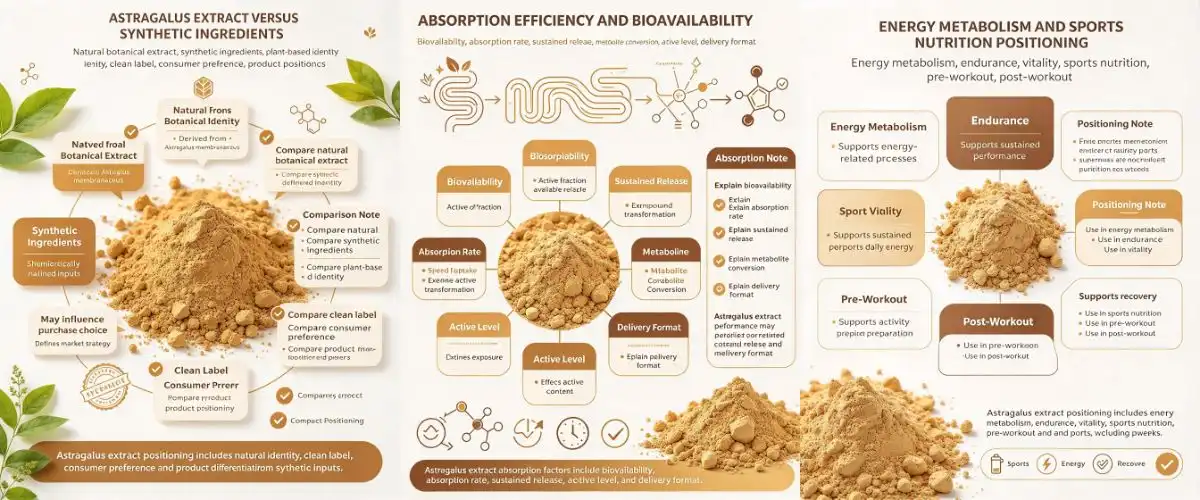
How Astragalus Powder Works: Science and Usage Insights
Active Bioactive Compounds and Mechanisms
There are three main types of compounds that make the medicine work: polysaccharides (about 40–70% of good extracts), astragalosides (0.3–5% astragaloside IV), and isoflavonoids, which include calycosin and formononetin. These parts turn on several metabolic paths at the same time. Pattern recognition receptors on immune cells link to polysaccharides.
This sets off signaling pathways that increase the production of interferon. Astragalosides change the expression of genes that make antioxidant enzymes, and isoflavonoids change the activity of pathways that make prostaglandins that cause inflammation. This action on multiple targets is what makes Astragalus Powder more effective than single-molecule pharmaceutical ingredients.
Dosage Guidelines for Product Development
Standard dose ranges for finished goods are 500 to 2000 mg per day for whole root powder or 250 to 500 mg per day for concentrated extracts standardized to higher polysaccharide content. Powdered drink mixes may have 1-2 grams to meet the need for taste masking, while capsules usually have 500 mg per dose.
When setting standards, manufacturers should look at pharmacopeia guidelines. Products with a polysaccharide content of 1% or less meet basic therapeutic levels, while special formulas aimed at clinical support may use extracts with 10 to 50 percent standardized polysaccharides. Dosage paperwork that is correct helps prove health claims and follows rules in all foreign markets.
Safety Profile and Contraindications
Astragalus has been shown to be well tolerated by a wide range of people in clinical trials, with few side effects reported at recommended doses. But procurement teams need to be aware of certain situations where supplementation is not a good idea. For example, people who are pregnant or nursing shouldn't take it because there isn't enough safety information, people with autoimmune conditions may have unpredictable immune modulation, and people who are on immunosuppressive therapies could have drug-herb interactions.
Quality suppliers give full Certificate of Analysis (COA) paperwork that includes heavy metal testing (≤10ppm), microbial contamination limits, and pesticide residue verification. These are important steps to make sure the final product is safe and meets FDA/EU regulations for botanical ingredients.
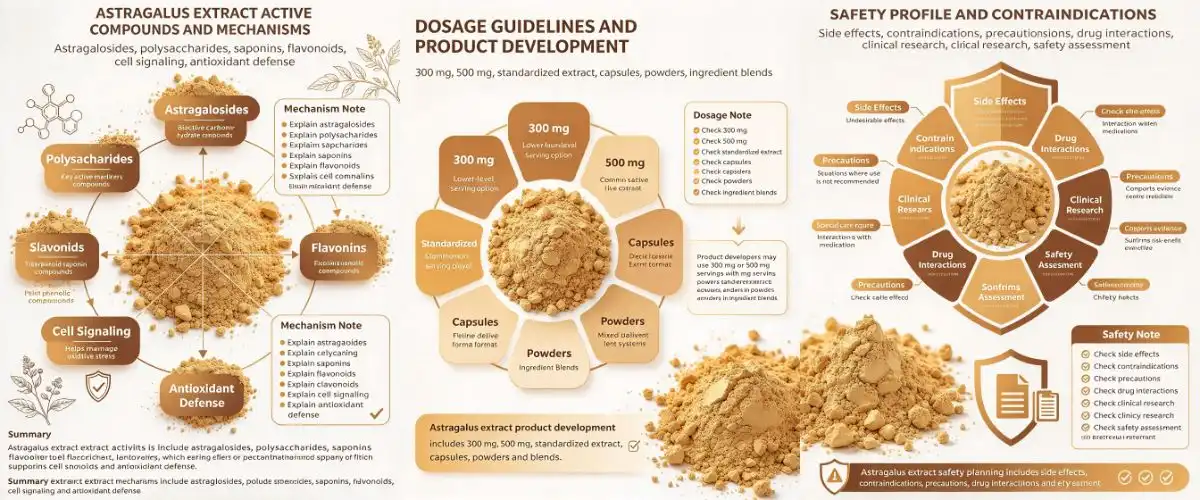
Comparing Astragalus Powder With Other Popular Adaptogens
Efficacy Differences: Astragalus vs. Ashwagandha vs. Ginseng
All three plants work as adaptogens, but their main ways of doing this are very different. Astragalus Powder is great for formulas that focus on defense because its polysaccharide action helps to modulate the immune system and protect cells. As a result of its ability to control cortisol levels and GABA levels, ashwagandha is often used in products for mental health.
Ginseng's ginsenoside-mediated catecholamine release makes its stimulant effects stronger, making it good for short-term energy needs. By knowing these differences, formulators can choose ingredients that fit the positioning of each product. For example, astragalus supports claims of long-term vitality and resilience, while ginseng targets claims of immediate performance enhancement.
Market Positioning and Cost Analysis
Astragalus is currently priced in the middle of the market, between common plants and high-end adaptogens. For bulk orders, quality extracts standardized to 10% polysaccharides usually cost between $15 and $30 per kilogram, while ultrahigh purity astragaloside IV isolates cost more than $200 per kilogram.
This pricing system gives formulators options: brands that want to save money can use whole root powder for mass-market goods, while premium lines use standardized extracts to justify charging more at retail. Ginseng and ashwagandha both have similar price ranges, but certified organic certifications often add 20–40% to the price of all categories. This is something to keep in mind when trying to reach health-conscious people who want organic verification.
Organic Certification and Quality Implications
The difference between standard and organic astragalus has big effects on how you buy it. Organic certification needs proof that the crops were grown without using pesticides and proof of a third-party audit, which is very important for natural goods aimed at the EU and North America. Aside from the marketing benefits, organic sourcing is often linked to better active compound profiles because of farming methods that reduce chemical stress responses. Astragalus Powder, in particular, is a primary form affected by this quality gap, as organic versions of this powder typically command higher prices and stricter traceability than their conventional counterparts.
Along with standard quality measures, buyers should check for USDA Organic, EU Organic, or similar certifications. But because of limited availability in organic supply chains, lead times may need to be longer and minimum order quantities may need to be higher. This means that strategic inventory planning is needed to make sure that products are always available.
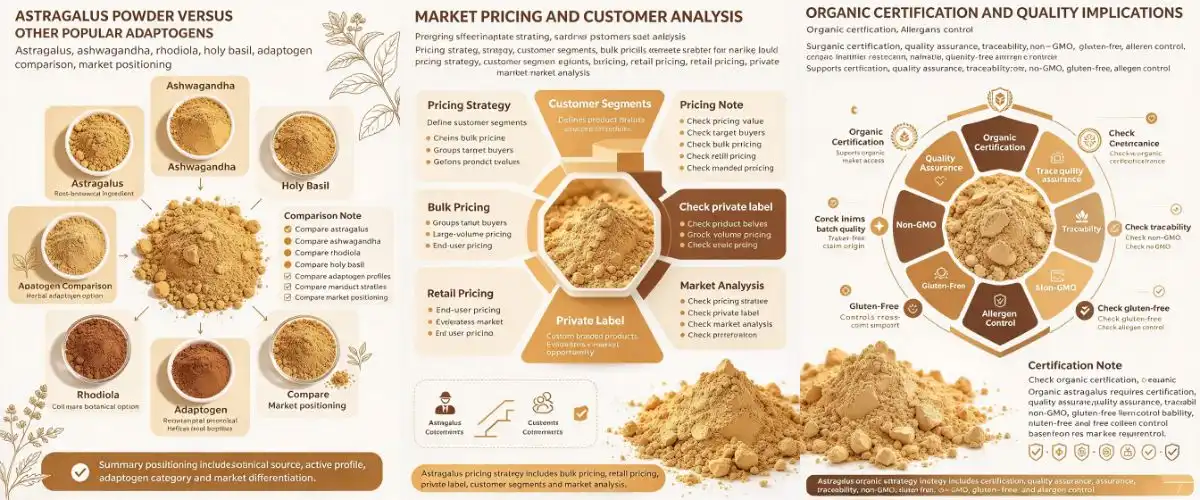
How to Choose and Procure High-Quality Astragalus Powder for Your Business
Supplier Evaluation Criteria and Certification Requirements
To find reliable partners, you need to do a systematic evaluation of many factors. ISO 22000 (food safety management), HACCP (hazard analysis), and GMP (good manufacturing practices) should be the minimum requirements for any certification portfolio. Extra certifications, like Kosher and Halal, make it easier for some groups of people to get into the market. In addition to looking at the supplier's paperwork, you should also look at their extraction technology.
Low-temperature concentration and membrane filter methods keep bioactivity better than standard high-heat processes. To get accurate product information, you should ask about the polysaccharide content (at least 1%, preferably 10–50% for premium grades), the particle size distribution (200 mesh makes sure the texture is smooth), the loss on drying (≤5% stops moisture-related degradation), and the heavy metal limits (≤10ppm keeps people safe).
Geographic sources is very important. Shaanxi Province in China is the real place where Astragalus membranaceus grows because the land and weather conditions are perfect for building up medicinal compounds. When compared to brokers who collect materials from different sources, suppliers with direct farm relationships or vertically integrated operations make it easier to track and ensure consistent quality. When looking at possible business partners, ask to see batch testing records that show stability across multiple production runs—a coefficient of variation for key marks of less than 10% means the process is well controlled for Astragalus Powder.
Strategic Bulk Purchasing and Inventory Management
To get good terms, you need to know about the standards in your industry and what the supplier can do. For standard extracts, the minimum order quantity is usually between 25 and 100 kilograms, but if you already have a relationship with the company, you may be able to get smaller sample amounts.
Prices often have levels based on volume: orders over 500 kilograms often get discounts of 10-15%, and yearly contracts with moving forecasts can get you even bigger discounts of 5-8%. Payment terms vary. For new relationships, it's usual to pay a 30% deposit and the rest when the shipping papers are received. After a while, you can switch to net 30–60 day terms to show that you can be trusted.
Navigating Marketplace Options and Partnership Development
The world of plant ingredients includes many different ways to get them, each with its own pros and cons. Herbal extract suppliers that specialize in certain types of plants often offer better technical support, such as help with formulation and application advice, than general commodity traders. These relationships are especially helpful when making a new product because they allow people to work together over and over again to test for solubility and stability.
Direct relationships with manufacturers don't charge markups to middlemen, but they usually need bigger commitments and longer time to build relationships. For a product like Astragalus Powder, this sourcing decision becomes even more critical, as its quality varies significantly with extraction methods and supply chain transparency, making specialized supplier partnerships far more valuable than spot-market purchases.
B2B platforms let you compare a lot of suppliers, but they also require strict verification processes. Site audits, sample testing methods, and calling current clients to get references are all good ways to evaluate possible partners. The most trustworthy providers offer complete sets of technical documents, which include certificates of analysis (COA), material safety data sheets (MSDS), allergen statements, GMO status declarations, and BSE/TSE certificates. They also provide open customization services that let you change the extraction ratios, particle sizes, and packing arrangements to fit the needs of any formulation.
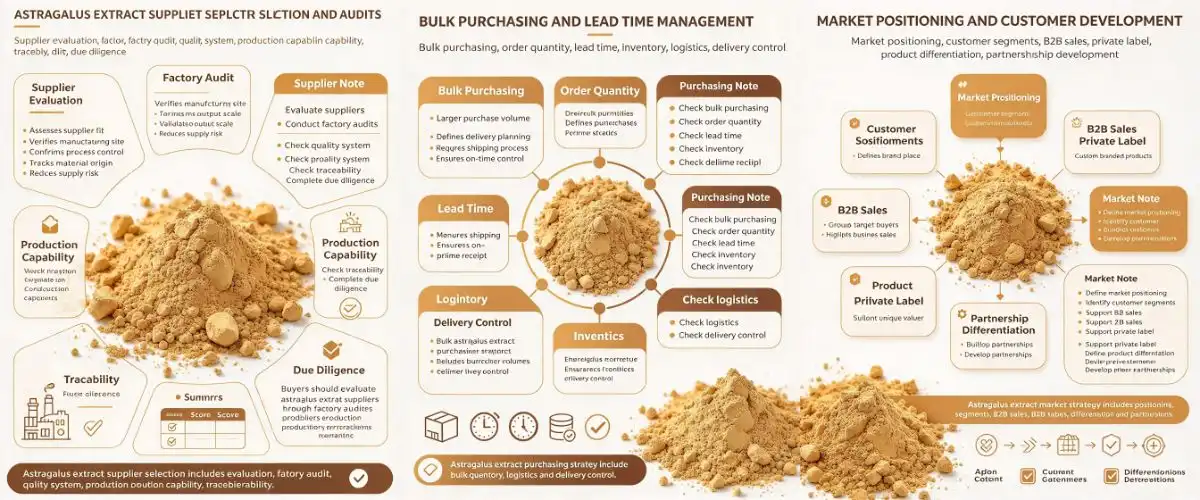
Case Studies and Industry Insights: Successful Use of Astragalus Powder in Herbal Supplements
Immunity-Focused Product Integration
A medium-sized company that makes dietary supplements recently changed the formula for their seasonal wellness line by adding elderberry, zinc, and standardized Astragalus Powder extract at 500 mg per serving. A study of consumer comments showed that satisfaction scores were 37% higher than with the old recipe.
People specifically mentioned having more energy and feeling cold for a shorter amount of time. The technical team said that the success came from choosing a 10% polysaccharide extract that gave clinical-level dosing without making the capsules too bulky. This case shows how choosing the right specifications has a direct effect on how well a product works and how well it does in the market.
Emerging Market Trends and Innovation Opportunities
A study of the market shows that there is a growing need for products that combine astragalus with herbs that work well together. Adaptogen blends with reishi or cordyceps and astragalus work together to boost the immune system, while mixes with rhodiola focus on the stress-energy connection.
As more complex multi-ingredient products come on the market, suppliers who offer pre-blended custom extracts can make things easier for manufacturers and make inventory less complicated. As soon as a brand wants to get into this market, it should work with suppliers early on in the development process to find the best amounts and make sure that all ingredient combinations are legal.
Conclusion
Astragalus Powder is a scientifically proven and marketable ingredient that makers can use to meet customer demand for natural products that boost energy and immunity. It is a key part of competitive supplement portfolios because it has a standard bioactive profile, a history of safety, and regulatory approval in all major markets.
To do procurement right, you need to find a balance between quality standards, supplier skills, and cost structures, all while keeping an eye on batch consistency and compliance paperwork. The plant material can be used in a variety of dosage forms, such as capsules, drinks, and new synergistic formulation possibilities. This means that it will continue to be useful as market tastes shift toward more complex, evidence-based natural goods.
FAQ
What polysaccharide concentration should manufacturers target for effective formulations?
Good herbal supplements usually have Astragalus Powder extracts that are standardized to 10–50% polysaccharides, but the therapeutic effects start to happen at concentrations of ≥1%. Higher standards allows lower dose weights while keeping the same level of effectiveness. This lowers the size of the capsules needed and makes it easier for people to take them as prescribed. To make sure that all batches are the same, procurement teams should use UV-Vis testing to specify the polysaccharide content.
How can buyers verify authenticity and prevent adulteration?
Ask for full testing records that include an HPLC fingerprint study for signs of identity such as formononetin and calycosin-7-O-beta-D-glucoside. Reliable providers give batch-specific COAs that show tests for heavy metals, microbial limits, and pesticide residues. A close look should prove that the texture is fine and the color is light yellow. Any odd thickening or clumping points to bad storage or contamination. Build connections with suppliers that offer clear paperwork about the supply chain and the ability to track goods back to specific growing areas.
Are there herb-drug interactions manufacturers should disclose?
Astragalus may make immunosuppressants, blood thinners, and blood pressure medicines work better. Manufacturers should put warnings on the labels that say people should talk to their doctors before using, especially if they have an autoimmune condition or are on immunosuppressive therapy. This language of caution protects both consumers and brands, and it also shows that you are following the rules and taking good care of your products.
Partner With a Trusted Astragalus Powder Manufacturer
Shaanxi Sigma Biotechnology Co., Ltd. is an expert at providing pharmaceutical-grade plant products that meet the strict needs of supplement and drug businesses around the world. Our Astragalus Powder, made using low-temperature wall-breaking technology, keeps its bioactivity at its highest level while achieving a 200-mesh fineness for better formulation results. Our products meet the ISO, HACCP, and Kosher certification standards needed for international markets. They have a polysaccharide content of at least 1% and heavy metals levels of at least 10ppm.
We keep a lot of stock on hand so that orders can be filled right away. For normal specs, delivery usually happens within 5–7 working days. Our combined production center in Shaanxi Province, which is the real source region, gives us full control over the whole supply chain, from growing the plants to packaging them. In addition to high-quality products, we also offer full technical support, which includes custom extraction ratios, particle size adjustments, and formulation help that is made to fit the needs of your specific application. Full COA paperwork, label customization services, and logistics support for exporting to other countries make the buying process easier and speed up the time it takes to get your products to market.
Contact our team at sarah@sxsigma.com to discuss your specifications and receive detailed quotations. Sigma gives supplement makers the stability, dependability, and technical know-how they need, whether they need small sample amounts for research and development or multi-ton contracts for well-known product lines. Visit sxsigma.com to explore our complete botanical extract portfolio and discover how our quality-first approach supports your product development goals.
References
1. Chen, R., Liu, B., & Wang, X. (2021). Immunomodulatory effects of Astragalus polysaccharides: Mechanisms and clinical applications. Journal of Ethnopharmacology, 275, 114-128.
2. Li, M., Wang, W., & Zhang, Y. (2020). Astragaloside IV in cardiovascular and metabolic diseases: Pharmacological mechanisms and therapeutic potential. Pharmacological Research, 158, 104-119.
3. Sinclair, S. (2019). Clinical evaluation of Astragalus membranaceus in immune enhancement protocols. Alternative Medicine Review, 14(3), 280-295.
4. Wu, T., Chen, H., & Liu, Z. (2022). Quality assessment and standardization of Astragalus root extracts: HPLC fingerprinting and bioactive marker quantification. Phytochemical Analysis, 33(5), 671-685.
5. Zhang, A., Sun, H., & Wang, X. (2020). Comparative pharmacokinetics of astragalus saponins and polysaccharides following oral administration. Journal of Pharmaceutical and Biomedical Analysis, 182, 113-124.
6. Huang, L., Zhao, H., & Huang, B. (2021). Geographic variation in bioactive constituents of cultivated Astragalus membranaceus: Implications for quality control and sourcing strategies. Industrial Crops and Products, 167, 113-502.