Why Choose High Purity Ashwagandha Extract Powder?
If you're sourcing adaptogens for a stress relief, sleep, or energy supplement line, ashwagandha is likely already on your radar. The North American adaptogen market has grown over 20% annually in recent years, and ashwagandha sits at the center of that growth. But not all ashwagandha ingredients perform equally on a production line. Pure ashwagandha extract — standardized, verified, and manufactured under strict quality controls — delivers the batch consistency and clinical credibility that raw root powder simply cannot match. This article breaks down exactly what separates high purity extract from the alternatives and how to choose a supplier worth trusting.
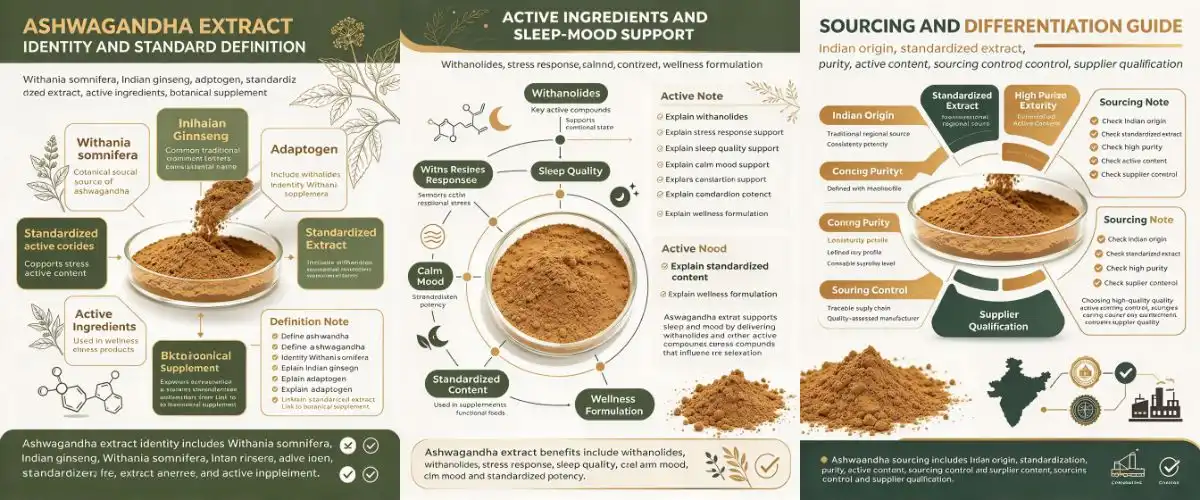
Understanding High Purity Ashwagandha Extract Powder
What "High Purity" Actually Means
High purity ashwagandha extract comes from the roots of the plant Withania somnifera. It is then processed to concentrate its main bioactive chemicals, withanolides, to a number that can be proven, usually ≥5%, using HPLC-UV analysis. This is not the same as ground root powder, which might only have 0.1 to 0.3 percent withanolides and doesn't have to be standardized. When your sign makes a practical claim, the difference is very important.
Key Benefits Backed by Research
Standardized withanolide diet is consistently linked to lower cortisol levels, better sleep start, and better brain function under stress. A 2019 randomized, double-blind study published in Medicine found that taking 240 mg of ashwagandha extract every day for 60 days lowered cortisol by 22.2%. These outcomes depend on a steady withanolide level, which can only be provided by a measured extract.
Safety Profile and Regulatory Position
Root-only extracts with controlled levels of Withaferin A (ideally less than 0.1% of the total extract) don't have the cytotoxic concerns that come with leaf fillers. For companies that follow FDA rules for dietary supplements, it is necessary to provide safety statistics and a correct proof of analysis. High purity grades back up claims of cleaner labels and lower regulatory exposure.
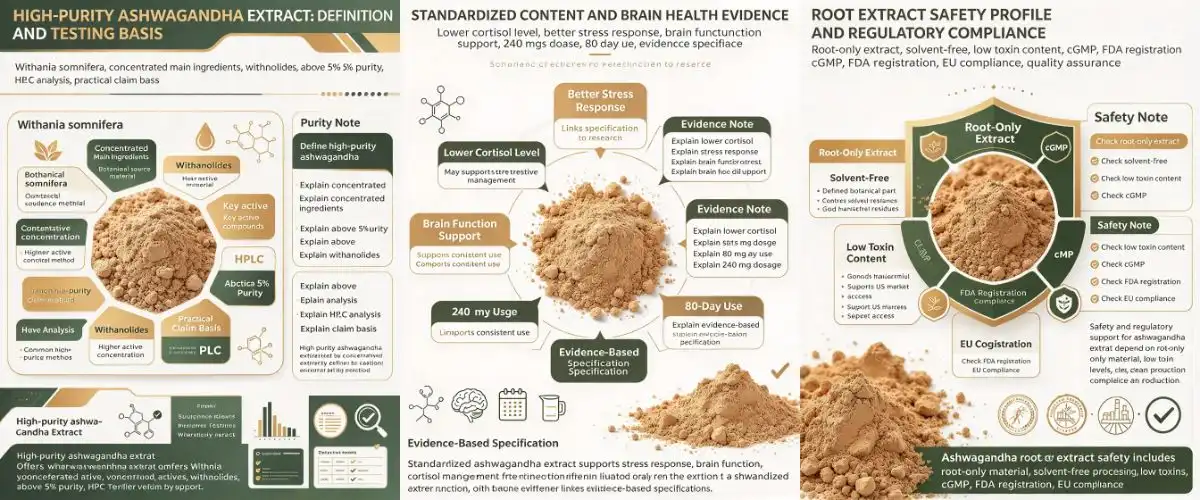
Comparing High Purity Ashwagandha Extract with Alternatives
Raw Root Powder vs. Standardized Extract
The price of raw ashwagandha root powder is lower, but the amount of withanolide in it varies a lot from crop to crop. This difference in dose per capsule is a production liability for a line of products that needs consistent dosing. Standardized extract gets rid of that doubt by keeping the active ingredient percentage within a ±3% range across runs.
KSM-66 and Sensoril: What You're Actually Paying For
KSM-66 and Sensoril are well-known brand names of pure ashwagandha extract ingredients that have strong clinical backgrounds. However, they are often 30–50% more expensive than similar non-proprietary products that contain the same amount of withanolide.
Branding and legal protection are what make them different, not necessarily better bioactivity. If purchasing teams are looking at how to save money on a large scale, an unpatented extract that has been standardized to ≥5% withanolides through HPLC can meet the functional profile without the name premium.
Other Adaptogens: Why Ashwagandha Stands Apart
Rhodiola, holy basil, and eleuthero all have their own uses in medicine, but ashwagandha has the most peer-reviewed research on how it can change the HPA axis and lower cortisol. It is well known by many people, which also helps store supplement makers with their marketing.
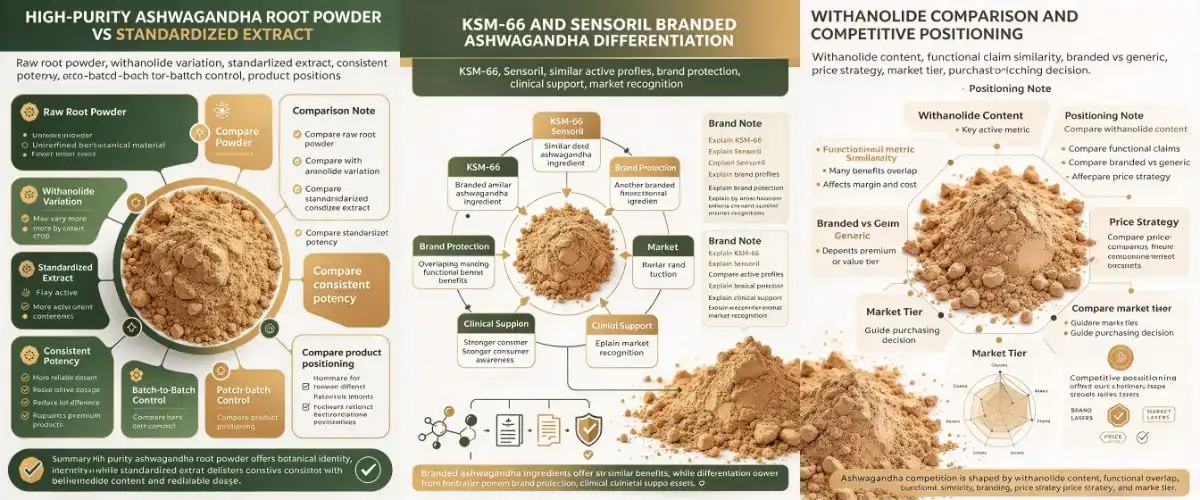
Criteria for Selecting the Best High Purity Ashwagandha Extract Supplier
Certifications That Actually Matter
A supplier that is worth looking at should have at least HACCP, ISO 22000, and cGMP compliance certifications. Brands that want to reach people who buy naturally will benefit from getting USDA Organic approval. Any statements about the amount of withanolide in a substance must be backed up by HPLC-UV test results, not gravimetric methods, which are known to give false results. Requesting third-party lab proof and DNA authentication to confirm root-only origin are two more steps that are worth doing.
Adulteration and Batch Consistency Controls
In the ashwagandha supply chain, fake ashwagandha is a big problem. Some suppliers lie about the amount of withanolides they sell by mixing in leaf matter or adding semi-synthetic withanolides. A trustworthy supplier can identify plants using DNA, give lot-specific COAs, and test for residual solvents. To support label claims that are always true, batch-to-batch changes in withanolide content should stay within ≤3% of what is written on the label.
Pricing, MOQ, and Supply Readiness
When brands buy 10 tons or more of pure ashwagandha extract such as KSM-66 every year, they negotiate their yearly contracts by looking at both price compared to KSM-66 standards and the flexibility of the minimum order. Suppliers with 10–20 tons of stock on hand and lead times of 5–7 business days are much better prepared to meet the high demand in Q1 than those whose production cycles are based on "just-in-time."
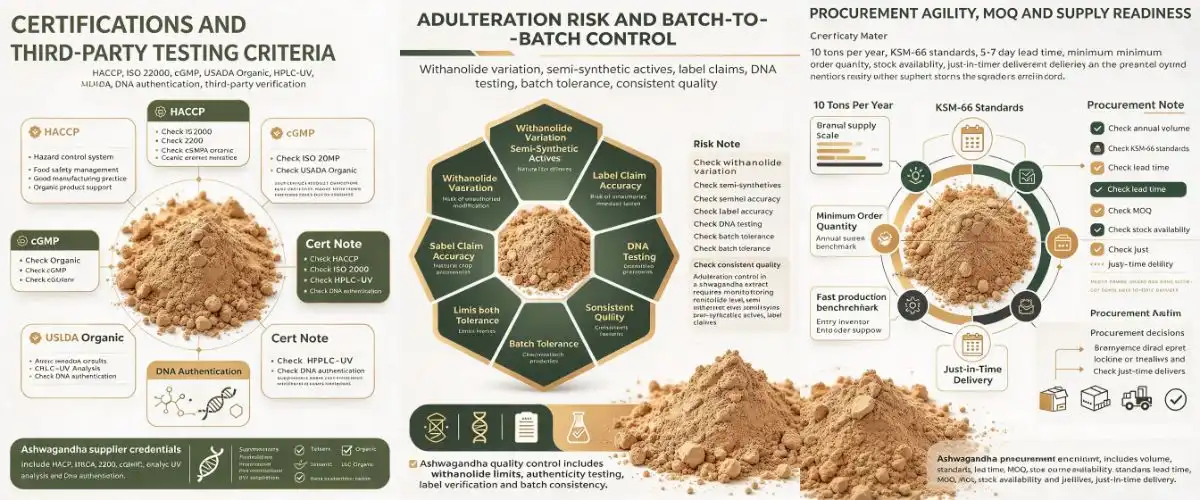
Practical Usage Guide for High Purity Ashwagandha Extract Powder
Dosage and Formulation Guidance
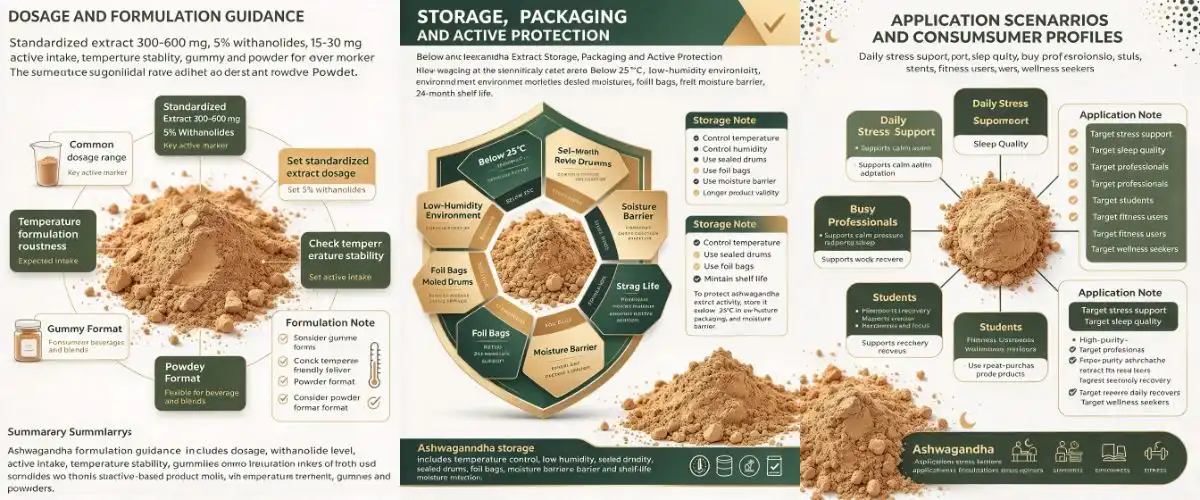
When it comes to capsules and tablets, the scientifically tested range is 300–600 mg of standardized extract per serving. At ≥5% withanolides, this gives you 15–30 mg of active withanolides per dose, which is in line with what has been reported as an effective level. The 80-mesh particle size makes it possible to blend the powder evenly in both dry-fill capsule lines and powder sachets. For gummy forms, you should make sure you have the temperature stability data you need before you start a production run.
Storage and Handling to Protect Active Content
The extract of ashwagandha absorbs water and is sensitive to heat and moisture. Here are the steps you should take to keep the medicine's effectiveness throughout its shelf life:
- Storage temperature: Keep below 25°C in a sealed, low-humidity environment to prevent caking and active compound degradation.
- Packaging: Double-lined foil bags or sealed drums are recommended for bulk storage; avoid paper-only packaging in humid warehouse conditions.
- Shelf life: Properly stored product maintains specification compliance for 24 months from manufacture date; lot-specific stability data from the supplier provides additional assurance.
These rules are directly for the yellow-brown fine powder (Loss on Drying ≤2%, heavy metals meet international standards) that is usually used to make food supplements. If you follow them, you'll have fewer production mistakes and your label claims will be safe for the whole lifecycle of the product.
Application Scenarios by End Consumer Profile
This pure ashwagandha extract works well for three main types of customers: those who deal with daily mental stress, those who have trouble sleeping sometimes, and those who want non-drug ways to relax. It's mild and won't make you dependent on it, so you can use it every day without stopping. This supports subscription-based product models, which are a growing source of revenue in the North American supplement market.
Where and How to Buy High Purity Ashwagandha Extract Powder for Your Business
Sourcing Channels Worth Considering
When it comes to pricing, technical documentation, and customization options, buying directly from the manufacturer is usually the best option. Meeting people in person is easy to do at trade shows like SupplySide West and Natural Products Expo West. Online marketplaces like Alibaba (which only shows certified sellers) can help you find products at first, but before you place a sample order, you should always check the COA and have it confirmed by an independent lab.
What a Strong Supplier Package Looks Like
A good provider should give you more than just the ingredient. They should also give you stability data for the finished extract, application support for your specific dosage form, and documentation packages that meet FDA standards for dietary supplements. OEM/ODM flexibility, which includes extraction ratio, particle size, and custom packaging, cuts down on the work you have to do on your own formulation and speeds up the time it takes to develop a new product.
Managing Supply Risk Through Q1 and Peak Seasons
Because of New Year's goals to be healthier, the first quarter is always the busiest time for stress and sleep products. A real business risk comes from suppliers who can't confirm stock inventory levels or guarantyd wait times during this window. A common way for procurement teams at this size to manage risk is to lock in annual volume agreements with tiered pricing and clear schedules for restocking.
Conclusion
There are three things that are most important when picking the right pure ashwagandha extract ingredient: the amount of withanolide that has been confirmed, the transparency of the supply chain, and the price that fits your profit margins. High-quality ashwagandha extract that is standardized to at least 5% withanolides, made in a way that is cGMP and ISO-certified, and backed by third-party COAs gives your product line the clinical credibility and production consistency it needs. Using raw powders and sources that haven't been checked out adds risks that cost more to fix in the long run than they save in the short term. It's both a quality call and a business call to make this buying choice.
FAQ
What withanolide percentage should I require from a supplier?
For products making stress or sleep-related structure/function claims, request a minimum of 5% total withanolides confirmed by HPLC-UV. This aligns with the dosage ranges used in published clinical trials and provides a defensible basis for label claims.
How do I verify that an extract is root-only and not adulterated with leaf material?
Ask for a DNA botanical identification report alongside the standard CoA. Third-party labs can confirm Withania somnifera root origin and flag undeclared plant parts that may inflate withanolide readings artificially.
What is a typical lead time for bulk orders?
Suppliers maintaining active inventory stock can typically ship within 5–7 business days for standard orders. For Q1 peak season, confirm inventory availability and negotiate a reserved allocation at least 8–10 weeks in advance.
Is organic ashwagandha extract reliably available in bulk?
Organic-certified material is available but subject to tighter supply constraints due to limited certified farmland. If your brand requires USDA Organic positioning, secure an annual supply agreement early and build in a buffer stock protocol.
Partner with Sigma for Your Ashwagandha Extract Supply
As a reliable source of pure ashwagandha extract, Shaanxi Sigma Biotechnology Co., Ltd. has 10–20 tons of stock, delivers in 5–7 business days, and offers ISO 22000, HACCP, and Halal-certified products. They also offer full OEM/ODM support. You can get free samples. To get prices and details, you can email our team at sarah@sxsigma.com or go to sxsigma.com.
References
1. Chandrasekhar, K., Kapoor, J., & Anishetty, S. (2012). A prospective, randomized double-blind, placebo-controlled study of safety and efficacy of a high-concentration full-spectrum extract of ashwagandha root. Indian Journal of Psychological Medicine.
2. Pratte, M. A., Nanavati, K. B., Young, V., & Morley, C. P. (2014). An alternative treatment for anxiety: A systematic review of human trial results reported for the Ayurvedic herb ashwagandha. Journal of Alternative and Complementary Medicine.
3. Salve, J., Pate, S., Debnath, K., & Langade, D. (2019). Adaptogenic and anxiolytic effects of ashwagandha root extract in healthy adults. Cureus.
4. Choudhary, D., Bhattacharyya, S., & Joshi, K. (2017). Body weight management in adults under chronic stress through treatment with ashwagandha root extract. Journal of Evidence-Based Complementary & Alternative Medicine.
5. Nutrition Business Journal. (2023). Global Supplement Business Report: Adaptogen Category Trends.
6. NutraIngredients-USA. (2022). Ashwagandha Market Analysis: Supply Chain Quality and Standardization Challenges.