White Peony Extract vs. Tea: Which Option Is Better for You and Why?
Because it is more concentrated and standardized, white peony extract is a better choice for skin care or supplements. White peony tea is the best thing to drink when you want something hot. They're not the same plant, even though they share the same name. How much of the root of Paeonia lactiflora is in the extract tells us how much paeoniflorin is in it. Camellia sinensis leaves and buds are used to make Bai Mudan tea. People judge it by how it tastes and smells. Before you ask for samples or quotes, this guide will help you choose the best option for your project.
White Peony Extract and White Peony Tea Are Not the Same Ingredient
Let me start with the name to make things clear. Once you know how the two materials are different, it's easier to choose.
Two Different Plants
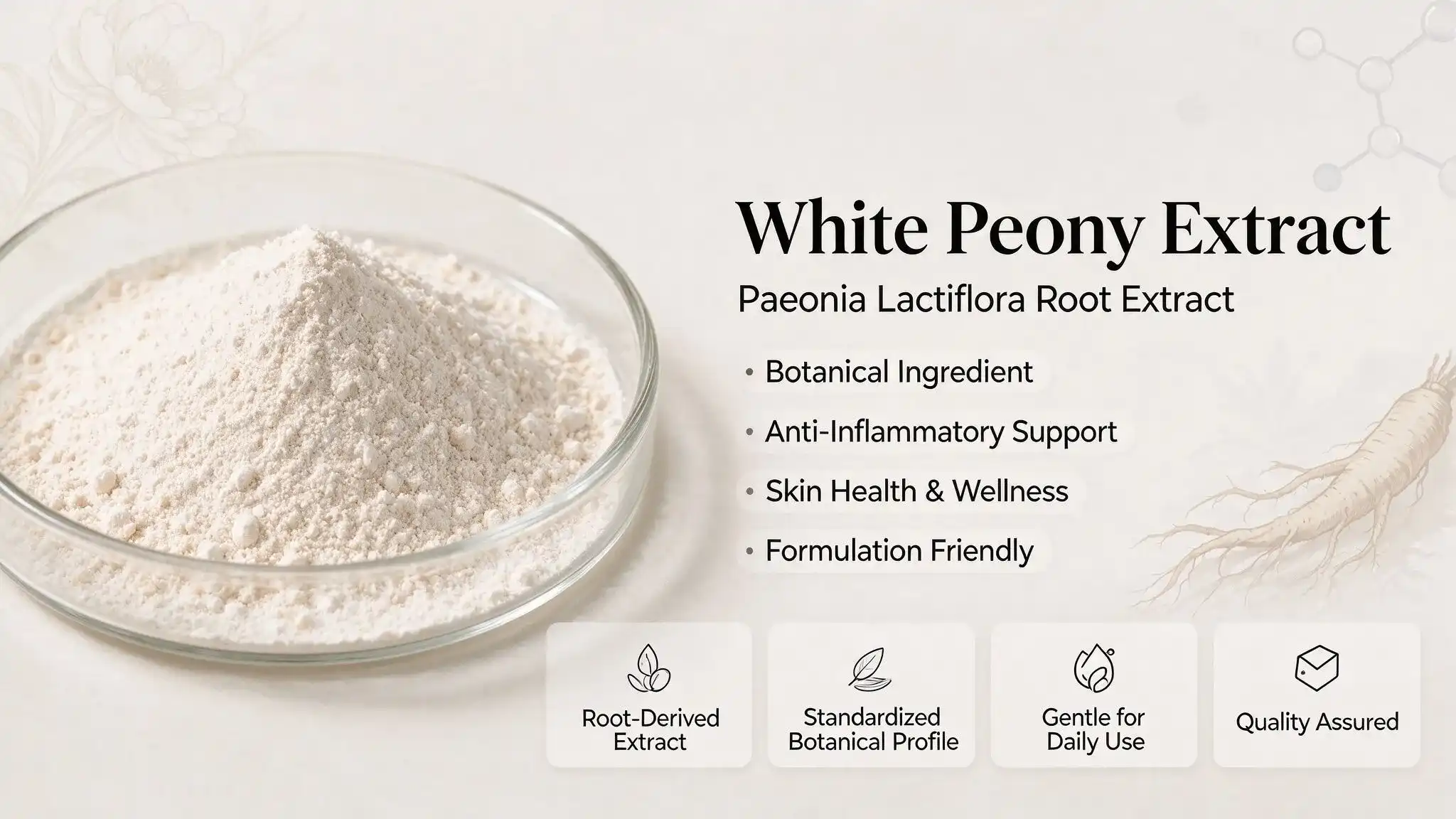
When people who buy things tell me that they searched for "white peony" and got two very different lists of items, I believe them. It is the dried root of the perennial herb Paeonia lactiflora Pall. that is used to make white peony extract. It's related to peonies. This is the type of plant that gives us black and green tea. To make white peony tea, you use the young leaves and buds. Plant parts, active compounds, and legal groups are all different because the botanical names aren't the same. Before you look at different prices, I always check the specs sheet to make sure the Latin name is correct.
Different Processing Methods
Making tea and extracting are not the same process. We pick the raw materials, grind and sieve them, use vacuums to concentrate them, clean and dry them, grind and sieve them again, mix them, test them, package them, and test them again. Water and ethanol are used to extract by Sigma. The new leaves and buds are instead laid out to dry and then wither. Not much else is done to them. This is why finished white tea still looks like the leaf. One way makes a chemical stronger, and the other way keeps a leaf whole.
Active Compounds and Sensory Profile
With the CAS number 23180-57-6, paeoniflorin is a monoterpene glycoside that is what peony root extract is made of. But the main things that scientists have looked into in white tea are catechins and caffeine. This is the brown and yellow powder we use. You should check the color and smell in your own base. It's judged by how it tastes, smells, and changes color when mixed. Because every material is chemically different, it makes sense that these checks would be done.
Comparing the Benefits and Uses of White Peony Extract and White Peony Tea
You can't tell which ingredient to use by reading the words "white peony." This is how the uses are different.
Where White Peony Extract and Tea Fit
You can use white peony extract in traditional herbal formulas, functional foods, botanical blends, skin care, personal care, and dietary supplements as long as you follow the local rules and laws. Health and beauty products are the main things that Sigma is used for. Pharmaceuticals and Therapeutics will publish a review on paeoniflorin in 2020. The review talks about research on this compound and how it can help lower inflammation and keep the immune system in check. People are interested in the ingredient, but that doesn't mean you don't need to look over the claims for your market. It tastes good with brewed drinks, fancy teas, and ready-to-drink lines.
Cosmetic Formulation Requirements
First, formulation chemists like to know how much paeoniflorin there is, how well it dissolves, what color it is, and how it smells. You should use your own base to test the powder because paeoniflorin breaks down in water. Regulation (EC) No 1223/2009 says that regulatory teams need to know the INCI name (Paeonia Lactiflora Root Extract), the CAS number, and anything else that helps them do the safety assessment that they need to do. Heavy metals in our powder meet EU standards. It also has at least 50% paeoniflorin and can go through a 100-mesh screen. Your lab can start with those numbers.
Supplement Considerations
The people who make supplements check the amount that is needed, how well it dissolves, how much water it has, and how well it flows. About 3% of the weight of our extract is lost when it dries. This helps keep the moisture level stable while it's being mixed and stored. The 100-mesh particle size works well for dry blends, but you should still put some in a capsule or tablet to see if it flows well. You can tell how much powder gives you a certain amount because paeoniflorin is marked on it. It's not possible to do that much math in tea without more tests.
White Peony Extract vs. White Peony Tea: Which Option Offers Better Standardization?
The main way that the two materials are different is in how they are standardized. If batch two acts like batch one or not, it is up to it.
How Extracts Are Standardized
A measurable marker is used to make sure that a standard extract is correct. Paioniflorin is a sign that something is peony root, and buyers can also ask for an extract ratio or a chromatographic fingerprint. We know that our product is paeoniflorin ≥50% because the specs say so. Companies that make supplements, sell them, work with OEM clients, and launch brands in more than one market need to be very consistent. Now that the number is set, it's easy for formulators to set the values for dosage and labels.
How Tea Quality Is Judged
How it was grown and how it tastes determine how good a tea is. The graders look at the leaves' appearance, where they came from, when they were picked, how they smell, how they taste, what color the infusion is, and how much water is in them. Studies that compare white, green, and black tea show that the types of plants used and how they are processed change the ingredients. It's not a flaw; it's part of what makes tea interesting. That only means that the checks for tea and extract are not the same.
What a Professional COA Should Show
This is a good certificate of analysis for white peony extract. It should have the batch number, the paeoniflorin assay, the loss on drying, the heavy metals, and the microbial results. Also, find out about GMP controls, third-party testing, traceability, and making sure the product is legal in the country where you want to sell it. Omega keeps microbes in check and checks the chemical and physical properties of each batch. We follow the rules set by ISO 9001, ISO 22000, and HACCP in our system. We are also certified as Kosher. Ask for the COA before you sign off on anything.
Powder, Liquid, Organic, and Conventional Options: Which Format Is Better?
It changes how much it costs to ship, how stable it is, and how simple it is for the ingredient to get into your process each time.
Powder or Liquid
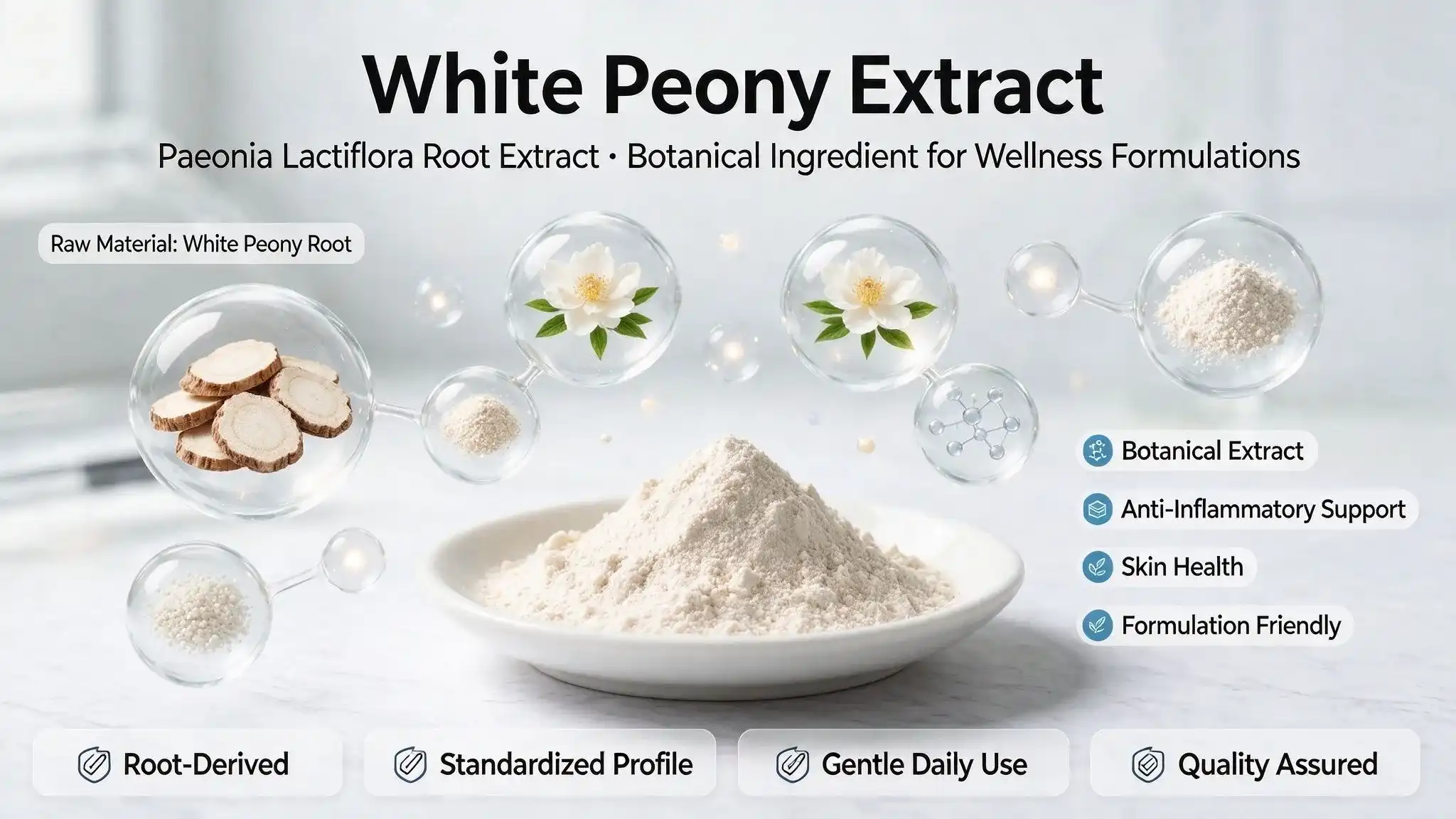
Making pills, capsules, and dry blends is easy. You can also send a lot of them abroad and keep powder for a long time. With liquid extract, you can make drinks, dropper products, and cosmetic bases that work well. It also speeds up small trials. But liquids need more care to stay fresh and are heavier because they contain water. This makes freight costs go up. There is a powder on Sigma that is made from white peony extract. It will keep its quality if you keep it away from hot and damp places.
Organic or Conventional
Certified organic extract is different from conventional material in how it is grown, how it is processed, how records of the chain of custody are kept, and what the certificate covers. For the certificate to work, it should cover the exact thing you want to buy. The ones we have now are ISO, HACCP, and Kosher. Before you spend money on testing, let me know early on if your project needs to be organic. That way, we can talk about it.
Tea Grade and Extract Grade
Don't judge extract by the rules of tea or tea by the rules of extract. You should not do either. A person who wants to buy an extract cares more about assay, solubility, and moisture than someone who wants to buy tea. People who buy tea care about the grade of the leaves and how well they make tea. When you mix the two sets of rules, trials don't work and quotes are hard to understand. It is important to write separate specs for each material and only compare suppliers who offer the same grade.
How to Choose and Buy White Peony Extract for Your Project
You can get things done faster if you know how to do them. I know what works for B2B buyers, so these steps are based on that.
Steps Before You Order
Make a list of your finished product, the people you want to buy it, and the type of regulation it fits into for white peony extract. The next step is to make a list of the technical requirements. These should include the botanical source, plant part, extract ratio, marker level, format, solubility, color, odor, microbial limits, packaging, and shelf life. Then, check out the suppliers' production skills, GMP systems, traceability, exporting experience, and technical support. You should test small amounts of your real formulation if you want to get bulk approval. Finally, place the MOQ, price, lead time, shipping terms, and documents next to each other and check their differences.
Questions to Ask Any Supplier
Contact the company regarding botanical name, plant component, extraction solvent, standardisation, batch-specific COA, third-party testing, MOQ, shelf life, and exportability. Comparing trading businesses, export suppliers, and manufacturers by quality control, delivery time, and profit is possible. Sigma always has popular goods in stock and ships them in 5–7 business days. Free samples and OEM/ODM work allow us to adjust particle sizes, extraction ratios, packaging, and labelling. Ask us what you'd ask anybody.
Common Mistakes
The worst case is mixing white peony tea with Paeonia lactiflora extract. This causes inaccurate measurements and claims. Other misconceptions include picking solely on price per kilogram, thinking all natural procedures are the same, and making unsupported health claims. People that don't obtain application samples before buying in bulk lose a lot of money. Its value varies on the test, dosage, dissolution, shipping, and follow-up. Samples and specifications before approval reduce these hazards.
Final Decision: Is White Peony Extract or White Peony Tea Better?
It's not always better to have neither. Each wins in its own way, and both are on the list below.
Choose Extract When
It is best to use white peony extract when you need a standard marker, concentrated plant material, formats that can be changed, and quality that stays the same from batch to batch. It works for beauty and supplement projects that need to get approval based on dosage, paperwork, and how well the formula works with the supplement. The paeoniflorin number can help your team, and the COA gives the government something to think about.
Choose Tea When
Pick white peony tea if you care about how well it brews, how the leaves look, how they smell, how they taste, and how they go with other teas. Having fun in the cup is more important than having a marker compound in this case. Do not judge it by standards for extracts. Instead, use standards for tea, such as grade, origin, harvest, and moisture.
Six Steps to Confirm Your Choice
Follow the six steps in the right order. Check the name of the plant. Describe the end goal. Pick out the style. Quality standards should be set. Compare vendors who are good at what they do. Before you buy a lot of them, look at some samples. This order keeps the name you choose for your product instead of a name that is already being used by other products. It works for extract and tea.
Conclusion
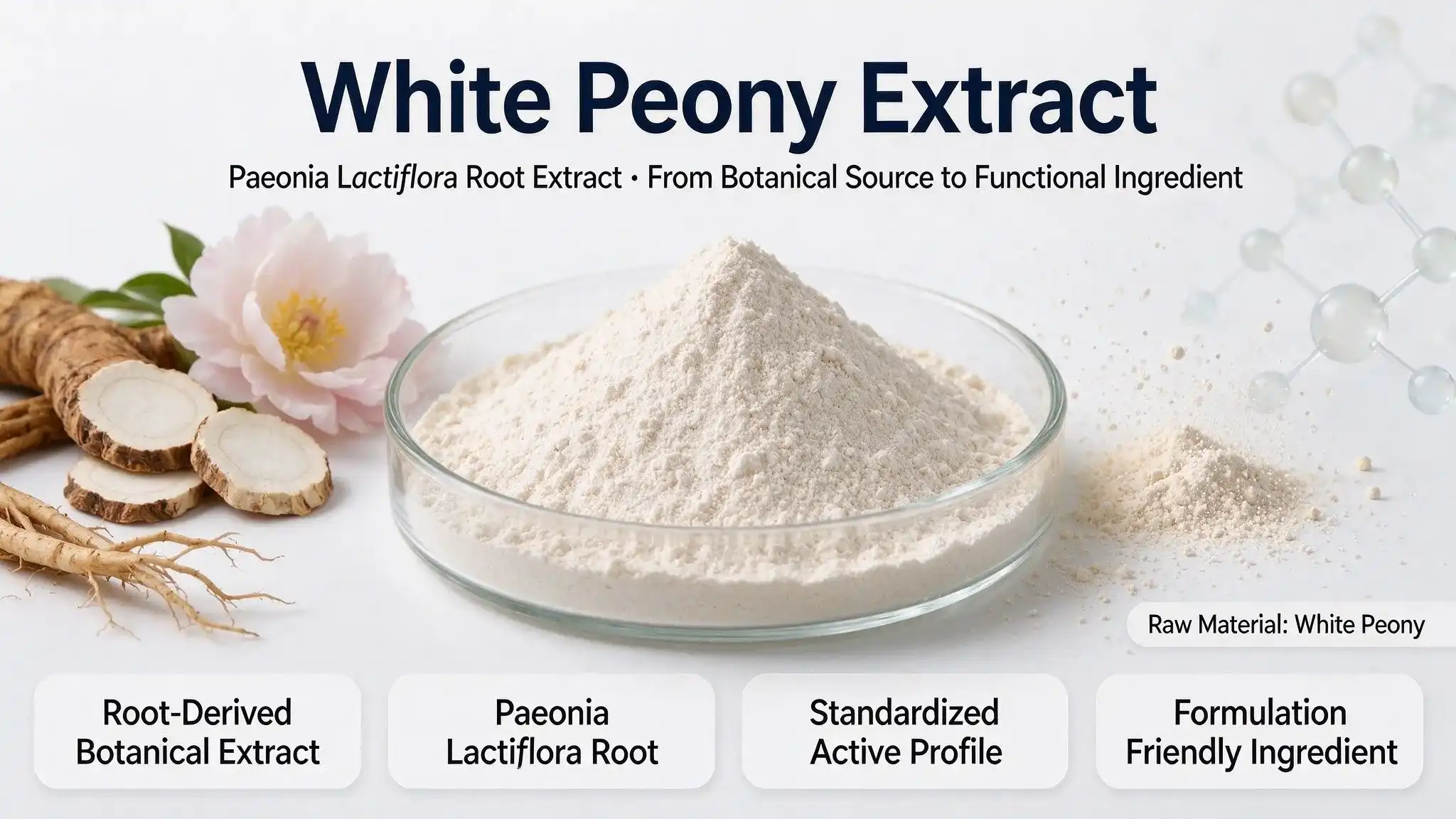
There is one plant that is used to make both white peony tea and white peony extract. However, they are made in different ways and from different parts of the plant. The extract comes from the root of Paeonia lactiflora. It can be used in supplements and cosmetics because the amount of paeoniflorin, the extract ratio, and batch testing all keep an eye on it. That plant's buds and leaves are used to make tea. It's judged by how it looks, smells, and tastes, so it's good for making drinks.
The comparison showed that the format, standardization, and certification should all be based on what the work is going to be used for. One more thing: you should never mix the standards for tea grade and extract grade. Tests on samples made with the real formula and a batch COA helped cut down on mistakes that cost a lot of money. There is no clear winner in every project; the product itself makes the choice.
FAQ
Is white peony extract the same as white peony tea?
No, paeoniflorin is used to measure the extract, which comes from the root of the Paeonia lactiflora plant. That plant's buds and leaves are used to make tea.
Can white peony extract be used in skincare?
In fact, beauty products use it. How well the formulation works with the product, the requirements, and any local rules all play a role in how suitable something is.
Should I choose powder or liquid extract?
You can put it in capsules, tablets, dry blends, or send it out in bulk. Liquids cost more to ship, but drinks and droppers work well.
What affects MOQ and price?
Standardization, certification, packaging, the scope of the test, and the number of orders all affect the MOQ and the price. Tell Sigma what you want and they will give you a quote.
Request White Peony Extract Samples from Sigma
Delta is a business that makes white peony extract. They offer free samples and can help with OEM/ODM for extraction ratios, particle sizes, and packaging. They also have stock that can be shipped in 5–7 business days. Please let sarah@sxsigma.com know about your application, including how it will be sent, how much it is, and what country it is from. I'll send you a price list, minimum order quantity, and specification sheet right away. You can also visit sxsigma.com to learn more.
References
1. Pharmacology & Therapeutics (2020): "Anti-inflammatory and immunoregulatory effects of paeoniflorin and total glucosides of paeony."
2. Pharmacopoeia of the People's Republic of China (2020): Radix Paeoniae Alba monograph.
3. Official Journal of the European Union (2009): Regulation (EC) No 1223/2009 on cosmetic products.
4. Food Research International (2013): "Antioxidant activity of white, green and black tea obtained from the same tea cultivar."
5. Journal für Verbraucherschutz und Lebensmittelsicherheit (2007): "Characterisation of white tea – Comparison to green and black tea."
6. Dietary Supplement Health and Education Act, U.S. Congress (1994).