What to Consider When Buying Sea Buckthorn Puree in Bulk?
When sourcing Sea Buckthorn Puree in bulk for your business, understanding the full spectrum of quality benchmarks, supplier credentials, and application compatibility becomes essential to your procurement success. As a B2B buyer in the functional food, dietary supplement, or cosmetics industry, you're not merely purchasing an ingredient—you're selecting a raw material that directly impacts product efficacy, regulatory compliance, and customer satisfaction. This guide walks you through the technical considerations, supplier evaluation criteria, and strategic purchasing practices that ensure you secure premium, batch-consistent sea buckthorn puree tailored to your production requirements and market positioning.
Understanding Sea Buckthorn Puree: Key Attributes
and Benefits
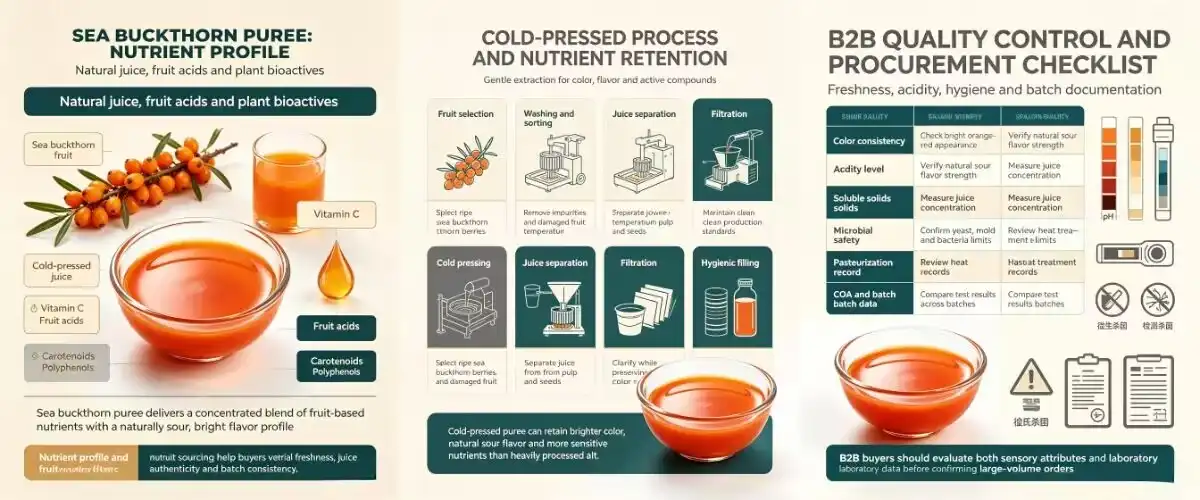
Sea Buckthorn Puree is different from other natural ingredients because of how it is made and how many nutrients it has. Through a mechanical cold-pressing process, puree keeps the whole fruit structure, including the seeds, natural oils, and bioactive substances. This is different from clarified juice or concentrated extracts. This method of using whole fruits keeps the Omega-7 fatty acids, beta-carotene, lycopene, and a very high vitamin C level (more than 400 mg per 100g in premium batches). The process makes an opaque orange-yellow, thick liquid with a pH level usually between 2.5 and 3.5. This natural acidity is used to preserve drinks while also providing strong antioxidant benefits.
Distinguishing Sea Buckthorn Forms for Industrial Applications
Knowing the differences between puree, oil, juice, and powder forms can help you choose raw materials that will help you reach your production goals. The liquid form mixes water-soluble vitamins with fat-soluble nutrients in a way that naturally emulsifies them, so in many cases, extra emulsifiers are not needed. Separately extracted sea buckthorn oil has a high concentration of Omega-7 but no fibre or water-soluble vitamins. It looks better when the juice is clarified, but it loses the pulp oil and bioflavonoids that stay in the puree. Powder versions are easier to use, but when they are sprayed dry, they often lose volatile aromatics. Cold-pressed Sea Buckthorn Puree usually has the best sensory qualities and the most complete nutritional profile for functional beverage makers who want both high nutritional density and real flavour.
Nutritional Profile and Functional Properties
Sea Buckthorn Puree's nutritional structure solves several manufacturing problems at the same time. Specialised cold-chain processing keeps its vitamin C content stable, which makes it better than synthetic ascorbic acid in clean-label formulations. The natural mixing of pulp oil and juice makes a way for fat-soluble vitamins A, E, and K to be delivered in a mostly water-based matrix. This makes formulation chemistry easier for beverage uses. With a solid content of more than 12% and a total acid content of 2.0% to 5.0% measured as malic acid, this ingredient gives the food structure and tartness without using artificial acidulants. Because of these qualities, it works really well in immune-boosting functional drinks, nutritional liquid packs, and high-end yoghurt toppings that need to make nutrients bioavailable while also tasting great.
Critical Factors When Buying Sea Buckthorn Puree in Bulk
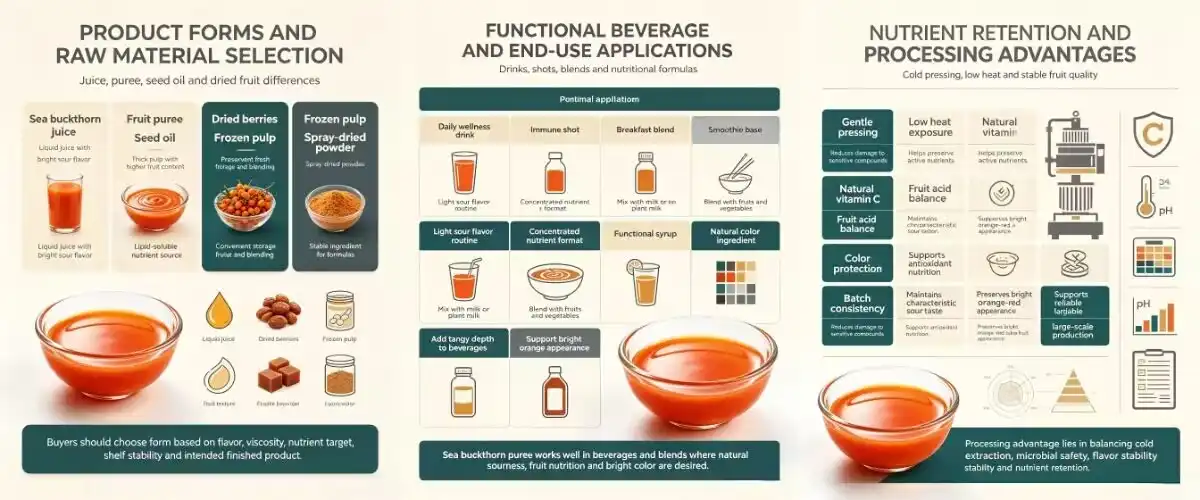
When buying in bulk, quality control goes far beyond just checking that the products meet basic requirements. Setting up strict evaluation procedures protects the consistency of your production, your brand's image, and your standing with regulators. It also lowers the supply chain risks that come with getting natural ingredients.
Essential Certifications and Compliance Standards
A lot of the time, the level of certification is what sets trustworthy providers apart from shady dealers. ISO 22000 certification shows that food safety is managed in a planned way, and HACCP compliance makes sure that key control points are watched over the whole production process. Halal and Kosher certifications make it easier for products that are aimed at a wide range of consumers to get into markets. In addition to these basic credentials, you should check to see if the suppliers offer batch-specific paperwork such as a Certificate of Analysis (COA), Material Safety Data Sheets (MSDS), and pesticide residue testing using LC-MS/MS for over 500 compounds.
Suppliers who follow EU and US organic standards usually have stricter limits on heavy metals like lead, arsenic, and mercury. This is important to keep in mind because Sea Buckthorn Puree tends to bio-accumulate in some growing areas. At Shaanxi Sigma Biotechnology, we have full quarantine reports for every production batch along with our ISO 9001, ISO 22000, and HACCP certifications. This makes sure that your purchase follows the strictest international rules and regulations.
Assessing Purity, Consistency, and Shelf Stability
Consistency from batch to batch is one of the hardest things about getting natural ingredients. Check sources to see if they can standardise bioactive markers by measuring vitamin C and isorhamnetin using HPLC across different production runs. For key specs, you should ask for past data that shows a coefficient of variation below 5%. It's also important to test for stability. Premium suppliers do accelerated shelf-life studies that show 90% of the vitamin C stays in the food for 12 months when stored properly. Physical stability is also important.
Centrifugal tests should show little oil-water separation, which means that the product is homogenised well and stays the same throughout its use life. A layer of oil that can be seen on top doesn't mean that the quality is going down, because it's concentrated pulp oil that is full of good fatty acids. If you understand these technical details, you won't mistake normal product features for quality problems.
Packaging Solutions and Logistics Considerations
During storage and shipping, packaging has a direct effect on how well the product stays intact. Aseptic cold-filling with nitrogen washing keeps heat-sensitive antioxidants from breaking down and increases shelf life without adding chemicals. For medium- to high-volume users, drum packaging (usually 200L to 220L) works best, while tote containers (1000L) save money on logistics for large-scale operations. Check to see if the materials used for packaging are safe for food and if the suppliers offer temperature monitoring during shipping.
We keep a safety stock of 10–20 tonnes of normal goods on hand so that we can deliver within 5–7 working days and avoid production delays that throw off schedules. Our global logistics network gives you a choice of sending methods, such as sea freight, air transport, or fast courier. We also help with all the paperwork and customs clearance, which is especially helpful for companies that are doing business internationally for the first time.
Pricing and Supplier Comparison: Making Cost-Effective Decisions
When buying ingredients for a business, strategic pricing review looks at both short-term and long-term benefits, knowing that the cheapest price doesn't always mean the best overall cost of ownership.
Understanding Price Structure and Value Drivers
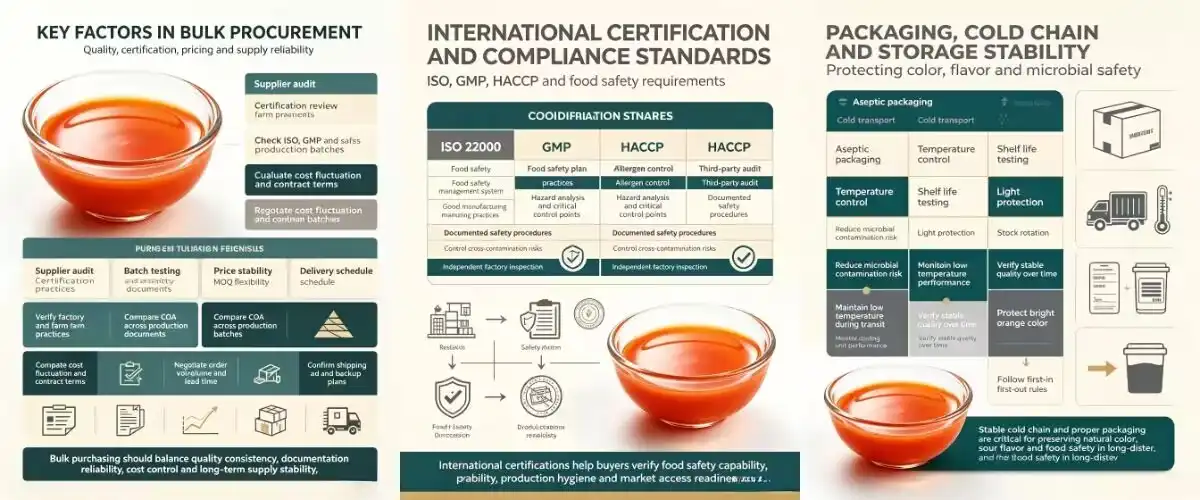
The price of Sea Buckthorn Puree takes into account more than just the cost of the raw materials. Cold-pressing technology needs more advanced tools than other extraction methods because it keeps nutrients that are damaged by heat. Organic certification usually comes with an extra 15–30% cost because farmers can't use as many chemicals and have to keep more records. The location of the berries also affects their price. Berries grown in well-known areas in Shaanxi province tend to be more consistent than those picked in the wild, which can be more variable.
Minimum order quantities vary a lot from one supplier to the next. Some need full container commitments, which can be hard for smaller businesses, while others have more flexible entry points. Prices should be looked at in light of the services that go with them. For example, do sellers offer free samples? Does it come with technical documentation? Does the price include help with customs and results from stability tests? These added-value factors have a big effect on your actual purchase cost.
Evaluating Supplier Credentials Beyond Price Points
When choosing a supplier, long-term dependability should be given more weight than short-term saves. Check the operating depth of possible partners by finding out if they have their own cultivation relationships or just buy and sell products from different sources. Suppliers whose integrated supply chains are fully integrated, from finding the raw materials to extracting them and checking the quality, usually give more consistent product specs. Read customer reviews and case studies that are relevant to your business.
For example, a supplier that is great for cosmetics may not know much about how to meet the pH buffering needs of beverages. Production capacity is also important. Working with suppliers who keep enough goods on hand will keep you from running out of stock, which can mess up your production schedules. Sigma has roots in some of the best places in Shaanxi to grow plants, and our modern extraction facilities let us control the whole value chain. This means we can offer higher purity at lower prices while still meeting the fast fulfilment needs of just-in-time production settings.
Procurement Process Best Practices for Bulk Sea Buckthorn Puree
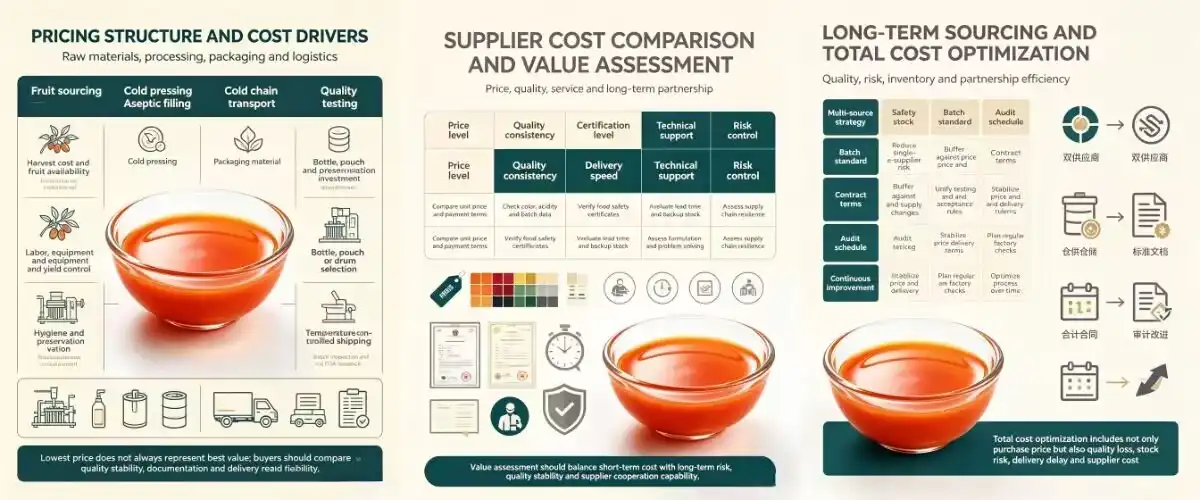
For the best procurement results, make sure that the technical specifications match the needs of your specific application while also building relationships with suppliers that go beyond simple transactions.
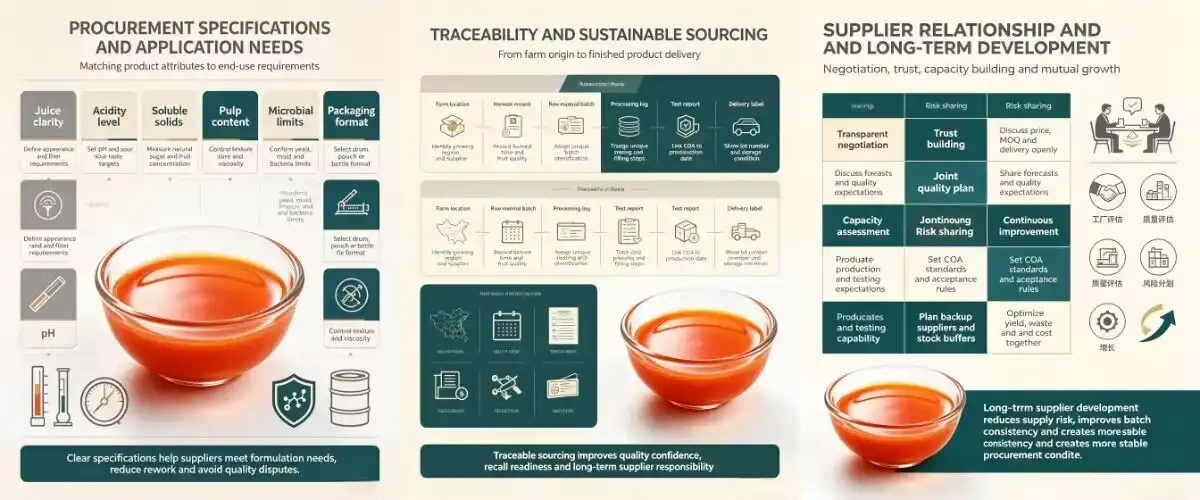
Matching Product Specifications to Application Needs
For different end-use applications, different specification priorities are needed. To keep the drink from settling, Sea Buckthorn Puree makers usually focus on the amount of vitamin C, how stable the pH is, and how the particles are spread out in size. Nutraceutical companies that fill capsules or sachets may focus on controlling viscosity and making sure the product is microbiologically pure to support longer shelf life at room temperature. Cosmetic formulators look for certain fatty acid patterns and the lack of microbes that could weaken the stability of the emulsion.
Make sure suppliers understand what you need for your application and ask for custom testing that addresses your specific concerns. Can the provider change the amounts of Brix? Do they offer spray-drying if you need to change powder to something else? Is it possible to get unique packing that fits your filling equipment? Suppliers who offer ODM/OEM can change the extraction ratios, particle sizes, and package forms of a standard ingredient, turning it into a custom solution that makes formulating easier and speeds up time-to-market.
Emphasizing Traceability and Sustainable Sourcing
Modern consumers and regulatory bodies want more information about where ingredients come from and how they are made. Check to see if sellers can provide complete traceability from cultivation to processing, including proof of where the food came from, records of when it was harvested, and timestamps for processing. Sustainable sourcing practices not only help businesses follow the rules, but they also lower the risks that come with running out of resources and hurting the environment.
Find out about possible suppliers' farming relationships. For example, do they teach growers how to gather crops in a way that doesn't harm the environment? Are areas used for farming checked for contaminated soil? How are the waste products of processing handled? These factors affect both consumer choice and government approval more and more. This is especially true in EU markets where farm-to-bottle transparency is now the norm. Our streamlined supply chain makes sure that full paperwork is kept at every stage of production. This supports your brand's environmental goals and makes sure that it follows all the rules in many different foreign markets.
Strategic Negotiation and Partnership Development
Getting good prices is only one part of effective business-to-business procurement. Another part is building partnerships that deliver long-term value. During the first talks, don't just talk about unit costs; also talk about payment terms, delivery schedules, the ability to change the minimum order, and the availability of technical support. Set up clear return policies and quality arbitration procedures to protect against failures to meet specifications. Talk about your supplier's ability to grow with you—can they handle more orders as your product becomes more popular?
Will they agree to price plans that last more than one year and keep your costs stable? When you add these things to your deals with suppliers, they become strategic partners who care about your success. We have ways to talk to us 24 hours a day, seven days a week, free sample programs, and a 12-month quality guarantee that lasts after the transaction is over. This way, you can be sure that you will get ongoing help during product development, government approval, and market launch.
Conclusion
To successfully find bulk Sea Buckthorn Puree, you need to find a balance between technical requirements, the supplier's abilities, and the possibility of forming a strategic partnership. You can lower quality risks and get an ingredient that makes your goods stand out in a crowded market by focusing on certifications, batch consistency, and clear source practices. When you evaluate suppliers based on their full range of services, from building partnerships to providing technical support, you can be sure that you're building relationships that will grow with your business and not just meeting your immediate procurement needs. The points talked about here will help your purchasing team make smart choices that will improve both the performance of the product and its overall cost of ownership in the ever-changing natural ingredient market.
FAQ
How should I store bulk sea buckthorn puree to maximize shelf life?
To keep the vitamin C and stop microbes from growing, store Sea Buckthorn Puree in containers with lids at temperatures between 2 and 8°C (refrigerated). When stored correctly, with nitrogen cleaning and aseptic packing, high-quality puree can keep 90% of its bioactive properties for 12 to 24 months. Temperature changes and light contact can speed up the oxidation of substances that are sensitive.
What's the difference between sea buckthorn puree and sea buckthorn oil?
Puree has all the parts of a fruit, like juice, pulp, and naturally mixed oils. It has both water-soluble vitamins (C and B-complex) and fat-soluble vitamins (Omega-7 and vitamin E). Sea Buckthorn Oil comes from berries or seeds and has a lot of fatty acids. It doesn't have any fibre, vitamin C, or the natural emulsification that makes making drinks easier. Which option you choose will rely on whether your application values complete diet or high-fat content.
Can sea buckthorn puree be used directly in dairy products given its high acidity?
If added improperly, the Sea Buckthorn Puree pH range of 2.5 to 3.5 could make dairy proteins less stable. For dairy applications to work, they usually use buffering agents or certain addition sequences that slowly add puree after the protein networks have stabilised. Many yoghurt makers add puree after the yoghurt has been fermented, as a topping or swirl, instead of during the fermentation process. This keeps the flavour and nutritional benefits while avoiding texture problems.
Partner with a Trusted Sea Buckthorn Puree Manufacturer
Shaanxi Sigma Biotechnology offers high-quality Sea Buckthorn Puree with a range of certifications, strict quality control, and customer-focused service that is suited to the needs of businesses that buy from each other. Our streamlined supply chain blends Shaanxi's excellent plant resources with cutting-edge cold-pressing technology. This makes sure that every batch of goods has the same amount of vitamin C and that no nutrients are lost during whole-fruit processing. With 10–20 tonnes of safety stock and shipping times of 5–7 days, we can avoid supply problems that throw off production plans.
Our team offers free samples, full technical documentation (including COA and quarantine reports), and flexible OEM/ODM customisation that includes labelling needs, packaging formats, and extraction specifications. As a dependable supplier, we can make sure that your purchases are in line with your quality standards and market positioning, whether you're making functional drinks, nutraceuticals or makeup. You can email our team at sarah@sxsigma.com to ask for product specs, stability data, and sample testing that shows how much we care about your success.
References
1. Zeb, A. (2004). Chemical and nutritional constituents of sea buckthorn juice. Pakistan Journal of Nutrition, 3(2), 99-106.
2. Yang, B., & Kallio, H. P. (2002). Effects of harvesting time on triacylglycerols and glycerophospholipids of sea buckthorn berries. Journal of Food Composition and Analysis, 15(2), 143-157.
3. Rousi, A. (1971). The genus Hippophae L.: A taxonomic study. Annales Botanici Fennici, 8, 177-227.
4. Beveridge, T., Li, T. S., Oomah, B. D., & Smith, A. (1999). Sea buckthorn products: manufacture and composition. Journal of Agricultural and Food Chemistry, 47(9), 3480-3488.
5. Eccleston, C., Baoru, Y., Tahvonen, R., Kallio, H., Rimbach, G. H., & Minihane, A. M. (2002). Effects of an antioxidant-rich juice in healthy human subjects. Nutrition Research, 22(9), 1011-1022.
6. Kallio, H., Yang, B., & Peippo, P. (2002). Effects of different origins and harvesting time on vitamin C, tocopherols, and tocotrienols in sea buckthorn berries. Journal of Agricultural and Food Chemistry, 50(21), 6136-6142.


_1776308368292.webp)