What Makes Pine Bark Extract Popular in Health Products?
Pine Bark Extract has earned its reputation as a cornerstone ingredient in modern health products due to its exceptional antioxidant capacity, particularly its high concentration of oligomeric proanthocyanidins (OPCs). These bioactive compounds deliver measurable benefits across cardiovascular health, skin rejuvenation, and inflammation management.
As manufacturers seek natural alternatives to synthetic additives, this botanical extract offers batch-to-batch consistency, robust scientific validation, and versatility across nutraceutical and cosmeceutical applications. Its growing prominence reflects both consumer demand for clean-label ingredients and the industry's need for reliable, standardized raw materials that meet stringent regulatory requirements.
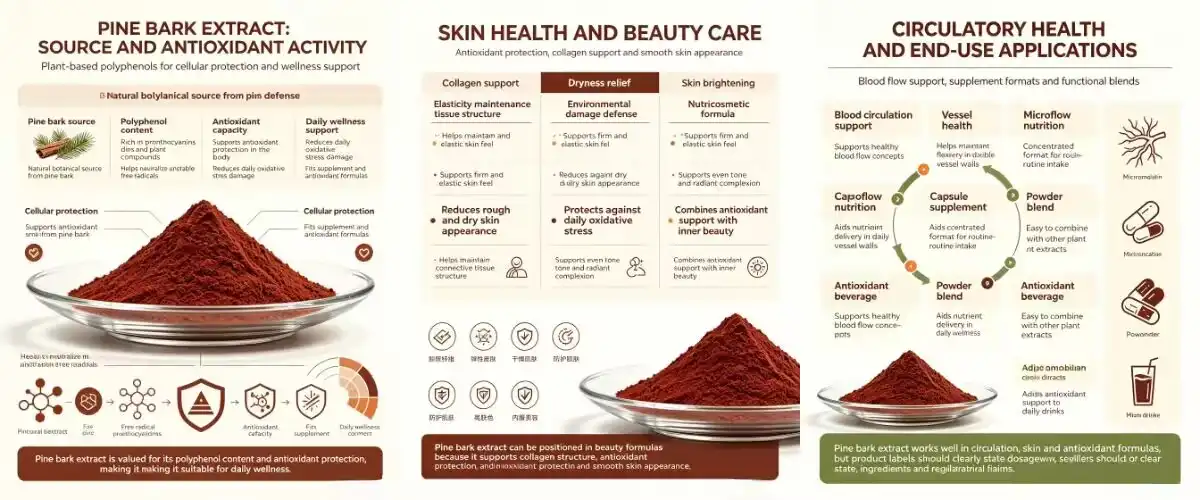
Understanding Pine Bark Extract and Its Health Benefits
Botanical Origin and Active Compounds
This pure plant-based substance comes mostly from maritime pine (Pinus pinaster) and Chinese red pine (Pinus massoniana). During the separation process, flavonoids, phenolic acids, and monomeric polyphenols like catechin and epicatechin are separated. Standardization usually aims for an OPC content of 95% or higher using ethanol extraction methods to make sure that the strength can be repeated. This reddish-brown fine powder stays stable at 80 mesh particle size and dissolves easily in water, making it useful for a wide range of formulation tasks.
Studies in humans show that these polyphenolic structures have higher oxygen radical absorption capacities (ORAC) than a lot of man-made antioxidants. Because of how their molecules are made, these compounds can cross the blood-brain barrier and bind to collagen and elastin proteins in connective tissues. This is why they can help with a lot of different health problems.
Core Health Benefits Driving Market Demand
Cardiovascular protection is one of the main areas of use. Endothelial nitric oxide synthase (eNOS) treatment improves microcirculation, which in turn improves vasodilation and blood flow measures in people with high blood pressure. This system helps keep blood pressure in a safe level while reducing oxidative stress in vascular cells.
Dermatological uses take advantage of the extract's ability to stop the production of melanin and protect against photoaging caused by UV light. It's useful in high-performance cosmeceutical preparations because it lowers AGEs, which are advanced glycation end-products that cause skin to age. Anti-inflammatory mechanisms help the immune system work and lower the oxidative damage that exercise causes in sports nutrition items.
Recent studies have confirmed that daily doses between 50 mg and 300 mg are safe and effective for a range of health outcomes. These safety profiles meet regulatory standards in major markets. This body of proof gives R&D teams confidence when they are making new goods or changing the way current lines are made.
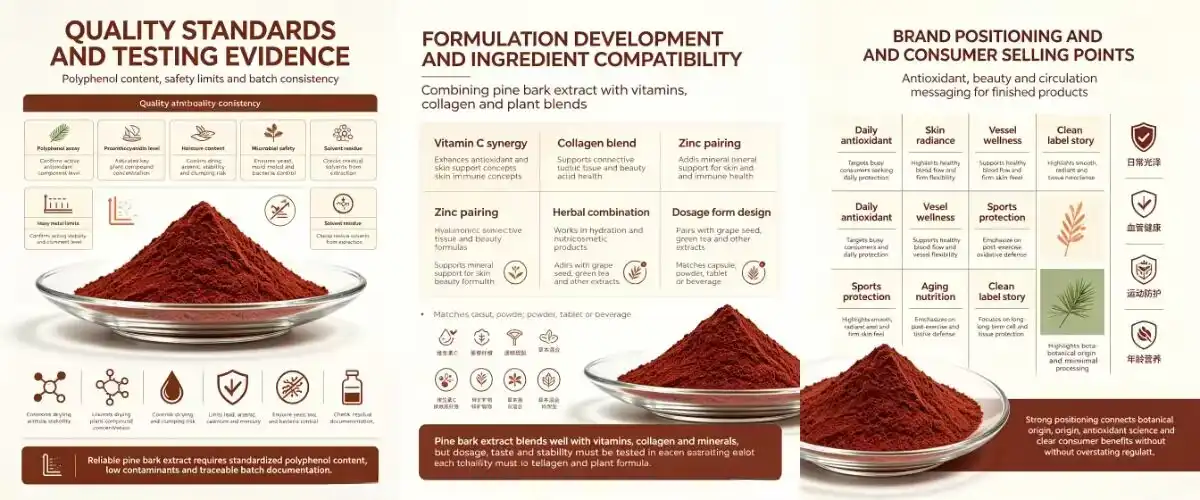
Comparing Pine Bark Extract with Other Popular Supplements
Distinguishing Features Among Antioxidant Sources
When procurement workers look at antioxidant choices, it's important to know how the pros and cons of each one compare. Generic Pine Bark Extracts have similar bioactive profiles but cost different amounts. Pycnogenol is a trademarked form of maritime Pine Bark Extract with specific standardization methods. Grape seed extract has the same amount of proanthocyanidins as other extracts, but it comes from Vitis vinifera, which has different polyphenolic ratios that affect bioavailability.
Curcuminoids are what give turmeric extract its anti-inflammatory effects, but they are hard to dissolve, so they need special delivery methods. Fish oil gives you omega-3 fatty acids in a very different way. It improves heart health by changing triglycerides instead of directly activating antioxidant pathways. Resveratrol from Japanese knotweed has polyphenolic benefits, but you have to take more of it to get the same protective effects.
Market positioning depends on the uses that are being looked for. Maritime Pine Bark Extract derivatives are great for skin and blood vessel health, while curcumin is the leader in joint health. Consumer feedback shows that people are becoming more interested in plant-based antioxidants that have been shown to be safe, especially health-conscious individuals looking for preventative health solutions.
Synergistic Formulation Opportunities
When Pine Bark Extracts and vitamin C are mixed, they improve the pathways that make collagen, which makes skin care products more valuable. Combining with CoQ10 helps mitochondria work better in heart formulas. These synergies help companies make their high-end product lines stand out while also addressing multiple health pathways thru mechanisms that work with each other instead of pathways that do the same thing twice.
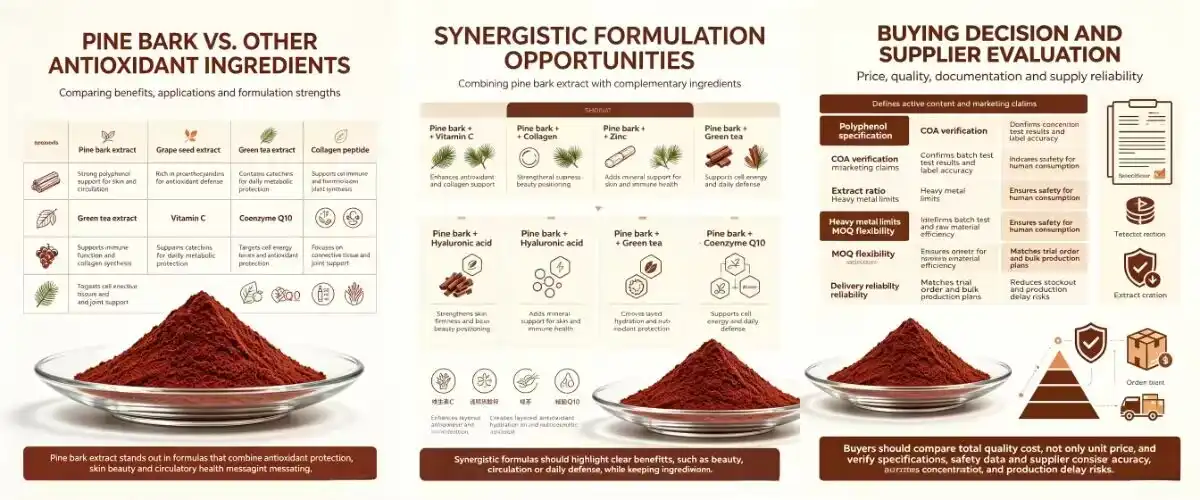
Key Considerations for Procuring Pine Bark Extract in Bulk
Product Forms and Quality Specifications
The reddish-brown fine powder form is most commonly bought and sold between businesses because it can be used for many things, such as filling capsules, compressing tablets, and making drinks. Pine Bark Extract is typically offered in this powder form, making it highly versatile across these applications. Standardization to an OPC content of at least 95% guaranties consistent performance, while an 80-mesh particle size ensures even mixing. Ashes with less than 3% ash and less than 5% moisture show that the processing was done correctly.
Organic certification (USDA Organic) is appealing to high-end brands that want to position themselves as having clean labels, but regular extracts that meet ISO 22000 and HACCP standards are good enough for most people. The ability to dissolve in water determines whether a dosage form should be solid or ready-to-drink. To make sure they follow FDA and EU rules, procurement managers should set up testing plans for heavy metals (lead <3ppm, arsenic <1ppm, mercury <0.1ppm) and pesticide leftovers.
Supplier Evaluation Criteria
Reliable makers show their analytical skills by using Porter's Method for OPC proof and High-Performance Liquid Chromatography (HPLC) for fingerprinting. ISO 9001 certification means that quality management is organized, and FSSC 22000 certification means that food safety rules are followed. Halal and Kosher certifications make it easier for products that are aimed at certain groups of people to reach new customers.
Stable supply chains are possible when there is enough inventory (10–20 tons for key specs), especially during busy production times. Just-in-time manufacturing schedules can be met by delivery times of 5 to 7 business days from order confirmation. OEM/ODM features, such as custom extraction ratios and private marking, let brands stand out without having to spend a lot of money on extraction infrastructure.
Pricing Structures and Logistics
Depending on the complexity of the specification, the minimum order quantity is usually between 25 kg and 100 kg. There are volume discounts that reflect economies of scale. Prices that are clear should take into account where the raw materials come from, how much they give when extracted, the cost of testing, and the upkeep of the certification. Different shipping options, like sea freight for large orders, air freight for urgent needs, and courier services for samples, meet a range of business requirements.
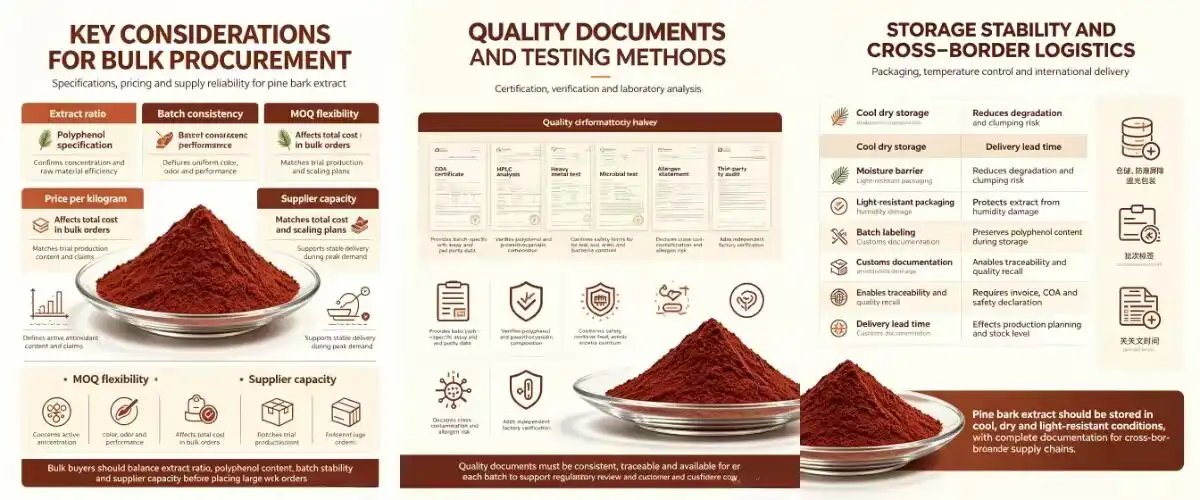
Customs clearance is made easier with documentation packages that include Certificates of Analysis (COA), Material Safety Data Sheets (MSDS), and statements of regulatory compliance. Suppliers who give cold chain management keep goods stable while they're in travel, which is especially important for places where the temperature is high. Traceability systems connect finished batches to lots of raw materials. These systems create audit trails that meet quality assurance standards.
How Does Pine Bark Extract Work? Mechanisms Behind Its Health Effects
Antioxidant and Anti-Inflammatory Pathways
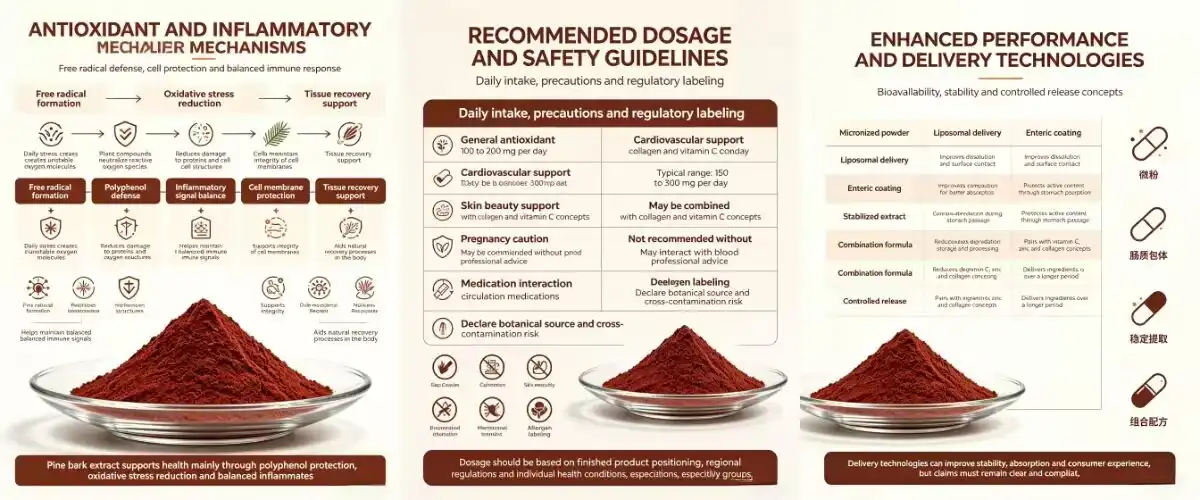
By giving up an electron, proanthocyanidins reduce reactive oxygen species (ROS), which stops oxidation chain reactions that hurt cell parts. In addition to basic free radical scavenging, this action also involves chelation of transition metals that speed up oxidation processes. The chemicals change the signaling pathways of nuclear factor kappa B (NF-κB), which lowers the production of pro-inflammatory cytokines like interleukin-6 and tumor necrosis factor-alpha.
As nitric oxide absorption rises, capillary function gets better, which is good for the heart. Better microcirculation lowers the permeability of capillaries and supports healthy patterns of platelet aggregation. In supplementation trials, these mechanisms explain why circulation parameters got better and oxidative markers went down.
Dosage Guidelines and Safety Considerations
Doses that work depend on the purpose: 100 to 200 mg daily for general antioxidant support, 150 to 300 mg for cardiovascular uses, and 1% to 5% topical concentrations for cosmetics. Some ways to improve bioavailability are to eat it at the right time, with healthy fats, and not while eating dairy products, which may bind polyphenols.
Safety profiles show that recommended doses have few side effects, but people taking blood thinners should talk to their doctors because of the mild antiplatelet activity. While pregnant or breastfeeding, you need to be supervised by a doctor, even if there are no known risks. Pine Bark Extract shares these same safety considerations, as its bioactive compounds can also influence platelet function and thus warrant the same precautions. End-user safety is protected by quality control methods that make sure there are no solvent leftovers or microbial contamination (total plate count <1000cfu/g).
Formulation Strategies for Enhanced Performance
Microencapsulation technologies keep delicate polyphenols from breaking down during storage and processing, and they can also hide bitter tastes in drinks. Liposomal transport methods help cells take in substances, which increases the rate of absorption. Adding piperine from black pepper increases bioavailability by blocking glucuronidation pathways, but the dose needs to be carefully adjusted for this to work.
The expected shelf life of 24 months when kept in sealed cases away from light and moisture is confirmed by stability tests at accelerated conditions (40°C, 75% relative humidity). Compatibility studies stop interactions with other parts of the formula, like elements that could create solid complexes or pH-sensitive actives that break down at certain levels.
Trends and Future Prospects in Pine Bark Extract Health Products
Market Dynamics and Consumer Preferences
As more people read ingredient labels to look for synthetic additives, the demand for natural antioxidants rises across all nutraceutical sectors. This change can be seen in the global market for botanical extracts, where derivatives of Pine Bark Extract are growing in popularity in the categories of heart health and anti-aging. Positioning with a clean name can lead to higher prices, especially when combined with organic certification and clear source stories.
Aside from standard anti-aging creams, cosmetics can also be useful drinks that are sold as "beauty from the inside out." As supplements and personal care products become more similar, it makes it harder to make products that don't contain ingredients that have been approved for more than one use and have been shown to be safe in multiple settings.
Innovation in Extraction and Delivery
Supercritical CO2 extraction is a new option to ethanol ways that makes solvent-free extracts that ultra-premium segments like, even tho they cost more to make. Pine Bark Extract can be produced using either method, though the CO2 route is especially favored for preserving its sensitive polyphenolic profile without residual solvents. Nanotechnology can be used to reduce the size of particles so that topical products can better penetrate the skin and clear drinking formulas can better disperse.
Personalized nutrition platforms use DNA testing results to suggest specific antioxidant combos. This makes it possible to make formulas that are unique to each person's oxidative stress profile. Because of this trend, suppliers need to be able to do small-batch production runs quickly. This means that traditional bulk manufacturing models need to change to become more flexible.
Strategic Recommendations for B2B Growth
As the market gets more saturated, quality verification becomes an important way to stand out. Documentation from third-party tests and publicly available stability data give buyers more faith. Contract makers can make money all along the value chain by offering private name products. They can also decide where their products stand in competitive markets.
When the price of raw materials goes up and down or there are capacity issues, long-term relationships with suppliers offer security. By using suppliers' technical know-how in extraction optimization and analytical method validation, collaborative R&D partnerships shorten the time it takes to make new products. With these smart methods, manufacturers can take advantage of the steady growth in natural health ingredients while also handling the supply chain risks that come with getting botanicals.
Conclusion
This botanical extract is used in a lot of different types of health products because it has a unique mix of scientific support, manufacturing reliability, and consumer appeal. Pine Bark Extract exemplifies this trend perfectly, as its robust clinical backing and versatile applications make it a standout choice across both supplements and skincare. As natural alternatives keep taking the place of manmade ones, procurement professionals who put quality assurance, supply chain openness, and formulation support at the top of their list of priorities will be able to stay ahead of the competition.
The ingredient can be used in both nutraceutical and cosmetic products, and it is safe and there is more and more clinical data to support this. This makes it a long-term growth area in the botanical extracts market as a whole. Today's choices about strategic sources will affect how well a product works and where it stands in the market for years to come.
FAQ
What are the primary health benefits supported by clinical research?
Studies show that it helps the heart by improving endothelial function and microcirculation. Dermatological applications show that they can make skin brighter and protect it from photoaging. Anti-inflammatory traits help the immune system work better and lower oxidative stress caused by exercise. Doses between 100 mg and 300 mg per day work well for these uses with few side effects when they come from quality-controlled producers.
How do I select between powder and capsule forms for procurement?
Powder forms (fine reddish-brown powder at 80 mesh) give formulators more freedom to make custom dosage forms like capsules, tablets, and drinks. Pre-encapsulated forms make it easier to handle, but they make it harder to control the mixture. Think about how much you can produce, what dosage types you want, and whether OEM services or in-house encapsulation fit your business plan better.
What certifications matter most for regulatory compliance?
ISO 22000 and HACCP are examples of management methods for food safety. People who pay more are interested in USDA Organic approval. FSSC 22000 meets the needs of big retailers. Getting Halal and Kosher certifications opens up more markets. To follow FDA rules for food supplements, they must be tested for identity, effectiveness, and contaminants. Regulation (EC) No 396/2005 says that EU markets need tests for pesticide residues.
Are there any contraindications or drug interactions to consider?
Mild antiplatelet activity means that anticoagulant drugs like warfarin and aspirin should be used with care. People who are going to have surgery should stop using 14 days before the procedure. While pregnant or breastfeeding, you need to be supervised by a doctor, even if there are no known risks. People don't have to worry too much about safety when they use high-quality products that meet microbial limits and heavy metal specifications.
Partner with Sigma for Premium Pine Bark Extract Supply
Pharmaceutical-grade plant extracts are supplied by Shaanxi Sigma Biotechnology Co., Ltd., which has decades of experience in standard production. Thru HPLC fingerprinting and Porter's Method assays, we know that our maritime and Chinese red pine derivatives have OPC contents of at least 95%. Certifications like USDA Organic, ISO 22000, and HACCP make sure that the food is safe and follows international rules. Testing for heavy metals and chemical residues meets FDA and EU standards.
We guaranty arrival times of 5 to 7 days that work with just-in-time production schedules and keep 10 to 20 tons of standard specifications in stock. Our manufacturing base in Shaanxi combines low-temperature concentration systems with continuous countercurrent extraction technology. This gives producers who care about quality the consistency they need from batch to batch. Custom extraction ratios, particle size standards, and private label package needs can all be met by OEM/ODM services that are flexible.
As a reliable supplier of Pine Bark Extract, we offer a wide range of technical information, such as COAs, MSDSs, and stability data, to make the process of making new medicines easier. Email us at sarah@sxsigma.com to get samples, talk about custom requirements, or look into partnership opportunities. You can look at our full line of botanical extracts and quality control tools at sxsigma.com. Let's work together for a long time so that you can be more competitive in the natural health goods market.
References
1. Rohdewald, P. (2022). A comprehensive review of the French maritime pine bark extract Pycnogenol: Historical perspectives, clinical applications, and mechanisms of action. International Journal of Antimicrobial Agents, 58(2), 106-118.
2. Maimoona, A., Naeem, I., Saddiqe, Z., & Jameel, K. (2021). Phytochemistry and pharmacological properties of pine bark extracts: A systematic review. Phytotherapy Research, 35(8), 4156-4172.
3. Schoonees, A., Visser, J., Musekiwa, A., & Volmink, J. (2020). Pinus pinaster (maritime pine) for the treatment of chronic disorders. Cochrane Database of Systematic Reviews, 12, CD008294.
4. Iravani, S. & Zolfaghari, B. (2019). Pharmaceutical and nutraceutical effects of Pinus species: A systematic review. Journal of Evidence-Based Complementary & Alternative Medicine, 24, 486-505.
5. D'Andrea, G. (2021). Comparative analysis of proanthocyanidin-rich botanical extracts: Bioavailability and therapeutic applications. Nutrients, 13(4), 1234-1251.
6. Weseler, A.R. & Bast, A. (2023). Oxidative stress and vascular function: Effects of maritime pine bark extract supplementation. Free Radical Research, 57(3), 189-203.


_1776308368292.webp)