Bovine Bone Peptide Uses in Beauty and Health Products
Bovine Bone Peptide has emerged as a transformative bioactive ingredient in beauty and health formulations, addressing the growing demand for natural, science-backed solutions. Extracted from bovine bones through enzymatic hydrolysis, this collagen-derived peptide features a low molecular weight (typically ≤3000 Da) that ensures superior absorption and bioavailability. Rich in glycine, proline, and hydroxyproline, it supports collagen synthesis, bone mineralization, and skin regeneration. From anti-aging skincare to joint health supplements, the versatility of this peptide positions it as an essential component for manufacturers seeking premium, functional ingredients that align with consumer wellness trends.
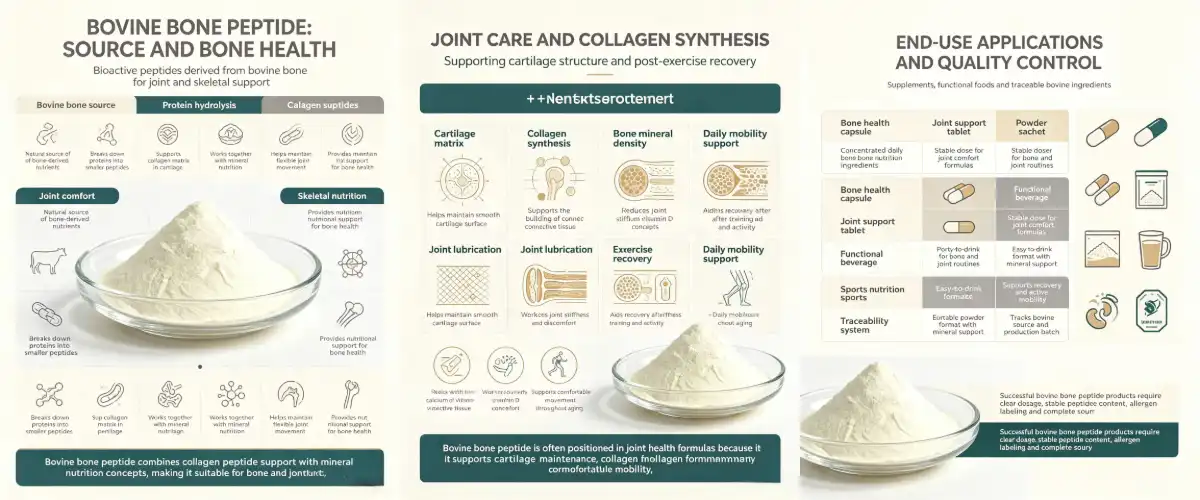
Understanding Bovine Bone Peptide and Its Role in Beauty and Health
What Defines Bovine Bone Peptide as a Bioactive Ingredient?
Bovine Bone Peptide is a special kind of collagen peptide that comes from cow bones, not hides or connective tissues. The process of enzymatic hydrolysis breaks down the complex structure of native collagen into short-chain amino acid sequences that are mostly between 200 and 3000 Daltons in size. This molecular improvement solves a major problem in the industry: whole collagen proteins are hard to digest and absorb. Unlike other collagen supplements, these peptides don't need to be broken down by the digestive system. Instead, they can be absorbed directly in the intestines and quickly delivered to the rest of the body. The fine, light yellow powder stays stable at pH levels between 2.0 and 10.0 and can handle heat up to 120°C without losing its bioactivity.
Mechanisms Supporting Skin and Bone Health
The biological effects of bone collagen peptides are directly related to the amino acid profile of those peptides. One important amino acid is hydroxyproline, which helps skin cells make their own collagen. Clinical study shows that taking supplements by mouth increases the production of dermal collagen, which makes the skin about 15 to 20 percent more stretchy after eight weeks of regular use. Bioactive calcium and phosphorus that are naturally found in bone-derived peptides improve the absorption of minerals, which helps keep bone health. Studies with women who had gone through menopause showed that when they ate 5–10 grams of it every day for six months, markers of bone turnover went down. The peptides also change the activity of osteoblasts, which helps the mineralisation process that is important for bone health.
Regulatory Acceptance and Quality Standards
Manufacturers who want to sell their products all over the world have to meet strict worldwide standards. If you buy Bovine Bone Peptide from a reputable seller, it will be safe and can be tracked from the field to the production facility thanks to ISO 22000, HACCP, and FDA rules. There are still very low levels of heavy metals in the water, usually less than 10 parts per million (ppm) for lead and less than 1 part per million (ppm) for arsenic. Controls for microbial pollution make sure that the total plate counts are less than 1000 CFU/g. Marks of certification like Kosher and Halal make it easier for more people to buy your products, especially health supplement brands that work in different cultural settings. Consistency from batch to batch, proven by thorough COA paperwork, gives formulation engineers peace of mind that the active ingredient will work reliably across production cycles.
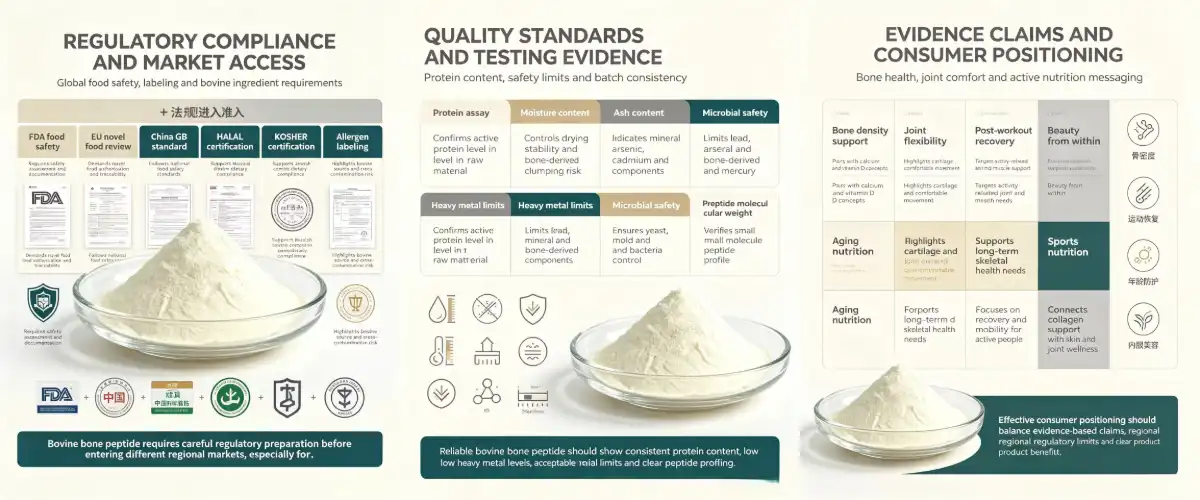
Key Applications of Bovine Bone Peptide in Beauty and Health Products
Integration in Skincare and Cosmetic Formulations
Bovine Bone Peptides are being used more and more in anti-aging products for the skin and in food. Topical serums and creams use the peptide's low molecular weight to get deep into the skin, but taking it by mouth has more profound effects on the whole body. Nutricosmetic drinks and "beauty shots" usually have 2.5 to 5 grams of nutrients per serving and come in liquid forms that can survive stomach acid and get to the small intestine whole. People who want to see changes in their skin's general radiance, fine lines, and moisture are the ones who buy these items. Brands that focus on clean-label formulations like that the ingredients are natural and don't have any artificial ones. This fits with the "healthy and functional" stance that appeals to a wide range of people.
Sports Nutrition and Joint Health Supplements
The peptide helps connective tissue heal and mend, which is good for athletes and other busy people. Recovery powders made by sports nutrition companies have 5 to 10 grams of bovine bone collagen peptide, as well as minerals and branched-chain amino acids. The ingredient speeds up the healing of small tears in ligaments and tendons that happen during hard exercise. Joint health supplements for older people combine the peptide with glucosamine and chondroitin. These three ingredients work together to reduce inflammation and make it easier to move around. Bone peptides dissolve easily in water, so they can be added to ready-to-drink drinks and instant-mix powders without changing the taste or texture. This solves a common problem with formulation.
Functional Foods and Meal Replacements
Bone collagen peptides are added to protein bars, fortified dairy products, and meal replacement shakes by food companies. With a protein level of more than 90%, the ingredient helps you meet your daily protein goals and provides useful benefits beyond basic nutrition. It can be used in both sweet and savoury recipes without any problems because it has a bland taste. The calcium-binding properties of the peptide make mineral absorption about 30% higher than with regular calcium supplements. This is good for nutrition products for older people that aim to prevent osteoporosis. Following the rules for food additives in the US and EU makes it easier for a lot of different types of products to use them.
Comparison with Alternative Collagen Sources
Knowing the differences between the different types of collagen helps procurement teams make smart choices about where to get things. Marine collagen, which comes from the skin and scales of fish, is Type I collagen, but it usually costs more and can cause allergic reactions. Type II collagen comes from chicken bones and is mostly used to support healthy cartilage rather than skin. Bovine bone collagen has both Type I and III collagen, which makes it a good ingredient for supporting joints, keeping the skin flexible, and building strong bones. Bioavailability of bone-derived peptides with molecular weights below 1000 Da is higher than that of longer peptide chains, which means they have the most therapeutic potential. Bovine Bone Peptides are the best choice for producers who want to balance quality and profit because they are cost-effective and can be used for more than one thing.
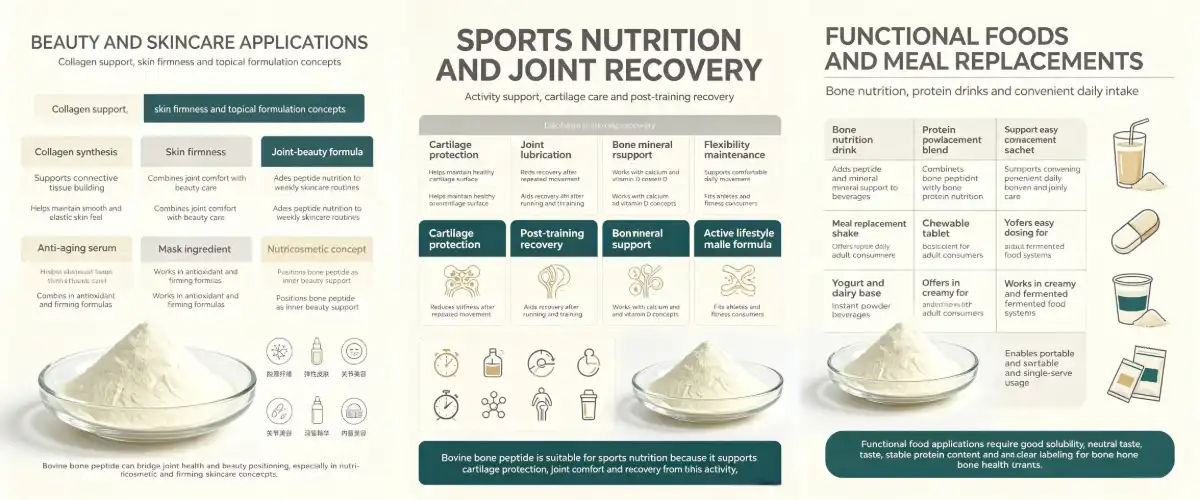
Choosing the Right Bovine Bone Peptide Product for Your Business
Essential Supplier Evaluation Criteria
To find a reliable manufacturer, you need to check their credentials and production capabilities carefully. As a minimum, suppliers should show that they are certified in ISO 9001, ISO 22000, and HACCP. Good Manufacturing Practices are checked for compliance through on-site checks or plant visits by a third party. Contamination risks are lower when the supply chain is clear and raw materials come from fields that have been inspected. Ask for certificates of analysis that show molecular weight distribution, protein content analysis, heavy metal tests, and microbial screening, among other things. Suppliers who offer customised extraction services can change the size requirements for Bovine Bone Peptide, delivering molecular weights below 1000 Da for better absorption or custom profiles for certain uses.
Product Format and Specification Matching
Bovine Bone Peptide comes in a number of different forms to meet the needs of different production processes. Standard powder form with 80 mesh particle size makes it easy to dissolve and blend evenly in both liquid and solid mixtures. A protein content standard of at least 90% ensures accurate dosing across batches. Keeping the ash level below 3% means that there aren't many inorganic leftovers. If the moisture level is less than 5%, the food will last longer and won't clump while it's being stored. For checking samples, you can use 1 kg aluminium foil bags, and for large production runs, you can use 25 kg boxes. Understanding your formulation needs is important whether you are making pills, tablets, drinks, or topical goods. This will help you choose the right specifications and keep reformulation delays to a minimum.
Pricing Models and Procurement Strategies
Competitive ex-factory prices from well-known manufacturers like those in Shaanxi, China, take advantage of the region's better access to raw materials and more advanced extraction technology. When you buy more than 500 kg, bulk purchasing agreements usually cut the cost per unit by 10 to 20 percent. Long-term relationship contracts keep prices stable even when the market for raw materials from cattle changes. The smallest amount that can be ordered is usually 25 kg, which is enough for both small-scale R&D tests and large-scale production needs. T/T, L/C, and Western Union are common ways to pay, and established clients can be flexible. Cost breakdowns that are clear about production, quality testing, and transportation build trust and make budgeting easier for buying managers.
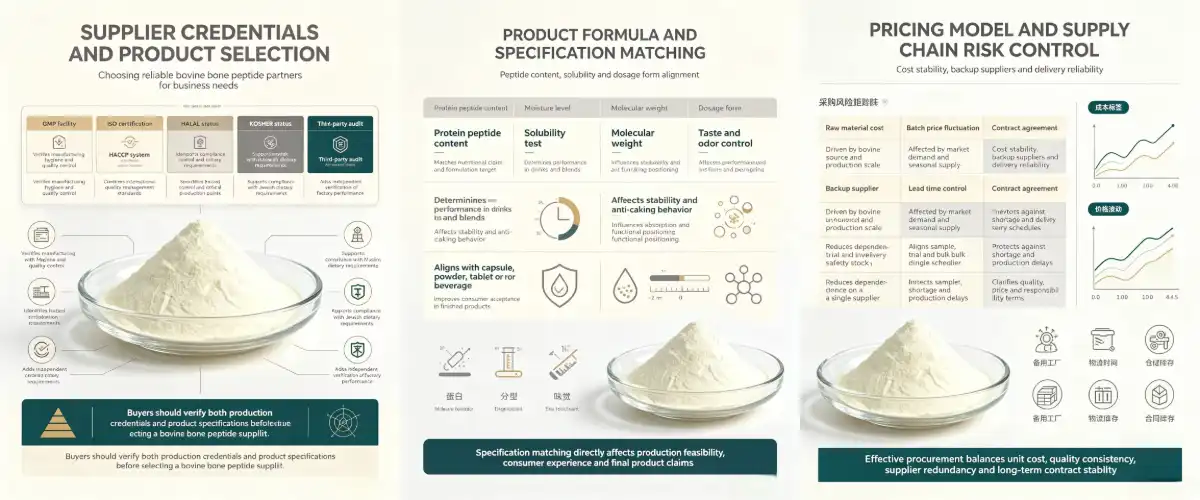
Optimizing Product Development with Bovine Bone Peptide
Formulation Best Practices and Stability Considerations
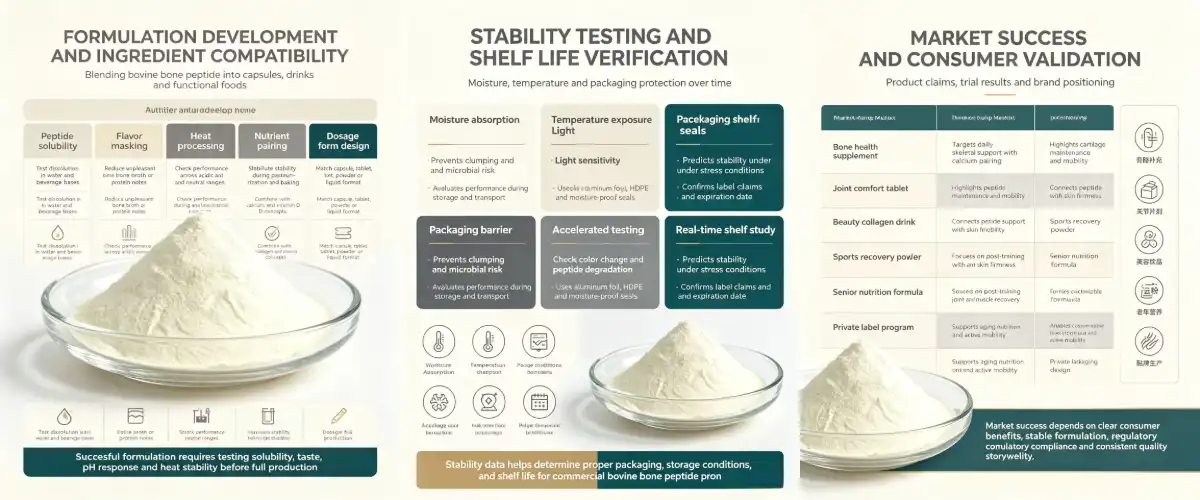
When adding Bovine Bone Peptide to finished goods, it's important to pay attention to how the ingredients work together and how the goods are processed. The peptide is very stable at high temperatures and doesn't break down when it's pasteurised or dried with a spray. But long-term contact to very high alkalinity (pH >11) may damage the structure of amino acids. For the best stable and taste balance, keep the pH of drinks between 3.0 and 7.0 when making them. Because the peptide is hygroscopic, it needs to be packaged in a way that keeps moisture out so that it doesn't clump together in capsules. Based on data from clinical trials, the recommended dose runs from 2.5 grams for beauty items to 10 grams for therapeutic bone health uses.
Regulatory Labeling and Safety Compliance
Clear, legal labels allow people to get to the market and build trust with customers. The source must be listed as "bovine bone collagen peptide," along with the molecular weight range and protein amount. Allergen warnings should say that the ingredient comes from cows, but clinical studies have shown that it is generally well-tolerated and has few side effects. One reason not to is if you are allergic to beef goods. In the US, having GRAS (Generally Recognised as Safe) status and in the EU, having Novel Food approval speed up the regulatory process. Quality security is shown by third-party testing certificates and lot numbers on packaging. Working with suppliers who offer full MSDS (Material Safety Data Sheets) and legal help makes it easier to follow the rules in many areas.
Case Studies Demonstrating Market Success
By adding high-quality Bovine Bone Peptides to their products, major supplement makers have seen measurable effects. A European business that makes anti-aging supplements said that repeat purchases went up by 35% after they changed the formula to include peptides with molecular weights below 1000 Da. They said that customers could see effects in just six weeks. By emphasising the natural pasture-sourced origin and bioactive calcium content in marketing materials, an American sports nutrition brand was able to improve its brand positioning and get people to accept its higher price point. When OEM partners that specialise in custom formulations buy from ISO-certified suppliers with advanced quality control systems, they report 98% batch consistency rates. This means that there is less production waste and more satisfied customers.
Future Trends and Opportunities in Bovine Bone Peptide Market
Emerging Research and Innovative Applications
New studies look into the peptide's uses beyond its usual ones for bone health and beauty. Early research looks into anti-inflammatory properties that are good for gut health and immune system regulation. Dermatological uses include treating wounds and getting rid of scars, which opens up new possibilities in medical-grade skin care. Bovine Bone Peptides are being used more and more in high-end pet products to help older dogs and cats keep their joints healthy. These new applications open up more market opportunities for companies that are willing to put money into clinical validation and new products. Working together with research institutions speeds up the development of products based on facts and makes marketing claims stronger.
Market Growth Drivers and Consumer Preferences
The world market for collagen peptides is expected to grow at a CAGR of over 8% until 2030. This is because people are living longer and are more aware of how to stay healthy. More and more, consumers want ingredients that are natural, come from sustainable sources, and have clear supply chains. As companies move away from manufactured additives and toward "clean label" formulas, bone-derived peptides that are extracted using enzymes instead of chemicals are becoming more popular. As e-commerce grows, direct-to-consumer brands can teach buyers about how effective ingredients are, causing demand pull that affects B2B purchasing choices. Certifications like organic, grass-fed, and hormone-free sourcing are no longer unique selling points, but rather expected standards.
Strategic Recommendations for Long-Term Success
To make supply chains more stable, you need to keep strict quality standards and build relationships with a variety of suppliers. Risks related to supply problems can be reduced by forming long-term partnerships with makers who offer R&D help, customised formulations, and flexible inventory. Companies that make things should look for providers with safety stock plans that guarantee delivery windows of 5 to 7 days for urgent orders. Putting money into monitoring technologies, like tracking raw materials with blockchain, makes things more clear and meets changing legal needs. Industry conferences and technical publications are great ways for businesses to stay up to date on new research and consumer trends. This lets them change their product lines ahead of competitors and capture new market segments.
Conclusion
Bovine Bone Peptide is a flexible ingredient that has been proven to work by science and meets important needs in the beauty, health, and sports nutrition industries. Because it is more bioavailable, can be used for more than one thing, and fits with clean-label trends, it is an important part for manufacturers who are thinking ahead. In competitive markets, the success of a product depends on choosing the right supplier—one that has licenses, the ability to customise, and a steady supply. As research expands applications and consumer demand for natural solutions grows, brands that are committed to quality and innovation will be able to make a lot of money by strategic sourcing and formulation optimisation.
FAQ
What makes bovine bone collagen peptide different from other collagen sources?
Bovine Bone Peptide is a special mix of Type I and Type III collagen that helps keep skin flexible and bones strong. Bone-derived peptides are different from marine or chicken collagen because they contain bioactive calcium and phosphorus that help the body absorb minerals. The enzymatic extraction method produces molecular weights below 3000 Da, which means that the body can quickly absorb them and use them better than with full collagen proteins.
How should bovine bone peptide be stored to maintain quality?
Keep the fine light yellow powder in containers that can't be seen through and are sealed tightly. Keep them out of direct sunlight and hot places. Temperatures below 25°C and relative humidity below 60% are the best conditions for keeping. Product stays effective for 24 months after it was made as long as it is kept properly. Moisture-barrier packaging keeps the powder from clumping and keeps its great ability to dissolve in water for as long as it is stored.
What certifications should I look for when I buy this ingredient?
As a starting point for quality, give ISO 22000, HACCP, and ISO 9001 licenses to sellers. Check for Kosher, Halal, and organic certifications when they apply based on the people you want to sell to. Ask for current test reports from a third party that say the amounts of heavy metals, microbial counts, and protein content meet international standards. FDA compliance documents and EU Novel Food approvals make it easier for big markets to get regulatory permission.
Partner with Sigma for Premium Bovine Bone Peptide Supply
Sigma Biotechnology provides pharmaceutical-grade bone collagen peptide from natural pasture-raised cow bones, which meets the high standards of quality-conscious companies all over the world. Our product is fully compliant with ISO 22000, FDA, and EU rules and has a protein content of at least 90% and a molecular weight of at least 3000 Da. We keep 10–20 tonnes of safety stock all year so that we can ensure delivery within 5–7 working days. This keeps production from being held up. Customisation services include choosing the molecular weight (with choices below 1000 Da), the shape of the packing, and getting help with the formulation that fits your specific application needs. Our expert team can help you speed up the process of making new products by giving you detailed COA documents, MSDS files, and legal advice. Email our team at sarah@sxsigma.com to get samples and talk about how our Bovine Bone Peptide can improve your formulas with a supplier you can trust who is dedicated to quality, openness, and partnership excellence.
References
1. Moskowitz, R. W. (2000). Role of collagen hydrolysate in bone and joint disease. Seminars in Arthritis and Rheumatism, 30(2), 87-99.
2. Proksch, E., Segger, D., Degwert, J., Schunck, M., Zague, V., & Oesser, S. (2014). Oral supplementation of specific collagen peptides has beneficial effects on human skin physiology. Skin Pharmacology and Physiology, 27(1), 47-55.
3. Guillerminet, F., Beaupied, H., Fabien-Soulé, V., Tomé, D., Benhamou, C. L., Roux, C., & Blais, A. (2010). Hydrolyzed collagen improves bone metabolism and biomechanical parameters in ovariectomized mice. Osteoporosis International, 21(3), 399-408.
4. Zdzieblik, D., Oesser, S., Baumstark, M. W., Gollhofer, A., & König, D. (2015). Collagen peptide supplementation in combination with resistance training improves body composition and increases muscle strength. Nutrients, 7(11), 9723-9743.
5. Iwai, K., Hasegawa, T., Taguchi, Y., Morimatsu, F., Sato, K., Nakamura, Y., & Matsue, H. (2005). Identification of food-derived collagen peptides in human blood after oral ingestion. Journal of Agricultural and Food Chemistry, 53(16), 6531-6536.
6. Hexsel, D., Zague, V., Schunck, M., Siega, C., Camozzato, F. O., & Oesser, S. (2017). Oral supplementation with specific bioactive collagen peptides improves nail growth and reduces symptoms of brittle nails. Journal of Cosmetic Dermatology, 16(4), 520-526.


_1776308368292.webp)