What is mullein powder used for?
Mullein powder comes from the leaves of Verbascum thapsus, a plant that has been used for a long time to help people with breathing problems. Wall-Broken Mullein Raw Powder is an improved way to process plants. It breaks down plant cell walls mechanically at low temperatures, which makes it much easier for active substances like saponins, flavonoids, and mucilage to be released and absorbed. This form is especially useful in health supplements, functional drinks, and formulation-based products that need to meet customer requests for natural respiratory support solutions and need to make sure that the ingredients are always bioavailable and pure.
Understanding Mullein Powder and Its Herbal Properties
What Defines Wall-Broken Mullein Powder?
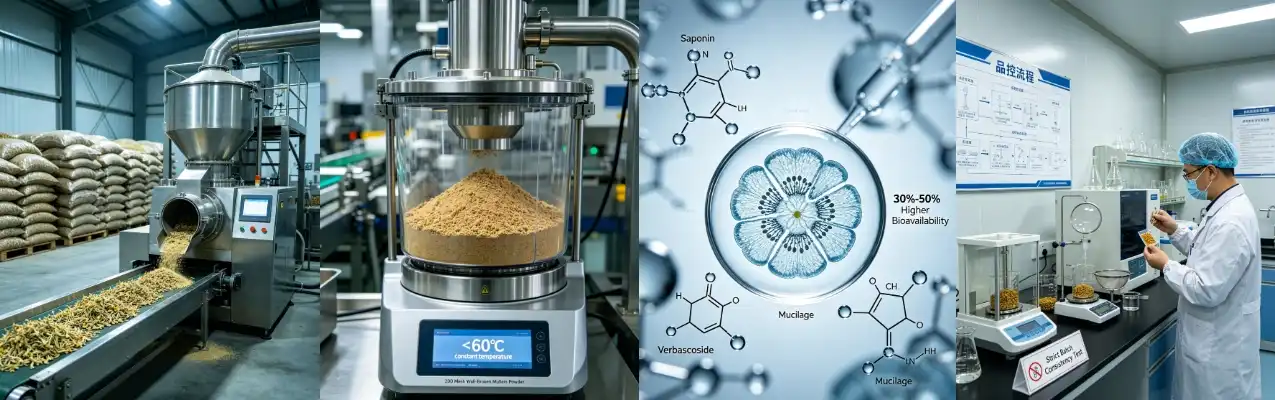
In wall-breaking technology, plant cells are manually crushed at controlled low temperatures, usually below 60°C, to keep bioactive chemicals that are sensitive to heat from breaking down. When you grind herbs the old-fashioned way, you get regular plant powders. But when you break down cell walls, you release nutrients that were stuck inside hard cellulose structures. This makes more surface area available for enzymes to work on during digestion and extraction, which directly leads to better bioavailability when added to functional foods or supplement formulas.
Our Wall-Broken Mullein Raw Powder is a light brown fine powder that has been ground to a mesh size of 200. This makes sure that it dissolves quickly and evenly in liquids. The drying loss stays very low at ≤5%, and the ash level stays at ≤4%, which means there isn't much mineral pollution. These factors show strict manufacturing controls that are needed for scaling in business production settings where consistency from batch to batch cannot be compromised.
Key Bioactive Compounds in Mullein
The healing properties of mullein come from a complex group of phytochemicals. Saponins help with expectoration by making mucus come out of the nose and throat and clearing out the airways. Flavonoids, like verbascoside, are very good at fighting free radicals and inflammation, which helps control how the immune system reacts in lung tissues. Mucilage is a type of polysaccharide that protects mucus membranes and eases the irritability that comes with coughing and throat pain.
Comparative extraction studies show that breaking down the walls of these chemicals makes them 30-50% easier to remove compared to standard dried powders. This improvement is very important when making goods that need to meet certain levels of active ingredients for standardization or effectiveness promises. This better ingredient performance helps companies that are making clinical-grade supplements or health goods for export, as it meets both legal requirements and customer standards of quality.
Traditional Mullein Versus Wall-Broken Processing
Traditional mullein preparations use whole or roughly ground dried leaves. The bioactive substances released depend on how long the leaves are steeped, how hot they are, and how they are mixed when they are eaten. Traditional forms work well for tea-based uses, but they are hard to make today because they don't meet the needs for exact dosing, long-term shelf stability, or cooperation with automatic equipment for encapsulation or tableting.
Wall-broken processing gets around these problems by breaking down cellular walls ahead of time. This lets makers make sure that all of their production runs have the same amount of potency. The small particle size (200 mesh) makes it easier for the mixture to run through dose equipment and makes it more uniform in blends, which lowers the risk of separation during bulk handling. Because of these technical benefits, wall-broken powder is the best choice for B2B clients who run high-volume production lines where process stability affects both operations efficiency and product quality.
Primary Uses and Benefits of Broken Mullein Powder
Respiratory Health Applications
Mullein has a reputation as a tonic for the lungs because it has been used for hundreds of years in plant medicine systems in Europe and North America. The expectorant features of the herb help thin and get rid of mucus from clogged lungs, which is helpful during times of the year when breathing problems are common. Mucilage soothes sore tissues, and saponin chemicals help this action happen by increasing the production of lubricant in the bronchial airways.
Clinical studies show that mullein can help with effective coughs, light bronchial congestion, and sore throats. These uses are great for the current market trend toward natural options to cough suppressants and expectorants made from chemicals. Product makers making respiratory support mixes can use Wall-Broken Mullein Raw Powder's many functions by mixing it with plants that work well together, such as elderberry, echinacea, or thyme, to make formulas that meet customers' needs for all-around winter health support.
The wall-broken form improves these effects by making bioactive release better. The pre-disrupted cellular structure makes sure that active chemicals reach therapeutic amounts more quickly and reliably than with other preparations, whether they are made into capsules, tablets, or ready-to-drink drinks. This means happier customers and more brand loyalty, which are important for supplement companies that work in stores with a lot of competition.
Anti-Inflammatory and Antimicrobial Properties
In addition to helping the lungs, mullein has a lot of other uses in medicine because it reduces inflammation and kills germs. Verbascoside is a phenolic glycoside that is found in large amounts in mullein leaves. It stops inflammatory agents like cyclooxygenase enzymes and pro-inflammatory cytokines from working. This action shows that mullein could be used in formulas for joint pain relief, digestive health, and skin health, making it more useful than just for breathing.
Studies on antimicrobials show that mullein products can kill a number of different types of bacteria, such as Staphylococcus aureus and Escherichia coli. These results are still preliminary and need to be confirmed by more research before they can be used to make treatment claims. However, they do open up some interesting options for using natural preservatives in cosmetics or topical health products. Mullein powder may be useful for manufacturers who are looking for clean-label preservatives because it helps keep products stable and gives them a "natural" image that consumers like.
The anti-inflammatory nature fits in with current health trends that stress managing systemic inflammation. Mullein can be mixed with turmeric, ginger, or boswellia by people who make healing mixes that are meant to help with a lot of different health problems. The wall-broken processing makes sure that the anti-inflammatory chemical is delivered consistently across production batches. This is very important for brands that make structure-function claims that need to be backed up by ingredient standardization.
Formulation Considerations and Usage Guidance
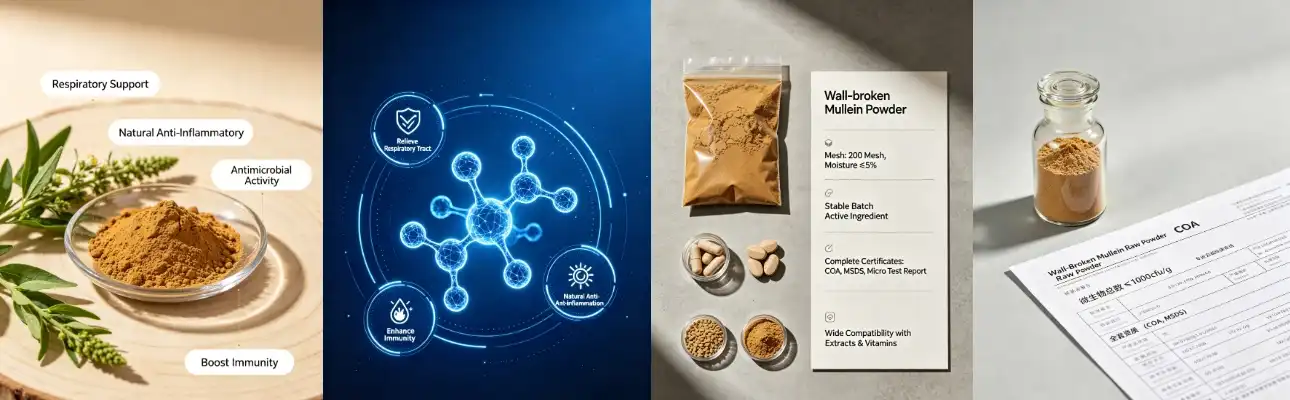
To effectively incorporate wall-broken mullein powder, you need to pay attention to a number of recipe factors. For respiratory support, the suggested inclusion rate is between 300 and 600 mg per serve. However, the exact dose should depend on how the finished product is positioned and the type of people who will be buying it. The powder mixes easily with other plant extracts, vitamins, and minerals, so it can be used in complete recipes with many ingredients.
Because of how easily they dissolve, encapsulation or pill compression are better than adding them directly to a beverage. However, microencapsulation or liposomal delivery systems can improve how well they mix with water. The small particle size (200 mesh) makes it easy to make tablets with the right binding agents, and the low moisture content (≤5%) means there aren't many worries about stability when stored in a controlled environment.
Simple but necessary storage rules say that sealed packages kept in cool, dry places out of direct sunlight will keep the active ingredients intact for the normal amount of time they are on the shelf. Our products come with a lot of technical information, like Certificates of Analysis (COA), Material Safety Data Sheets (MSDS), and microbial testing reports that confirm total plate counts of ≤1000 cfu/g. This makes it easy to integrate our products into quality management systems and follow the rules in different countries.
Comparing Different Forms and Quality Factors of Mullein Powder
Product Format Comparison
Mullein gets to customers through a number of different delivery methods, each of which has its own benefits based on the situation and the preferences of the target market. Preparations of tea are still popular in traditional health circles because they offer a familiar cultural way to drink. However, teas have different dosage instructions and take time to prepare, which makes them less appealing to people who like things to be easy and makes it harder for makers to standardize their products.
The popular supplement market is growing because capsules and tablets are easy to use, come in exact doses, and stay stable for longer on the shelf. Wall-Broken Mullein Raw Powder works great in these forms because it consistently delivers active ingredient profiles that allow for true claims of potency. Encapsulated mullein works well with daily supplement plans and other health products, so the market is expanded beyond plant fans to include more health-conscious people.
New forms like functional drinks, protein powders, and snack bars offer growth possibilities for people who make new products. The small particles and bland flavor of wall-broken mullein make it easy to use in these situations without changing the way it tastes. Brands that want to stand out by telling stories about plant ingredients can use mullein's traditional respiratory health placement while meeting modern standards for taste and ease of use.
Quality Indicators and Certification Standards
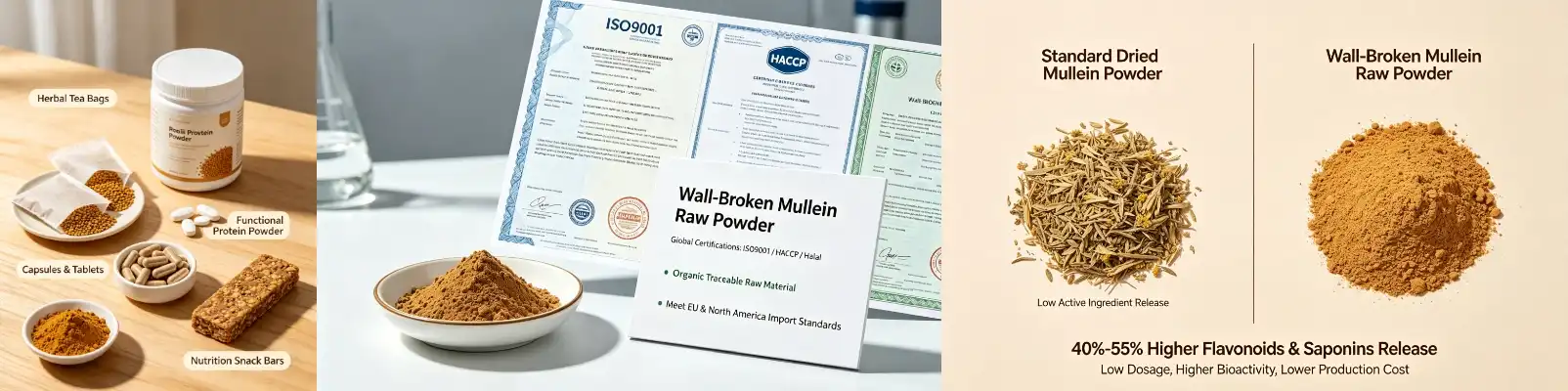
When purchasing workers look at mullein providers, they need to look at more than just price when judging quality. Organic approval gives farmers peace of mind about farming methods, chemical residue limits, and the ability to track products through the supply chain. Even though it's not required for all uses, organic rank has a bigger impact on what people buy and lets businesses use premium positioning tactics that bring in more money.
Our Wall-Broken Mullein Raw Powder has ISO 9001, HACCP, and Halal certifications, which show that it meets quality management and food safety standards that are known all over the world. These qualifications make it easier for manufacturers that want to sell their products in more than one market to get governmental approval. This is especially helpful when dealing with the strict import rules in Europe and North America. Halal certification creates possibilities in growing Muslim-majority areas where following religious dietary rules is a key factor in buying decisions.
Sand and minerals getting into field-harvested plants is a problem that keeps happening in the business. Poor mullein powders often have small particles that change the quality of the product, how it feels in the mouth, and maybe even how well the equipment works during production. We deal with this problem by using vibrational screening and air classification methods that get rid of impurities that can't be dissolved before the final grinding. This process consistency tells the difference between high-end suppliers and low-end ones, which protects the image of the brand and the trust of customers.
Wall-Broken Versus Standard Dried Powder
The preparation method has a big impact on how well an item works and how much it's worth. Standard dried mullein powder is made by grinding dried leaves in a normal way, which makes pieces that still have their cell structures intact. This structure works fine for standard tea preparations, but it makes bioactive extraction less effective and adds formulation problems like bad flowability, uneven dissolution rates, and higher minimum effective doses.
With wall-broken processing, these problems can be turned into competitive benefits. We keep heat-sensitive chemicals safe while making them much easier to get to by breaking down cell walls with controlled mechanical forces at low temperatures. Comparative dissolution tests show that within 30 minutes, wall-broken mullein releases 40-55% more flavonoids and saponins than regular powder when the same extraction conditions are used.
This difference in function has a direct effect on the economics of the end product. Manufacturers can get the desired strength with less raw material, which lowers the cost of creation while keeping the product's effectiveness. On the other hand, the same amount of raw material can produce more bioactivity, which supports stronger product claims and supports price tactics that charge more. These value offers are especially appealing to buyers who care about quality and put ingredient performance above small price differences at the start.
How to Source and Procure Mullein Powder for Business Needs?
Identifying Qualified Suppliers
For mullein buying to work, suppliers must first be carefully evaluated based on a number of factors. Check more than just the business license to see if the company has quality management systems (ISO 9001), food safety programs (HACCP, ISO 22000), and product-specific approvals that meet the needs of the target market. Suppliers who keep their third-party certifications up to date show that they are committed to the ideas of structured quality control and ongoing growth.
The dependability of the supply chain is directly affected by how much can be produced and how well it can be managed. Suppliers who keep enough safety stock (10-20 tons for high-volume products) can quickly fill pressing orders and protect against changes in the harvest season. Wall-Broken Mullein Raw Powder is something we keep a lot of on hand, so we can send normal order quantities within 5 to 7 business days. This flexibility is very important when putting out new goods or dealing with sudden spikes in demand.
The ability to provide technical help is what sets real production partners apart from commodity sellers. Leading suppliers offer help with formulation, customization services for specific particle size needs or extract concentration goals, and full paperwork to support regulatory applications. These value-added services shorten the time it takes to develop a new product and lower the risks that come with formulating it. They are especially helpful for companies that are entering new product categories or geographic markets.
Understanding Bulk Pricing and Terms
Mullein prices depend on many things, such as the variability of crop yields, the difficulty of processing, licensing fees, and the way supply and demand work in the market at the time. Wall-broken powder costs 20-35% more than regular dried powder. This is because it is more bioavailable, has better quality control, and uses new processing technology. Buyers should look at the overall cost of the mixture instead of the prices of individual ingredients. This is because better performance often means better value, even if the per-kilogram rates are higher.
Most of the time, volume agreements open up tiered price structures. Annual contracts that promise minimum buy amounts give suppliers a way to predict their income, which lets them offer better prices, set up production schedules more efficiently, and handle their inventory in a way that suits their needs. These agreements are good for both parties; they lower the costs for buyers to buy things and make it easier for sellers to plan their capacity and buy raw materials.
Fees depend on how long you've been working with the seller and how much you buy. When doing business for the first time, especially when shipping goods internationally, you may need to pay in advance or get a letter of credit. Customers who have been with you for a while and have paid you in the past can discuss net-30 or net-60 terms, which makes managing working capital easier. Knowing these business rules and building relationships with suppliers through regular contact and on-time payments gives you a long-term edge over your competitors by giving you special treatment when supply is limited.
International Shipping and Compliance Considerations
To buy mullein across borders, you have to figure out how to deal with complicated rules that are very different in each country. United States imports must follow FDA rules about plant ingredients. These rules include making sure that the right paperwork is filled out to prove the identity of the ingredients, checking for contaminants like heavy metals, pesticides, and microbes, and following labeling rules. Novel Food rules and national requirements that affect botanical supplement formulas add to the limits that come with European markets.
Suppliers with a lot of experience offer complete export paperwork, which speeds up the customs clearance process. Commercial invoices, packing lists, certificates of origin, phytosanitary certificates, and testing reports relevant to the product are all important papers. Our logistics team works with freight forwarders and customs dealers to make sure that all necessary paperwork is sent in on time. This keeps clearance times to a minimum, which keeps production plans on track and keeps carrying costs low.
Choosing the right shipping method means weighing the costs of different options against the need for on-time arrival and product security. Sea freight is a cheap way to send big amounts of goods at flexible times, while air freight is best for urgent restocking needs or first trial orders. We offer both options, as well as fast courier services for trial shipments. This gives buyers the freedom to choose the best method for their needs and lets them access the global market, no matter how big their order is or how quickly they need it delivered.
Practical Guidelines and Industry Insights for B2B Buyers
Dosage Recommendations and Formulation Strategies
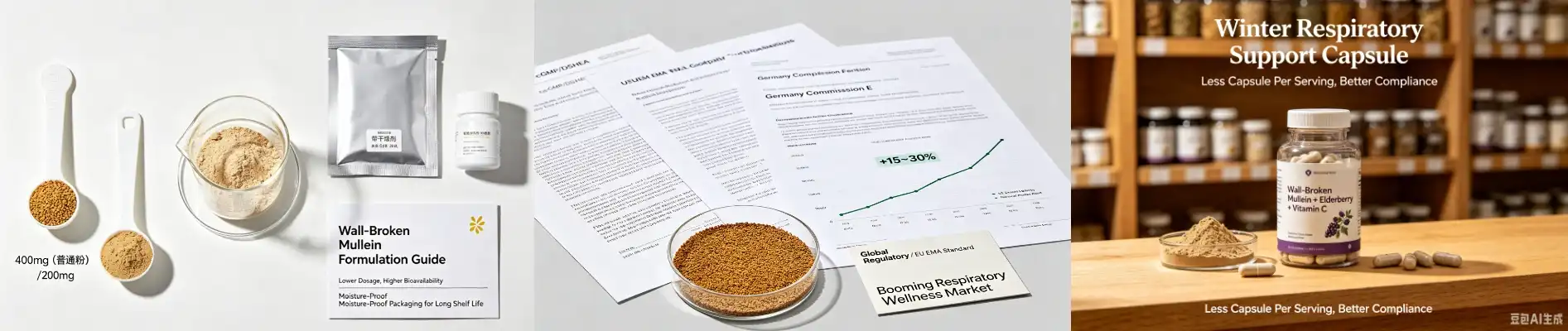
When used as the main ingredient to help the lungs, mullein supplements usually work best at 300 to 600 mg per dose. These amounts are in line with how the herb has been used in the past and what doctors have seen in patients. However, the best dose may be different depending on the quality of the herb, how it was processed, and the preparation. Because wall-broken powder is more bioavailable, formulators can think about lower dosing ranges while still meeting effectiveness standards.
Formulas that combine ingredients can have synergistic benefits and help with overall health. When you mix Wall-Broken Mullein Raw Powder with other respiratory-friendly plants, you get specific seasonal support products that work on more than one mechanism route. On the other hand, adding mullein to broad-spectrum immune or inflammation management recipes makes the product stand out by telling a unique story about the ingredient and providing useful benefits that support the overall product positioning.
Stability testing is still very important for developing new products, especially for forms that are likely to get wet or change temperature. Because mullein absorbs water, it needs to be packaged in a way that keeps it from moving around. For example, aluminum foil bags with nitrogen draining or HDPE bottles with desiccant packets keep the ingredients intact during the shelf life. Accelerated stable methods (40°C/75% RH for three months) predict real-time performance and find possible ways for products to break down before they go on sale.
Regulatory Landscape and Market Trends
The Dietary Supplement Health and Education Act (DSHEA) in the United States allows mullein to be used in finished products as long as they are made according to current good manufacturing practices (cGMP) and the labeling follows structure-function claim standards. Manufacturers can't say that their products fix diseases, but they can say things like "supports respiratory health" or "soothes throat comfort" to describe how their products affect normal body parts. These rules about regulations affect how marketers talk about products and make sure that claims are true by using examples from past uses or new clinical data.
European markets have more complicated needs because of different rules in each member state and laws that are meant to work together. There are no limits on mullein itself, but each country has different rules about final products and what ingredients can be used. The herbal papers from the European Medicines Agency (EMA) and the Commission E in Germany give reliable information on traditional uses and safety standards. They also provide guidelines for making sure that products made in Europe meet the needs of European customers.
A study of the market shows that the respiratory wellness categories have been growing steadily. This growth has been sped up by recent global health events that have made people more aware of the need for immunity and respiratory support. Natural goods are seen as more expensive in these categories, and people are willing to pay 15-30% more for choices made from plants than for manufactured alternatives. As a result of this trend, there are huge chances for brands that use real plant ingredients, like mullein, in interesting ways that appeal to customers' interests in natural health.
Case Applications in Commercial Product Development
Successful launches of mullein products show that different market groups can benefit from different strategies. One local supplement company made a respiratory support pill with Wall-Broken Mullein Raw Powder, elderberry extract, and vitamin C. They marketed it as a complete answer for winter health. The wall-broken processing made it possible for a smaller serving size of two capsules, which made it easier for people to follow the directions compared to traditional recipes that needed four capsule doses.
As part of its plan to target the growing "wellness shots" market, a functional beverage company added mullein powder to a herbal tea mix. The neutral flavor profile and small particle size made it possible to integrate without affecting taste, and the claims about lung comfort were supported. Placement in natural grocery stores and specialty health stores that were in line with how the target customer shops, encouraging trial and repeat purchases through honest stories about the ingredients.
Partnerships for contract manufacturing are another effective way to put ideas into action. A well-known supplement seller that didn't have its own production facilities worked with our team to make special wall-broken mullein capsules. We offered full total services, which included improving the formulation, testing for stability, managing certifications, and coordinating packing. This partnership allowed quick entry into the market (within six months) compared to the usual 12 to 18 months for building a plant on your own. This shows the strategic value of having skilled production partners.
Conclusion
Wall-Broken Mullein Raw Powder is a combination of old plant knowledge and new processing technology. It improves bioavailability and gives manufacturers benefits that are necessary to make supplements that compete in the market. Its lung support uses meet strong market demand and give formulators more freedom to make a wide range of product forms. Manufacturers who care about quality know that choosing the right ingredients isn't just about price; it's also about purity, consistency, certification compliance, and source trust. When you build relationships with reputable sellers who offer expert support, thorough paperwork, and quick shipping, procurement changes from a one-time transaction to a strategic partnership that supports long-term product success and market differentiation.
FAQ
Q1: What makes wall-broken mullein powder different from regular mullein?
A: Wall-breaking technology breaks down plant cell walls automatically at controlled low temperatures. This lets bioactive chemicals that are stuck inside cells escape. Compared to regular dried powder, this process makes the saponins, antioxidants, and mucilage 30-50% more bioavailable. Better absorption means better effectiveness at lower doses, which can lead to better formulation and maybe even bigger benefits for the customer. Regular mullein powder has cell walls that are still whole, which makes it harder to get compounds out during processing.
Q2: How should manufacturers store bulk mullein powder?
A: Wall-Broken Mullein Raw Powder that has been broken down along the walls should be kept in sealed containers in cool, dry places out of direct sunlight. Ideal conditions include temperatures below 25°C and relative humidity under 60%. The product's low moisture content (≤5%) provides inherent stability, though exposure to humid conditions can cause clumping and potential microbial growth. We recommend transferring bulk quantities into smaller working containers to minimize atmospheric exposure during repeated opening, while maintaining primary stock in original sealed packaging.
Q3: What certifications are essential for international mullein trade?
A: Core certifications include ISO 9001 (quality management), HACCP (food safety), and ISO 22000 (complete food safety management). Organic approval (USDA, EU, or similar) has a bigger impact on what people buy and lets companies charge more for their products. Religious food licenses, like Halal and Kosher, let you reach certain types of customers. GMP approval shows that production quality standards are met for pharmaceutical-grade uses or export to controlled markets. Our Wall-Broken Mullein Raw Powder is certified as ISO, HACCP, and Halal, which helps it meet the needs of a wide range of markets.
Q4: Can mullein powder be used in beverage applications?
A: Wall-broken mullein powder can be added to drinks, but the way it dissolves needs to be thought about. The small particles (200 mesh) can be mixed with liquids and work well in herbal tea mixes or ready-to-drink health shots. For beverages requiring complete clarity, special preparation including microencapsulation or filtration after steeping can be used. The neutral flavor profile minimizes taste impact, allowing formulation alongside complementary botanicals without dominating sensory attributes. Beverage developers should conduct small-scale trials evaluating dissolution behavior and stability under intended processing and storage conditions.
Partner with Sigma for Premium Wall-Broken Mullein Raw Powder
Sigma's skills as a Wall-Broken Mullein Raw Powder manufacturer solve the most important issues that supplement and functional food creators are facing right now. Our multi-stage vibrational purification process gets rid of the sand that gets into regular mullein sources. This makes sure that the quality is always the same, which protects your brand's image and customer trust. With standards like ISO 9001, HACCP, and Halal, we make it easier for you to follow the rules in global markets. We also keep a large store (10-20 tons of safety stock) to ensure reliable delivery within one week.
Beyond supplying premium raw materials, we offer flexible OEM/ODM services supporting custom extraction ratios, particle size specifications, and packaging solutions tailored to your unique positioning requirements. Our technical team provides comprehensive formulation support, stability testing guidance, and complete documentation (COA, MSDS, clinical references) streamlining your product development timeline. Contact our team at sarah@sxsigma.com to request samples, discuss your specific application requirements, or explore how our complete supply chain capabilities can strengthen your competitive position in the growing natural wellness market.
References
1. European Medicines Agency. (2018). Community Herbal Monograph on Verbascum thapsus L., folium. Committee on Herbal Medicinal Products.
2. Hoffmann, D. (2003). Medical Herbalism: The Science and Practice of Herbal Medicine. Healing Arts Press.
3. Turker, A. U., & Camper, N. D. (2002). Biological activity of common mullein, a medicinal plant. Journal of Ethnopharmacology, 82(2-3), 117-125.
4. World Health Organization. (1999). WHO Monographs on Selected Medicinal Plants, Volume 1. World Health Organization Press.
5. Chevallier, A. (2016). Encyclopedia of Herbal Medicine: 550 Herbs and Remedies for Common Ailments (3rd ed.). DK Publishing.
6. Sarrell, E. M., Cohen, H. A., & Kahan, E. (2003). Naturopathic treatment for ear pain in children. Pediatrics, 111(5), e574-e579.


_1776308368292.webp)