What is fucoxanthin extract good for
Fucoxanthin Extract Powder can help your metabolism work better, help you lose weight, protect your body from free radicals, and be used in useful formulations for food supplements and beauty products. This marine carotenoid comes from supercritical CO2 extraction of brown kelp. It is known for its thermogenic qualities, ability to speed up fat burning in white adipose tissue, and strong ability to remove free radicals. It works well with oil-based softgels because it is lipophilic, and microencapsulated types make it possible for it to dissolve in water and be used in drinks and enriched foods. It's especially useful for B2B buyers who want natural, non-GMO active ingredients that meet strict standards for safety and purity.
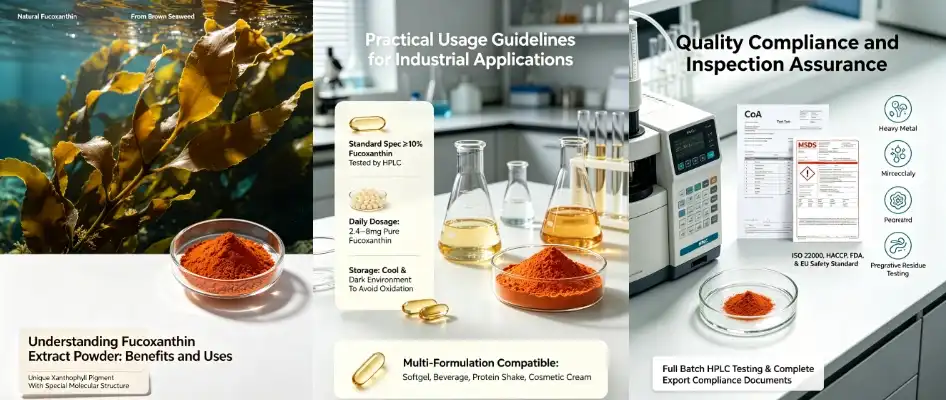
Understanding Fucoxanthin Extract Powder: Benefits and Uses
Fucoxanthin Extract Powder is a xanthophyll pigment that comes from saltwater sources, mostly brown algae like Laminaria japonica and Undaria pinnatifida. Fucoxanthin is different from terrestrial carotenoids because it has an allenic link and an epoxide group, which help make it biologically active in ways that terrestrial carotenoids do not. Its complicated structure is shown by the molecular formula C42H58O6. This molecule absorbs light best at 450 nm, which makes it different from chlorophyll and other breakdown products found during analytical testing.
Core Health Benefits Backed by Research
The chemical turns on uncoupling protein 1 (UCP1) in white adipose tissue, which raises body temperature without affecting the brain or spinal cord. This process is very different from caffeine-based ingredients, which makes fucoxanthin a good choice for weight management products that don't contain stimulants. Especially when paired with conjugated linoleic acid (CLA) or medium-chain triglycerides (MCT), clinical studies have shown that it lowers the amount of fat stored in the belly and improves measures of lipid metabolism. Fucoxanthin does more than just help the metabolism; it is also a powerful antioxidant that works better than vitamin E to protect cell structures from reactive stress.
The health of the skin is another strong use case. The extract stops tyrosinase from working, which lowers the production of melanin and helps keep skin tone even. It can stop UV-B from activating matrix metalloproteinase-1 (MMP-1) expression, which makes it a useful ingredient in nutricosmetics and high-end skin care products that fight photoaging.
Practical Usage Guidelines for Industrial Applications
High-performance liquid chromatography (HPLC) is used to measure the active ingredient content of food supplements. The reference level is ≥10%. The powder is a fine, brown material with particles that are 80 mesh in size, which makes sure that they mix well in fatty carriers. Loss during drying stays at ≤3%, and the amount of heavy metals is kept at ≤10ppm, which is the same level of safety set by the FDA and the EU.
Doses of 2.4 to 8 mg of pure fucoxanthin should be taken every day. This is usually done through softgels that contain 10 to 50 mg of a standardized extract. Lipid-based delivery methods improve bioavailability, and cold water-soluble (CWS) beadlets help make protein shakes and healthy drinks that are easier to make. To stop cis-trans isomerization and oxidative breakdown, storage needs to be kept at a low temperature and away from light.
Full physicochemical analysis, batch-to-batch HPLC verification, and strict tests for pesticide residues, microbial contamination, and solvent traces are all part of quality assurance processes. Suppliers need to show proof that they follow ISO 22000, HACCP, and any other export laws by giving Certificates of Analysis (CoA), Material Safety Data Sheets (MSDS), and other compliance paperwork. During product creation rounds, these technical parameters help R&D teams make sure that ingredients are correct and that formulations will stay stable.
Fucoxanthin Extract Powder vs Alternatives: Making the Right Choice
To find your way around the world of natural carotenoids, you need to know how Fucoxanthin Extract Powder stacks up against other molecules with similar structures and different forms. This review has a direct effect on how well the recipe works, how much it costs, and where it stands in the market.
Structural and Functional Differences
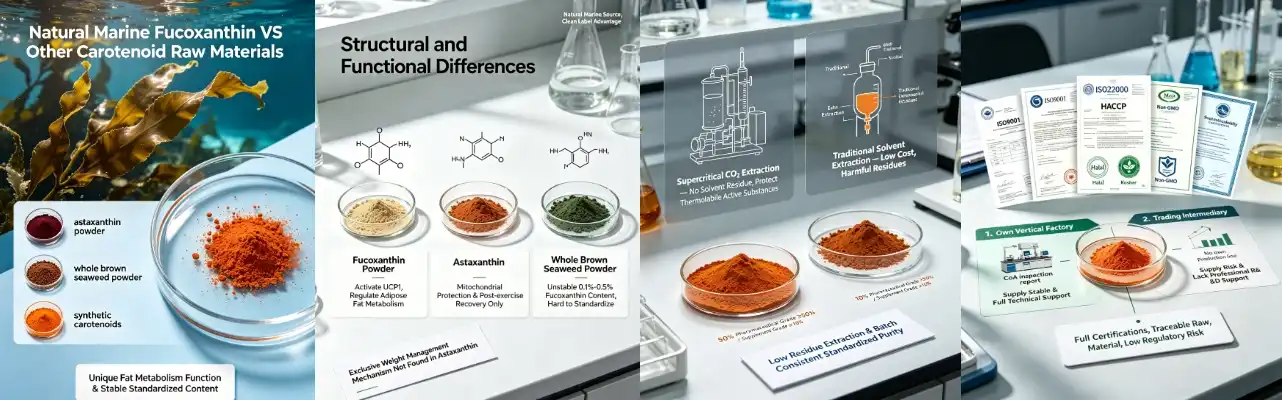
Astaxanthin is another sea carotenoid that has strong protective properties but not the metabolic activation properties of fucoxanthin. Astaxanthin works to protect mitochondria and speed up healing from exercise. Fucoxanthin, on the other hand, changes the function of adipocytes by increasing UCP1 production. Brown seaweed powder is a whole-food option that contains many bioactive chemicals. However, the varying fucoxanthin content (usually between 0.1 and 0.5%) makes it harder to standardize dosages and make regulatory claims.
More and more people want products that come from natural sources, which makes the market resistant to synthetic options. Marine-origin claims are especially important to the "clean label" movement, and synthetic production can't copy the complex web of co-occurring nutrients that may improve bioavailability and action.
Production Methods and Purity Considerations
Supercritical CO2 extraction is the best way to separate fucoxanthin because it gets rid of liquid leftovers and keeps thermolabile parts. There is no solvent pollution with this method, which is very important for medicine and cosmetic uses. Traditional solvent extraction with ethanol or acetone lowers production costs, but it leaves behind residues that could be harmful and needs extra steps to be cleaned up.
Purity levels are directly related to how well they work in a given application. Pharmaceutical-grade goods need assay values of at least 50% for accurate doses in clinical studies, while supplement makers need 10% standardized extracts to find a balance between potency and cost-effectiveness. Buyers who care about quality give more weight to providers who can show consistent performance from batch to batch through detailed analytical paperwork.
Certification Factors Critical to Procurement
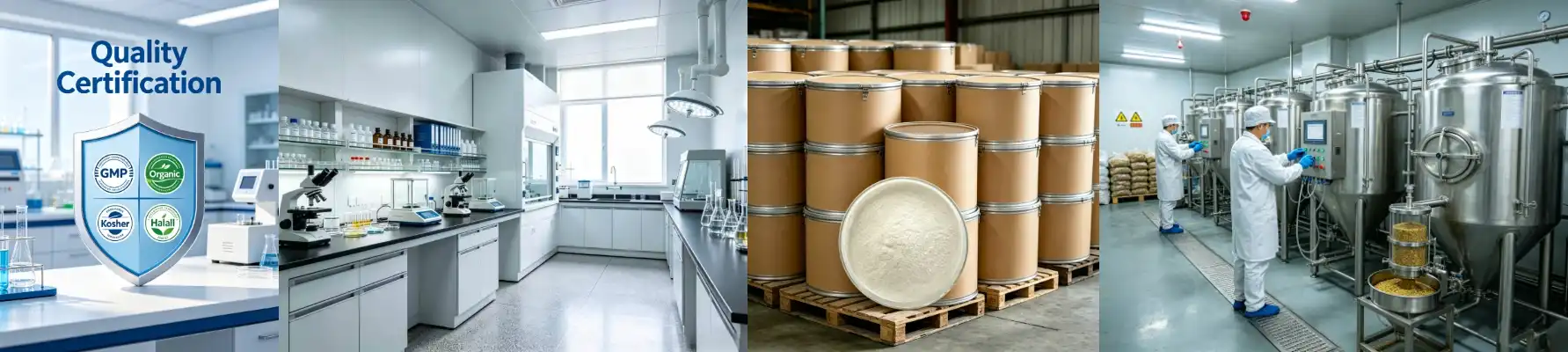
Systematic quality management is shown by ISO 9001 certification, while ISO 22000 and HACCP qualifications focus on food safety rules. Halal and Kosher approvals help brands reach more customers, especially those from the Middle East and Israel. Marine sustainability certifications (like Friend of the Sea) and non-GMO certifications are becoming more important in buying choices as brands try to live up to their environmental, social, and governance (ESG) promises.
A study of prices shows that verified, traceable fucoxanthin gets a higher price, which is backed up by lower regulatory risk and brand security. Trading companies may have lower startup costs, but they don't always have vertical integration, which makes supply continuity and expert help less reliable.
Procuring Fucoxanthin Extract Powder: A B2B Buying Guide
Successful bulk procurement balances quality assurance, supply chain reliability, and commercial terms aligned with the size of the production.
Essential Supplier Selection Criteria
The first step in figuring out a company's credibility is to check out its factories. This can be done through third-party approvals or direct site visits. When it comes to tracking, manufacturers with their own extraction and quality control labs are better than wholesalers who get their products from different places. Most of the time, the minimum order quantity (MOQ) is between 1 and 25 kilograms, and price levels for larger orders start to apply every 100 kilograms.
Delivery times separate sellers who are quick from those who are having trouble keeping track of their stock. Reliable partners keep a safety stock of 10–20 tons of key goods, which lets them ship within 5–7 business days. This level of stocking depth is very important when putting out new goods or when demand suddenly rises.
Manufacturers are different from commodity sellers because they can offer technical help. R&D teams that help with formulation, stability testing, and application problems add measured value that goes beyond just giving raw materials. When Fucoxanthin Extract Powder is changed to work in new delivery systems or mixture formulas, this service factor becomes very important.
Certification and Compliance Verification
You should ask for up-to-date Certificates of Analysis (CoAs) that show the amount of active ingredients, the spread of particle sizes, the level of wetness, heavy metal screening, and microbial limits. Compare these numbers to the specs to find any differences before placing big orders. The MSDS should include information about how to handle the substance safely, how to store it, and what to do in an emergency.
For suppliers to make claims about being organic, non-GMO, or environmentally friendly, they need to back them up with certificates from reputable organizations. Not having enough paperwork can mean that there are quality problems or risks of misinformation that could hurt the brand's image and standing with regulators.
Logistics and Sample Evaluation
There are different types of packaging, such as aluminum foil bags, fiber drums with PE liners, and vacuum-sealed cases. Each type protects against light, air, and moisture in a different way. There are different ways to ship, such as sea freight for large orders, air transport for urgent packages, and fast courier services for sample requests. Experienced sellers offer full export paperwork, help with customs, and shipping insurance to lower the risks of transit.
Protocols for evaluating samples should check how well they dissolve, how stable their color is when exposed to light, and how well they work with target grids. Doing rapid stability studies (40°C/75% RH for 3 months) can help you guess how long something will last and find any recipe problems before you start making more of it. These steps keep you from having to go through expensive reformulation rounds and output delays.
Trusted Fucoxanthin Extract Powder Suppliers and Brands
Building long-term ties with suppliers, you need to find partners who regularly meet Fucoxanthin Extract Powder quality standards and can adapt to changing market needs.
Hallmarks of Dependable Suppliers
Reputable makers have strict quality control measures that go beyond just following the rules. These include being able to track down raw materials, making sure the process works, and testing the finished product. Batch records that list the parameters for extraction, the steps for cleaning, and the results of the analysis show that the production process is disciplined and make it easier to find the root cause of any quality problems that may happen.
For industrial clients, responsive customer service includes expert advice, legal advice for certain markets, and proactive communication about changes to production plans or specifications. Account management teams that know how B2B buying cycles work can predict needs instead of just responding to purchase orders.
Advanced Extraction Technologies
Leading providers spend money on supercritical fluid extraction (SFE) systems that work at the best pressure and temperature levels to get the most fucoxanthin out of the fluid while also getting the least amount of other impurities. Continuous countercurrent extraction lines are more efficient than batch processing, and special methods for keeping ingredients stable, like nitrogen-sealed packing or cyclodextrin complexation, make them last longer.
Private label capabilities enable product differentiation through custom particle size specifications, unique packaging configurations, and proprietary blends combining fucoxanthin with synergistic ingredients. ODM services include formulating new medicines, choosing the right dosage forms, and designing packages. These help clients who don't have their own R&D facilities.
Evaluating Supplier Performance
Third-party reviews, business references, and sample performance data are all used to evaluate suppliers. Some red flags are not wanting to provide analytical paperwork, contact patterns that aren't constant, and prices that are way below market benchmarks without a clear explanation. On the other hand, providers who offer building tours, full technical literature, and clear pricing structures show that they are skilled and reliable.
Scientific Insights and Future Trends in Fucoxanthin Extract Usage
By keeping up with changes in study and the market, procurement tactics for Fucoxanthin Extract Powder can gain a competitive edge.
Pivotal Research Findings
Studies that were reviewed by experts and published in journals like Marine Drugs and Biochemical and Biophysical Research Communications have shown how fucoxanthin works at the cellular and molecular levels. Researchers have found that the amount of a substance has an impact on how adipocytes differentiate, how anti-inflammatory pathways work, and how glucose metabolism is controlled. These results back up marketing claims based on facts and help doctors figure out the best doses for different health effects.
New uses are looking into neuroprotective effects, and early results show that antioxidant action in neural cells may help cognitive performance. Oncology study looks into how to stop the growth of certain types of cancer cells, but clinical testing on humans is still ongoing.
Market Trends Shaping Procurement
The fucoxanthin market is growing because people want natural fat-burning products that don't have the side effects of stimulants. This is especially true in North America and Europe. "Marine superfood" branding helps brands stand out and earn the trust of health-conscious consumers at higher prices.
Fucoxanthin absorption used to be limited, but new technologies like nano-emulsification and liposomal delivery methods have made it easier for the body to absorb. These new ideas allow for lower dosage needs and better effectiveness, which could change the economics of creation and how companies place themselves in the market.
Regulatory changes in structure-function claims and new food approvals affect choices about where to get food. Keeping up with FDA guidance documents, EFSA views, and foreign attempts to harmonize rules makes sure that products are legal in all target markets and stops expensive re-formulations or pulling products from the market.
Strategic procurement lines up the buying of ingredients with the timelines for the product pipeline. It does this by using dual sourcing methods and inventory buffering to lower risk. Getting suppliers involved early in the product development process makes it easier to solve technical issues and makes sure that suppliers get priority when supplies are low.
Conclusion
Fucoxanthin Extract Powder is a powerful natural ingredient that has many health and fitness benefits, such as helping the metabolism and protecting cells from damage caused by free radicals. More and more scientific proof supports its unique biochemical qualities, which put it ahead of options in both the dietary supplement and cosmetics industries. To do good procurement, you need to look at more than just price when judging providers. You should look at their extraction technology, certifications, expert support, and how reliable their supply chain is.
To make decisions that are in line with formulation needs and regulatory standards, it's helpful to know quality factors like HPLC-verified purity, particle size specifications, and stability characteristics. More and more, the market wants natural ingredients from marine sources that can be tracked back to their source. This is good news for brands that use high-quality fucoxanthin that comes with full paperwork and seller partnerships based on openness and technical cooperation.
FAQ
Q1: What is the recommended dosage of fucoxanthin in dietary supplements?
A: In clinical tests, 2.4 to 8 mg of pure fucoxanthin is usually used every day. This is given through 10–50 mg of a standardized extract that has at least 10% active ingredient. The right dose relies on the formulation's goals. For weight loss purposes, the higher end of this range is usually used, with fat carriers helping the body absorb the drug better.
Q2: How can buyers verify fucoxanthin quality?
A: For HPLC pure proof, heavy metal screening (≤10ppm), microbial limits testing, and solvent residue analysis, you should ask for certificates of analysis. Check the analytical data against the product specs and have a third party test samples before placing large orders. Suppliers who provide full batch documentation and quick expert help show that they care about quality.
Q3: Is fucoxanthin suitable for vegan formulations?
A: Yes, fucoxanthin that comes from brown seaweed is plant-based and fits the idea of a vegan product. Make sure that the encapsulation materials and container systems are also vegan. Unless they are especially made with plant-based options, softgels usually use gelatin that comes from animals.
Partner with Sigma for Premium Fucoxanthin Extract Powder Supply
Shaanxi Sigma Biotechnology stands as a trusted Fucoxanthin Extract Powder manufacturer delivering consistent quality through supercritical CO2 extraction technology and comprehensive certification including ISO 22000, HACCP, Halal, and Kosher. Our vertically integrated operations ensure 100% marine-sourced brown seaweed extracts with ≥10% fucoxanthin content, zero solvent residue, and rigorous batch testing meeting FDA and EU standards. With 10-20 tons safety stock enabling 5-7 day delivery, flexible OEM/ODM customization for unique formulation needs, and dedicated technical support guiding application development, we provide the reliability and expertise required for successful product launches. Contact sarah@sxsigma.com today to request samples, discuss custom specifications, or explore partnership opportunities with a fucoxanthin extract powder supplier committed to your long-term success.
References
1. Maeda, H., Hosokawa, M., Sashima, T., & Miyashita, K. (2007). Dietary combination of fucoxanthin and fish oil attenuates the weight gain of white adipose tissue and decreases blood glucose in obese/diabetic KK-Ay mice. Journal of Agricultural and Food Chemistry, 55(19), 7701-7706.
2. Peng, J., Yuan, J. P., Wu, C. F., & Wang, J. H. (2011). Fucoxanthin, a marine carotenoid present in brown seaweeds and diatoms: metabolism and bioactivities relevant to human health. Marine Drugs, 9(10), 1806-1828.
3. Beppu, F., Niwano, Y., Tsukui, T., Hosokawa, M., & Miyashita, K. (2009). Single and repeated oral dose toxicity study of fucoxanthin, a marine carotenoid, in mice. Journal of Toxicological Sciences, 34(5), 501-510.
4. Miyashita, K., Nishikawa, S., Beppu, F., Tsukui, T., Abe, M., & Hosokawa, M. (2011). The allenic carotenoid fucoxanthin, a novel marine nutraceutical from brown seaweeds. Journal of the Science of Food and Agriculture, 91(7), 1166-1174.
5. Zhang, H., Tang, Y., Zhang, Y., Zhang, S., Qu, J., Wang, X., Kong, R., Han, C., & Liu, Z. (2015). Fucoxanthin: A promising medicinal and nutritional ingredient. Evidence-Based Complementary and Alternative Medicine, 2015, 723515.
6. Sachindra, N. M., Sato, E., Maeda, H., Hosokawa, M., Niwano, Y., Kohno, M., & Miyashita, K. (2007). Radical scavenging and singlet oxygen quenching activity of marine carotenoid fucoxanthin and its metabolites. Journal of Agricultural and Food Chemistry, 55(21), 8516-8522.


_1776308368292.webp)