What Is Bovine Bone Peptide and Its Commercial Applications
Bovine bone peptide represents a highly bioavailable protein derivative extracted from bovine bones through advanced enzymatic hydrolysis. This bioactive ingredient, characterized by its low molecular weight (typically ≤3000 Daltons), delivers superior absorption compared to native collagen proteins. Rich in Type I collagen fragments and hydroxyproline, bovine bone peptide functions as a signaling molecule that stimulates cellular activity in bones, joints, and skin tissues, making it invaluable across nutraceutical, cosmetic, and pharmaceutical sectors.
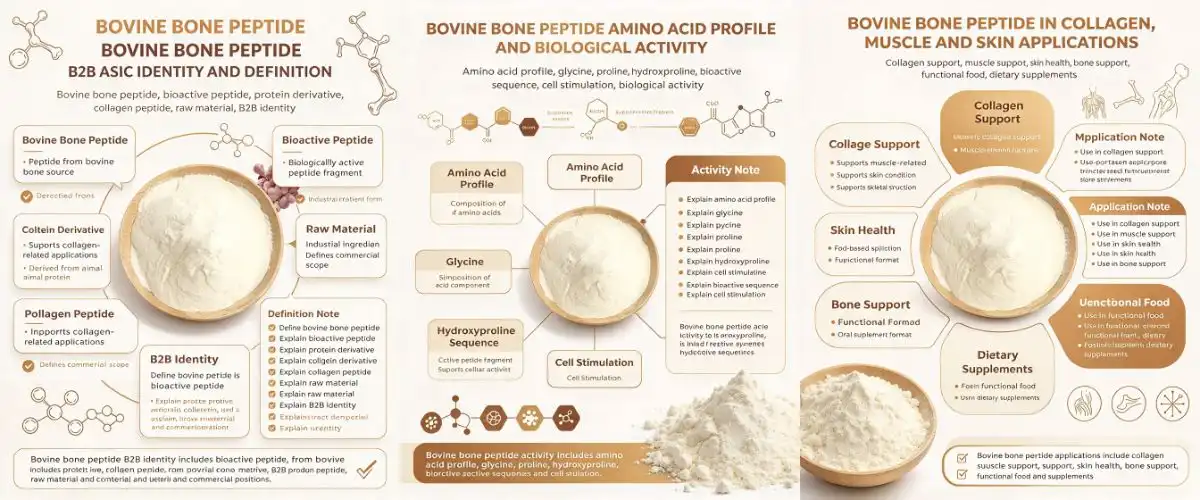
Understanding Bovine Bone Peptide: Composition, Mechanism, and Benefits
When people who work in procurement look at ingredients for useful health goods, they need to know how Bovine Bone Peptide works scientifically. This naturally occurring ingredient has gotten a lot of interest because it has been shown to work well in a number of business settings.
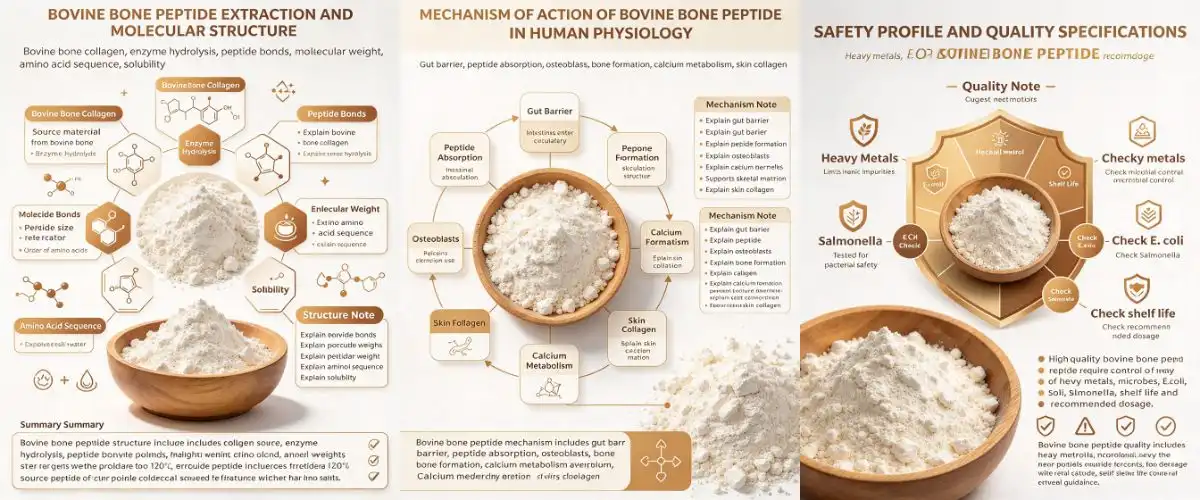
The Extraction and Molecular Structure
Bone collagen peptides are made from fresh bovine bones that come from healthy cattle that were raised in controlled environments. Before directed enzymatic hydrolysis breaks down long chains of collagen into short sequences of amino acids, these bones are thoroughly degreased and demineralized. This managed process makes peptides with molecular weights that are mostly between 1000 and 3000 Daltons. This lets them be absorbed directly in the intestines without being broken down further. The fine, light yellow powder that is made has a protein content of more than 90% and dissolves easily in cold water, which is a big plus for making drinks and liquid supplements.
Mechanism of Action in Human Physiology
Researchers have found that these small molecules can pass through the gut barrier without getting damaged and then enter the bloodstream, where they cause specific biological reactions. The hydroxyproline-rich sequences tell osteoblast cells to speed up the formation of the bone matrix and also help keep chondrocytes healthy in cartilaginous tissues. Studies in papers about bone metabolism show that taking supplements regularly increases the amount of calcium in the bones and their mineral density. Dermatological study shows similar benefits. Peptide pieces increase collagen production in the dermis layers of the skin, making it more elastic and lowering the signs of aging that can be seen.
Safety Profile and Quality Specifications
High-quality bone peptide products have an ash content of less than 3% and heavy metal levels that are much lower than what is allowed by law. Comprehensive microbial testing methods are used in certified manufacturing sites. These include screening for total plate count, E. Salmonella, E. coli, and Staphylococcus aureus. Because these peptides are stable at temperatures up to 120°C, they can be added to prepared foods without losing their bioactivity. Depending on the use, the daily recommended amount is usually between 2 and 10 grams, and safety at these doses for long periods of time has been proven by clinical trials.
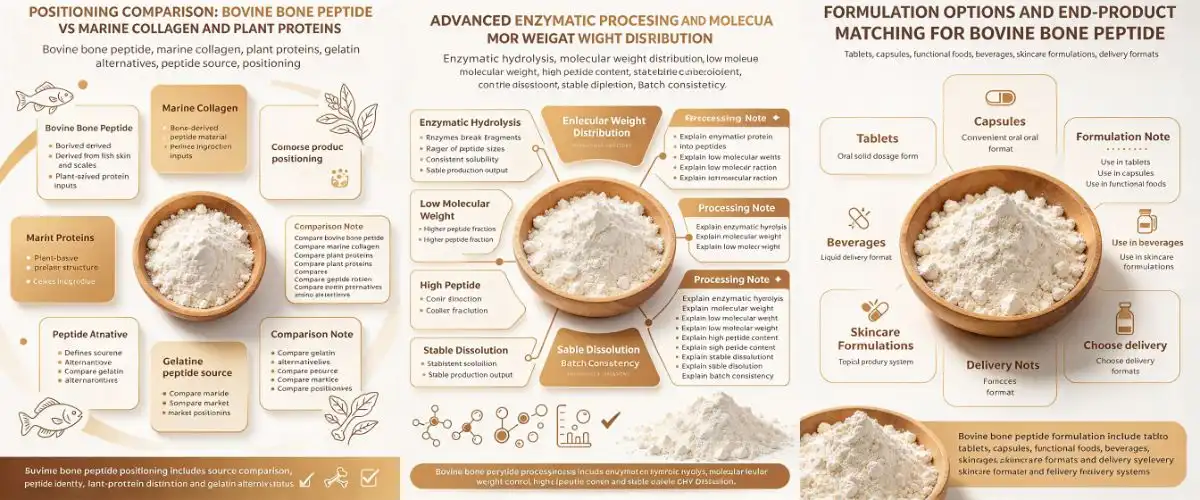
Comparing Bovine Bone Peptide with Other Collagen and Peptide Sources
Often, procurement teams look at more than one source of peptides to find the best ones for formula performance and cost-effectiveness. Figuring out the relative benefits of different ingredients helps match the choice of ingredients with the positioning of the product and the people you want to sell it to.
Marine vs. Bovine Sources
Marine collagen comes from the skin and scales of fish. It is mostly Type I collagen, with peptide amounts that are about 2000 Daltons on average. Some people like saltwater sources because they are good for pescatarians, but Bovine Bone Peptides are better for bone health because they naturally contain calcium and phosphorus. The amino acid profile of cattle sources is more like the structure of human bones, which could make musculoskeletal formulas more bioactive. Marine collagen works best for skin care because it has a slightly higher glycine content that may help the structure of the skin. However, bovine peptides work better in formulations that are meant to improve both joint and skin health.
Hydrolyzed Collagen and Gelatin Alternatives
When compared to specialized bone peptides, standard hydrolyzed collagen has higher molecular weights (3000–5000 Daltons) and lower absorption. Partially hydrolyzed gelatin needs more digestion before it can be absorbed, and it is not very bioactive when it is in its natural state. Advanced enzymatic processing of bone peptides makes an ingredient that is more polished and has a more uniform molecular weight distribution. This makes sure that all production groups work the same way. This consistency is very important for makers whose end goods need to have stable viscosity profiles and dissolution rates.
Plant-Based Protein Considerations
People are becoming more interested in plant-based proteins, but they are fundamentally different from collagen peptides in how they work biologically and what amino acids they contain. Plant proteins don't have hydroxyproline and hydroxylysine, which are two amino acids that make collagen special in its ability to form structures and send signals. Companies that want to sell collagen-specific benefits can't use plant proteins instead without lowering their claims about how well their products work. However, hybrid formulations that mix bovine peptides with plant ingredients that work well together can meet the needs of a wide range of customers while still performing well.
Commercial Applications and Industry Use Cases of Bovine Bone Peptide
Bone collagen peptides can be used in many different types of industries because they can act as both structure proteins and chemical signaling molecules. Many types of manufacturers see these peptides as key ingredients for the next generation of health products.
Nutraceutical and Dietary Supplement Integration
The biggest market for bone peptides is in joint health products, which contain 3–5 grams of them per dose along with glucosamine, chondroitin, and MSM. The neutral taste and ability to dissolve in water make it easy to add to powder mixes, ready-to-drink drinks, and capsules. These peptides are mixed with calcium, vitamin D3, and vitamin K2 in bone health support items for older people so that the minerals are used more effectively. When formulations use peptides with molecular weights below 2000 Daltons for maximum absorption, clinical evidence that backs up claims of effectiveness strengthens brand positioning.
Cosmetic and Personal Care Formulations
Bovine Bone Peptides are being used more and more in anti-aging skin care lines in serums, creams, and sheet masks at amounts of 2 to 5 percent. The peptides' ability to boost the body's own collagen production has been shown to help fight wrinkles, which appeals to people who care about quality. Formulators like that the ingredient is stable at pH levels between 3 and 7. This means that it can be used with many active ingredients, such as vitamin C, retinoids, and alpha hydroxy acids. Hair care uses peptides to study how they strengthen keratin structures, but skin uses are currently driving commercial development.
Pharmaceutical and Clinical Applications
In orthopedic medicine, bone peptides are being looked into as possible additions to existing treatments for bone diseases and broken bones. The bioactive compounds might help speed up the process of bone repair by making calluses form faster. Contract research organizations (CROs) that run clinical trials need peptides that are pure enough to be used in medicine, along with full documentation like Certificates of Analysis (COAs), Material Safety Data Sheets (MSDSs), and tested analytical methods. Suppliers of peptides to this industry must show that they can track the production process from getting the raw materials to releasing the end product.
Functional Food and Beverage Innovation
Protein-enhanced drinks, meal replacements, and nutrition bars use bone peptides to increase the amount of protein they contain and provide health benefits beyond basic nutrients. Because the ingredient is stable at high temperatures, it can be processed using normal tools for making food without any special handling needs. Peptides are marketed by sports nutrition companies as healing tools that help connective tissues heal after intense training. It is still very important to follow the rules for food additives in target markets. ISO 22000 and HACCP certifications are the minimum standards that must be met.
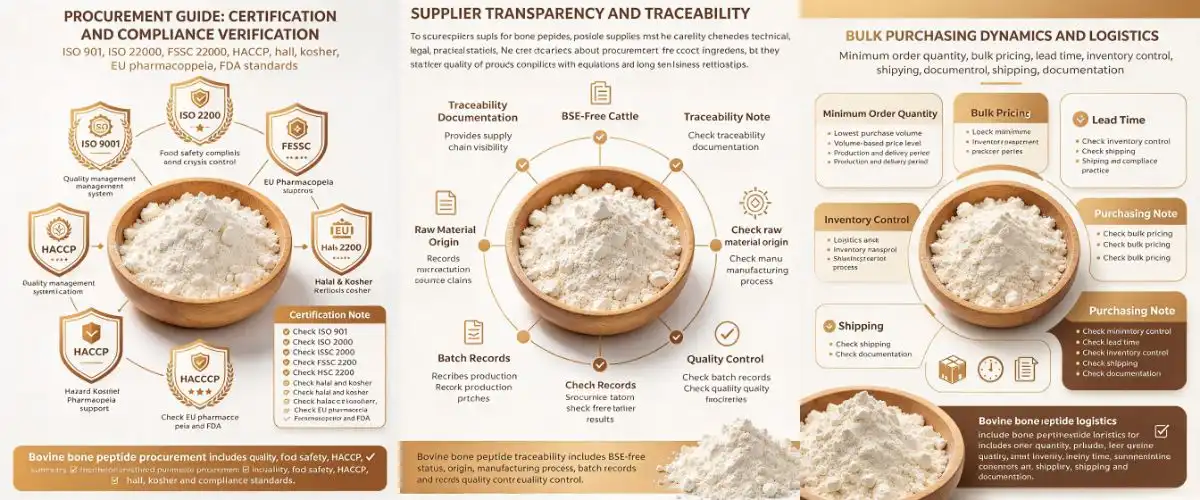
Procurement Guide: How to Source High-Quality Bovine Bone Peptide?
To set up effective supply chains for bone peptides, possible suppliers must be carefully checked against technical, legal, and practical standards. Not only do decisions about procurement affect the cost of ingredients, but they also affect the quality of products, compliance with regulations, and long-term business relationships.
Certification and Compliance Verification
People who care about quality usually choose providers that have widely known certifications, such as ISO 9001 for quality management systems, ISO 22000 or FSSC 22000 for food safety management, and HACCP for hazard analysis methods. Kosher and Halal certifications help brands that are trying to reach specific groups of people reach a wider audience. Third-party testing reports showing that heavy metal amounts for lead, arsenic, mercury, and cadmium are well below FDA and EU pharmacopeia standards are also part of the verification process. Ask for recent batch test results that show the product is microbiologically safe, has a protein content of at least 90%, and has the right molecular weight distribution.
Manufacturing Transparency and Traceability
Reliable suppliers provide full traceability documentation that shows where the raw materials come from (BSE-free cattle) and how they are made all the way to the finished peptide. Supply chain risks are lower in places where there is strong veterinary control and methods for keeping an eye on the health of animals. Manufacturing openness includes tours of the building, thorough records of the process flow, and quality control steps at every stage of production. When suppliers use continuous countercurrent extraction technology along with low-temperature concentration, the peptides they make are usually better and have more bioactivity than those made with traditional methods.
Bulk Purchasing Dynamics and Logistics
Depending on the seller, the minimum order quantity for bone peptides is usually between 25 and 500 kilograms. Buyers who commit to quarterly or yearly amounts get better prices. Competitive ex-factory pricing takes into account the cost of raw materials, the difficulty of the process, and the economics of manufacturing in the region. Check to see which providers keep a safety stock of 10–20 tons of key goods and guaranty delivery within 5–7 working days for standard requirements. When buying ingredients across countries, it's important to have sellers who are skilled in customs paperwork, temperature-controlled shipping, and foreign freight forwarding. Supply chain management that can respond quickly is made easier by shipping options like air freight for urgent orders, sea freight for large quantities, and express courier for samples.
Making the Smart Choice: Selecting the Right Bovine Bone Peptide for Your Business
Strategically choosing ingredients makes sure that technical requirements are met by the application while also taking into account cost and quality concerns. This methodical approach improves buying results in a wide range of product development situations.
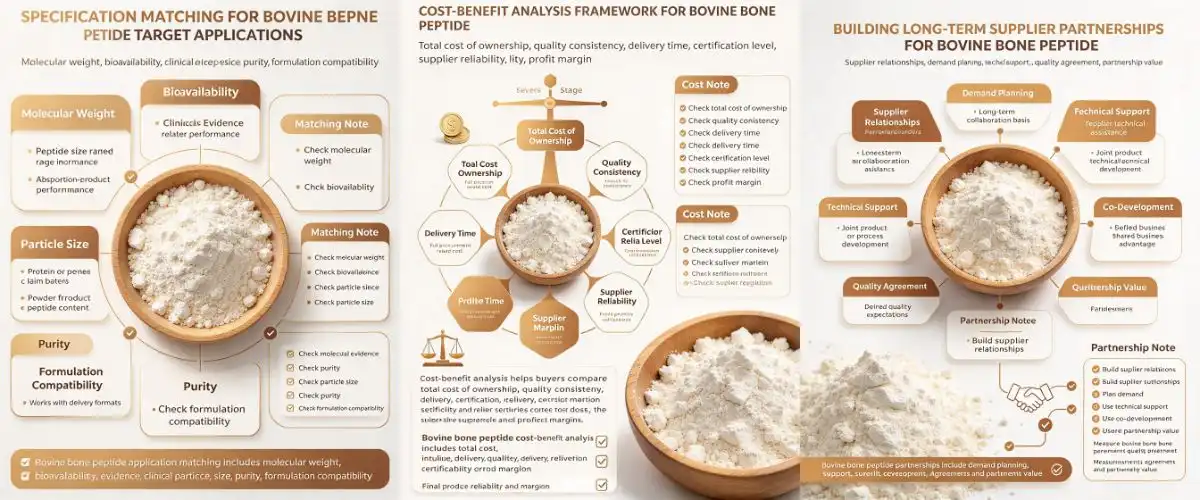
Specification Matching for Target Applications
Nutraceutical uses that focus on joint health usually need molecular weights below 2000 Daltons to get the most bioavailability and clinical effectiveness. Cosmetics may be able to handle slightly bigger peptides (2000–3000 Daltons), since the way they are absorbed on the skin is different from how they are absorbed when taken by mouth. To make sure that dosing in finished goods is cost-effective, protein content guidelines should meet or go over 90%.
Custom molecular weight requirements, like peptides with a weight of less than 1000 Daltons, help with premium placement strategies, but they come with higher prices because they require more processing improvement. Setting the normal mesh size at 80 mesh makes sure that the dissolve properties are always the same and stops formulation problems from happening during mixing. Bovine Bone Peptide is fully compatible with these parameters, making it suitable for both oral joint health supplements and topical cosmetic formulations.
Cost-Benefit Analysis Framework
While the overall cost of ingredients does affect purchasing choices, a full analysis takes into account the total cost of ownership, which includes things like quality consistency, the work needed to meet regulations, and the quality of supplier service. For cheaper peptides, extra tests may be needed or the recipe may need to be changed if variation from batch to batch is too high. When it comes to value, mid-range suppliers that offer certified quality, quick technical support, and reliable delivery are often better than either budget or premium options. Instead of cost-per-kilogram of raw ingredients, figure out the cost-per-dose in finished products to get a more accurate picture of how the economy will affect product margins.
Building Long-Term Supplier Partnerships
Both parties benefit from stable supply relationships because they make it easier to predict demand, negotiate business terms, and work together on technical development. Long-term suppliers often help with design, give information about the market, and set priorities when there are supply limits. Communication protocols that set clear points of contact, order processing workflows, and problem-solving procedures keep operations from getting interrupted. Annual volume agreements allow for better prices while still allowing for portfolio changes. Having a variety of providers in different areas lowers risk, and the competitive nature of the market pushes prices and service performance to keep getting better.
Conclusion
Bovine Bone Peptide is a widely useful ingredient that has been proven to work by science and meets the growing demand for natural health solutions that work. Its high bioavailability, proven effectiveness in joint health and skin care, and good processing properties make it a valuable ingredient in the nutrition, cosmetic, and pharmaceutical industries. For procurement to go well, suppliers must be carefully evaluated using certifications, open manufacturing, and technical specifications that match the needs of the application. Strategic relationships with qualified suppliers help keep quality high, make sure regulations are followed, and make sure the supply chain works quickly and effectively. This supports new ideas and market competition in the global functional ingredient market, which is growing.
FAQ
What makes bovine bone peptide more effective than regular collagen supplements?
changes in effectiveness are caused by changes in molecular weight. A lot of digestive work has to be done on standard collagen before it can be absorbed. A lot of protein has to be broken down before it can reach its target tissues. Bone peptides with molecular weights below 3000 Daltons can pass through the walls of the intestines without being broken down. They then take bioactive sequences straight to bones, joints, and skin, where they cause cells to respond.
Can bovine bone peptide cause allergic reactions?
Compared to glucosamine from shellfish or marine collagen from fish, bovine peptides don't pose as much of an allergen risk. People who are severely allergic to beef proteins should talk to their doctors, but the extensive hydrolysis process usually gets rid of allergenic epitopes. Certified goods are tested to make sure they don't contain any common food allergens.
How does molecular weight affect product application choices?
Smaller peptides (below 1000 Daltons) are the most effective at being absorbed, which is why high-end vitamins cost more. For most formulations, mid-range peptides (1000–3000 Daltons) are a good mix between price and effectiveness. When used in cosmetics, bigger peptides can be used because the way they are delivered to the skin is different from how they are bioavailable when taken by mouth.
What documentation should buyers request from suppliers?
Full purchase includes up-to-date Certificates of Analysis that show the amount of protein, the spread of molecular weight, heavy metal tests, and microbiological safety. Regulatory compliance is shown by Material Safety Data Sheets, allergy statements, GMO status declarations, and copies of certifications (ISO, HACCP, Kosher/Halal). Proof that the cattle sources are traceable and free of BSE meets the standards for due investigation.
Partner with Sigma for Premium Bovine Bone Peptide Supply
Shaanxi Sigma Biotechnology Co., Ltd. provides pharmaceutical-grade bone collagen peptides that meet the strict needs of producers around the world who care about quality. Our Bovine Bone Peptide source qualifications include ISO 22000, HACCP, and Kosher certifications, which make sure that we follow all regulations in all global markets without any problems. We keep a lot of stock on hand so that we can deliver within 5 to 7 days. We also offer flexible customization options, such as molecular weight requirements below 1000 Daltons and custom protein content levels above 90%.
Our low ex-factory prices come from the fact that we efficiently source raw materials and release finished products all in one step. Technical help includes advice on how to make the formula, complete paperwork packages with COA and MSDS, and samples for R&D to test. With full customs paperwork and temperature-controlled shipping options, global logistics experts make sure that deliveries happen on time.
You can talk to our team about your needs by emailing sarah@sxsigma.com. We offer free samples, expert advice, and custom purchasing options to help you reach your innovation goals with guaranteed quality and quick service.
References
1. Moskowitz RW. "Role of collagen hydrolysate in bone and joint disease." Seminars in Arthritis and Rheumatism, 2000, 30(2): 87-99.
2. Bello AE, Oesser S. "Collagen hydrolysate for the treatment of osteoarthritis and other joint disorders: a review of the literature." Current Medical Research and Opinion, 2006, 22(11): 2221-2232.
3. Proksch E, Segger D, Degwert J, et al. "Oral supplementation of specific collagen peptides has beneficial effects on human skin physiology." Skin Pharmacology and Physiology, 2014, 27(1): 47-55.
4. Zague V, de Freitas V, da Costa Rosa M, et al. "Collagen hydrolysate intake increases skin collagen expression and suppresses matrix metalloproteinase 2 activity." Journal of Medicinal Food, 2011, 14(6): 618-624.
5. Benito-Ruiz P, Camacho-Zambrano MM, Carrillo-Arcentales JN, et al. "A randomized controlled trial on the efficacy and safety of a food ingredient, collagen hydrolysate, for improving joint comfort." International Journal of Food Sciences and Nutrition, 2009, 60(2): 99-113.
6. Oesser S, Adam M, Babel W, Seifert J. "Oral administration of 14C labeled gelatin hydrolysate leads to an accumulation of radioactivity in cartilage of mice." Journal of Nutrition, 1999, 129(10): 1891-1895.