What Are the Benefits of Prunus Humilis Extract in Skin Care Products?
The main possible benefits of prunus humilis extract in skin care products are that it may help with antioxidants, condition the skin, and give new formulas a unique botanical story. The extract comes from a Rosaceae shrub that is also called a Chinese dwarf cherry. How well it works depends on what part of the plant was used, how it was extracted, and how it was tested. There aren't many published data on this ingredient's effects on human skin right now, so brands should think of these benefits as formulation ideas that need to be proven. Before they ask for a sample, I wrote this guide to help buyers decide if the ingredient is good by giving them evidence, clear instructions, and regulatory checks.
A lot of people who buy this ingredient first see it in health and food channels. For instance, our own Prunus Humilis Extract is a fine, white powder used in food additives and health products. Since this is a newer question about skin care use, I will separate what is known from what still needs to be tested.
What Is Prunus Humilis Extract, and Why Does Identity Matter?
Botanical Identity and Traceability
Prunus humilis Bunge is a Rosaceae shrub. The same plant is Cerasus humilis in Flora of China. Also called Chinese dwarf cherry or bush cherry. Having numerous names is perilous. Nanking cherry, Prunus tomentosa, is a separate species, therefore the one you study can't assist with the other. Traditional Chinese medicine calls the kernel Yuliren, and the Chinese Pharmacopoeia contains a section on it. I check the scientific name, portion of the plant I want, where it originates from, how to verify it, how to extract it, and what I want to use it for before asking for a sample. They take two minutes and prevent expensive blunders.
How Extract Types Differ
"Extract" has several meanings. In a recipe, water-based, hydroalcoholic, glycerin-based, glycol-based, powdered, or oil-soluble extracts respond differently. Type of solvent, amount extracted, drying method, and standardisation might affect product colour, smell, solubility, and constituents. The plant matters too. Ingredients including fruit juice, fruit extract, seed oil, seed extract, and polyphenol-rich fractions have documentation. A generic "cherry extract" specification sheet doesn't provide enough information. Buyers should record extract kind, ratio, and marker data. These details decide whether lab results may be utilised in production.
Sigma's Water-Extracted Powder
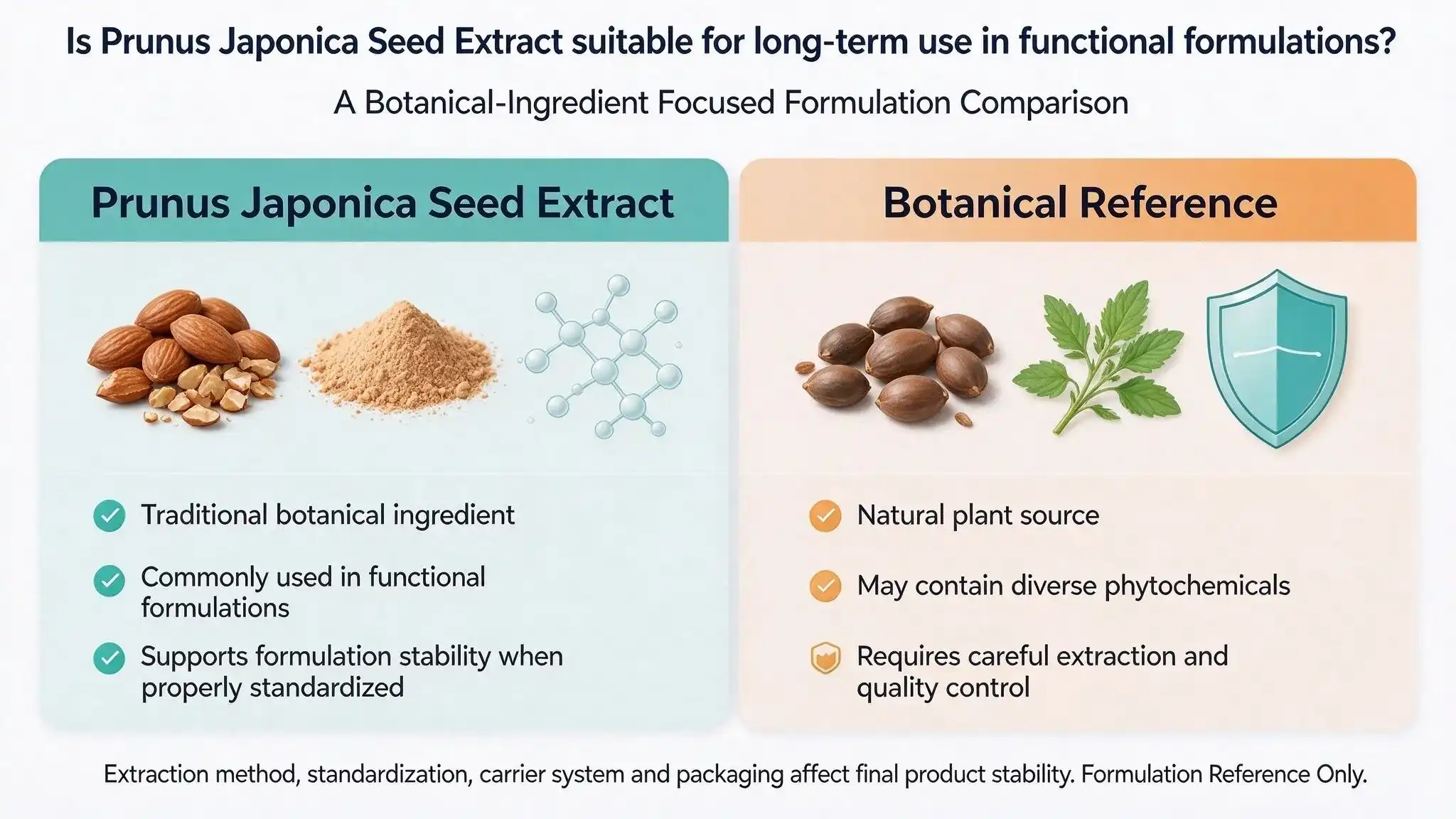
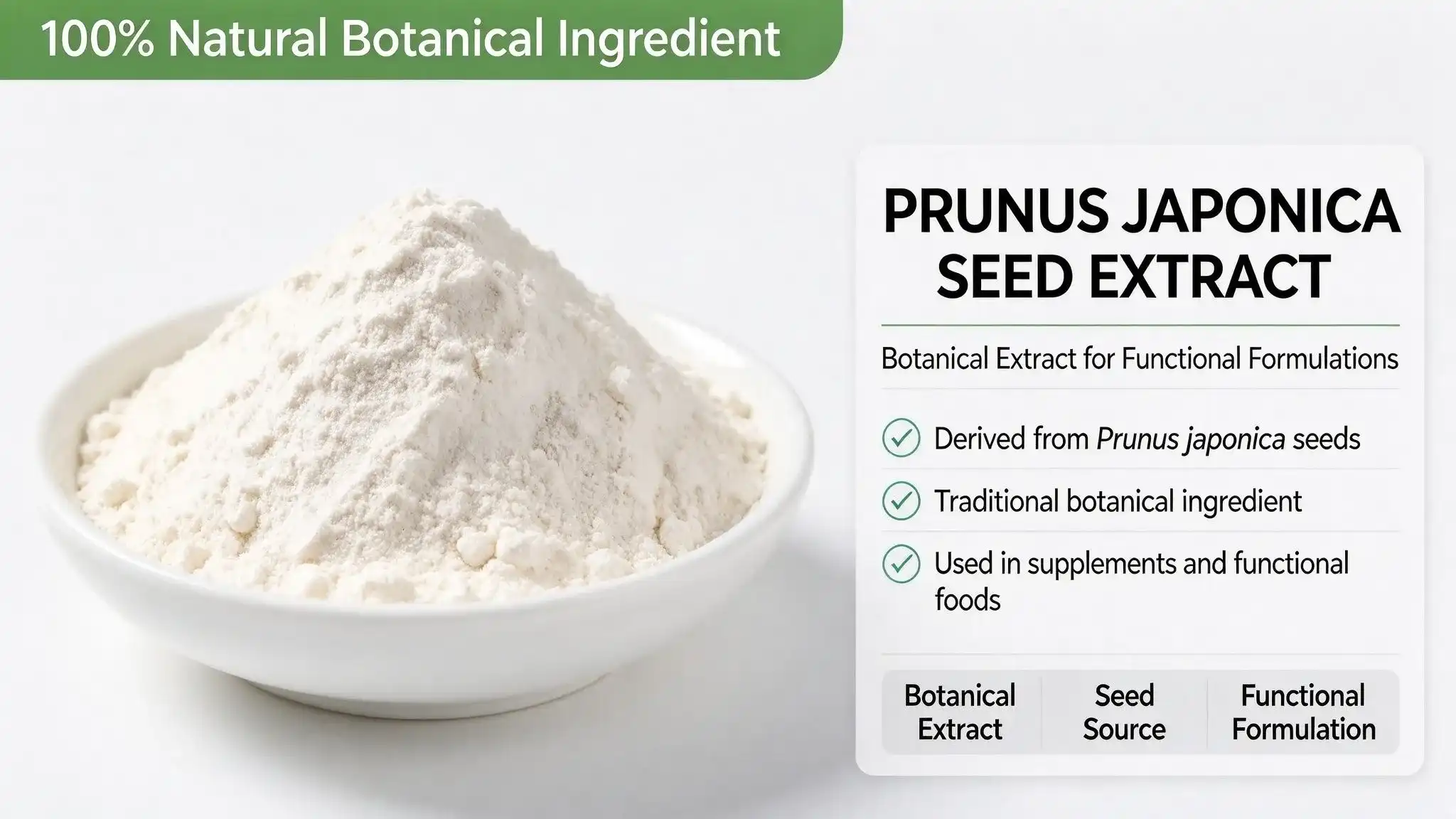
Our Prunus Humilis Extract, which we offer at Sigma, is a fine, white powder. The listed specification calls for amygdalin levels of 10% or more, particles no bigger than 80 mesh, a loss of 5% or less during drying, and microbial results that meet food standards. The item has ISO, HACCP, and Halal certifications, and it should be kept sealed in a cool, dry place. Health products and food additives are the only things that use it right now, so a skin care team should see it as something that needs to be tested, not as a finished cosmetic active. We say that this powder dissolves well, which means that it can be tested first in water-based systems.
Potential Skin Care Benefits of Prunus Humilis Extract
Antioxidant Support and Skin Conditioning
Skin care benefits from plant extracts' antioxidants, conditioning, moisturising, and shine. Some companies utilise prunus humilis extract in relaxation and ageing health campaigns. All of these botanical component possibilities make reasonable, but they require verification of a recognised composition. According to Huang and colleagues, antioxidant tests measure chemical behaviour, thus a good result in a test tube doesn't guarantee your skin will improve. This is why I start with antioxidant data. Next, examine the completed product for hydration, redness, brightness, and elasticity.
Using Responsible Claim Language
Your claims should reflect your evidence. "supports a radiant-looking complexion" and "formulated for skin conditioning" describe the product's appearance and usage without claiming to treat health issues. Some terms, including "heals," "treats," and "repairs," are confusing. If a US product claims to modify bodily appearance or function, it may be a medicine rather than a cosmetic. I believe marketing teams should draft claim wording with regulatory counsel before printing artwork. This arrangement saves time and maintains the product narrative honest, which helps shop reviews.
Suitable Product Formats
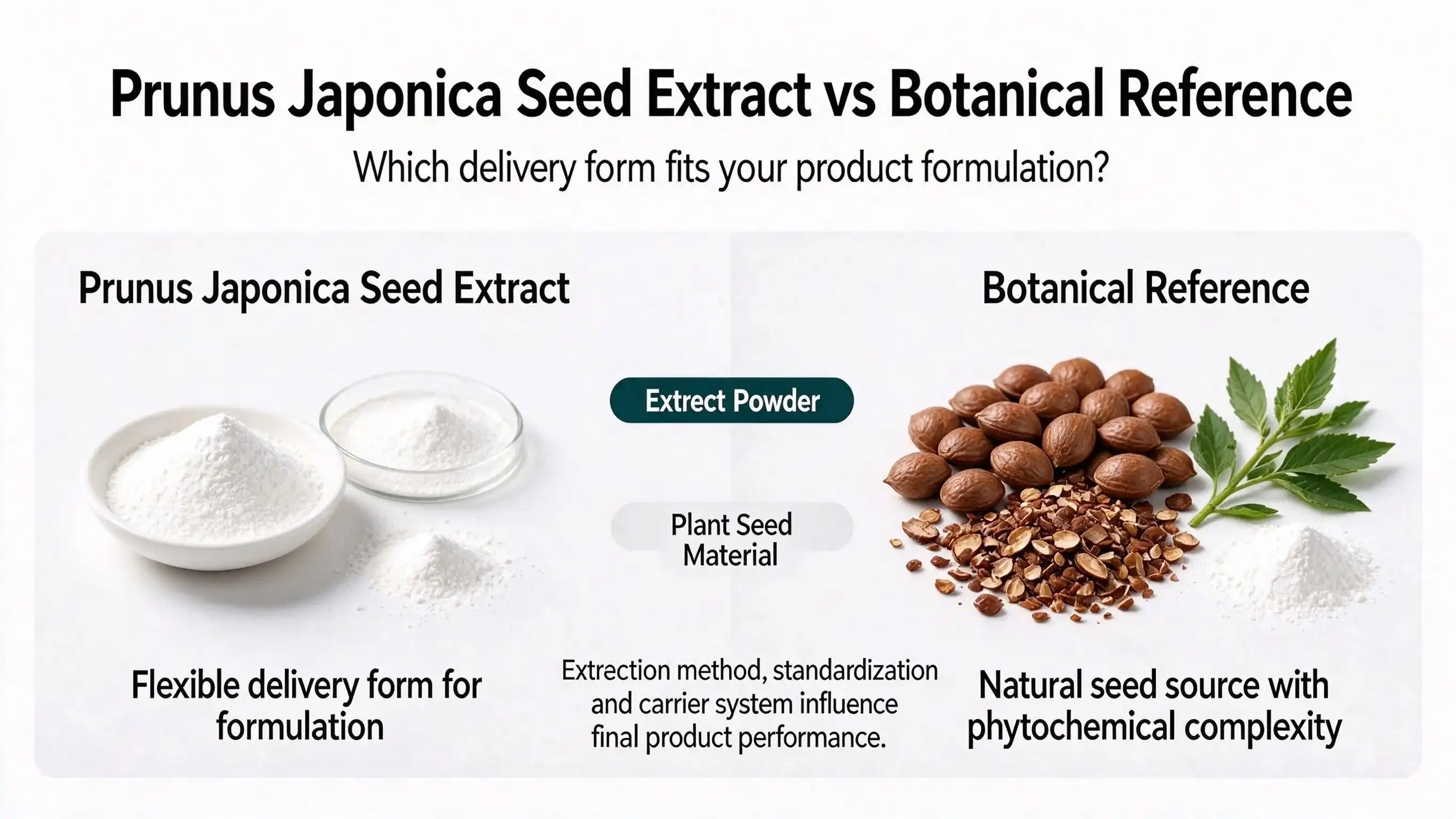
It is possible to test prunus humilis extract in serums, creams, masks, lotions, body care products, and scalp formulas to see if it works well with other ingredients and is safe. To start with a water-based powder that mixes easily in serums, masks, or lotions, add it to the water phase. If the cream has a lot of oil in it, you may have to do more to spread the powder out evenly. In order to set the right particle size, solubility, and preservative needs, brands that want to make OEM or private-label lines should choose the target format early on. I think you should start with one water-based format, make sure it's stable, and then add more.
How Prunus Humilis Extract Works in a Formula and What the Evidence Shows
Extraction Conditions and Marker Compounds
How an ingredient was extracted affects its formula performance. Water, ethanol-water, glycerin, and propanediol pull compounds. This implies extracts vary in colour, scent, solubility, and preservation needs. Since plant material varies, I usually need marker data. Amygdalin at 10% or higher marks our powder. A chromatographic fingerprint or total polyphenol result might reveal identify. Variation exists. Bolarinwa and colleagues reported in Food Chemistry in 2014 that UK kernel-based samples had varying amygdalin levels. Brands are secure from such swing due to batch-level standards and testing.
An Evidence Hierarchy
I organised evidence. Folklore and studies on related Prunus species provide background but don't guarantee a commercial extract works. Analysis and in vitro testing such antioxidant, total phenolic, and irritant assays follow. Review the controls, concentration, procedure, and lab quality for each number. Rebuilt skin models, animal testing, and controlled-use studies provide further evidence. A person evaluates the skin's moisture, redness, radiance, elasticity, and tolerability in the top layer. Your claims should be legitimate and meet the standards for your level.
Formulation Checks Before Scale-Up
A good lab result must stand up in a formula when using prunus humilis extract. Formulators should consider pH, how effectively the combination dissolves in water or oil, settles, mixes, and how packaging influences it. Colour changes from oxidation, precipitation, odour changes, light or heat sensitivity, and preservative effectiveness variations are common issues. Small-scale testing first. Accelerated stability, microbiological, and active-retention testing follow. After these, the team should concentrate on a pilot batch. Storage suggestions matter too. We should seal our powder in a cold, dry spot and package final items based on stability data, not estimates.
How to Choose a Prunus Humilis Extract Supplier and Start Development
Documents to Request
Supplier reviews begin with documentation. Ask for the technical data sheet, batch analysis certificate, safety data sheet, allergy declaration, product lifespan, and export documentation. Search for documentation of the plant's identification, where it was picked, how it was extracted, how it can be monitored, and batch consistency. Test findings should include heavy metals, pesticides, aflatoxins, residual solvents, microbiological quality, and foreign materials. Good systems matter too. Sigma follows ISO 9001, ISO 22000, and HACCP, and Prunus Humilis Extract is Halal. Buyers may also question suppliers about complaints, deviations, and change control.
Lead Time, Samples, and Customization
Speed and adaptability assist early on. In-stock 1 kilogram orders of this material come in two to three days. Custom orders of 25 kg take seven to ten days, while standard orders take three to five. Our ODM/OEM service handles packaging, labelling, extraction ratios, and particle sizes, and we provide free samples. Buyers should still check the MOQ, packing, Incoterms, payment terms, and how to address issues before placing an order. A written explanation of these topics keeps the purchasing, manufacturing, and quality teams on the same page from sample to purchase order.
Building the First Prototype
Define the project before mixing. It covers product type, plant part, extract, target market, and estimated yearly volume. Next, know the product's name, description, how it dissolves, ideal usage, pH range, and preservative compatibility. Rate the initial prototypes on appearance, fragrance, pH, viscosity, microbiological quality, stability, sensory profile, and packaging interaction. Test a batch without the extract so your team can observe how the powder alters things. This basic comparison shows how the chemical functions, making safety and claim work simpler later.
Comparing Prunus Humilis Extract With Other Ingredients and Meeting Regulatory Needs
Related Cherry Ingredients
They might look like the same thing on a price list, but prunus humilis extract is not the same thing as prunus tomentosa extract or generic cherry extract. It's possible for species, plant part, active profile, color, smell, and standardization to be different. Each piece of material needs its own quality and identity records. When I compare candidates, I put the species, plant part, marker data, traceability, cost, and ability to be bought in stores next to each other. For those who can't tell these differences, I treat the offer as a different ingredient and test it all over again.
Established Skin Care Actives
Vitamin C derivatives, vitamin E, ferulic acid, green tea extract, and resveratrol have long been utilised in beauty goods and have stronger skin studies. They vary in stability and sensory character. Prunus humilis extract, a novel botanical, might provide a brand a unique plant narrative or an antioxidant and skin-conditioning product. How the formula is developed, who the product is for, how much money you have, and how long you can obtain it all rely on the product. Teams often test the novel extract with an existing activity. A side-by-side test shows whether the herb provides value or costs more.
US and Global Regulatory Checks
In the US, the FDA doesn't evaluate most cosmetic ingredients before sale. The Modernisation of Cosmetics Regulation Act of 2022 (MoCRA) requires safety proof, facility registration, product listing, and negative event reporting. Every cosmetic product must be safety evaluated under EU Regulation 1223/2009. Things that work in one market may not in another. Amygdalin is a cyanogenic glycoside, thus a certified safety assessor should check the amount before each leave-on or rinse-off application. The review should include pollutants, phototoxicity, irritation, and sensitisation. Buyers should verify each market's INCI guidelines and use accurate names.
Conclusion
Prunus humilis extract might be useful for cosmetic brands because it is an antioxidant and can condition the skin. However, there isn't much evidence for this ingredient, so its benefits are best thought of as ideas to test. The article showed that results depend on the confirmed botanical identity, plant part, extraction method, and marker data. It also showed that finished-product, safety, and stability testing is needed to back up lab assays. What a brand can say is limited by clear language for claims and rules that apply to that market, such as MoCRA in the US and the EU cosmetics regulation.
Our water-extracted powder, which has 10% or more amygdalin, is currently approved for use in food and health products. prunus humilis extract with amygdalin needs to be carefully looked at for safety reasons. It's a good way to judge it by comparing it to well-known actives. The best choice was made after a supplier was thoroughly checked, species were confirmed, and tests were done in stages.
FAQ
Does prunus humilis extract have proven skin benefits?
Few published data on this ingredient's effects on human skin are available. Possible uses include antioxidants and skin conditioning, but they need to be tested on finished products. Before making any performance claims, brands should make sure they are backed by controlled tests.
Is cherry extract the same as prunus humilis extract?
No, because the species, plant part, and way of extraction are all different. Ask for the Latin name and proof of authenticity. Findings about a different kind of Prunus do not replace records for this one.
What are the specifications of Sigma's powder?
The powder is white and fine, made by extracting amygdalin with water. It has an 80-mesh size and loses no more than 5% of its amygdalin when it dries.
How quickly can I receive a sample?
Orders for 1 kg that are already in stock take two to three business days to arrive, and we offer free samples. Orders of 25 kg or more usually take 3–5 business days.
Which documents should I request?
Ask for the COA for the specific batch, the safety data sheet, the allergen statement, the technical data sheet, and the export documents. Ask for results on microbiology and contaminants as well.
Request a Prunus Humilis Extract Sample from Sigma
Looking for a company that makes prunus humilis extract and can answer your technical questions quickly? Sigma has a white powder that is extracted with water and has amygdalin levels of 10% or more. They also offer free samples and help with OEM/ODM. It takes two to three working days to get a 1 kg order that is in stock. You can email sarah@sxsigma.com with your plant part, specifications, and plan for how you will use it, or you can go to sxsigma.com for more information. Our team will look over your project and send you notes for your quality and formulation teams.
References
1. Chinese Pharmacopoeia, 2020.
2. Flora of China, Volume 9 (Rosaceae), 2003.
3. Food Chemistry, 2014. "Amygdalin content of seeds, kernels and food products commercially-available in the UK."
4. Journal of Agricultural and Food Chemistry, 2005. "The chemistry behind antioxidant capacity assays."
5. U.S. Food and Drug Administration, Modernization of Cosmetics Regulation Act of 2022 (MoCRA), 2022.
6. Official Journal of the European Union, 2009. Regulation (EC) No 1223/2009 on cosmetic products.