Is L-Carnosine Powder Worth Buying for Antioxidant and Muscle Support?
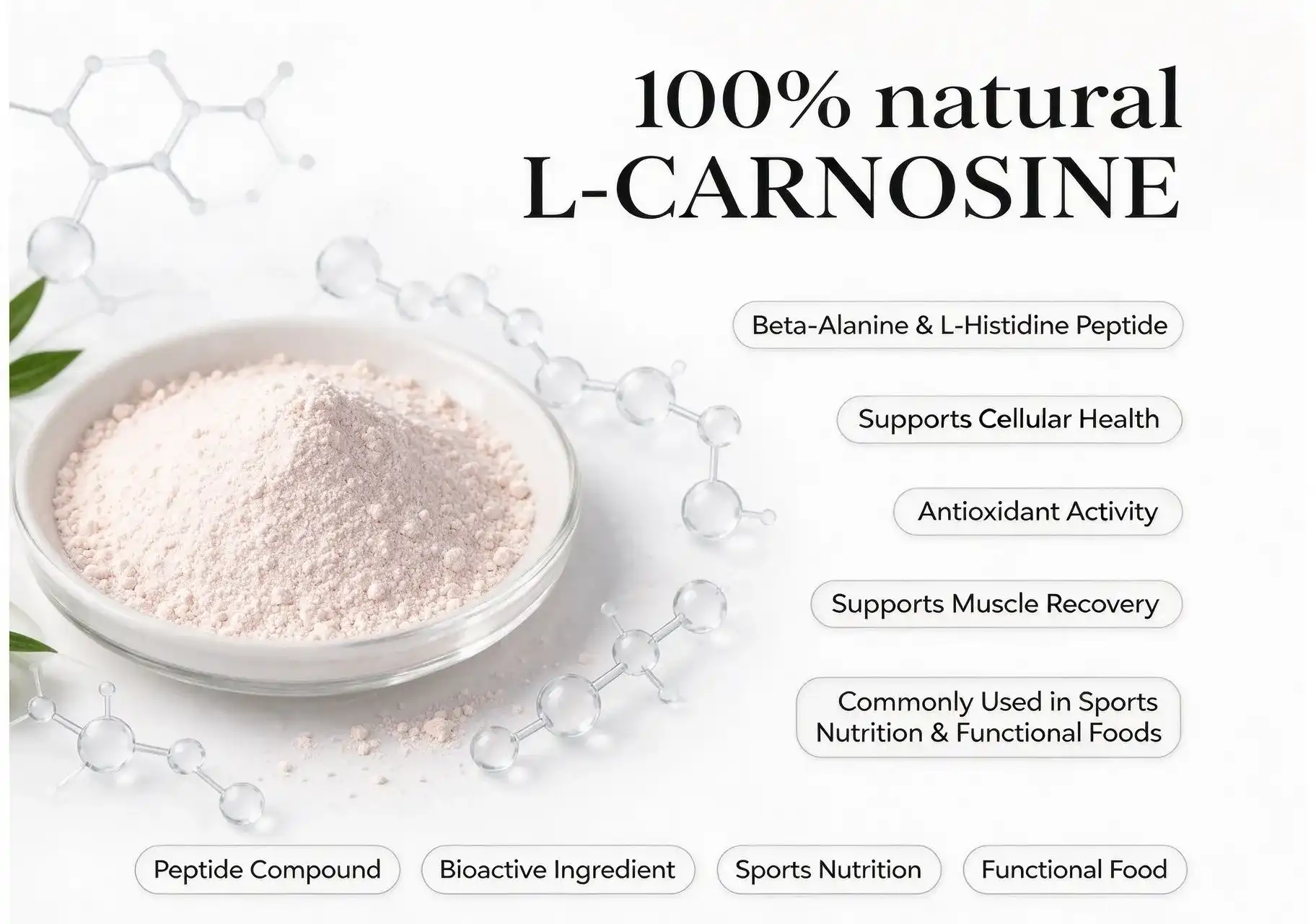
It is worth the money to use L-Carnosine powder in most antioxidant and muscle-building mixes, but only if the grade is checked out. This chemical is made up of beta-alanine and L-histidine, which are already found in brain, heart, and muscle tissue. Researchers have found that it can remove carbonyls, stop glycolysis, and keep the pH level inside cells stable. What's dangerous is how it was bought; serum carnosinase breaks it down quickly, while D-isomer content weakens it more slowly. A certificate of analysis doesn't tell you much until you read about the tests that were used to make each number. After the first look, I could see 98% of something that said it was 99% clear.
Because they need to make a choice instead of being told what to do, this is written for brand owners, purchasing managers, and R&D directors. Next, we'll talk about the benefits, form and ingredient comparisons, pre-purchase checks, formulation and dosage, safety and rules, cost, and then where the best supplier fits your needs. You can use what you've learned at the end of each part in a third-party test, a sample review, or a call with a partner. I say so when there isn't much proof.
What Are the Potential Benefits and Uses of L-Carnosine Powder?
Antioxidant and Anti-Glycation Activity in Plain Terms
Two main factors explain business interest. Starting with iron and copper, carnosine connects to free radical-generating transition metals. Methylglyoxal and other reactive carbonyl species are prevented from reacting. Also a sacrificial amine. A sugar molecule is targeted instead of nearby collagen, elastin, or enzyme. It takes longer to develop advanced glycation end products. That distinction matters where you stand. The phrase "antioxidant" on the label suggests anything. Anti-aging product buyers desire glycation control and carbonyl interception labels. This label works because of chemistry, not mood language.
Muscle Support and the Beta-Alanine Question
Skeletal muscle stores millimolar carnosine, which blocks hydrogen ions during intense exercise. This traps new brands. People who take oral carnosine don't have it in their blood long since carnosinase breaks it down into two amino acids. So, muscle reserves don't migrate much. Alanine, the rate-limiting precursor, elevates muscle carnosine more efficiently and has been researched most in sports nutrition. I sell carnosine products by saying they help muscles repair and remain healthy, not by improving performance. Use both ingredients in one recipe. Putting one assertion above another is wrong.
Healthy Aging, Brain, and Eye Applications
Other than muscle supplements, carnosine is in many items. Brain, skin, and eye formulations are available. The dipeptide in brain tissue prevents metals from binding proteins, according to lab testing. Human cognitive trials are still tiny. Japan offers the finest commercial opportunities. The name "carnosine" is widely recognised there since it has long been utilised in anti-aging eye drops and skin care products. Americans don't always comprehend it, so they market by talking about skin and good ageing. Before printing, both directions need structure/function language and a regulatory check.
How Does L-Carnosine Powder Compare with Other Product Forms and Ingredients?
Bulk Powder vs. Finished Capsules and Tablets
Formulators may pick portion size, mix ratios, and delivery when buying L-Carnosine powder. It generally lowers serving cost. What you sacrifice determines your ability. Powder requires mixing, pressing, or tableting instruments and quality control professionals to send out batches. Some brands can't create capsules, so they purchase completed ones. This speeds up product launch, saving them money. Both ways are good. Before I recommend either, can your plant prove that the content is the same at the anticipated dose? If no, the powder savings are utilised for extra work.
L-Carnosine vs. Beta-Alanine
You can't swap these two things. Muscles make carnosine from beta-alanine. The complete dipeptide carnosine protects cells from damage and glucose buildup. Beta-alanine works as advertized and has a well-known dosing range. Beta-alanine doesn't affect skin, while carnosine does. It preserves cells, decreases ageing, and treats skin. Some brands employ them simultaneously. Beta-alanine boosts body reserves, while carnosine regulates local carbonyls. It makes sense on paper, but the label narrative is confusing and doubles ingredient costs.
Reading Grade Claims on a Spec Sheet
Legal definitions of "pure," "natural," "synthetic," "micronised," and "pharmaceutical grade" are unclear. A question for everyone. What's pure comparable to? Chemicals or enzymes make commercial carnosine, thus it must be natural? How tiny are micronised particles? Laser diffraction or sieving may reveal this. How is the pharmaceutical grade made, and does the supplier have the monograph? Ingredients are food-grade and supplement-approved. They may work for capsules but not eyes. Request the specifications sheet first. After that, determine which clause the certificate of analysis examines.
What Should Buyers Check Before Purchasing L-Carnosine Powder?
Identity, Assay, and the D-Isomer Question
Say who you are. L-Carnosine is C9H14N4O3 and CAS 305-84-0. About 226.2 g per mole. HPLC should test at least 99.0% and connect the chromatogram to the lot number. Chirality needs its own line. L-carnosine is separated from D-carnosine, an enantiomer that doesn't aid living creatures, using a chiral column. Rotations between +20.0° and +22.0° support L-forms. An simple HPLC approach can't always tell. I have them identify the column and mobile phase before naming the isomer.
Residual Solvents, Heavy Metals, and Microbial Limits
This procedure leaves hints, which the certificate should mention. Request residual solvent data to compare to ICH Q3C limitations. List each solvent and detection level instead of a summary line that disappears. Heavy metals should be kept at 10 ppm or fewer. Mercury, arsenic, cadmium, and lead need limitations. Yeast, mould, E. coli, Salmonella, and total aerobic count should be tested. If applied on the eyes, endotoxin is essential. This is why patented cleaning methods are helpful. A generic PDF from the provider after these queries tells you anything.
Physical Data That Decides Whether Production Runs Smoothly
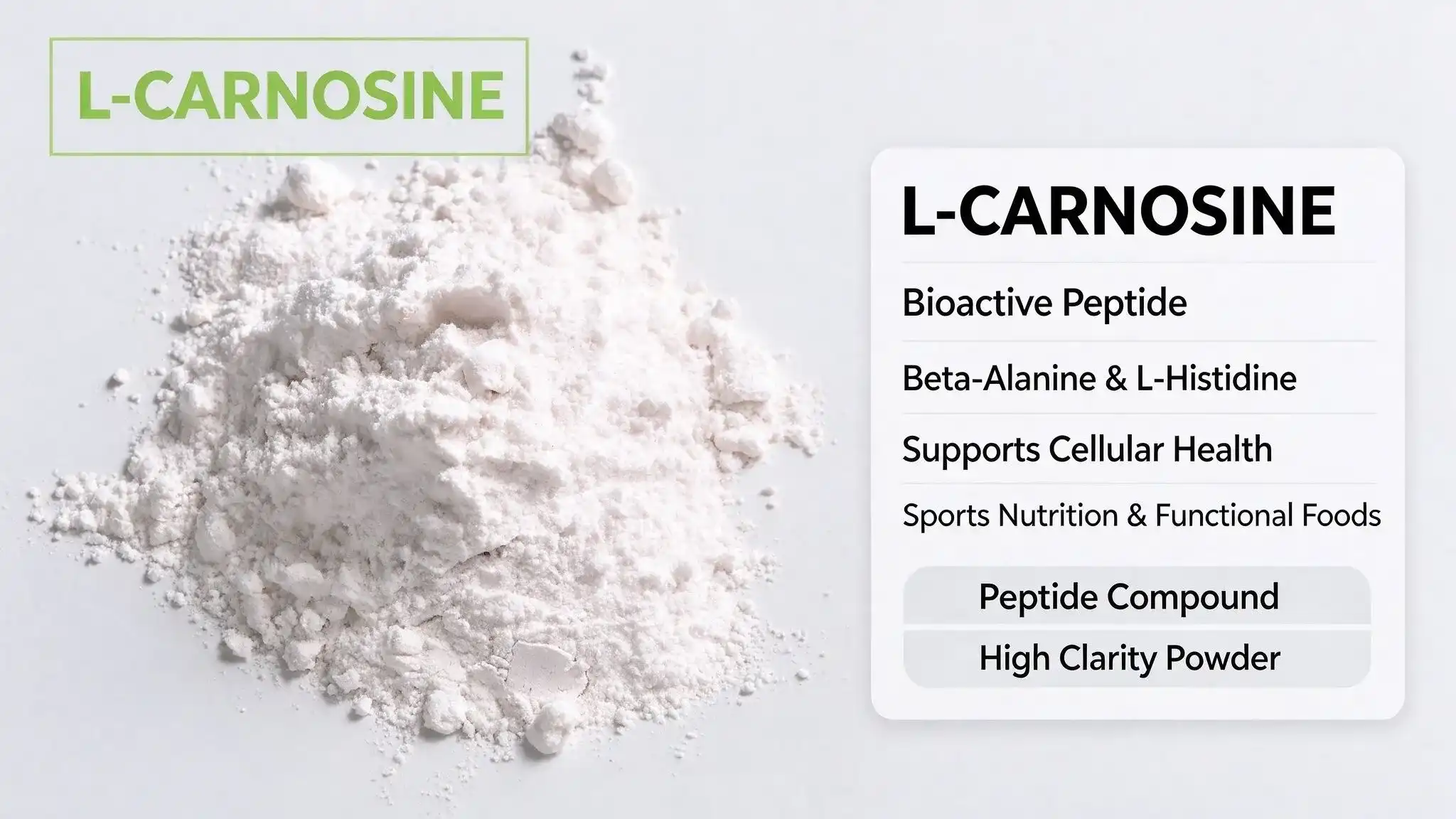
How things operate frequently depends on physics. It's OK for beverages and liquids if L-Carnosine powder dissolves beyond 50 mg/mL in the water. Dissolving poorly causes haze or sediment weeks after filling the bottle. 100 mesh packets are clean-tasting and good for capsule mixtures. The moisture profile is tight when drying loss is 0.5% or less. This is required since the powder absorbs water from moist air. Determine flow, bulk density, and tap density. That figure indicates whether your filler will travel rapidly or not due to hopper bridging.
How Should L-Carnosine Powder Be Formulated and Taken?
Setting Dosage for the Finished Product
I think there is no "universal dose," and I don't trust anybody who claims there is. Human study researchers often utilise 1–4 grams each day. When making anything, your recipe must account for manufacturing loss, mixing variances, and assay changes over time. Each destination market has intake and claim language rules. Write down my claim and who I'm writing for. I work backward to a defendable daily intake. I conclude with a verified overage. Label "consumer directions" describe how to serve the product, not how to create a batch.
Capsules, Tablets, and Sachets
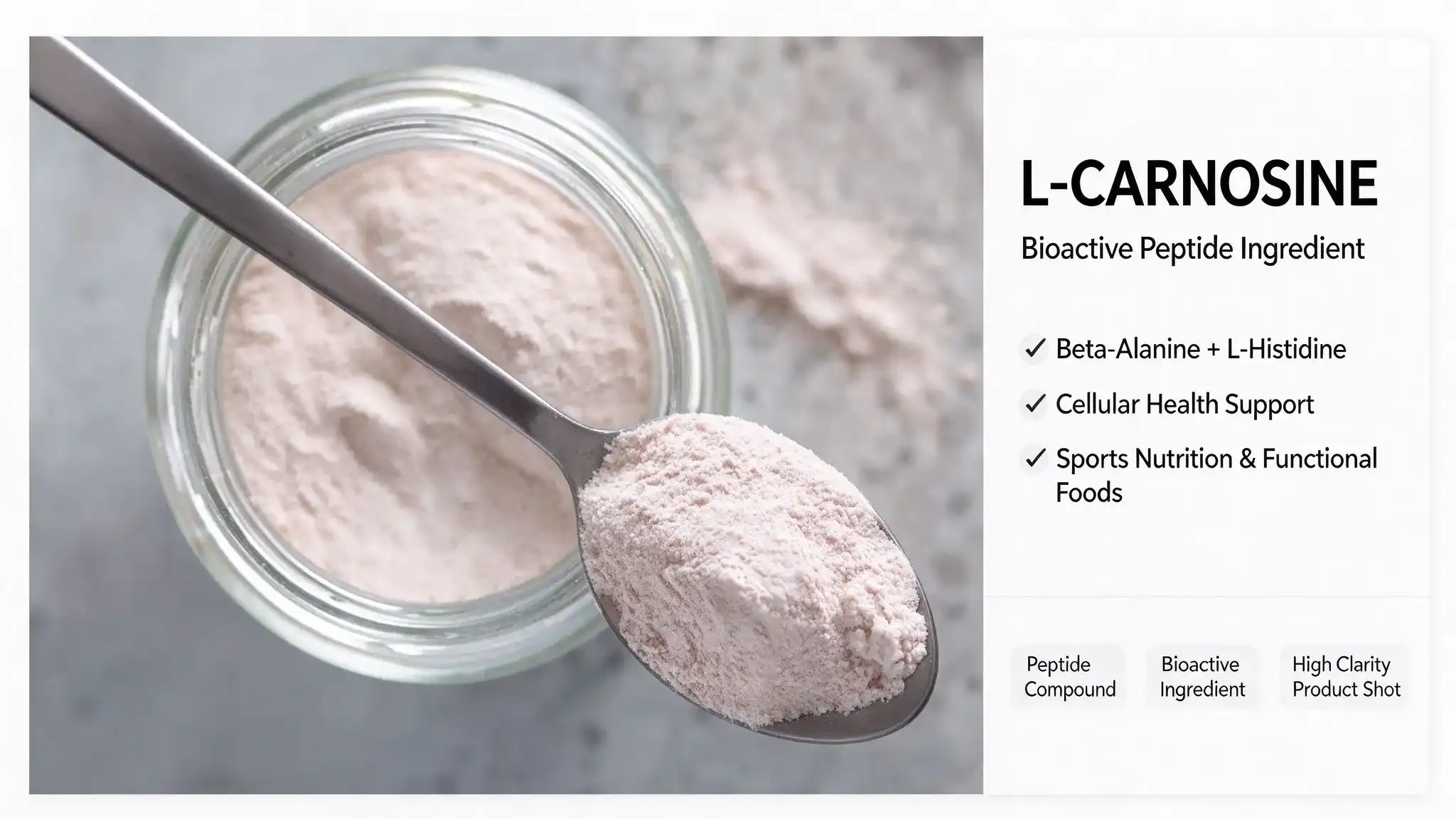
Different supplement forms have different checks. Powder must enter capsules smoothly and quickly. Also, make sure the density matches the fill weight you desire in the shell size. Check whether dipeptide can be pressed before putting in tablets. Pure crystal may require a binder or roller compaction to avoid capping. While filling, sachets permit water into powder from larger particles and flavour mixtures. Desiccant and foil laminates repel water. Use your own gear for a brief test run before joining a commercial lot.
Beverages, Functional Foods, and Topical Formats
You can test how well something dissolves in real life as well as in a beaker with a neutral pH when you use liquid formats. Carnosine works best when the pH level is neutral to slightly alkaline. When you add acidic bases to drinks, they change both the taste and the stability of the substance. As you test the shelf life at the pH you want, keep an eye out for bitterness and precipitation, and make sure that oxygen can't get in through the door.
The thermal profile of the ingredient needs to be checked before the extrusion or pasteurization steps are taken because functional foods put ingredients through more heat. Emulsifiers and preservatives need to be able to work with serums and creams that are put on the skin. More and more skin care companies are making cosmetic-grade carnosine to help keep glycation in check in skin that looks old and dull.
What Are the Safety, Side Effects, and Regulatory Considerations?
Human Evidence, Serving Size, and Tolerability
Food has traditionally included carnosine, and taking it as a supplement has minimal and moderate negative effects. Rather than alone, compare it alongside the rest of the offering. The additional substances, total daily exposure from several products, and product usage affect the image. I trust human literature to figure out the particular dosage in the exact population, not broad safety assertions. If the research is brief, the label should be too. Honesty is preferable for brand protection than making a grandiose claim that might bring you a government letter.
Who Should Avoid It or Use Caution
Be cautious if you have kids, are pregnant or breastfeeding, use prescription medicines, or have a health issue when using L-Carnosine powder. Carnosine's metal-chelating capacity is usually harmless, however mineral-handling disorders should be monitored. Remember that this is simply about how the substance is created and labelled, not why to avoid it. Anti-aging regimens that stack, such taking three or four comparable supplements, are also checked for overlap. Warnings, instructions, and an increased intake cost nothing and reduce complaints over time.
Regulatory Status Across the US, UK, EU, and Japan
Rules change often, so one strategy may not work in many marketplaces. Carnosine supplements are available in the US. Labels must clearly distinguish between claims that a supplement will treat an illness and its structure and function. The regulatory agency must determine whether the application is food-safe or GRAS. New foods cannot be claimed or used in particular ways in the UK or EU. Countries have different laws. Japan regulates carnosine in cosmetics and eye care. Before approving artwork, I check each SKU's market-by-market table. Because a claim that works in one nation may not allow a shipment in another.
What Does L-Carnosine Powder Cost, and Which Supplier Fits Your Business?
Price per Kilogram vs. Cost per Serving
This pricing per unit doesn't say anything. To calculate the price per serving, add shipping, taxes, testing, and other recipe requirements to each quotation. High-purity synthesis is expensive, and modest orders reflect that. Trial lots of 25 kg usually cost much more than the annual contract fee. This doesn't portend problems. I need separate sample, pilot, and commercial volume quotations to see the scale curve. Knowing what happened when one supplier's pricing is considerably lower than the market is crucial. This may be the assay foundation, test scope, solvent class, or missing paperwork.
What to Ask a Supplier Before a Pilot Run
It should answer technical questions first, then business questions when someone sends you a packet. This is what I ask every company that sells L-Carnosine powder the first time I talk to them.
- Documentation: a current specification sheet, a lot-specific certificate of analysis with test methods named, certificates for ISO 9001, ISO 22000, HACCP, Kosher, and HALAL where relevant, plus a solvent residue report. Confirm that each certificate names the manufacturing site and sits inside its validity window.
- Supply depth: stated stock levels, production capacity, and lead time in writing. A supplier holding ten to twenty tons of safety stock and shipping within five to seven working days behaves very differently from one quoting against future production runs.
- Customization: whether the supplier micronizes to a requested mesh, adjusts packaging, supports private label, and advises on slow-release delivery. Because carnosinase clears carnosine quickly, sustained-release design often decides whether a capsule delivers meaningfully.
By reading all three answers together, I can tell if the other party is a maker who runs the process or a go-between who sells a lot from another plant.
When L-Carnosine Powder Is Not the Right Choice
There are times when the honest answer is "no." If your claim is based on performance results that are better supported by evidence for beta-alanine, then carnosine will have a hard time charging more for what it is. It makes more sense to work with someone who can handle powder if your plant can't. If the destination market puts limits on the word or ingredient that can be used, it is better to change the recipe than to go against the rules. A cheap antioxidant might also work if the price you want to charge for your product is too low for a high-end raw material. Brands should not put out products that can't cover their costs. I'd rather lose a sale than see that happen.
Conclusion
If a company wants to use L-Carnosine powder for muscular nutrition, anti-glycation, and antioxidant purposes, and the buyer reads the label, it is a good buy. Metals are chelated, carbonyls are quenched, and proteins are protected against glycation by giving up something else. The chemistry is well explained. When you move muscles, be careful because carnosinase limits the amount of intact dipeptide that can get to tissue.
Beta-alanine is still the best way to build muscle. It is more important to look at the assay, chiral purity, solvent and heavy-metal data, moisture, solubility, and particle size than the unit price when you are shopping. It depends on the country and the product it is sold in to change the dose. Suppliers can earn trust by giving clear documents for each lot, steady batches, and helpful technical support.
FAQ
Is L-Carnosine powder safe for daily use?
Human studies that have been published show that supplements are well tolerated and have only mild side effects that rarely happen. Talk to a doctor first if you are a child, pregnant or nursing woman, or someone who is taking medicine. Your finished product is the last piece in the safety puzzle, so look at how much of each ingredient you need each day.
How does carnosine differ from beta-alanine?
One amino acid, beta-alanine, slows down the process of muscles making carnosine. Carnosine is the whole dipeptide, and it can protect cells from damage and stop sugar from building up. Beta-alanine is good for performance, while carnosine is good for skin, aging, and cell protection.
Which purity should I specify?
To be sure that the L-form is present, check that the HPLC reading is at least 99.0%, the specific rotation is between +20.0° and +22.0°, there is at least 0.5% loss on drying, and the heavy metals level is at least 10 ppm. Get the chromatogram that has the lot number written on it.
How do I store the material?
It should be kept somewhere cool, dry, and out of the light. Since the powder soaks up water, keeping the humidity low while it is being weighed and filled keeps the assay safe while it is stored. How long does it take between retests? Ask your supplier.
Request L-Carnosine Powder Samples and a B2B Quotation from Sigma
I will send Sigma my specs, and they will send mine to you. L-Carnosine powder from Sigma comes from a company that is ISO 22000, HACCP, Kosher, and HALAL certified. There is 10–20 tons of safety stock on hand, and they can ship in 5–7 business days. The material is ≥99% pure at 100 mesh, and the heavy metals level is at or below 10 ppm. You can get free samples, help with OEM/ODM, and a one-year guaranty on quality. Send an email to sarah@sxsigma.com with your purity goal, application, and volume to get a spec sheet, current COA, and quote.
References
1. Boldyrev AA, Aldini G, Derave W. Physiology and pathophysiology of carnosine. Physiological Reviews, 2013.
2. Sale C, Saunders B, Harris RC. Effect of beta-alanine supplementation on muscle carnosine concentrations and exercise performance. Amino Acids, 2010.
3. Hipkiss AR. Carnosine and its possible roles in nutrition and health. Advances in Food and Nutrition Research, 2009.
4. Aldini G, Facino RM, Beretta G, Carini M. Carnosine and related dipeptides as quenchers of reactive carbonyl species: from structural studies to therapeutic perspectives. BioFactors, 2005.
5. Derave W, Ozdemir MS, Harris RC, et al. β-Alanine supplementation augments muscle carnosine content and attenuates fatigue during repeated isokinetic contraction bouts in trained sprinters. Journal of Applied Physiology, 2007.
6. Quinn PJ, Boldyrev AA, Formazuyk VE. Carnosine: its properties, functions and potential therapeutic applications. Molecular Aspects of Medicine, 1992.