What Are Soybean Peptide Benefits for Food Formulations?
Soybean peptide offers measurable advantages for food formulators working across sports nutrition, functional beverages, and clinical nutrition. Derived from non-GMO soy protein isolate through enzymatic hydrolysis, these short-chain oligopeptides carry a molecular weight at or below 1,000 Da, which enables absorption through the PepT1 transporter rather than the slower amino acid pathway. The result is faster bioavailability, cleaner label potential, and excellent water solubility — making soy-derived peptides a practical choice for product developers who need protein performance without formulation compromises.
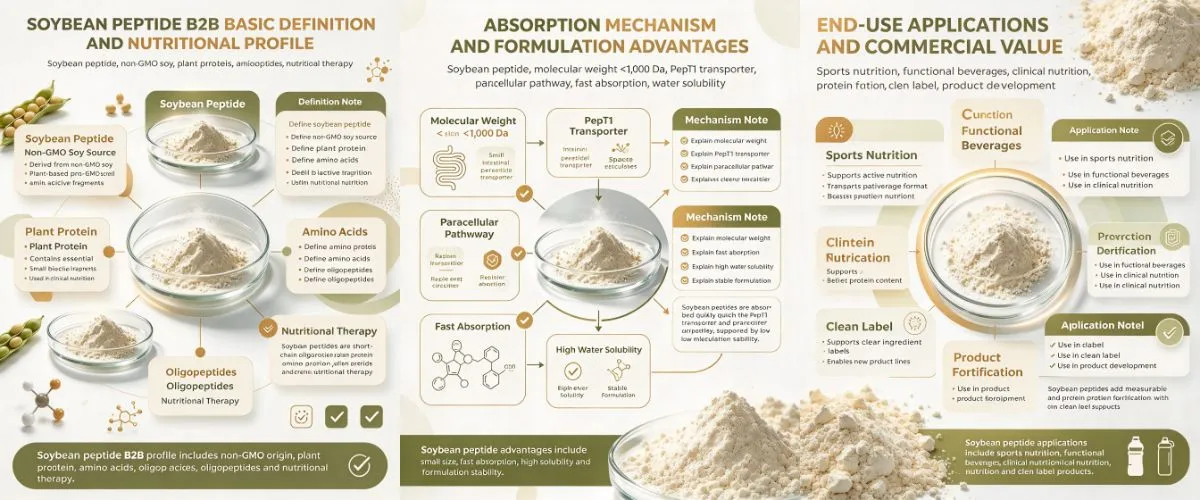
Understanding Soybean Peptides and Their Nutritional Profile
What Makes Soy Peptides Different from Whole Soy Proteins
Long, whole protein chains make up standard soy protein isolate (SPI). These chains need to be fully broken down in the gut before they can be taken. Enzymes leave behind pieces of 2 to 6 amino acids when they break these chains apart. Oligopeptides are made and go straight into cells through gut peptide transport. They don't go through the slower routes for amino acid uptake. Because of this difference in structure, peptide-based products raise amino acids in the blood more quickly than SPI does when used for therapy.
Amino Acid Composition and Bioavailability
Oligophages made from soy keep all the amino acids that are in the parent protein. Some of these are necessary amino acids, like lysine and leucine. A lot of arginine and glutamine are also in them. These help the immune system and blood vessels work better. Bioavailability tests show that parts of digested soy peptides that are less than 1,000 Da keep a lot more nitrogen than whole soy protein. A study in the Journal of Agricultural and Food Chemistry proved this to be true.
Antioxidant and Functional Properties
There are antioxidants naturally found in soy peptides. This is because free amino acids are released when the protein is broken down. A few types of peptides can also stop ACE from doing its job, which is important for heart health claims. Because of these useful features, manufacturers can use a single ingredient to help with a lot of different health issues, from sports healing to controlling blood pressure.
Core Benefits of Incorporating Soybean Peptides in Food Formulations
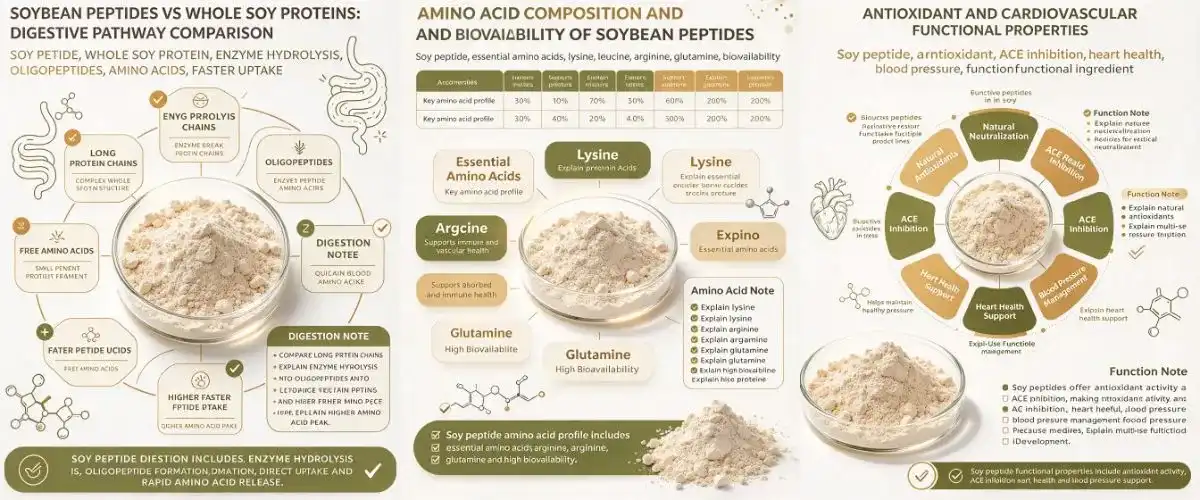
Rapid Absorption and Muscle Recovery Support
Soy oligopeptides, also known as soybean peptide, are great for healing because they are quickly taken by the body. You can get amino acids into your muscles 30 minutes after eating them because they don't go through the enzyme action of the digestive system. This quality is very important for protein shakes and post-workout powders that are ready to drink and marketed to athletes and people who are serious about their fitness.
100% Water Solubility Across a Wide pH Range
When the pH level is close to 4.5, SPI crystallizes. But from pH 2 to 10, soy peptides stay fully soluble. In other words, they won't settle or get cloudy when added to functional drinks that are acidic, neutral, or alkaline. Standard tests have shown that the product we sell dissolves completely in water and even without any problems in sour drink mixes.
Here are the main benefits of formulation that procurement teams always look at first:
- Zero sedimentation in acidic beverages: Full solubility at pH 3.0–4.0 allows clean incorporation into fruit-flavored sports drinks without stabilizers.
- Low viscosity at high concentrations: The ultra-low viscosity profile prevents gelation in protein-dense beverages, which reduces processing complexity on high-speed filling lines.
- Thermal stability up to 121°C: Peptides retain structural integrity through standard retort sterilization, making them suitable for shelf-stable RTD products.
For manufacturing teams that work with different kinds of goods, these features directly lower the risk of having to change the recipe.
No Bitter Taste — A Formulation Barrier Removed
Soy hydrolysates from the past taste bitter and last a long time. This is because amino acids that don't mix with water, like leucine and phenylalanine, are shown. This issue is fixed by our product, which uses a unique method that blends specific exo-peptidase treatment with activated carbon absorption. The people who make the product say it looks like pure water because it is neutral to light in color. This means that high-intensity hiding agents are not needed for clear drinks and powder that doesn't have a flavor.
Comparing Soybean Peptides with Other Protein Ingredients
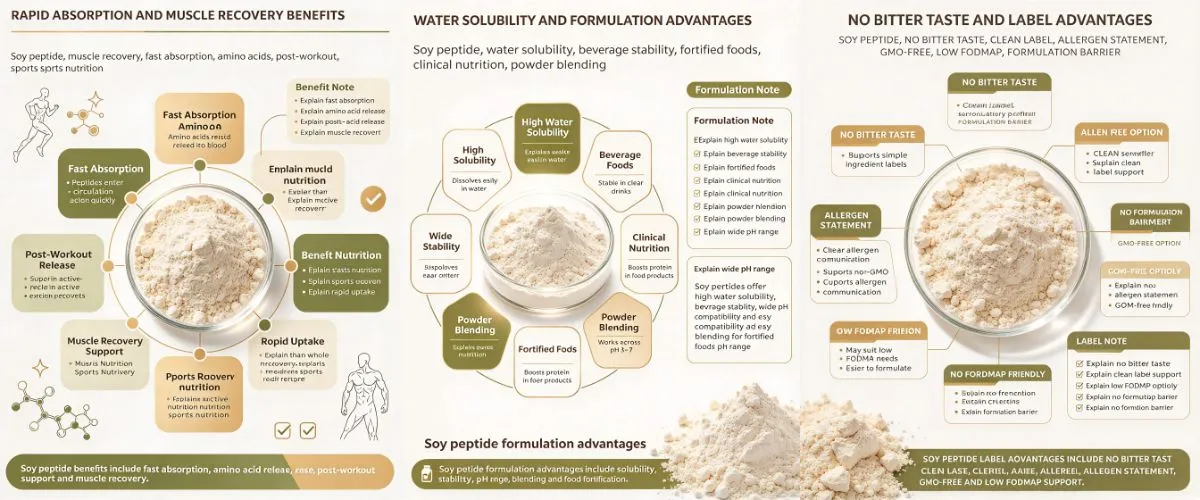
Soy Peptides vs. Whey Hydrolysate
When it comes to sports nutrition, whey hydrolysate is often used as a measure of uptake. On the other hand, soy oligopeptides move through the PepT1 pathway in a way that is similar to how plasma amino acids do. Soy peptides are better than whey hydrolysate because they are faster to absorb and have more arginine and glutamine, which help the body make nitric oxide and heal the gut barrier. Whey hydrolysate is not as good in these areas.
Soy Peptides vs. Pea Protein
More and more people are using pea protein as an alternative plant protein that is safe. That being said, it has a high viscosity and doesn't dissolve well in salty places. People who make drinks and powders should use soybean peptide instead of other proteins because they are better at mixing with water and have a wider range of amino acids at the same protein inclusion rates.
Soy Peptides vs. Soy Protein Isolate
The things that set it apart are its bioactivity and processing flexibility. Since SPI has to be fully broken down before amino acids can be used, it isn't as useful in clinical nutrition or formulas for older people. Peptides from soy with a molecular weight of less than 1,000 Da are taken in right away. Because of this, more and more professional doctors are prescribing hydrolyzed forms to people who have recently had surgery or who have trouble digesting food.
Procurement Considerations for Soybean Peptides in Bulk Manufacturing
Certifications and Quality Standards That Matter
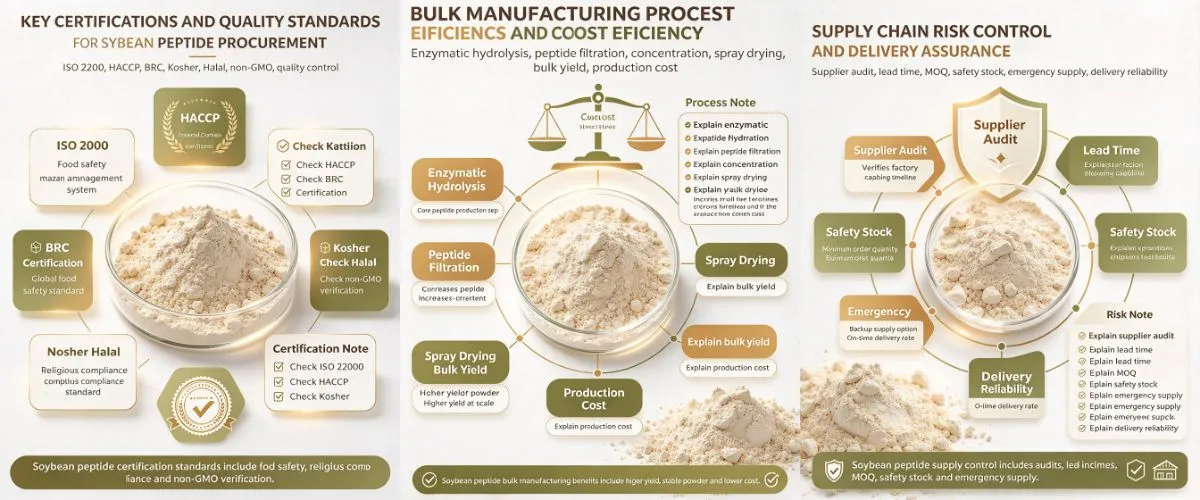
To judge a soybean peptide provider, the first thing you should look at is their quality paperwork. Providers should have ISO 22000, HACCP, and Halal certificates at the very least. Every batch of production should come with a full Certificate of Analysis that lists the heavy metals, microbiological counts, pesticide residues, and peptide content (which should be at least 80% dry). It should also say on the certificate that the molecular weight distribution is ≥85% below 1,000 Da by GPC/HPLC.
Non-GMO Source Verification and Allergen Compliance
Food buyers in the US and EU want non-GMO identity protection (IP) approval more and more, and the Asia-Pacific functional food market already has it. Suppliers should be able to show proof of where the raw materials came from and be ready to show proof of the allergen status of the goods they make. Beta-conglycinin and glycinin are two major soy epitopes that are broken down by enzyme processing. However, FDA and EU rules say that the item still needs to say "contains soy" on the label.
Batch Consistency and Supply Reliability
When the molecular weight distribution changes from batch to batch, it changes the ACE-inhibitory effect and the regularity of the absorption rate. This is why it's hard to believe what the label says. Before making a big purchase, buying teams should get GPC/HPLC data for more than one batch of goods. The provider should have constant countercurrent extraction methods and in-line QC checks so that there is less difference between batches.
Practical Guidelines for Using Soy Peptides in Food Production
Recommended Inclusion Rates by Application
Inclusion rates for soybean peptide powder supplements are usually between 5 and 15% by weight, and for ready-to-drink drinks they are between 1 and 5% by weight. This depends on how much protein is wanted and how dense the finished product is. Most meal replacement shakes start with 10–12% protein because that gives the shake a good texture while still adding enough protein. A lot of the time, nutritional shakes for people who just had surgery aim for the higher end of the range to meet their clinical protein needs.
Storage and Handling on the Production Line
Because their hydrophilic groups are out in the open, soy oligopeptides can take in water. When things are being made, the relative humidity should stay below 40%, and when big bags are empty, they should be sealed back up right away. The best place to put things is somewhere cool, dry, and safe. Most foods will stay fresh for 24 months if they are kept in the metal foil their came in.
Application Formats That Work Best
Oligopeptides from soy work well with many kinds of goods. Energy drinks for sports should not be too sticky and should have a stable pH. Protein shakes are better because your body absorbs them more quickly. It's easy for your stomach to handle nutritional powders for after surgery that meet professional dietary goals. It is easy to spread out quickly in both cold-mix and hot-fill methods because the powder has particles that are 80 mesh.
Conclusion
Soy oligopeptides, namely soybean peptide, are very useful because they are easily absorbed, dissolve completely in water, stay stable at high temperatures, and don't taste good. For purchasing managers looking for ingredients for sports nutrition, functional beverages, or clinical nutrition products, a high-quality, low-molecular-weight soy peptide is a clear choice. It makes formulations easier, supports multiple health claims, and works consistently at scale. You should pick a provider whose molecular weight data, batch records, and certificates can be checked.
FAQ
Does soy peptide have a beany or bitter taste?
Because they have hydrophobic residues that are out in the open, lower-grade hydrolysates often taste bitter. When you treat things with exo-peptidase and activated carbon adsorption, they get rid of their taste. This is great for powders and drinks that don't have any taste. Sigma's products go through a unique step called "debittering" that is meant to meet standards for clean taste.
Is soybean peptide suitable for sports nutrition labeling?
"Rapid protein replenishment" is possible because of how it is taken in by the PepT1 transporter. It also has the right amount of arginine and glutamine to help the nervous system and muscles recover.
What certifications should a reliable supplier provide?
Each batch must have ISO 22000, HACCP, Halal, and a full COA at the very least. To sell in controlled markets, you need heavy metal panels and GPC/HPLC studies of molecular weight distribution.
How does molecular weight affect ACE-inhibitory activity?
The sub-1,000 Da fraction is where most of the peptide patterns that stop ACE from working can be found. The biological activity will be different between batches whose molecular weight distribution isn't the same. A multi-lot GPC report should always be asked for before a big order.
Can it be used in acidic beverages without a stabilizer?
Yes. It can be mixed with water up to pH 4.0, but around pH 4.5, SPI starts to harden. There is no need for extra preservatives when using fruit juice.
Partner with Sigma — Your Trusted Soybean Peptide Manufacturer
Sigma has a food-grade soybean peptide that has been tested and is ≥80% protein, ≤1,000 Da in molecular weight, 100% water-soluble, and doesn't taste sour. It is certified by ISO, HACCP, and Halal, and it's in stock so it can be sent out right away. When OEMs ask for things like custom particle size and molecular weight distribution, our plant in Shaanxi can do it. To get a free sample or a good deal on a lot of them, email Sarah at sarah@sxsigma.com or go to sxsigma.com.
References
1. Hartmann, R., & Meisel, H. (2007). Food-derived peptides with biological activity: From research to food applications. Current Opinion in Biotechnology, 18(2), 163–169.
2. Korhonen, H., & Pihlanto, A. (2006). Bioactive peptides: Production and functionality. International Dairy Journal, 16(9), 945–960.
3. Li, G. H., Wan, J. Z., Le, G. W., & Shi, Y. H. (2006). Novel angiotensin I-converting enzyme inhibitory peptides isolated from Alcalase hydrolysate of mung bean protein. Journal of Peptide Science, 12(8), 509–514.
4. Messina, M. (2016). Soy and health update: Evaluation of the clinical and epidemiologic literature. Nutrients, 8(12), 754.
5. Yoshikawa, M., Fujita, H., Matoba, N., Takenaka, Y., Yamamoto, T., & Yamauchi, R. (2000). Bioactive peptides derived from food proteins preventing lifestyle-related diseases. BioFactors, 12(1–4), 143–146.
6. Kannan, A., Hettiarachchy, N. S., Marshall, M., Raghavan, S., & Kristinsson, H. (2008). Shrimp shell peptide hydrolysates inhibit human cancer cell proliferation. Journal of the Science of Food and Agriculture, 88(9), 1696–1702.