What Are Perilla Extract Applications in Natural Products?
Perilla Extract, derived from the leaves and seeds of Perilla frutescens, stands out as a high-performance botanical ingredient in modern natural product formulations. Its applications span dietary supplements, functional foods, cosmeceuticals, and animal nutrition. Rich in rosmarinic acid, polyphenols, and omega-3 fatty acids, this extract delivers anti-inflammatory, antioxidant, and allergy-relief benefits. B2B buyers across health supplement brands, cosmetics manufacturers, and food technology companies increasingly rely on perilla-based solutions to meet consumer demand for clean-label, plant-derived alternatives to synthetic additives.
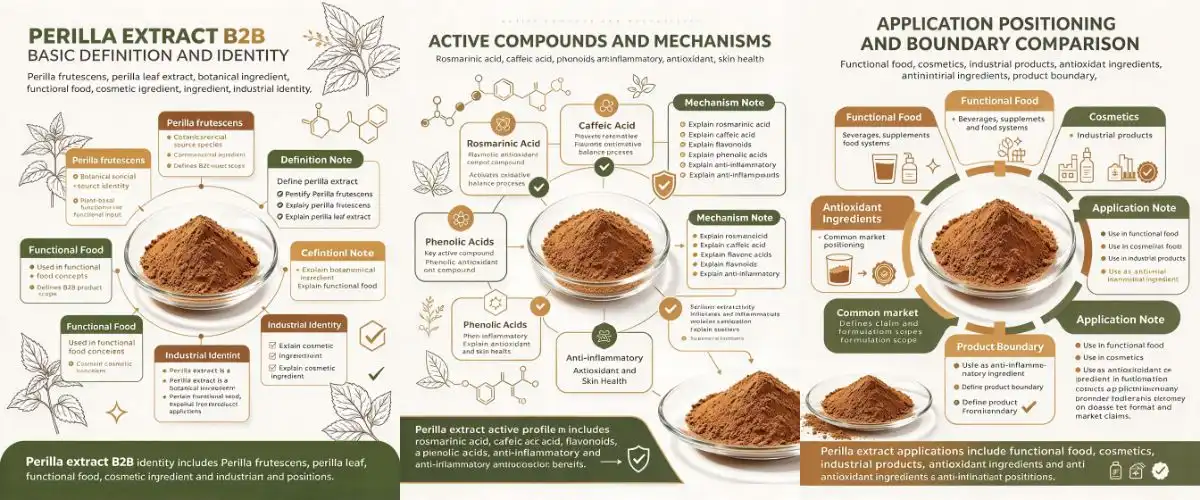
Understanding Perilla Extract: Composition and Health Benefits
Botanical Origin and Extraction Techniques
Perilla frutescens, which is in the Lamiaceae family, has been used for hundreds of years in traditional Eastern medicine. Bioactive compounds like rosmarinic acid, luteolin, and apigenin are separated from plants using modern industrial extraction methods that use ethanol. The ethanol extraction method makes sure that the product is very pure and leaves behind few solvent residues.
This means that the final product meets FDA and EU regulations. Our fine, yellow-brown powder has rosmarinic acid amounts that range from 5% to 98%, based on what the formula needs. The 80-mesh particle size ensures good dispersion in both water- and fat-based matrices, meeting the need for versatile ingredient integration across a wide range of product categories.
Advanced extraction methods keep polyphenols stable at temperatures up to 80°C, which is very important when making hot drinks or encapsulating things that need to be done at high temps. Perilla Extracts are stable, which makes them different from heat-sensitive plants that lose their bioactivity during production.
Key Nutritional Attributes and Bioactive Compounds
Rosmarinic acid, the main active ingredient, has been shown in clinical tests to block the 5-lipoxygenase and 12-lipoxygenase pathways. This dual blocking method is better at reducing inflammation than single-compound isolates. A study in the journal Phytotherapy Research shows that rosmarinic acid can maintain mast cells, which stops the release of histamine during allergic reactions. The extract also has alpha-linolenic acid (ALA), an omega-3 fatty acid that comes from plants and helps the heart work better. It doesn't smell fishy like marine-derived oils do, and it doesn't oxidize as quickly.
Ashes must have a percentage of less than 5% and heavy metal levels must be tightly managed at or below 1.0 ppm for lead, arsenic, and mercury. These requirements are in line with USP and EP monographs, which makes sure that there is consistency from batch to batch, which is important for large-scale manufacturing.
Clinically Supported Health Benefits
Studies that have been studied by experts point out three main health benefits. The anti-inflammatory properties lower the levels of the pro-inflammatory cytokines IL-1β and TNF-α. This makes the extract useful for respiratory health supplements that target seasonal allergies. Unlike most antihistamines, Perilla Extract-derived compounds help without making you sleepy, which is an important thing to think about for daytime health solutions.
High ORAC values show that the antioxidant activity is strong. It fights free radical damage that is linked to early aging and chronic diseases. Because of this, the extract can be used as a useful ingredient in nutricosmetics and vitamins that focus on long life. Dermatological study shows that UV-induced oxidative stress is lowered when the product is applied to the skin or eaten. This supports both inside-out beauty methods and direct skincare uses.
Another benefit that has been proven to work is allergy relief. People with allergic rhinitis saw their symptoms get better after taking the extract for four weeks. This is because it can change immune reactions without lowering general immunity.
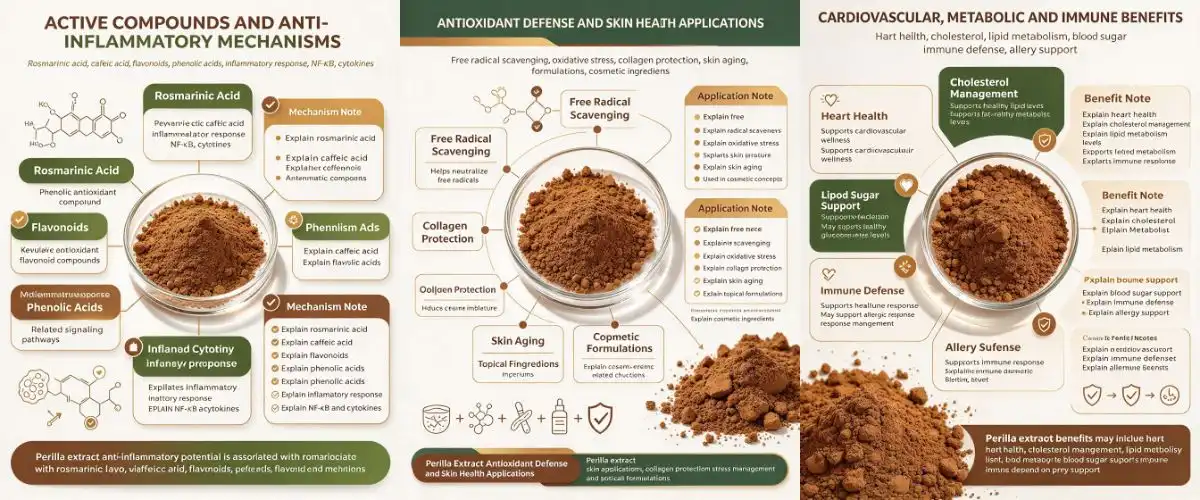
Diverse Applications of Perilla Extract in Natural Products
The versatility of this botanical ingredient addresses multiple industrial pain points across health and personal care sectors. Manufacturers leverage its multifunctional properties to create differentiated products that meet evolving consumer preferences for natural, effective formulations.
Dietary Supplements and Nutraceuticals
Formulators put Perilla Extract-derived ingredients into pills, capsules, and powdered vitamins that focus on three main areas of health. The anti-allergic properties of the extract are used in seasonal respiratory health products, and the lipid-balancing properties of the omega-3 content are used in cardiovascular recipes. Anti-inflammatory pills mix rosmarinic acid with other polyphenols to make blends that work well together to support joint health and reduce inflammation throughout the body.
The water-soluble type lets scientists make liquid vitamins and instant-dissolve forms, which are different from the usual pill-based delivery methods. This benefit in solubility is especially helpful for senior feeding products and infant recipes where kids have trouble swallowing and need different dosage forms.
Functional Foods and Beverage Technology
Perilla Extracts are used as natural preservatives in high-lipid systems by food companies that have to follow clean label laws. Plant-based meats, nut butters, and functional oils have longer shelf lives because the polyphenols stop lipid peroxidation. This is done without using synthetic antioxidants like BHA or BHT. This application solves a very important problem in new types of food where traditional chemicals don't work well with natural or organic labels.
The extract is added to functional drinks, smoothie mixes, and meal replacement shakes by people who make drinks. The yellow-brown powder is both a natural colorant and a bioactive ingredient. It makes formulations easier to understand and improves the nutritional profiles of foods. It can handle acidic fruit drinks and neutral dairy options without discoloring or precipitating because its pH is stable between 4.0 and 7.0.
Cosmetics and Personal Care Formulations
The cosmetics industry uses Perilla Extract's anti-inflammatory and antioxidant properties in products for people with sensitive skin. The extract is used in serums, creams, and washes by brands that treat atopic eczema or rosacea. The luteolin in the skin improves its ability to protect itself from external factors that are common in cities. This is done by lowering the amount of water that is lost through the skin's surface.
Anti-aging skin care products use the extract's ability to stop UV damage and boost collagen production. Synthetic peptides need to be stored in a refrigerator, but the stable powder form stays effective in normal warehouse conditions. This makes it easier to distribute around the world. Because ethanol is soluble in alcohol, it can be easily added to oil-based formulas and dry products that don't work with water-soluble actives.
Animal Nutrition and Feed Additives
Pet food companies and farmers who raise animals add Perilla Extract to their products to make them healthier. The anti-inflammatory properties of omega-3 fatty acids help older pets' joints work better, and the coat health of companion animals depends on them. Animal farms that raise chickens or fish use the extract as a natural feed supplement to boost their immune systems and lower health problems caused by stress during busy farming times. This cross-species applicability shows that the ingredient is safe and bioavailable across a range of digestive systems, which is more proof that it can be used in human food.
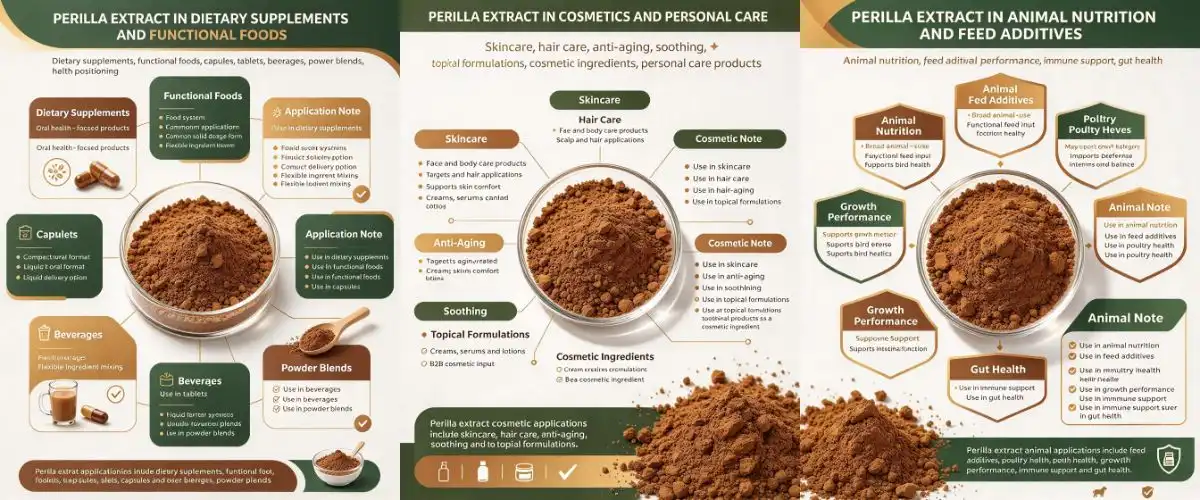
Comparing Perilla Extract to Other Natural Oils and Extracts
Omega-3 Content Versus Fish Oil and Flaxseed Oil
Fish oil gives you EPA and DHA, but Perilla Extract gives you ALA in amounts higher than flaxseed oil by weight. Concerns about sea pollution are avoided by the plant-based source, which also appeals to veggie and vegan customers. People's bodies change ALA to EPA and DHA at different rates. However, the mixed polyphenol profile has anti-inflammatory effects that aren't caused by omega-3 conversion. This makes the health benefits greater than those found in fish oil products that are only omega-3.
Comparing levels of stability shows big benefits. To keep them from going bad, fish oils need to be flushed with nitrogen and kept cold, which raises the cost of distribution. Our Perilla Extract powder stays stable for 24 months if it is kept cool, dry, and out of the light. This lowers the risk of losing product and allows for shipping at room temperature.
Organic Versus Conventional Sourcing Considerations
Organic approval raises the cost of raw materials by 15 to 25 percent, but it opens up new markets that want foods that don't contain pesticides. By getting our products from Shaanxi's real medicinal plant regions, we can get certified organic crops and keep our prices low by integrating all of our production processes. Conventional versions meet the same quality standards for heavy metal limits and rosmarinic acid content. This means they can be used in price-sensitive situations without lowering safety or effectiveness.
The choice between organic and standard grades should be based on how the brand is positioned and what the target market wants, not on changes in the quality of the processed extract.
Positioning Against Other Herbal Anti-Inflammatory Agents
Perilla Extract is more bioavailable than turmeric extract or boswellia, and it doesn't need any piperine enhancers or special delivery systems. Rosmarinic acid is quickly absorbed in the upper intestine, and within two hours, plasma concentrations reach their highest point. Curcumin-based treatments need to be given over and over for weeks in order to reach therapeutic levels, but acute-response products for allergy or respiratory problems can be made with this pharmacokinetic profile.
A look at the costs shows that Perilla Extract has an edge in recipes with more than one ingredient. Because it works as both an antioxidant and an anti-inflammatory, it cuts down on the number of botanical extracts that need to be used in formulations while still providing full health benefits.
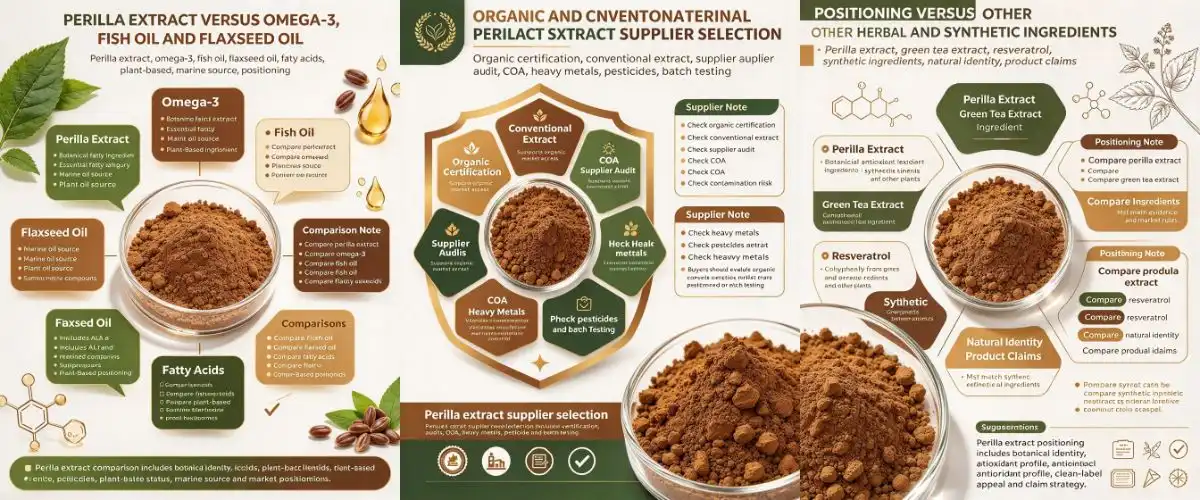
Procurement Insights: How and Where to Buy Perilla Extract
Supplier Evaluation and Certification Requirements
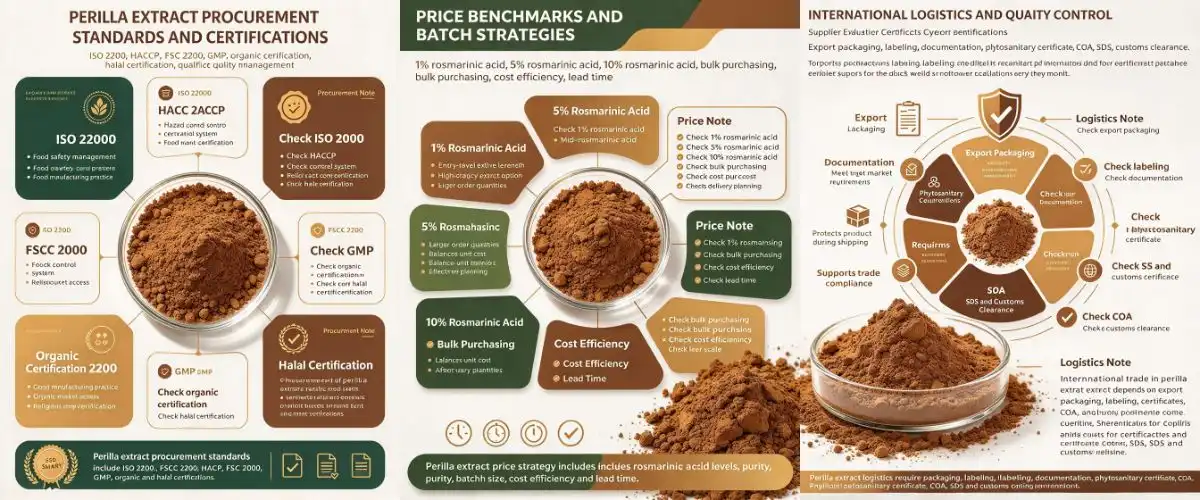
To make sure that sources are reliable, you need to check three important credentials. The ISO 22000 and HACCP certifications show that food safety management systems are in place, and the FSSC 22000 certification shows that the systems meet the standards set by the Global Food Safety Initiative. Kosher and Halal approvals make it easier for goods that are aimed at certain groups of people to reach more customers.
Traceability paperwork should have a Certificate of Analysis (COA) that lists the amount of rosmarinic acid found through HPLC tests, the maximum amount of microbes that can be present, and pesticide residue screens that look for more than 500 chemicals. Material Safety Data Sheets (MSDS) give information on how to handle a substance and how to make sure it meets regulations so that it can be imported.
Transparency in manufacturing is important. Suppliers who work in true plant areas like Shaanxi are close to good raw materials, which makes the supply chain simpler. Facilities with continuous countercurrent extraction lines show they can produce consistent batches, which is important for buyers who need 500 kg or more of goods every month.
Price Benchmarks and Bulk Purchase Strategies
Prices on the market depend on the details. Standard 5% rosmarinic acid powder costs between $45 and $65 per kilogram when bought in bulk of 100 kg, while high-purity 98% powder costs between $180 and $220 per kilogram. Volume discounts usually start at 500 kg, and orders of 1000 kg or more get 12–18% off.
Inventory-holding suppliers have a lot of benefits. Our 10–20-ton safety stock allows for delivery in 5–7 working days, which keeps production from being held up for 30–45 days as is common when relying on made-to-order manufacturers. This ability to fulfill orders quickly comes in handy when seasonal demand goes up or when a new product needs to get into the market quickly.
International Logistics and Quality Control Practices
For global shipping to work, many types of paperwork need to be coordinated. Basic requirements include commercial bills, packing lists, and phytosanitary certificates. Some markets may need more papers, though. For shipments to the EU, proof of REACH pre-registration is needed. For shipments to the US, sending a Prior Notice to the FDA is helpful. Suppliers with a lot of experience handle these issues, which cuts down on customs delays and the costs that come with them.
Quality control goes beyond making sure that suppliers are certified. As soon as you get it, have a third party check it for rosmarinic acid level and contamination. This practice backs up what the seller says and keeps batch differences from hurting the quality of the end product. Setting up lists of approved suppliers after successful testing of samples makes future purchases easier while still meeting quality standards. Whether you're looking to buy Perilla Extract in bulk or have special needs for a proprietary recipe, setting up approved supplier lists is key.
Future Trends and Opportunities in Perilla Extract Market
Technological Advancements in Extraction and Formulation
New supercritical CO2 extraction methods get ingredients that are more pure and leave no solvent waste, meeting the needs of the top market for ultra-clean ingredients. These technologies raise the levels of rosmarinic acid to 99% or higher while keeping thermolabile compounds that are broken down by normal methods. Microencapsulation techniques make things more stable in difficult mixtures like high-moisture foods or acidic drinks, which opens up more uses.
Nanotechnology uses improve solubility by making particles smaller, which makes them easier for the body to absorb. These improvements allow for lower dose needs, which lowers formulation costs while keeping effectiveness. This is a great value offer for supplement companies that are having trouble making ends meet.
Consumer-Driven Growth Factors
Three changes in demographics are speeding up market growth. People in developed markets who are getting older are looking for natural anti-inflammatory options to help them deal with their chronic illnesses. Millennials and Gen Zers care about sustainability and openness, and they prefer natural ingredients with clear stories about where they came from to fake ones. Thirty to forty percent of people in industrialized countries suffer from allergies, which creates a constant need for non-drug ways to feel better.
More and more, regulations are favoring natural chemicals. Because the EU limits manufactured antioxidants and preservatives, formulators have to change their products to use natural options. Long-term tailwinds are created for Perilla Extract and related plant extracts when markets in North America and Asia move in similar ways.
Strategic Recommendations for Procurement Alignment
To build strong supply ties, you need to sign multi-year contracts with quality-certified providers who allow for flexible customization. OEM/ODM features, such as formula changes, custom specifications, and private labels, allow for quick product development without having to spend a lot of money on extraction facilities.
By getting from different places, you lower the risk that bad weather or changes to the law will affect your area. Focusing on well-known plant areas like Shaanxi, on the other hand, offers quality benefits through centuries of farming experience and perfect growing conditions.
Early on in the product creation cycle, procurement teams should work with R&D. Time-to-market is shortened with the help of technical support from suppliers. This gives companies that make natural products that move quickly a competitive edge. With this collaborative method, suppliers go from being transactional sellers to strategic partners who help make innovation work.
Conclusion
Adding Perilla Extract to the formulation strategy, Perilla Extract can be seamlessly integrated into existing product systems. Adding Perilla-based ingredients in a planned way meets several industry needs, including the need for clean labels, natural preservation, and customer desire for effective plant health solutions. When purchasing professionals look at this flexible extract, they should focus on the seller approvals, batch consistency data, and the ability to make changes, and Perilla Extract stands out as a prime example of an ingredient that delivers both functional benefits and consumer appeal.
Plant extracts will be important parts of next-generation natural product lines because technology is getting better, regulations are backing them up, and people want them. Buyers who are smart will form partnerships with suppliers that offer both quality assurance and quick service. This will give them a competitive edge in wellness markets that are changing quickly.
FAQ
What industries commonly use perilla-derived ingredients?
The biggest buyers are companies that make dietary supplements, followed by functional food companies that are making clean-label goods. More and more people want cosmetics with anti-aging and sensitive skin formulas, and animal nutrition companies use the extract in high-end pet foods and feed for livestock. Anti-inflammatory chemicals are studied by research centers, which also buy analytical-grade material for clinical studies. What types of businesses often use Perilla Extract-derived ingredients depends on their target market demographic.
How does rosmarinic acid concentration affect application suitability?
Lower amounts (5–10%) work well in functional foods where a small amount of bioactive enhancement works well with other ingredients without being too strong. Standard dietary products that aim to improve health should have mid-range specs (20–40%). High-purity types (80–98%) are used in pharmaceutical research, clinical-dose vitamins, and concentrated skin care serums that need to be as effective as possible while using as little product as possible. Buyers should match the quantity to the cost and health claims goals they want to make.
What storage conditions maintain ingredient stability?
Bioactivity can be kept for 24 months in sealed containers that are kept cool, dry, and out of direct light. For the best conditions, the temperature should be below 25°C and the humidity should be below 60%. Once it's opened, put the contents in containers that won't let air in and eat them within six months. Stay away from oxidation agents and strong smells that could make the purity less reliable. These simple rules keep things from breaking down and make sure they keep working well throughout the product's shelf life.
Ready to Source Premium Perilla Extract?
The pharmaceutical-grade botanical products that Shaanxi Sigma Biotechnology Co., Ltd. sells are backed by ISO 22000, HACCP, and Kosher approvals. Our perilla powder has a rosmarinic acid content ranging from 5% to 98%, no solvent residues, and better oxidative stability than other products on the market. With 10–20 tons of stock on hand, we can promise arrival in 5–7 days for all orders, no matter how big or small.
Whether you're looking to buy Perilla Extract in bulk or have special needs for a proprietary recipe, our technical team is here to help you for free with formulas and applications. You can ask for samples, talk about OEM/ODM possibilities, or get in touch with buying specialists about volume prices by emailing sarah@sxsigma.com. You can look at our whole line of plant extracts at sxsigma.com.
References
1. Makino, T., Furuta, Y., Wakushima, H., Fujii, H., Saito, K., & Kano, Y. (2003). Anti-allergic effect of Perilla frutescens and its active constituents. Phytotherapy Research, 17(3), 240-243.
2. Ueda, H., Yamazaki, C., & Yamazaki, M. (2002). Luteolin as an anti-inflammatory and anti-allergic constituent of Perilla frutescens. Biological and Pharmaceutical Bulletin, 25(9), 1197-1202.
3. Asif, M. (2011). Health effects of omega-3,6,9 fatty acids: Perilla frutescens is a good example of plant oils. Oriental Pharmacy and Experimental Medicine, 11(1), 51-59.
4. Osakabe, N., Yasuda, A., Natsume, M., & Yoshikawa, T. (2004). Rosmarinic acid inhibits epidermal inflammatory responses. Journal of Investigative Dermatology, 122(3), 433-440.
5. Zhou, X. J., Yan, L. L., Yin, P. P., Shi, L. L., Zhang, J. H., Liu, Y. J., & Ma, C. (2014). Structural characterisation and antioxidant activity evaluation of phenolic compounds from cold-pressed Perilla frutescens seed flour. Food Chemistry, 164, 150-157.
6. Shin, T. Y., Kim, S. H., Kim, S. H., Kim, Y. K., Park, H. J., Chae, B. S., & Jung, H. J. (2000). Inhibitory effect of mast cell-mediated immediate-type allergic reactions in rats by Perilla frutescens. Immunopharmacology and Immunotoxicology, 22(3), 489-500.