What Are Fucoxanthin Extract Powder Health Applications?
Fucoxanthin extract powder is a marine-derived carotenoid concentrate obtained primarily from brown seaweed species such as Undaria pinnatifida and Laminaria japonica. Standardized to ≥10% active fucoxanthin by HPLC analysis, this brown fine powder supports weight management, antioxidant defense, and metabolic health.
Its unique allenic bond structure activates uncoupling protein 1 (UCP1) in white adipose tissue—a mechanism absent in most terrestrial plant extracts. For procurement teams developing natural fat-burning or metabolic supplements, understanding its validated health applications is the first step toward building a market-ready formulation.
Understanding Fucoxanthin Extract Powder and Its Health Benefits
Fucoxanthin is a type of carotene that is in the xanthophyll group. Unlike beta-carotene from carrots or lycopene from tomatoes, it has a unique 5,6-monoepoxide group that causes a number of biological effects that have been studied in peer-reviewed study. It can be used in three main areas of health, which are broken down below.
Weight Management and Visceral Fat Reduction
Fucoxanthin goes straight after visceral fat, which is the biologically active fat that is kept around the organs inside the body. A study in Diabetes, Obesity and Metabolism (Maeda et al., 2009) found that people who took fucoxanthin-rich Xanthigen supplements had a statistically significant decrease in belly fat mass compared to people who took a placebo. Upregulation of UCP1 in white adipose tissue is thought to be the mechanism. This increases energy expenditure at rest without stimulating the central nervous system. This makes it a truly unique ingredient for weight loss goods that don't contain stimulants.
Antioxidant and Anti-Inflammatory Activity
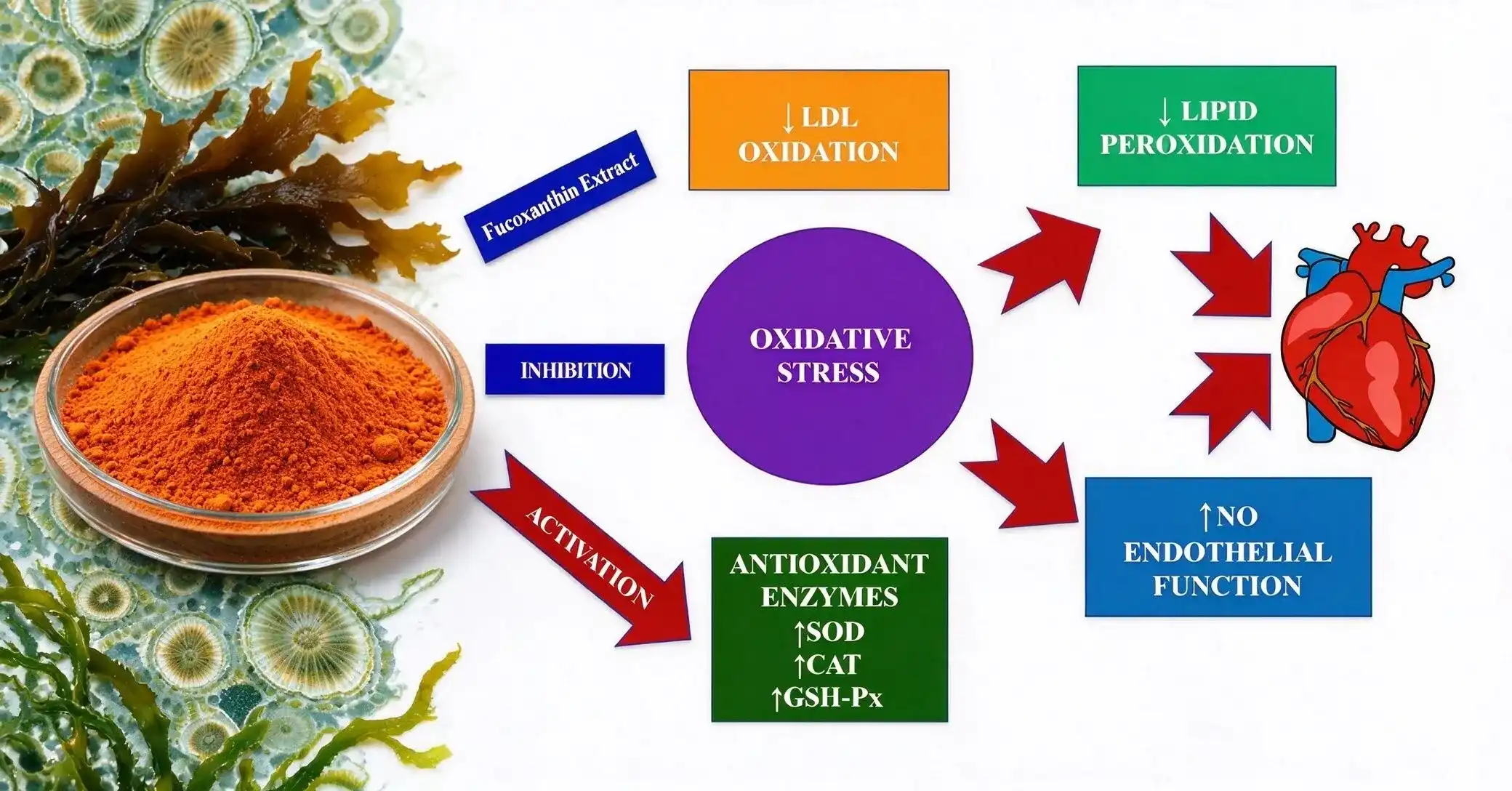
Fucoxanthin's allenic bond is said to be better at removing singlet oxygen than common antioxidants like astaxanthin and beta-carotene in tests done on cells. Marine Drugs research showed that fucoxanthin stops the production of pro-inflammatory cytokines like TNF-α and IL-6 by blocking the NF-κB pathway. This dual antioxidant-plus-anti-inflammatory profile gives supplement makers more ways to market their products besides weight loss, like recipes for joint pain and cellular aging.
Metabolic Health and Blood Sugar Regulation
Several preclinical studies show that fucoxanthin extract powder improves insulin sensitivity and lowers the buildup of lipids in the liver. A study published in 2010 in the Journal of Agricultural and Food Chemistry found that fucoxanthin decreased the activity of lipogenic enzymes in fat mice that were on a diet while increasing measures of fasting glucose. Even though more human clinical data is still being collected in this area, these results give product developers a scientifically sound reason to include fucoxanthin in metabolic wellness formulas along with chromium or berberine.
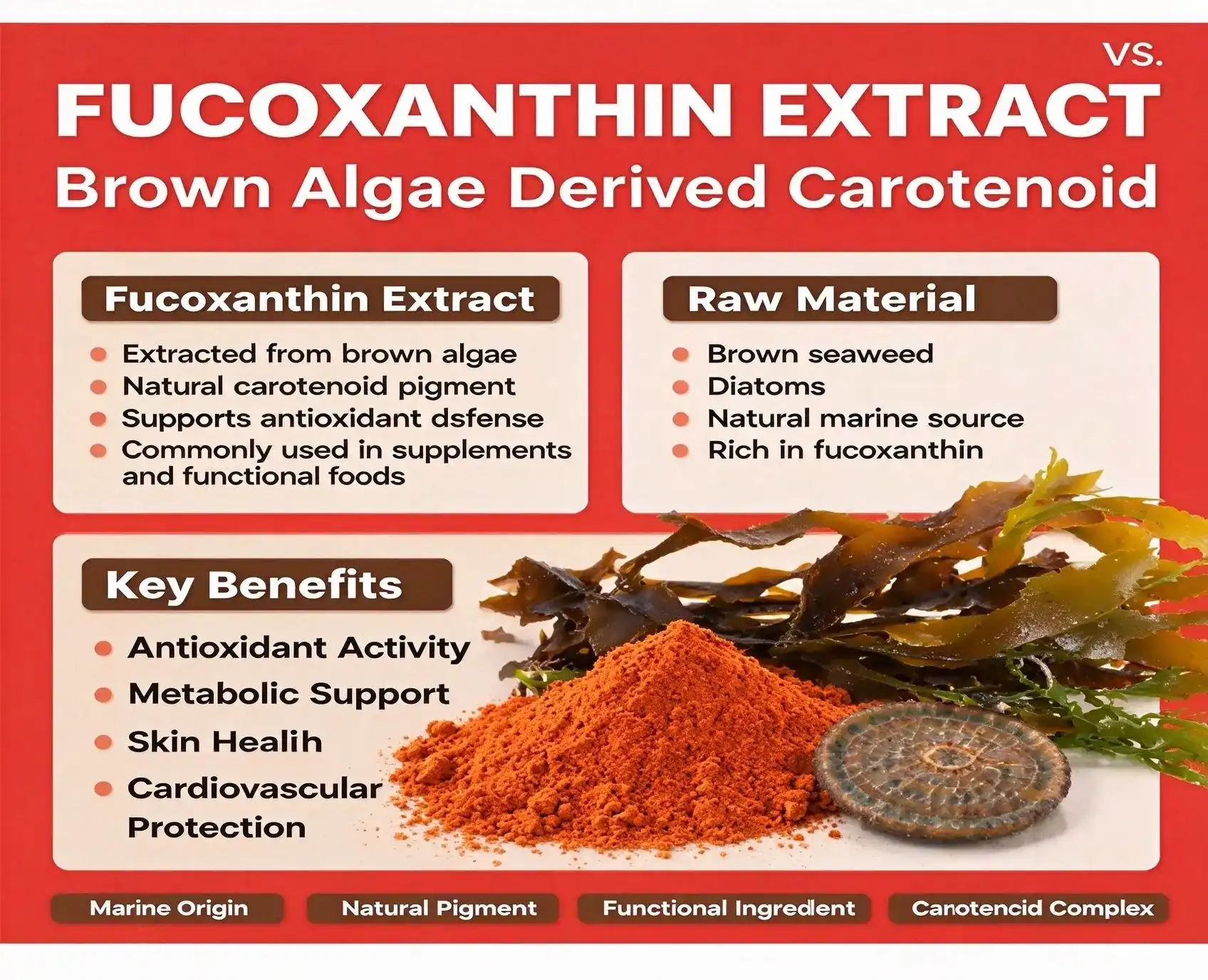
Comparison of Fucoxanthin Extract Powder with Other Natural Extracts
A lot of procurement managers look at fucoxanthin extract powder with CLA, green tea extract (EGCG), or raw brown seaweed powder. Figuring out where each ingredient fits in helps you make a sourcing choice that you can stand by.
Fucoxanthin vs. Green Tea Extract (EGCG)
Green tea extract mostly works by increasing thermogenesis through catechins and mildly increasing caffeine interaction. Fucoxanthin, on the other hand, works through a non-stimulant pathway called UCP1 activation. This makes it a good choice for product lines that don't contain stimulants and are aimed at sensitive groups like older adults or people who don't drink caffeine. The two ingredients are often mixed together because their effects work together instead of against each other.
Standardized Extract vs. Raw Seaweed Powder
Brown seaweed that has been dried out usually only has 0.05 to 0.2% fucoxanthin by weight. There are 50–200 times more active compounds per gram of raw material in a measured extract that has been concentrated to ≥10%. Using raw seaweed powder would mean making capsules that are too big to be useful for any real weight loss plan that needs a clinically relevant amount of 2.4–8 mg of pure fucoxanthin every day. Standardized extract that has been checked by HPLC is the only B2B raw material that makes sense.
Natural vs. Synthetic Fucoxanthin
Fucoxanthin that comes from algae still has the biologically active trans-isomer structure needed to bind UCP1-related receptors well. At the moment, synthetic analogs are only used for study, and they can't legally be labeled as "natural" in U.S. food supplements. Brands that make claims about being "ocean-derived" or "plant-based" must use 100% natural extraction from certified brown seaweed biomass; it's the law.
Dosage, Safety, and Side Effects of Fucoxanthin Extract Powder
Recommended Dosage for Supplement Formulations
A daily dose of 2.4 mg to 8 mg of pure fucoxanthin from fucoxanthin extract powder is supported by clinical research. This equals 24 mg to 80 mg of raw material per serving when using a 10% standardized powder. This range can be easily accommodated by most commercial soft-gel and hard-capsule formats, making capsule counts reasonable for end users.
Known Side Effects and Contraindications
So far, tests have shown that fucoxanthin is generally well accepted. The most common thing that people think about is the amount of iodine in ingredients that come from seaweed. Professional extraction methods lower iodine levels by a large amount. For goods aimed at people with thyroid problems, providers who offer a de-iodized specification with iodine levels controlled below 50 ppm are best. People who are pregnant, nursing, or taking thyroid medicine should talk to a doctor before using.
Regulatory and Certification Considerations
Under DSHEA, fucoxanthin is sold as an ingredient in food supplements in the United States. Teams in charge of buying things should ask for a full Certificate of Analysis (COA) that confirms the HPLC test, the heavy metal levels (≤10 ppm), the loss on drying (≤3%), and the number of microbes. The factory's ISO 22000, HACCP, and cGMP certifications are the proof that the product is ready for an FDA audit and meets the requirements for retailers.
Procurement Insights: Sourcing and Buying Fucoxanthin Extract Powder
Evaluating Supplier Quality Benchmarks
When choosing a few suppliers, ask for HPLC-specific assay results instead of UV spectrophotometry reports. UV methods measure the total absorption of a pigment, and breakdown products can make the color look more pure than it really is. The industry standard is real fucoxanthin that is at least 10% HPLC-verified. Another sign of mature process control is batch-to-batch consistency data that covers at least three consecutive production lots.
Here are the core quality documents a procurement team should request from any candidate supplier:
- Certificate of Analysis (COA): HPLC analysis, moisture (≤3%), mesh size (80 mesh), microbial limits, and heavy metals (≤10 ppm total).
- Stability Data: Faster stability tests at 40°C/75% RH for 6 months, plus real-time data for a 24-month shelf life.
- Certification Copies: ISO 22000, HACCP, and Halal—the certificate number and issuing body can be used to check them.
- Third-Party Lab Reports: Heavy metals (lead, arsenic, cadmium, mercury) and iodine levels from a recognized independent lab are included in third-party test reports.
Together, these papers help your R&D team get expert approval for the ingredient and give your law team the proof they need to back up the product label.
Pricing, Lead Times, and Inventory Planning
High-purity fucoxanthin extract powder is still one of the more expensive marine carotenoids because it doesn't naturally build up in seaweed and is hard to get out of the sea. Suppliers who use solvent-free supercritical CO2 extraction usually charge more, but for high-end products, the zero-residue profile and clean label placement make it worth it. For the Q1 weight-loss season, make sure that your provider has enough safety stock to fill orders within 5–7 working days. This will help avoid production delays during busy selling times.
Why Choose Sigma's Fucoxanthin Extract Powder?
Sigma (Shaanxi Sigma Biotechnology Co., Ltd.) makes fucoxanthin extract powder using supercritical CO2 extraction. This makes a brown fine powder that is defined to contain at least 10% active fucoxanthin and has no solvent waste and is non-GMO. The product comes from brown seaweed and is 100% marine-sourced. It has ISO, HACCP, and Halal certifications and passes full HPLC batch testing. Here are the core product advantages that set Sigma's offering apart for B2B buyers:
- ≥10% Fucoxanthin by HPLC: Consistent potency in every batch that is ready for an audit.
- Supercritical CO2 Extraction: No hexane or other toxic solvents—compliant with clean labels.
- Heavy Metals ≤10 ppm, LOD ≤3%, 80 Mesh: This meets food safety standards in the EU and the US.
- In-Stock Inventory: Regular stock is available and can be sent out within 5–7 business days.
- Full OEM/ODM Support: We can help you with formulas, private-label packages, and custom specs.
Most of the time, procurement teams have trouble with formulation risk, supply stability, and gaps in compliance paperwork. These benefits directly address these problems. Sigma's integrated production model lets buyers track products from where they are made to when they are shipped, from sourcing the raw seaweed to quality control of the finished extract.
Conclusion
Fucoxanthin extract powder is one of a kind when it comes to natural ingredients for weight loss and digestive health. Its antioxidant profile, non-stimulant fat-burning mechanism, and marine origin give brand creators real chances to set their products apart. For procurement teams, the sourcing decision comes down to three things that can't be changed: purity confirmed by HPLC, stability proven by documentation, and the reliability of the supplier certification. Getting these three things right early on in the product development cycle will save you money on later changes that need to be made and protect your brand's claims of effectiveness at retail.
FAQ
What makes fucoxanthin extract different from standard seaweed powder?
Normal dried seaweed powder has only 0.05 to 0.2% fucoxanthin in it. A standardized extract at ≥10% has 50–200 times more active compound per gram, which makes it the only option that can be used in clinically dosed supplements.
How should fucoxanthin powder be stored?
Nitrogen-purged aluminum foil bags should be used to store them below 20°C and away from light. During these times, the shelf life is 24 months. Heat and UV light break down the allenic link and quickly lower the effectiveness.
Is the iodine level safe for thyroid-sensitive consumers?
Professional treatment gets rid of a lot of the iodine. If the people you want to reach are thyroid-sensitive or take thyroid medicine, ask for a de-iodized standard with iodine levels controlled below 50 ppm.
Does Sigma provide third-party testing reports?
Yes. A full COA is sent with every batch. It includes an HPLC test, heavy metals, moisture, microbial counts, and mesh size. You can request validation from a third-party lab.
What certifications does Sigma's fucoxanthin extract carry?
The product is certified to meet ISO, HACCP, and Halal standards, which helps it follow the rules in the US, EU, and Middle Eastern markets.
Request a Sample of Sigma's Fucoxanthin Extract Powder Today
Sigma's fucoxanthin extract powder supplier team is ready to help you start your next product, whether you need bulk raw materials, help with OEM formulations, or proof of stability for regulatory filing. Sigma gives buying teams the confidence to move quickly from samples to production because they have in-stock items, HPLC purity checks that are ≥10%, and full certification support. To get a free sample or COA today, email Sarah at sarah@sxsigma.com or go to sxsigma.com.
References
1. Maeda, H. et al. — Diabetes, Obesity and Metabolism, 2010.
2. Miyashita, K. — Marine Drugs, 2014.
3. Woo, M. N. et al. — Journal of Agricultural and Food Chemistry, 2010.
4. Gammone, M. A., & D'Orazio, N. — Marine Drugs, 2015.
5. Peng, J. et al. — PLoS ONE, 2011.
6. Beppu, F. et al. — Journal of Nutritional Biochemistry, 2012.