Top White Peony Extract Benefits and Uses for Supplement Brands
White peony extract, derived from the dried, peeled roots of Paeonia lactiflora Pall., has become a sought-after botanical ingredient across the supplement and personal care industries. Standardized to its primary bioactive marker, paeoniflorin, this brown-yellow powder offers documented benefits spanning anti-inflammation, skin brightening, hormonal modulation, and immune support. For B2B procurement teams evaluating plant-based actives, understanding its phytochemical profile, formulation compatibility, and supplier qualifications is the foundation of sound sourcing decisions.
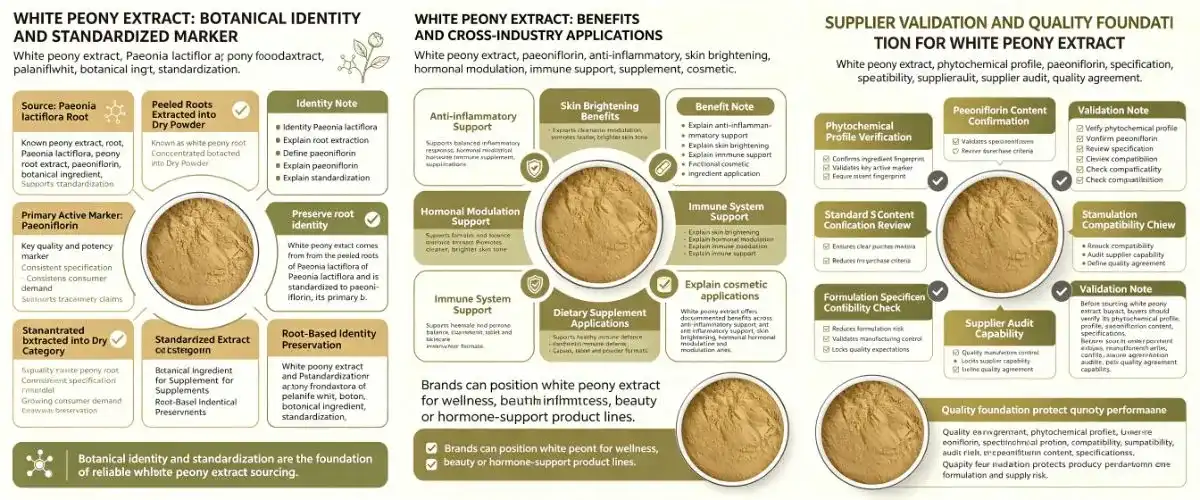
Understanding White Peony Extract: What It Is and How It Works
The Plant Behind the Ingredient
White peony extract is made from the dried, peeled roots of Paeonia lactiflora Pall. This extract is very popular in the personal care and vitamin industries right now. Paeoniflorin is one of the main bioactive signs for this brown-yellow powder. It has been shown to reduce swelling, make skin clearer, control hormones, and make the immune system stronger. They need to know about the phytochemical profile, how well the actives work in different forms, and how skilled the source is when they look at plant-based actives for B2B use.
Because of this knowledge, you can pick smart places to get your supplies.For more than 2,000 years, tea made from Paeonia lactiflora Pall. has been used as therapy. It is called Bai Shao in old Chinese medicine. For example, the root needs to be cooked and peeled in a certain way before it can be used. This changes the chemicals that make it up and increases the amount of key glycosides. It has a strong "clean label" story, so brands that want to appeal to people who like green goods can use it.
Key Bioactive Compounds
A monoterpene glycoside called paeoniflorin (CAS: 23180-57-6) is the main ingredient that works. It has been shown to reduce swelling, stop muscle spasms, and stop tyrosinase from doing its job. You can change how the extract works as a whole with albiflorin and benzoylpaeoniflorin. You can always count on pure, regulated, high-grade extracts to be strong. Raw root powders, on the other hand, can't do that.
Mechanism of Action
Paeoniflorin changes the way NF-κB signals work. This stops cytokines that cause inflammation from being released as much. A substance known as tyrosinase is also stopped from doing its job. Melanin can't be made without this enzyme. It can be used in things that make skin look better. A study published in 2011 in the Journal of Ethnopharmacology says it can stop the body from being defensive without hurting the whole body. This is what makes it different from other fake options.
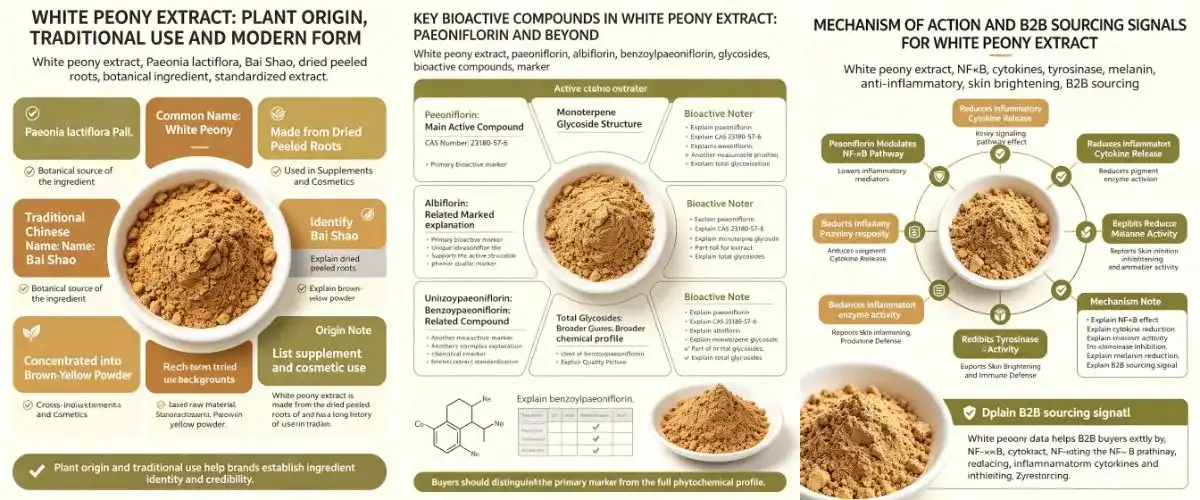
Top 7 Benefits of White Peony Extract for Supplement Formulations
A lot of research in the fields of medicine and health shows that white peony extract can help with many health issues. When pill makers study it, this is what they look for. It was found that these seven benefits are the best for business.
Here are the most important useful benefits that formulation teams should keep in mind:
- Anti-inflammatory action: Paeoniflorin suppresses NF-κB activation, reducing inflammation markers relevant to joint health and chronic condition management supplements. A 2016 study in Phytomedicine documented this pathway clearly.
- Antioxidant protection: The extract scavenges free radicals, supporting general wellness formulas and skin health supplements where oxidative stress is a key target.
- Anxiety and cognitive support: Animal and preliminary human studies indicate paeoniflorin modulates GABAergic activity, positioning the ingredient for mental wellness and stress-relief product lines.
- Hormonal balance for women's health: Traditional use and emerging clinical data support the extract's role in regulating estrogen-related pathways, making it relevant for PMS and menopause supplement categories.
- Immune modulation: The extract supports adaptive immune function without overstimulation, useful for immune-support nutraceuticals targeting long-term wellness.
- Digestive health: It has documented antispasmodic effects on smooth muscle, which supports formulations for occasional habitual constipation and abdominal fullness.
- Skin brightening: Through tyrosinase inhibition, it serves as a natural alternative to synthetic whitening agents in cosmetic-grade supplement crossover products.
Because of these reasons, natural supplement brands that want to stand out without using artificial actives can use extracts that are high in paeoniflorin.
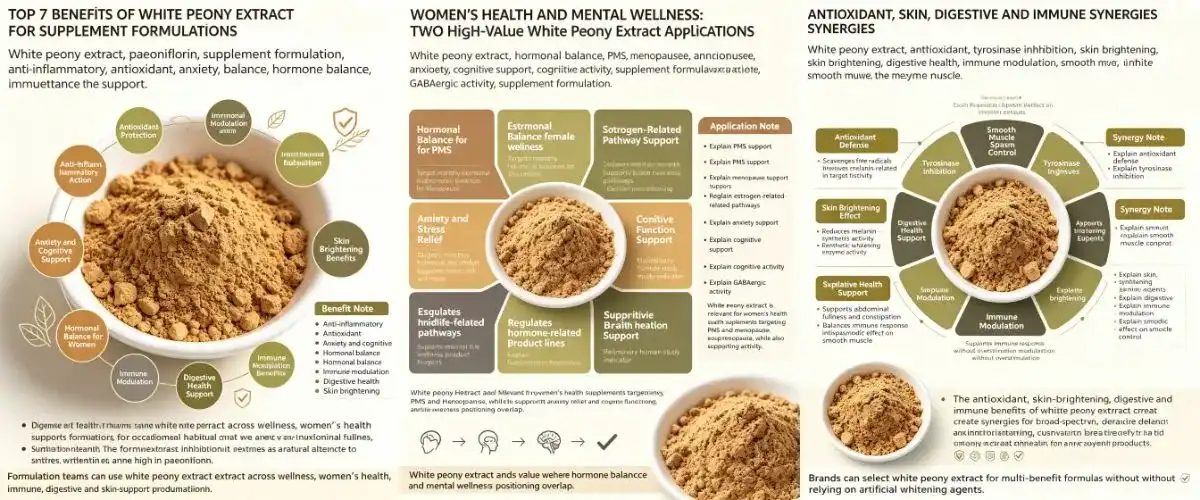
Comparing White Peony Extract to Other Herbal Extracts: Choosing the Best for Your Brand
White Peony vs. Red Peony Extract
They are made from the roots of the Paeonia lactiflora plant, and white peony extract comes in two different types. When white peony root is peeled and boiled, it has more paeoniflorin and albiflorin. Because red peony root (Chi Shao) keeps its bark, it has more tannins and works better to get the blood moving. There is a steady amount of paeoniflorin in white peony. This makes it easier for supplement companies to say that their products can reduce swelling or improve skin tone.
Pure Extract Powder vs. Blended Formulas
Formulators can make any mix they want as long as they use a pure, uniform powder like paeoniflorin (≥50%, 100 mesh, ≤3% loss on drying). It might be harder to see what's in pills that have already been mixed and to keep track of how much you take. Companies that make their own formulas can get a more accurate extract from a single ingredient so they can make more accurate label claims and better INCI papers for markets that are controlled.
Organic vs. Conventional Sourcing
Things that have been certified as organic cost more, but in places like Germany and the UK where people are very careful, they help with clean label marketing. When regular extracts are mixed with water and ethanol and tested against EU heavy metal standards, they can be used legally and are cheaper on a large scale. This is very important for brands that are still making their products.
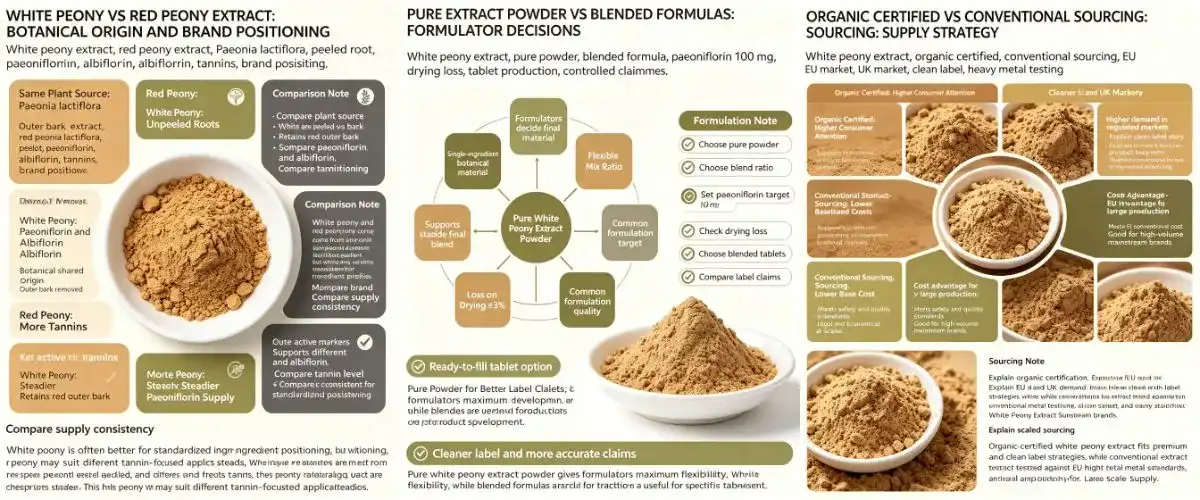
How to Procure Paeonia lactiflora Root Extract: A Guide for B2B Buyers
Supplier Qualification Criteria
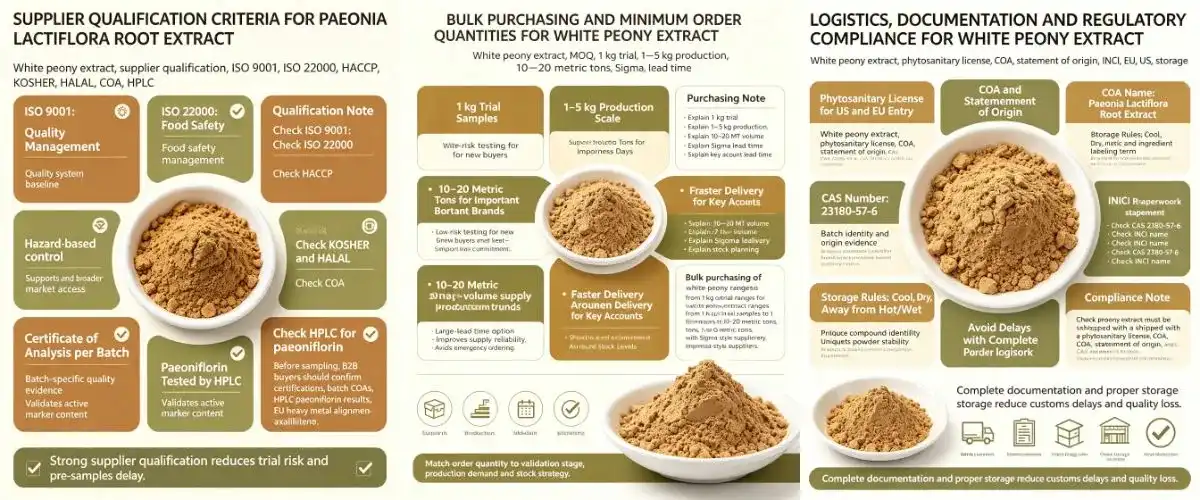
Anyone you want to do business with for white peony extract should have ISO 9001, ISO 22000, HACCP, and if possible, Kosher or Halal certifications. There should be a Certificate of Analysis (COA) for each batch that says how much paeoniflorin was found by HPLC, how much heavy metal is in line with EU standards, and how many microbes were checked. Before samples are looked at, you should also ask for Technical Data Sheets (TDS) and Safety Data Sheets (SDS/MSDS).
Bulk Purchasing and Minimum Order Quantities
You can get samples from some sources for as little as one kilogram, which is good for names that are still new and lowers the risk for those brands and speeds up lab tests. For the first test to see if it works, order as little as 1 to 5 kg. That person should always have things on hand. One company, Sigma, keeps 10–20 metric tons of important things on hand so they can be sent out quickly, in 5–7 business days.
Logistics, Documentation, and Regulatory Compliance
When plants are sent into the US or the EU, they need to have a phytosanitary license, a COA, and a statement about where they came from. Skin care ingredients going to the EU need to be certified with their CAS number (23180-57-6) and INCI name (Paeonia Lactiflora Root Extract). People who move goods across borders can avoid a lot of delays at customs if they know how to fill out the right paperwork. Making sure you follow the storage rules when you ship the extract is very important. Avoid putting it in places that are too hot or too wet.
Conclusion
Plenty of proof shows that white peony extract from the paeonia lactiflora root can help lower swelling, shield cells from harm, boost brain function, keep hormones in check, and improve the look of the face. If a supplement company wants to make natural product lines, the only way to get governmental approval and group uniformity is to use a standardized, high-purity extract.
The powders are too raw to do that. If you choose a provider with approved quality systems, clear testing records, and a range of order sizes, you can protect the money you spent on the formula and get your product to market faster. The quality and dependability of the thing you make will depend on where you get your materials.
FAQ
What is the standard paeoniflorin content for supplement applications?
The HPLC test shows that the amounts of paeoniflorin in most commercial grades are between 10% and 98%. Functional supplements often have a level of ≥50% because it gives them a lot of strength and helps keep the formula stable. They can make numbers that are just right for you if they offer ODM services.
Are there known side effects or contraindications?
Some people are fine with taking the suggested amounts of paeoniflorin. If you eat a lot of it, it might have slight effects on your stomach. Girls and women who are pregnant should not use it until they have talked to their doctor. Before a vitamin claim is put on the label, it should be the subject of a safety review study.
How do I verify extract purity before committing to bulk orders?
Ask for HPLC test results from a third party along with the COA from the seller. There are limits on how much heavy metal can be in medicines in the EU Pharmacopeia. It is also important to make sure that the amount of bacteria is within the ranges allowed by the FDA. Suppliers you can trust will send you free samples that you can test in your own lab before you buy them.
What application formats work best for this extract?
Skin creams, pills, and tablets mix well with the 100-mesh brown-yellow powder. It can be used with both hydrophilic and lipophilic systems because it breaks down in water and ethanol. Wet: Keep in a jar that can't be opened and keep it away from heat and water.
Source Your Next Batch of White Peony Extract with Sigma
Sigma (Shanxi Sigma Biotechnology Co., Ltd.) is a real company that produces and sells white peony extract. Shaanxi is the best place in China to get plants, so that's where it was made. At least half of the paeoniflorin in our extract must be present. This is achieved by using water and ethanol to remove the plant. It's safe for Kosher, ISO, and HACCP. It comes in different batch sizes, our paperwork follows EU rules, and people who are eligible can get free trials. To get your sample right away, please email Sarah at sarah@sxsigma.com or go to sxsigma.com.
References
1. Liu, D. et al. "Anti-inflammatory effects of paeoniflorin via the NF-κB signaling pathway." Phytomedicine, 2016.
2. Zheng, Y. et al. "Paeoniflorin: a natural compound with anti-inflammatory and immunomodulatory properties." Journal of Ethnopharmacology, 2011.
3. Tong, B. et al. "Paeoniflorin inhibits prostaglandin E2-induced inflammation." Journal of Natural Products, 2012.
4. Wang, S. et al. "Skin-brightening effects of tyrosinase inhibitors derived from Paeonia lactiflora." International Journal of Cosmetic Science, 2018.
5. Hsu, F. L. et al. "Phytochemical analysis and bioactivity of white peony root extract." Phytochemistry, 2007.
6. Kim, H. et al. "Anxiolytic effects of paeoniflorin in a GABAergic mechanism model." Biological & Pharmaceutical Bulletin, 2020.