Pine Bark Extract: Benefits, Uses, and OEM Sourcing Guide 2026
If you're sourcing a high-potency antioxidant ingredient for cardiovascular or anti-aging supplement lines, pine bark extract deserves a serious look. Standardized to OPC ≥95%, this reddish-brown fine powder delivers measurable benefits backed by decades of clinical research. This guide covers its bioactive profile, how it compares to alternatives, what to check before signing a supply contract, and how to identify a manufacturer worth partnering with in 2026.
Understanding Pine Bark Extract: Composition, Benefits, and Uses
What It Is and Where It Comes From
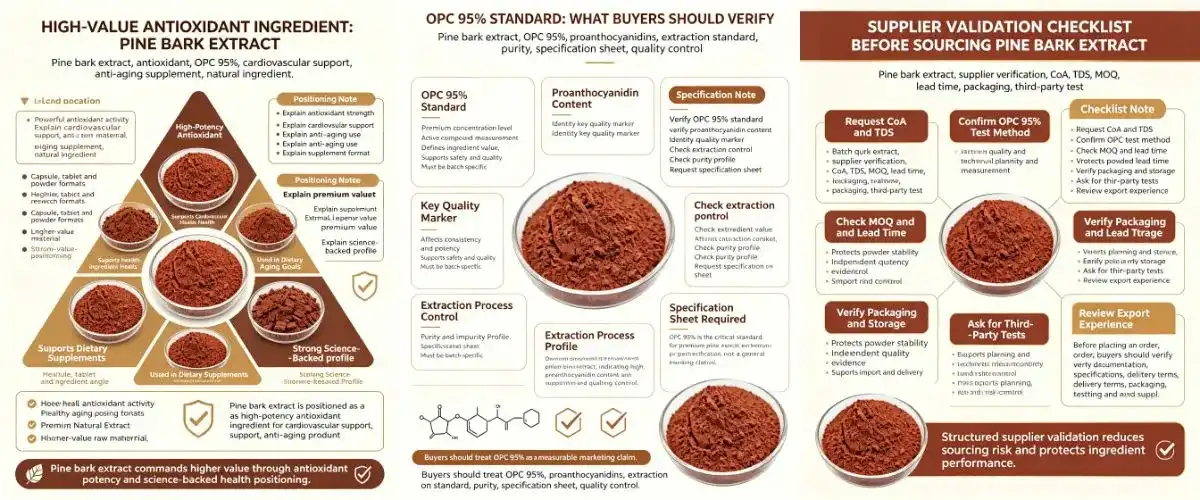
Pine bark extract comes from the inner bark of Pinus pinaster (Maritime Pine) or Pinus massoniana, which is taken out using ethanol. A group of beneficial polyphenols is concentrated through this process. These include flavonoids, phenolic acids, catechins, epicatechins, and oligomeric proanthocyanidins (OPCs). With a standard OPC level of at least 95%, this ingredient meets the requirements of North American supplement makers who make products for heart and skin health.
Core Health Benefits Supported by Research
Pine bark powder that is high in OPC has a lot of therapeutic evidence behind it. A 2015 review article in the journal Phytotherapy Research revealed that it does improve vascular function and blood pressure control. This is what science shows over and over:
- Cardiovascular protection: OPCs improve microcirculation by helping the body make nitric oxide and shielding the walls of blood vessels from oxidative stress. This makes the ingredient directly useful for heart health products.
- Anti-aging and skin benefits: OPCs stop matrix metalloproteinases (MMPs), which break down collagen. Studies have shown that consistent supplementation can reduce skin roughness and glycation markers in a way that can be measured.
- Anti-inflammatory and immune activity: Phytochemical parts change NF-κB signaling pathways, which lowers the production of pro-inflammatory cytokines without the harmful effects seen with manufactured inhibitors.
Because of these benefits, the ingredient is a good choice for high-end supplement lines aimed at adults aged 40 and up, who are likely to buy in the U.S. market.
Formulation Applications Across Dosage Forms
High-quality pine bark powder can be used in hard capsules, soft gels, tablets, and beverage blends because the particles are 80 mesh and the powder dissolves in water. Keeping the ash level at ≤3% makes sure that it doesn't affect the excipients too much. For liquid mixtures, a chelating agent is suggested to keep them from turning brown over time because of polyphenol oxidation.
Pine Bark Extract vs. Alternatives: Comparative Insights for Informed Decisions
How It Stacks Up Against Grape Seed Extract
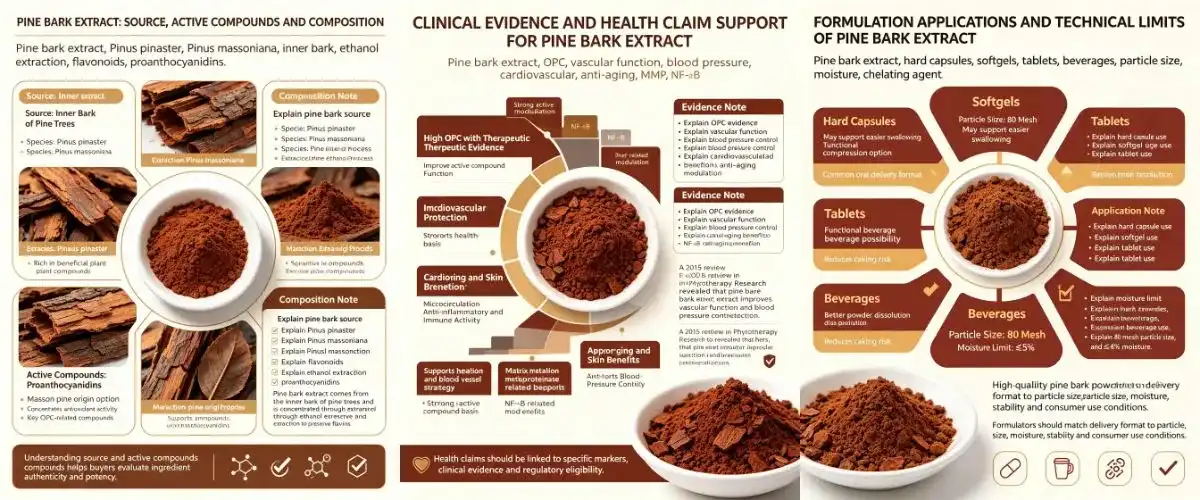
Grape seed extract and pine bark extract are both high in OPC, but their phenolic acid fingerprints are very different. HPTLC research shows that pine wood has markers for ferulic acid and caffeic acid that grape seed does not have. Pine bark extract has a stronger clinical database and more consumer recognition in North America, making it a better choice for brands that want to promote vascular health with proven science.
Pycnogenol vs. Generic Pine Bark Extract: The Price Equation
Horphag Research's Pycnogenol is a unique extract from French Maritime Pine that has a good brand name but costs a lot. Large to medium-sized supplement companies often look for non-proprietary, USDA-certified options that meet the same OPC 95% standard. When a certified provider gives batch-consistent HPLC results, the price difference can be as much as 30–50%, and there is no loss of active content. The most important thing to figure out is whether the extraction process falls outside of Horphag's current patent claims. Any reputable provider should make this clear in their paperwork.
Powder vs. Capsule: Form Factor Decisions
When procurement managers buy powder in bulk, they have the most options for controlling dosage and encapsulation in-house. It costs more to make pre-encapsulated formats, but there are fewer steps involved. Eighty-mesh powder that has been tested to dissolve is the best choice for most mid-sized supplement brands that run their own production lines. It can be used to fill capsules and crush tablets.
OEM Sourcing Guide: How to Buy Pine Bark Extract in 2026
What to Verify Before Placing a Trial Order
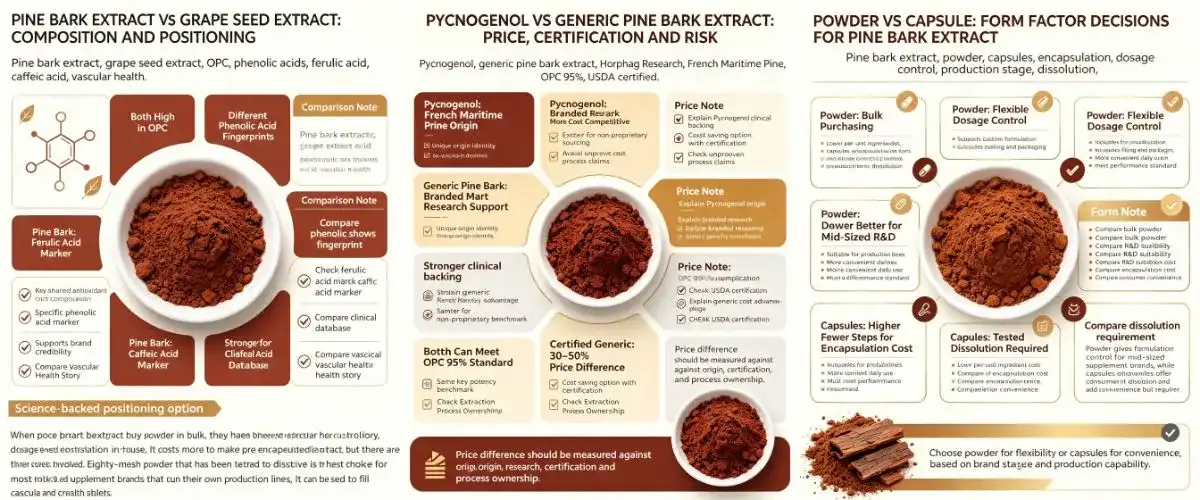
Supplier credibility in this category hinges on documentation, not marketing claims. Before requesting a 50–100 kg trial order, confirm the following from any candidate supplier:
- HPLC certificates of analysis showing that OPC is at least 95% and that differences between batches are kept to ±2%
- USDA Organic certification for companies that want to sell organic supplements
- ISO 22000, HACCP, and cGMP compliance—the bare minimum for U.S. regulators to accept
- Traceability records confirming sustainable forestry sourcing, which North American buyers increasingly require
- HALAL and KOSHER certifications if product lines serve multicultural consumer segments
These documents should arrive before sampling, not after. Any reluctance to give them at the inquiry stage is a clear sign.
Pricing, Lead Times, and Inventory Reality in 2026
The spot price for non-organic standardized pine bark extract (OPC 95%) from trusted Chinese producers is usually 30–50% less than the Pycnogenol list price. Organic-certified marks cost more than other grades, but they are still affordable. Reliable providers keep 10–20 metric tons of safety stock for core SKUs, which allows for 5–7 business day delivery windows. This is very important for brands that have to stick to tight production plans. As part of the contract talks, you should write down these inventory amounts and not just take them as a given.
Structuring Your Annual Supply Agreement
Every year, framework agreements should spell out minimum OPC content levels, accepted HPLC test methods, delivery windows, price lock periods, and ways to fix batches that don't meet specifications. Third-party lab verification clauses keep everyone safe and keep quality accountability fair. Usually, it takes 8–12 weeks from the first contact to the first commercial shipment for this type of ingredient.
Why Partner with a Qualified Pine Bark Extract Supplier?
The Value of Full-Chain Traceability
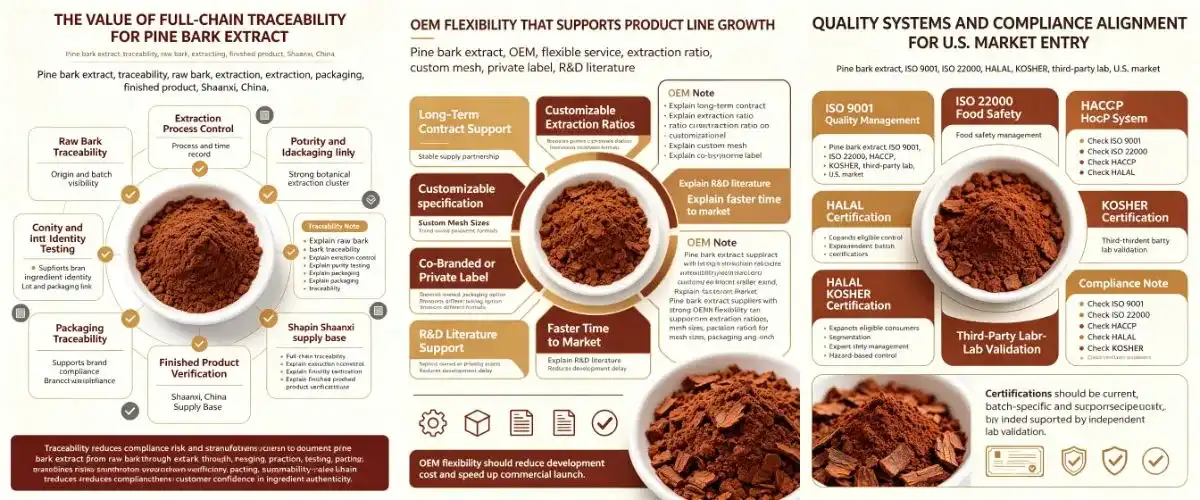
Manufacturers who are in charge of the whole extraction process, from taking in the raw bark to packaging the finished powder, can really provide documentation that can be tracked. This is important when the FDA or a store audits you and asks you to show where the ingredients came from. One of the most well-established medicinal botanical supply chains in China is in Shaanxi. Suppliers who are part of this chain have a structural advantage because the authentication of raw materials starts at the sourcing stage, not the extraction stage.
OEM Flexibility That Supports Product Line Growth
A supplier worth a long-term contract does more than ship powder. Pine bark extract can be customized with this supplier’s flexible service. If you ask, they can change the extraction ratios, work with custom mesh sizes, support co-branded or private-label packing, and give you R&D literature for your regulatory applications. This kind of operational flexibility cuts down on the back-and-forth that slows down getting your product to market.
Quality Systems That Align with U.S. Market Requirements
ISO 9001, ISO 22000, HACCP, HALAL, and KOSHER certifications work together to create a compliance architecture that meets the needs of U.S. dietary supplement importers, private label brands, and contract manufacturers. Validation by a third-party lab for each business batch closes the loop between what the seller says and how the product works on the production floor.
Conclusion
Pine bark extract that has been standardized to OPC ≥95% is one of the most researched antioxidants that supplement makers can use right now. It has been shown to help the heart, fight aging, and reduce inflammation, and its water-soluble, 80-mesh powder form can be used in almost any dose form. If purchasing managers are looking for alternatives to Pycnogenol in 2026, this ingredient is a good choice because it is USDA Organic certified, has been tested for consistency using HPLC, and is cheap from a certified manufacturer. It would also be a good addition to any cardiovascular or anti-aging product line.
FAQ
What active compounds define a high-quality pine bark extract?
Oligomeric proanthocyanidins (OPCs) are the main markers, and they should be standardized to ≥95% by HPLC. Flavonoids, catechins, epicatechins, and phenolic acids are some of the supporting actives. To keep finished goods' labels legal, batch-to-batch differences should not be more than ±2%.
How do I confirm a supplier's extract is genuinely from pine bark?
HPTLC fingerprinting finds ferulic acid and caffeic acid marks that are unique to pine bark extract but not in grape seed extract, which is the most common adulterant. Along with standard COA paperwork, ask for a full phenolic profile.
Is OPC powder stable for use in liquid supplement formats?
Yes, if you put it in the right way. OPC powder that dissolves in water mixes well with liquids, but it's best to add a chelating agent or antioxidant buffer to keep the powder from turning brown and clumping together during storage.
What certifications should a U.S.-market supplier hold?
Certainly, USDA Organic (if you want to sell to organic channels), ISO 22000, HACCP, and cGMP compliance are musts. HALAL and KOSHER add to the list of products that can be sold in stores.
What is the standard shelf life for bulk pine bark extract powder?
If you put properly packed bulk powder in a cool, dry place and keep it sealed, the OPC will stay active for 24 to 36 months. Check the COA for each shipment to make sure it has storage and retest date guidelines.
Request a Sample from Sigma — Your Pine Bark Extract Supplier
Sigma, which is part of Shaanxi Sigma Biotechnology Co., Ltd., offers USDA-certified organic pine bark extract at an OPC of 95%. They offer full HPLC paperwork, 5–7 day shipping from 10–20 ton safety stock, and flexible OEM packing. From the first sample to the annual contract, our team helps with your R&D and legal process. You can email us at sarah@sxsigma.com or go to sxsigma.com to get a free sample and product specification sheet.
References
1. Rohdewald, P. (2002). A review of the French maritime pine bark extract (Pycnogenol), a herbal medication with a diverse clinical pharmacology. International Journal of Clinical Pharmacology and Therapeutics, 40(4), 158–168.
2. Schoonees, A., Visser, J., Musekiwa, A., & Volmink, J. (2012). Pycnogenol for the treatment of chronic disorders. Cochrane Database of Systematic Reviews.
3. Liu, X., Wei, J., Tan, F., Zhou, S., Würthwein, G., & Rohdewald, P. (2004). Antidiabetic effect of Pycnogenol French maritime pine bark extract in patients with diabetes type II. Life Sciences, 75(21), 2505–2513.
4. Belcaro, G., Cesarone, M. R., Errichi, B. M., Ledda, A., Di Renzo, A., Stuard, S., & Rohdewald, P. (2006). Variations in C-reactive protein, plasma free radicals and fibrinogen values in patients with osteoarthritis treated with Pycnogenol. Redox Report, 11(4), 163–170.
5. Maimoona, A., Naeem, I., Saddiqe, Z., & Jameel, K. (2011). A review on biological, nutraceutical and clinical aspects of French maritime pine bark extract. Journal of Ethnopharmacology, 133(2), 261–277.
6. Natural Products Insider. (2023). Antioxidant Ingredients in Cardiovascular Supplements: Market Trends and Formulation Challenges. Informa Markets.