Top Uses and Benefits of Butterfly Pea Flower Extract in Drinks
The top uses of butterfly pea flower extract in drinks include natural blue coloring for teas, botanical waters, functional beverages, cocktails, syrups, and instant drink powders. Its main benefits are a plant-based blue shade, a visible shift from blue to purple when acid is added, and a clean-label alternative to synthetic dyes such as FD&C Blue No. 1. I wrote this guide for beverage developers and buyers who need practical facts about solubility, stability, documents, and sourcing. It also covers the specifications of the Sigma product.
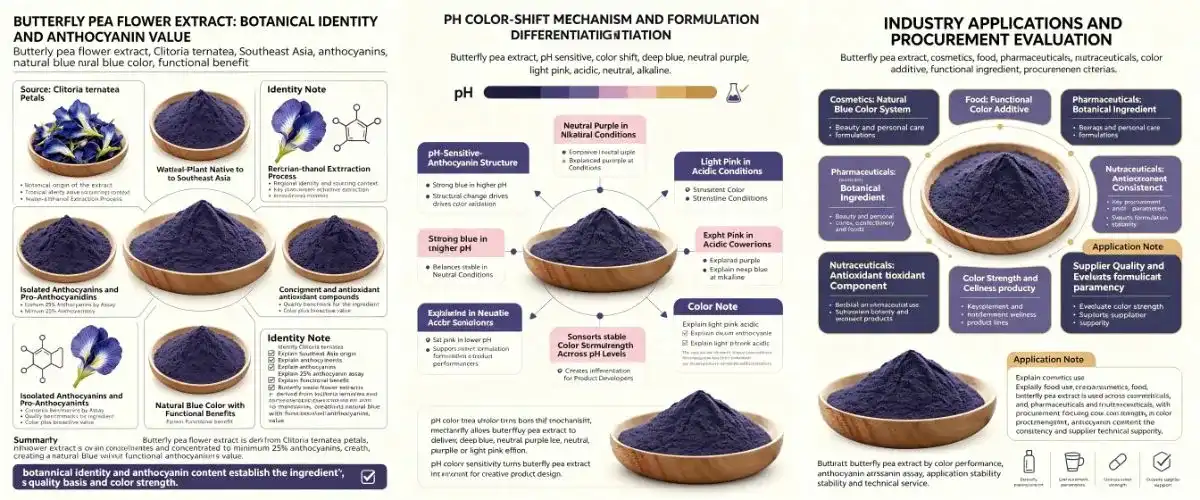
What Butterfly Pea Flower Extract Is and Why Beverage Brands Use It?
Source and Color Chemistry
Warm Asia is home to a plant called Clitoria ternatea. It can climb. Butterfly pea flower extract is made from the petals of this plant. The main reason is anthocyanins, which are what make it blue. Because they are acidic, these colors change. The color stays blue when the drink is balanced or just a little sour. The color changes from blue to purple and then to pink as the pH drops. Frontiers in Plant Science wrote about it in 2021. To get these flower anthocyanins, read the review. It also talks about how stable they are and what you can do with them. For each pH level, one thing can keep some drinks blue and change their color a lot.
Extract Versus Whole-Flower Powder
That flower powder is just flowers that have been ground up. It can add haze, sediment, and a grassy note because it is made of fiber and plant solids. It gets rid of a lot of that stuff and makes the color stronger at the same time. This adds more color per gram and makes clear drinks look better. Because formulators know how much anthocyanin is in an extract, they don't have to guess how much to give. It's important to label the bottles the same way every time you make a lot of something. I check each sample for anthocyanin, see how well it dissolves, and see how much is left over after a day.
Sigma Product Specifications
What is the correct spelling for Sigma butterfly pea flower extract? The blue, fine powder is made by washing the flower with water and ethanol. It has at least 25% anthocyanin, particles no bigger than 100 mesh, and a pH range of 3.0 to 5.0. When dried, it loses less than 5% of its weight. The powder dissolves quickly in water and doesn't leave any residue or bad tastes behind because it is ground very finely and dried at low temperatures. When we check for quality, we use heavy metal and herbicide residue guidelines from the FDA and the EU. The item is in stock and has ISO, HACCP, and Halal certifications. Keep air and light away from it.
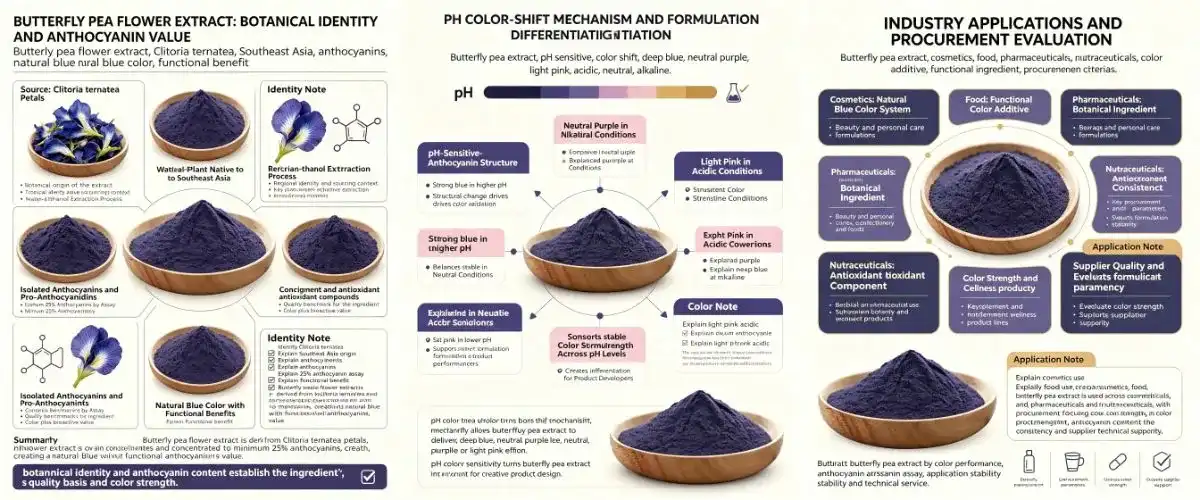
Top Uses of Butterfly Pea Flower Extract in Drinks
Ready-to-Drink Teas, Botanical Waters, and Functional Beverages
You can start with plant-based waters and teas that are ready to drink. A small amount gives off a clear blue or blue-violet tone, which means it has natural chemicals. You can also use color to make useful drinks, like rest or beauty drinks, look more expensive on the stand. The shade is always based on the pH at the end. An acidic water base stays blue, but a tea that tastes like lemon moves toward violet. In the lab, I think you should make a small pH ladder. Before you lock the mix, test the same amount of butterfly pea flower extract in three or four bases.
Color-Changing Cocktails, Mocktails, and Syrups
People who work in coffee shops and bars like it because customers can see the color change. It turns purple or pink when you mix tonic or citrus juice with blue syrup or spirit. This is an interesting way to serve food that doesn't use extra dyes. As long as you mix the color just right when you bottle syrups and concentrates, they will work well. The guest should add the acid and raise the pH of the base so that it stays blue. The shift takes place because of acid. An acidic drink will look purple or pink from the start when it's done.
Instant Drink Powders and Dry Premixes
Packs, stick packs, and dry drink mixes can all be made from powder. Sweeteners, acids, and other dry ingredients mix well with our 100 mesh powder because it is so fine. It breaks down right away in water because we grind it up very fine and dry it at low temperatures. When powder and water are mixed together, the acid in the dry mix changes the color. The last mix should be tried both as a drink and as a powder. That's why the mix needs to be hidden. Over time, light and water can make the color fade.
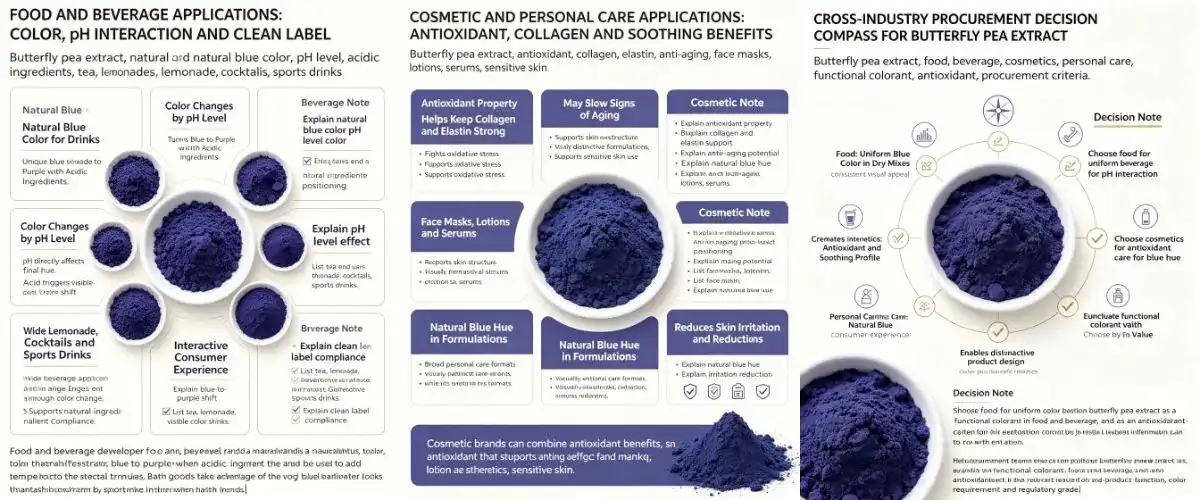
Key Benefits of Butterfly Pea Flower Extract for Beverage Brands
A Natural Blue for Clean-Label Positioning
Plants have a hard time giving off blue. Because natural dyes can fade or change color, many brands still use FD&C Blue No. 1, a dye that was made in a lab. A plant-based blue created by butterfly pea flower extract is suitable for clean labels. The FDA lists butterfly pea flower extract in 21 CFR 73.69 as a color additive that does not need to be approved in the US. If someone wants to buy something, they should look at the rule to see if their drink type is covered. It's important to check with each market before you start, like in the EU where the rules are different.
A Visible Color Change That Supports Marketing
People remember things that surprise them. When you add acid to a drink, it turns purple. This will be talked about, and your marketing team will be able to tell a good story about it. It's also possible for the sign to say that the color comes from a flower. Sigma presents the powder as a pure bright blue color that changes to purple when it comes in contact with acid. You should time the claim to match when the drink is served, like when the tonic or lemon is added. You will know what will happen this way.
Antioxidant Context, Cost in Use, and Their Limits
Blossoms of the butterfly pea plant have been used in a lot of studies that look into antioxidants. Still, a colorant that is used in very small amounts shouldn't be linked to health problems. People who say things like this need to back them up with facts and follow the rules in the area. I can't use what I know about antioxidants to sell something just because I know about them. You also need to pay close attention to cost. For natural dyes, which cost more than man-made ones, I look at the price per finished dish instead of the size of the package. I looked at a scientific sheet that said the amount of color was between 0.1% and 0.5%. The number should be right based on your own tests.
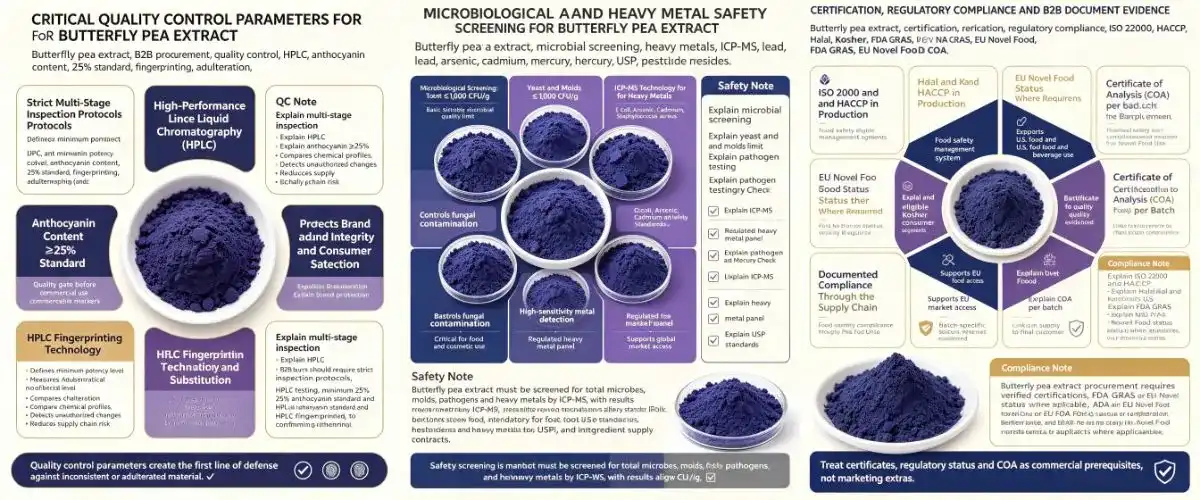
How Butterfly Pea Flower Extract Performs in Beverage Formulas
Solubility, Clarity, and Flavor Impact
How well it mixes with water is the first thing that is checked. If you don't spread the powder out well, it might leave behind spots, clouds, or a layer of dirt. Because it is very finely ground and dried at low temperatures, our powder melts right away and doesn't leave any residue or bad tastes behind. Just the right amount of extract should not change the taste much at the color amounts used. To be sure, check your recipe, though, because herbs, minerals, and tea can change the way a drink tastes. In clear glass, place two samples next to each other. After 24 hours, check to see if there is any fuzz. Then, have that group of people taste one that is colored and one that isn't.
Stability: pH, Heat, Light, and Oxygen
Blues that come from nature don't always stay stable as well as blues that are made in a lab. The pH level of anthocyanins changes, and heat, ozone, and light can make them fade. To solve this problem, test it in real drink. In the last step, the pH is checked, and then heat tests are done to match the pasteurization or hot-fill-ing step. Keep samples away from cold things and dark places. Leave them out in the open. Keep an eye on the color for as long as the item is meant to last. Most of the time, wrapping that is opaque or blocks UV light works best. Your provider may give you stable data, but only use it as a suggestion. It will be different if you add sugar, nutrients, or other things.
Comparison with Blue Spirulina and Other Natural Blues
The blue color in butterfly pea flower extract comes from a protein called phycocyanin. The anthocyanins in blue spirulina are what make it blue. They act in different ways. Phycocyanin is more likely to break down in hot and acidic places, so many companies go slowly when they process it. For drinks that need color, butterfly pea flower extract changes color based on pH. But it's not so great when you just need one color. People who sell "blue matcha" should be asked to name the plant and the main ingredient. It was released in 2014 in the Journal of Agricultural and Food Chemistry. The study looked at the search for natural blue colorants and the pros and cons of each.
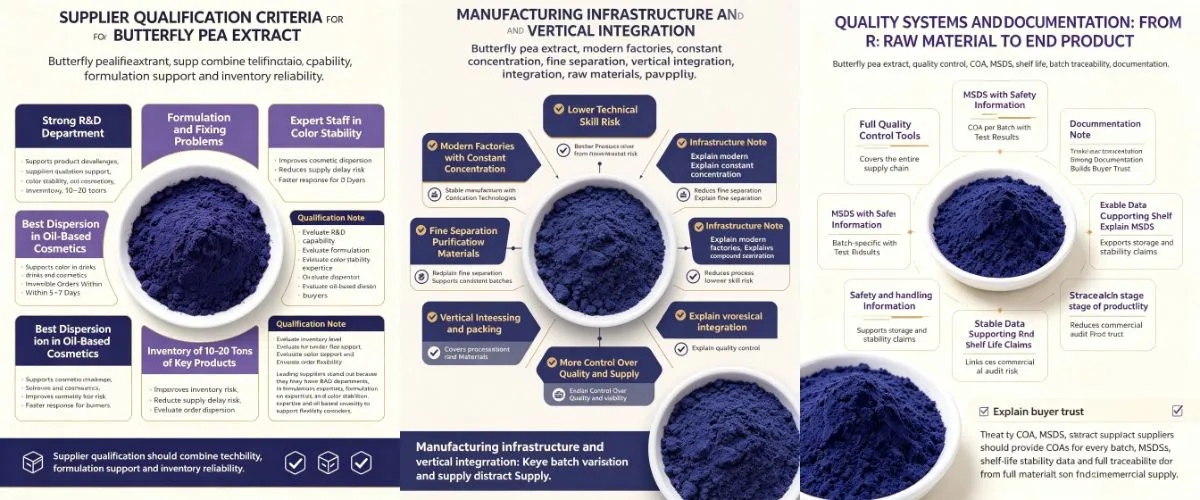
Choosing and Sourcing Butterfly Pea Flower Extract for Bulk Production
Specifications and Documents to Request
Write down the type of drink, its pH level, color, amount, and how long it will last. So, ask each seller for a specification sheet and an analysis report that shows how much anthocyanin was present and how much was lost when it dried. The report should also include a list of any heavy metals or pesticide residues that were found. This is because one ticket doesn't cover something else. You need to get proof that the thing you want is real and that it was made in that place. Check to see if the material can be used for food as well as face masks. For the U.S. market, you need to see proof that the color ingredient follows FDA rules. Last but not least, ask the seller how they deal with lot differences in color. To keep the color the same on the shelf, this has to be done.
Powder or Liquid, and Cost per Serving
Powder is easy to ship and store, and it works well with bags, dry blends, and quick drinks. They can be used to make syrups and lines that bottle things slowly because they don't turn into powder dust. Sigma sells powder that has at least 25% anthocyanin by weight at 100 mesh. Check out how much each style costs when you add up the dose, the freight, the handling, the packing, and any changes that were made to the process. It might cost more to use a cheaper kilogram if the color isn't good and the amount needs to be raised. Ask for samples with the same amount of color so you can compare like with like.
Sampling, Pilot Runs, and Supply with Sigma
A good way to get qualified gets better over time. First, test on a bench with different doses. After that, check the item for light, heat, and how long it will last on the shelf to make sure it is safe. Once you're sure of the dose, mixing order, and color balance, make a test batch on your line. Only then should you agree to a plan for supplies. Sigma backs up every step. We always have a lot of stock, safety stock items are sent out in 5 to 7 business days, and we guaranty the quality for a year. You can change the labels, the size of the grains, and how they are packed with our OEM/ODM service. We can ship by sea, air, or express. Edges and papers are another thing we can help with.
Conclusion
When acid is added, the drinks go from blue to purple or pink. Butterfly pea flower extract gives it its blue color. Most of the time, it's used to make teas, herbal waters, useful drinks, cocktails, syrups, and quick powders. It does have some good points, such as clean labels, a clear marketing story, and the choice of man-made blue colors. Light, heat, and pH can also change the results, along with the whole process. It's not as sensitive to acid and heat as blue spirulina. We need to look again at the cost per dose, the amount of anthocyanins, how well they dissolve, licenses, and whether drinks are FDA-approved. Tests on a bench, in the air, and in the stable show how well something really works.
FAQ
Is butterfly pea flower extract water soluble?
Yes. Because it is very finely ground and dried at low temperatures, our powder is mixed with water right away. To get dispersion, you should always check your own formula.
Why does the color change?
For anthocyanins, the pH level is important. When the pH level is right, the drink stays blue. Being more acidic makes it turn purple and then pink.
Is it approved in the United States?
In 21 CFR 73.69, the FDA says that you don't have to be certified and lays out rules for how much of each type of food you can use. Choose what kind of drink you want to get ready.
How does it compare with blue spirulina?
Most of the time, acid and heat are worse for spirulina's phycocyanin. Butterfly pea flower extract changes color based on how acidic or basic the soil is. Taste both of them after adding them to your drink.
What does the Sigma powder specify?
At least 25% anthocyanin, 100 mesh, less than 5% loss when dried, and a pH level between 3.0 and 5.0.
Contact Sigma for Butterfly Pea Flower Extract Samples
For your next project, Sigma can help you make a drink that changes color. Because we make and sell butterfly pea flower extract, we can send you free samples, tell you about the science behind it, and let you choose between OEM and ODM. Our team will help you set a good standard. Email sarah@sxsigma.com with the pH, dose, and yearly amount you want.
References
1. Vidana Gamage, G.C., Lim, Y.Y., Choo, W.S. "Anthocyanins from Clitoria ternatea Flower: Biosynthesis, Extraction, Stability, Antioxidant Activity, and Applications," Frontiers in Plant Science, 2021.
2. Jeyaraj, E.J., Lim, Y.Y., Choo, W.S. "Extraction Methods of Butterfly Pea (Clitoria ternatea) Flower and Biological Activities of Its Phytochemicals," Journal of Food Science and Technology, 2021.
3. Oguis, G.K., Gilding, E.K., Jackson, M.A., Craik, D.J. "Butterfly Pea (Clitoria ternatea), a Cyclotide-Bearing Plant With Applications in Agriculture and Medicine," Frontiers in Plant Science, 2019.
4. Newsome, A.G., Culver, C.A., van Breemen, R.B. "Nature's Palette: The Search for Natural Blue Colorants," Journal of Agricultural and Food Chemistry, 2014.
5. Sigurdson, G.T., Tang, P., Giusti, M.M. "Natural Colorants: Food Colorants from Natural Sources," Annual Review of Food Science and Technology, 2017.
6. U.S. Code of Federal Regulations, Title 21, Part 73, Listing of Color Additives Exempt From Certification, 2023.