Prunus Humilis Extract vs. Other Berry Extracts: Which Is Best?
When sourcing berry-derived ingredients for functional food or supplement formulations, the options can feel endless. After reviewing the bioactive profiles, formulation compatibility, and regulatory standing of leading berry extracts, prunus humilis extract consistently stands out for digestive health applications.
Its standardized amygdalin content, medicine-food homology status, and compatibility with FOSHU and Korean Health Functional Food frameworks make it a practical choice for Asia-Pacific brands. That said, the "best" extract always depends on your specific application target—and this article walks through the comparison systematically.
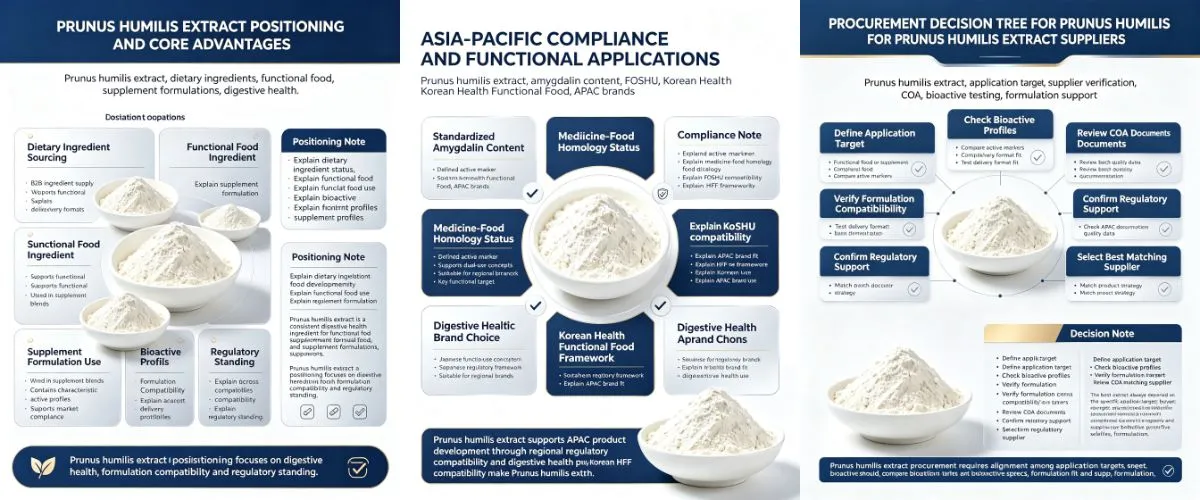
Understanding Prunus Humilis Extract: Composition and Benefits
In traditional Chinese medicine, Prunus humilis is called 送渎 (Yùlǐrén). It is a stone fruit plant that grows naturally in northern China. Its seeds have been used as a natural cleanser for more than a thousand years. This is written down in the Shennong Bencao Jing and other medical books.
Active Compounds and Standardization
The main bioactive ingredient in this extract is amygdalin, which is sometimes called Prunuside A. It is a cyanogenic glycoside that has been shown to have mild laxative effects by speeding up intestinal motility. Commercial-grade extracts are defined to have at least 10% amygdalin and come as an 80-mesh white fine powder that was made by extracting the plant with water. When compared to whole-seed recipes, this defatted matrix shape makes it easier to dissolve.
Traditional Medicine Meets Modern Formulation
Its labeling in China as a medicine-food homology makes it stand out—it has both food safety authority and therapeutic backing. For people who want to get their products approved by FOSHU in Japan or registered in Korea, having a plant ingredient with a history of traditional use makes the paperwork stronger.
Physical and Functional Properties
prunus humilis extract is a fine white powder that has lost about 5% of its weight when dried, and the number of microbes in it meets standards for food-grade use. Because it dissolves easily in water, it works well for production lines that make solid drinks, oral liquids, and granules, which are common formats for mid-sized functional food brands in the Asia-Pacific region.
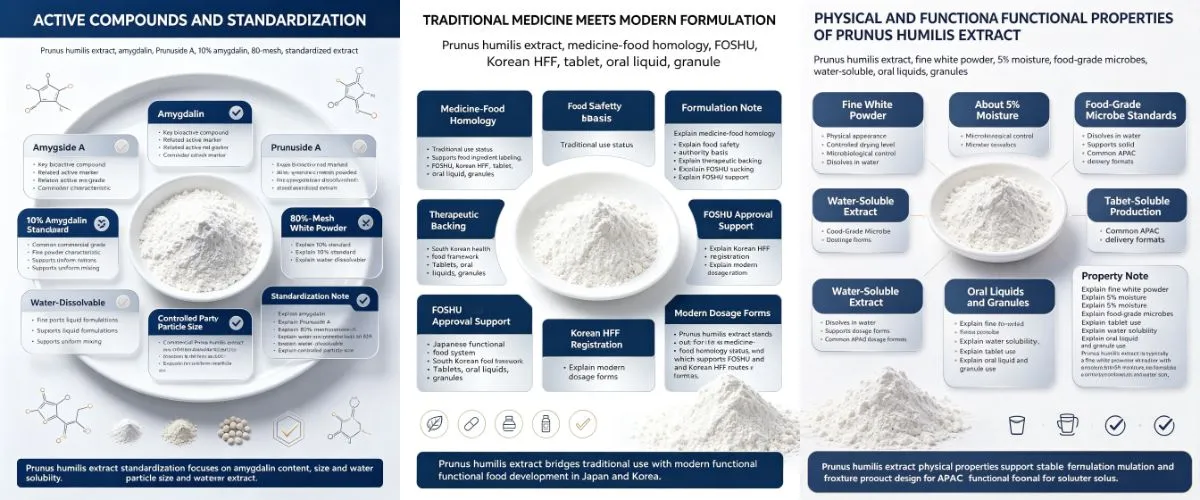
Comparing Prunus Humilis Extract with Other Berry Extracts
Berry products are not all used for the same things. Below is a direct comparison of the alternatives that are most often found.
Blueberry Extract (Vaccinium corymbosum)
Blueberry extract has a lot of anthocyanins and proanthocyanidins, which makes it a good choice for claims that it can help with eye health and fight free radicals. However, it doesn't have much of an effect on the movement of stools and isn't usually thought of as a laxative. Batch color difference can also be a problem for white or neutral-colored product forms.
Cranberry Extract (Vaccinium macrocarpon)
Cranberry extract has been studied a lot for its effects on the health of the urinary tract, mainly through its A-type proanthocyanidin mechanisms. It's not designed to make claims about being a digestive laxative, and the approval processes for non-traditional ingredients are more complicated in Japan and Korea. Its sour taste also limits how much can be used in drinks.
Prunus Mume Extract (Japanese Apricot)
Prunus mome is in the same family as Prunus and is known to help with gut health, especially in Japan. But it's mostly used to help the liver and fight fatigue, not to keep the bowels regular. Prunus mome has less standardized amygdalin than Prunus humilis. This means that it can't be used as effectively as Prunus humilis for laxative health benefits.
Each piece fills a different purposeful space. The Prunus humilis profile is hard to beat in the berry family for brands that want to promote bowel health and have regulatory paperwork to back it up.
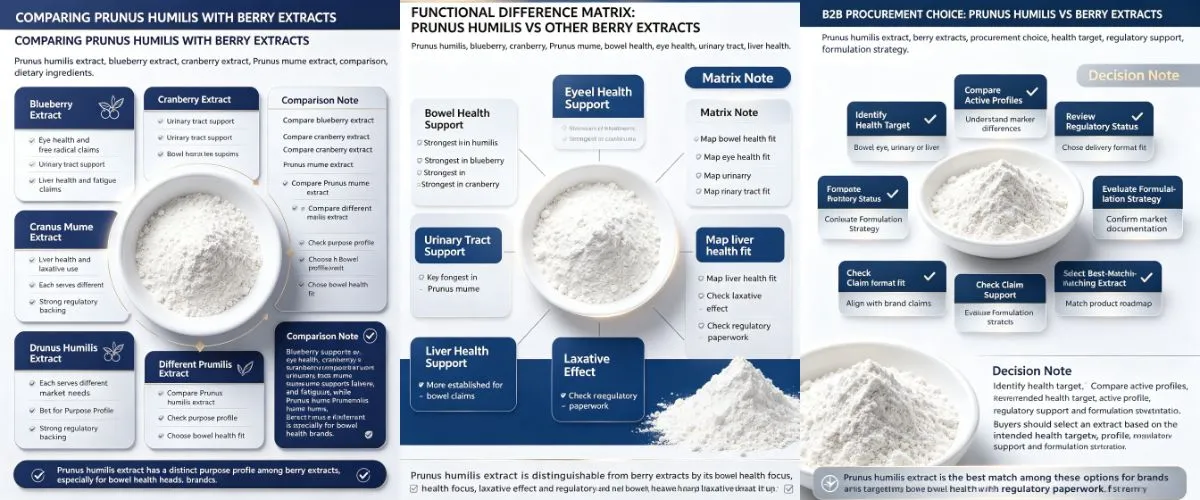
Key Factors in Selecting the Best Berry Extract for B2B Procurement
It's not enough to just look at price per kilogram when choosing a prunus humilis extract supplier. If a purchasing manager has seen FOSHU or Korean HFF entries, they know how important it is to have proper paperwork for each ingredient.
There are a few main factors that are most important at the industry sourcing level.
- Standardized active content: Confirm amygdalin ≥10% with HPLC-verified COA per batch. Batch-to-batch consistency directly affects functional claim reproducibility and labeling integrity.
- Certification stack: ISO 22000, HACCP, and Halal certification cover the primary compliance checkpoints for Japan's Ministry of Health, Labour and Welfare (MHLW) and Korean MFDS import review.
- Heavy metal and pesticide residue data: Third-party test reports for Pb, As, Hg, Cd, and pesticide panels should accompany every lot. Japanese standards for botanical food ingredients are among the most stringent globally.
- Formulation compatibility: An 80-mesh particle size with good cold-water solubility reduces processing friction across granule, powder sachet, and oral liquid production formats.
- Lead time and MOQ: For fast-moving R&D cycles, in-stock availability with 1 kg trial quantities and 2–3 working day dispatch is a genuine operational advantage.
These factors work together to show if a supplier can handle not only your first order but also a yearly supply plan.
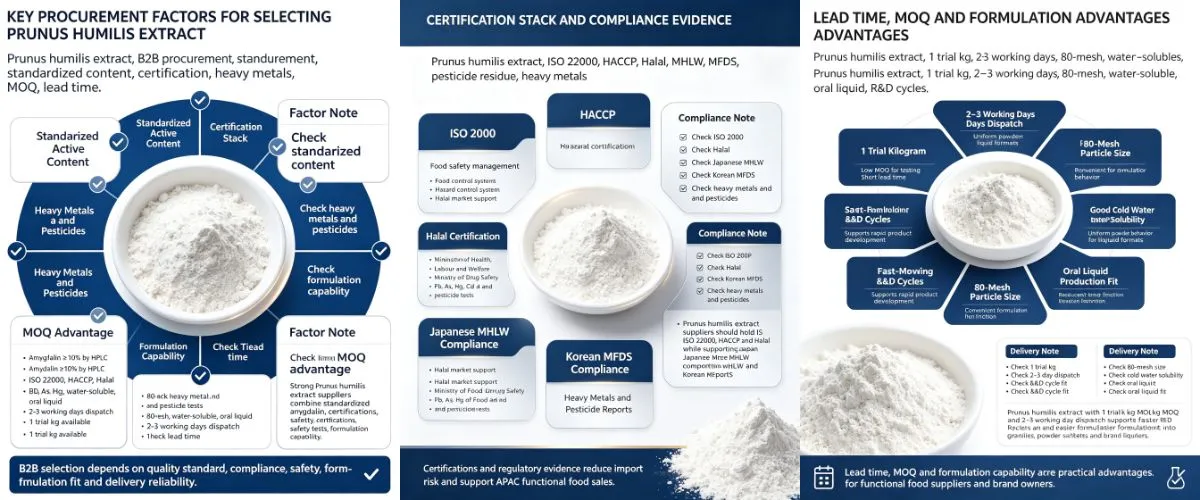
Practical Applications and Performance
How an ingredient works in real production settings is the best proof of its effectiveness.
Laxative Health Foods and Solid Beverages
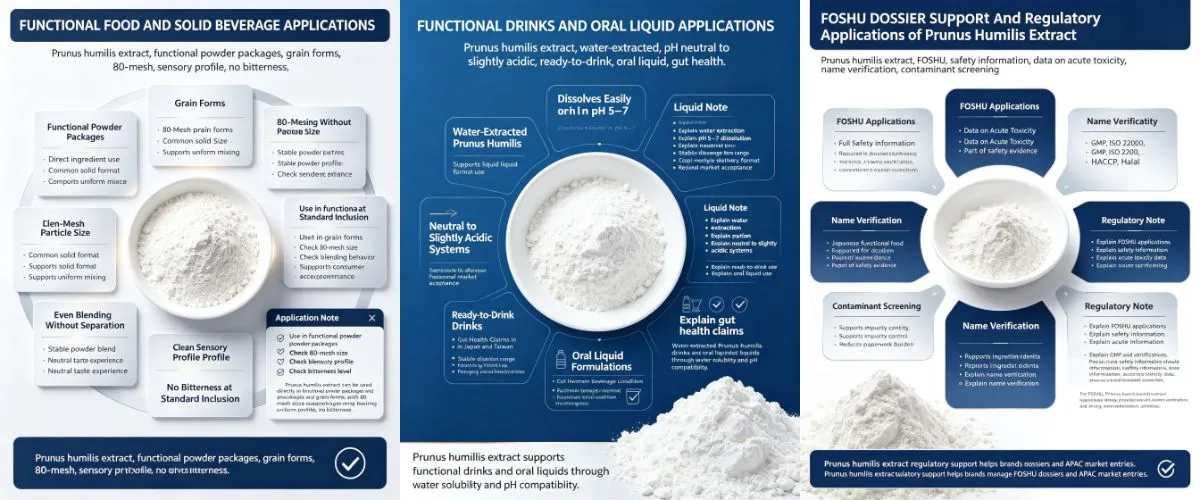
This extract can be used most directly in functional powder packages and grain forms. The 80-mesh particle size makes sure that mixed-powder forms blend evenly without any separation. Brands in this group have said that their sensory profiles are clean, meaning that at standard inclusion rates, there is no bitterness.
Functional Drinks and Oral Liquids
Powder of prunus humilis extract that has been extracted using water dissolves easily in pH systems that are neutral to slightly acidic, which are common in ready-to-drink drinks. In Japan and Taiwan, where people are open to herbs in liquid form, oral liquids with gut health claims are a quickly rising subcategory.
Regulatory Dossier Support
For FOSHU uses, ingredient providers must provide full safety information, such as data on acute toxicity, name verification, and contaminant screening. A GMP facility-certified extract with ISO 22000, HACCP, and Halal certifications makes the submission process much easier by reducing the amount of paperwork that needs to be done.
Making the Informed Choice: Which Extract Suits Your Business Needs?
Which berry extract you use depends on what your product is supposed to do. If you want to make claims about being an antioxidant or brightening the skin, blueberry or acai extracts are better choices. Cranberry is still the standard when it comes to bladder health.
Prunus humilis extract has a lot of room in the Asia-Pacific market for digestive health, normal bowel movements, and traditional plant placement. Its status as a medicine-food homology substance and its ability to work with Japanese and Korean regulatory frameworks give it a functional and business advantage for brands in this niche.
Here, too, customization is important. Mid-sized brands can stand out without having to build their own extraction infrastructure if they can find suppliers that offer variable extraction ratios, particle size specifications, and private label packing. For brands moving from 25 kg trials to commercial scale, low MOQ and fast shipping are not options; they are necessary to meet deadlines.
Conclusion
There isn't a single berry product that works best in all situations. Blueberry, cherry, and Prunus mome all have clear roles to play in nature. Prunus humilis extract, on the other hand, has a combination of traditional use documentation, standardized amygdalin content, and regulatory compatibility that other berry extracts do not have.
This makes prunus humilis extract a better choice for digestive health and bowel regularity. It's a useful, well-documented place to start for buying workers who are building FOSHU or Korean HFF product lines. It is important for suppliers to have batch-consistent COA data, certifications that are in line with target markets, and sampling logistics that are quick and easy.
FAQ
What is the standard active ingredient content in Prunus humilis extract?
Commercial food-grade extracts are standardized to amygdalin ≥10%, verified per batch via HPLC. This standardization ensures consistent functional claims across production runs.
How does Prunus humilis extract compare to blueberry extract for digestive health?
Blueberry extract is well-positioned for antioxidant claims but lacks documented laxative activity. Prunus humilis extract carries pharmacopeial recognition for intestinal motility support, making it the more appropriate choice for bowel health formulations.
What certifications should I require from a supplier?
For Japan and Korea market entry, ISO 22000, HACCP, and Halal certification represent the baseline. Each production batch should carry a full COA with heavy metal, pesticide, and microbial data.
What formats are available for formulation?
The extract is available as an 80-mesh white fine powder, suitable for granules, powder sachets, solid beverages, and oral liquids. Water extraction ensures clean solubility without residual organic solvents.
What is the typical lead time for sampling and bulk orders?
In-stock 1 kg samples ship within 2–3 working days. Standard 25 kg bulk orders dispatch within 3–5 working days. Custom specification orders require 7–10 working days.
Partner with Sigma for Reliable Prunus Humilis Extract Supply
Sigma offers prunus humilis extract that is made according to GMP standards and has been tested for amygdalin levels of at least 10%. It also has ISO 22000, HACCP, and Halal approvals, as well as batch-by-batch COA reports. As a well-known company that makes prunus humilis extract and does all of its production in Shaanxi, we can handle trial quantities as low as 1 kg and go up to annual framework agreements. You can email our team at sarah@sxsigma.com or go to sxsigma.com to ask for a sample or specification sheet.
References
1. Chinese Pharmacopoeia Commission. Chinese Pharmacopoeia. 2020 Edition. China Medical Science Press.
2. Blumenthal, M., et al. The Complete German Commission E Monographs: Therapeutic Guide to Herbal Medicines. American Botanical Council, 1998.
3. Japan Ministry of Health, Labour and Welfare. Foods for Specified Health Uses (FOSHU) Approval Guidelines. MHLW, 2021.
4. Monagas, M., et al. "Proanthocyanidin-rich berry extracts and their role in gastrointestinal health." Food & Function, Royal Society of Chemistry, 2010.
5. Korea Ministry of Food and Drug Safety. Functional Ingredient Standards for Health Functional Foods. MFDS, 2022.
6. Zhao, Y., et al. "Amygdalin content and laxative activity of Prunus humilis seed extracts." Journal of Ethnopharmacology, Elsevier, 2017.