Pine Bark Extract vs Other Antioxidant Ingredients Explained
When procurement managers evaluate antioxidant raw materials for cardiovascular and anti-aging product lines, the comparison always comes back to one question: does pine bark extract actually outperform the alternatives? The short answer is that it depends on what your formulation needs. This article breaks down how proanthocyanidin-rich pine bark extract stacks up against grape seed extract, vitamin C, resveratrol, and fish oil — across potency, bioavailability, formulation flexibility, and cost — so you can make a sourcing decision backed by evidence, not marketing claims.
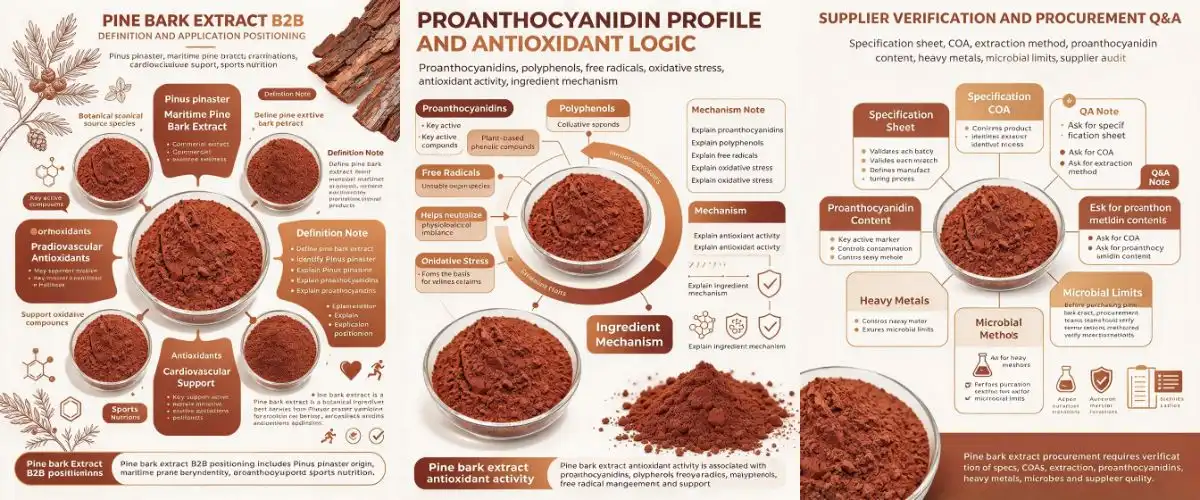
Understanding Pine Bark Extract and Its Core Benefits
What It Is and Where It Comes From
The inner bark of Pinus pinaster (Maritime Pine) or Pinus massoniana is used to make pine bark extract, a standardized plant product. Oligomeric proanthocyanidins (OPCs), flavonoids, phenolic acids, catechins, and epicatechins are some of the main things that make it work. Sigma's product is a fine reddish-brown powder that is standardized to OPC ≥95% and processed using ethanol extraction. The particles are 80 mesh and the ash content is ≤3%, which means it is fully water-soluble and can be used in capsule, tablet, and liquid dosage forms.
Biochemical Mechanisms That Matter
Pine bark extract contains OPCs, which are low-molecular-weight polyphenols that can get through cell walls more easily than many bigger antioxidant molecules. Because of their unique structure, they can remove free radicals from both the cellular membrane and the watery environment. A study in 2012 in the journal Free Radical Biology and Medicine confirmed that OPCs stop lipid peroxidation and change nitric oxide pathways. These are two processes that are directly related to health claims for the heart and blood vessels.
Applications Across Product Categories
The extract works well in functional food forms, anti-aging skin serums that fight glycation and collagen degradation, and dietary supplement pills that focus on heart health. When mixed with the right stabilizers, its water solubility at 80 mesh allows for smooth dissolution in liquid drinks. Because of these features, it is one of the most useful antioxidant raw materials for companies that handle a lot of different SKUs in the beauty-from-within and circulatory categories.
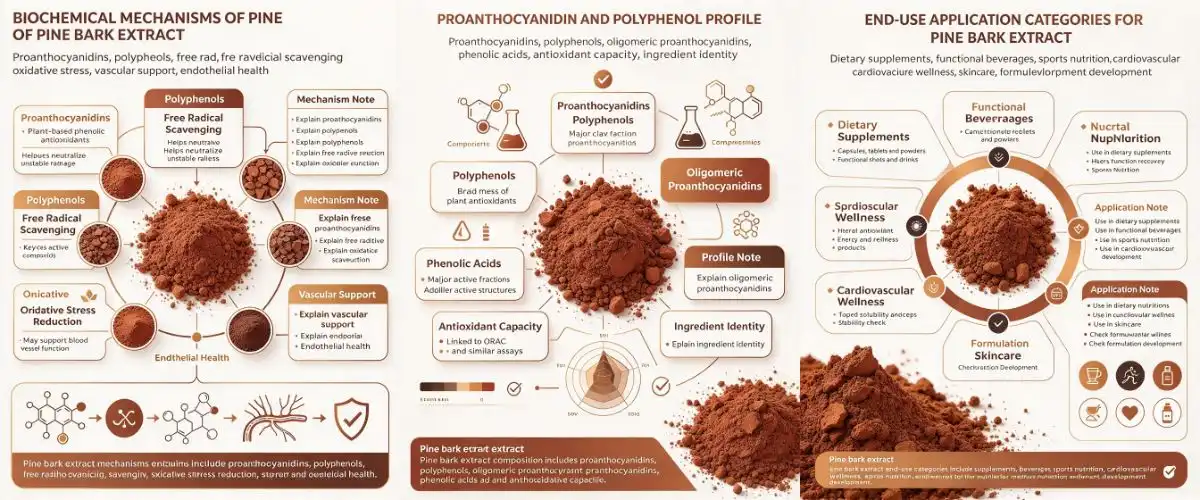
Comparing Pine Bark Extract with Other Popular Antioxidants
Pine Bark Extract vs. Grape Seed Extract
The proanthocyanidin backbone is the same in both ingredients, but they can't be switched out. The OPC levels in grape seed extract are usually between 80% and 95%, while the OPC levels in high-grade pine bark extract are always at least 95% by HPLC. HPTLC fingerprinting also shows phenolic acid markers—ferulic acid and caffeic acid—that are unique to pine bark.
These are important when your quality team checks the identity of the pine bark extract raw material. The scientific proof that pine bark helps make nitric oxide gives it a clinical edge that grape seed can't fully match for companies making heart-healthy products with specific label claims.
Pine Bark Extract vs. Branded Pycnogenol
Pycnogenol is a licensed and trademarked form of French coastal pine bark extract that has a lot of clinical evidence behind it. It really is recognized by scientists. However, its price, which is usually 30–50% higher than similar non-branded OPC 95% pine bark products, makes it hard for mid-sized supplement brands to make money.
It is important to note that using separate extraction technology to get pine bark extract from Pinus massoniana does not pose a risk of patent infringement. When purchasing an option to Pycnogenol, purchasing managers should make sure that the supplier's extraction process is independently recorded and that the OPC content is confirmed by third-party HPLC testing with a difference of no more than 2% from batch to batch.
Pine Bark Extract vs. Vitamin C and Resveratrol
While vitamin C dissolves in water and has been studied a lot, it breaks down quickly in heat and light, which means it can't be used in all formulas. Resveratrol has gotten a lot of attention for research into aging and heart health, but its bioavailability is still not always consistent because of its fast first-pass metabolism.
On the other hand, pine bark OPCs are better at staying in the body and working together with vitamin C. In fact, Biochemical Pharmacology (1998) found that OPCs can turn damaged vitamin C back into its active form. Because of this, pine bark is a natural addition to anti-aging stacks instead of a rival to vitamin C.
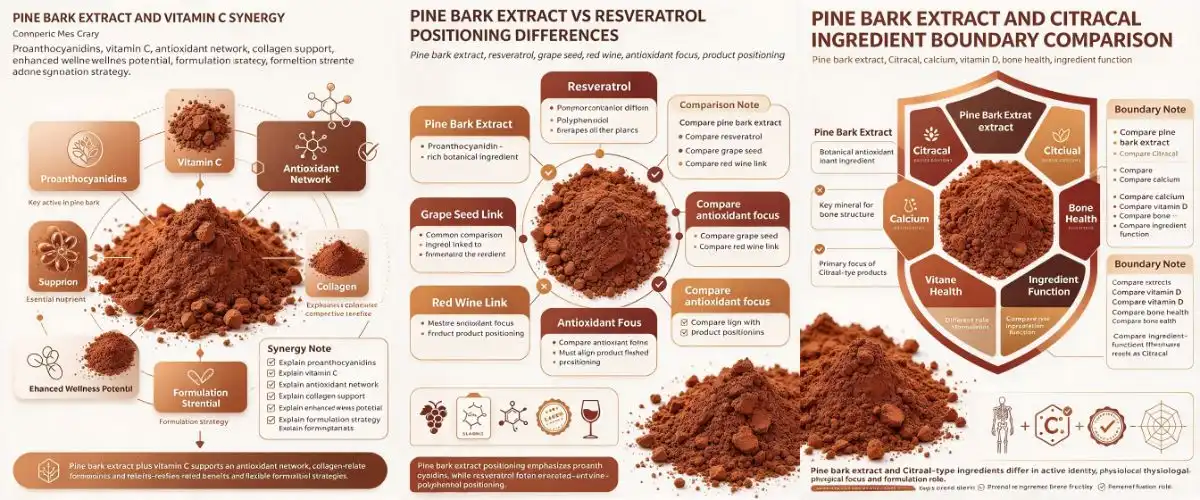
Strategic Considerations for Procuring Pine Bark Extract
Supplier Selection Criteria
Four things should be the most important when looking at pine bark extract sources. First, use a standard HPLC method to make sure the OPC is at least 95% pure, and ask for COA paperwork that shows batch-to-batch change of less than 2%. This directly protects the truth of what your label says. Second, make sure the supplier has USDA Organic, ISO 22000, and HACCP certifications.
These days, you need more than one certification to sell natural and organic products in North America. Third, check to see if the seller keeps 10–20 tons of ready pine bark extract stock and can ship within 5–7 business days. Brands that don't have much inventory are more likely to be affected by supply chain problems. Fourth, ask for tracking paperwork that proves the raw wood came from sustainable forests.
These four criteria quickly weed out the least trustworthy sources, which lowers the chance of problems with compliance during FDA facility inspections or retailer audits.
Pricing Trends and Negotiation Strategy
Due to raw wood supply and organic certification costs, OPC raw material prices have increased globally. However, fully integrated Chinese enterprises with their own extraction equipment and direct access to Shaanxi plant source regions continue to provide 30–50% cheaper pricing than European brands. Annual framework agreements with specified OPC content floors, price cap limits, and batch failure penalties enable procurement teams estimate 12-month manufacturing cycle budgets.
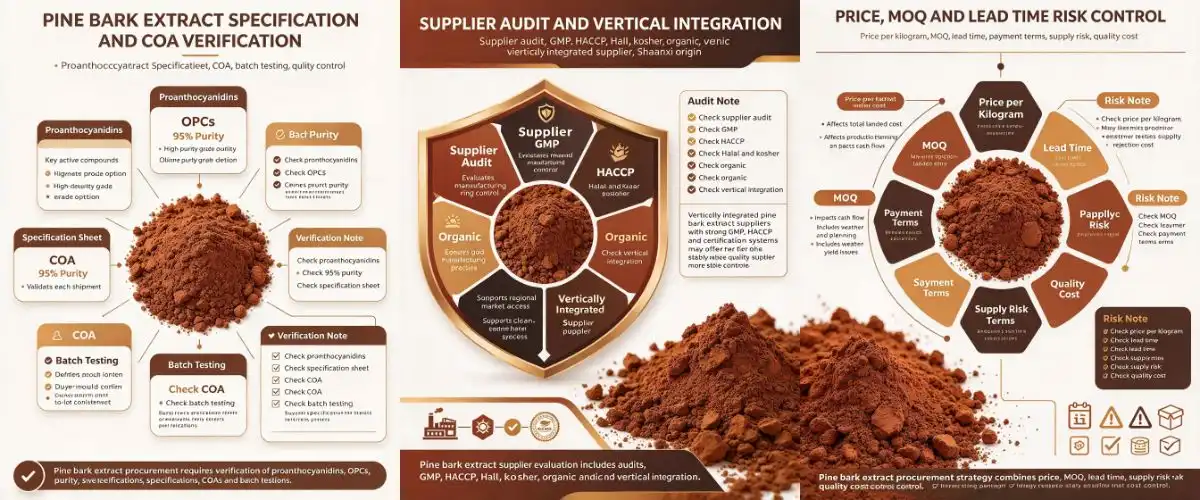
Integrating Pine Bark Extract into Your Product Line — Best Practices
Formulation Compatibility and Stability
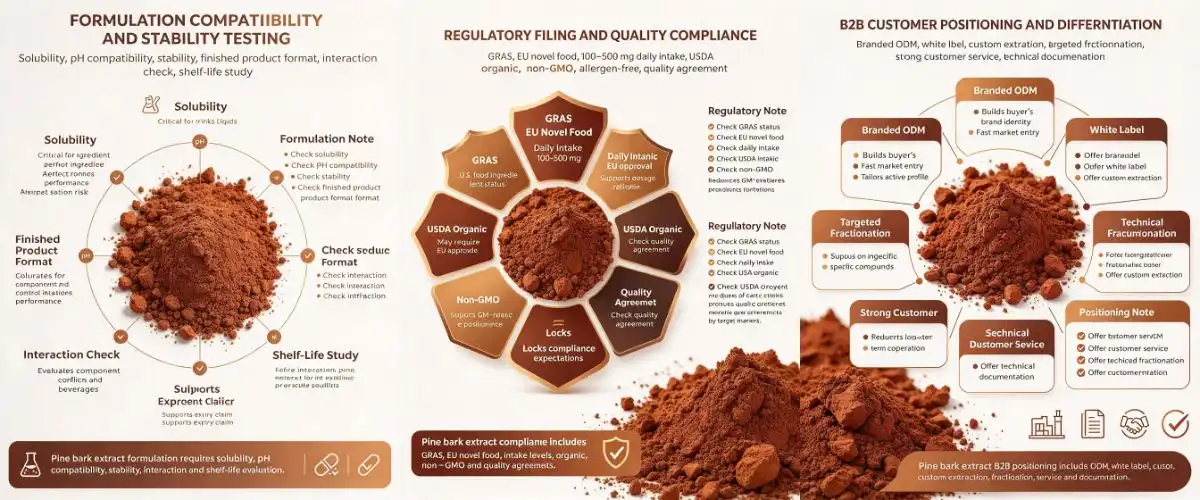
Pine bark extract powder with an 80 mesh size dissolves quickly in water, making capsules, tablets, and liquid mixes easy. When dealing with proteins, such in meal replacements, its significant polyphenol affinity for protein matrices must be considered to minimize binding losses. The hard capsule and softgel lines' reddish-brown hue complements botanical arrangement and doesn't require concealing agents. Sealed, cold, and dry, the product may last 24–36 months. The required 18-month shelf life for completed items is met.
Regulatory Compliance and Quality Assurance
Pine bark extract is offered in U.S. nutritional supplements under DSHEA. The FDA considers it safe (GRAS) as a supplement ingredient at the prescribed doses (50–300 mg/day in clinical trials). USDA Organic certification lets firms place the organic badge on completed products, giving them a selling advantage. Third-party testing by certified U.S. or European laboratories, not merely supplier-issued COAs, should be common for incoming materials before manufacturing.
Marketing Positioning for B2B Clients
Pine bark extract is a good middle ground between well-known generic antioxidants and high-end brand-name ingredients. Instead of depending on the private studies of a single brand provider, companies can look at the large body of published research on OPC bioactivity, which includes uses in cardiovascular health, skin health, and pain relief.
This makes the item seem scientifically sound while still being good for the bottom line. When private label and OEM clients combine pine bark OPCs with vitamin C or coenzyme Q10 in combination SKUs, they can make a unique product architecture that can compete with brand-name formulas at a lower cost of goods.
Conclusion
Comparing pine bark extract to other major options shows that it is competitive in terms of price, bioavailability, antioxidant potency, formulation flexibility, and clinical documentation. It is more stable than vitamin C, has the same or higher OPC content than grape seed extract, and is a cheaper option to Pycnogenol that doesn't cause patent issues. Finding an OPC ≥95% extract that is certified as USDA Organic and ISO 22000 gives your cardiovascular and anti-aging supplement brand the scientific credibility and business flexibility it needs to make more products and make more money.
FAQ
How do I verify OPC content when sampling a new supplier?
Request third-party HPLC testing from an accredited U.S. laboratory using standardized proanthocyanidin quantification methods. Supplier-issued COAs should be treated as preliminary — independent verification on your first and every subsequent lot protects your label claims.
Does pine bark extract interact with common capsule excipients?
It is generally compatible with standard fillers such as microcrystalline cellulose and dicalcium phosphate. However, its high affinity for proteins requires attention in protein-rich formulations, where binding losses can reduce effective OPC delivery.
How stable is it in liquid beverage formats?
It dissolves well in aqueous systems, but polyphenol oxidation over time can cause browning and precipitation. Chelating agents or antioxidant stabilizers — such as ascorbic acid — significantly extend liquid stability and appearance.
What distinguishes pine bark extract from grape seed extract during quality testing?
HPTLC fingerprinting identifies phenolic acid markers specific to pine bark — particularly ferulic acid and caffeic acid — that are absent or present at different ratios in grape seed extract. This is the standard botanical identity verification method.
What is the expected shelf life under commercial storage conditions?
When stored in original sealed drums at cool, dry conditions, the product maintains OPC potency for 24–36 months. This comfortably supports standard finished product shelf-life requirements.
Partner with Sigma for Bulk Pine Bark Extract Supply
Sigma has 10–20 tons of OPC ≥95% pine bark extract powder in stock and can ship it in 5–7 days. This powder is certified to meet USDA Organic, ISO 22000, and HACCP standards. As a reliable manufacturer of pine bark extract with full traceability, flexible OEM/ODM options, and a 12-month quality guaranty, we can help you with your formula from the first sample to the full production run. Visit sxsigma.com or email Sarah at sarah@sxsigma.com to get a free sample and COA right away.
References
1. Packer, L., Rimbach, G., & Virgili, F. (1999). Antioxidant activity and biologic properties of a procyanidin-rich extract from pine bark. Free Radical Biology and Medicine.
2. Bagchi, D., Bagchi, M., Stohs, S. J., et al. (2000). Free radicals and grape seed proanthocyanidin extract: importance in human health and disease prevention. Toxicology.
3. Rohdewald, P. (2002). A review of the French maritime pine bark extract Pycnogenol, a herbal medication with a diverse clinical pharmacology. International Journal of Clinical Pharmacology and Therapeutics.
4. Cesarone, M. R., Belcaro, G., Rohdewald, P., et al. (2006). Improvement of diabetic microangiopathy with Pycnogenol: a prospective, controlled study. Angiology.
5. Virgili, F., & Rimbach, G. (1998). Flavonoids and vitamin C interaction: molecular mechanisms in antioxidant protection. Biochemical Pharmacology.
6. Schäfer, A., & Hogger, P. (2007). Oligomeric procyanidins of French maritime pine bark extract inhibit TNF-alpha-induced matrix metalloproteinase-9 expression in human monocytic cells. Biomedicine & Pharmacotherapy.