How to Choose Polygonatum Extract Quality Standards
Understanding the difference between a standardized, functional ingredient and one that will underperform on your manufacturing line helps you choose the proper polygonatum extract. B2B buyers of Huang Jing-based ingredients for functional meals or wellness drinks require polysaccharide content, mesh size, contaminant limitations, and supplier certification. This book covers everything from raw material traceability to long-term supplier relationships to help you make informed sourcing choices.
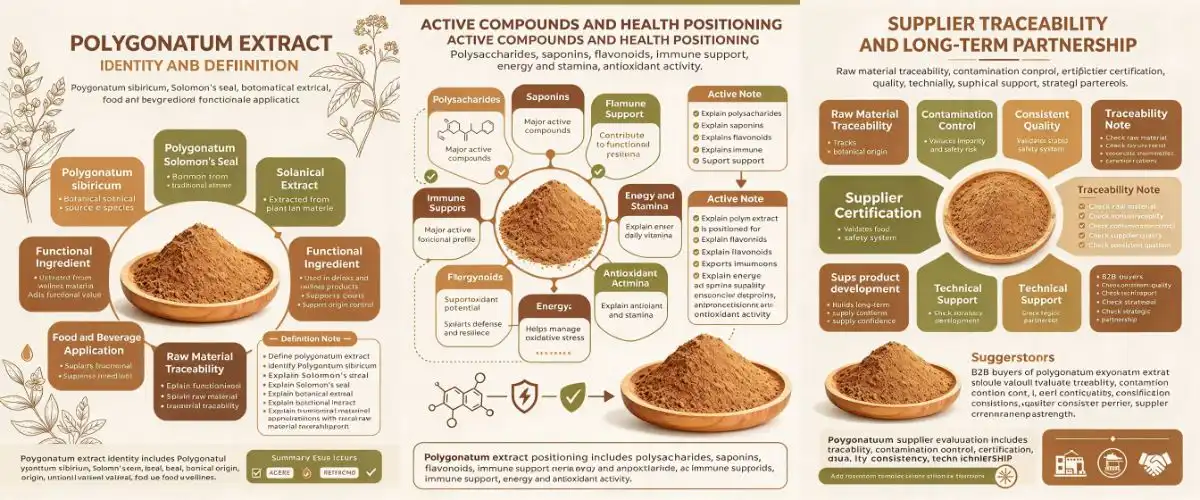
Understanding Key Quality Challenges in Polygonatum Extract Procurement
Purchasing teams often face three issues with plant extracts: differences in strength between batches, uncertainty about the species' source, and processing residues left over from old drying methods. Each problem has a real risk that affects other things.
Species Variation and Its Impact on Potency
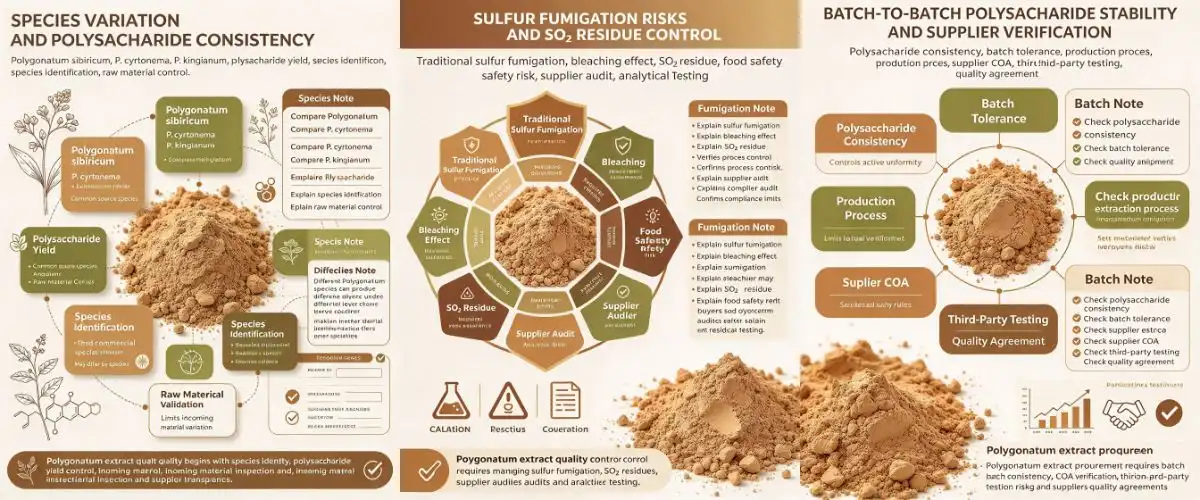
The polysaccharide profiles of Polygonatum sibiricum, P. cyrtonema, and P. kingianum are different. The 2021 study in Food Chemistry confirmed that the amount of polysaccharide produced varies by up to 15% between these species even when the extraction conditions are the same. You can't be sure about how well the finished product will work unless your supplier gives you a species identification certificate.
Sulfur Fumigation Residues in Traditional Processing
In traditional Chinese plant drying, sulfur fumigants are sometimes used to make the herbs last longer. This method leaves behind sulfur dioxide levels that may be higher than what is allowed in Japan and South Korea, two countries with strict rules about food additives. Along with the standard Certificate of Analysis (COA), you should always ask for a separate report on SO₂ detection.
Batch-to-Batch Polysaccharide Fluctuation
Even if the species and processing methods for polygonatum extract are always the same, the conditions of harvesting and storing them can be different. The amount of polysaccharides can change by a few percentage points from one production lot to the next. This makes it hard to back up claims on product labels. It's much safer to buy from suppliers who test both finished goods and goods in progress with HPLC and batch release controls.
Core Quality Metrics and Standards for Polygonatum Extract
Once you know what the risks are, the next step is to turn that information into specifics for buying things that can be measured.
Active Ingredient and Physical Parameters
The following should be true of a production-grade Huang Jing extract:
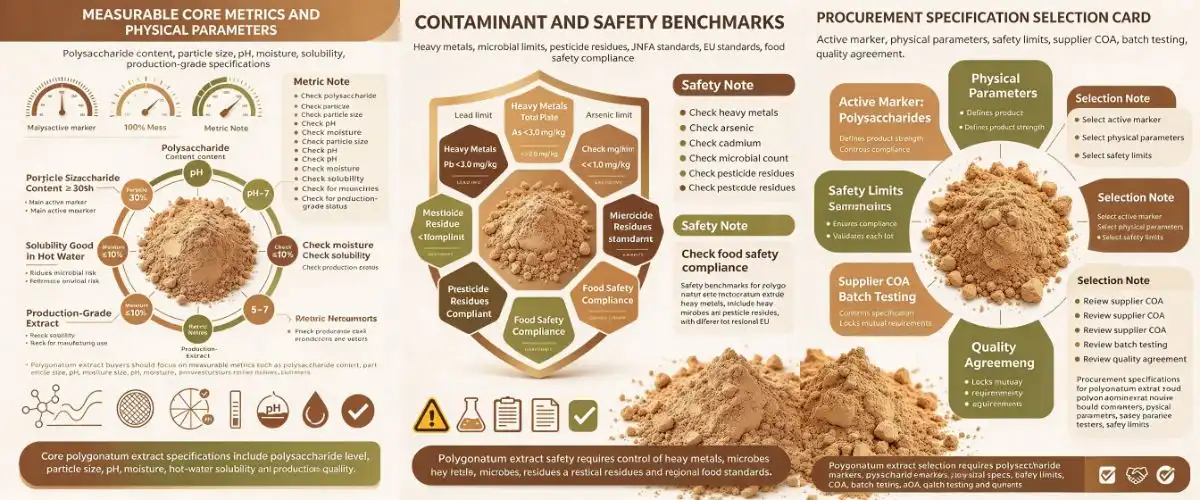
- Polysaccharide content: ≥30% (tested via UV-VIS or HPLC)
- Particle size: 100% pass 80 mesh for uniform dispersion in powder blends and capsule fills
- Ash content: ≤5%, which signals clean raw material and proper processing
- Moisture content: ≤5% to prevent microbial proliferation during storage
- Solubility: Soluble in hot water, which is critical for oral liquid and functional beverage applications
These numbers are not made up. Products with less than 20% polysaccharides don't always have the anti-fatigue and Qi-nourishing benefits that are described in clinical research. This makes the wellness claims of your final product less credible.
Contaminant and Safety Benchmarks
The ground rules here are set by regulations in the target areas. For Trade with Japan (JHNFA standards) and South Korea, as well as for all other international trade:
- Heavy metals: Pb <3.0 mg/kg, As <2.0 mg/kg, Cd <1.0 mg/kg, Hg <0.1 mg/kg
- Microbial limits: Total plate count <1,000 CFU/g; absence of Salmonella and E. coli
- Pesticide residues: Compliant with EU MRL standards as a reference benchmark
Comparing Polygonatum Extract Solutions and Suppliers
Not every product that says "Polygonatum extract" is the same. On the market, you can find raw rhizome powder, uniform powder that was separated with water, and alcohol-precipitated concentrates. That's because each one is used for a different kind of preparation.
Product Type Selection by Application
The most useful form is a water-extracted powder with particles that are at least 30% polysaccharides and 80 mesh in size. It melts easily in hot water, mixes well into mouth liquids without making them cloudy, and can be easily pressed into capsules and tablets. Raw rhizome powder is much less expensive, but its strength isn't always constant, and it needs to be processed more at your facility.
Evaluating a Supplier's Full-Chain Transparency
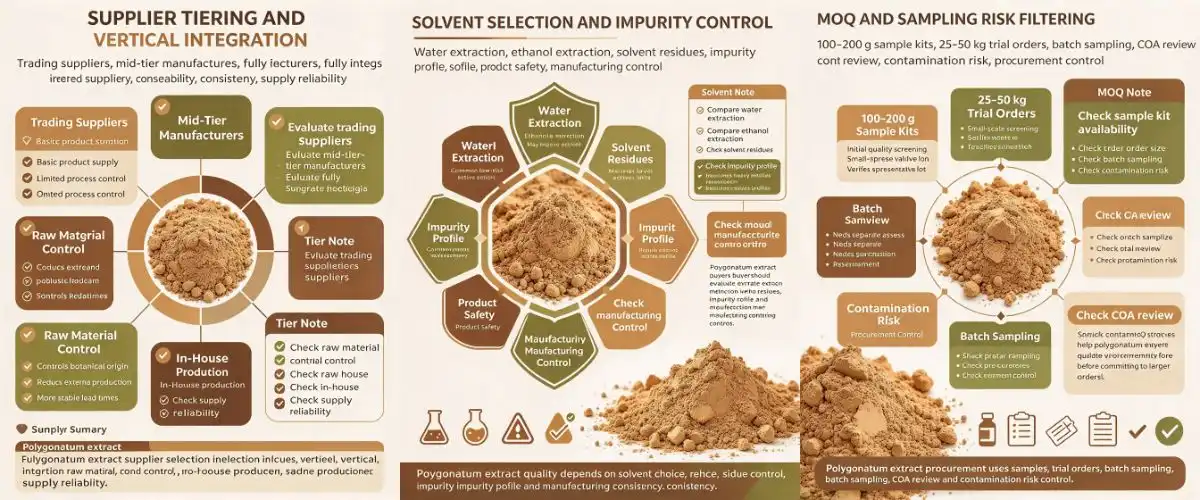
At every step, a reliable supplier will have paperwork to show: the species name, the region where the raw materials came from, records of each extraction batch, and a certificate of analysis (COA) for the finished product. Suppliers based in Shaanxi, where Polygonatum sibiricum grows in known production areas, have better access to higher-quality raw materials. Vertical integration, in which the provider oversees the whole process from extraction to finished powder, cuts down on the number of handoffs where quality can slip.
Low MOQ and Sample Testing as a Risk Filter
Suppliers who are ready to give away 100–200g samples for free and take 25–50 kg trial orders show that they are sure of their product. This gives you the freedom to let your research and development team check the polysaccharide content, heavy metals, and SO₂ in a separate lab before making a bulk purchase. Any supplier that doesn't want to send samples at this point should be looked at closely.
Best Practices for Ensuring Long-Term Satisfaction with Polygonatum Extract Purchases
The process of quality management doesn't end when you sign the first purchase order.
Establish Incoming Quality Control Protocols
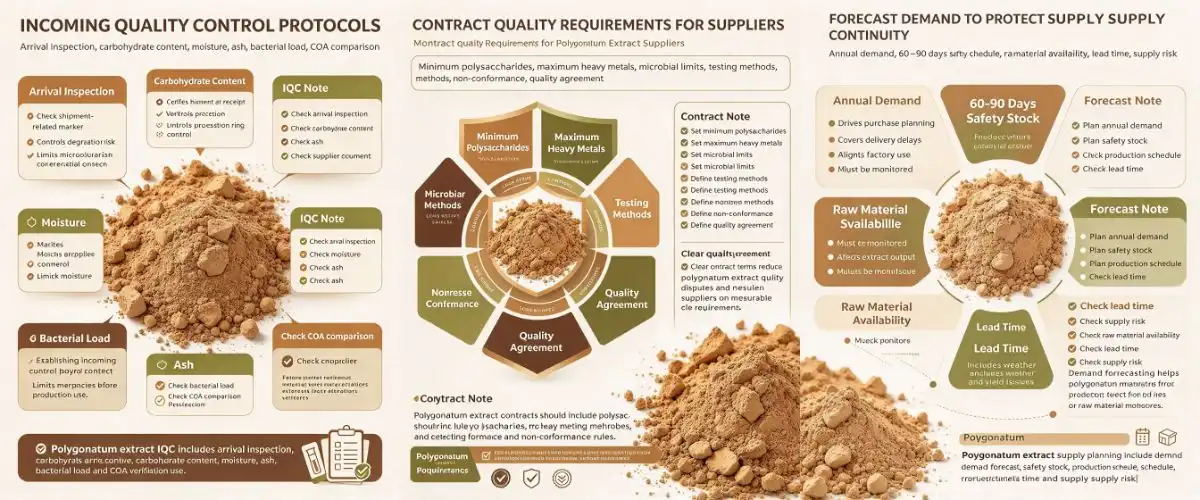
Do not only trust the supplier's COA. Set up testing of arriving materials to happen at your site or at a third-party lab that you hire. Check each batch that comes in for carbohydrate content, moisture, ash, and bacteria load. Compare the results to the standard sheet and mark any differences before they get to the production line.
Build Quality Requirements Into Contracts
A supply agreement should spell out the minimum amount of polysaccharides in each batch, the highest amount of heavy metals that are acceptable, how to retest material that doesn't meet the standards, and how long it will take to send replacement shipments. Suppliers who agree to these terms show that they are responsible. People who don't want standard quality clauses are usually dealing with supply quality problems they haven't told anyone about.
Forecast Demand to Protect Supply Continuity
The best time to get polygonatum extract raw materials is after the fall harvest. Purchasing teams that plan their orders around yearly supply cycles and keep 60–90 days of safety stock on hand lower the chance that production will be interrupted. When you work with suppliers who keep an inventory of at least 10 tons, your production schedule won't be affected by shortages of raw materials.
Case Studies Demonstrating Effective Quality Selection
A Vietnamese Functional Beverage Brand
A wellness drink company in Ho Chi Minh City was having trouble with its Huang Jing tonic drink's color and taste being different from batch to batch. When they switched to a supplier that offered water-extracted powder with a confirmed ≥30% polysaccharide content and batch-matched COAs, the new formulations had the same color, stable brix readings, and consistent sensory profiles. Within two production cycles, the brand brought the product back to market.
A Japanese OEM Capsule Manufacturer
A medium-sized Japanese OEM that works with the JHNFA-registered supplement market needed paperwork that would pass Japan's strict import review process. Each shipment from the supplier they chose came with species identification papers, SO₂ test records, and full heavy metal panels. This package of paperwork cut down on the time it took for customs to review the package and gave the OEM's regulatory team a full safety dossier for their product registration file.
Conclusion
Choosing a good Polygonatum extract is not a one-time thing; it is something that you do every time you buy something. The most important standards are a consistent amount of polysaccharides, proof of species identity, low levels of contaminants, and a seller who backs up every batch with proof that it can be trusted. When buyers set these standards early on, make sure that new quality control enforces them, and build contract terms around them, production problems will be less common and the end product will perform better over time.
FAQ
How do I verify polysaccharide content before placing a bulk order?
Ask for a free sample and send it to a trusted third-party lab for HPLC or UV-VIS analysis. Check the result against what the supplier said it should be. A reputable seller will include a certificate of authenticity (COA) with the sample that lists test results for each batch.
What is the difference between Polygonatum sibiricum and P. cyrtonema in extract quality?
In Traditional Chinese Medicine, both species are used, but their polysaccharide profiles are different. P. sibiricum has been studied more for its ability to fight tiredness and lower blood sugar. To be sure of what you're getting, ask your supplier for a species identification certificate.
Why is SO₂ testing important for this ingredient?
When herbs are dried, sulfur fumigation is sometimes used, and SO₂ residues can be found. Japan and South Korea have strict rules about how much sulfur gas can be in food. It is against the rules in these markets to not have a SO₂ report.
What mesh size is standard for capsule and beverage applications?
The standard in the business world is 80 mesh (100% pass). It makes sure that capsule filling equipment can move the material easily and that liquid formulations are evenly spread out without any visible sediment.
How much minimum order quantity should I expect for a trial?
Orders of 25–50 kg are common in this category. Suppliers who offer this range and free samples are in a good position to work with other companies to make new products.
Request a Sample from Sigma — Your Trusted Polygonatum Extract Supplier
Sigma offers water-extracted Polygonatum powder with particles that are at least 30% polysaccharides and 80 mesh in size. They also offer full paperwork, such as ISO 22000, HACCP, and Kosher licenses. We keep a lot of stock on hand so that we can deliver quickly, and we can take trial orders starting at 25 kg. Visit sxsigma.com or email Sarah at sarah@sxsigma.com to get a free sample and COA for your development team right away.
References
1. Li, X., et al. "Structural Characterization and Immunomodulatory Activity of Polysaccharides from Polygonatum sibiricum." Food Chemistry, 2021.
2. Chinese Pharmacopoeia Commission. Pharmacopoeia of the People's Republic of China, 2020 Edition. China Medical Science Press, 2020.
3. Wang, Y., et al. "Anti-fatigue Effects of Polygonatum kingianum Polysaccharides in Mice." Journal of Ethnopharmacology, 2019.
4. ISO. ISO 22000:2018 — Food Safety Management Systems: Requirements for Any Organization in the Food Chain. International Organization for Standardization, 2018.
5. Zhang, H., et al. "Comparative Analysis of Bioactive Compounds in Three Polygonatum Species." Industrial Crops and Products, 2022.
6. Japan Health and Nutrition Food Association (JHNFA). Standards and Guidelines for Health Foods in Japan. JHNFA, 2020.