Perilla Extract OEM Guide: Sourcing, Quality, and Import Tips
A good perilla extract OEM plan starts with four checks: the plant part, the rosmarinic acid level, the quality paperwork, and the U.S. import rules. I wrote this guide for purchasing managers who source perilla extract for allergy, respiratory, food, or cosmetic products. Below, I explain how to read a specification, compare suppliers, plan bulk orders, and avoid common sourcing errors. I also share product data from Sigma, a manufacturer based in Shaanxi, so you can measure any quote against clear numbers before you order a sample.
Perilla Extract Basics: Plant Parts, Active Compounds, and Uses
Perilla Leaf Extract vs. Perilla Seed Extract
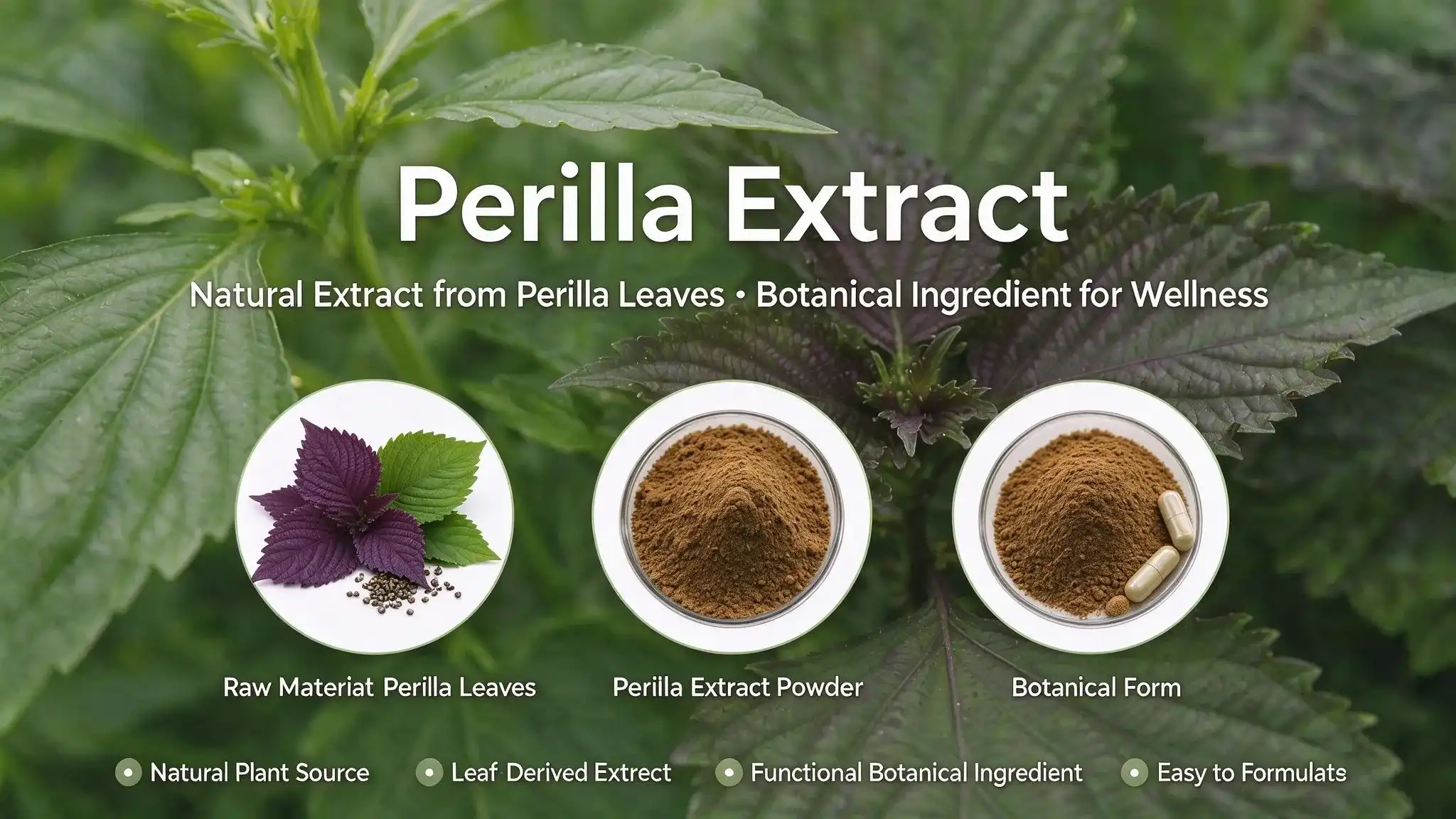
Not only does mint belong to the same family as Perilla frutescens, but so do other plants in that family. The seeds are sold by one company, and the leaves are sold by another. These two things do not work together. Some of the polyphenols that can be found in perilla extract leaf are luteolin, rosmarinic acid, and apigenin. A lot of seed oil has alpha-linolenic acid, which is an omega-3 fatty acid. The words "perilla" are found in both, so people often mix them up. This changes how it feels, how well it melts, and how likely it is to deteriorate. If your brand wants to be known as an antioxidant or winter health brand, leaf extract that has been standardized to rosmarinic acid is usually a better pick. On the specification sheet, they should always write down the plant part and species.
Rosmarinic Acid: What the Research Shows
Rosmarinic acid is a phenolic chemical that is found in plants in the Lamiaceae family, such as basil, perilla, rosemary, and others. They looked into how it could help with inflammation and free radicals in 2016. They published a small study in 2004 that looked at how people with seasonal allergies responded to a perilla extract that was high in rosmarinic acid. Some of the signs in the eyes and nose got better, they said. Your R&D team can start with this work, but it's not the same as your own proof file. Source is also very important. Rosmarinic acid is found in both perilla extract and rosemary extract. Make it clear in the lab report for each lot where the plants came from.
Common Uses and Claim Limits in the United States
Foods that are good for you, creams, pills, tablets, and sachets all use perilla extract powder. The Dietary Supplement Health and Education Act of 1994 says that a dietary supplement can write something about how it works or what it is made of. You have 30 days after putting the product on the market to tell the FDA about the claim and add the normal warning. It is against the law for a product to say that it heals or treats a disease. That is, "treats allergic rhinitis" is not enough. The help for regular operation should be read over by your regulatory adviser before you start. The language used is safer. There are different parts of the plant that can have different statuses, so check the Novel Food Catalog first if you also sell in the EU.
Choosing Format, Specifications, and Quality Controls
Matching the Format to Your Dosage Form
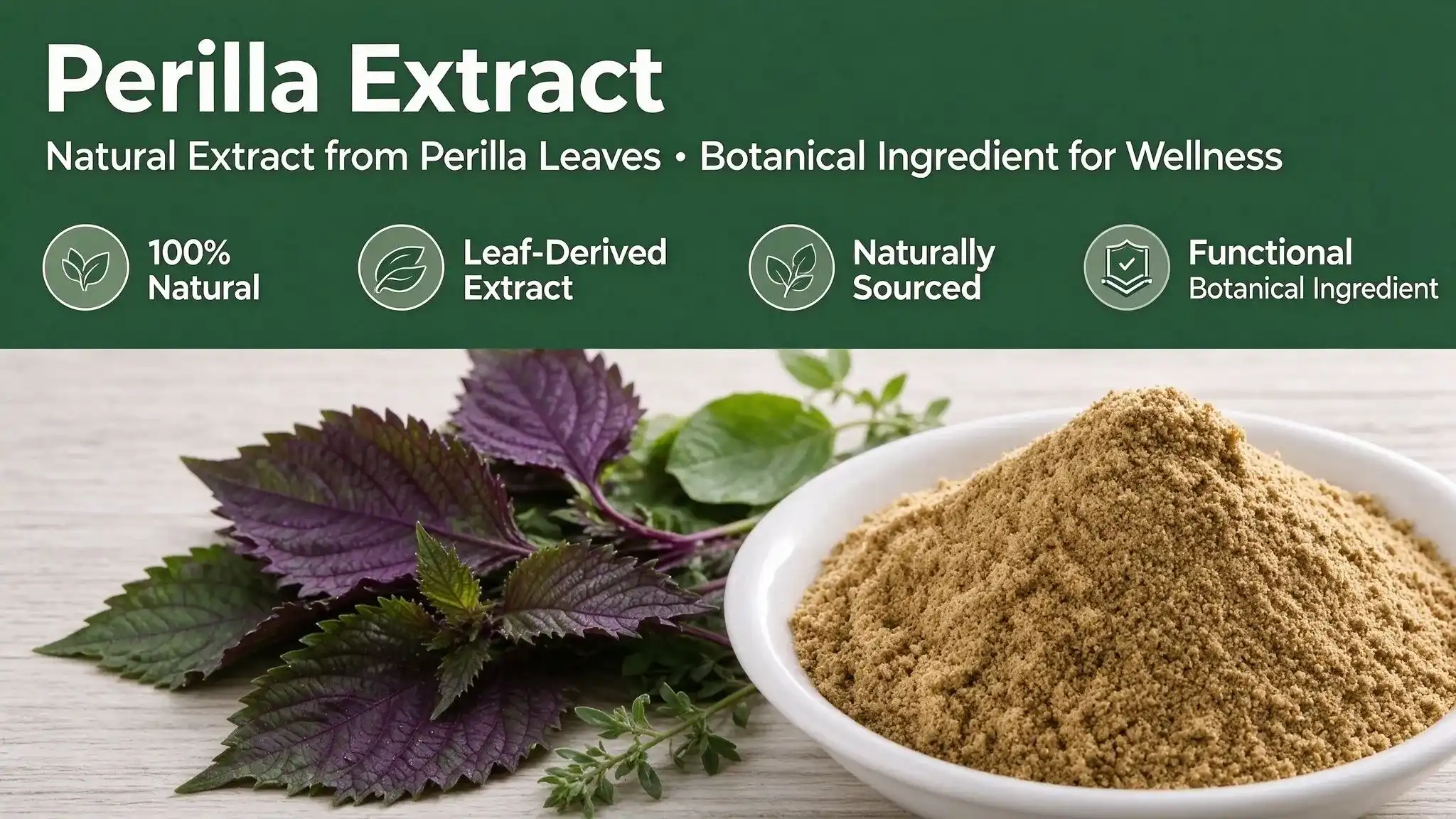
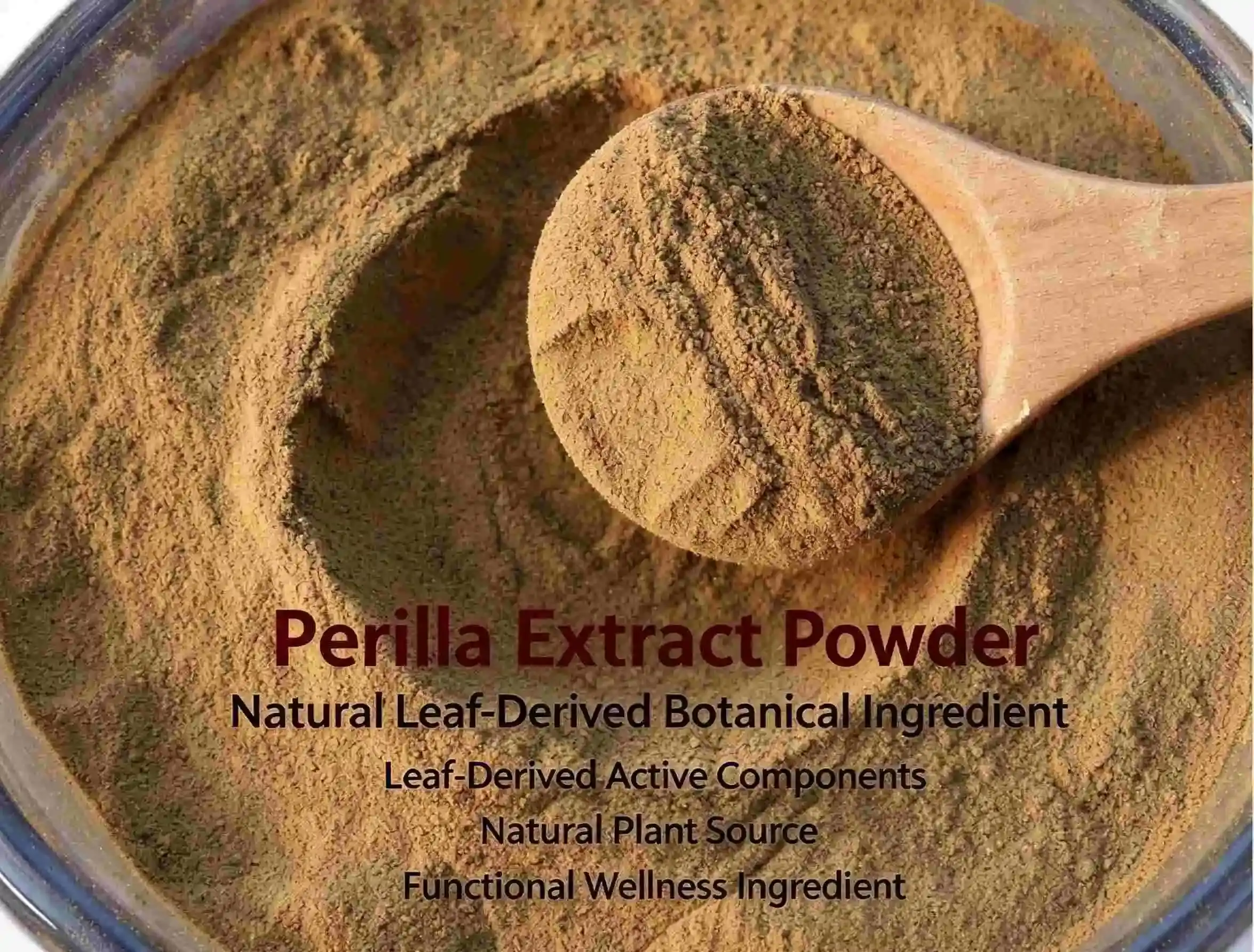
You don't have to worry about perilla extract powder going bad in pills, tablets, or sachets because it ships quickly and stays fresh in packages that are sealed. They can be used in drops and drinks, but they are heavy to ship and need to be kept cool. It is a fine, yellow-brown powder with an 80-mesh size that can be used in dry mixing and sealing lines. It's said to dissolve in ethanol and have ash content of about 5%. Solubility can change what you need to make drinks or sprays, so test it in your own mat first. When you use a uniform powder, it is easier to keep the quality the same from batch to batch because the range is clear.
Reading the Specification and COA
What the plant part looks like, how it dissolves, how it is stored, how long it lasts, and the size and shape of the particles are all important details. Rosmarinic acid needs to be kept somewhere cool, dry, and out of the light. Ethanol is used to get the powder out, which is a fine yellow-brown color. People can get their own extraction rates to get the right amount for their formula. The COA should have the lot number, test date, method, boundaries, and real data for each batch on it. In 21 CFR Part 111, it says that supplement companies need to make sure their goods are what they say they are. Before they can use their COA for something else, they need to look into a source. It is also important to find out about any heavy metals, chemicals, bacteria, or solvents that may still be in the area.
Extraction Method, Stability, and Testing
How a chemical was removed affects its color, taste, and risk of being a solvent. Sigma sorts it out with ethanol to make this powder. It's good that it doesn't leave any liquid trash behind. To be sure, have a test for leftover solvents done on your lot. They also say that their powders are more stable against oxidation and don't change color as much as other powders on the market. Check that claim out for yourself. Light, heat, dampness, and the pH level you want to reach should all be put on a sample. A standard sample should then be used to compare the color and amount of rosmarinic acid to. Besides testing the taste, you should also look at the package, how well it flows, and how it combines with other ingredients. After the trial, make rules for who can accept them so that it is fair to choose who does it.
Evaluating a Perilla Extract Supplier and OEM Partner
Questions to Ask Before You Approve a Supplier
First, you need to know what the business is. Someone who sells things does it, and someone who gets things makes the process work. Someone who makes deals can also mix and pack the goods. There are risks with all of the plans, but they can all work. Find out who owns the building, signs the COA, and takes out the plants. Do not ask for certificates that are not real. Also, make sure you know what they cover and when they end. Write down how much you have to spend, how long you have to wait, how to track a lot, and how to report. Search terms like "perilla extract supplier" or "perilla extract powder bulk" can help you narrow down your choices, but they don't tell you which companies are good. A remote or on-site check, sample results, and papers should be used to decide who gets the go-ahead if the amount of work calls for it.
Sigma's Product Data and Certifications
Shaanxi Sigma Biotechnology Co., Ltd. makes plant extracts, natural health ingredients, and food additives for people who buy vitamins, food, makeup, and feed. Cutting-edge countercurrent extraction lines that work at low temperatures to separate and clean the material very well are used by the company. It has ISO 9001, ISO 22000, FSSC 22000, HACCP, and HALAL certifications. There are ISO, HACCP, and Kosher certificates from Sigma that come with this item. Rosmarinic acid makes up just over 5% of the standard powder. Sigma also says that its best features are that it is clear up to 98% of the time, mixes easily with water, and doesn't create solvent waste. A source says that the yellow-brown powder is used in food and makeup. It can also be used to color food without dying it. Please check each number against the COA for the lot.
Service, Stock, and OEM Support
Here are the service points that matter the most when seasonal supplements come out:
• Stock and freight: Sigma has it in stock; for important items, they keep an extra 10–20 tons of stock on hand. It takes 5–7 work days to send something out from the plant. People can fill up their warehouses with goods before the pollen season in the spring and summer. Make sure you know how much of your grade is open before you ask for a price.
• OEM and ODM service: Sigma makes changes to the labels, bags, particle sizes, and extraction ratios so that they match your brand. Before putting in a sample order for your production line, your R&D team can talk to technical contacts about pill, tablet, and other form choices. The team can then help change the mix and come up with new ways to give the medicine.
• Care before and after the sale: Sigma says the quality is good for a year, and you have 15 days to return or swap things if the quality isn't right. You can get help with application formulas and real-time order tracking from the technical staff. This way, your planners can keep track of each shipment as it moves from the factory to the port without having to ask for updates all the time.
The point of these services is to cut down on the time people have to wait to get stock and fix technical problems.
Bulk Buying, U.S. Import Planning, and Procurement Workflow
Comparing Price, MOQ, and Total Cost
Take a look at quotes that are very similar. Rosmarinic acid may not be present in large amounts if the price per kilogram is low. You can divide the price by the active fraction once you know how much the active compound costs in grams. Ten percent of the price of a 5% grade gives you five percent of the price of a 10% grade. Next, make sure you understand what the quote covers: testing, shipping, paperwork, duties, taxes, insurance, packaging, and any costs for creating your own formulas. Agree to the trial terms, minimum order amount, and wait time for a second order. Before the season starts, ask the supplier how they handle expecting orders and how much stock they have. This is important because it's best to buy allergy medicines when stores are busy.
U.S. Import Documents and FDA Rules
The U.S. Food and Drug Administration (FDA) lets drugs in nutrition supplements into the country because they think of them as food. The Bioterrorism Act of 2002 says that people who send food must let the people who are sending it know ahead of time when they will be arriving. Also, if they make, pack, or store food for people in the U.S., they need to sign up with the FDA. Under the Foreign Supplier Verification Program, importers may have to pay taxes. Talk to the person working at customs to make sure you know what to do. To ship perilla extract, you might need a commercial invoice, a packing list, a bill of lading or air waybill, a certificate of origin, or a batch COA. Pick boxes that don't let light or water through and have clear lot numbers. Sigma ships by sea, air, or express, and they handle the paperwork and customs so that your broker can give you the best file possible.
A Practical Procurement Workflow and Common Mistakes
A lot of workout plans last between six and ten weeks. First, talk to your regulatory expert about the recommended dose, any claims, the goal of the rosmarinic acid, and the amount to be taken each month. It needs to be done in two weeks or less. Next, take a look at some sample policies, prices, material, and awards from three to five providers. After that, the samples will be HPLC-tested at a different lab for two to three weeks. Then, test your line with 50–100 kg. Finally, make an annual supply agreement that spells out specs, how to handle changes, and how to handle things that don't work. You shouldn't treat all extracts the same, choose the cheapest one, go with a general COA, or skip tests in the end product matrix.
Conclusion
Before you look at prices for OEM work, you need to know the style, plant part, and marker chemical. Products that are seasonal and good for you can use perilla extract leaf extract that has been standardized to rosmarinic acid. Seeds can be used to get things that are high in oil. You should have your own stable test, an HPLC COA, and a full specification for each batch. All of these are ways to make sure that every batch is fine. No matter how it looks or works, the US has limits on what can be claimed. Imports also need the right papers and FDA Prior Notice. It is better to check prices by unit of active chemical than by kilogram if you want to save money. Because of these checks, there is less risk with rules, quality, and supplies. Also, it's simple for the buying team to ok a supplier.
FAQ
What is the difference between perilla extract and perilla oil?
This plant's oil and perilla extract are both used to make things. Rosmarinic acid and other antioxidants are what leaf juice needs. ALA is the main thing that makes perilla seed oil useful as a lipid. One has a marker compound and one has a plant part. Before you buy from someone or accept an offer, make sure you know the difference between the two.
Which documents should I request for a U.S. shipment?
Some of the things you should ask for are a quote, a COA for each batch with HPLC results, reports on contaminant tests, valid certificates, details on where the goods came from, an allergen statement, a commercial invoice, and a packing list. It is filed by your importer or customs broker before the package comes. Tell them right away about the goods and everything else.
Can I make a disease claim on an allergy supplement?
In the U.S., supplement labels can't say that they treat, fix, or stop a disease like allergic rhinitis. They can only say that they change how things normally work or are built. Better wording talks about making things work normally. You have to send the FDA the right notice and have your regulatory advisor look it over before you sell any claim.
Request a Perilla Extract OEM Sample from Sigma
Sigma is a company that makes and sells perilla extract. They have ISO, HACCP, and Kosher-approved powder in stock. In 5–7 working days, you can send key goods. Let us know what you want and we'll send you a free sample if you email sarah@sxsigma.com with your rosmarinic acid goal, dosage form, and yearly dose. So that we can plan our stock, we need to know when your pollen season starts.
References
1. Experimental Biology and Medicine, 2004. Takano et al., "Extract of Perilla frutescens Enriched for Rosmarinic Acid, a Polyphenolic Phytochemical, Inhibits Seasonal Allergic Rhinoconjunctivitis in Humans."
2. Planta Medica, 2016. Amoah et al., "Rosmarinic Acid – Pharmaceutical and Clinical Aspects."
3. Molecules, 2019. Ahmed, "Ethnomedicinal, Phytochemical and Pharmacological Investigations of Perilla frutescens (L.) Britt."
4. U.S. Food and Drug Administration, 2007. Current Good Manufacturing Practice in Manufacturing, Packaging, Labeling, or Holding Operations for Dietary Supplements (21 CFR Part 111).
5. U.S. Congress, 1994. Dietary Supplement Health and Education Act.
6. U.S. Congress, 2002. Public Health Security and Bioterrorism Preparedness and Response Act (Prior Notice of Imported Food).