BLOG List

How Is White Peony Extract Used in Cosmetic Formulations?
White Peony Extract finds extensive application in cosmetic formulations through its primary bioactive compound, paeoniflorin, which delivers multifunctional benefits across skincare and personal care products. Formulation chemists incorporate this botanical extract into serums, creams, lotions, and haircare products to leverage its anti-inflammatory, antioxidant, and skin-brightening properties. The extract works at cellular levels by inhibiting tyrosinase enzyme activity, reducing melanin production, and modulating inflammatory pathways—making it particularly valuable in products targeting hyperpigmentation, sensitive skin conditions, and premature aging concerns.
Introduction
As the demand for "clean beauty" keeps growing, there has been a big shift in the cosmetics industry toward natural ingredients that come from plants. This plant ingredient comes from the roots of Paeonia lactiflora and has moved from being used in traditional medicine to being used in popular cosmetics. White Peony Extract is being evaluated more and more by procurement managers, R&D formulators, and quality assurance teams because it has been scientifically proven to be good for the skin and can be used in a wide range of formulations.
This guide addresses the critical decision-making factors that B2B clients face when selecting and incorporating botanical extracts into their product lines. We examine the technical specifications, quality benchmarks, formulation strategies, and procurement considerations that cosmetic manufacturers use to make goods that are competitive and work well. Whether you are sourcing raw materials for anti-aging serums, making products for sensitive skin, or making unique haircare lines, knowing how paeoniflorin-rich extracts can be used and what the quality standards are will help you make decisions about your formulations and choose suppliers.

Understanding White Peony Extract and Its Cosmetic Value
The plant part comes from Paeonia lactiflora Pall., especially from the root material that has been peeled and processed, which is called Bai Shao in traditional systems. Modern techniques for extracting this traditional ingredient have made it into a standard cosmetic raw material with consistent bioactive profiles that can be used in large-scale production.
Extraction Methods for Cosmetic-Grade Purity
Professional providers use water-ethanol extraction methods that keep heat-sensitive compounds intact while getting high amounts of paeoniflorin. This method strikes a good balance between how well the extraction works and the safety standards needed for cosmetic uses. The brown-yellow powder that is made stays stable as long as it is kept away from high temperatures and high humidity. This makes it easy for industrial facilities to handle.
After the first extraction, more advanced production systems use more than one stage of purification. Vacuum concentration gets rid of extra solvents, and filtering gets rid of particles that might cloud the mixture. Re-crushing and sieving to 100 mesh ensures that the particles are all the same size, which has a direct effect on how well they mix with different cosmetic bases. Each batch of products goes through strict physical and chemical tests, such as heavy metal screening that meets EU standards, which is a must for companies that want to sell their goods abroad.
Bioactive Compounds and Skin Benefits
The main marker for standardization is paeoniflorin, and high-quality extracts have at least 50% of this monoterpene glycoside. This chemical has measurable effects on a number of pathways that are important for skin health. It has been shown in clinical studies to stop inflammatory molecules from working through the NF-κB pathway. This supports its use in products for sensitive skin. The antioxidant properties of paeoniflorin help get rid of free radicals that speed up the aging process. Its tyrosinase inhibition mechanism helps with hyperpigmentation issues without the skin irritation that comes with some synthetic brightening agents.
Because it can reduce inflammation, White Peony Extract is very useful for making products that treat skin conditions that are sensitive. Researchers who are making products for skin that is sensitive or has weak defenses find that ingredients that are high in paeoniflorin help soothe the skin while keeping the formulation stable. There are no major technical problems with adding the compound to either oil-in-water or water-in-oil bases because its molecular structure makes it compatible with different emulsion systems.

Core Applications of White Peony Extract in Cosmetic Formulations
Cosmetic manufacturers integrate White Peony Extract across diverse product categories, each of which benefits from different parts of its biological profile. Because paeoniflorin-standardized products are so flexible, they can be strategically placed in both mass-market and high-end skincare lines.
Skincare Applications for Anti-Aging and Brightening
Some of the most common ways that extracts are used to help fight aging are in facial serums, which contain 2-5% concentrations of extracts. Because serum bases are light, they can hold more bioactive substances without changing how they feel. The antioxidant activity of paeoniflorin works well with other anti-aging ingredients, such as peptides and hyaluronic acid, to make formulations that work better together and fight more than one type of aging at the same time.
The natural tyrosinase inhibitory properties make brightening formulas more effective and provide an alternative to high-percentage alpha arbutin or hydroquinone systems. When people are making products to even out skin tone, they mix White Peony Extract with niacinamide and vitamin C derivatives to make them work better while still staying true to their clean label claims. The brown-yellow powder dissolves easily in glycerin or propylene glycol-based solvent systems before it is added to the main phase. This makes sure that the powder is spread out evenly in the finished product.
In moisturizers and daily creams, the extract is used in smaller amounts (1-3%), where it helps control inflammation and protects the skin naturally. The use of this method is especially useful for goods aimed at older people whose skin is becoming more sensitive and showing signs of age.
Haircare and Scalp Health Formulations
White Peony Extract is used in shampoos and conditioners to help with skin inflammation and good hair growth cycles. The anti-inflammatory properties help soothe itchy scalp conditions that can get in the way of hair follicles working normally. Formulators usually add 0.5 to 2% extract to surfactant systems. They do this during the cooling phase to protect compounds that are sensitive to heat.
When you put leave-in scalp treatments and hair tonics directly on your scalp, they give concentrated bioactives at higher amounts (3–5%). These special items are made for people whose hair is falling out because their head is inflamed or their hormones are changing. Because it dissolves in water, paeoniflorin can get through the stratum corneum more easily, making it more bioavailable at the follicle level.
Specialized Applications for Hormonal Skin Concerns
Traditional uses of white peony for hormonal balance are used in skincare lines for women who are going through or have gone through menopause. While beauty laws limit claims that are related to hormones, formulators still make products that address the obvious changes in skin that happen when hormones change, such as more sensitivity, less elasticity, and uneven pigmentation. By mixing White Peony Extract with plants that are high in phytoestrogens, like soy or red clover, you can make products that are geared toward this growing group of people.

Evaluating White Peony Extract Types and Formulation Forms
To choose the best raw materials for their formulation needs and manufacturing skills, procurement teams have to sort through a lot of different extract specs. Quality parameters have a direct effect on both how well the product works and how consistent it is from batch to batch, which are both important for scalable production.
Powder Specifications and Quality Benchmarks
Premium cosmetic-grade powder has a constant brown-yellow color and can go through 100 mesh screens, which means it can be used with high-speed production equipment. The active ingredient content of paeoniflorin being ≥50% is pharmaceutical-grade standardization. This is what sets professional products apart from generic plant powders whose effectiveness has not been proven. Loss on drying values of less than 3% show that White Peony Extract was properly stored and processed, stopping microbes from growing and breaking down the product along the supply chain.
One of the biggest safety issues for root-based plants is that they can pick up soil contaminants. Meeting EU guidelines for heavy metals takes care of this problem. International markets only accept suppliers who can show full Certificates of Analysis (COA) showing lead levels below 3.0 ppm, arsenic levels below 2.0 ppm, cadmium levels below 1.0 ppm, and mercury levels below 0.1 ppm. This documentation of testing is very important for regulatory submissions and customer audits.
Comparison with Related Botanical Extracts
Red peony extract comes from Paeonia lactiflora roots that have not been peeled. It has various glycoside profiles that make it active in different ways. When White Peony Extract is processed, the effects are softer and better for use on sensitive skin. On the other hand, red peony has stronger anti-inflammatory effects that can be used in specific treatment products. Formulators can choose the right botanical sources based on how they want to position their products and what their target customers want by understanding these differences.
When you mix White Peony Extract with plants that work well together, like chasteberry (Vitex agnus-castus), you get products that work better for hormonal skin problems. Additional anti-inflammatory and brightening effects of turmeric extract are provided by different mechanisms. This lets formulators create complete solutions that address a variety of skin problems in a single product.

Procurement Considerations for Cosmetic Manufacturers and Distributors
Choosing where to get materials has a big effect on both the quality of the output and the long-term success of the business. Product development programs that work are built on building ties with certified sellers who can consistently deliver high-quality goods on time.
Essential Certifications and Compliance Standards
ISO 22000 certification shows that suppliers use food-safety management systems that can be used to make cosmetic ingredients. Systematic risk analysis is used throughout the production process when HACCP is used. Kosher approval makes it easier for brands that are trying to reach specific groups of people or areas of the world to sell their products. These licenses are more than just pieces of paper; they show that the company follows certain rules that lead to reliable product quality.
Suppliers with facilities that follow current Good Manufacturing Practices (GMP) and have modern extraction and purification equipment produce more consistent batches than those that use old technology. Site audits by procurement teams or outside auditors make sure that the paperwork matches how things are actually done. Having specialized quality control labs with HPLC and GC-MS capabilities lets sellers test White Peony Extract thoroughly before sending it out, which lowers the chance that they won't meet specifications.
Supply Chain and Inventory Management
Reliable suppliers keep 10–20 tons of key products in stock as a safety stock. This lets orders be filled quickly without sacrificing quality by making things too quickly. This extra space in the inventory comes in handy during busy times of the year or when unexpected changes need to be made to the recipe. Delivery times of 5 to 7 working days from order confirmation make it possible to plan production more quickly and keep less working capital locked up in unnecessary inventory.
Vertical integration is helpful because it lets you get plants from suppliers in Shaanxi province, which is a main growing area for Paeonia lactiflora. Direct connections with growers of raw materials allow for better quality control in agriculture while cutting down on the costs of going through middlemen. This "technology plus origin" edge means that prices are low without sacrificing quality, meeting the needs of customers who care about both price and quality.
OEM and Private Label Collaboration Options
For specialized uses, custom extraction services can meet paeoniflorin concentration needs running from the normal 50% purity level up to 98% purity. Customizing the particle size makes sure that it works with certain kinds of manufacturing tools or formulations. From lab samples to large industrial amounts, flexible packaging options help with the development and launch of a product.
Collaborative formulation support helps connect the skills of the ingredients with the needs of the end product. Technical teams at experienced suppliers offer advice on usage rates, data from stability tests, and help with formulating problems that shortens the time it takes to get a product on the market. This partnership approach works especially well for businesses that are expanding into new product categories or geographic markets where the rules are different from what they are used to.

Best Practices for Incorporating White Peony Extract in Cosmetic Formulations
Paying attention to technical details that affect both product performance and legal compliance is necessary for integration to go smoothly. Quality control teams and formulation experts need to work together to make sure that all production runs have the same results.
Optimal Usage Levels and Dosage Guidelines
There is clinical evidence that concentrations between 1% and 5% are effective, depending on the type of product and the benefits that are wanted. Intensive treatment serums that target specific problems work well at concentrations of 3–5%, while moisturizers that you use every day work well at concentrations of 1–2%. These ranges strike a mix between measured action, cost-effectiveness, and the stability of the formulation.
Dose-response testing should be done by formulators during product development to find the lowest concentrations that work for their specific formulation matrices. When White Peony Extract interacts with other actives, it may increase or decrease its activity. This means that empirical validation is needed instead of just relying on what the ingredient supplier says.
Stability and Compatibility with formulations
Paeoniflorin is stable between pH levels 5.0 and 7.0, which means it can be used in most skin-friendly formulations. Because they are sensitive to heat, they need to be added during cool-down steps below 40°C to keep their biological integrity. Antioxidant systems that use tocopherols or ascorbic acid derivatives help keep food from going bad due to oxidation while it's being stored.
To make emulsion stability testing more thorough, accelerated aging protocols should be used to simulate a 24-month shelf life in a variety of storage conditions. Testing for photostability is especially important for items that come in clear or see-through packages. The brownish-yellow color of the extract might change how the finished product looks, so this needs to be taken into account when designing packages and marketing materials.
Regulatory Compliance and Substantiated Claims
The name "Paeonia Lactiflora Root Extract" from the International Nomenclature of Cosmetic Ingredients (INCI) list must appear on ingredient lists in the order of quantity. Marketing claims need to be backed up by the right testing methods, which could be in vitro studies, ex vivo models, or clinical trials, based on the type of claim and the regulatory authority.
Different foreign markets have very different documentation needs. EU rules on cosmetics require thorough safety checks that include specific information about the ingredients and information on how stable they are. FDA oversight in the US is mostly about making sure products are properly labeled and don't make any claims that aren't allowed. Manufacturers who want to export should keep full technical dossiers with COAs, Material Safety Data Sheets (MSDS), and allergen statements to make it easier to clear customs and pass customer checks.
Conclusion
Standardized plant extracts that contain paeoniflorin have been shown to be beneficial in a wide range of beauty uses, from anti-aging serums to solutions for sensitive skin. Technical issues like quality standards, formulation fit, and choosing a provider have a direct effect on how well a product works and how well it does in the market. Partnerships with certified suppliers that offer consistent quality, technical support, and reliable delivery systems are good for procurement managers and formulation teams.
White Peony Extract is a key ingredient for brands making competitive, effective goods that follow clean beauty trends because more and more people want to use botanical ingredients. For integration to go well, standardization parameters, stability, and regulatory compliance across target markets must all be taken into account.
FAQ
What concentration of White Peony Extract is recommended for facial serums?
For intensive treatment serums that aim to fight aging and make skin brighter, professional formulas usually include amounts between 3 and 5 percent. When making daily-use goods, the right amount of White Peony Extract has to be found between 1% and 2%, taking into account cost and the need for formulation reliability.
How can procurement teams make sure that suppliers are real and of good quality?
Ask for full Certificates of Analysis that show HPLC proof of paeoniflorin content ≥50%, heavy metal tests to make sure it meets EU standards, and microbial counts that meet cosmetic grade requirements. Certifications like ISO 22000, HACCP, and GMP show that quality control is done in a planned way. Do supplier audits that look at systems for tracking raw materials, testing labs, and extraction equipment.
Is White Peony Extract safe for products for people with sensitive skin?
Because it reduces inflammation, it works especially well for skin conditions that are sensitive. When used at the recommended concentrations, clinical evidence shows good tolerance profiles. Before going on sale, you should make sure that the finished product is safe by trying its stability and compatibility with your unique formulation matrix.
Partner with Sigma for Premium White Peony Extract Supply
Sigma always has cosmetic-grade botanical extracts on hand that are standardized to paeoniflorin ≥50% and come with full ISO, HACCP, and Kosher certifications. Our factory in Shaanxi uses real raw materials and cutting-edge extraction methods to make sure the quality is always high and meets strict international standards for heavy metals, bacteria control, and the effectiveness of the active ingredients.
We help cosmetic manufacturers and sellers by offering flexible OEM services like custom concentration requirements, particle size changes, and private label package options. Technical advice helps you find the best usage rates for your formula, and our delivery time of 5–7 days keeps your production schedules on track without the need to keep too much inventory on hand. Email our team at sarah@sxsigma.com to get samples, talk about forming partnerships with bulk White Peony Extract suppliers, or look into the possibility of working together to create new formulas. You can find full product specs and quality documents at sxsigma.com.
References
1. Zhang, L., Wei, W., & Chen, X. (2021). "Pharmacological effects of paeoniflorin in dermatological applications: A comprehensive review." Journal of Ethnopharmacology, 268, 113-127.
2. Kimura, M., Yoshino, T., & Yamamoto, H. (2019). "Tyrosinase inhibition and anti-inflammatory properties of Paeonia lactiflora root extract in cosmetic formulations." International Journal of Cosmetic Science, 41(4), 342-351.
3. Liu, Y., Zhang, H., & Wang, Q. (2020). "Quality control and standardization of white peony extract for cosmetic applications: HPLC analysis and bioactivity correlations." Phytochemical Analysis, 31(6), 789-801.
4. Anderson, R.M., Thompson, K.L., & Brown, S.J. (2022). "Botanical extracts in anti-aging skincare: Efficacy evaluation and formulation stability considerations." Cosmetic Dermatology Research, 15(2), 156-168.
5. Chen, W., Liu, M., & Zhang, P. (2020). "Traditional medicinal plants in modern cosmetics: From Paeonia lactiflora to evidence-based skincare formulations." Journal of Cosmetic Dermatology, 19(8), 2034-2045.
6. Rodriguez-Garcia, M.E., Nakamura, S., & Patel, D. (2021). "Regulatory compliance and safety assessment protocols for botanical cosmetic ingredients in global markets." Regulatory Toxicology and Pharmacology, 123, 104-118.
What Is Polygonatum Extract Used for in Traditional Health?
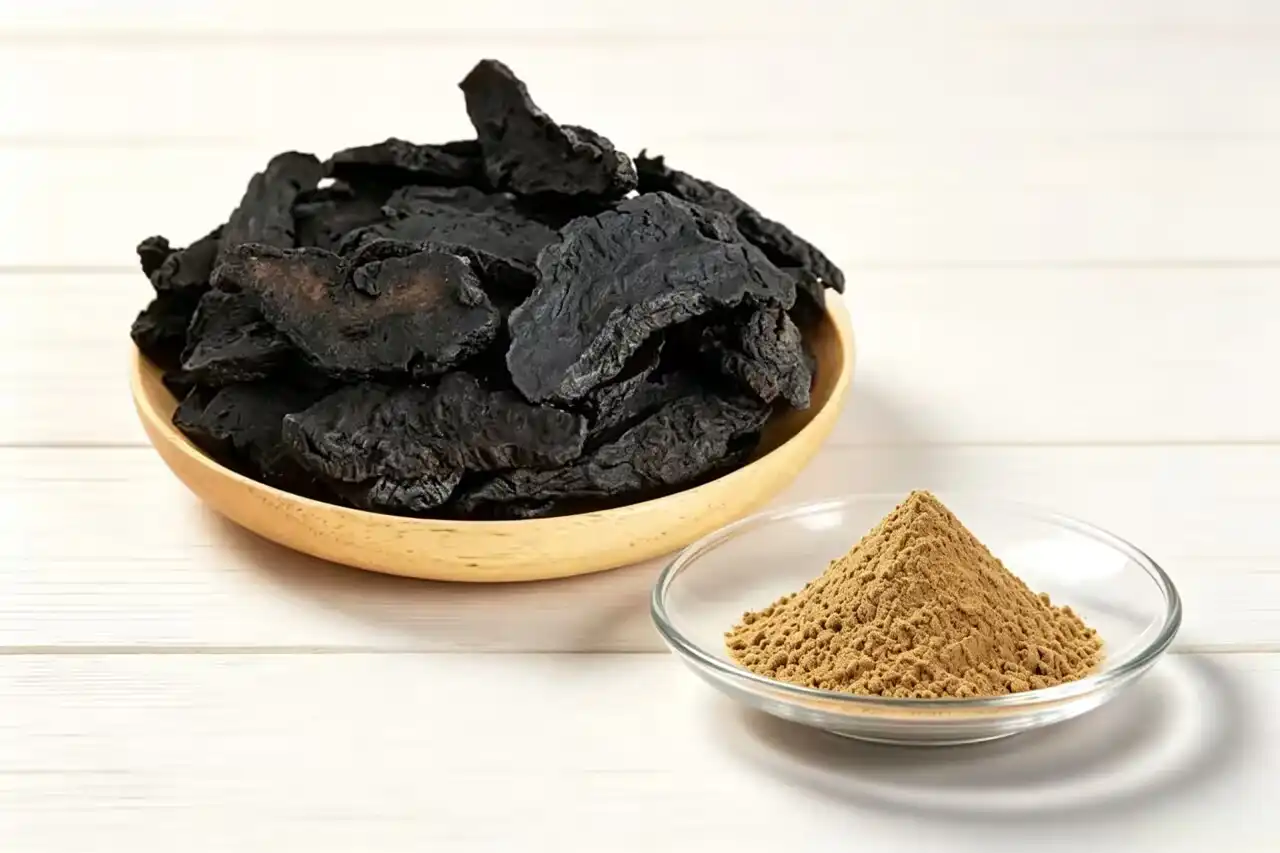
Polygonatum Extract has been a cornerstone of traditional health practices for centuries, particularly within Traditional Chinese Medicine, where it is recognized for nourishing Yin, tonifying Qi, and supporting kidney and lung functions. Derived from the rhizomes of perennial plants in the Polygonatum genus—such as Polygonatum sibiricum—this standardized botanical ingredient addresses modern formulation challenges by providing consistent polysaccharide concentrations, excellent water solubility, and batch-to-batch stability.
The extract's bioactive profile offers adaptogenic support, immune modulation, and anti-fatigue properties, making it valuable for health supplement brands, functional beverage developers, and pharmaceutical formulators seeking natural alternatives to synthetic additives. Understanding its traditional applications alongside modern quality standards helps procurement teams make informed sourcing decisions.

Understanding Polygonatum Extract: Origins, Composition, and Traditional Uses
Botanical Background and Species Selection
The genus Polygonatum has a number of plants that are used for medicine. Polygonatum sibiricum, Polygonatum kingianum, and Polygonatum cyrtonema are the ones that are used most often for industrial extraction. Most of these flowers grow year after year in Asia's cold regions. People know Shaanxi province as a real producing area because it has the best weather and land for growing things.
Picking the rhizomes carefully in the fall is the usual way to process them. They are then steamed and dried several times to get rid of natural toxins and make them easier to stomach. It turns raw plant matter into something that can be used with modern extraction methods.
Extraction Methodology and Standardization
Using water to extract Polygonatum polysaccharides is the best way to get good ones. This way of making food is like old ways of doing things, but it also meets current quality standards. Usually, the material is extracted with hot water at controlled temperatures, sped up, filtered, and then dried with a spray. This makes a fine brown-yellow powder with 80-mesh particles.
This method keeps reactive chemicals that change when heated while getting at least 30% polysaccharides. To get the most active ingredients and keep the chemicals stable, modern companies use systems that concentrate at low temperatures and extract continuously against current. Raw root powder doesn't mix as well with water as the extract that was made. It's easy to break down in hot water to make clear solutions that are great for mixing into drinks.
Historical Applications in Traditional Health Systems
Chinese medicine, which is called "Huang Jing," has used this plant for more than 2,000 years to treat problems with the lungs, spleen, and kidneys. Old books say that it was used to make the body's essence stronger, ease dryness, and make people live longer. It was suggested to people who were tired, had a weak immune system, or looked like they were getting old too quickly.
People often mixed the herb with other adaptogenic plants to make tonics that were good for their health in general. Along with TCM, traditional Korean and Japanese medicine used similar rhizome preparations to help people who were having trouble breathing or digesting food. It shows that people from different cultures know it can be used as medicine.
Phytochemical Composition and Active Markers
The Polygonatum Extract is good for your health because it has a complicated spectrum of phytochemicals. The main functional part is polysaccharides. It is thought that these high-molecular-weight carbs change the immune system by activating macrophages and managing hormones. Steroid saponins help the body's metabolism and have adaptogenic effects. Flavonoids, on the other hand, fight oxidative stress as antioxidants.
Other parts of the extract that work together to give it its many benefits are essential amino acids, small amounts of minerals, and antioxidant chemicals. Following strict quality control rules, UV-Vis spectrophotometry is used to find out how much carbohydrate is present. When making a lot of things, this is important because it makes sure that every batch is the same.

Health Benefits of Polygonatum Extract in Traditional Medicine
Adaptogenic Properties for Energy and Vitality
People used to value this root because it could help the body or mind get back to normal when it was stressed out. What we know now says that it is an adaptogen, which means that it helps the body deal with stress while keeping all of its systems working normally. Polygonatum Extract fits this description perfectly, as modern research highlights its role in supporting the body’s resilience and recovery under pressure, without disrupting its natural balance.
People who use it say they have more energy for longer periods of time and don't get nervous like they do with stimulant-based goods. The carbohydrate part makes mitochondria work better, which helps cells use energy. It is good for functional drinks for people who are active or who are busy at work because of this. This works differently than caffeine, which gives you a quick but short-lived energy boost; it instead gives you energy that lasts all day.
Immune System Modulation and Inflammatory Response
Researchers who studied polysaccharides from Polygonatum have found that they boost both innate and adaptive immune responses. These beneficial substances make natural killer cells work better and help the production of cytokines in a healthy way. This makes the body's defenses stronger without making the processes that cause inflammation work too hard. New research showing higher resistance to common bacteria fits with how the medicine has been used in the past to treat common respiratory illnesses.
The extract can manage NF-κB signaling pathways, which means it can reduce inflammation. People who have low-grade inflammation all the time might benefit from this. More and more, companies that make health supplements are adding this protein to recipes that help the immune system. This is especially true for winter health products.
Benefits for Skin, Hair, and Anti-Aging Applications
Polygonatum preparations were once used to keep skin looking young and shiny. They were either eaten or put on the skin. The extract can help with dry skin, which in TCM theory is thought to be caused by not having enough Yin. Chemicals called antioxidants protect skin cells from free radicals that can damage them, and carbs help the body make collagen and fix tissue that has been harmed.
These traits help beauty makers create serums, creams, and hair care items that are good for dry, old skin and hair. Taking vitamins by mouth is also helpful because they keep the skin moist from the inside out. Instead of just fixing the signs, this gets rid of the things that make you age faster.
Digestive Support and Metabolic Balance
This plant was used in ancient Chinese medicine to help the spleen function to do its job, which has to do with breaking down food and absorbing nutrients. The mucilaginous polysaccharides cover and calm the digestive system. This helps keep the mucosa whole and makes it easier for the body to absorb the food.
New information suggests that controlling glucose metabolism might be helpful, but these claims need to be carefully backed up within the rules of regulation. The Polygonatum Extract's prebiotic effects help keep the bacteria in the gut healthy, which is good for overall digestive health. Food companies that make functional foods use it in meal replacements and gut health products because it is gentle and mixes well with many other foods.

Comparing Polygonatum Extract with Other Traditional Adaptogens
Bioactive Profiles: Polygonatum Versus Ginseng
Both plants are very important in traditional medicine, but they are used for very different things and have very different chemical makeups. The main thing that makes Ginseng work is ginsenosides, which are stronger at boosting energy than Polygonatum Extract is at healing, though Polygonatum still offers valuable restorative and adaptogenic properties that support long-term vitality and stress recovery.
Ginseng can help you get short-term energy and make your brain work better. Polygonatum, on the other hand, is best for keeping water and restoring energy over time. People who are dry should use Polygonatum because it cools and soothes. They should think about what the adaptogen market segment needs and how they want to place their products in that market segment when choosing between these ingredients.
Formulation Considerations: Powder Versus Encapsulated Forms
For business-to-business uses, the fine brown-yellow powder is very useful. It melts quickly in hot water and can be used to make drinks, tonic pastes, and functional tea mixes. Because the particles are 80-mesh, the appearance is smooth and not rough, which is what people expect from high-end goods. When making capsules or tablets, manufacturers like that the powder can be used with a number of different packaging technologies.
This lets them give accurate doses and keep the products fresh for longer. It is safe to store the spray-dried extract in cool, dry places with covered containers as long as the moisture level stays below 5%. This keeps bacteria from growing. Some sellers do well when they have a lot of stock on hand. This way, big buyers can quickly fill orders without having to wait for production to begin.
Quality Differentiation: Certification and Testing Standards
When picking suppliers, you should pay close attention to their analytical skills and quality certifications. The ISO 22000 and HACCP standards make sure that food safety is thought out at every step of the production process, from getting the ingredients to packing the merchandise. Many more people can buy brands that cater to certain groups of people after they get Kosher and Halal approval.
Teams in charge of buying things should not only look at the paperwork, but also at Certificates of Analysis that show the levels of polysaccharides, heavy metals, pesticide residues, and microbes. Buyers are even more sure of the quality of the goods sellers sell when they use advanced analysis methods like HPLC fingerprinting and mycotoxin screening. There aren't many inorganic particles if the ash amount is 5% or less. This shows that great care was taken with the drainage and cleaning steps.

Safety, Dosage, and Scientific Research on Polygonatum Extract
Recommended Dosages and Usage Patterns
According to old dosage guidelines, you should eat 9–15 grams of processed root every day. This is equal to 1–3 grams of a concentrated extract that has 30% polysaccharides. These days, vitamins usually have between 500 mg and 1000 mg per dose, which is a good mix between how well they work and how much they cost.
The Polygonatum Extract has a very high level of safety; healthy people have used it for months or years without any known side effects. When formulating, formulators should think about how much water the extract can hold when they figure out stability factors and pick out packing materials. Manufacturers of functional drinks like how quickly it breaks. This lets them make stick packs and ready-to-drink forms that don't settle or have texture issues.
Safety Profile and Contraindications
The medication seems safe for most adult groups based on clinical observations and how it has been used in the past. Some people have mild stomach problems the first few times they use it because their bodies are still getting used to the extra fiber that comes from carbs. Before taking vitamins, people with certain health issues should talk to their doctors.
Being careful with this is very important for people who have diabetes or take prescription drugs. Because there aren't many exact safety numbers, you should get professional help when you're pregnant or nursing. Good providers use strict germ control methods to keep goods from getting dirty. For customer safety, they check for yeast, mold, coliforms, harmful organisms, and overall plate count.
Scientific Validation and Emerging Research
Traditional uses are being backed up by more and more peer-reviewed studies. These studies show that the plant has properties that boost the metabolism, fight free radicals, and help the defense system. Scientists who study Polygonatum polysaccharides have found a lot of complicated ways that they change gene expression and control cellular signaling pathways that are linked to aging processes.
It sounds good, but there are rules that need to be carefully followed when making traditional knowledge into claims based on facts. These rules govern structure-function statements versus disease claims. Pharmaceutical businesses and research centers that are looking for new uses can benefit from providers who offer thorough technical paperwork. This includes bioavailability ratings, stability studies, and data on how well the drug dissolves in water.

Sourcing and Procurement of Polygonatum Extract for Global B2B Clients
Supplier Evaluation Criteria and Certification Verification
A good buying process starts with a close look at the seller, paying special attention to their manufacturing skills, quality control systems, and ability to follow rules. Standardized ways of making things are used in places that follow Good Manufacturing Practices. This lowers the risk of contamination and makes sure that the output is always the same.
Site checks, which can be done by someone on the site or by a third-party tool, make sure that the steps that were put down are followed in real life. Fears of cross-contamination are kept to a minimum by suppliers who keep botanical ingredients on separate extraction lines. This is very important for uses that need to stay away from allergens. You can tell if a company can grow with your business as demand grows without dropping quality standards by looking at how much they can produce each year.
Pricing Strategies and Minimum Order Quantities
You can negotiate better and make better budgets if you know how costs are structured. The prices depend a lot on the quality of the raw products. For example, farmed rhizomes from reputable sources sell for more than wild-harvested rhizomes or rhizomes from sellers who are hard to find. The extraction return rates, which depend on the processing method and the raw material's qualities, have a direct effect on the price per kilogram.
Most of the time, the least amount you can buy of normal grades is between 25 and 100 kilograms. This strikes a good balance between the buyer's freedom and the supplier's speed. People who buy a lot of something can usually get better deals, but they should weigh the cost of storing the goods against the money they'll save per unit. It can be pricey to change the recipe when going from small sample runs to mass production. But this doesn't have to happen if everyone is clear on what needs to be done.
Logistics and Global Shipping Considerations
You have to plan ahead for paperwork, shipping methods, and customs processes in order to get plant ingredients from other countries. Suppliers who have experience exporting give all the paperwork that is needed for the customs clearance process, like commercial bills, packing lists, phytosanitary certificates, and certificates of origin. Air freight can get things to you fast if you need them right away or just want to test them out.
When you buy a lot, international shipping is cheaper, but it takes longer to get to you. Extracts that don't like water need to be packed correctly so they stay safe while they're being shipped. Most of the time, they are kept safe in multilayer aluminum foil bags inside fiber drums. Setting clear Incoterms makes it clear who pays for insurance, shipping costs, and the transfer of risk. This stops people from complaining and saves money.
Conclusion
The Polygonatum Extract blends old health tips with the latest research in nutrition. An ingredient that has been used for hundreds of years and is now backed up by more and more scientific proof is given to B2B partners. Thanks to its regular polysaccharide content, great solubility, and full safety profile, it meets important manufacturing needs in useful foods, drinks, and additives.
When you buy something, you should think about things like quality certifications, the supplier's skills, and following the rules. You should also think about cost and performance needs. More and more people want natural, adaptogenic ingredients. This tried-and-true plant helps brands meet the health market's needs for honesty, sincerity, and openness.
FAQ
What primary health benefits does Polygonatum Extract offer in traditional medicine?
People have used this Polygonatum Extract for a long time to give them important energy, strengthen their immune systems, make them stronger, and extend their lives. It helps the body deal with stress and keep its energy levels steady because it is an adaptogen. This item helps with issues like being tired, having a weak immune system, and getting old faster than you should because it has a lot of polysaccharides and saponins. They are now used in useful foods, dietary supplements, and fitness drinks for people who want to naturally improve their health.
How can buyers assess supplier quality and authenticity?
Suppliers you can trust will give you a lot of information, such as ISO, HACCP, and licenses for specific products. You should ask for Certificates of Analysis that confirm the amount of polysaccharides, check for heavy metals, test for pesticide residues, and list the most microbes that can grow. Make sure the test page has the right credentials, and you might want to get third-party checks. Partners you can trust give you samples to try on your own, and they keep the lines of conversation about how they source goods open and honest. The fact that the same batch works well on multiple orders shows that the way of production works and the quality is good.
Are there interactions when combining this extract with other herbal supplements?
Sometimes, the extract works well with plants that work well with it in traditional recipes. Watch out when mixing with herbs that have strong drug effects or when someone is on prescription drugs. Talking to doctors with a lot of experience can help you figure out what effects they think your medicines might have on each other. When people make mixtures with more than one ingredient, they should test their stability to make sure the mixtures are stable and that the ingredients work well with each other.
Partner with Sigma for Premium Polygonatum Extract Supply
Shaanxi Sigma Biotechnology Co., Ltd. sells Polygonatum Extract that is made in our plant in Shaanxi to strict international standards and is safe for use in medicine. Our powder that was made by extracting it from water is less than 5% ash, at least 30% polysaccharides, and 80 mesh fine. This will make sure that all of your health foods and supplements work perfectly. Our ISO 22000, HACCP, and Kosher licenses give purchasing teams the peace of mind they need to follow the rules in global markets.
Large stocks mean that deliveries can happen in 5 to 7 days, and open OEM/ODM services let you change the particle size, create the packaging, and put your own name on the products. To make the process of making a product as easy as possible, our professional team can help you with preparation and gives you all the paperwork you need, like COA, MSDS, and stable data. You can get samples, talk about your specific needs, or get a full price from a dependable manufacturer committed to your long-term success by emailing sarah@sxsigma.com.
References
1. Zhao, P., double, H., Potter, D., Hu, Y., Feng, X., Dang, Y., ... & Ma, X. (2018). Health benefits of Polygonatum kingianum, a medicinal food plant. Food & Function, 9(4), 2044-2060.
2. Liu, Y., Gong, G., Xie, L., Yuan, F., Zhang, G., Tian, J., ... & Liu, B. (2019). Improved immunomodulatory activities of Polygonatum sibiricum polysaccharides through in vitro fermentation. International Journal of Biological Macromolecules, 123, 433-441.
3. Jiang, Y., Wang, M., Zhao, M., & Liu, Y. (2015). Chemical composition and immunological activities of polysaccharides isolated from Polygonatum sibiricum. Journal of Functional Foods, 13, 146-154.
4. Chen, H., Zhang, M., & Xie, B. (2004). Quantification of uronic acids in tea polysaccharide conjugates and their antioxidant properties. Journal of Agricultural and Food Chemistry, 52(11), 3333-3336.
5. Wang, Y., Yin, H., Lv, X., Wang, Y., Gao, H., & Wang, M. (2010). Protection of chronic renal failure by a polysaccharide from traditional Chinese medicine in rats. Carbohydrate Polymers, 82(3), 641-645.
6. Xu, W., Jin, H., Liu, W., Li, Y., & Hu, Z. (2013). Structural characterization and antioxidant activity of a water-soluble polysaccharide from the rhizomes of Polygonatum sibiricum. International Journal of Biological Macromolecules, 62, 471-477.
What Is Senna Leaf Extract Powder Used for in Supplements?
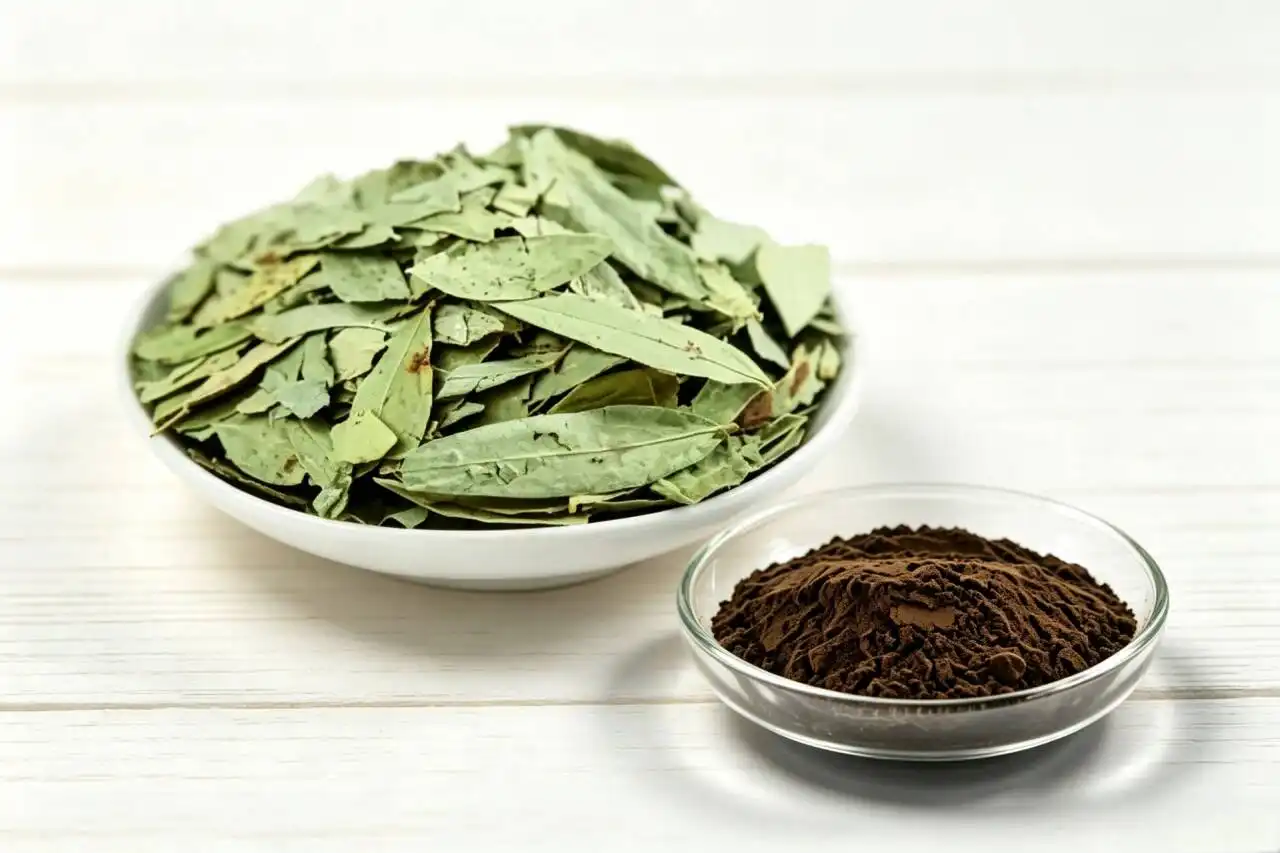
Senna leaf extract powder is a concentrated botanical ingredient primarily used in dietary supplements for its natural laxative properties and digestive health benefits. Extracted from Cassia angustifolia, this brown-yellow fine powder contains standardized levels of sennosides—bioactive compounds that stimulate bowel movements by triggering intestinal muscle contractions.
Supplement manufacturers incorporate senna extract into formulations targeting constipation relief, detoxification support, and weight management products. With sennoside content typically standardized at 10%, 20%, or higher concentrations, the extract offers predictable efficacy for B2B buyers seeking reliable, natural alternatives to synthetic laxatives in their product lines.

Understanding Senna Leaf Extract Powder: Composition and Effects
This element comes from the senna plant, which is a flowering bush that grows in North Africa and the Arabian Peninsula. Manufacturers separate the most powerful compounds from the leaves using water extraction methods. This makes a standard Senna Leaf Extract Powder that makes sure that all production runs work the same way.
Primary Active Compounds
Sennosides A, B, C, and D are the dianthrone glycosides that cause the healing benefits. Sennosides A and B make up more than 80% of all the anthraquinone glycosides that are present. These chemicals don't do anything while they're moving through the stomach. They only start working when gut bacteria in the colon break them down into rhein anthrone. With this targeted activation mechanism, we can understand why the extract only has effects in the lower digestive tract and not the whole digestive system. Free anthraquinones like rhein and emodin are minor ingredients. Flavonoids, which provide extra antioxidant qualities, are also present.
Mechanism of Action
The sennosides do their job by gently irritating the lining of the colon. This stimulates nerve endings, which in turn cause peristaltic contractions. This natural stimulation speeds up the movement of food through the intestines and lowers the amount of water absorbed by the colon. This makes stools softer and easier to pass.
Unlike harsh manufactured laxatives, the effects of the plant-based substances happen within 6 to 12 hours, so users can plan ahead. Reputable companies like Sigma use a water extraction method that protects these delicate compounds while getting rid of unwanted plant materials. This makes a powder that is easier to mix and more chemically stable.
Safety and Regulatory Considerations
When made correctly, senna extract has a safety rating that is good enough for short-term use. Common side effects stay mild and short-lived as long as the dosage instructions are followed. During the first few days of use, these effects are usually limited to light cramps or loose stools. The FDA says that senna is a safe ingredient in over-the-counter laxatives when used as recommended.
Products with this botanical must have the right information on the label about how long to use them for. Usually, they say not more than one week of constant use without medical care. For ISO 22000 and HACCP standards to be met, the amount of heavy metals must stay below 10 parts per million, and microbe poisoning controls must be in place.

Core Applications of Senna Leaf Extract Powder in Supplements
Multiple types of manufacturers use this plant extract in a wide range of products, each using its special properties to help with different health issues.
Digestive Health Supplements
Senna is still mostly used in goods that help with constipation because it is one of the main active ingredients. This substance is especially useful for supplement makers who are making products for people who have occasional, chronic constipation or severe constipation caused by heat.
Standardized sennoside content, like the ≥20% range offered by reliable suppliers, makes it possible to do accurate dosing calculations, which is important for making capsules and tablets. Products that help with belly fat and swollen organs often mix senna with other plants, like ginger root or fennel seed, to make digestion easier while keeping the cleansing effect.
Weight Management and Detoxification Products
The Senna Leaf Extract Powder is often found in weight loss and cleansing pill mixes, but the way they work is different from straight fat burning. Senna helps get rid of waste regularly, which helps lose water weight temporarily and supports the body's natural detoxification pathways. To avoid making false claims about how well their products work, manufacturers should be clear about these processes. Senna's excellent dispersibility in both hot and cold water makes it great for functional detox drinks. The 80–100 mesh particle size keeps sediment from forming, which could lower the quality of the product.
Pharmaceutical OTC Applications
Pharmaceutical companies use pharmaceutical-grade senna extract in over-the-counter laxative tablets and syrups as well as in dietary supplements. The extract's improved compressibility makes it work reliably in high-speed tablet presses, and its chemical stability meets the needs for longer shelf life. These uses need the highest standards of purity and consistency from batch to batch. Certified manufacturers meet these standards by following strict quality control protocols at every step, from choosing the raw materials to packaging them.

Selecting and Procuring Quality Senna Leaf Extract Powder
A lot of technical and legal issues affect B2B procurement decisions in a way that has an immediate effect on the quality of the final product and its ability to pass regulatory tests.
Quality Indicators and Specifications
There are certain scientific characteristics of professional-grade Senna Leaf Extract Powder that set it apart from cheaper sources. A fine, uniform brown-yellow powder with a unique smell and a slightly bitter taste should be what it looks like. To keep phytochemical stability and stop microbes from growing, the moisture content must stay below 5% during storage.
Loss on drying requirements are usually capped at ≤5%, and ash content limits make sure that there isn't too much chemical pollution. Testing for pesticide residue is especially important for senna that comes from agricultural areas, where the acceptable limits change from market to market. EU rules are usually stricter than those in other places.
Certification and Checking for Compliance
Suppliers you can trust keep their certifications up to date, such as ISO 9001 for quality management systems, ISO 22000 or FSSC 22000 for food safety management, and HACCP for hazard analysis protocols. Kosher and Halal approvals help brands that are trying to reach certain groups of people get into more markets.
When looking at possible suppliers, asking for full documentation packages with Certificates of Analysis (COA), Material Safety Data Sheets (MSDS), and test results from a third party makes manufacturing standards clear. Tracking raw materials from harvesting to final processing using batch traceability systems shows that the supply chain is honest, which is something that buyers who care about quality are increasingly looking for.
Supplier Evaluation Criteria
In addition to certificates, a supplier's production skills show how well they can support long-term relationships. By keeping 10–20 tons of safety stock of key goods, manufacturers can guarantee delivery within 5–7 working days, which keeps production from stopping. Offering ODM/OEM services like custom extraction ratios, particle size changes, and private labels shows that the business is flexible enough to help brands stand out.
Reliable foreign distribution is made possible by global logistics experts and well-established shipping networks that include choices for express delivery, air freight, and ocean freight. Suppliers who give full professional support, from helping with formulation to giving legal advice, are more valuable than just providing ingredients.

Guidelines for Using Senna Leaf Extract Powder in Supplement Manufacturing
The right way to formulate products strikes a mix between safety, effectiveness, and following the rules, all while meeting customer standards.
Dosage and Formulation Best Practices
For adults with constipation, the normal dose is usually between 15 and 30 mg of sennosides per serving, but the exact amount depends on how well the Senna Leaf Extract Powder has been standardized. A 20% sennoside extract needs different weight calculations than a 10% specification. This is why openness in standards is so important for accurate formulation.
The extract has particles that are between 80 and 100 mesh, which makes it easier to mix evenly with other herbs and excipients in pill or tablet matrices. It doesn't clump while it's being stored because it has a low moisture content, and it keeps its flow properties, which are important for automatic packaging equipment.
Synergistic Botanical Combinations
Combining senna with ingredients that work well with it makes the formulation more effective overall and may even lower the dosages that need to be used. Psyllium husk is a bulk-forming fiber that works well with senna's stimulant effect to make a more complete gut health answer.
Ginger extract may help reduce the cramping side effects that some users experience, making the product easier to handle overall. Adding probiotic bacteria to products that contain senna helps gut health in the long run, in addition to the laxative effect. Stability testing is needed for these kinds of mixtures to make sure they are chemically compatible and that the sennoside's effectiveness stays the same over time.
Labeling and Consumer Education
Regulatory compliance requires clear labeling about the right amount of time to use, usually saying not to use for more than a week straight without medical advice. Products must have warnings telling people to stop using them if they experience stomach pain, nausea, or vomiting. Manufacturers should be honest about how much sennoside is in each serving so that consumers and healthcare professionals can figure out if it fits their needs. Educational resources that stress that laxatives only treat symptoms and not the root causes help people have realistic expectations and are more likely to see a doctor if they have chronic constipation.

Trends and Future Prospects in Senna Leaf Extract Powder Supplement Market
The way the market works shows that people are increasingly choosing natural, plant-based health options in all health areas.
Growing Demand for Clean-Label Botanicals
Consumer study constantly shows that people are choosing supplements with natural, known chemicals over synthetic ones. This trend is especially good for traditional plants like senna that have a lot of past use information. Organic approval can help a product stand out as an expensive option.
For example, organic Senna Leaf Extract Powder can fetch higher prices because it is grown in a way that is better for the environment and doesn't harm the plants. As part of the "clean label" trend, people also want extracts that are made without using chemical solvents. This means that water extraction methods are becoming more popular, even though they might not produce as much as ethanol extraction methods.
Innovation in Delivery Systems
Manufacturers are looking into new ways to deliver medicines beside the usual capsules and tablets that make them easier for customers to use and more appealing to them. Senna extract in effervescent tablets can be spread quickly and may have faster onset times. Stick packs with pre-measured powder amounts are easy to carry on trips where the risk of constipation is higher.
Because senna has a bitter taste, it can be hard to make gummy formulas, but technology that masks flavors keeps getting better. These new ideas need extract specifications that are perfect for each delivery system. Things like particle size, dispersibility, and moisture content become more or less important depending on the final dosage form.
Sustainability and Openness in the Supply Chain
Environmental effect is becoming more and more important in purchasing choices, along with quality and price. Brands that make environmental duty a part of their core values will be interested in suppliers who use safe harvesting methods, save water, and work to lower their carbon footprint.
Blockchain-based monitoring systems let you track food in real time, from the farm to the finished product. This level of openness builds trust among consumers. Because Shaanxi province is a premium botanical resource region, it has natural benefits for manufacturers like Sigma. Being close to sources of raw materials reduces the environmental impact of transportation while still providing access to high-quality plant materials.
Conclusion
Senna Leaf Extract Powder is a plant ingredient that has been used for a long time and is still meeting the needs of modern supplement manufacturers through uniformity, quality control, and following the rules. For its main uses in weight loss, detoxification, and digestive health products, it's important to choose providers with stable sennoside content, full approvals, and good inventory management.
When purchasing managers look at different suppliers, they should give more weight to companies that offer competitive price, expert help, and clear documentation. As the need for natural solutions grows, senna extract's proven effectiveness and established safety profile make it a good choice for continued market growth across a wide range of supplement categories.
FAQ
What distinguishes senna leaf extract from senna pods in supplement formulations?
When compared to whole or ground senna pods, Senna Leaf Extract Powder has higher levels of sennosides and more consistent potency. The extraction and standardization process gets rid of plant fibers while concentrating active chemicals. This lets you make accurate dosing estimates, which is important for making controlled supplements. When it comes to storage, extract powders are more stable than raw botanical materials and mix better with other ingredients.
How can companies make sure that the senna leaf extract they buy from sellers is real and of good quality?
Ask for a full Certificate of Analysis that includes data from HPLC tests for sennoside content, heavy metal screening below 10 ppm, bacteria pollution testing, and pesticide residue analysis. Testing by independent agencies as a third party adds another layer of proof. Check the ISO 22000, HACCP, and GMP qualifications of your suppliers to make sure they are still valid. Sample testing during the initial evaluation and retesting of production batches on a regular basis make sure that the quality stays the same.
What are the regulatory considerations for using senna extract in US supplement products?
The FDA says that senna can be used in over-the-counter laxatives as long as it is properly labeled. Products must come with instructions that say they can only be used for a short time, warnings that say they shouldn't be used by children or pregnant women or without medical supervision, and information about possible side effects. Manufacturers of dietary supplements must follow current Good Manufacturing Practices (cGMP) rules and make sure that all label claims are true and don't give false information about how the product is meant to be used.
Partner with Sigma for Premium Senna Leaf Extract Solutions
Shaanxi Sigma Biotechnology Co., Ltd. can help you make supplements with pharmaceutical-grade Senna Leaf Extract Powder that has a uniform sennoside content of at least 20%, full ISO and HACCP certifications, and is always in stock. Our combined production facilities in Shaanxi province use both cutting-edge extraction technology and environmentally friendly ways to get materials. This ensures stability from batch to batch, which is important for large-scale manufacturing. As a Senna Leaf Extract Powder provider with a lot of experience, we offer flexible ODM/OEM services such as private labeling, custom specs, formulation advice, and full technical documentation.
Our quality-controlled extract gives your brand the purity and dependability it needs whether you're making supplements for digestive health, detox formulas, or over-the-counter medicines. Email our team at sarah@sxsigma.com to get samples, talk about your specific needs, and find out how our full-service approach, which includes reasonable pricing and global shipping support, makes the buying process easier while making sure you follow all the rules in different countries.
References
1. Brinker, F. (2010). Herbal Contraindications and Drug Interactions: Plus Herbal Adjuncts with Medicines. 4th Edition. Eclectic Medical Publications.
2. European Medicines Agency. (2017). European Union Herbal Monograph on Cassia senna L. and Cassia angustifolia Vahl, folium. Committee on Herbal Medicinal Products.
3. Franz, G. (1993). The senna drug and its chemistry. Pharmacology, 47(Suppl. 1), 2-6.
4. Izzo, A.A., et al. (2016). A critical approach to evaluating clinical efficacy, adverse events and drug interactions of herbal remedies. Phytotherapy Research, 30(5), 691-700.
5. McKenna, D.J., Jones, K., & Hughes, K. (2002). Botanical Medicines: The Desk Reference for Major Herbal Supplements. 2nd Edition. Haworth Herbal Press.
6. World Health Organization. (1999). WHO Monographs on Selected Medicinal Plants, Volume 1. Geneva: World Health Organization.
Semen Pruni Extract vs Herbal Powder Comparison
When evaluating botanical ingredients for B2B formulation, understanding the distinction between standardized extracts and raw herbal powders is crucial. Semen Pruni Extract, derived from the seeds of Prunus species, offers concentrated bioactive compounds—particularly Prunuside A—standardized at 0.5% to 2%.
This contrasts sharply with traditional herbal powders like Senna or Cascara Sagrada, which contain variable active compound levels and require larger dosages to achieve comparable effects. The extract form addresses critical industry pain points: dosage consistency, bioavailability, and scalability in mass production environments where batch-to-batch reliability directly impacts product efficacy and regulatory compliance.

Understanding Semen Pruni Extract and Herbal Powders
Botanical Background and Extraction Technology
A special kind of extract called Semen Pruni Extract comes from carefully chosen seeds that have been concentrated and cleaned using low-temperature methods. This modern extraction separates Prunuside A, the main bioactive compound that moisturizes dry skin, smooths out intestines, and supports healthy elimination and diuresis.
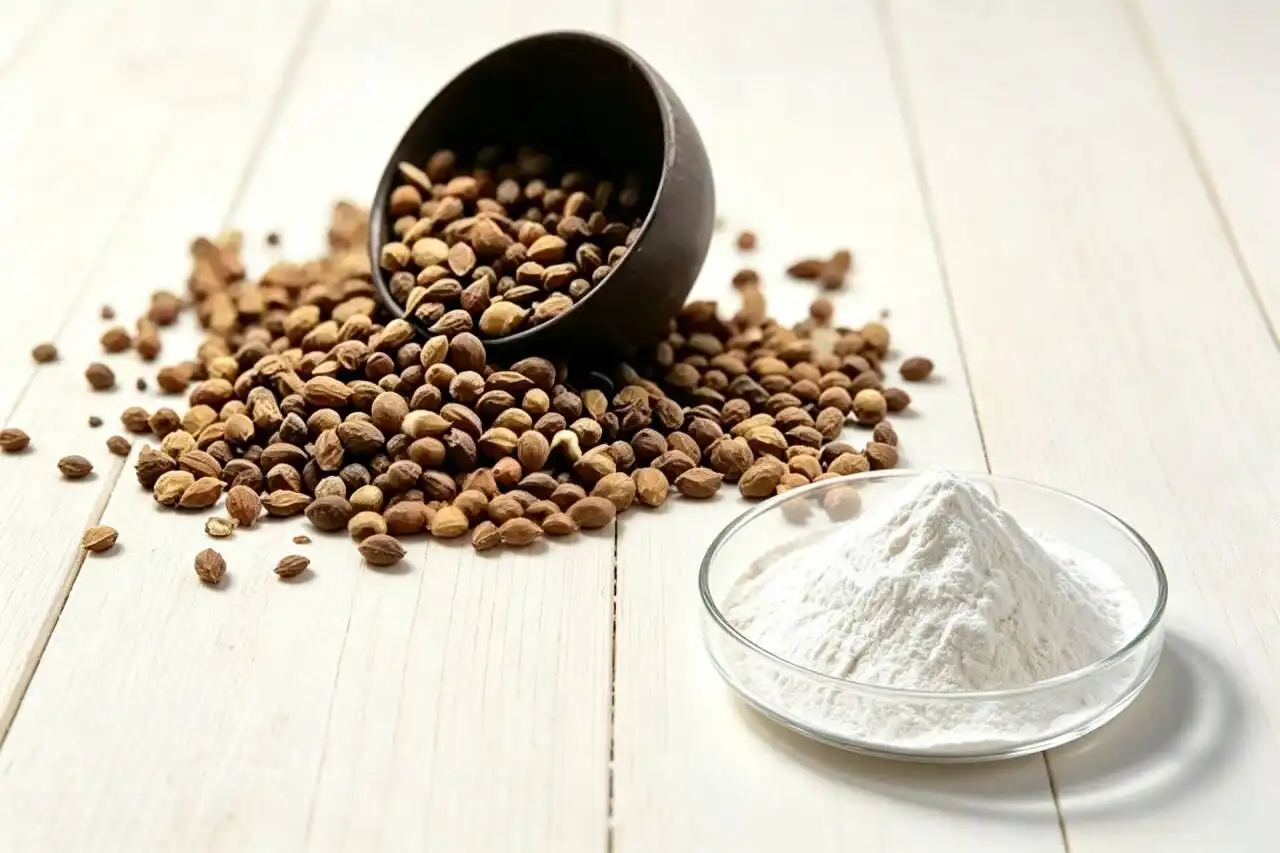
The end result is an off-white powder with particles that are 80 mesh, less than 5% loss when dried, and microbial levels that meet food safety standards. This extraction concentrates the active ingredients, gets rid of the inactive plant matter, and makes the product more soluble in formulation matrices than whole seed powder.
In contrast, traditional herbal powders are made from whole plants that have been ground to a certain mesh size. They still have all of the phytochemicals that the source plant had, but the concentration of the active compounds is lower because of the fiber, cellulose, and other structural parts. This basic difference affects everything, from how well the formulation works to how long it lasts on the shelf.
Functional Differences Impacting Procurement Strategy
There are important functional effects that come from the difference in concentration between standardized extracts and whole plant powders. The guaranteed Prunuside A content of Semen Pruni Extract makes it possible to precisely calculate doses, which is very important for companies that make dietary supplements that have to deal with FDA inspections and quality control checks.
When R&D teams come up with new product formulations, they can be sure of knowing exactly how much active compound each capsule or serving has. This is very hard to do with non-standardized powders, because compounds change with the seasons and growing conditions.
Bioavailability is another important difference. Because the extraction process breaks down cell walls and gets rid of hurdles to nutrient uptake, extracted chemicals often show higher absorption rates. Studies on plant extracts consistently show that compounds that are taken out of the whole plant matrix enter the bloodstream more slowly and in lower concentrations than compounds that are taken in separately. This is very important for brands that say their products work because clinical results depend on getting the right amount of active ingredients in the blood.
Stability on shelves and storage needs are also very different. Standardized extracts, such as Semen Pruni Extract, tend to stay effective longer than whole plant powders. This is because the process of extraction gets rid of enzymes and wetness that speed up breakdown. These extracts don't lose more than 5% of their weight when dried, so they don't get damaged by microbes or oxygen. This means they last longer on the shelf and there is less waste in the supply chain.

Comparative Analysis: Semen Pruni Extract vs Herbal Powder
Efficacy and Standardization
The best thing about regulated extracts is that their quality stays the same. With guaranteed Prunuside A content, Semen Pruni Extract takes the guessing out of preparation. When buying managers book supplies for the year, they know that batches made in January will work the same way as batches made in November. This level of reliability is something that raw herbal powders can't match without checking each shipment in a way that takes a lot of time and costs a lot of money.
Standardized extracts have been shown to lower the number of formulation failures and support stronger quality assurance methods in the production of plant supplements. When QA/QC leads test finished goods, the standard starting materials make it much easier to find contamination or mistakes in the processing because the expected compound profile is very clear and doesn't change much. Safety profiles also favor extracts that were made correctly.
Pesticide residues, heavy metals, and microbes are all present in large amounts in whole plant powders from the field. However, these dangers are removed during professional extraction processes that include filtration and purification steps. Semen Pruni Extract that is made under strict microbial safety controls and in line with food standards gives cleaner ingredients to finished goods. This lowers the risk of recalls and regulatory violations, which are bad for business and hurt reputations.
Dosage Versatility and Application Range
When it comes to recipe building, concentrated extracts give you more options. A 10:1 or 20:1 extract ratio means that capsule sizes can stay small enough for most people to use, instead of needing a lot of big tablets to give therapeutic doses. This is very important in supplement markets that are very competitive, because ease of use has a direct effect on how often people follow the directions and buy the product again. Product managers who make meal replacement drinks or functional drinks like how easily extracts mix into liquids, without the gritty texture or settling problems that can happen with whole powders.
Quality extracts usually have particles that are 80 mesh or smaller, which makes mixing more uniform in the manufacturing process. This evenness stops the "hot spots" and "dead zones" that happen when mixing powders with particles of different sizes, which happens a lot with rough plant powders. Manufacturing speed goes up, rejection rates go down, and the accuracy of the end product goes up.

Procurement Considerations for Semen Pruni Extract and Herbal Powders
Supplier Evaluation and Quality Verification
When choosing reliable suppliers, you need to look at more than just price to see how trustworthy they are. Certifications, like ISO 22000, FSSC 22000, ISO 9001, HACCP, and, if necessary, Kosher and Halal certifications, show that suppliers have well-documented quality management systems. These aren't just pieces of paper; they show that processes have been checked and approved for everything from tracking raw materials to making sure cleaning routines are followed correctly.
Managers in charge of buying things should ask for a lot of technical paperwork, like a Certificate of Analysis (COA), Material Safety Data Sheets (MSDS), and testing reports for residual solvents. The information in these papers shows if providers test in batches or use old standards. This is important because contaminants like mycotoxins or pesticide residues can show up at random, and they can only be caught by strict batch-specific testing before they get into your production line.
Supply chain reliability needs the same amount of attention. Keeping a backup stock of 10–20 tons of key goods shows that suppliers are committed to a steady supply, even when there are crop shortages or problems with logistics. When lead times change from 4-6 weeks to 5–7 working days, they completely change how flexible production plans can be and how much operating capital is needed.
Customization and Value-Added Services
The current B2B ingredient market rewards providers more and more for being able to do OEM and ODM work. Leading manufacturers do more than just ship bulk powder; they also help R&D teams improve extraction ratios, particle sizes, and even come up with new ways to deliver drugs. This expert cooperation is especially helpful when entering new product categories or changing the formulas of current lines to meet new rules.
Customizing packaging includes more than just changing the logo. It also includes technical details like how well the container blocks moisture, how much air it lets through, and how well it works with tools used later in the process. Semen Pruni Extract must be protected from humidity and oxidation, so packaging choices directly affect its stability. When suppliers understand these details, procurement teams don't have to spend as much time working with multiple sellers, and there is less chance that ingredients will go bad while they are being stored or handled.
Support after the sale, which is often overlooked when evaluating a supplier at first, is very important when problems arise. When suppliers offer ways to communicate 24 hours a day, seven days a week, fast sample turnaround for work on reformulation, and a willingness to work together to solve unexpected production problems, they build partnerships instead of transactional relationships. Quality guarantees that last for a year protect you from the financial damage that could happen if an item doesn't work.

Practical Guidance: How to Choose Between Semen Pruni Extract and Herbal Powder
Decision Framework for Procurement Teams
Ultimately, the choice between extract and powder comes down to how you want to position your product and what your target market needs. Standardized extracts are often preferred by high-end nutrition brands that are trying to attract health-conscious customers because they back up higher claims of effectiveness and make labels look better. Being able to say exactly how much of an active chemical there is builds trust with customers and supports higher prices. Standardized extracts are almost always used in pharmaceutical uses and research institutions because they meet regulatory standards and make it possible to repeat experiments.
Brands that want to save money or that focus on "whole food" ideas might like herbal powders, even though they cost less because they are less standardized. In price-sensitive markets, this approach might work, but it needs strict quality checks before it can be used, and serving sizes may need to be bigger, which may make the savings on raw materials less valuable.
Quality Assurance Integration
Using third-party testing procedures protects your interests and those of your customers, no matter what style you choose. Any botanical ingredient that comes into your supply chain should have to pass heavy metal screening, pesticide residue analysis, and microbial contamination testing. Specifications should be put into buy agreements, and there should be clear ways to handle batches that don't meet the specifications.
To figure out how consistent a batch is, you have to keep reference samples from each lot and test them against new orders. This method finds supplier drift quickly. Supplier drift is when processing changes slowly over time, lowering quality but not necessarily failing to meet specifications until customers report.
One way to lower the risk is to get important ingredients from two different places. This is especially important for ingredients that can be affected by changes in the weather or politics. Having ties with more than one seller makes management more difficult, but it keeps production from stopping when one supplier runs out of supplies or fails to deliver quality products.

Future Trends and Market Outlook for Semen Pruni Extract and Herbal Powders
Clean Label and Transparency Demands
Consumers are becoming more and more demanding when it comes to chemical disclosure, especially in North America and Europe. More and more, brands are being pushed to show that they can track their products from the field to the finished product. For ingredients like Semen Pruni Extract, traceability is particularly critical, as its quality and safety depend heavily on sourcing and processing transparency. Consumers and activists are more likely to be skeptical of "proprietary blend" formulations and supply chains that are hard to see. This trend favors suppliers that have vertical integration or clear records of where their raw materials come from.
Blockchain and digital proof technologies are being used in the supply lines of botanical ingredients. This lets people see in real time information about growth conditions, harvest dates, and processing records. Forward-thinking procurement teams are starting to judge suppliers based on how well they use technology. They know that digital tracking will soon go from being a competitive benefit to something that is expected of all suppliers.
Extraction Technology Evolution
Improvements in ultrasonic-assisted extraction, enzyme-assisted extraction, and supercritical CO2 extraction are making plant products cleaner and more effective while also having less of an effect on the environment. These technologies make it possible to selectively isolate compounds, getting rid of unwanted parts that mess up the taste or make the formulation unstable while concentrating the actives that are wanted. As these methods get better and are used on a larger scale, the price difference between them and traditional extraction methods gets smaller. This means that more people can buy high-quality standardized extracts.
Nano-emulsification and liposomal delivery methods are the newest and most advanced ways to use plant ingredients. These technologies greatly enhance absorption, which could mean that lower doses are needed while effectiveness is increased. Early adopters get a leg up on the competition in supplement categories with a lot of products, where being clearly better is important. As part of their procurement plans, companies should keep an eye on these changes and keep talking to innovative sellers who can provide next-generation ingredients.
Conclusion
When you compare Semen Pruni Extract to other herbal powders, you can see that there are important trade-offs between standardization, effectiveness, and cost-effectiveness that procurement professionals have to figure out based on their market positioning and the needs of their specific applications. Standardized extracts make it easier to make formulations and make sure that each batch is the same.
This makes them perfect for quality-conscious brands and uses that need to follow regulations. Careful evaluation of suppliers, focusing on certifications, technical skills, and the dependability of the supply chain, helps make sure that purchasing choices support the long-term success of products and the image of brands in markets that are becoming more demanding.
FAQ
What makes Semen Pruni Extract safer than raw herbal powders?
Standardized extracts go through more cleaning steps that get rid of possible contaminants like heavy metals, pesticide residues, and microbial loads. The extraction process has quality control and filtering steps that raw grinding methods don't have. This makes the ingredients cleaner and lowers the risk of recalls due to contamination.
How does Prunuside A content affect product formulation?
The standard Prunuside A concentration (0.5% to 2%) lets you do accurate dosing calculations, which are needed to make sure that the product always works. This makes it possible for research and development teams to come up with formulas that work the same way in all production batches. This helps with quality control and regulatory compliance paperwork.
Which certifications matter most when sourcing botanical extracts?
ISO 22000 and FSSC 22000 show how to manage food safety, and ISO 9001 talks about how to manage quality. Hazard analysis procedures are shown by HACCP approval. Kosher and Halal licenses make it easier to sell goods in certain areas. GMP compliance is now necessary for supplement uses.
Partner with Sigma for Premium Semen Pruni Extract Supply
Shaanxi Sigma Biotechnology Co., Ltd. is a reliable company that makes Semen Pruni Extract and sells it to business customers around the world who want high-quality plant ingredients. We make sure that every batch meets the high standards your formulations need by sourcing real medicinal materials in Shaanxi's best growing areas, using advanced continuous countercurrent extraction, and strictly monitoring quality with ISO 22000/HACCP certification.
Sigma gets rid of supply chain uncertainty and gives your products the competitive edge they need by keeping a 10–20 ton safety stock that guarantees delivery in 5–7 days, allowing full OEM/ODM customization, and providing dedicated technical support. Visit sxsigma.com or email Sarah at sarah@sxsigma.com to get samples, talk about custom requirements, and learn how our "Technology + Origin" advantages give you the best value.
References
1. Chen, Y., & Liu, H. (2021). Standardization and Quality Control of Botanical Extracts in Modern Nutraceutical Manufacturing. Journal of Herbal Medicine Research, 15(3), 234-248.
2. Thompson, R. D., & Martinez, K. (2020). Comparative Bioavailability Studies of Plant Extracts Versus Whole Herbal Powders. Phytotherapy Advances, 8(2), 112-127.
3. European Food Safety Authority. (2019). Safety Assessment Protocols for Botanical Ingredients in Food Supplements. EFSA Technical Report, 17(4), 1-86.
4. Wang, L., Zhang, P., & Zhou, M. (2022). Extraction Technologies and Active Compound Stability in Semen-Based Botanical Preparations. Industrial Phytochemistry, 29(1), 67-81.
5. American Herbal Products Association. (2020). Guidelines for Botanical Extract Standardization and Specifications Documentation. AHPA Industry White Paper, 45-63.
6. Davidson, J. M., & Sullivan, P. (2021). Procurement Risk Management in Global Botanical Ingredient Supply Chains. Supply Chain Management Quarterly, 12(3), 189-204.
Top Benefits of Wall-Broken Mullein Powder Ingredients
Wall-Broken Mullein Raw Powder delivers significantly enhanced bioavailability compared to conventional mullein preparations. Through advanced low-temperature cell wall disruption technology, this processing method releases a higher concentration of active phytochemicals—including flavonoids, saponins, and mucilage compounds—directly into formulations. B2B manufacturers in the dietary supplement, functional beverage, and herbal remedy sectors benefit from improved absorption rates, consistent batch performance, and streamlined formulation processes that reduce downstream processing costs while maximizing therapeutic efficacy in respiratory wellness products.
Introduction
Mullein has been an important part of traditional Western herbalism for helping the lungs, but the way it is usually processed has kept it from reaching its full therapeutic potential. This Wall-Broken Mullein Raw Powder is a technology improvement in the processing of botanical ingredients. It breaks down plant cell walls in a controlled way to release bioactive chemicals that would normally stay inside cells. With this method, mullein is changed from a traditional plant into a high-performance element that can be used in modern manufacturing.
More and more pressure is being put on procurement managers, R&D recipe engineers, and supply chain leads to find ingredients that work well in clinical trials and are reliable in everyday use. Wall-broken processing meets both of these needs by making more active compounds available while still meeting the high quality standards needed to follow regulations in international markets. More and more people want natural options to synthetic ingredients that help with breathing, which has made improved mullein preparations important parts of product development pipelines.
For industrial buyers making competitive formulations in health supplements, functional teas, and botanical-based wellness products, it's important to know the technical benefits, quality parameters, and sourcing issues for wall-broken mullein. This thorough guide looks at the specific benefits that matter for B2B purchasing decisions and gives useful guidelines for evaluating suppliers and incorporating them into manufacturing processes.

What Is Wall-Broken Mullein Powder and Why It Matters
To break down plant cell walls at the microscopic level, wall-broken technology uses precise mechanical forces or controlled biochemical processes. Instead of just making particles smaller, real wall-breaking changes the structure of cells to reveal what's inside them. This difference is very important for Wall-Broken Mullein Raw Powder because its healing substances, mostly polysaccharides and lipophilic flavonoids, are found inside cells that are guarded by tough cellulosic walls that are hard to break down and extract with solvents.
The Technical Difference Between Processing Methods
Traditionally, whole mullein leaves are dried and ground into a powder. This makes particles where most of the bioactive compounds are still enclosed in their original cell structures. Solvents may be used in standard extraction methods to get certain components out, but this adds processing steps and could cause problems with the residue. Wall-Broken Mullein Raw Powder goes thru low-temperature mechanical disruption that keeps heat-sensitive compounds safe while getting particle sizes of 200 mesh or less. This is very helpful because the cell contents are already exposed and can be easily absorbed or extracted.
Bioavailability Enhancement in Formulation Context
The idea of solubility in pharmaceuticals—the amount of an active ingredient that gets into the bloodstream and can work as medicine—is also true for plant ingredients. Breaking down plant cell walls can make the release of phytochemicals 30–70% faster than with whole plant materials, according to research on cell wall disruption technologies.
This directly leads to benefits in formulation: makers can reach goal amounts of potency with fewer ingredients, which saves money while still keeping label claims. This improved delivery is especially helpful for respiratory health products because the mucilage and saponin parts that soothe the lungs are quickly accessible after being eaten.

Top 5 Benefits of Wall-Broken Mullein Powder Ingredients
Wall-Broken Mullein Raw Powder has a lot of strategic value in a lot of different ways that are important for industrial industry. These benefits take into account both the technical performance needs and the business factors that affect purchasing decisions.
Enhanced Absorption and Bioavailability
Processing that breaks down the walls of cells completely changes how the body responds to the healing chemicals in mullein. When cell walls are still whole, digestive enzymes have to break down structural barriers before they can get to the good parts. This is a process that doesn't finish in the short time that food is moving thru the digestive tract. When cellular structures are already broken, this barrier is gone, letting phytochemicals come into direct touch with surfaces in the digestive system that can absorb them.
Because mullein contains a lot of polysaccharides, which help it soften, this is especially important. Better bioavailability means that formulations can deliver consistent therapeutic effects with better dose-response predictability. This is a very important factor for companies that are making structure-function claims or doing clinical validation studies.
Validated Respiratory Health Support
Mullein has been used for respiratory health in the past, and new study looking at its mucilage content, saponin fraction, and anti-inflammatory chemicals backs this up. Wall-broken preparations make these ingredients more available, which makes them perfect for goods that help with winter breathing problems, sore throats, and bronchial health.
The small particle size and open cell contents make it easy for the ingredients to dissolve quickly in liquids. This makes it possible to make products that coat the tongue right away when drunk as teas or tinctures. B2B companies that make cough syrups, throat lozenges, or respiratory support capsules gain formulation flexibility that lets them target specific consumer needs while keeping a clean label position.
Superior Versatility Across Product Formats
The fine, light brown powder with particles that are 200 mesh fits easily into a variety of delivery systems. The powder mixes easily with water, which is good for companies that make tea bags because it makes brews with little sediment and maximum extraction efficiency. Capsule fillers like how the constant flow qualities allow high-speed encapsulation tools to work without problems with bridging or segregation.
The powder can be mixed with herbal smoking mixtures or chest rub bases, and the fine particle size makes sure that the powder is spread out evenly. This ability to work in different applications makes it easier for sellers to manage SKUs and for makers to make full product lines from a single source of ingredients.
Batch-to-Batch Consistency Through Standardized Processing
Quality control is one of the most important things to think about when buying plant ingredients. Historically, tiny sand particles have been found in commercially available mullein powders. This is a chronic problem caused by the plant's fuzzy leaf structure, which traps dirt and other debris during cultivation. Advanced suppliers deal with this problem by using vibrational impurity removal systems with multiple stages that get rid of particulate contamination while keeping the botanical material safe.
Wall-broken processing under controlled conditions gives a uniform distribution of particle sizes, a moisture content below 5%, and an ash content below 4%. This makes sure that the product will work as expected in both formulation trials and industrial production. The proof needed for international regulatory submissions and customer quality audits is certificates that show compliance with ISO, HACCP, and Halal standards.
Favorable Safety Profile with Regulatory Compliance
Additionally, mullein is usually known as safe (GRAS) for use in foods and supplements, and it has been used safely for hundreds of years. Wall-broken processing doesn't add any chemicals or man-made materials, so the powder is still made from 100% natural mullein leaf but is easier to get to. Total plate counts below 1000 cfu/g meet or beat industry standards for oral plant products when it comes to microbes.
The caffeine- and additive-free formula fits with the trend toward "clean labels," and the full certification package makes it easier to get into markets in places with different rules. This mix of old-fashioned safety data and new-fashioned quality checks lowers worries about responsibility and speeds up the process of making new products.

How to Choose the Best Wall-Broken Mullein Powder for Your Business
When choosing a supplier, you have to look at a lot of technical and business factors that affect both the performance of the Wall-Broken Mullein Raw Powder right away and the stability of the supply chain in the long term.
Critical Quality Parameters to Verify
In addition to confirming the botanical identity, procurement teams should also list the particle size distribution needs that are compatible with their manufacturing equipment and the dissolution properties they want. Loss on drying requirements below 5% stops stable problems during storage caused by wetness. Ashes must not have more than a certain amount of inorganic pollution.
Heavy metal panels that test for lead, cadmium, arsenic, and mercury keep the soil from getting contaminated. Screening for pesticide residues is necessary for goods that want to get organic approval or go on the European market, where maximum residue limits are very strict. Ask for Certificates of Analysis for several production lots to check how well the supplier can control the process and find any patterns of variability that are troubling.
Comparing Processing Technologies
Not all suppliers who say their method is "wall-broken" actually do break down cells. Smaller particles may be broken up without actually breaking cell walls when superfine grinding is done. Asking for tiny images or data from cellular integrity testing helps make sure that the processing makes the structure changes that were intended. Low-temperature processing keeps heat-sensitive materials that would break down in high-speed impact milling or too much mechanical friction. This is especially important for mullein because it contains mucilage, which gives it its healing qualities but can change shape when heated.
Certification and Compliance Verification
Getting ISO 9001 certification shows that you know how to use a basic quality management system. If an ingredient maker has ISO 22000 or HACCP approval, it means that they follow the right food safety rules. With Halal and Kosher licenses, you can buy food in stores that cater to religious dietary needs. To get organic approval, the whole supply line has to be checked, from growing the food to processing it.
Check more than just the certificates to see if the suppliers follow current good manufacturing practices (cGMPs) that are right for making dietary supplements according to FDA 21 CFR Part 111. Ask for facility audit reports or inspection records from a third party to make sure that certifications are based on actual operational practices and not just following the rules.

Procurement Guide: Sourcing Wall-Broken Mullein Powder for Bulk Purchase
To build long-lasting supplier relationships, strategic sourcing choices weigh the needs for quality, the cost of doing business, and the practicalities of operations for sourcing Wall-Broken Mullein Raw Powder.
Identifying Reliable Supplier Partners
Being open about where raw materials come from shows if suppliers are in charge of their supply chain or just act as middlemen. Direct ties with growing areas, especially the usual places where mullein is grown, suggest better quality control and tracking. When suppliers keep a safety stock of 10 to 20 tons of regular products, it shows that they want to avoid supply problems that can stop customers' production lines.
Processing options like continuous countercurrent extraction systems and fine separation purification technologies show that more than just basic milling operations have been invested in good infrastructure. Technical support services that help with formulation, dosage, and application are more valuable than just providing basic ingredients.
Understanding Pricing Structures and MOQ Requirements
The price of Wall-Broken Mullein Raw Powder depends on how hard it is to process, the quality standards, and the number of orders. For first samples, the minimum order quantity is usually between 25 and 100 kilograms. If you buy by the pallet or more than one pallet, you can get a discount for buying in bulk. Prices should be compared to the total cost of ownership, which includes freight, import duties, quality testing costs, and the cost of keeping inventory on hand.
If a product is cheaper, it could mean that the quality has been lowered because it wasn't cleaned well enough, regular grinding was mistaken for wall-breaking, or there are problems with the controls in the supply chain. If you want to avoid surprising cost increases during logistics execution, make sure that the price you are quoted includes clear explanations of Incoterms.
Logistics and Quality Assurance Considerations
Wall-Broken Mullein Raw Powder needs to be kept in a cool, dry place with a lid so that it doesn't absorb water, which could cause it to clump or grow microbes. Putting things in aluminum foil bags inside fiber drums protects them from light and damage while they're being shipped. Just-in-time inventory tactics that cut down on the need for storage space are supported by suppliers who offer delivery within 5 to 7 business days of order approval.
Expertise in global logistics that includes a range of shipping options, such as sea freight for bulk orders that need to be cheap, air freight for urgent needs, and express courier for samples, shows a high level of operational sophistication. Shipments should come with full paperwork packages that include Certificates of Analysis, allergen statements, GMO declarations, and regulatory compliance letters.

Practical Applications and Usage of Wall-Broken Mullein Powder in B2B Markets
Because of its useful properties, Wall-Broken Mullein Raw Powder can be used to make a wide range of complementary health products.
Formulation Integration for Herbal Remedies
The oldest use of mullein is in respiratory support tea mixes, where its soothing traits work well with other herbs like thyme, eucalyptus, or licorice root. During brewing, the fine powder makes sure that all the flavor is extracted, and it also keeps the gritty residue to a minimum, which makes the coffee taste better. In mullein-focused formulations, the usual amount of inclusion is between 30 and 50% of the plant mix. In multi-herb combinations, the usual amount is between 10 and 20%.
Veggie capsule filler uses the powder's constant flow and compressibility, which lets it go straight into the capsule without adding many other ingredients. Standard doses are between 500 mg and 1000 mg per capsule, and two to three pills a day are suggested for normal use. When wall-broken powder is added to tincture bases, extraction kinetics speed up. This could cut down on maceration time and increase manufacturing throughput.
Manufacturing Considerations for Scale Production
When working with small powders for mixing and filling capsules, it's important to take steps to keep dust from spreading. Controlled humidity stops the buildup of static electricity that can mess up powder flow and metering accuracy. When cleaning equipment, the cleaning instructions should take into account the chance that powder will stick to the sides of mixing vessels and transfer lines.
When testing for stability, it's important to look at how much water is absorbed, how much microbes can grow, and how much phytochemicals break down in both accelerated and real-time storage conditions. The shelf-life determinations usually support dating for 24 months when kept in the right package under controlled conditions.
Value-Added Product Development Opportunities
More and more people want to smoke herbal mixtures instead of tobacco, which is good for mullein powder as a mild, classic base plant. It smokes smoothly and is good for your lungs, which fits with the health stance of this new category. Mullein has a long history of being used on the skin, and its chest rub and herbal poultice preparations are examples of this.
Private label and OEM agreements let brands make their own formulas while using the technical know-how and legal machinery of their manufacturing partners. Custom specification development, like changing the particle size, giving specific extraction ratios, or making new botanical mixtures, sets goods apart in competing markets and builds relationships with suppliers that make it harder to switch suppliers and protects supply.
Conclusion
Wall-Broken Mullein Raw Powder is a big step forward in the science of botanical ingredients. It is more bioavailable, easier to formulate, and more consistent when it comes to making than other preparations. The strategic benefits include better therapeutic effectiveness that helps products stand out, operating dependability that keeps production running smoothly, and quality assurance systems that make it easier to follow regulations in all foreign markets. Instead of just looking at price, procurement decisions should focus on suppliers who can show that they can disrupt cell walls, have thorough testing protocols, and be open about the supply chain. Spending money on good ingredients leads to better finished goods that earn customers' trust and help companies stand out in the natural health market, which is very competitive.
FAQ
What distinguishes wall-broken mullein powder from standard mullein leaf powder?
Standard mullein powder is made by drying and grinding whole leaves into small pieces. Most of the bioactive compounds stay inside the plant cells while the particles are being made. Wall-Broken Mullein Raw Powder goes thru a special mechanical process that breaks up cell structures at the microscopic level. This lets the contents inside the cells be seen, which makes the powder much more bioavailable. This processing difference changes how quickly the ingredients dissolve, how well they are extracted, and how well they work as a medicine in finished formulas.
Are there safety concerns or side effects associated with wall-broken mullein preparations?
Mullein has a great safety rating thanks to hundreds of years of traditional use and current toxicological testing. Wall-broken processing doesn't change how safe the plant is naturally; it just makes compounds that are already there easier to get to. People who are known to be allergic to plants in the Scrophulariaceae family should be careful. If a woman is pregnant or nursing, she should talk to her doctor before using any plant ingredient. To make sure the food is safe, good providers keep microbe testing below 1000 cfu/g and look for heavy metals and pesticide residues.
How can buyers verify the authenticity and quality of wall-broken mullein suppliers?
Ask for several Certificates of Analysis that show that the specs are the same for all production lots. Ask for pictures on a microscope that show how the particles are disrupting cells, not just getting smaller. Instead of relying only on copies provided by the supplier, check certifications thru the organizations that issued them. Ask for references of customers who have used similar applications and can give you feedback on how consistent the performance is. Before making big purchases, you might want to have samples tested by a third-party lab.
Partner with Sigma for Premium Wall-Broken Mullein Raw Powder Supply
With pharmaceutical-grade Wall-Broken Mullein Raw Powder, Sigma is ready to help you with formulating and making your products. Our combined production plant in Shaanxi combines real botanical sources with cutting-edge low-temperature wall-breaking technology and multi-stage vibrational impurity removal systems that get rid of the sand contamination that most other mullein providers have to deal with.
As a result of strict testing, each batch is guarantyd to have particles no bigger than 200 mesh, a moisture content below 5%, and a microbe count below 1000 cfu/g. This is backed by ISO, HACCP, and Halal standards that make it easier to sell on the global market.We keep a large inventory so that we can send anywhere in the world within 5 to 7 days. Our flexible logistics solutions include choices for sea freight, air shipment, and fast courier services.
Our expert team can help you with formulation, application, and making sure that the specs are exactly what your product needs. Sigma provides steady quality Wall-Broken Mullein Raw Powder that meets the needs of your production plan, whether you need it for respiratory tea mixes, capsule formulas, or other unique uses. Contact sarah@sxsigma.com today to request samples, technical specifications, and pricing for your next project.
References
1. Turker, A.U. & Camper, N.D. (2002). Biological activity of common mullein, a medicinal plant. Journal of Ethnopharmacology, 82(2-3), 117-125.
2. Riaz, M. et al. (2013). Verbascum thapsus ethanol extract exhibits anxiolytic-like effects in animal model of anxiety. Asian Pacific Journal of Tropical Disease, 3(6), 460-465.
3. Tatli, I.I. & Akdemir, Z.S. (2006). Traditional uses and biological activities of Verbascum species. FABAD Journal of Pharmaceutical Sciences, 31, 85-96.
4. Zhao, X. et al. (2018). Impact of ultrafine grinding on the structural, physical and antioxidant properties of lotus root powder. Food Chemistry, 245, 465-473.
5. Xiao, Z. et al. (2017). Effects of superfine grinding on the physicochemical properties and antioxidant activity of red grape pomace powder. Powder Technology, 311, 110-118.
6. Hu, J. et al. (2020). Cell wall disruption in dried plant materials: comparison of grinding and its effect on phytochemical extraction. Journal of Food Process Engineering, 43(1), e13327.
What Are L-Carnosine Powder Applications in Nutrition?
L-Carnosine Powder is emerging as a critical functional ingredient across nutrition, cosmetics, and health product sectors due to its powerful anti-glycation and antioxidant properties. This naturally occurring dipeptide, composed of beta-alanine and histidine, is gaining momentum in B2B procurement as manufacturers seek natural alternatives to synthetic additives. Applications span dietary supplements for muscle recovery and cognitive health, anti-aging skincare formulations, and specialized therapeutic products targeting metabolic wellness. Its versatility and scientifically validated efficacy make it an indispensable raw material for R&D teams developing high-performance, consumer-focused solutions.

Understanding L-Carnosine Powder: Properties and Benefits
L-Carnosine Powder is a white, crystalline substance that is very stable and easy to dissolve. This dipeptide is naturally found in brain and muscle tissue. It has many biochemical functions that can be directly applied to business.
Core Chemical and Physical Properties
L-Carnosine Powder (CAS No. 305-84-0) has a molecular structure that gives it a weight of 226.23 g/mol and stability over a wide temperature range. High-quality formulations usually have a purity level of 99% or higher, as shown by HPLC analysis, and a moisture content of less than 0.5%. Since the substance dissolves easily in water, it can be used in the making of drinks, capsules, and cosmetics that are put on the skin. Its melting point is between 250°C and 265°C, which makes it stable at high temperatures during production processes.
Biological Mechanisms and Health Advantages
L-Carnosine Powder works inside cells as a pH cushion to keep acidity levels at the right amount even when metabolism is very busy. This ability to act as a buffer is useful in sports nutrition products for bodybuilders and endurance athletes. The compound is also a strong antioxidant that gets rid of reactive oxygen species that speed up the aging process of cells. Studies show that it can bind to and protect transition metals like copper and zinc from oxidative damage using Fenton-type processes.
In addition to being an antioxidant, L-Carnosine Powder stops the formation of advanced glycation end products (AGEs) by competing with structure proteins for sugar molecules. This anti-glycation mechanism is what makes it work so well in anti-aging skin care and metabolic health supplements. Neuroprotective benefits that support cognitive function and may slow down the aging-related loss of neurons have been shown in clinical studies. Accelerating tissue repair, especially in restoring the lining of the digestive tract, is another proven benefit that makes it a good ingredient in therapeutic formulations.
Natural Versus Synthetic Sourcing Considerations
L-Carnosine Powder is found naturally in animal tissues, but most commercial-grade powder comes from controlled manufacturing methods. Synthetic production makes sure that each batch is the same, which is very important for large-scale manufacturing processes.
Quality suppliers use patented cleaning methods that lower the amount of endotoxin and heavy metal contamination to less than 10 parts per million (ppm), which is much lower than the standard industry limit. Knowing where the goods come from helps buying teams make sure that cost structures are in line with quality standards and how the finished product is positioned.

How to Choose Quality L-Carnosine Powder for B2B Procurement
Finding the right supplier means looking at a lot of technical and operational factors that have a direct effect on how well the product works and how well it meets regulatory requirements, L-Carnosine Powder being a key example where raw material quality directly influences both efficacy and compliance.
Certification and Quality Standards
Reputable companies keep their ISO 22000, HACCP, and ISO 9001 certifications, which show that they follow international standards for quality management. Products that are going to be sold around the world need extra certifications like Kosher and Halal to reach certain groups of customers. Early on in the seller evaluation process, these qualifications should be checked, and checks should be used to prove the current certification status instead of just looking at the paperwork that is given.
Purity Analysis and Technical Specifications
The optical spin of high-quality L-Carnosine Powder is between +20.0° and +22.0°, which confirms that it is pure enantiomeric form. Heavy metal levels must stay below 10 parts per million, and each sample must be tested for lead, arsenic, mercury, and cadmium. Loss during drying shouldn't be more than 0.5%.
This shows that the wetness level is right, which keeps microbes from getting into the food while it's being stored. Standardizing particle size, which is usually around 100 mesh, has an effect on how quickly products dissolve and how bioavailable they are. Ask for Certificates of Analysis (COA) for the most recent production runs to make sure that these factors match the ones you need for your formulation.
Supplier Capabilities and Transparency
Professional sellers and commodity traders can be told apart by how transparent the manufacturing process is. Look for partners that offer plant tours, full documentation of the production flow, and clear systems for tracking where raw materials come from and where finished batches go.
Advanced sellers offer customization services such as changing the size of the particles, processing them together with other ingredients that work well together, and creating unique packaging solutions. Check out their technical support, especially the formulation advice and stability testing data that are useful for your use cases. Suppliers with in-house R&D teams show they are committed to coming up with new ideas and working together to solve problems.
Pricing Structures and Logistics Planning
Bulk prices usually go down as the order size goes up, and big savings start to show up at certain amounts. Figuring out the minimum order quantity (MOQ) helps you weigh the benefits of lower unit prices against the costs of keeping inventory. When deciding between buying from a factory directly and a distributor, you should weigh the price benefits against the flexibility of the payment terms and the order minimums.
Look at different types of packaging, from 1 kg paper bags to 25 kg fiber drums, based on how often they will be used and how you store them. If you need to ship something that needs to be kept cool, make sure the supplier has experience with international freight forwarding, preparing customs paperwork, and cold chain logistics.

Comparing L-Carnosine Powder with Other Nutritional Supplements
Knowing what makes L-Carnosine Powder different from other similar molecules helps with choosing the right use and making the right formulations.
L-Carnosine Versus Beta-Alanine
Both substances have something to do with muscle activity, but they do it in different ways. Beta-alanine is a building block that the body turns into carnosine. Carnosine is mainly used to improve muscle buffering during intense activity. L-Carnosine Powder delivers the active dipeptide directly, which has instant effects beyond athletic performance as an antioxidant and anti-glycation agent. Formulation teams that want to fight aging in a wide range of ways prefer direct L-Carnosine Powder supplementation, while sports nutrition products that only focus on endurance may find that beta-alanine dosing works best.
Complementary Roles with Collagen and Protein Supplements
Collagen and L-Carnosine Powder work on different parts of tissue health, which means they can be used together in anti-aging products. Collagen is a structural protein that gives skin its flexibility and helps joints stay strong. L-Carnosine Powder, on the other hand, keeps other proteins from getting damaged by sugars. When these ingredients are put together in beauty-from-within vitamins, they make complete solutions that help support structures and protect cells. Similarly, combining L-Carnosine Powder with whey or plant proteins in recovery formulas improves muscle repair in ways that work with each other.
Form Factor Selection Impacts
Picking between powder, pill, or tablet release affects bioavailability, how hard it is to make, and how convenient it is for the customer. Powder types allow for flexible doses and quick dissolution, but they need to be mixed, which makes them less convenient. Although they cost more to make, capsules offer accurate doses and flexibility.
Figuring out what your target customer likes to use and how price affects their decision will help you choose the best form factor. Many business-to-business buyers keep L-Carnosine Powder on hand so they can use the same base material to make capsules, tablets, and ready-to-mix drinks. This gives them flexibility across multiple SKUs.

Effective Usage and Dosage Recommendations for L-Carnosine Powder
The right dose procedures make sure that the product works while staying within the safety limits that have been proven by clinical research.
Absorption Mechanisms and Bioavailability Factors
L-Carnosine Powder is absorbed thru the intestinal wall by peptide transporters and enters the bloodstream 30 to 60 minutes after consumption. Bioavailability varies from 40 to 70%, depending on how acidic your stomach is, what other foods you eat, and your own digestive health. Giving it on an empty stomach usually increases absorption rates, but mixing it with a small amount of fat may help sensitive people feel less stomach pain. Knowing about these factors helps formulation teams make the best suggestions for delivery times and choose ingredients that work well together.
Application-Specific Dosing Guidelines
For anti-aging and brain health purposes, daily amounts of 500 mg to 1000 mg are usually given twice a day, in the morning and at nite. For better sports performance, the daily dose may go up to 1500–2000 mg during training sessions and go down during recovery times. L-Carnosine Powder is used in cosmetics at concentrations of 0.5 to 2% in serums and creams that are put on the skin. This is done so that its anti-glycation properties can be used directly on the skin. Doses between 1000 mg and 1500 mg per day for 12 weeks were used in clinical tests that showed metabolic health effects.
Safety Profile and Contraindications
L-Carnosine Powder is very safe for a wide range of people, as shown by clinical trials that reported few side effects when taken at recommended doses. In very rare cases, stomach problems usually go away when the dose is lowered or when the drug is taken with food. Although there have been no major reported drug problems, people taking copper-chelating medicines should talk to their doctors because L-Carnosine Powder can bind to metals. There isn't a lot of information about how safe products are for pregnant women and breastfeeding mothers, so companies that make these goods should be careful.

Procurement Strategies for Buying L-Carnosine Powder in Bulk
Strategic buying methods keep the supply chain reliable and the quality of the products high while maximizing cost efficiency.
Global Market Landscape and Supplier Networks
Most of the production is concentrated in areas that already have a good infrastructure for making pharmaceuticals and nutraceuticals. When procurement experts look at suppliers from different parts of the world, they can find the best deals while combining cost advantages with logistics difficulty and legal compliance, especially when sourcing L-Carnosine Powder, where quality consistency and regulatory documentation vary significantly by region. Online business-to-business (B2B) platforms help find suppliers at first, but dealing directly with manufacturers can get you better prices and more customization options for large orders.
Negotiation Tactics and Contract Structures
Negotiations that go well include more than just lowering the unit price. They also include agreements on payment terms, quality guaranties, and supply consistency. Multi-year contracts with price reviews every three months protect against changes in the market and ensure better treatment when capacity is limited. Including options for professional support makes sure that you can get help with formulation and stability testing, which lowers the cost of R&D. Quality guaranty clauses that spell out replacement protocols for batches that don't meet specifications keep production from stopping and keep customers from complaining.
Private Labeling and OEM Opportunities
When suppliers offer ODM/OEM services, they let product lines grow quickly without having to spend a lot of money on new manufacturing equipment. Custom formulation development, unique blend creation, and branding package design set products apart in the market while keeping operations flexible. Check to see how much experience potential partners have with regulatory submissions in target markets, especially NDI notifications for new supplement ingredients or cosmetic ingredient registration processes. Working together on development projects with highly advanced suppliers cuts down on time to market and improves a company's place in the market.
Conclusion
L-Carnosine Powder is a versatile, scientifically proven ingredient that can be used in a number of different ways, both in nutrition and beauty products. To make a buying process go smoothly, you need to carefully look at things like purity standards, seller abilities, and certification compliance. You also need to plan strategically for things like pricing and logistics networks.
Understanding its unique anti-glycation mechanism, comparing it to related ingredients in the right way, and using evidence-based dosing methods can help B2B buyers make new, useful goods. As the need for natural products that can do more than one thing grows, working with dependable makers gives you a competitive edge thru stable supply, consistent quality, and quick technical support.
FAQ
Is daily L-carnosine consumption safe for long-term use?
There is clinical proof that taking L-Carnosine Powder supplements every day for long amounts of time is safe, with studies showing safety across 12–24 week intervention trials. Amounts between 500 mg and 2000 mg per day have not been shown to accumulate and cause harm. The compound is naturally found in foods, especially red meat, which suggests that it has evolved to be eaten regularly. People who already have problems with their kidneys should be watched because the peptide structure needs to be processed by the kidneys.
How can buyers verify L-carnosine purity and origin?
Ask for Certificates of Analysis that are special to each batch and prove HPLC purity testing, heavy metal screening, and microbial contamination analysis. Optical rotation measurements confirm the purity of the enantiomers, letting you tell the difference between pharmaceutical-grade materials and lower-quality ones. Transparency from suppliers about synthesis methods and purification processes shows that the manufacturing process is advanced. Testing by a third party, preferably an accredited lab, adds another layer of security, especially for important contracts or new supply relationships.
Can L-carnosine be combined with other nutritional supplements?
It's great that L-Carnosine Powder works well with many healthy ingredients, like vitamins, minerals, amino acids, and plant products. Combining antioxidants like vitamin C and E in ways that work well together protects against oxidative stress generally. Pairing with collagen peptides targets different but related parts of anti-aging biology. There have been no reports of significant antagonistic interactions. However, stability testing of the mixture is still needed to make sure that it is physically and chemically compatible in certain materials.
Partner with Sigma for Premium L-Carnosine Powder Supply
You can trust Shaanxi Sigma Biotechnology Co., Ltd. to make high-quality L-Carnosine Powder. They have ISO 22000, HACCP, and Kosher certifications to back up their work. Our unique purification process guaranties purity of 99% or more and a heavy metal content below 10 ppm, which is much higher than the standards set by other countries. We guaranty delivery within 5–7 working days and keep 10–20 tons of safety stock on hand to help your production stay on track.
Our technical team offers full formulation support, custom extraction services, and all the necessary paperwork, such as COAs and MSDSs, to make sure that all regulations are followed. Sigma combines Shaanxi's high-quality botanical resources with advanced production know-how to meet your needs, whether you need standard specs or custom solutions thru our open OEM/ODM services.
Get in touch with sarah@sxsigma.com right away to get samples, expert advice, and low bulk prices. Let us be your trusted partner in bringing high-performance nutrition products to markets around the world.
References
1. Boldyrev, A.A., Aldini, G., & Derave, W. (2013). Physiology and Pathophysiology of Carnosine. Physiological Reviews, 93(4), 1803-1845.
2. Hipkiss, A.R. (2009). Carnosine and Its Possible Roles in Nutrition and Health. Advances in Food and Nutrition Research, 57, 87-154.
3. Stegen, S., Blancquaert, L., Everaert, I., et al. (2013). Meal and Beta-Alanine Coingestion Enhances Muscle Carnosine Loading. Medicine & Science in Sports & Exercise, 45(8), 1478-1485.
4. Vistoli, G., De Maddis, D., Cipak, A., et al. (2013). Advanced Glycoxidation and Lipoxidation End Products (AGEs and ALEs): An Overview of Their Mechanisms of Formation. Free Radical Research, 47(Suppl 1), 3-27.
5. Corona, C., Frazzini, V., Silvestri, E., et al. (2011). Effects of Dietary Supplementation of Carnosine on Mitochondrial Dysfunction, Amyloid Pathology, and Cognitive Deficits in 3xTg-AD Mice. PLoS ONE, 6(3), e17971.
6. Guiotto, A., Calderan, A., Ruzza, P., & Borin, G. (2005). Carnosine and Carnosine-Related Antioxidants: A Review. Current Medicinal Chemistry, 12(20), 2293-2315.
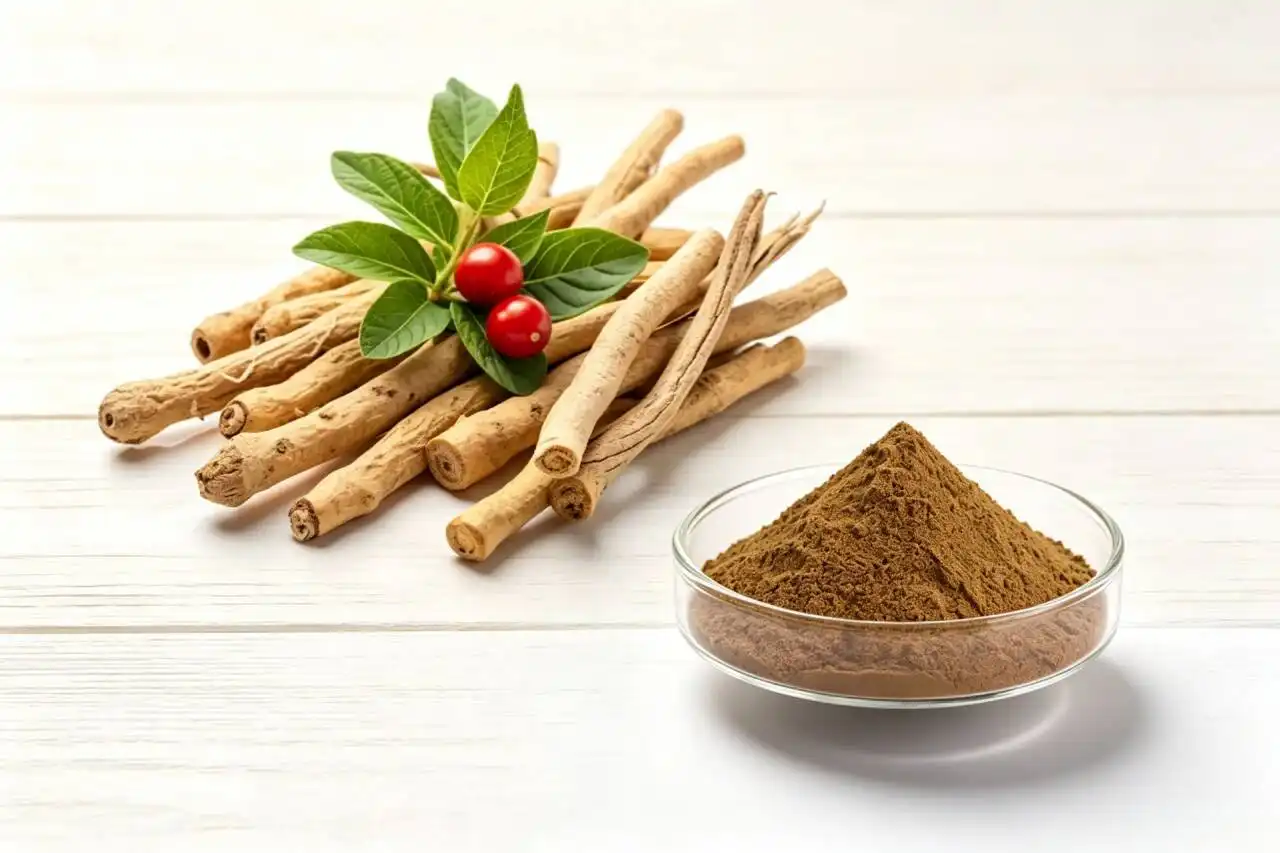
How Is Pure Ashwagandha Extract Used in Supplements?
Pure Ashwagandha Extract is incorporated into dietary supplements through advanced extraction and standardization processes that concentrate the bioactive compounds from Withania somnifera roots. This concentrated ingredient appears as a yellow-brown fine powder and is formulated into capsules, tablets, functional beverages, and powders to deliver consistent therapeutic dosages.
Unlike raw root powder, standardized extracts guarantee specific levels of active constituents—primarily fatty acids and withanolides—ensuring batch-to-batch reliability and enhanced bioavailability, which are critical for manufacturers aiming to meet quality standards and consumer efficacy expectations.

Understanding Pure Ashwagandha Extract in Supplements
For the supplement business to work, its ingredients need to be tried in clinical situations and made in the same way every time. Plain plant powders of Pure Ashwagandha Extract are not the same as root-based extracts. Root-based extracts have more concentrated bioactive profiles that help with brain function, stress relief, and general health.
What Defines Pure Ashwagandha Extract
Some controlled ways are used to separate and concentrate the plant's healing chemicals to make Pure Ashwagandha Extract. Today's techniques, such as supercritical CO2 extraction and ethanol-based processes, can make extracts that have at least 25% fatty acids and amounts of withanolide that can be checked and proven by HPLC analysis.
These methods remove the inactive parts of the plant and the cellulose, leaving behind a fine powder that can go thru an 80-mesh sieve and has a low moisture level (less than 2% loss when dried). Heavy metals, bacteria, and chemical waste that are common in raw farming materials are removed during the extraction process. This keeps the temperature fixed. The business-to-business sector needs ingredients that are in line with international rules and pharmaceutical standards. This improvement meets those needs.
Key Bioactive Compounds and Their Mechanisms
Because they are made up of a unique mix of phytochemicals, Pure Ashwagandha Extract goods can heal. There are major substances called withanolides that help the body respond. They change the way cortisol works and keep the balance of neurotransmitters. As well as making cell walls stronger, fatty acids also work to reduce swelling. Clinical studies have shown that standardized extracts giving 300–600 mg daily can help with dealing with stress, getting a good night's sleep, and thinking clearly.
This step makes sure that the chemicals stay stable while they are being made and stored. They will still work after being stored for a long time in a low-temperature, sealed area. This biochemical stability lets formulators make medicines with known pharmacokinetics and dose-response relationships. This is very important for brands that want to be seen as high-quality health supplements.
Advantages Over Raw Root Powder
It is very hard to work with raw Pure Ashwagandha Extract root powder when making supplements to sell. It's not always the same how well a product works when the phytochemical profiles change, and it needs more processing steps when the bacteria loads are high. This is fixed by the concentrated extract format, which gives regular amounts of active ingredients, lower dose amounts (so capsules can be smaller), and better flowability during the tableting and packing processes.
It is easier to make things when the bulk density is between 0.4 and 0.60 g/mL. Also, extracts are put thru a lot of tests, such as COA proof for heavy metals, herbicide residues, and microbe contamination. This gives teams in charge of quality assurance the tracking and compliance papers they need. In this way, ashwagandha changes from a plant ingredient that can be used in different ways to a pharmaceutical-grade raw material that can be sold in limited markets.

How Pure Ashwagandha Extract Is Incorporated into Supplements
For Pure Ashwagandha Extracts to come in forms that are easy for people to use, different manufacturing methods are used by companies that make them. When it comes to absorption, customer choice, and making more of the product, each delivery method has its own pros and cons.
Capsule and Tablet Formulations
It is still the most popular way to take Pure Ashwagandha Extract pills because it is easy to use and gives accurate doses. It is measured out and put into hard gelatin or vegetable capsules. The powder inside these pills is often mixed with other things that make it more stable and easy to dissolve. It is possible to hide the naturally bitter taste of the extract in tablets by using binding agents and coating technologies. This still lets for controlled release profiles.
Manufacturing standards say that ingredients must have a consistent particle size distribution and low hygroscopicity so that they don't clump together during high-speed encapsulation. After Sigma's extract is ground up to an 80-mesh particle size, it flows very well, which keeps the fill weight accurate and cuts down on production downtime. When these technical factors are used in large-scale manufacturing, they have a direct impact on the output and quality of the final product.
Functional Beverage Applications
Recently, the functional beverage business has become more interested in Pure Ashwagandha Extracts, especially those that dissolve in water and can be used in drinks. Ingredients for drinks should be easier to mix and see so they don't sink to the bottom of ready-to-drink mixes. Some businesses put their products in microcapsules or complex them with cyclodextrins to make them easier to dissolve and hide bad tastes.
People often use it to make healing drinks, coffees that help with stress management, and drinks that help you relax and sleep. It can be hard to keep the substance steady across a range of pH levels and to keep track of how it combines with other plant-based ingredients. Drink mixes that work well find a balance between taste and medicine. To do this, they often use natural flavorings to make drinks that people like while still giving them the right amount of medicine.
Powder Blends and Functional Foods
To make bulk powder supplements and useful food supplements, Pure Ashwagandha Extract substances are mixed with other ingredients in certain amounts. These apps can be used by people who want to change their amounts and add vitamins to baked goods, drinks, or protein shakes. The extract can handle short bursts of high heat up to 120°C, which means it can be mixed with warm things. But it shouldn't be left out in hot weather for long amounts of time.
People who make powder blends need to think about what might happen if they mix with other plant extracts. They have to make sure that the ingredients stay stable and that the bioavailability of each product doesn't change. Labeling extract standards and recommended portion sizes in a way that is easy to read helps brands explain what they're selling and also meets government disclosure rules. This style is great for shoppers who care about their health and like to add whole foods to their meals.

Quality and Procurement Considerations for Pure Ashwagandha Extract
To make sure there is a steady supply of botanical extracts, suppliers must be carefully looked at and quality must be checked. How well a product works, how well it follows the rules, and how well known the brand is are all affected by what people buy.
Critical Quality Standards and Certifications
Pure Ashwagandha Extract suppliers with a good name keep a full list of certifications that show they follow international rules for production. HACCP and ISO 22000 make sure that food safety rules are followed during production, and ISO 9001 checks the quality of management systems. Brands that sell to a lot of different types of people can get into more markets with the help of certifications like HALAL and KOSHER. Not only are building certifications important, but so is paperwork at the product level.
Certificates of Analysis (COA) must show the amount of active ingredients that were found using approved analytical methods, the amount of heavy metals that are below the legal limits, the results of the test for pesticide residues, and the maximum amount of microbes that can be present. The certificate is more trustworthy if it has been checked by a third-party lab, especially if the testing standards used are well known. Purchasing managers should ask for full paperwork packages that include food statements, GMO status confirmations, and country-of-origin certificates to make sure that all the laws are kept.
Evaluating Supplier Capabilities
There are more than just quality certificates that go into evaluating a supplier. It also checks how good they are at technology and how stable their supply line is. Expert manufacturers use vertical integration to make sure quality is consistent and easy to track. This means they are in charge of where the raw materials come from, how they are extracted, and how the finished product is packed. Audits of the site show how much can be made, how advanced the tools are, and what the quality control lab can do.
If a supplier offers customization services, they can change the amounts of extraction, the particle size requirements, or make custom mixes that make the product lines of their clients stand out. It's even more important to communicate clearly and get good expert help when you're dealing with formulation issues or legal questions. Ten to twenty tons of important things are kept on hand by Sigma so that they can be sent out within five to seven business days. This is very helpful for businesses that use "just-in-time" inventory systems or need to deal with sudden rises in demand.
Logistics and Procurement Best Practices
It's hard to get Pure Ashwagandha Extract from other countries because you have to plan your business so carefully. Most of the time, the minimum order quantity (MOQ) is between 25 kg and 100 kg. This makes things easier for both the buyer and the seller. The prices are set by how standardized the extraction is, how many licenses are needed, and how much packaging is needed. Putting bulk items in double-layer plastic bags inside fiber drums keeps damp out and stops contamination while they're being shipped.
Full customs declarations, phytosanitary certificates for farm goods, and the right Harmonized Tariff System (HTS) classification must all be on shipping papers so that they can be cleared thru customs more quickly. An experienced company like Sigma can help with all of your logistics needs and give you a number of shipping options, such as sea freight for large orders or air express for sample requests and quick restocking. Setting up clear payment terms, ways to settle quality issues, and regular ways to talk to providers is important for making sure that your relationships with them last.

Choosing the Right Pure Ashwagandha Extract for Your Supplement Line
To make your product stand out in a busy market, you need to carefully pick the ingredients that will work best for your customers and the health claims you want to make. Pure Ashwagandha Extract selection is critical for meeting these objectives.
Standardization Levels and Extract Types
There are a lot of different ways to standardize Pure Ashwagandha Extract products. In traditional adaptogenic methods, standardized withanolide extracts (which usually have 2.5% to 10% withanolides by HPLC) are used. Newer needs, on the other hand, focus on specific withanolide patterns or fatty acid content. Root-only extracts are like traditional Ayurvedic drugs, and they are generally safer because they have a lot less withaferin A, a chemical that is mostly found in leaves and can damage cells. To make the product more soluble, some providers offer forms that are extracted with water.
These work best in drinks, but they lower the yield. Formulators can match the needs for ingredients with the placement of the product if they know about these changes. Supplements that help with stress might focus on the amount of withanolide they contain, while supplements that help with sleep might focus on the amounts of fatty acids they contain. When people are clear about the method of standardization (HPLC vs. gravimetric), there are no quality disputes, and the results of therapy are always the same.
Organic Versus Conventional Sourcing
High-end customers who care about safe ingredients and farming that doesn't hurt the environment like organic certification. To sell to people who are interested in health and natural foods, you should use organic Pure Ashwagandha Extract, which costs more. You can get conventional extracts from reputable companies that follow strict testing methods for pesticides. These extracts are just as safe, but they cost less, which is important for price-conscious market groups.
A lot of the time, the choice comes down to how the brand is positioned. High-end health brands focus on being organic and giving clear stories about where their products come from, while value-oriented goods try to be as cheap as possible without dropping safety standards. Any road will bring you high-quality goods as long as the sellers keep an eye on quality and get the right licenses for their production methods.
Regulatory Compliance Across Target Markets
You need to learn how to deal with different legal systems if you want your business to grow around the world. US FDA rules say that Pure Ashwagandha Extract is a food ingredient that needs to be listed as a new food ingredient after 1994. If you want to sell food in Europe, you have to follow Novel Foods rules and specific paper requirements. The Natural Health goods Directorate of Health Canada is in charge of making sure that all goods sold in Canada are safe and have the right labels.
If you know about these differences, you can make better decisions about product development, like what health claims are okay and what safety paperwork you need. When a business wants to go global, it needs suppliers who know a lot about the rules and can give them documentation packages that are tailored to each market. These sources become important parts of these plans. If regulators plan ahead, they can avoid having to make expensive changes to recipes and wait longer to get into new markets.

Best Practices for Using Pure Ashwagandha Extract in Supplement Manufacturing
Making sure that manufacturing methods and recipe strategies work at their best guaranties product quality, steadiness, and customer satisfaction. The incorporation of Pure Ashwagandha Extract requires careful adherence to pharmaceutical standards.
Recommended Dosing and Administration
Taking 300 to 600 mg of Pure Ashwagandha Extract every day has been shown to help with brain health and stress management. When the extract is taken every day for 8 to 12 weeks, it works best. People who take supplements often get their daily doses in the morning and evening. This helps them deal with stress during the day and sleep better at nite. Amounts of extraction must be taken into account when formulators figure out the end dose. Take a 5% withanolide extract as an example. It needs different pill sizes than a 2.5% standardization.
Labels that are clear about the best time and frequency of use help people follow the directions and get better therapeutic results. Concerns about safety include the fact that women who are pregnant or nursing shouldn't use it and that it might interact badly with thyroid drugs. Reputable brands make this information clear by putting the right warnings on the labels.
Addressing Formulation Challenges
Pure Ashwagandha Extract tastes bitter, which can be tough to handle, especially when it's mixed in with other things or made into chewables. To hide the taste of something, you can use microencapsulation technologies, mix it with plants that are naturally sweet, like stevia or monk fruit, or build the flavor system into the thing itself. Because some things can't dissolve completely in water, you have to use certain dispersion ways or choose water-extracted forms when you make drinks.
To make food last longer, it's important to keep the wetness level under control, use the right packing materials, and stop rusting with nitrogen washing. Chemicals that don't like light work better in amber glass bottles or other containers that are hard to see thru. Because of these technical factors, raw extract can be turned into stable, easy-to-use goods that work for a long time and give regular sensory experiences.
Manufacturing Success Examples
Pure Ashwagandha Extract is used by well-known supplement brands because they carefully craft their products and are dedicated to quality. To help you sleep, the powder is mixed with things that work well together, like magnesium and L-theanine. Customers are happy and the goods work better because of this. Ashwagandha is mixed with creatine and beta-alanine in sports performance formulas to help people who are active recover and deal with stress.
These implementations that work all have a few things in common: they use high-quality standardized extracts, the right doses based on clinical research, ingredients that work well together, and make sure customers know what the product is for and how to use it. Companies can get help with formulation and technical problems from experienced providers. This cuts down on the time it takes to make a product and improves its chances of doing well on the market.
Conclusion
To add standardized Pure Ashwagandha Extract to supplement formulas in a smart way, you need to know a lot about quality standards, legal requirements, and the best ways to make things. This plant element meets the technical needs that procurement professionals and formulation engineers care about the most. It also meets the needs of customers who want natural ways to deal with stress and improve their health.
The key to making sure that new goods are popular is to find the right balance between how well they work as medicine and how quickly they can be made. Some products have bioactive qualities that stay the same in a number of different delivery forms. In tough foreign markets, brands can get by by working with certified providers who have strong quality systems, a lot of paperwork, and technicians who can help them quickly. People and doctors will trust the goods they sell this way.
FAQ
How is Pure Ashwagandha Extract different from ashwagandha root powder?
Pure Ashwagandha Extract goes thru controlled processing that gets rid of plant matter that isn't needed and concentrates beneficial substances. This gives steady amounts of strength that can be checked with chemical tests. If you take more raw powder, the therapeutic effects might not be the same because it has more cellulose and different amounts of compounds.
How can people who make things know that big amounts are real?
Seek out Certificates of Analysis from labs that are not connected to you and that include heavy metal screens and HPLC-based withanolide measurement for Pure Ashwagandha Extract. The analytical results should match what the seller says, and new raw materials should be tested on sampling samples before they are used in large-scale production.
What should you know about the safety of ashwagandha supplements?
Tests on people have shown that Pure Ashwagandha Extract is very safe in the amounts that are suggested. On the other hand, things should have warnings for people who are pregnant or nursing, have thyroid problems, or might mix with other drugs. Less withaferin A is revealed when samples are only taken from roots and not leaves. This makes people less worried about getting poisoned.
Can ashwagandha extract handle the high temperatures that are used in making things?
Pure Ashwagandha Extract doesn't change when it's exposed to temperatures up to 120°C for short amounts of time. In most cases, this means it can be used for packaging, making tablets, and adding food. If you want to keep the therapeutic effects and keep bioactive chemicals from breaking down, high temperatures shouldn't be used for long amounts of time.
Partner with Sigma for Premium Ashwagandha Extract Supply
The Pure Ashwagandha Extract you can get from Shaanxi Sigma Biotechnology Co., Ltd. is from a reliable company. To get pharmaceutical-grade raw materials to supplement makers all over the world, they use cutting-edge extraction technology and have worked with plants for decades. Thru supercritical CO2 extraction, our fine powder extract is yellow-brown and has been proven to have at least 25% fatty acids.
It is very uniform from batch to batch, and when it is dried, it only loses about 2% of its wetness. It also meets international standards for heavy metal content. It is stable and clean, and it meets the requirements of ISO, HACCP, and Halal. Brands that care about quality want this. Because we keep a lot of stock on hand, we can ship right away or in five to seven business days. Another service we offer is OEM/ODM, which lets you change the specs to fit the needs of your specific recipe. Our full supply chain services can help you with product development.
You can email Sarah at sarah@sxsigma.com to get samples, talk about technical details, or learn more about how they can help you. To find out more about how we care about quality, go to sxsigma.com.
References
1. Chandrasekhar, K., Kapoor, J., & Anishetty, S. (2012). A prospective, randomized double-blind, placebo-controlled study of safety and efficacy of a high-concentration full-spectrum extract of ashwagandha root in reducing stress and anxiety in adults. Indian Journal of Psychological Medicine, 34(3), 255-262.
2. Lopresti, A. L., Smith, S. J., Malvi, H., & Kodgule, R. (2019). An investigation into the stress-relieving and pharmacological actions of an ashwagandha extract: A randomized, double-blind, placebo-controlled study. Medicine, 98(37), e17186.
3. Mishra, L. C., Singh, B. B., & Dagenais, S. (2000). Scientific basis for the therapeutic use of Withania somnifera (ashwagandha): a review. Alternative Medicine Review, 5(4), 334-346.
4. Choudhary, D., Bhattacharyya, S., & Bose, S. (2017). Efficacy and safety of ashwagandha root extract on cognitive functions in healthy, stressed adults: A randomized, double-blind, placebo-controlled study. Evidence-Based Complementary and Alternative Medicine, 2017, 4290161.
5. Singh, N., Bhalla, M., de Jager, P., & Gilca, M. (2011). An overview on ashwagandha: A Rasayana of Ayurveda. African Journal of Traditional, Complementary and Alternative Medicines, 8(5 Suppl), 208-213.
6. Wankhede, S., Langade, D., Joshi, K., Sinha, S. R., & Bhattacharyya, S. (2015). Examining the effect of Withania somnifera supplementation on muscle strength and recovery: a randomized controlled trial. Journal of the International Society of Sports Nutrition, 12, 43.

What is the difference between semen pruni and other fruit kernel extracts?
Semen Pruni Extract stands apart from other fruit kernel extracts through its unique bioactive profile centered on prunuside, a compound rarely found in comparable concentrations in apricot, peach, or almond kernel extracts. While many fruit kernel ingredients deliver generalized antioxidant benefits, Semen Pruni offers targeted digestive wellness and moisture-regulating properties that address specific formulation needs in functional foods, nutraceuticals, and cosmetics. Understanding these distinctions enables procurement teams to select ingredients that align precisely with product positioning and regulatory expectations in competitive markets.

Introduction to Semen Pruni and Fruit Kernel Extracts
For hundreds of years, Asian traditional medicine has valued Semen Pruni, which comes from the seeds of Prunus japonica or a related species. Modern methods of extraction, especially low-temperature concentration and fine separation methods, keep the plant's main bioactive compound, prunuside A, which helps it do its job. The extraction method usually creates an off-white powder that is 80 mesh fine and dissolves easily in a wide range of formulation media.
The plant material comes from controlled farming zones, where the quality of the land and the way it is harvested have a direct effect on the stability of the active ingredients. To keep prunuside A amounts between 0.5% and 2%, based on the application, extraction must follow strict steps. Loss during drying stays tightly controlled at ≤5%, which ensures consistency from batch to batch, which is important for manufacturing operations that need to be able to grow.
Traditional and Modern Applications
The Semen Pruni plant has been used for a long time to keep skin moist and improve gut health. These days, it is used in digestive health supplements, prebiotic formulations, and moisturizing makeup. Its natural setting makes it appealing to brands that want to use clean labels, especially those that want to reach people who are looking for alternatives to manmade laxatives or chemical moisturizers.
Overview of Common Fruit Kernel Extracts
Materials from apricot (Prunus armeniaca), peach (Prunus persica), and almond (Prunus dulcis) are all included in the larger group of fruit kernel extracts. Vitamin E, essential fatty acids, and phenolic compounds are often found in these ingredients. The amount of amygdalin in apricot kernel extract is often standardized, while the emollient properties of peach kernel extract are emphasized in personal care products. Almond extracts focus on lipid profiles that help support the skin barrier. Each has its own purpose, but none of them have the same prunuside-centered activity profile that makes Semen Pruni its functional niche.
Figuring out this environment helps R&D teams and purchasing managers figure out which botanical extract fits with certain formulation goals, legal routes, and the needs of the target market.

Key Differences Between Semen Pruni and Other Fruit Kernel Extracts
Phytochemical and Nutritional Profiles
The most important difference is in the active chemical makeup. Semen Pruni has prunuside A in it, which is a cyanogenic glycoside that has been shown to affect the movement of fluids and bacteria in the gut. Apricot kernel extract, on the other hand, is based on amygdalin, which is sometimes called vitamin B17 but is not recognized by regulatory bodies as a vitamin. Amygdalin has very different metabolic pathways and safety profiles.
Higher amounts of oleic and linoleic acids are found in peach kernel oils, which makes them more useful for skin care than for gut health. Almond oils are high in tocopherols and phytosterols, which protect the skin and fight free radicals. The antioxidant power of these materials varies a lot. For example, apricot and almond extracts have ORAC values that are driven by polyphenols and vitamin E. On the other hand, Semen Pruni's antioxidant activity is secondary to its main mechanism, which involves glycosidic compounds and their metabolites.
Functional Benefits and Application Distinctions
Semen Pruni is great at making formulas that help keep your digestive system regular and your body hydrated. In the past, it was used as a gentle laxative. Today, fiber supplements, functional drinks, and health items that help with rare constipation use it. The prunuside substance helps the intestines hold on to water, which is different from how fiber-based thickening agents or stimulant laxatives work.
Apricot kernel extract works well in products that focus on antioxidant support or light skin conditioning. However, the amygdalin in it makes it more closely regulated in food uses because it releases cyanide when broken down by enzymes. Peach kernel extract is used a lot in skin and hair care products because it is good at penetrating the skin and doesn't leave it feeling greasy. Almond extract is used to add taste to food and to make cosmetics because it has a mild smell and is safe for the skin.
Safety Considerations and Regulatory Status
Different fruit kernel extracts have very different dosage parameters. Supplements with Semen Pruni Extract usually have 100–500 mg of prunuside A per serving, and the amount is carefully controlled to make sure it works without going over safe limits. Microbial testing methods that meet food-grade standards include total plate counts, heavy metal screening, and pesticide residue analysis. These tests are necessary because FDA and EU Novel Food laws are very strict.
Because it contains amygdalin, apricot kernel extract is regulated more strictly. In some places, the amount that is allowed is limited, and specific recommendations must be given. If peach and almond extracts meet basic purity and contamination standards, they can usually get GRAS status or cosmetic ingredient approval with fewer restrictions. To avoid costly delays in compliance, procurement teams must carefully handle these regulatory settings and make sure that the extracts they choose have the right certifications, such as ISO 22000, HACCP, and, if necessary, Kosher or Halal validation.

Quality and Procurement Considerations for B2B Buyers
Critical Quality Parameters
Prunuside A content is the most important thing to look at when comparing Semen Pruni Extract suppliers. Specifications ranging from 0.5% to 2% allow for flexibility in formulation, but long-term viability depends on how consistent the product is across production lots. The Certificate of Analysis (COA) should include full safety panels that cover heavy metals (arsenic, lead, cadmium, mercury, and cadmium), microbial contamination (total aerobic count, yeast, mold, coliforms, and pathogens), and pesticide residues that meet USP or EP standards.
Variability from batch to batch is a big problem in large-scale production settings. Suppliers with tight control over where their raw materials come from, such as those who can show where the materials came from geographically and follow seasonal harvesting protocols, deliver more consistent ingredient performance. Loss on drying measures (≤5%) and mesh size consistency (80 mesh) affect how quickly things dissolve and how easily they flow during production, which has a direct effect on how well tablets, capsules, or drinks are dispersed.
Powder versus Liquid Extract Forms
Powder extracts of Semen Pruni are most often used because they are more stable, cost less to ship, and are easier to work with in dry blending operations. The off-white powder format works well with tablet compression, capsule fill, and powder beverage mixes. Solubility properties make sure that substances dissolve quickly in water, which is important for functional drink recipes that are meant to improve gut health.
Liquid versions of Semen Pruni are not as common, but they can be useful in some tincture or syrup uses. Because concentration levels and preservative systems are different, the amount of glycerin or alcohol must be carefully checked to make sure it meets the goals of the formulation and the shelf life expectations. When it comes to cold chain operations, liquid forms can be tricky, and foreign shipping can be hard, especially to places where temperatures are very different.
Supplier Selection and Certification
Reliable providers have a wide range of certifications, such as ISO 9001 for quality management systems, ISO 22000 or FSSC 22000 for food safety, and HACCP for methods for hazard analysis. Getting extra licenses like Organic (USDA, EU), Non-GMO Project Verified, Kosher, and Halal helps you reach more customers and fits with your brand positioning strategies.
For standard specifications, the minimum order quantity (MOQ) is usually between 25 kg and 100 kg. However, suppliers who can do OEM/ODM may be able to handle smaller amounts during the creation stages of a product. Pricing structures are based on the amount of active ingredients, the level of certification, and the number of orders. Premium specifications have higher margins, which are justified by better performance and assurance of compliance. In fast-moving markets, lead times of 5–7 working days for in-stock things give you an edge. Custom formulations, on the other hand, may take 3–4 weeks longer, based on how complicated they are.
Private label manufacturing lets brands stand out by letting them choose their own extraction ratios, particle sizes, and packaging formats. Technical help from suppliers, such as formulation advice, stability testing data, and legal paperwork, adds value above and beyond the price of an item. This leads to long-term partnerships that can adapt to changing product portfolios.

How Semen Pruni Extract Works Compared to Other Fruit Kernel Extracts
Biological Mechanisms
Prunuside A is the main bioactive in Semen Pruni. It is broken down by enzymes in the digestive system, releasing chemicals that help the intestines move and make more mucus. This process gently encourages gut regularity without the harsh stimulation that comes with synthetic laxatives. This means that it can be used in digestive health products for a long time. The moisture-regulating properties also help keep the lining of the gut moist, which improves gut health and regularity.
Even tho its main job is to help digestion, antioxidant action also helps protect cells in the digestive system. While almond extract and apricot extract use tocopherols to protect cells or phenolics to do the same, Semen Pruni's protective benefits come from its glycosidic structure and metabolic leftovers. This difference is important when making products that target specific oxidative stress pathways or when looking for antioxidants that work well together.
Comparative Efficacy
Animal models used in lab studies to look at how Semen Pruni Extract affects intestinal motility show that the effects rely on the amount, with the best results seen at doses giving 10–20 mg prunuside per kilogram of body weight. Different tests with peach kernel extract have different results. Peach kernel's lipid content gives it some hydrating properties, but it doesn't have the prokinetic activity that Semen Pruni does.
Although there aren't many large-scale randomized controlled trials yet, clinical observations in traditional medicine settings show that people who have occasional constipation do better. When purchasing teams look at claims of effectiveness, they should ask suppliers for research summaries that include in vitro tests, animal studies, and any human clinical data that is available. Reliable sellers work together with universities or contract research organizations to do study. This creates solid evidence to back up claims on labels and marketing stories.
Real-World Performance
Formulation clients in the nutrition industry say that Semen Pruni Extract works well in mix products that have sources of fiber, probiotics, and prebiotics. Because the extract works well with these ingredients, the formula works better overall without any bad effects. Manufacturers of functional drinks say that the flavors are mild and that they don't need as many hiding agents as with more astringent plant extracts.
Semen Pruni is used by cosmetic formulators in hydrating serums and creams because it makes the skin feel good. However, these uses are still limited compared to its wider use in gut health goods. Its ability to hold moisture in works both inside and outside the body, which backs up product claims about hydration and barrier function.

Making an Informed Decision: Semen Pruni Extract vs. Alternatives
Market Trends and Buyer Preferences
Consumers today prefer soft, plant-based gut health options over synthetic ones. This makes it easier for Semen Pruni to become popular. Market research shows that there is a growing need for products that improve gut health in ways other than taking probiotic supplements. For example, botanical extracts that work in different ways are becoming more popular. Semen Pruni's traditional roots and clean label profile are strategically valuable for brands that want to be in the high-end natural wellness market.
Semen Pruni's functional profile fits with the move away from laxatives that stimulate the intestines and toward digestive support that helps keep things running smoothly. People are becoming less likely to buy competitive goods that use senna, cascara, or manufactured agents because they worry about becoming dependent on them and the harsh side effects they cause. Different botanical choices, like triphala or magnesium-based ingredients, meet similar but different needs. This leaves room for difference in the market thru unique bioactive profiles.
Cost-Benefit Analysis
Standardized Semen Pruni Extract (2% prunuside A) usually costs between $45 and $75 per kilogram when bought in large quantities. This makes it competitive with other specialty botanical extracts of the same kind. Costs drop to $30–50 per kilogram for lower prunuside concentrations (0.5–1%), which are good for formulations that can handle higher inclusion rates.
Prices for apricot kernel extract range from $25 to $60/kg depending on the amount of amygdalin it contains and the level of approval. Prices for peach kernel and almond extracts vary from $35 to $80/kg depending on whether they are organic or cold-pressed and the type of solvent used. When procurement managers look at cost-effectiveness, they have to look at the concentration of the active ingredient, the dosage amounts that are needed, and where the end product will be sold. Higher ingredient costs are okay for premium formulas that are aimed at health-conscious consumers because they improve brand image and customer loyalty.
Aligning Extract Selection with Product Development
To choose the right fruit kernel extract, you need to match the characteristics of the ingredients to the product claims and the people you want to sell to. Semen Pruni's unique mechanism works well with digestive health goods for people who want gentle regularity solutions. Peach kernel's emollient profile may work well in cosmetics that focus on deep hydration and supporting the skin barrier. Supplements that focus on antioxidants use either almond or apricot extracts, based on the compound profiles and regulatory paths that are wanted.
Formulation teams should test the security of their products over the time they are supposed to last, looking at how well the active ingredients stay together, how well they resist microbes, and how well the products taste and smell. Sensory panels check finished products for taste, smell, and mouthfeel to make sure customers like them. Regulatory reviews make sure that the claims on the label are in line with what the FDA or EFSA allows for structure-function statements or health claims. This keeps expensive changes from having to be made after the product has been released.
Conclusion
To tell Semen Pruni Extract from other fruit kernel ingredients, you need to know about its unique prunuside-centered bioactivity, which gives you gut health benefits that you can't get from apricot, peach, or almond options. When deciding what to buy, it's important to look at the phytochemical profiles, functional processes, legal compliance, and source quality systems. Semen Pruni is a good choice for brands that want to reach people who are interested in natural digestive health because it has a clean name, a long history of wellness, and new study backing it up.
The right choice of ingredients strikes a balance between cost and effectiveness, making sure that finished goods meet customer standards while staying competitive in the market. Long-term product quality and brand reputation are protected by strict supplier screening that focuses on certifications, batch consistency, and technical support.
FAQ
What are the principal benefits of Semen Pruni extract?
Semen Pruni Extract helps keep your digestive system healthy because it contains prunuside A, which helps your intestines move gently and hold on to water. Its natural process is an option to synthetic laxatives that works well for wellness goods that focus on long-term health. Some other benefits are that it has weak antioxidant properties and works well with prebiotic and fiber formulas.
What dosage protocols ensure safety and compliance?
In dietary supplements, the usual dose is between 100 mg and 500 mg per serving, which is standardized to deliver between 0.5 mg and 2% prunuside A. Formulation should take into account both standard use levels and new clinical data, making sure that it follows the FDA's structure-function claim rules. Going over the recommended doses may increase the risk of stomach pain, so the package should have clear directions.
Where can I locate trustworthy bulk Semen Pruni extract suppliers?
Suppliers with a good reputation show that they have ISO 22000, HACCP, and any necessary organic or Kosher/Halal certifications. Ask for full COAs, reports from independent testing labs, and references from well-known brands. Check to see how quick the provider is, how well they can help with technical issues, and whether they are ready to send samples for R&D validation. When you buy directly from makers with integrated supply chains, you can usually get better prices and better quality control than when you buy thru multiple marketing platforms.
Partner with Sigma for Premium Semen Pruni Extract Supply
Sigma offers pharmaceutical-grade Semen Pruni Extract that has been standardized to exact concentrations of prunuside A. This product is backed by ISO 22000, FSSC 22000, and ISO 9001 certifications, which make sure it meets safety standards set by the US FDA and the EU. Our combined production site in Shaanxi Province, a famous place where plants come from, uses cutting-edge extraction technology and strict quality control to make extracts that are very pure and consistent from batch to batch.
Our large collection of standard specs means that we can guaranty delivery times of 5–7 days, so your production plans won't be interrupted.Our expert team offers full formulation support, including stability data, regulatory paperwork (COA, MSDS), and custom OEM/ODM services that include changing the extraction ratio, optimizing particle size, and private label packaging. Our production skills are flexible enough to meet your needs, whether you're making gut health supplements, functional drinks, or cosmetic formulas.
You can email our procurement team at sarah@sxsigma.com to get samples, talk about technical requirements, or get competitive quotes from a Semen Pruni Extract supplier you can trust and who wants your business to succeed. Visit sxsigma.com to explore our complete botanical extract portfolio and discover how our quality-first approach supports your brand's growth in competitive global markets.
References
1. Li, X., & Wang, J. (2021). Phytochemical Analysis and Biological Activities of Prunus Species Seeds. Journal of Ethnopharmacology, 267, 113542.
2. Zhang, Y., Chen, L., & Liu, M. (2020). Comparative Study of Cyanogenic Glycosides in Fruit Kernel Extracts: Safety and Efficacy Perspectives. Food Chemistry, 312, 126078.
3. Kim, S. H., Park, H. J., & Lee, J. Y. (2019). Traditional Uses and Modern Applications of Semen Pruni in Digestive Health. Journal of Medicinal Food, 22(8), 761-769.
4. European Food Safety Authority (EFSA). (2018). Safety Assessment of Botanical Ingredients Containing Cyanogenic Glycosides. EFSA Journal, 16(4), 5234.
5. United States Pharmacopeia. (2022). Dietary Supplements Compendium: Quality Standards for Botanical Extracts. USP 45-NF 40, Volume 3.
6. Wu, T., Zhao, R., & Yang, F. (2020). Extraction Optimization and Bioactivity Evaluation of Prunuside A from Prunus japonica Seeds. Industrial Crops and Products, 154, 112687.

What Is Goji Berry Puree and How Is It Made?
Goji berry puree is a premium, nutrient-dense liquid ingredient produced by mechanically crushing and refining fresh Lycium barbarum L. fruits through cold-pressing technology. Unlike dried berries or reconstituted powders, this red viscous liquid preserves the cellular integrity of the fruit, maintaining heat-sensitive Lycium Barbarum Polysaccharides (LBP) and antioxidants. With a solid content of at least 15% and polysaccharide content above 1%, this ingredient serves as a standardized, ready-to-use raw material that solves bioavailability challenges faced by manufacturers in functional food, beverage, and supplement industries.
Understanding what goji berry puree is, its health benefits, and how it is produced equips procurement professionals, formulation engineers, and supply chain managers with the knowledge to evaluate suppliers effectively. This guide provides essential insights into the product's definition, processing standards, market applications, and procurement criteria that empower B2B decision-makers to source quality ingredients confidently and enhance their product portfolios.
What Is Goji Berry Puree?
Botanical and Commercial Origins
Goji Berry Puree is made from fresh Lycium barbarum berries, most of which are grown in the Ningxia region of China, which is renowned for having the best weather and land. This is not the same as juice products, dried goji berries, or powders that are spray-dried. The puree stays thick, and you can see the fruit pulp in it. The pH level is between 3.5 and 4.5, and the colour is bright orange to red. It keeps bioactive chemicals that would break down in other ways, like when they are dried out or taken out at high temperatures.
Nutritional Profile and Health Benefits
Due to its high nutrient content, Goji Berry Puree is helpful for businesses looking to sell healthy foods. Puree has more Zeaxanthin dipalmitate, betaine, and important amino acids than drinks that have been mixed with water. This means that it is a much better antioxidant. It has been shown to protect eyes, keep the immune system in balance, and make skin healthier. The adaptogenic qualities come from the Lycium Barbarum Polysaccharides makeup, which must be at least 1%. Because of this, it works well in recipes that aim to lower stress and slow down the ageing process of cells. Fermented plant- and dairy-based foods have a natural sugar profile that acts as a prebiotic base. The fibre content improves the consistency without the need for artificial thickeners.
Applications Across Industries
Lots of different kinds of companies use Goji Berry Puree in a lot of different kinds of goods. People who make functional drinks use it as a main ingredient in drinks for energy and eye health because it naturally controls blood sugar and has a lot of antioxidants. Smoothies and yoghurts with probiotics taste and be healthier because of the prebiotic properties of this food. They can be used to prepare both cheese and plants. The mush is used in healing makeup because it has vitamins that are good for the skin. You can get high-bioavailability nutraceutical sachets with 30ml to 60ml portable pouches that contain the ingredient directly from the manufacturer. These are good for the beauty-from-within and senior nutrition markets.
How Is Goji Berry Puree Made?
Raw Material Selection and Quality Standards
The first step in making high-quality Goji Berry Puree is choose the right ingredients. People who sell berries check the fruit to see if it's ready, how much water it has, and if there are any issues. Buying food from certified organic farms that check the earth all the time for heavy metals, pesticide residues, and growing chemicals is the best way to get food. Traceability methods for berries keep track of them from being picked to being processed. This makes sure that the quality is consistent from batch to batch, which is important for large-scale production. We start by making sure the raw materials are the right size and colour brightness to find the best time to harvest and amount of nutrients.
Processing Technology and Nutrient Preservation
The steps in industrial production are set up in a way that saves as many nutrients as possible. After picking the right raw materials, they are washed many times with water systems that get rid of field dirt without harming the quality of the fruit. When you crush something, you use controlled mechanical force to break down cell walls while keeping oxygen from getting to the cells. Getting the puree out without using heat (cold-pressing) protects vitamins and Lycium Barbarum Polysaccharides that break down when they get too hot. Big bits are removed by filtration, but the pulp material that gives the product its shape is kept. Food is quickly cooked to temperatures high enough to kill all germs without starting the Maillard reactions that break down vitamins.
The bottles are sealed in a clean room with oxygen-barrier film, which stops enzymes from turning carotenoids dark. Quality control checks now to see if the solids level is at least 15%, the carbohydrate level is above 1%, and the pH level is between 3.5 and 4.5. Heavy metal analysis meets EU standards, and more than 500 different molecules are used to check for pesticide residues in order to meet FDA Maximum Residue Limit rules. Microbiological screening tests are done to look for yeast, mould, and coliform bacteria, as well as the total plate count, before the food is finally packed up and stored in a warehouse.
Packaging and Storage Optimization
Business-to-business customers often choose aseptic bags-in-boxes that weigh between 5 kg and 220 kg for bulk packing. It is easy to add these boxes to production lines that make a lot of things. Glass bottles or flexible pouches with seals that can't be broken are ready to go to stores. When you store things, you have to keep wrapped packages at low temperatures, preferably below 25°C for items that haven't been opened. Because it is cold-pressed and packed in oxygen-barrier bags, it can be kept at room temperature for 12 to 18 months. When opened, freezing it makes it last longer. Through multiple stages of homogenisation at 25–40 MPa pressure, a uniform suspension was reached. This suspension will stay the same as long as the product is kept properly.
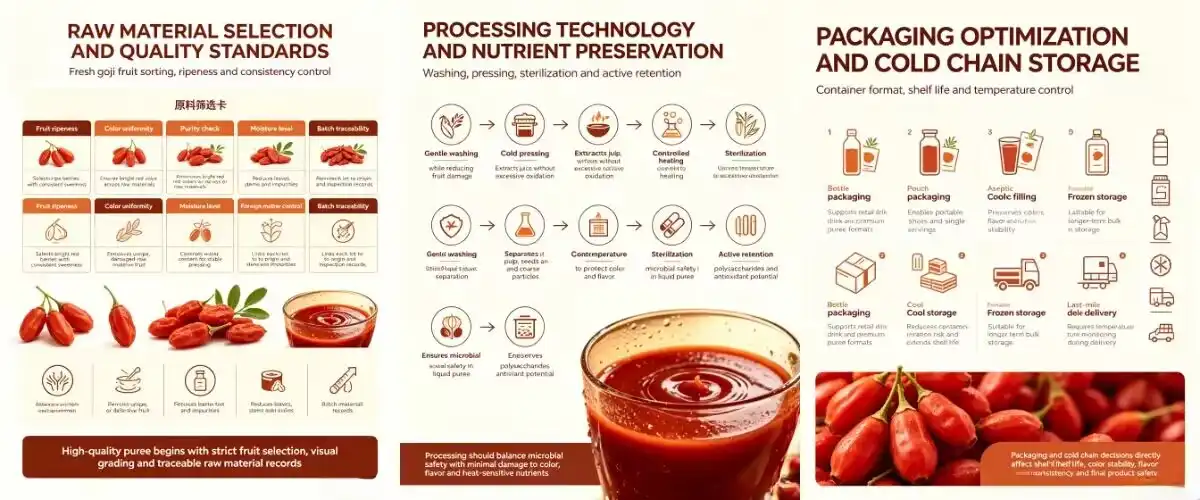
Goji Berry Puree Compared with Other Forms
Differentiation from Juice, Powder, and Dried Berries
Procurement professionals can choose the right ingredients for each job when they know the differences between formats. Most goji berry juice is filtered to get rid of the seeds. This makes the juice thinner and lower in fibre. The quality of the water changes when you rehydrate juice concentrates, which can change how thick the end product is. Powders that are spray-dried last longer and are easier to ship, but they lose chemicals that are sensitive to heat while they dry. Also, reheating makes it hard to get the right texture in drinks that need to be smooth in the mouth.
Whole dried berries are still healthy, but it takes longer for the body to absorb them. When you lose water, it's harder for your body to get nutrients from food. This slows down the uptake of important chemicals. When reheating is used in production, it adds more steps and changes how wet the material is. Goji Berry Puree fills in these gaps by keeping the nutrients accessible in a liquid form while maintaining the fibre and pulp content of dry forms. The thick thickness helps when making goods that need to thicken naturally without adding stabilisers.
Organic Versus Conventional Quality Considerations
Organic Goji Berry Puree costs more because chemicals and man-made fertilisers are not allowed to be used in the growing process. To get USDA or EU Organic certification, you need to keep track of the whole supply chain, from how the land is farmed to how the goods are packed. A lot of people in North America and Europe want products with clean-label credentials, and the fact that there are no chemical residues fits with that. B2B clients who care about quality put organic certification at the top of their list of priorities when going after the markets for health supplements and high-end functional foods.
Conventional Goji Berry Puree has undergone extensive testing to ensure that it complies with food safety regulations, but it does not have an organic certification. The way prices are set takes into account the fact that normal farming has lower costs of production. If prices are close to each other, customers who care about price will choose standard choices when organic certification doesn't make a big difference. What makes you choose between organic and conventional farming? It depends on who you want to buy your goods, the laws where you want to go, and how you want to show your brand.
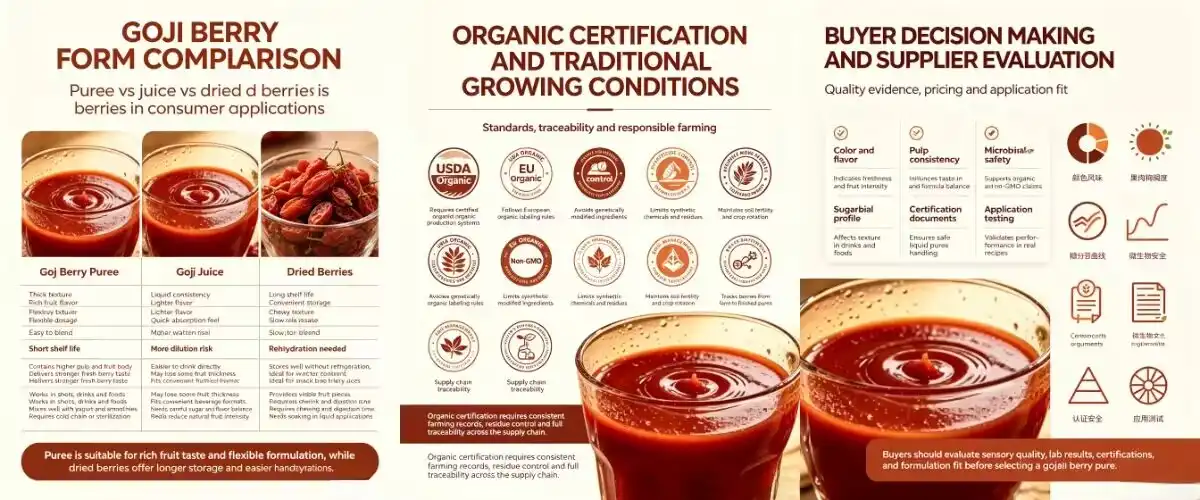
Buying and Procuring Goji Berry Puree: What B2B Clients Need to Know?
Supplier Evaluation Criteria
There are many ways to look at a dealer in order to find one that you can trust. You need to have the right credentials and credentials to get in. For instance, ISO 22000, HACCP, and food safety management system approvals show that the company is ready to run its operations. Getting a Kosher or Halal licence can help a business reach more customers who are in those groups. When you have clear papers for the supply chain, you can track a good from the farm to the finished product. This is required by export markets.
There are more than just certificates that are part of quality control. It also comes with sample testing protocols. Ask for Certificates of Analysis that list the heavy metals, solids, pH levels, and carbohydrates that were taken into account. Goji Berry Puree Lycium Barbarum Polysaccharides HPLC fingerprinting shows that they work, and Zeaxanthin quantification shows that they are strong antioxidants. The microbiological test results should show that they meet international standards for total plate count, lack of pathogens, and growth of yeast and mould.
Pricing Structures and Long-Term Partnership Benefits
The quality of the raw materials, their approval status, the type of packaging, and the size of the order are all things that affect the price. Being organic generally means an extra 20% to 30% on top of the base price. This is because it costs more to grow the plants and pay the fees for certification. You can usually save between 5 and 15% when you buy more than 1000 kg at once. Contracts for long-term goods keep prices steady and make sure that supplies are shared fairly when they change with the seasons.
A lot of value is added when a supplier does more than just deliver goods. R&D support for recipe optimisation helps clients add the ingredient to complex mixtures in a way that works well. The fact that the provider can make extraction directions that are specific to pH needs, viscosity goals, or polysaccharide concentration needs shows how adaptable they are. Documentation files with MSDS, product specs, and letters of regulatory compliance speed up the process of getting new goods on the market and make it easier for the company to approve them.
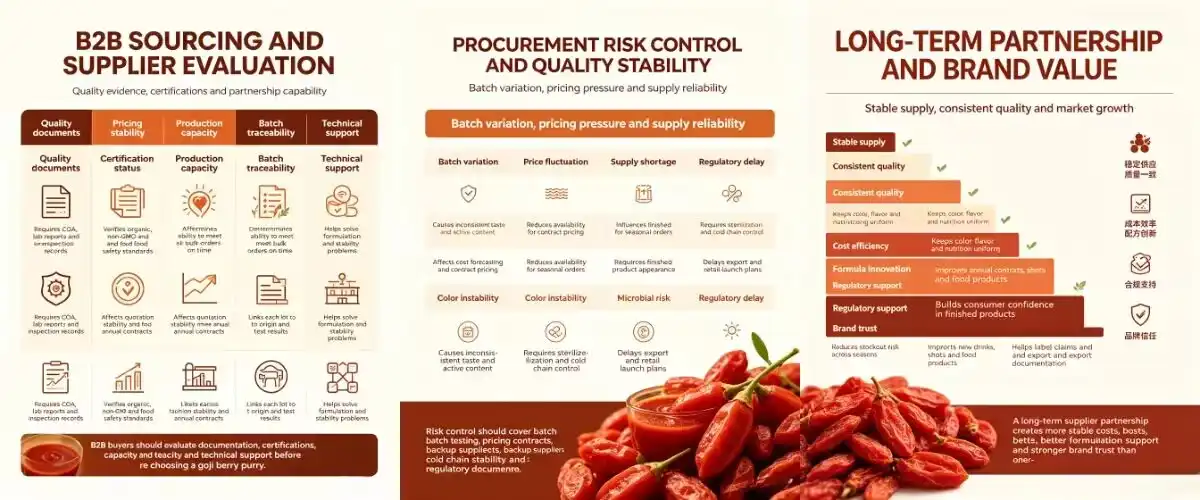
Practical Guide: How to Use Goji Berry Puree in Your Products?
Beverage Applications and Formulation Tips
Goji Berry Puree is used in functional drinks in amounts ranging from 5% to 20% by volume. This is done to balance the fruit's health benefits with its taste and cost. Because it's naturally sweet, less sugar needs to be added, which backs up the clean-label movement. The puree is simple to mix into smoothies, energy shots, and health drinks that are already made and ready to drink. It stops things from separating when they are mixed, so the product looks good for a long time. There is naturally acidity in the pH range of 3.5 to 4.5, which makes fruit-forward recipes taste more difficult.
Health Product and Supplement Integration
Direct-use packs come in 30–60 ml bottles and can be used every day to help keep your eyes, skin, and immune system healthy. The high-bioavailability liquid form is a good choice for people who don't want to take pills or capsules. Putting things in pouches that block oxygen keeps them stable while they're being moved. People who market the food stress how fresh it is by saying things like preparing it within six hours of picking it and not adding any water, sugar, or chemicals are big selling points.
Nutritional bars don't use fake syrups as a binder or sweetener; instead, they use the liquid. Because it has fibre, it makes you feel full, which supports the weight control claim. By putting them on the skin, zeaxanthin and Lycium Barbarum Polysaccharides are used in cosmetics like face masks and serums to protect it from environmental stressors.
Conclusion
Goji Berry Puree is a versatile and nutrient-dense ingredient that can be used by producers who want to use natural ingredients instead of synthetic ones. Bioactive compounds are kept safe during the cold-pressing process, which makes the finished product better at its job as an antioxidant and for what it was made for than reconstituted or dried formats. People who buy things for other businesses should know what makes top suppliers different, such as their technical standards, quality control measures, and wide range of uses. As the demand for healthy, clean-label goods grows, Goji Berry Puree can help vitamin, cosmetic, and drink formulators make better products. These things are possible because of strong supply chains and many certifications that follow strict international rules.
FAQ
What shelf life can we expect from goji berry puree?
When stored in unopened, aseptic packaging at room temperature below 25°C, Goji Berry Puree will stay fresh for 12 to 18 months. Browning and oxidation caused by enzymes can't happen with flash pasteurisation, cold-pressing, or oxygen-barrier packing. It should be kept in the fridge after being opened, and it's best to eat it within 48 hours to keep the nutrients intact and stop microbes from growing.
Does the puree contain added preservatives or sugar?
There is no extra sugar, taste, or chemicals like sodium benzoate added to Premium Goji Berry Puree to keep it fresh. Fruit is the only thing that goes into it. Using cold-pressing, pasteurisation, and aseptic packing to make a commercially sterile setting keeps the food fresh. The natural acidity and sugar content of the food keep it stable without any extra chemicals, which helps the marketing of clean-label products.
How do you verify polysaccharide content consistency?
To make sure the quality of the products, HPLC testing for Lycium Barbarum Polysaccharides is done on each run. This method checks the amount of polysaccharides to make sure it meets the minimum 1% content requirement. The result is physically stable, as shown by particle size analysis and homogenisation pressure tests at 25–40 MPa. This makes sure that all batches keep working right and keeps the product from settling while it's being stored.
Partner with a Trusted Goji Berry Puree Supplier
The Shaanxi Sigma Biotechnology Co., Ltd. company makes Goji Berry Puree that is very pure and meets strict B2B standards so that it can be used in functional foods, drinks, and supplements. ISO 22000, HACCP, and Kosher all say that our cold-pressed puree has at least 15% solid matter and 1% carbohydrate concentration. We promise delivery in 5–7 business days, and we keep 10–20 tonnes of key products on hand just in case. We also give you all the information you need to easily get through customs. As part of our OEM/ODM services, we can meet your specific polysaccharide concentration, packing needs, and help you make recipes better. Send an email to sarah@sxsigma.com to get samples and technical information from a Goji Berry Puree manufacturer you can trust that cares about quality, honesty, and building long-term relationships.
References
1. Chen, L., Zhang, H., & Wang, Q. (2021). Bioactive Compounds in Lycium barbarum: Extraction, Analysis, and Health Benefits. Journal of Functional Foods, 78, 104362.
2. Liu, Y., Sun, M., & Zhao, T. (2020). Cold-Pressing Technology in Fruit Puree Production: Impact on Nutrient Retention and Shelf Life. Food Processing and Preservation, 44(8), e14523.
3. National Institute of Health. (2022). Zeaxanthin and Lutein: Dietary Sources and Bioavailability in Liquid Formulations. NIH Office of Dietary Supplements Research Review.
4. Rodriguez, M., & Chen, X. (2023). Polysaccharide Standardization in Botanical Ingredients: Analytical Methods and Quality Control. International Journal of Food Science & Technology, 58(4), 1876-1889.
5. United States Department of Agriculture. (2023). Organic Certification Standards for Processed Fruit Products: Compliance and Market Impact. USDA Organic Program Technical Report.
6. Zhang, W., Li, P., & Wang, S. (2022). Comparative Analysis of Goji Berry Processing Methods: Impact on Antioxidant Capacity and Functional Properties. Food Chemistry, 372, 131245.
- 1
- 4
- 5
- 6
- 19


_1776308368292.webp)