What Is Goji Berry Puree and How Is It Made?
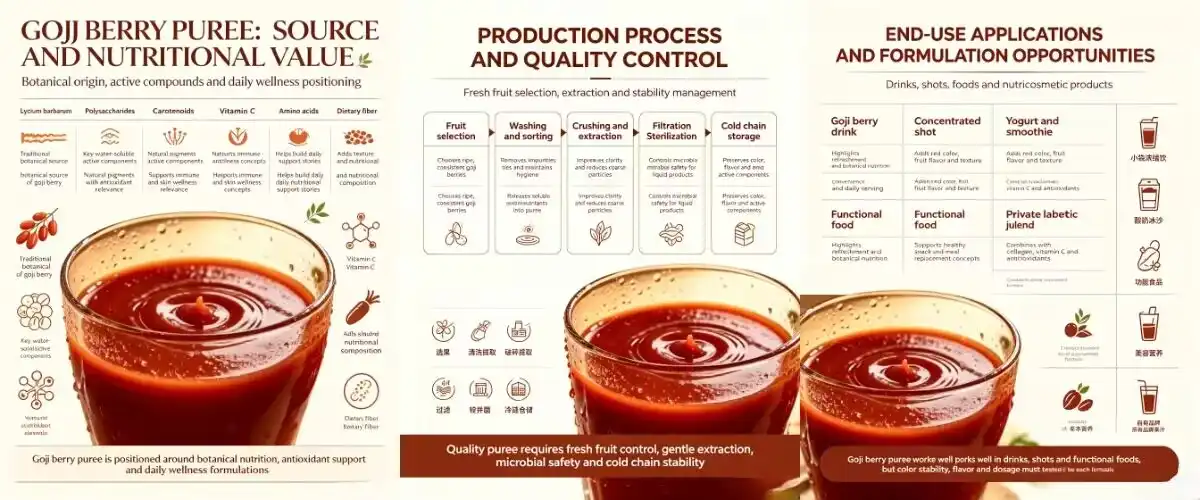
Goji berry puree is a premium, nutrient-dense liquid ingredient produced by mechanically crushing and refining fresh Lycium barbarum L. fruits through cold-pressing technology. Unlike dried berries or reconstituted powders, this red viscous liquid preserves the cellular integrity of the fruit, maintaining heat-sensitive Lycium Barbarum Polysaccharides (LBP) and antioxidants. With a solid content of at least 15% and polysaccharide content above 1%, this ingredient serves as a standardized, ready-to-use raw material that solves bioavailability challenges faced by manufacturers in functional food, beverage, and supplement industries.
Understanding what goji berry puree is, its health benefits, and how it is produced equips procurement professionals, formulation engineers, and supply chain managers with the knowledge to evaluate suppliers effectively. This guide provides essential insights into the product's definition, processing standards, market applications, and procurement criteria that empower B2B decision-makers to source quality ingredients confidently and enhance their product portfolios.
What Is Goji Berry Puree?
Botanical and Commercial Origins
Goji Berry Puree is made from fresh Lycium barbarum berries, most of which are grown in the Ningxia region of China, which is renowned for having the best weather and land. This is not the same as juice products, dried goji berries, or powders that are spray-dried. The puree stays thick, and you can see the fruit pulp in it. The pH level is between 3.5 and 4.5, and the colour is bright orange to red. It keeps bioactive chemicals that would break down in other ways, like when they are dried out or taken out at high temperatures.
Nutritional Profile and Health Benefits
Due to its high nutrient content, Goji Berry Puree is helpful for businesses looking to sell healthy foods. Puree has more Zeaxanthin dipalmitate, betaine, and important amino acids than drinks that have been mixed with water. This means that it is a much better antioxidant. It has been shown to protect eyes, keep the immune system in balance, and make skin healthier. The adaptogenic qualities come from the Lycium Barbarum Polysaccharides makeup, which must be at least 1%. Because of this, it works well in recipes that aim to lower stress and slow down the ageing process of cells. Fermented plant- and dairy-based foods have a natural sugar profile that acts as a prebiotic base. The fibre content improves the consistency without the need for artificial thickeners.
Applications Across Industries
Lots of different kinds of companies use Goji Berry Puree in a lot of different kinds of goods. People who make functional drinks use it as a main ingredient in drinks for energy and eye health because it naturally controls blood sugar and has a lot of antioxidants. Smoothies and yoghurts with probiotics taste and be healthier because of the prebiotic properties of this food. They can be used to prepare both cheese and plants. The mush is used in healing makeup because it has vitamins that are good for the skin. You can get high-bioavailability nutraceutical sachets with 30ml to 60ml portable pouches that contain the ingredient directly from the manufacturer. These are good for the beauty-from-within and senior nutrition markets.
How Is Goji Berry Puree Made?
Raw Material Selection and Quality Standards
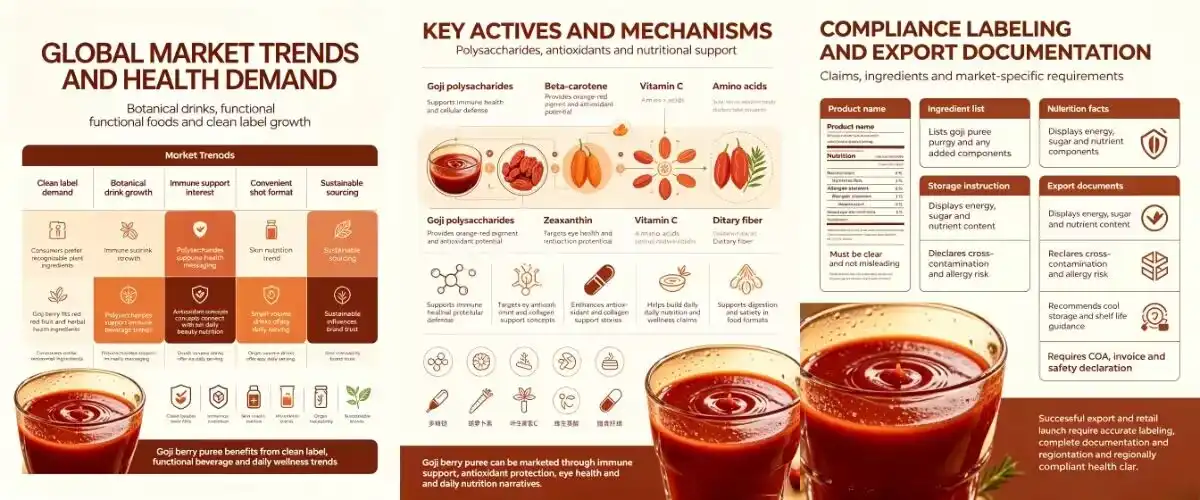
The first step in making high-quality Goji Berry Puree is choose the right ingredients. People who sell berries check the fruit to see if it's ready, how much water it has, and if there are any issues. Buying food from certified organic farms that check the earth all the time for heavy metals, pesticide residues, and growing chemicals is the best way to get food. Traceability methods for berries keep track of them from being picked to being processed. This makes sure that the quality is consistent from batch to batch, which is important for large-scale production. We start by making sure the raw materials are the right size and colour brightness to find the best time to harvest and amount of nutrients.
Processing Technology and Nutrient Preservation
The steps in industrial production are set up in a way that saves as many nutrients as possible. After picking the right raw materials, they are washed many times with water systems that get rid of field dirt without harming the quality of the fruit. When you crush something, you use controlled mechanical force to break down cell walls while keeping oxygen from getting to the cells. Getting the puree out without using heat (cold-pressing) protects vitamins and Lycium Barbarum Polysaccharides that break down when they get too hot. Big bits are removed by filtration, but the pulp material that gives the product its shape is kept. Food is quickly cooked to temperatures high enough to kill all germs without starting the Maillard reactions that break down vitamins.
The bottles are sealed in a clean room with oxygen-barrier film, which stops enzymes from turning carotenoids dark. Quality control checks now to see if the solids level is at least 15%, the carbohydrate level is above 1%, and the pH level is between 3.5 and 4.5. Heavy metal analysis meets EU standards, and more than 500 different molecules are used to check for pesticide residues in order to meet FDA Maximum Residue Limit rules. Microbiological screening tests are done to look for yeast, mould, and coliform bacteria, as well as the total plate count, before the food is finally packed up and stored in a warehouse.
Packaging and Storage Optimization
Business-to-business customers often choose aseptic bags-in-boxes that weigh between 5 kg and 220 kg for bulk packing. It is easy to add these boxes to production lines that make a lot of things. Glass bottles or flexible pouches with seals that can't be broken are ready to go to stores. When you store things, you have to keep wrapped packages at low temperatures, preferably below 25°C for items that haven't been opened. Because it is cold-pressed and packed in oxygen-barrier bags, it can be kept at room temperature for 12 to 18 months. When opened, freezing it makes it last longer. Through multiple stages of homogenisation at 25–40 MPa pressure, a uniform suspension was reached. This suspension will stay the same as long as the product is kept properly.
Goji Berry Puree Compared with Other Forms
Differentiation from Juice, Powder, and Dried Berries
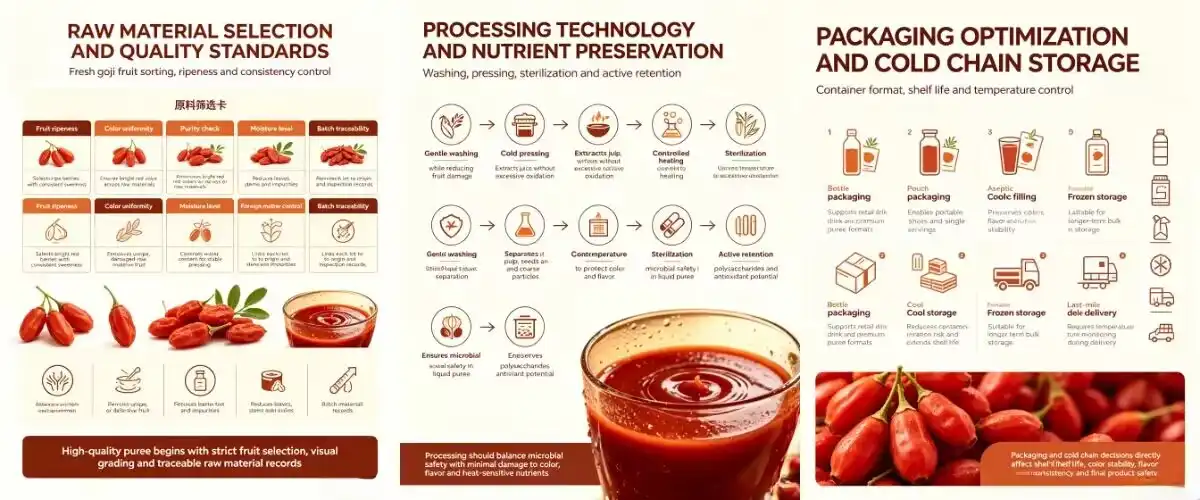
Procurement professionals can choose the right ingredients for each job when they know the differences between formats. Most goji berry juice is filtered to get rid of the seeds. This makes the juice thinner and lower in fibre. The quality of the water changes when you rehydrate juice concentrates, which can change how thick the end product is. Powders that are spray-dried last longer and are easier to ship, but they lose chemicals that are sensitive to heat while they dry. Also, reheating makes it hard to get the right texture in drinks that need to be smooth in the mouth.
Whole dried berries are still healthy, but it takes longer for the body to absorb them. When you lose water, it's harder for your body to get nutrients from food. This slows down the uptake of important chemicals. When reheating is used in production, it adds more steps and changes how wet the material is. Goji Berry Puree fills in these gaps by keeping the nutrients accessible in a liquid form while maintaining the fibre and pulp content of dry forms. The thick thickness helps when making goods that need to thicken naturally without adding stabilisers.
Organic Versus Conventional Quality Considerations
Organic Goji Berry Puree costs more because chemicals and man-made fertilisers are not allowed to be used in the growing process. To get USDA or EU Organic certification, you need to keep track of the whole supply chain, from how the land is farmed to how the goods are packed. A lot of people in North America and Europe want products with clean-label credentials, and the fact that there are no chemical residues fits with that. B2B clients who care about quality put organic certification at the top of their list of priorities when going after the markets for health supplements and high-end functional foods.
Conventional Goji Berry Puree has undergone extensive testing to ensure that it complies with food safety regulations, but it does not have an organic certification. The way prices are set takes into account the fact that normal farming has lower costs of production. If prices are close to each other, customers who care about price will choose standard choices when organic certification doesn't make a big difference. What makes you choose between organic and conventional farming? It depends on who you want to buy your goods, the laws where you want to go, and how you want to show your brand.
Buying and Procuring Goji Berry Puree: What B2B Clients Need to Know?
Supplier Evaluation Criteria
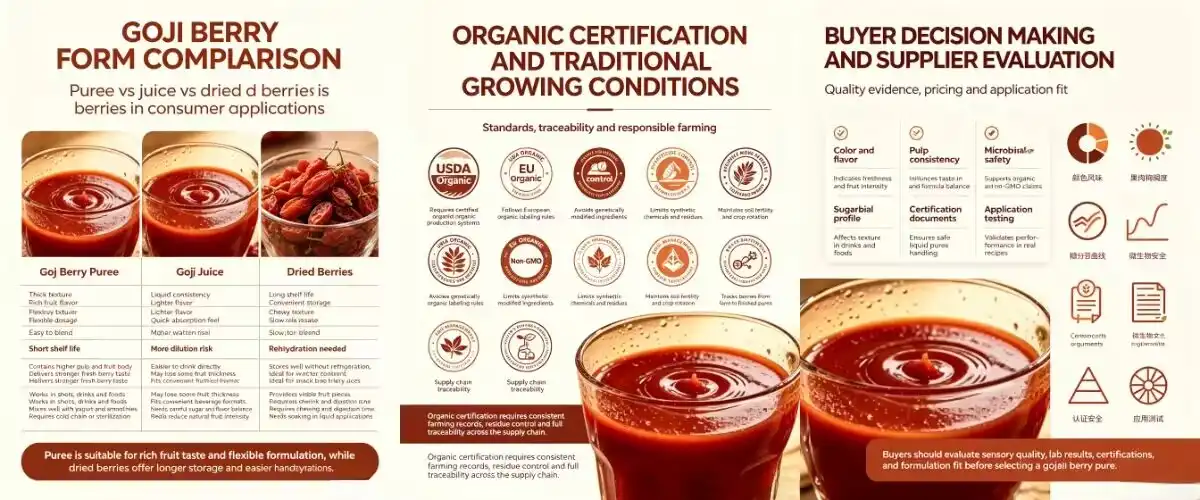
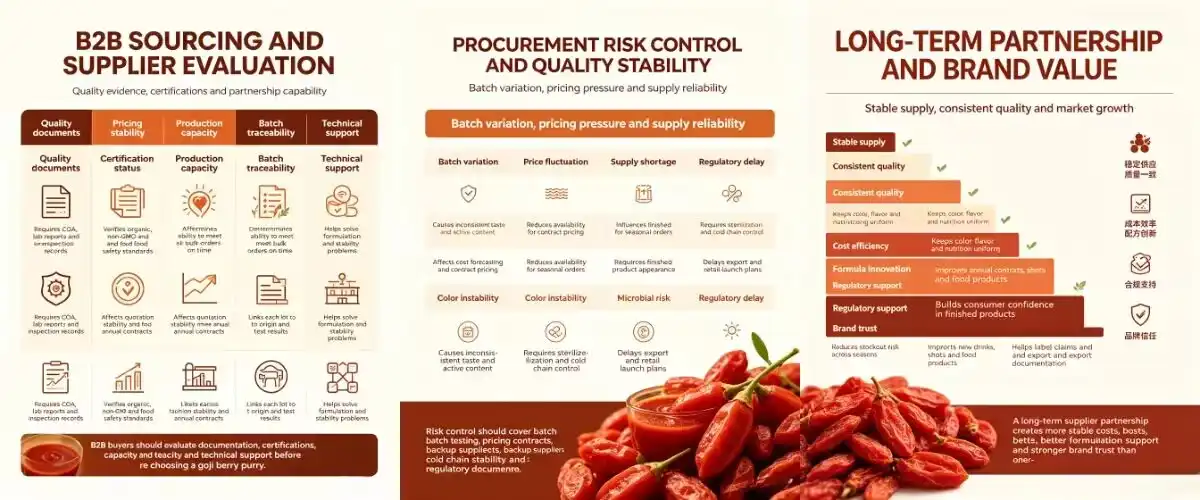
There are many ways to look at a dealer in order to find one that you can trust. You need to have the right credentials and credentials to get in. For instance, ISO 22000, HACCP, and food safety management system approvals show that the company is ready to run its operations. Getting a Kosher or Halal licence can help a business reach more customers who are in those groups. When you have clear papers for the supply chain, you can track a good from the farm to the finished product. This is required by export markets.
There are more than just certificates that are part of quality control. It also comes with sample testing protocols. Ask for Certificates of Analysis that list the heavy metals, solids, pH levels, and carbohydrates that were taken into account. Goji Berry Puree Lycium Barbarum Polysaccharides HPLC fingerprinting shows that they work, and Zeaxanthin quantification shows that they are strong antioxidants. The microbiological test results should show that they meet international standards for total plate count, lack of pathogens, and growth of yeast and mould.
Pricing Structures and Long-Term Partnership Benefits
The quality of the raw materials, their approval status, the type of packaging, and the size of the order are all things that affect the price. Being organic generally means an extra 20% to 30% on top of the base price. This is because it costs more to grow the plants and pay the fees for certification. You can usually save between 5 and 15% when you buy more than 1000 kg at once. Contracts for long-term goods keep prices steady and make sure that supplies are shared fairly when they change with the seasons.
A lot of value is added when a supplier does more than just deliver goods. R&D support for recipe optimisation helps clients add the ingredient to complex mixtures in a way that works well. The fact that the provider can make extraction directions that are specific to pH needs, viscosity goals, or polysaccharide concentration needs shows how adaptable they are. Documentation files with MSDS, product specs, and letters of regulatory compliance speed up the process of getting new goods on the market and make it easier for the company to approve them.
Practical Guide: How to Use Goji Berry Puree in Your Products?
Beverage Applications and Formulation Tips
Goji Berry Puree is used in functional drinks in amounts ranging from 5% to 20% by volume. This is done to balance the fruit's health benefits with its taste and cost. Because it's naturally sweet, less sugar needs to be added, which backs up the clean-label movement. The puree is simple to mix into smoothies, energy shots, and health drinks that are already made and ready to drink. It stops things from separating when they are mixed, so the product looks good for a long time. There is naturally acidity in the pH range of 3.5 to 4.5, which makes fruit-forward recipes taste more difficult.
Health Product and Supplement Integration
Direct-use packs come in 30–60 ml bottles and can be used every day to help keep your eyes, skin, and immune system healthy. The high-bioavailability liquid form is a good choice for people who don't want to take pills or capsules. Putting things in pouches that block oxygen keeps them stable while they're being moved. People who market the food stress how fresh it is by saying things like preparing it within six hours of picking it and not adding any water, sugar, or chemicals are big selling points.
Nutritional bars don't use fake syrups as a binder or sweetener; instead, they use the liquid. Because it has fibre, it makes you feel full, which supports the weight control claim. By putting them on the skin, zeaxanthin and Lycium Barbarum Polysaccharides are used in cosmetics like face masks and serums to protect it from environmental stressors.
Conclusion
Goji Berry Puree is a versatile and nutrient-dense ingredient that can be used by producers who want to use natural ingredients instead of synthetic ones. Bioactive compounds are kept safe during the cold-pressing process, which makes the finished product better at its job as an antioxidant and for what it was made for than reconstituted or dried formats. People who buy things for other businesses should know what makes top suppliers different, such as their technical standards, quality control measures, and wide range of uses. As the demand for healthy, clean-label goods grows, Goji Berry Puree can help vitamin, cosmetic, and drink formulators make better products. These things are possible because of strong supply chains and many certifications that follow strict international rules.
FAQ
What shelf life can we expect from goji berry puree?
When stored in unopened, aseptic packaging at room temperature below 25°C, Goji Berry Puree will stay fresh for 12 to 18 months. Browning and oxidation caused by enzymes can't happen with flash pasteurisation, cold-pressing, or oxygen-barrier packing. It should be kept in the fridge after being opened, and it's best to eat it within 48 hours to keep the nutrients intact and stop microbes from growing.
Does the puree contain added preservatives or sugar?
There is no extra sugar, taste, or chemicals like sodium benzoate added to Premium Goji Berry Puree to keep it fresh. Fruit is the only thing that goes into it. Using cold-pressing, pasteurisation, and aseptic packing to make a commercially sterile setting keeps the food fresh. The natural acidity and sugar content of the food keep it stable without any extra chemicals, which helps the marketing of clean-label products.
How do you verify polysaccharide content consistency?
To make sure the quality of the products, HPLC testing for Lycium Barbarum Polysaccharides is done on each run. This method checks the amount of polysaccharides to make sure it meets the minimum 1% content requirement. The result is physically stable, as shown by particle size analysis and homogenisation pressure tests at 25–40 MPa. This makes sure that all batches keep working right and keeps the product from settling while it's being stored.
Partner with a Trusted Goji Berry Puree Supplier
The Shaanxi Sigma Biotechnology Co., Ltd. company makes Goji Berry Puree that is very pure and meets strict B2B standards so that it can be used in functional foods, drinks, and supplements. ISO 22000, HACCP, and Kosher all say that our cold-pressed puree has at least 15% solid matter and 1% carbohydrate concentration. We promise delivery in 5–7 business days, and we keep 10–20 tonnes of key products on hand just in case. We also give you all the information you need to easily get through customs. As part of our OEM/ODM services, we can meet your specific polysaccharide concentration, packing needs, and help you make recipes better. Send an email to sarah@sxsigma.com to get samples and technical information from a Goji Berry Puree manufacturer you can trust that cares about quality, honesty, and building long-term relationships.
References
1. Chen, L., Zhang, H., & Wang, Q. (2021). Bioactive Compounds in Lycium barbarum: Extraction, Analysis, and Health Benefits. Journal of Functional Foods, 78, 104362.
2. Liu, Y., Sun, M., & Zhao, T. (2020). Cold-Pressing Technology in Fruit Puree Production: Impact on Nutrient Retention and Shelf Life. Food Processing and Preservation, 44(8), e14523.
3. National Institute of Health. (2022). Zeaxanthin and Lutein: Dietary Sources and Bioavailability in Liquid Formulations. NIH Office of Dietary Supplements Research Review.
4. Rodriguez, M., & Chen, X. (2023). Polysaccharide Standardization in Botanical Ingredients: Analytical Methods and Quality Control. International Journal of Food Science & Technology, 58(4), 1876-1889.
5. United States Department of Agriculture. (2023). Organic Certification Standards for Processed Fruit Products: Compliance and Market Impact. USDA Organic Program Technical Report.
6. Zhang, W., Li, P., & Wang, S. (2022). Comparative Analysis of Goji Berry Processing Methods: Impact on Antioxidant Capacity and Functional Properties. Food Chemistry, 372, 131245.


_1776308368292.webp)