BLOG List

Polygonatum benefits for immune system
Polygonatum is being used more and more in functional foods and nutraceuticals around the world because it is good for the immune system. Polygonatum Extract, which is standardized to have polysaccharides of at least 30%, has strong immune-modulating benefits that are backed up by both traditional use and current studies. This plant-based ingredient boosts the activity of white blood cells, controls inflammatory reactions, and protects against free radicals, which makes it a useful addition to immune-support goods. As purchasing managers look for natural options to manmade additives, it's important to know how this extract works and where to find it in order to make competitive, legal product lines.
Understanding Polygonatum Extract and Its Role in Immune Health
In traditional Chinese medicine, Polygonatum is called Huang Jing. It comes from the roots of Polygonatum sibiricum, Polygonatum kingianum, or Polygonatum cyrtonema. In the hilly parts of East Asia, these evergreen herbs grow well. For hundreds of years, people have used them to boost their health and vitality.
Botanical Origins and Extraction Technology
Before extraction starts, the rhizomes go through traditional processing, which includes repeated rounds of steaming and drying. This turns unpleasant chemicals into nutrients that the body can use. The beneficial polysaccharides are concentrated using modern water extraction methods that keep their molecular integrity. This process fixes a major problem in the industry: raw rhizome powders aren't always effective and don't mix well with other substances. The fine brown-yellow powder that is made goes through 80 mesh, which makes sure that the particles are all the same size and that the powder can flow easily in industrial settings.
Key Bioactive Compounds
Polygonatum polysaccharides, which have molecular weights between 10 and 500 kDa, are the main active ingredients. By connecting to specific receptors on immune cells, these complicated carbohydrates cause good things to happen. The extract also has flavonoids like quercetin, steroidal saponins, and different amino acids that work together. To make sure that batches are all the same, quality control measures focus on carbohydrate content, which is usually 30% or higher. This is important for large-scale production.
Mechanisms of Immune Modulation
Polysaccharides from this plant source improve the uptake of macrophages and boost the activity of natural killer cells, according to research. They also help make cytokines, like interleukin-2 and interferon-gamma, which help the adaptive immune system work together. Antioxidants fight oxidative stress, which weakens the immune system, and anti-inflammatory qualities stop the immune system from over-activating, which could hurt healthy cells.

Key Health Benefits of Polygonatum Extract for the Immune System
This extract's immune-boosting features work on multiple routes, so it can be used in a wide range of products to meet the needs of different consumers.
Antioxidant Protection Against Immune Decline
Over time, oxidative stress hurts immune system performance and harms parts of cells. Free radicals are stopped by the flavonoids and polysaccharides in Polygonatum Extract, which keeps defense cells from getting old too quickly. Studies have shown that regular antioxidant support maintains lymphocytes' ability to multiply and preserves white blood cells' functionality for longer. This is especially important for products aimed at older people or those under constant stress.
Balanced Immune Response Regulation
Instead of just making the immune system work harder, the extract actually modifies it, making reactions stronger when they're needed and stopping them from becoming too active. This two-way control is useful in formulas that aim to keep the defense system in balance. The polysaccharides connect with toll-like receptors on immune cells, which changes the release of inflammation mediators. This makes it different from simple stimulants and fits with the rising need for smart, flexible immunity support in the market.
Metabolic Support Enhancing Immune Resilience
New study shows a link between digestive health and immune function. The extract seems like it could help keep glucose metabolism healthy, which helps the immune system indirectly because long-term metabolic instability makes immune reactions less effective. By handling this link, formulations can appeal to health-conscious customers who want all-around wellness solutions instead of pills that only do one thing.
Adaptogenic Effects on Stress-Related Immune Suppression
Long-term worry lowers the immune system by raising cortisol levels and messing up natural rhythms. According to science, Polygonatum's traditional use as a tonic for "Qi and Yin deficiency" means that it has qualities that help the body keep balance when it is stressed. Products that use this ingredient can get into the growing market for products that help with stress management and building resilience.

Comparing Polygonatum Extract with Other Herbal Immune Support Solutions
When purchasing teams look at immune-supporting ingredients, they need clear criteria for difference so they can make smart choices about how to place the product and gain a competitive edge.
Polygonatum Versus Ginseng: Distinct Advantages
Even though both are classic tonic herbs, they work in very different ways. Ginseng ginsenosides mainly speed up the body's energy use and change the way stress hormones work. On the other hand, Polygonatum polysaccharides work directly with immune cell receptors. The product has softer, longer-lasting benefits than ginseng, and it doesn't make some people feel too stimulated. This means it can be used in daily-use goods and combination recipes where more than one active ingredient needs to work well together.
Organic Versus Conventional Extraction Standards
Differences in quality between organic and standard extracts have an effect on both following the rules and standing in the market. For Polygonatum Extract to be certified organic, it must come from approved farms and processing plants that follow strict rules about pesticide residues and environmental practices. Heavy metal pollution is a big problem for ingredients that come from rhizomes because of how they build up in the soil. Suppliers of good quality follow strict testing procedures to keep the ash content below 5% and ensure that the microbial counts meet international standards.
Powder Versus Capsule Formats in Supply Chain Planning
The brown-yellow powder form gives B2B clients the most options. Because it dissolves easily in hot water (because it has a lot of polysaccharides), it can be used in functional drinks, quick teas, and tonic pastes. Because the particles are all the same size and there isn't much water in them, encapsulation is still easy. For high-volume production, powder forms are more efficient in the supply chain, but finished capsule goods are more appealing to brands that don't have their own encapsulation capabilities.
Combination Products: Polygonatum with Complementary Ingredients
New versions combine this ingredient with other nutrients or plants to get better results. Combinations with honey make foods taste better and add prebiotic benefits. When combined with reishi mushroom or astragalus, they make full immune-support mixes that draw from their traditional uses that go hand in hand. These combination tactics help brands stand out in crowded markets and solve multiple health issues of consumers at the same time.

Procurement Guide: How to Source High-Quality Polygonatum Extract for Immune Support Products?
To get steady quantities of standardized botanical extracts, you need to carefully check the quality of possible sellers using clear standards.
Essential Certifications and Quality Standards
The ISO 22000 certification shows that food safety is managed in a planned way, and the HACCP proof shows that key control points are met throughout production. Kosher and Halal approvals help brands that cater to certain groups of people get into more markets. In addition to these basic requirements, providers who follow current Good Manufacturing Practices (GMP) show they are dedicated to quality systems that keep output uniform and stop contamination. For copies of current certificates, ask the organizations that issued them to confirm that they are still valid.
Laboratory Testing Protocols
A thorough test should look at a lot of different factors. Lead, cadmium, mercury, and arsenic must all be included in heavy metal analyses, and the results must be well below the standards set by the government for everyday goods. Tests for microbes should count the total number of plates, look for yeasts and molds, and look for pathogens like Salmonella and E. coli. Panels that are made from pesticide leftovers that are right for the plant source protect against farming chemical carryover. Verification of polysaccharide content using approved methods shows that the amounts of active ingredients meet requirements.
Supplier Due Diligence Strategies
In addition to reviewing the paperwork, you should visit the site when you can or ask for thorough photos and process flow diagrams of the building. Check with suppliers to see if they keep separate tools for water extraction so that goods that were extracted with alcohol don't get contaminated. Check to see how they get their raw materials—find out if they control the regions where the materials come from and keep track of harvest batches. Customer recommendations from well-known brands can tell you a lot about how reliable, communicative, and good at solving problems a company is.
Pricing Structures and Bulk Purchasing Terms
Polysaccharide content has a direct effect on price, with 30% standardization being a mid-level product that strikes a good balance between price and effectiveness for Polygonatum Extract. When you buy in bulk of 100 kg or more, you can usually get big savings and still keep your inventory under control. Find out if the prices given include the paperwork needed for testing, what the payment terms are, and how changes in the value of the dollar could affect long-term contracts. Suppliers who keep a safety stock of 10–20 tons of key goods can ensure delivery within 5–7 business days, which lowers the cost of keeping merchandise on hand.
Delivery Terms and International Logistics
It is important to understand the Incoterms, such as whether the prices given are FOB (Free on Board), CIF (Cost, Insurance, and Freight), or DDP (Delivered Duty Paid). Suppliers with a lot of experience take care of export paperwork like phytosanitary certificates, certificates of origin, and customs reports. They offer a variety of shipping choices, such as sea freight for big orders, air freight for quick restocks, and fast courier for trial orders. They also provide tracking information and handle any problems that may come up with customs clearance.

Practical Recommendations for Using Polygonatum Extract in Immune-Boosting Products
Paying attention to dosing, stability, and customer acceptance factors is important when turning ingredient requirements into formulas that are ready to go to market.
Evidence-Based Dosage Guidelines
Based on traditional use and new study, daily doses of the standardized extract running from 500 mg to 2,000 mg may help the immune system. With 30% polysaccharide content, this gives you 150–600 mg of active chemicals every day. Products that aim to improve general health tend to use lower doses, while products that aim to boost the immune system during seasonal challenges use higher doses. Always take into account the total amount of polysaccharides in the recipe from all of its parts to avoid giving too much.
Formulation Stability and Compatibility
When kept in sealed cases away from light and moisture, the extract stays very stable. Hygroscopic goods need to have moisture barriers in the package to keep them from getting wet. When mixed with most vitamins, minerals, and other plant products, the ingredient works well. When making a recipe, don't use strong oxidizing agents that could break down carbohydrates. The high solubility in hot water makes it easier to mix with liquids, but cold-process drinks might need extra steps to make the ingredients dissolve.
Flavor Masking and Consumer Acceptance
It has a mild, slightly sweet taste that works well in many situations without needing a lot of flavor hiding. Tonic pastes use the traditional taste, and useful teas mix it with herbs that go well with it, like goji berry or chrysanthemum. Capsule forms don't care about taste at all, which makes them appealing to people who value speed over traditional preparation methods. Sensory testing is done on new products to make sure that the end recipe is what the target market wants.
Synergistic Ingredient Combinations
When combined with vitamin C, the antioxidant benefits are amplified, and collagen production and immune function are both improved. The presence of zinc and selenium takes care of mineral cofactors that are important for immune cell growth. Combining plants like echinacea, elderberry, or astragalus makes immune-boosting mixes that are full of herbs from different cultures. When coming up with combinations, you should think about how much each ingredient costs all together, how the regulations work in the target markets, and whether there is scientific evidence to back the combination as a whole or just the individual ingredients.
Real-World Application Examples
In the United States, a company that makes functional drinks put the extract into a hot tea mix that is meant to boost overall health during the winter. Instant solubility and compatibility with other plants made production easier, and the fact that it could be used for both food and medicine made governmental acceptance easier. A supplement company that made pills for busy workers mixed it with adaptogens to help the immune system deal with problems caused by stress. The supplier's technical documents, which included suggested usage levels and stability data, sped up the development times for both apps.

Conclusion
The Polygonatum Extract is a scientifically proven and financially viable ingredient for immune-support formulas that target a wide range of market groups. Its regular polysaccharide content gives it uniform immunomodulatory effects, and its high solubility and compatibility make it easier to incorporate into products. To make sure they can rely on suppliers, procurement workers should know the quality standards, testing requirements, and evaluation factors for suppliers. As the need for natural, effective immune support continues to rise, this plant extract gives brands a unique chance to stand out, backed by both traditional use and new study.
FAQ
Q1: What are some possible side effects of Polygonatum Extract in formulations?
A: When used in the suggested amounts, the extract has a very good safety rating. Records from hundreds of years of traditional medicine show that it has few side effects. Mild stomach pain may happen in sensitive people when they take too much, but it doesn't happen very often at normal supplement amounts. This good safety record is shown by the fact that it is a dual-use food in several places.
Q2: How should people who make products figure out the right dose?
A: Think about what the target audience wants, how you want to place the product, and what the whole recipe is made of. In general health products, 500 to 1,000 mg is used every day, while 1,500 to 2,000 mg may be used in intense immune support products. Always figure out how much carbohydrate is actually being delivered based on the standardization percentage and make sure you're following the rules set by the regulatory body in your area for that application.
Q3: Does Polygonatum Extract interact with other supplements?
A: The ingredient works well with most vitamins, minerals, and plant supplements that are widely found in immune-support formulas. Standard supplement chemicals have not been shown to combine in any way that is important. When making new mixes, product makers should try their stability to make sure they will work together over the shelf life they plan for.
Partner with Sigma: Your Trusted Polygonatum Extract Supplier
Pharmaceutical-grade plant ingredients are sent all over the world by Shaanxi Sigma Biotechnology Co., Ltd. to producers who know what they're doing. Our Polygonatum Extract stays very consistent at ≥30% carbohydrates thanks to improved water extraction and quality control methods. We are certified in ISO 22000, HACCP, and Kosher, so you can be sure that your recipes meet the strictest government standards.
We control the whole supply chain, from forming partnerships for farming to extracting the medicine and checking its quality. We are located in Shaanxi, which is known for its high-quality medicinal materials. Our safety stock of 10–20 tons of key goods promises fast delivery within one week, so you can keep up with your production schedules without having to pay a lot for a rush order. Our technical team can help you with formulation and provide full paperwork, such as COA, MSDS, and stability data, whether you need standard specs or custom extraction ratios. Email Sarah at sarah@sxsigma.com to ask for samples and talk about your particular needs. As a Polygonatum Extract manufacturer with a lot of experience, we know how hard it is for buying teams to find the right balance between quality, safety, and cost-effectiveness.
References
1. Chen, Y., Wang, H., & Ng, T. B. (2012). Antiproliferative and antioxidant activities of polysaccharides from Polygonatum species. Journal of Ethnopharmacology, 142(3), 609-616.
2. Liu, J., Zhang, M., & Wang, S. (2015). Immunomodulatory effects of Polygonatum sibiricum polysaccharide on immune function in mice. International Immunopharmacology, 28(1), 406-412.
3. Zhao, P., Zhou, H., & Potter, D. (2018). Traditional uses, phytochemistry, pharmacology and quality control of Polygonatum species: A comprehensive review. Journal of Pharmaceutical and Biomedical Analysis, 160, 395-405.
4. Kim, M. H., Lee, E. J., & Choi, Y. H. (2016). Antioxidant and anti-inflammatory activities of Polygonatum odoratum extract in macrophages. Natural Product Communications, 11(9), 1279-1282.
5. Wang, D., Liu, M., & Cao, J. (2019). Structural characterization and immunomodulatory activity of polysaccharides from Polygonatum cyrtonema. Carbohydrate Polymers, 203, 210-221.
6. Zhang, L., Wang, Y., & Yang, D. (2020). Quality evaluation and immunological activity of Polygonatum kingianum polysaccharides from different geographical origins. Molecules, 25(19), 4326.

How to use mullein powder for cough relief?
Mullein powder has become a well-known and effective natural treatment for breathing problems, especially coughs that don't go away during cold or weather changes. Wall-Broken Mullein Raw Powder is a new way of processing that uses low-temperature wall-breaking technology to break down plant cell walls. This makes nutrients much more bioavailable than with traditional grinding methods. This method keeps heat-sensitive chemicals like flavonoids and mucilage while making a fine 200-mesh powder that mixes easily with liquids and is quickly absorbed by the body. For people who want to get rid of their cough without using artificial ingredients, this natural plant ingredient has been used for a long time and is supported by both traditional use and new processing techniques.
Understanding Wall-Broken Mullein Powder and Its Benefits for Respiratory Health
Mullein, whose chemical name is Verbascum thapsus, has been used by herbalists for hundreds of years to help people breathe. There are bioactive substances in the plant's leaves, such as saponins, mucilage, and flavonoids, that help clear out the airways and ease irritation. Traditionally, dried mullein leaves were soaked in water before being used. However, new processing methods have made mullein easier to use and more effective.
What Makes Wall-Broken Processing Different?
Mechanical forces at controlled temperatures are used in wall-breaking technology to break up plant cell structures without making too much heat. Normal milling might leave cell walls whole and nutrients locked inside, but this new method lets internal parts escape into the powder matrix. The end result is a fine, light brown powder that dissolves better and makes more medicinal compounds available. This is especially important for lung uses where fast absorption helps relieve symptoms quickly.
Key Bioactive Components Supporting Respiratory Wellness
The unique phytochemical makeup of mullein is what makes it useful as a medicine. The mucilage content forms a protected layer over sore throat tissues, which makes you less likely to cough and helps them heal. Saponins have expectorant qualities that help loosen up thick mucus, which makes coughing more effective. Flavonoids have anti-inflammatory properties that help with lung inflammation. From what doctors have seen, these chemicals seem to work together to ease dry, annoying coughs and help clear out congestion in active coughs.
Addressing Industry Purity Concerns
A big problem in the Mullein Leaf Powder market is that tiny sand particles get into it. This happens a lot when preparing plants that were picked in the wild. This is exactly what our multi-stage vibrational impurity removal system goes after, making sure that the finished product meets strict microbial standards with total plate counts below 1000 CFU/g. This quality control step is necessary for companies that are making tea bags, pills, or drink mixes where rough textures would ruin the experience for customers.

How to Use Wall-Broken Mullein Powder Effectively for Cough Relief?
Finely milled mullein powder can be prepared in a number of different ways, based on the needs of the recipe and the tastes of the end user. Knowing the right way to dose and prepare drugs guarantees the best possible treatment results while still meeting safety standards.
Recommended Dosage Guidelines
For adults, one to three times a day, based on how bad the symptoms are, one to two grams of powder per serving is usually enough. This is the same as taking about half a teaspoon per dose. When making goods for sale, it's important to keep each batch consistent. The normal particle size of 200-mesh makes sure that the particles are spread out evenly in capsules and mixed evenly in liquid formulas. For children ages 6 to 12, pediatric uses need different doses, usually one-quarter to one-half of the adult amounts. Products aimed at younger people should come with clear directions on how to use them and advice for parents or guardians. The United States has rules that say supplement labels have to say what doses are safe for kids and when they can use the products.
Tea Preparation Method
The most common way to use mullein powder is to use it to make tea. It's best to mix 1-2 grams of powder with 8 ounces of newly hot water. Let the mixture sit for 10 to 15 minutes so that all the water-soluble chemicals can be extracted. The mucilage gives it a slightly thick texture that coats the throat while it's being eaten and soothes it right away. Some formulas mix mullein with herbs that go well with it, like thyme or licorice root, to make the taste better and the medicine work better.
Capsule and Tablet Formulations
Encapsulation is convenient for people who want to get a normal dose without having to spend time preparing it. Wall-Broken Mullein Raw Powder is great for straight encapsulation because it has small particles and little water (≤5% loss on drying). Usually, 400 to 600 mg of medicine are put into a veggie capsule, so two capsules can provide therapeutic amounts. Binding agents are needed to turn the powder into pills, but the powder's natural mucilage content helps it stick together.
Tincture and Liquid Extract Development
Powders work best in dry forms, but companies that make liquid goods can use Wall-Broken Mullein Raw Powder as a base to make suspensions. When making concentrated medicines, the larger surface area made possible by wall-breaking technology makes extraction more efficient. Alcohol-based extractions pull out both flavonoids that dissolve in alcohol and mucilage that dissolves in water. This makes full-spectrum solutions that last longer.
Storage Requirements for Maintaining Potency
The security and healing effectiveness of a product are directly affected by how it is stored. Large amounts should be kept sealed in cool, dry places out of direct sunlight. Because plant materials are hygroscopic, water can cause microbes to grow and nutrients to break down. Our rules say that the ash level can't be more than 4%, which means that there isn't much inorganic material that could speed up the burning process. Putting food in containers that keep wetness out and putting desiccant packets inside them makes the food last longer in distribution chains that go through different temperature zones.

Comparing Wall-Broken Mullein Powder with Other Herbal Respiratory Solutions
When making a purchase choice, mullein has to be weighed against other botanical ingredients and processing ways. Knowing these differences helps match the choice of product with the ability to make it and the place it takes in the market.
Powder vs. Whole Leaf vs. Extract Forms
Whole dried mullein leaves take time to prepare and may come with stems or other things that make the experience less enjoyable. Standardized extracts have more concentrated active ingredients, but they don't have the whole plant structure that traditional herbalists like. Wall-Broken Mullein Raw Powder is in the middle. It keeps the whole-plant image while getting particle sizes that make it easier to use and better at absorbing. In the natural product market, this shape works especially well for names that stress "minimally processed" or "whole herb" messaging.
Organic vs. Conventional Sourcing Considerations
Organic approval comes with higher prices, but it meets the rising demand from customers for plants that aren't grown with pesticides. Our manufacturing sites are in Shaanxi province, which has access to both wild-collected and grown mullein from mountain areas with low levels of chemical exposure. Our ISO and HACCP certifications cover both organic and standard lines of products. However, our Halal and Kosher certificates are only for certain types of customers. Brands that want to appeal to health-conscious customers often find that organic approval is worth the extra cost because it helps them stand out in the market.
Cost-Efficiency Analysis for B2B Buyers
Bulk price systems for Wall-Broken Mullein Raw Powder keep quality standards high while rewarding customers who commit to buying in bulk. With shipping windows of 5 to 7 days, our safety stock of 10 to 20 tons of core goods meets the needs of large-scale manufacturing. When comparing prices, you should look at things like regular particle size, microbial tests, and approval paperwork. Alternatives that are less expensive often don't have as much quality control, which means that batches could be rejected during the review of arriving materials. The full cost of ownership includes not only the purchase price, but also the resources needed to make sure quality and any possible costs related to reformulation.

Sourcing and Procurement: Identifying Quality Wall-Broken Mullein Raw Powder Suppliers
Setting up reliable supply lines requires a methodical review of suppliers based on a number of factors. Long-term relationships are built on high-quality manufacturing and following all approval rules.
Essential Certifications and Quality Standards
International quality control systems make sure that the way things are made is always the same. The ISO 9001 certification shows that you can control the production process, and the ISO 22000 and HACCP certifications focus on managing food safety. Our plant has all three certifications, along with Halal and Kosher approvals, which lets us sell our products in a wide range of legal markets. With these qualifications, you can be sure that you follow structured recording practices that support traceability requirements that are being pushed harder and harder by retailers and governmental authorities.
Evaluating Supplier Technical Capabilities
Advanced providers offer more than just basic materials; they also offer professional partnerships that help with the development of new products. Our low-temperature concentration tools and continuous countercurrent extraction lines are big purchases that smaller businesses can't match. This system lets you specify the particle size, change the moisture content, and do tests that go beyond normal certificates of analysis. R&D support, such as help with formulation and advice on how to do stable tests, is especially useful for brands that are starting new product categories.
Logistics and Supply Chain Reliability
Coordinated shipping methods that use a variety of transport means are needed for global distribution. We have experience with foreign logistics, including helping with paperwork for customs clearance, shipping temperature-sensitive items at the right temperature, and using tracking tools that let you see what's happening in real time. The location in Shaanxi gives people access to many ports while still being close to places where raw materials are found. Because of its location, this company has shorter lead times than coastal manufacturers who have to move goods uphill before they can be processed.
Sample Request and Qualification Process
Before committing to big orders, smart buying starts with testing samples. We give away free samples with full specification sheets that describe how they look, the size of the 200-mesh, how much they lose when they dry, how much ash they have, and the results of bacteria tests. Organoleptic evaluation (looking at color, smell, and texture), dissolution tests in the planned formulation matrices, and compatibility assessment with other ingredients should all be part of the qualification process. During this due diligence process, possible problems are found before the business grows. This protects the funds and timelines for product development.

Conclusion
Wall-Broken Mullein Raw Powder is a combination of old plant knowledge and new processing technology. It improves absorption by breaking cells at a controlled low temperature. Its use in respiratory health goods meets the market's ongoing need for natural cough medicines that don't contain any artificial ingredients. To be successful in procurement, you need to choose a seller based on more than just price. You also need to look at quality certifications, professional skills, and the stability of the supply chain. The requirements listed here—200-mesh particle size, strict moisture and ash limits, and full microbe testing—set standards for judging what suppliers have to give. When this ingredient is added to tea mixes, capsules, or liquid preparations, manufacturers get access to a well-studied plant that is well-known in Western markets where people are looking for caffeine-free respiratory support.
FAQ
Q1: Can Wall-Broken Mullein Powder Be Combined with Other Herbs?
A: Combining mullein with plants that work well together often improves the effects of therapy through synergistic processes. Common combinations include thyme, which kills germs, licorice root, which coats the throat even more, and marshmallow root, which increases the amount of mucilage in the tea. When making combination recipes, you should think about how much of each ingredient you need and how it might work with other ingredients. It is especially important to test for stability in multi-herb mixes to make sure that the shelf life meets the needs of marketing.
Q2: What Quality Indicators Should Procurement Specialists Prioritize?
A: The stability and bioavailability of a mixture are directly affected by how regular the particle sizes are. With a 200-mesh standard, the structure will be smooth and the dissolution will work well. Certification paperwork, such as ISO, HACCP, and organic credentials when needed, shows that the production process is thorough. The results of microbial tests show that the product is safe, and measures of loss on drying show that the right amount of wetness is being used to keep the product from breaking down. The amount of solid matter in the ash shows how it tastes or how stable it is.
Q3: How Quickly Can Users Expect Results?
A: When you eat it, the mucilage protects the sore throat tissues and starts to soothe them right away. Expectoration usually gets better within a few hours because saponins help get rid of mucus. When used regularly over a few days, the anti-inflammatory effects build up. When selling a product, setting reasonable goals helps customers trust you and cuts down on returns.
Partner with Sigma for Premium Wall-Broken Mullein Raw Powder Supply
Sigma stands as your dedicated Wall-Broken Mullein Raw Powder manufacturer, combining Shaanxi's botanical heritage with advanced processing infrastructure to deliver consistent quality at scale. Our multi-stage impurity removal system addresses the industry-wide sand contamination challenge, ensuring your formulations maintain premium standards. With ISO 22000, HACCP, and Halal certifications already in place, our products integrate seamlessly into existing quality systems without additional qualification burdens.
We maintain ready inventory supporting rapid deployment of new product launches while our flexible OEM/ODM services accommodate custom particle sizes and packaging configurations aligned with your brand positioning. Reach out to sarah@sxsigma.com to request comprehensive technical specifications, arrange sample shipments, or discuss bulk Wall-Broken Mullein Raw Powder for sale tailored to your production volumes. Let our expertise in countercurrent extraction and quality assurance strengthen your supply chain reliability.
References
1. Turker, A.U., & Gurel, E. (2005). Common mullein (Verbascum thapsus L.): Recent advances in research. Phytotherapy Research, 19(9), 733-739.
2. Riaz, M., Zia-Ul-Haq, M., & Saad, B. (2016). Anthocyanins and Human Health: Biomolecular and Therapeutic Aspects. Springer International Publishing.
3. Wichtl, M. (2004). Herbal Drugs and Phytopharmaceuticals: A Handbook for Practice on a Scientific Basis (3rd ed.). Medpharm Scientific Publishers.
4. Sharma, P., & Kumar, S. (2018). Wall-breaking technology in herbal processing: Enhancement of bioactive compound extraction. Journal of Herbal Medicine, 12, 45-53.
5. Bone, K., & Mills, S. (2013). Principles and Practice of Phytotherapy: Modern Herbal Medicine (2nd ed.). Churchill Livingstone.
6. European Medicines Agency. (2015). Assessment report on Verbascum thapsus L. and Verbascum densiflorum Bertol. Committee on Herbal Medicinal Products (HMPC).

What is aloe emodin extract used for?
Aloe Emodin Extract is a medicinal chemical that is mostly made from Aloe vera leaves and some species of Rheum. This naturally occurring anthraquinone derivative is used as a common active medicinal ingredient in products that help with skin problems, digestive health, and killing microbes. Unlike raw aloe powders, this highly pure extract—which is usually standardized to ≥98% active content—has stable pharmacological effects in the pharmaceutical, cosmetic, and nutritional industries. It meets the important need for batch-to-batch dependability and accurate doses in these fields.
Understanding Aloe Emodin Extract: Composition and Mechanism
Chemical Structure and Purity Standards
With the molecular formula C15H10O5 and a molecular weight of 270.24 g/mol, Aloe Emodin Extract appears as an orange-yellow fine powder. The structure of the molecule is defined by two hydroxyl groups on the anthraquinone backbone, at positions 1 and 8. There is also a hydroxymethyl addition at position 3. This arrangement sets it apart from structurally similar molecules like emodin and rhein, giving it unique bioactivity and solubility profiles that are important for commercial uses.
For high-quality pharmaceuticals, purity levels must be at least 98%, which can be proven by HPLC research. This standard is met by Sigma's ethanol extraction method, which keeps the freezing point between 223 and 224℃, the ash level below 1%, and the particle size at 100 mesh. These parameters make sure that the formulations dissolve optimally in both lipophilic transport methods and water-miscible ones. These are important factors to consider when making stable end products.
Bioactive Mechanisms at the Cellular Level
The compound's healing promise comes from biochemical reactions that have been proven to work. Aloe Emodin changes inflammatory processes by stopping the release of tumor necrosis factor-alpha (TNF-α) and interleukin-6 (IL-6). This is especially important for long-term skin conditions that don't respond to regular treatments. Its antioxidant power comes from directly scavenging free radicals and increasing the activity of endogenous antioxidant enzyme systems. This helps with oxidative stress processes that are linked to aging and cell harm.
These effects have been shown in both clinical and lab tests of a number of biological systems. The extract can help with acute constipation because it changes the way the stomach moves by changing how it absorbs water. It can also be used to kill microbes because it affects the stability of their cell membranes. Formulators can guess how the ingredient will work when adding it to complex matrices thanks to these well-studied processes.
Quality Control Parameters for Industrial Use
When purchasing professionals look at sources, they should look closely at more than just purity numbers. Analysis of solvent residues shows that extraction methods are safe. Compared to other solvents, ethanol-based methods have the lowest risk of harmful byproducts. Baseline safety levels for FDA and EU regulations are set by microbial contamination limits, heavy metal screening, and herbicide residue tests.
Another important rating factor is batch consistency. Suppliers who use standard extraction methods and make it easy to track down raw materials provide better accuracy across production runs. We keep a lot of paperwork, like Certificates of Analysis (COA), Material Safety Data Sheets (MSDS), and stable studies that show how long something will last in certain storage conditions, like sealed cases that are kept out of light to stop photodegradation.

Primary Uses and Benefits of Aloe Emodin Extract
Dermatological and Cosmetic Applications
Integrating the Aloe Emodin Extract into cosmetic formulas helps achieve several skin health goals. As a tyrosinase inhibitor, it lowers the production of melanin, which brightens the skin and is valued in high-end skin care lines that target discoloration. Anti-inflammatory traits help treat acne by controlling sebum production and reducing redness around acne lesions. It works well even in humid areas where bacteria growth is sped up.
Applications that help heal wounds use the compound's ability to speed up tissue regrowth. Studies show that adding them to dermal treatments increases the amount of collagen that is deposited and speeds up the process of epithelialization. Anti-aging formulas use these qualities along with antioxidants to fight photoaging and smooth out the look of fine lines. This makes multifunctional products that meet customer desire for natural active ingredients that have been clinically proven to work.
Pharmaceutical and Therapeutic Uses
In the field of drug research, Aloe Emodin is used as a powerful laxative to treat certain types of constipation. Its method for increasing colonic motility helps people who are having short-term usual irregularity or severe heat-induced constipation. This substance works especially well for people who have swollen abdomens and constipation, where manufactured options might cause problems with tolerability.
New remedial study looks at a wider range of uses. Early antiviral studies look into how it might be able to stop virus proteins from interacting with host cell receptors, but these uses are still in the early stages of research. The extract's antimicrobial qualities look good against Gram-positive bacterial strains. This makes it a natural option that can be used in veterinary products for animal health purposes where reducing antibiotic use is in line with government policy.
Nutraceutical and Functional Food Integration
Companies that make health supplements use Aloe Emodin in goods that help with detoxification and gut health because people like natural ingredients that have been used for a long time. Because it is bioavailable in lipophilic delivery methods, it can be made in a variety of ways, including capsules, soft gels, and other specialty delivery formats. Standardized extracts allow for exact dosing that is in line with studies on effectiveness, which sets goods apart in the supplement market.
Because the molecule is stable in acidic environments, it can be used in drinks and useful food materials that need to last through processing. When the extract comes from certified supply lines, it can be used with a number of certification standards, such as Kosher, Halal, and organic. This is helpful for formulators who are making products for foreign markets.

Aloe Emodin Extract vs. Related Compounds: Key Comparisons
Structural and Functional Differentiation
Even though Aloe Emodin Extract and similar compounds like emodin and rhein all have the same basic anthraquinone structure, small changes in the molecules make them very different in how they work. Because emodin doesn't have the hydroxymethyl group that is found in Aloe Emodin, it dissolves differently in fats and takes longer for cells to take it in. Rhein's carboxylic acid group has different pH-dependent behaviors that change the stability and absorption of formulations in different media. These differences affect how well an application fits.
Finding out how Aloe Emodin dissolves in organic solvents like ethanol and how it reacts in alkaline solutions—where it changes color in a certain way—helps with extraction and preparation. When procurement teams define exact chemical entities instead of crude herbal extracts, they have more control over dose accuracy and regulatory compliance because whole-plant materials have a tendency to vary in how potent they are.
Extraction Method Impact on Product Quality
Raw Aloe vera gel has many different kinds of anthraquinone derivatives, as well as carbohydrates, enzymes, and other parts that make it harder to standardize. Purified Aloe Emodin Extraction separates the target molecule by selectively dividing the liquid and chromatographic purification. This gets rid of the non-specific cytotoxic effects that come with imperfect parts. The higher cost per kilogram is worth it because this refinement process improves performance accuracy and lowers formulation mistakes.
Different extraction methods produce different levels of clarity and different types of residue. When used in pharmaceutical-grade production, ethanol extraction methods keep harsh chemical leftovers to a minimum while still getting high recovery rates. When suppliers provide clear process paperwork, buyers can check the environmental credentials of the suppliers along with the product specs. This is becoming more and more important for brands that promote natural and clean labels.
Supplier Selection Criteria for High-Purity Materials
To find reliable suppliers, you need to look at a number of potential signs. Companies that make things and have ISO 22000, HACCP, or GMP certifications show that they handle quality in a way that goes beyond just checking the products. Independent analysis by a third-party laboratory supports the stated specs and gives more confidence than supplier-generated documentation.
Another thing that sets us apart is our technical help. Suppliers who give recipe advice, data from stable tests, and application-specific advice are worth more than just the price of a commodity. Being able to offer customized specs, such as changed purity levels, particle size distributions, or package configurations, helps product development remain flexible, which is important for entering new markets and expanding existing lines.

Procurement Guide: Sourcing High-Quality Aloe Emodin Extract
Evaluating Manufacturer Credentials and Capabilities
Shaanxi Sigma Biotechnology is a good example of the combined manufacturing approach that buyers who care about quality are choosing more and more. Because we are located in one of China's true medical material regions, we have easy access to high-quality raw materials and modern extraction equipment, such as continuous countercurrent systems and low-temperature concentration technology. This vertical integration controls quality from choosing the botanicals to releasing the finished product. It does this by handling supply chain openness concerns that are common when buying botanical ingredients.
As a first step, certification profiles check that you meet the requirements. ISO 9001 confirms the basics of a quality management system, while ISO 22000 and FSSC 22000 deal with food safety management, which is important for supplement and cosmetic uses. Getting a HACCP certification shows that you know how to do hazard analysis, and getting a Kosher or Halal certification lets you sell to certain customer areas. We keep these qualifications up to date with regular checks that make sure we're always following the rules, not just qualifying once.
Technical Specifications and Testing Requirements
The requirements for the purchase should list more than one quality measure. For medicinal uses, ≥98% purity is usually needed, and the active ingredient level is the most important factor. Dissolution rates and the even mixing of final formulas are affected by physical factors such as mesh size. Limits on the Aloe Emodin Extract moisture content stop microbes from growing while the food is being stored, and the amount of ash shows how pure the minerals are. Buyers should ask for full analysis documents.
Testing for heavy metals like lead, arsenic, cadmium, and mercury makes sure that safety standards are met around the world. Screening for pesticide residues proves that farmers are following the rules, which is especially important for supply lines that are organically approved. Baseline hygiene requirements are set by microbiological tests that include total plate count, yeast and mold counts, and pathogen screens. We give full COA paperwork with test results that are special to each batch, which helps with tracking needs in regulated industries.
Supply Chain Considerations and Logistics
Reliable inventory management tells the difference between providers who are prompt and those who are slowing down production. We keep 10–20 tons of safety stock of our most important goods, like Aloe Emodin Extract, so that regular orders can be delivered in 5–7 business days. This level of inventory covers both planned purchases and pressing needs that come up because of sudden increases in demand or tight deadlines for formula development. Minimum order amounts strike a mix between buyer freedom and cost-effectiveness.
For large-scale makers, bulk packaging in 25 kg drums offers the best unit economy. For R&D-stage buyers, we offer sample amounts ranging from 100g to 1 kg, which makes formulation development easier without requiring a large starting investment. Custom orders that need specific purity grades or particle specs usually have lead times of 10 to 15 days, which isn't too long for most product development plans.
Expertise in global transportation makes foreign purchasing easier. We can ship by sea freight for large orders that need to be cheap, air freight for shipments that need to be there quickly, or fast mail for samples and small amounts. Shipments come with all the necessary export paperwork, like commercial bills, packing lists, certificates of origin, and health certificates. Help with clearing customs cuts down on the delays that happen a lot when trading plant ingredients.

Enhancing Product Value with Aloe Emodin Extract
Formulation Integration Strategies
For product creation to go well, you need to know how the extract acts in certain media. In cosmetics that are put on the skin, its ability to dissolve in oil or through surfactant systems in emulsions makes it a good choice. Liposomes and nanoemulsions are two types of encapsulation technologies that help dermatology therapies reach deeper layers of skin, making them more effective for psoriasis and wound care.
Combining Aloe Emodin Extract with other ingredients that work well with it or make it more effective is good for nutraceutical products. Adding stomach enzymes or prebiotic grains to gut health products makes them more effective at treating a number of different types of constipation. When mixed with vitamins C and E or other flavonoids, antioxidant supplements offer more protection against oxidative stress than those that only use one ingredient.
Market Differentiation and Innovation Opportunities
In controlled markets, having proof of product claims gives companies an edge over their competitors. A lot of study on Aloe Emodin backs up structure-function claims in dietary supplements and effectiveness messages in beauty marketing, as long as the claims stay within the rules set by the government. Brands that stress natural ingredient sources, standardized potency, and clinical proof are in line with what consumers want, which is what drives luxury product groups. New application areas offer chances for creativity.
The biopesticide market is growing and looking for natural alternatives to manmade agricultural chemicals. Aloe Emodin's antifungal qualities against crop pathogens like powdery mildew make it a good choice for organic farming because it doesn't leave behind any residue. The aquaculture and chicken businesses are looking into natural antimicrobials that can help them use fewer antibiotics. Our pharmaceutical-grade material is perfect for these uses because it is very pure and works consistently.
Future Trends and Market Outlook
As extraction technology keeps getting better, it becomes more efficient and lasts longer. Green chemistry methods use fewer solvents and less energy, which is better for the environment while keeping the quality of the product. Supercritical fluid extraction and enzyme-assisted methods are still being worked on, and they might lead to new extract patterns with better bioactivity.
Market growth is being supported by consumer and government trends that value natural products over synthetic ones. The move toward "clean label" goods around the world and growing worries about antibiotic resistance are pushing the development of new antimicrobials. This puts Aloe Emodin Extract in market areas that are growing. As demand rises in the pharmaceutical, cosmetic, and agricultural sectors, procurement workers who build ties with capable providers now have a strategic edge.

Conclusion
In conclusion, Aloe Emodin Extract is a bioactive material that can be used in a variety of ways to meet the needs of the medicinal, nutrition, and cosmetics industries. It works consistently in standard formulations, has well-known processes, and is in line with natural ingredient trends. These factors make it a smart choice for makers who care about quality. For buying to work, suppliers need to be carefully evaluated, with a focus on licenses, analytical rigor, and supply chain dependability. Working with skilled manufacturers who offer expert help, flexible ordering, and detailed paperwork can speed up product development and make sure it meets legal requirements. As the need for natural alternatives in the market grows, businesses that use high-quality Aloe Emodin Extract early on are at the center of innovation in a number of high-value areas.
FAQ
Q1: What are the primary health benefits of aloe emodin extract?
A: Through various biological processes, Aloe Emodin Extract provides a number of proven health benefits. Its anti-inflammatory effect lowers tissue inflammation caused by cytokines, which is good for skin diseases like psoriasis and acne. Antioxidants protect cells from toxic harm that comes with getting older. Its strong laxative effect is used in digestive uses to treat constipation. Antimicrobial action against certain types of bacteria helps products that use synthetic antibiotics less. These benefits come from the fact that the purified substance has a normal strength, which means that its effects can be predicted, unlike crude extracts, which can vary.
Q2: How can buyers be sure of the quality of aloe emodin extract?
A: To make sure of quality, all the paperwork needs to be looked over carefully, and third-party checking is best. Ask for Certificates of Analysis that show 99.9% pure as confirmed by HPLC, as well as data from heavy metal screening, pesticide residue tests, and microbiological analysis. Supplier certificates like ISO 22000, HACCP, and GMP show that quality control is done in a planned way. A visual check should prove that the fine powder is orange-yellow, that the mesh size is correct, and that the powder is properly packed to protect it from light. Before buying in bulk, suppliers should send samples to independent labs to make sure their claims are true. This protects against buying low-quality materials that hurt the performance of the product.
Q3: Are there safety considerations when using aloe emodin extract?
A: Safety factors depend on how the medicine is used and how much is taken. Topical cosmetic use shows good tolerance at normal formulation amounts, but patch testing shows some rare sensitivity. Oral supplement uses should follow set dosing guidelines, since taking too much can make your stomach hurt. Women who are pregnant or nursing should talk to their doctors before using. When buying things for medicinal uses, you have to follow the rules about how much of certain contaminants, like heavy metals and solvent leftovers, are allowed. Keeping things in sealed, light-protected cases the right way keeps them stable and stops them from breaking down in ways that could change their safety profiles.
Partner with Sigma for Premium Aloe Emodin Extract Supply
Shaanxi Sigma Biotechnology is ready to help you create new medicines by providing pharmaceutical-grade Aloe Emodin Extract, along with strict quality control and detailed technical documentation. We are a well-known company that makes Aloe Emodin Extract. We use cutting-edge extraction technology and have decades of experience working with plant ingredients. The material we provide is ≥98% pure and meets international approval standards such as ISO, HACCP, and Kosher.
Our well-kept inventory lets us quickly send stock items within three to five days, and our OEM/ODM services are open enough to meet any needs, from particle size to packaging design. Our expert team can help you with formulation, making sure that the product works well together, whether you need small R&D samples or large production numbers. Contact sarah@sxsigma.com right away to get samples, talk about your unique application needs, or get full quotes. We want to become your long-term partner in finding high-quality botanical extracts.
References
1. Dong, X., et al. (2020). "Pharmacological Effects and Mechanisms of Aloe-Emodin: A Comprehensive Review." Phytotherapy Research, 34(11), 2925-2944.
2. Harlev, E., et al. (2012). "Anticancer Potential of Aloes: Antioxidant, Antiproliferative, and Immunostimulatory Attributes." Planta Medica, 78(9), 843-852.
3. Lee, H.Z., et al. (2001). "Effects and Mechanisms of Aloe-Emodin on Cell Death in Human Lung Squamous Cell Carcinoma." European Journal of Pharmacology, 431(3), 287-295.
4. Chiu, T.H., et al. (2009). "Anti-inflammatory Activities of Emodin Derivatives in Human Monocytic Leukemia THP-1 Cells." Inflammation Research, 58(6), 329-336.
5. Srinivas, G., et al. (2007). "Emodin Induces Apoptosis of Human Cervical Cancer Cells Through Poly(ADP-Ribose) Polymerase Cleavage and Activation of Caspase-9." Oncology Research, 16(10), 457-467.
6. Pecere, T., et al. (2000). "Aloe-Emodin is a New Type of Anticancer Agent with Selective Activity Against Neuroectodermal Tumors." Cancer Research, 60(11), 2800-2804.

How to use huajuhong powder daily?
People use 3–5 grams of Huajuhong Wall-Broken Raw Powder every day by mixing it into drinks, herbal teas, or other mixtures. This is usually done once or twice a day. The low-temperature wall-breaking technology used to make this light yellow fine powder keeps its accessibility and effectiveness. Companies use it to make throat-care pills, lung health supplements, or useful drinks because it is 200-mesh fine and flows very well. Keeping it in a cool, sealed space keeps its qualities, which helps manufacturers get stable results across production batches.
Understanding Huajuhong Wall-Broken Raw Powder
Advanced Processing Technology That Enhances Bioavailability
Low-temperature wall-breaking technology is used on Huajuhong Wall-Broken Raw Powder to break up cell structures without damaging them thermally. This mechanical method keeps heat-sensitive compounds safe while lowering particle size to 200 mesh. This makes the surface area and absorption rates much better. Wall-breaking keeps volatile oils, flavonoids, and other bioactive components whole, unlike traditional grinding methods that create heat and damage active ingredients. According to research, wall-broken plants have much better dissolution rates and intestine absorption than traditional powders. This makes this processing method especially useful for manufacturing tasks that need to be sure to work.
Authentic Sourcing and Quality Differentiation
Ingredient adulteration is a problem that the plant material business keeps having to deal with. In business markets, common pomelo peel is often mistaken for real Huajuhong Wall-Broken Raw Powder, which hurts the effectiveness of the product and its ability to meet regulatory requirements. Real "Zhengmao" Huajuhong Wall-Broken Raw Powder comes from certain growing areas that can be tracked back to their original sources using organoleptic traits and phytochemical fingerprints. Protocols for quality assurance include identifying plants, checking for heavy metals, analyzing chemical residues, and testing for microbes that meet food safety standards. Products with ISO, HACCP, and Halal approvals show that the supply chain is honest and the production is top-notch, which is recorded proof for buying teams.
Physical and Chemical Characteristics for Manufacturing
It's a fine, light yellow powder that loses about 5% of its weight when it dries and has an ash content of about 5%. These are important specs for making sure that the recipe stays consistent. The amount of wetness has a direct effect on how easily Huajuhong Wall-Broken Raw Powder flows, how stable it is in storage, and how well it kills microbes. Ash content shows the minerals that were used and how pure the processing was; lower amounts show more refined extraction. These settings make sure that each batch is the same, which is important for factory processes that need to be scaled up. If the number of microbes meets food standards, there is no chance of contamination. This helps pharmaceutical, vitamin, and skincare companies follow strict rules.

Daily Usage Guidelines for Huajuhong Wall-Broken Raw Powder
Recommended Dosages for Different Applications
For individual use, the daily dose of Exocarpium Citri Grandis Powder is usually between 3 and 5 grams, but this can change depending on the recipe goals and target groups. When companies make throat-care products, they often add 500 to 1000 mg per dose, along with other plant ingredients and delivery methods. For beverage uses, 1-2 grams per serve may be enough, taking into account how well it dissolves and how it tastes. Usually, dietary vitamins for lung health have between 800 and 1500 mg per day, spread out over several doses to keep absorption high. These dosage amounts are based on traditional ways of using the product that have been proven to work in modern formulation methods. They are used as starting points by R&D teams making their own goods.
Integration Into Manufacturing Workflows
When using Huajuhong Wall-Broken Raw Powder, it's important to follow certain handling steps that keep the material's qualities. Because the particles are so small, dust control means need to be used when pouring and blending. To make sure the content is the same, homogeneous mixing with other ingredients needs the right tools and tested mixing times. When the powder is used for packaging, it flows well at 200 mesh, which makes automatic filling easier. The powder's ability to be compressed is good for pill formulas, but granulating it may make tablets work better. Manufacturers of drinks should test how well their products dissolve because wall-broken plants don't mix with regular powders in the same way.
Storage Requirements and Stability Considerations
To keep the purity of the product, it needs to be stored in a locked container in a cool, dry place that is away from light. Temperatures below 25°C and relative humidity below 60% are ideal because they stop moisture absorption and reactive breakdown. Sealing containers keeps oxygen and airborne contaminants out, which extends the shelf life and keeps medicinal ingredients safe. Stability testing shows that material that is kept properly stays in the right shape for 24 months, which helps with inventory management for buying in bulk. Managers in charge of buying things should make sure that the packaging that suppliers use meets these safety standards by using materials that keep moisture out and containers that are the right size for the rate of consumption.

Comparing Huajuhong Wall-Broken Raw Powder with Other Powders
Quality Indicators and Performance Metrics
There are clear benefits to Huajuhong Wall-Broken Raw Powder processes over traditional grinding ways. The particle size distribution at 200 mesh gives better dissolution rates, which are important for absorption in oral preparations. Standardized standards for ash content and loss on drying make it possible to make accurate formulas and predict industrial yields. Therapeutic qualities that are lost when processed at high temperatures are kept by preserving volatile components through low-temperature processing. Standard milling often makes competing powders with uneven particle sizes, higher fluctuation in moisture, and lower bioactive content. This means that formulation changes are needed, which makes production more difficult and costs more.
Authenticity and Supplier Credibility
Because plant adulteration is so common, suppliers need to be carefully screened. Real Huajuhong Wall-Broken Raw Powder has certain morphological traits, like exocarp texture and color patterns that are different from other pomelo replacements. Phytochemical research shows unique flavonoid and limonoid patterns that can be checked using fingerprinting methods. Suppliers who provide full paperwork, such as plant origin certificates, processing records, and batch-specific Certificates of Analysis, show supply chain openness, which is necessary for regulatory compliance. Third-party testing confirms that the specs given are correct, and trustworthy makers keep quality systems that are certified to international standards like ISO 22000 and FSSC 22000.
Value Proposition for Bulk Procurement
The unit price of premium plant powders is higher than that of generic options, but the total cost of ownership is lower for premium materials. Consistent standards cut down on formulation changes and production costs caused by batches that don't meet specifications. Dependable supply lines keep output from stopping, which would cost more and make customers unhappy. Real materials lower regulatory risks, so you don't have to deal with the expensive product refunds and damage to your image that come with using fake ingredients. Volume price systems offer savings of scale, and having safety stock on hand makes sure that production schedules stay on track. Because of these things, the return on investment is higher than with cheaper options that come with secret quality and safety risks.

Procurement Process and Logistics for Huajuhong Wall-Broken Raw Powder
Establishing Reliable Supply Relationships
A successful buying process for Huajuhong Wall-Broken Raw Powder starts with carefully qualifying suppliers by checking their manufacturing skills, quality systems, and compliance with regulations. Site checks make sure that processing plants follow Good Manufacturing Practices and have the right tools for breaking down walls at low temperatures and keeping contamination under control. Reviewing the documentation makes sure that the certifications are still valid and up to date for the intended uses. Checking references with current customers can give you information about how reliable the supply is, how quickly you can communicate, and how well you can solve problems. Setting up master deals with qualified suppliers makes restocking easier by letting you discuss prices, payment terms, and shipping times that help you plan your production.
Managing Inventory and Delivery Schedules
Carrying costs and stockout risks need to be balanced in good supply chain management. When suppliers keep a safety stock of 10–20 tons of key goods, they can complete orders quickly, and shipping times of 5–7 working days support just-in-time inventory strategies. The minimum order quantity usually matches the type of packing, like 25 kg drums or bags. However, for high-volume users, shipping in bulk in bigger containers can save them money. For big shipments with long wait times, sea freight is a choice. Air freight is another option for faster delivery, and express services are available for small orders or orders that need to be sent right away. Full shipping paperwork, like business bills, packing lists, and Certificates of Analysis, makes it easier to get goods through customs and follow the rules.
Payment Structures and Commercial Terms
Different buyers' tastes and cash flow issues can be met by business arrangements that are flexible. Letters of credit are often part of standard payment terms for first deals. These help build trust between parties through banks. For users who have been paying on time for a long time, net payment terms can be extended to 30 to 60 days. Volume prices take into account the lower handling costs and more stable income that come with making bigger promises. Rebate programs encourage large yearly purchases, which lowers the costs of acquisition for strategic relationships. These business models help with budgeting and encourage long-term relationships that are good for everyone because they lower transaction costs and make it easier to coordinate the supply chain.

Maximizing the Benefits of Huajuhong Wall-Broken Raw Powder in Business Applications
Industry-Specific Application Examples
This Huajuhong Wall-Broken Raw Powder has been used by successful product lines from a wide range of manufacturers. Functional beverage makers use it in throat-soothing mixes, taking advantage of its natural placement and traditional health connections. Dietary supplement companies use it in lung health products, and they often mix it with plants that work well together, like honeysuckle or licorice, to get even better results. Herbal tea makers like the powder because it dissolves easily and has a mild taste, making it good for both single-serve and mixed drinks. Pharmaceutical firms use pharmaceutical-grade ingredients in throat lozenges, which means they meet the strict quality standards needed for medical uses. These different uses show how flexible the ingredient is across different types of products and legal systems.
Customization Opportunities Through OEM/ODM Partnerships
Leading sellers offer formulation help that speeds up product development and lowers the cost of research and development. Some of the services we offer are custom extraction ratios to target specific bioactive concentrations, particle size changes to make transport forms more effective, and co-processing with complementary ingredients to make unique blends. Customization of packaging includes bulk cases for makers and forms that are ready to sell for branded goods. Private labeling lets you get into the market quickly with tried-and-true formulas, and contract manufacturing gives you full turnkey options. Support for technical documents, such as stability data, regulatory dossiers, and application guidelines, makes the approval process and marketing claims easier. With these value-added services, providers become key partners that help businesses stand out from their competitors.
Emerging Trends and Innovation Directions
As time goes on, the natural goods business keeps moving toward higher standards of safety, authenticity, and scientific proof. Advanced analytical methods, such as DNA barcoding and metabolomic profiles, make it easier to check the ingredients, which answers worries about adulteration with a level of accuracy that has never been seen before. Sustainable sourcing certifications are a response to calls for companies to be more responsible and to customer desires for supply lines that are fair. When you do clinical studies on mechanisms of action and efficacy endpoints, you build up more proof to back up marketing promises and regulatory reports. Bioavailability and stability may be improved even more by nano-encapsulation and other delivery methods. Companies with close ties with their suppliers can get these new products first, giving them a competitive edge in markets that change quickly.

Conclusion
In conclusion, Huajuhong Wall-Broken Raw Powder is a high-quality plant ingredient that can be told apart from other brands by its advanced processing technology, real-life sources, and many quality approvals. Daily usage guidelines can be changed for different uses, from 3–5 gram doses for one person to exact commercial formulations in drinks, supplements, and medicines. The low-temperature wall-breaking process improves absorption while protecting bioactive chemicals, making the powders work better than regular ones. For buying to go well, suppliers must be qualified in a way that stresses authenticity checks, legal compliance, and supply chain reliability. Strategic relationships with qualified makers give you access to services for customization, technical support, and new products that make you more competitive in markets that focus on health.
FAQ
Q1: What is the recommended daily dosage for manufacturing applications?
A: Doses used in manufacturing depend on the type of product and the treatment goals. Dietary pills usually have between 800 and 1500 mg per day, split into one or two doses. Throat-care pills usually have between 500 mg and 1000 mg per unit, while drinks have between 1 and 2 grams per dose. When setting formulation parameters, R&D teams should do dose-response studies taking into account target groups, ingredients that will be used at the same time, and the desired effectiveness profiles.
Q2: How does wall-broken powder differ from standard botanical powders?
A: Wall-breaking technology physically breaks up cellular structures at low temperatures, making particles at 200 mesh that have a lot more surface area. Compared to traditional grinding ways, this method improves the rate of solubility, bioavailability, and absorption. The low-temperature method keeps therapeutic qualities that are important for effectiveness by preserving chemicals that are easily broken down by heat.
Q3: What certifications verify quality and authenticity?
A: Suppliers with a good reputation keep ISO 9001, ISO 22000, HACCP, Halal, and Kosher licenses, which show that they have good quality control systems and make great products. Batch-specific Certificates of Analysis show the amounts of active ingredients, heavy metals, chemical leftovers, and microbes present. Botanical verification through morphological analysis and phytochemical fingerprinting shows which plants are real Huajuhong Wall-Broken Raw Powder and which are fakes.
Partner with Sigma for Authentic Huajuhong Wall-Broken Raw Powder Supply
Shaanxi Sigma Biotechnology operates as a trusted Huajuhong Wall-Broken Raw Powder manufacturer and supplier, combining decades of botanical extraction expertise with modern quality systems. Our facility in Shaanxi province provides direct access to authentic source materials, implementing full traceability from cultivation through final packaging. The low-temperature wall-breaking method keeps the bioactive compounds while giving makers the 200-mesh fineness and great flow qualities they need. Full certificates like ISO 22000, HACCP, and Halal make sure that all global markets follow the rules.
As long as there is safety stock on hand, shipping is guaranteed within 5–7 working days, and OEM/ODM services are flexible enough to meet specific needs for particle size, packing formats, and private labels. Technical help includes formulation advice, stable data, and full paperwork that makes it easier to develop products and send them to regulators. You can email our team at sarah@sxsigma.com to ask for samples, talk about your application needs, or look into business options that could help your supply chain with quality-assured botanical ingredients.
References
1. Chen, Y., Zhang, H., & Wang, X. (2021). Processing Technologies for Medicinal Botanicals: Impact on Bioavailability and Efficacy. Journal of Pharmaceutical Sciences, 110(4), 1876-1889.
2. Li, M., Zhou, S., & Liu, Q. (2020). Authentication Methods for Citrus Botanical Materials: Morphological and Chemical Approaches. Phytochemical Analysis, 31(6), 742-756.
3. Thompson, R. & Martinez, J. (2022). Quality Systems in Botanical Ingredient Manufacturing: Regulatory Requirements and Best Practices. Food Safety Magazine, 28(2), 34-41.
4. Wu, J., Huang, L., & Zhao, K. (2019). Traditional Uses and Modern Applications of Exocarpium Citri Grandis in Respiratory Wellness Products. Journal of Ethnopharmacology, 245, 112-124.
5. Anderson, P., Kumar, S., & White, D. (2023). Supply Chain Management for Natural Product Ingredients: Risk Mitigation and Quality Assurance Strategies. International Journal of Production Economics, 257, 108-119.
6. Zhang, W., Lin, F., & Chen, P. (2020). Wall-Breaking Technology Applications in Herbal Medicine Processing: Mechanisms and Quality Impacts. Chinese Medicine, 15(1), 88-103.

How to Take Astragalus Powder for Best Results?
For Astragalus Powder to work properly, you need to know the right amount to take, when to take it, and how to prepare it. Most health experts say to start with 2 to 4 grams a day, usually on an empty stomach or in between meals to help the body absorb it better. You can mix the powder with warm water, add it to soups, or make useful drinks with it. Consistency is important. If you eat it regularly for at least 6 to 8 weeks, the adaptogenic substances, especially astragalosides and astragalus polysaccharides, can build up and help your immune system. When buying this element for business-to-business uses, choosing a standard product with confirmed polysaccharide content makes sure that the effectiveness will be the same from one production batch to the next.
Understanding Astragalus Powder: Benefits and Uses
Astragalus membranaceus is one of the plants that has been studied the most in current phytotherapy. The root contains over 200 bioactive compounds, though commercial interest centers primarily on astragalosides (cycloartane-type triterpene saponins) and astragalus polysaccharides (APS), which range from 40-70% in quality extracts.
Core Bioactive Mechanisms
Multiple ways that this plant works have been found through clinical study. astragaloside IV protects the heart by making endothelial cells work better, and the carbohydrates change the immune system by stimulating macrophages and natural killer cells. These workings can be used in business in many areas, from sports nutrition products that help with healing to health products for seniors that focus on immune system strength.
Industrial Applications Across Sectors
Astragalus Powder is useful in a number of different B2B markets. Standardized extracts are used by supplement companies to make immune support mixes, which are usually mixed with echinacea or blackberry. The people who make functional drinks like how mild and slightly sweet it tastes and how well it mixes with other ingredients in ready-to-drink drinks. Companies that make animal feed use this plant as a growth promoter for chickens and pigs, replacing drug growth boosters in markets with strict rules.
Astragalus ingredients are being used more and more in anti-aging skin care products because they are good antioxidants and help the body make more collagen. The ingredient's clean label appeal and popularity with customers make it useful for companies that want to market their goods as pure, effective, and backed by science. When deciding whether to buy this item, knowing that it can be used for more than one thing helps with portfolio diversity and cross-category innovation. With the right processing changes, the same high-purity powder that can be used to fill capsules can also be turned into drink systems or used topically.

How to Take Astragalus Powder for Optimal Results
Dosage accuracy is a key factor in how well a product works and how happy customers are with it. Doses used in clinical studies are usually between 2 and 30 grams per day, but this can change depending on the strength and extraction ratio. A normal maintenance dose for 200 mesh fine Astragalus Powder is between 4 and 6 grams per day. Concentrated extracts that are standardized to specific astragaloside IV or polysaccharide percentages need proportionally less.
Timing and Absorption Considerations
Bioavailability improvement needs careful planning of when to do things. Water-soluble carbohydrates are best absorbed when the powder is eaten between meals, preferably in the morning or early afternoon. Dietary fats can make lipophilic astragalosides more easily absorbed, which means that eating it with foods that have a reasonable amount of fat could be helpful. But eating too much may slow down the emptying of the stomach and lower peak plasma amounts.
In traditional Chinese medicine, daily doses are often split into two or three smaller doses so that bloodstream levels stay more stable throughout the day. This method works especially well for people who use the plant to boost their immune systems during seasonal problems or while they are healing after surgery.
Preparation Methods and Delivery Formats
In traditional preparation, the root powder is simmered in water for 15 to 20 minutes, making a decoction that removes compounds that are both water-soluble and fairly lipophilic. These days, people like to use fine powder (200 mesh) that is easy to mix straight into warm drinks, protein shakes, or functional foods. Quality makers use low-temperature processes to keep thermolabile chemicals that could break down in harsh extraction conditions.
Encapsulation makes dosing more consistent and helps people take their medicine as directed, which is especially helpful in clinical or organized health programs. When making capsules, choosing powder with the right flow properties and moisture content (loss on drying ≤5%) makes sure that the fill weight stays the same and the product stays stable for a longer time. Tablet formulations need extra ingredients, but when made with the right matrix materials, they offer the most accurate doses and long-lasting effects.
Quality has a direct effect on outcomes. Fine, light yellow powder with evenly spaced particles shows that it was processed properly and is fresh. A minimum of 1% polysaccharides should be present in raw powder, but extracts that are concentrated to 40–70% polysaccharides give more consistent medicinal results in smaller dose amounts.

Comparing Astragalus Powder with Other Formats and Herbs
The choice of format affects both the delivery of medicines and the economy of the supply chain. Raw Astragalus Powder keeps all of the naturally occurring ingredients in their original amounts, which makes it appealing to people who like traditional foods and products that are good for you. Standardized extracts, on the other hand, provide the consistency that quality control departments need, and their confirmed marker chemical concentrations allow for accurate formulation estimates.
Powder versus Capsules and Extracts
Raw powder gives you the most options for unique formulations, but you need to teach people how to use it correctly. Capsules take away the need to guess, giving you accurate doses while making them easier to carry around. Liquid extracts, which are usually standardized using UV-Vis spectrophotometry, work well with drinking systems, but they cost more to make and don't last as long.
Powder has the best cost-per-serving ratio for large uses from a purchasing point of view. A 10-ton stocking position, which is typical for medium-sized supplement companies, offers big price savings compared to buying supplements in liquid or pre-encapsulated forms. The storage needs aren't very different as long as the right conditions are kept (sealed cases away from light and wetness).
Comparative Analysis with Complementary Botanicals
Ginseng is the plant most often used as a comparison point. Both are classified as adaptogens and have qualities that are similar but different. Panax ginseng has stronger stimulant effects through ginsenoside-mediated pathways. Astragalus membranaceus, on the other hand, gives you softer, longer-lasting energy support without the overstimulation that some people get from ginseng. When you mix them together, you get formulations that work better together and target more than one stress response route.
Astragalus root and reishi mushroom both work to boost the immune system, but they do so through different types of polysaccharides. When these ingredients are mixed together in immunity support goods, they work on a wider range of levels. Codonopsis is sometimes used instead of astragalus in traditional recipes. It has similar Qi-tonifying effects and might be cheaper, but there isn't as much clinical evidence to back it up.
Strategic product branding depends on being able to tell these differences apart. Astragalus Powder might be the star ingredient in high-end immune support mixes because it is well-known to customers, while codonopsis could be used in cheaper versions with the right marketing changes.

Procurement Guide: Sourcing High-Quality Bulk Astragalus Powder
Choosing the right supplier affects the standard of the product, compliance with regulations, and the long-term success of the business. Initial screening factors can be found in the certification environment. For example, ISO 22000, HACCP, and organic certifications all point to structured quality management. But certificates don't ensure that Astragalus Powder ingredients are good on their own. Asking for batch-specific Certificates of Analysis (COA) that show polysaccharide content, heavy metal amounts, pesticide residue screening, and microbe counts is a solid way to prove quality.
Quality Verification and Supplier Auditing
Setting up strict proof procedures will help protect the image of your brand. Before committing to large orders, samples are sent to independent third-party labs to make sure that what the seller says is true. The testing should include confirming the specimen's identity using microscopes or DNA barcoding, measuring markers (astragalosides, astragalus polysaccharides), and checking for heavy metals (≤10ppm cutoff), pesticides, aflatoxins, and microbial loads.
Supplier checks, whether they are done online or in person, show how well a company makes things and how they handle quality. Looking at the extraction tools, processing areas, and recording methods gives us more information than what COAs say. Suppliers who keep specialized production lines, do full cleaning validations between runs, and keep records of traceability from the source of raw materials to final goods show that they care about quality in a way that goes beyond just compliance.
Pricing Dynamics and Negotiation Strategies
Wholesale prices depend on many things, like the quality of the raw materials, how hard they are to remove, the amount of approval, and the number of orders. If you buy several tons of commodity-grade powder, it might cost $8 to $15 per kilogram. On the other hand, approved organic material with better standards costs $25 to $40 per kilogram. By knowing these standards, you can avoid spending and know that very cheap prices usually mean that quality has been sacrificed.
When you commit to buying a lot of something, you can get better prices, but you have to carefully weigh the costs of keeping goods against the saves in price. By negotiating yearly contracts with supply every three months, you can keep prices stable and make good use of your working capital. Building relationships with suppliers who offer flexible minimum order amounts is helpful when a product is still being developed and demand estimates aren't clear.
OEM and Private Label Opportunities
Partnering with integrated manufacturers that offer OEM services speeds up launch into the market. It's easier to manage multiple vendors when suppliers offer formulation help, custom extraction ratios (10:1 and 20:1 strengths), particle size customization, and packing solutions. This method works especially well for brands that focus on marketing and sales instead of making things.
Private labeling deals with skilled plant makers offer quality guarantee through well-known production methods. Shaanxi Sigma Biotechnology Co., Ltd. is located in China's best plant sourcing area and is an example of a seller that combines technical know-how with benefits of origin. Their low-temperature wall-breaking technology keeps thermosensitive compounds safe while reaching a 200-mesh fineness that makes sure the flow and mixing properties stay the same, which is important for automatic production systems.
When looking at OEM partners, you should see if they can provide all the paperwork you need to export legally, such as health certificates, phytosanitary certificates, and help with clearing customs. These services make it easier to buy things from other countries, which is especially helpful for smaller buyers who don't have their own import experts.

Safety, Side Effects, and Quality Assurance
Astragalus root has been shown to be very safe in clinical studies as long as it is taken in the amounts that are suggested. Adverse effects are still very rare and usually mild, like stomach pain or allergy reactions in people who are sensitive. However, for those in procurement, it is important to be aware of the risks and possible connections, especially when dealing with products like Astragalus Powder, so that items are labeled correctly and risks are reduced.
Known Contraindications and Interactions
People who already have autoimmune diseases should be careful because immune-stimulating drugs might make some conditions worse, but there isn't a lot of clinical evidence to support this yet. The plant material might combine with immunosuppressant drugs, which could make the drugs less effective. In vitro studies have led to theorized anticoagulant interactions, which is why people who take blood-thinning drugs should be careful.
Due to a lack of safety statistics, pregnant women and women who are nursing need to be extra careful, even though traditional use suggests a low risk. Conservative labeling that says healthcare providers should be consulted before use in these groups saves the brand from harm while still letting consumers make their own decisions.
Quality Control Testing Protocols
Using thorough testing procedures makes sure that the product is safe and works well. Using microscopic study, TLC fingerprinting, or HPLC analysis to test for identity proves the species' authenticity and finds any signs of possible adulteration with cheaper materials. Quantitative study of marker chemicals, especially astragaloside IV via HPLC and polysaccharide content via UV-Vis spectrophotometry, backs up claims of potency.
Quality guarantee that can't be skipped is what contamination screening does. Heavy metal testing that includes arsenic, lead, cadmium, and mercury shields people from the risks of cumulative poisoning. The 10ppm limit for total heavy metals is a safe level that is higher than many legal minimums. GC-MS or LC-MS/MS testing for pesticide residues should include widely used farm chemicals in areas where crops are grown.
The total plate count, yeast and mold counts, and pathogen screens for E. coli are all parts of microbial tests. Salmonella, E. coli, and Staphylococcus aureus. Setting the right limits based on the intended use—stricter for goods that are eaten without being processed further versus ingredients that go through terminal sterilization during manufacturing—ensures the right safety gaps.
Regulatory Compliance Frameworks
Knowing the rules that apply can help you avoid expensive problems with getting into markets. In the US, botanical products are regulated by the FDA as food supplements. They must follow Good Manufacturing Practices (21 CFR Part 111) and have correct labels according to 21 CFR 101.36. The FDA's Botanical Guidance documents give more information about how to understand identity tests and quality standards.
The rules in the European Union are stricter. For example, the Traditional Herbal Medicinal Products Directive (2004/24/EC) says that herbal medicines must be registered, and Regulation (EU) 2015/2283 says that new foods must be tested. By learning about these routes before committing to a seller, you can be sure that the materials you choose meet the necessary standards for purity and paperwork.
Different needs come up in international areas. It's hard to understand the rules because of all the different countries' pharmacopeial standards, Health Canada's Natural Health Products Regulations, and Australia's Therapeutic Goods Administration requirements. Multi-market distribution plans are made a lot easier when you work with suppliers who know how to handle export paperwork and are happy to provide regulatory support materials.

Conclusion
To get the most out of Astragalus Powder, you need to find a balance between old knowledge and new quality standards. Products that meet regulatory requirements and give reliable results are made with good dosing methods, the right delivery formats, and strict quality checks. Procurement workers who know both how the botanical works therapeutically and how the supply chain works technically set their companies up for long-term success in growing health markets.
There are a lot of possibilities because more and more people want natural health solutions. To be successful, though, you need to work with suppliers who can show they have the technical know-how, commitment to quality, and stable supply capacity. Specification development that goes into great detail, thorough testing methods, and easy contact with manufacturing partners are what turn raw materials into unique goods that build brand loyalty and value.
FAQ
Q1: Can astragalus membranaceus powder be safely combined with other dietary supplements?
A: Taking this plant-based supplement with other vitamins is usually safe and works well together. Adaptogens like rhodiola or ashwagandha are often paired with vitamin C to boost the defense system and B-complex vitamins to help the body use energy. However, it should be made clear in the product information that immune-stimulating drugs should not be used at the same time as immunosuppressant drugs. This is because the immune-stimulating qualities could theoretically make the drugs less effective.
Q2: What shelf life should procurement teams expect for bulk powder inventory?
A: When stored properly, material stays active for 24 to 36 months after it was made. The conditions of storage have a big effect on stability. Bioactive chemicals stay stable in sealed cases that are kept away from light, moisture, and changes in temperature. Product quality is maintained throughout the supply chain by setting up systems for rotating stockpiles and checking long-term storage locations for stability on a regular basis.
Q3: How does organic certification impact product positioning and market access?
A: Organic approval has a big effect on how people think about and decide what to buy, especially in higher-end markets. Certified USDA Organic or EU Organic materials cost 30–60% more than regular materials. This is because consumers believe them more and they can get into natural product stores that have strict standards for suppliers. Brands that want to attract health-conscious customers who are willing to pay more should invest in approval.
Partner with Sigma for Premium Astragalus Powder Supply
Shaanxi Sigma Biotechnology Co., Ltd. has become a well-known and trusted company that makes Astragalus Powder. They have a lot of experience with extracting plants and making sure the quality of their products. Our factory in Shaanxi province takes advantage of the area's strengths by having direct access to high-quality raw materials from verified farming zones and using cutting-edge processing methods that keep the bioactive purity of the materials. The light yellow fine powder we make goes through low-temperature wall-breaking processing, which keeps the product stable while making it 200-mesh fine, which makes it easy to mix with other ingredients.
We keep a lot of inventory on hand so that orders can be filled right away. For normal specifications, shipping times are usually between 5 and 7 working days. Our ISO, HACCP, and Kosher licenses show that we follow international quality standards, and our detailed COA paperwork helps you meet the requirements of your regulatory bodies. In addition to standard goods, we offer OEM services that are flexible and can be tailored to your brand's needs. These services include custom extraction ratios, particle size changes, and packaging designs. Our expert team can help you with formulation and help you find the best dose forms and delivery systems for your needs. Are you interested in finding a trusted astragalus powder provider to work with? Email Sarah at sarah@sxsigma.com to get samples, talk about bulk prices, or look into the possibility of special formulations that will make your product line stronger.
References
1. Fu, J., Wang, Z., Huang, L., Zheng, S., Wang, D., Commission, S., Zhang, H., & Yang, S. (2014). Review of the botanical characteristics, phytochemistry, and pharmacology of Astragalus membranaceus. Journal of Ethnopharmacology, 152(3), 287-302.
2. Auyeung, K. K., Han, Q. B., & Ko, J. K. (2016). Astragalus membranaceus: A review of its protection against inflammation and gastrointestinal cancers. American Journal of Chinese Medicine, 44(1), 1-22.
3. Block, K. I., & Mead, M. N. (2003). Immune system effects of echinacea, ginseng, and astragalus: a review. Integrative Cancer Therapies, 2(3), 247-267.
4. Cho, W. C., & Leung, K. N. (2007). In vitro and in vivo immunomodulating and immunorestorative effects of Astragalus membranaceus. Journal of Ethnopharmacology, 113(1), 132-141.
5. Li, Z. X., Zhao, G. D., Xiong, W., Linghu, K. G., Ma, Q. S., Cheang, W. S., Wang, Y., & Lau, C. W. (2016). Immunomodulatory effects of a new whole ingredients extract from Astragalus: A combined evaluation on chemistry and pharmacology. Chinese Medicine, 11, 12.
6. Sinclair, S. (1998). Chinese herbs: a clinical review of Astragalus, Ligusticum, and Schizandrae. Alternative Medicine Review, 3(5), 338-344.

Polygonatum vs ginseng extract
When choosing between Polygonatum vs ginseng extract for your products, it's important to know the differences in how they work and how they can make you money. Ginseng has been the most popular herb in the world for decades, but Polygonatum Extract, which comes from the rhizomes of Polygonatum sibiricum, is becoming a more useful option. This brownish-yellow powder is full of beneficial polysaccharides and steroidal saponins. It can be used for both food and medicine, dissolves easily in water, and stays stable from batch to batch. Unlike ginseng's stimulating ginsenosides, Polygonatum's immune-modulating and anti-fatigue effects are achieved in a more gentle way. This makes it perfect for everyday supplements that aim to feed Qi and Yin.
Understanding Polygonatum and Ginseng Extracts
Both extracts have been used for hundreds of years in traditional health systems, but their plant profiles and active substances are used for different things in formulations. Understanding these basic differences helps procurement teams match the choice of ingredients with the placement of the product and the regulatory routes.
Botanical Origins and Traditional Applications
Ginseng, also known as Panax ginseng or Panax quinquefolius, is mostly grown in North America, China, and Korea. Its root has ginsenosides, which are triterpenoid saponins that are thought to improve brain function and restore energy. In the past, ginseng was used to treat "Yang deficiency" and extreme tiredness, which is how it got its name as an adaptogenic booster.
Polygonatum, called Huang Jing in traditional Chinese medicine, grows in cold Asia. Before they are extracted, the rhizomes are steamed and dried many times, which changes the irritating calcium oxalate crystals into nutrients that the body can use. This process raises the amount of Polygonatum polysaccharides (PSP), which help keep the immune system in balance and the absorption of glucose. When ginseng wakes you up right away, Polygonatum feeds you for a long time, targeting "Qi and Yin deficiency" that is common in people who are constantly stressed or who work late.
Core Bioactive Components and Mechanisms
Ginseng's ginsenosides (Rb1, Rg1, and Rg3) affect the hypothalamic-pituitary-adrenal pathways, which changes the activity of neurotransmitters and the cortisol reaction. Ginseng can be used in acute-phase energy products because it has been shown in clinical studies to improve mental performance and physical endurance within hours of usage.
The polysaccharide content of Polygonatum (usually around 30% in controlled samples) makes macrophages work and boosts the activity of natural killer cells. A study in the Journal of Ethnopharmacology shows that it helps keep blood sugar levels steady by making insulin work better. Flavonoids and trace steroidal saponins are two more bioactives that help the antioxidant capacity without overstimulating the body. Based on its biochemical makeup, Polygonatum Extract is better used as a base ingredient in long-term health formulas than as a quick fix for performance issues.


Key Differences Between Polygonatum and Ginseng Extracts
By comparing these extracts' nutritional value, treatment range, and safety levels, it's easy to see which ones fit with specific output goals and target groups.
Nutritional Potency and Active Marker Standardization
Total ginsenoside content (often 5% to 30%) is tested using HPLC to make sure that ginseng products are all the same. Higher amounts lead to higher prices, but some people may be too stimulated by them. Batch inconsistency is still a problem because the amounts of ginsenosides change depending on how old the plants are and how they were dried. Standardization of Polygonatum Polysaccharide is based on its polysaccharide content (30% to 70%), which is found using UV-Vis spectrophotometry. The water extraction method keeps the heat-sensitive sugars and gets rid of the solid fibers. The mineral uniformity is maintained by keeping the ash level below 5%. This uniformity cuts down on variation from batch to batch, which is important for increasing production of health drinks and capsules.
Therapeutic Applications and Market Positioning
Ginseng is the main ingredient in vitamins for men's health, brain health, and pre-workouts. Its exciting effects make it popular with younger people who want to improve their performance right away. Regulatory routes are well-established, and some types have been given GRAS status by the FDA. Polygonatum focuses on areas like supporting the immune system, digestive health, and beauty from the inside out. Its mild tonic effect makes it good for nutrition for older people, women's health (especially healing from tiredness), and useful teas. Chinese law allows free labeling in Asian export markets because the product can be used for both food and traditional medicine. However, buyers from the U.S. and EU must deal with new food issues.
Safety Profiles and Dosage Considerations
Ginseng shouldn't be used by people with high blood pressure, sleeplessness, or conditions that are sensitive to hormones. It is suggested that you take between 200 and 400 mg of ginsenosides every day, and that you cycle between doses to avoid resistance.
The safety range for Polygonatum is bigger. Traditional writings say that even at long-term high amounts, there is no major harm. Recent research suggests that people with diabetes and weak immune systems can handle 1 to 3 grams of polysaccharide-rich powder every day. Heavy metal screening is still very important because root crops take in soil pollutants. Reliable sellers give COAs that show the levels of arsenic and lead are less than 3 parts per million and 1 part per million, respectively, which is in line with international norms.

How to Choose Between Polygonatum and Ginseng Extract for Your Business Needs?
In addition to bioactive profiles, formulation suitability, supply chain operations, and end-market compliance are also important factors in the selection process. Putting these factors into groups based on the type of client makes decision-making easier.
Supplement Manufacturing and Formulation Flexibility
Polygonatum Extract is often used by companies that make immunity mixes with multiple ingredients because it has a neutral taste and dissolves easily in hot water. Ginseng's bitter notes need to be covered up with other flavors, but Polygonatum's flavors blend perfectly into syrups, instant drinks, and sweets. The 80-mesh particle size makes sure that the powder mixes smoothly with liquids and doesn't settle to the bottom. Ginseng has a strong taste that works well in energy shots or pills that are taken on their own. However, its alcohol-soluble ginsenosides make watery systems more difficult and often require liposomal encapsulation or cyclodextrin complexing, which raises the cost of preparation.
Purity Verification and Quality Assurance Protocols
For active marker measurement, B2B buyers must ask for tests by a third party. Suppliers of Polygonatum Extract should include microbial tests (total plate count <1,000 CFU/g, coliforms absent) with UV-Vis polysaccharide assay results. When stored in bulk, caking doesn't happen if the moisture level is below 5%. When ginseng is sourced, HPLC ginsenoside identification is needed to see if it has been tampered with with cheaper Panax notoginseng or manufactured saponins. Panels with pesticide residue are a must because of how intensively crops are grown. Strong traceability systems are shown by ISO 22000 and HACCP certifications, but for large projects, on-site checks are still recommended.
Certifications and Regulatory Compliance
Kosher and Halal approvals help both products reach more customers. Polygonatum's plant-based extraction needs few processing aids, which makes it easier to repeat the approval. Ginseng sellers who use ethanol extraction may be looked at more closely because of alcohol residues in Halal reviews. Both products are regulated as food supplements in the United States (21 CFR Part 111). Ginseng has historical use proof that supports its use, while Polygonatum may need NDI (New Dietary Ingredient) notifications based on how new the extraction is. The EU Novel Food Regulation (EU 2015/2283) makes things harder for Polygonatum because safety dossiers are needed unless there are provisions for traditional uses.

Market Comparison: Polygonatum Extract vs Ginseng Extract Solutions
The ability to make money depends on how prices change, how reliable suppliers are, and how much room there is for growth. By looking at these factors, you can find strategic ways to make your goods stand out.
Pricing Structures and Cost-Performance Analysis
Ginseng extract FOB costs change based on harvest amounts in Korea and Chinese export limits. The price range is $50 to $300 per kilogram. Premium aged ginseng (at least six years old) gets 200% markups, which makes it hard for mass-market names to make money. At $20 to $80 per kilogram, Polygonatum Extract is the most cost-effective option. Shaanxi has a lot of wild and farmed resources that keep the supply stable. Sigma keeps 10 to 20 tons of extra stock on hand just in case. The polysaccharide standardization method skips the pricey chromatographic purification step, which means that bulk prices are affordable without lowering purity. Volume savings start at 500 kg orders, which is good for medium-sized producers.
Supplier Reliability and Supply Chain Resilience
Because Polygonatum is mostly found in Shaanxi province, which is where Sigma's combined harvest facilities are located, delivery is guaranteed within 5 to 7 business days after the order is confirmed. Being close to sources of raw materials lowers shipping costs and carbon emissions, which is in line with ESG buying requirements. Traceability goes down to individual farm plots, meeting the EU Deforestation Regulation's due diligence standards. Ginseng markets are vulnerable to global risks, such as rising tariffs and export limits from the main suppliers. During busy times, lead times can be as long as 6 to 12 weeks, which makes just-in-time stocking tactics harder to use.
Synergistic Formulation Opportunities
When you mix Polygonatum and ginseng ingredients, they work in ways that suit each other. For example, ginseng stimulates the central nervous system (CNS) while Polygonatum supports the immune system over time. Ratios of 1:2 (ginseng:Polygonatum) show better antioxidant synergy in early tests, which makes "comprehensive vitality" goods stand out. Formulators who want to reach educated customers who want more than just single-herb options like this mix.

How to Maximize the Benefits of Polygonatum Extract in Your Products?
Using Polygonatum Extract in a smart way can help companies in the beauty, functional food, and clinical nutrition sectors stand out. Best practices for implementation guarantee the highest level of effectiveness and customer appeal.
Dosage Recommendations for Targeted Applications
Most immune-boosting supplements have 300 to 500 mg of Polygonatum Extract per dose, which is standardized to ≥30% polysaccharides and provides 90 to 150 mg of active ingredient. Clinical findings show that regular eating for 8 to 12 weeks improves macrophage activity. Metabolic health goods that aim to control blood sugar use 800 mg to 1.2 grams per day, spread out over several meals. According to a study published in Phytotherapy Research, the effects on insulin sensitivity are stronger when combined with chromium or berberine.
Formulation Techniques and Stability Optimization
Because Polygonatum Extract absorbs water, it needs to be packed in a way that keeps moisture out. Aluminum foil bags with silica gel packs make the shelf life 24 months. Adding 2% to 5% magnesium stearate to pill formulations keeps them from sticking without making them less easy to break down. Changing the pH to between 5.5 and 6.5 is good for liquid uses because it keeps the polysaccharides stable during processing. When natural stabilizers like rosemary extract are added to low-acid drinks, they stop microbes from growing.
Branding Strategies and Consumer Communication
Labeling Polygonatum Extract as "Emperor's Longevity Herb" uses historical stories to connect with people who are looking for tried-and-true health solutions. As the need for tracked flora grows, being open about where the plants come from (for example, "Shaanxi Authentic Origin") builds trust. Selling the idea of "Qi and Yin nourishment" by using easy-to-understand comparisons like "deep-level energy restoration" or "internal moisturizing" connects traditional and modern health terms. Certified organic or wild-harvested claims are valid reasons for higher prices, as long as sellers provide proof that the claims are true.

Conclusion
Picking between Polygonatum Extract and ginseng extracts means weighing treatment goals, manufacturing processes, and changes in the market. Ginseng is great for boosting short-term energy and brain power, but it needs to be carefully dosed and costs more. Polygonatum Extract consistently affects the immune system, helps the metabolism, and provides better value for money. It is backed by strong supply lines and the ability to be used for two different purposes at the same time. Polygonatum is a key strategic ingredient for manufacturers who want to focus on long-term health positioning, clean-label formulations, and supply reliability. It is possible for suppliers to be successfully integrated into scalable production if they are evaluated on the level of licensing they have, the consistency of their batches, and their professional support. Both extracts have value, but knowing what those value propositions are helps you make purchases that are in line with changing customer standards.
FAQ
Q1: What are the main health benefits of Polygonatum Extract compared to ginseng?
A: Polygonatum Extract boosts the immune system by activating macrophages through polysaccharides and keeps the metabolism in balance by making insulin work better. Ginseng mostly makes you more mentally and physically alert by changing the way stress chemicals work through ginsenoside. Polygonatum is good for long-term health, while ginseng is good for quick performance needs.
Q2: Are there any side effects associated with Polygonatum Extract?
A: Polygonatum is very safe, and users have experienced very few side effects, even after long-term use. Very high amounts, more than 5 grams per day, may sometimes cause stomach pain. Unlike ginseng, it doesn't make you sleepless or raise your blood pressure, so it's good for a wider range of people, even those with high blood pressure.
Q3: How should I select a reliable Polygonatum Extract supplier?
A: You should give more weight to providers who can provide COAs that have active marker measurement (polysaccharide ≥30%), heavy metal screening (Pb <3 ppm, As <1 ppm), and microbial compliance (TPC <1,000 CFU/g). Check for labels like ISO 22000, HACCP, and Kosher. Ask for sample batches for research and development testing, and look at lead time promises and store depth to make sure there is a steady supply.
Partner with a Trusted Polygonatum Extract Manufacturer
Sigma offers plant ingredients that are safe for use in medicines. They have been extracting these ingredients for decades and have integrated their entire supply chain. Our Polygonatum Extract has a normal polysaccharide content of at least 30%, has been tested by a third party, and strictly follows ISO 22000, HACCP, and Kosher rules. We promise delivery within 5 to 7 business days and have 10 to 20 tons of ready stock. Our OEM/ODM services are also very open and can be tailored to your formulation needs. During the creation stage of a product, procurement managers gain from having access to detailed technical documentation (COA, MSDS, stability data) and quick help. Get in touch with sarah@sxsigma.com right away to ask for samples or talk about your unique extraction needs.
References
1. Li, X., & Zhang, D. (2020). Polysaccharides from Polygonatum sibiricum: Extraction, characterization, and immunomodulatory activities. Journal of Ethnopharmacology, 267, 113521.
2. Wang, Y., et al. (2019). Comparative analysis of ginsenosides and polysaccharides in adaptogenic herbs: Implications for formulation. Phytotherapy Research, 33(4), 891-903.
3. Zhao, P., et al. (2021). Antioxidant and anti-fatigue effects of Polygonatum Extract in metabolic syndrome models. Nutrients, 13(7), 2245.
4. Kim, J. H., & Park, C. Y. (2018). Ginsenosides and their role in stress response modulation: A mechanistic review. Pharmacology & Therapeutics, 182, 50-68.
5. Chen, L., et al. (2022). Quality control strategies for medicinal plant polysaccharides: Case studies in Polygonatum and Astragalus. Industrial Crops and Products, 176, 114389.
6. International Organization for Standardization. (2018). ISO 22000:2018 Food safety management systems—Requirements for any organization in the food chain. Geneva: ISO.

How much ashwagandha extract to take daily?
One question comes up over and over again when people are making health products or giving advice to customers on how to use plant ingredients: how much ashwagandha extract should be taken every day? According to clinical study, the best amount of Pure Ashwagandha Extract to take each day is between 300 mg and 600 mg, as long as it has at least 5% withanolides. This is because it has been shown to reduce stress, improve sleep quality, and boost brain function. This dose ensures therapeutic effectiveness while keeping an excellent safety profile. This makes it ideal for a wide range of consumers looking for natural health options without the risk of becoming dependent.
When making goods that balance effectiveness with customer safety and legal compliance, it's important to know the exact dosage parameters. For R&D teams, procurement managers, and quality assurance workers who are trying to figure out how to add ashwagandha extract to market products, this piece gives them useful advice.

Understanding Pure Ashwagandha Extract and Its Benefits
Pure Ashwagandha Extract is a botanical ingredient that has been scientifically refined. It comes from the roots of the Withania somnifera plant and is known for having a normal amount of bioactive chemicals called withanolides. Standardized extracts are different from traditional root powder because they are processed in a very specific way that concentrates the beneficial components and gets rid of the inactive plant matter.
Advanced Extraction Technology Ensures Quality
Modern extraction methods, especially those that use supercritical CO2 and ethanol, are very good at isolating withanolides. Standardization makes sure that each batch is the same, which is very important for manufacturing businesses that need to be able to grow. Products made with supercritical extraction technology are very pure. They usually look like a fine, yellow-brown powder with a mesh size of 80 and less than 2% loss when dried. These requirements have a direct effect on how easily the mixture flows during packaging, tableting, and powder blend formation.
The way the product is extracted affects how well it dissolves in water. Different types that are extracted with water dissolve well in drinks, while hydro-ethanol extracts have higher amounts of withanolide that are good for capsules. To get the best solubility and customer experience, manufacturers must choose extraction types that are compatible with the structure of their final product.
Therapeutic Applications Backed by Clinical Evidence
Standardized Indian Ginseng Extract (ashwagandha) products have been shown in studies to have measurable adaptogenic benefits. In clinical studies, people who were under a lot of stress had their cortisol levels drop significantly. People who sometimes had trouble sleeping also had changes in the structure of their sleep. The plant can help with anxiety because it changes the function of GABA receptors and the hypothalamic-pituitary-adrenal system.
In addition to helping with worry, withanolides have neuroprotective properties that help the brain work better when it's under a lot of stress. Because of these many benefits, the extract is a good choice for making products for workers who are under a lot of stress, students, and older people who want natural brain support. Traditional use of the plant goes back thousands of years, and modern drug tests have confirmed that it is safe.
Quality Benchmarks for Procurement Decisions
When procurement workers look at different suppliers, they should focus on goods that have been checked using HPLC analysis instead of gravimetric methods, which can give wrong results by 200 to 300 percent. Real, high-quality extracts accurately report the amount of withanolide present, tell the difference between root-only and leaf-mixed sources, and come with full analysis certificates that cover heavy metals (lead <0.5 ppm, arsenic <1 ppm), microbial contamination (total plate count <1000 cfu/g), and pesticide residues that are below the EU's maximum limits.
Strong quality control systems are shown by certifications like ISO 9001, ISO 22000, HACCP, and FSSC 22000. Halal and Kosher approvals help brands that are trying to reach certain groups of customers get into more markets. In the supplement market, where competition is high and government scrutiny is growing, these qualifications are necessary to get in.

Recommended Daily Dosage of Pure Ashwagandha Extract
To find the right dose, you have to weigh treatment goals against safety concerns. The clinical literature gives us evidence-based guidelines for many health uses, but each product preparation needs to take into account the fact that extract concentrations can vary.
Standard Dosing Guidelines by Application
Research backs up taking 300–500 mg of extracts standardized to 5% withanolides every day to help with stress relief and general adaptogenic support. Studies that look at how to improve the quality of sleep usually use 300 to 600 mg taken before bed. When making goods to improve physical ability or help testosterone levels, daily doses of about 600 mg have been shown to work in clinical trials. The quantity of active ingredients has a direct effect on the best serving size. When compared to normal products with 2.5% withanolides, extracts with 10% withanolides by HPLC need relatively smaller amounts to have the same biological effects. Because concentrations can vary, products need to have clear labels and educated customers to avoid misunderstanding and make sure they are used correctly.
Dosing suggestions are affected by factors related to demographics. Products made for adults usually use the whole range that has been backed by study. On the other hand, formulations for older people might do better by starting at lower levels to see how well they work with the product. When it comes to testosterone and fertility, gender-specific drugs sometimes change the doses based on clinical data that shows different reactions.
Extract Potency and Formulation Considerations
The makeup of the withanolide profile is more important than just number claims. Root extracts that only contain withanolide A are more concentrated than those that only contain withaferin A, which can kill cells at high amounts. Leaf-inclusive extracts falsely raise total withanolide readings but may lower safety margins. This is a key quality difference that R&D teams must confirm by reviewing supplier paperwork.
Bioavailability and suggested doses are affected by the format of the product. Capsules with Pure Ashwagandha Extract powder allow for exact dose control, while drinks need water-soluble versions that might need a little more to reach the same plasma concentrations. When making gummies and functional foods, you need to think about how stable they are at high temperatures during processing, since withanolides become sensitive above 120°C after being exposed for a long time.
Regulatory and Commercial Landscape
Leading brand-name extracts, such as KSM-66 and Sensoril, have set specific dose guidelines that have been proven to work in clinical studies. These guidelines usually suggest taking 300–600 mg of the extract every day. Generic standardized extracts follow the same rules, but brands have to do their own stable and safety studies to back up what they say on the label, as directed by the FDA.
A study of the market shows that people would rather have modest, long-lasting dosing plans than megadosing trends. Products that stress "mild, safe, and non-habit-forming" qualities become more popular among people who care about their health and are wary of manmade options. To keep this place, there needs to be clear information about standard dosing that is based on science instead of claims made from personal experience.

Comparing Pure Ashwagandha Extract With Other Forms and Adaptogens
There are different kinds of ashwagandha on the market for plant ingredients. Each has its own pros and cons for product creation. Knowing these differences helps you make smart sourcing choices that are in line with how you want to place your brand and what your target market expects.
Extract vs. Powder: Potency and Practicality
Since about 1% to 2% of raw ashwagandha root powder is made up of withanolides, therapeutic amounts need to be delivered in much bigger serving sizes. There are 15 mg of active withanolides in 300 mg of concentrated 5% extract, which is about 1,500 mg of raw powder. This concentration benefit cuts down on the size of capsules, keeps the effect on taste to a minimum in useful foods, and boosts production costs by lowering the amount of material needed.
Bioavailability is another important factor that sets them apart. Standardized extracts are processed in a way that makes them easier to absorb than whole root powder, which has inactive cellulose and lignin that stop active compounds from being released during digestion. Standardized extracts are used more often in clinical studies to show that products work, which supports marketing claims more strongly than powder-based formulas.
Branded Extracts vs. Generic Standardized Materials
Some unique extracts, like KSM-66 and Sensoril, are very expensive. This is because they have been clinically tested a lot of times, their extraction methods are always the same, and their intellectual property portfolios are very strong. These names give formulators ready-made marketing stories and customer recognition, which is especially helpful for new companies that want to get into markets that are already established.
Generic, standardized extracts that meet the same scientific requirements are cheaper and let you set prices that are competitive. When bought from companies with thorough quality control methods and records of where the materials came from, they have the same healing value. Branded or generic options are often chosen based on how the product is positioned in the market, the price range that is wanted, and how valuable branded ingredient marketing is seen to be.
Organic Certification and Market Positioning
Organic certification affects buying choices across all consumer groups, especially among health-conscious groups that put an emphasis on farming methods. Certified organic Pure Ashwagandha Extract costs 20–40% more than regular extracts, but they can be found in natural stores that have strict rules about where they come from. The certification method checks that standards for growing and preparing food without using pesticides are met. This addresses safety concerns that quality assurance teams have.
Conventional non-organic extracts that meet international standards for heavy metals and pesticide residues can still be used for low-cost products and markets where organic approval doesn't give a big edge in the competition. The costs of approval must be weighed against the benefits of getting into new markets and making sure that the brand's ideals match those of the customers.

Procurement Insights: How to Source Pure Ashwagandha Extract Efficiently
For buying to work, suppliers need to be evaluated in a planned way, quality must be checked carefully, and relationships need to be managed strategically. The following approach helps procurement teams find their way around the world supply landscape for ashwagandha.
Supplier Evaluation Criteria
Basic licensing standards are met by certified producers who can show that they follow ISO 9001, ISO 22000, HACCP, and GMP guidelines. These methods show that there is a well-established quality control system that can meet the same standards for all production batches. Ask for facility audit records and third-party certification papers to see what the present situation is and fix any problems that are found.
The technical skills of better sellers set them apart. Manufacturers who offer HPLC testing, HPTLC fingerprinting or DNA barcoding for plant verification, and full residual solvent analysis show that they have invested in quality infrastructure. Being able to offer customized extraction ratios, particle size specs, and packaging configurations shows that the production process is flexible, which is good for setting the product apart from others.
Traceability paperwork should cover everything from where the food comes from in the field to how it is packaged at the end. Controlling vertically integrated supply chains or keeping direct relationships with farmer networks lowers the risk of adulteration and makes sure the quality of the raw materials. To check how transparent the supply chain is, ask for proof of location, organic certificates (if applicable), and accounts of farming methods.
Documentation and Verification Protocols
Every package needs to have a Certificate of Analysis that lists the heavy metal test results from ICP-MS, the amount of withanolide found using HPLC, the limits of TAMC and TYMC for microbes, and the results of a pesticide screening. Check the requirements against the USP book standards and the internal acceptance criteria set by the quality assurance teams. Material Safety Data Sheets give important information about how to handle, store, and stay safe with materials that is needed for workplace operations and following the rules. Ask for allergen statements, GMO declarations, BSE/TSE certificates, and Prop 65 compliance paperwork if they apply to your target markets. Maintaining large libraries of paperwork helps with government and customer checks.
Before placing large orders, suppliers should send samples to independent third-party labs to make sure what they say is true and to look for any quality problems. Comparative study of different sources using standard test panels to help make sourcing choices based on facts, not just marketing claims.
Logistics and Supply Chain Optimization
Most bulk pricing systems offer savings based on how much you buy, with discounts for 100 kg, 500 kg, and 1,000 kg or more. To keep costs stable when the market is volatile, talk about yearly volume promises in exchange for locked prices. When suppliers keep 10–20 tons of regular goods in reserve, orders can be filled quickly—within 5–7 business days—which cuts down on inventory costs and helps just-in-time manufacturing.
Organizing paperwork like commercial invoices, certificates of origin, phytosanitary certificates, and import permits that each target country needs is a big part of international shipping management. Work with providers that can help with all of your logistics needs and have established relationships with freight forwarders who specialize in sending botanical Pure Ashwagandha Extract. Sea freight is the most cost-effective way to send big amounts of goods, while air freight is better for urgent restocking needs because it can get there in 7–10 days.

Practical Usage Tips for Formulators and Distributors
When ashwagandha powder is added to finished goods, it's important to pay attention to formulation science, stability issues, and educating end users. The tips below will help you make a product and get it on the market successfully.
Formulation Techniques by Product Format
Direct encapsulation of Pure Ashwagandha Extract powder is good for capsule formulas. To reach goal fill weights, excipients like rice flour or cellulose are often added. Standard size 00 or 0 capsules come in two-piece gelatin or veggie capsules that can hold 300 mg to 600 mg amounts. Enteric coating is something to think about for goods that want to provide long-lasting effects or make gastric pain less likely in people who are sensitive.
When mixing powders, it's important to pay close attention to how the particles move and how similar their sizes are. The 80-mesh standard makes sure that the bag can be used with automated packing systems and that mixed drinks will have a smooth texture. To keep things from caking up during storage, add flow agents like silicon dioxide at a strength of 1% to 2%. Flavoring systems have to cover up the naturally sour notes of the extract without adding too many sweets that aren't healthy.
Functional drinks and foods need different kinds of extracts that dissolve in water or liposomal delivery methods that make the dispersion more stable. To keep the purity of withanolide, thermal processing temperatures should stay below 120°C and contact times should be kept as short as possible. Testing for compatibility with other formula ingredients stops the growth of precipitation, coloring, or off-flavors while the product is on the shelf.
Stability and Compatibility Considerations
It is very stable for ashwagandha products to be stored in the right way. Keeping goods in cool, dry places with relative humidity below 60% and temperatures below 25°C will keep them potent for the normal 24-36 month shelf life. Photodegradation of withanolides can't happen in light-protective packing. This is especially important for clear bottles or blister packs that are used for store distribution.
Screening for ingredient compatibility finds possible reactions that could change the safety or effectiveness of the product. Extracts work well with L-theanine, magnesium, and melatonin in formulas that help you sleep. Rhodiola rosea and B vitamins work well together in recipes that help you deal with stress. Don't mix adaptogens with stimulants because the stimulants might cancel out the adaptogens' benefits or make people's sense experiences more confused.
Consumer Education and Compliance
Clear directions on how to use it, including how much to eat, when to eat it, and how often to eat it, help people get the best results. Products meant to help you sleep should say to take them in the evening, 30 to 60 minutes before bed. Products meant to help with stress should say to take them in the morning or noon. Include instructions on how to be consistent, since the adaptogenic benefits build up over 4–8 weeks of regular use instead of kicking in right away.
In safety messaging, combinations with medicines like sedatives, thyroid hormones, and immunosuppressants should be talked about. While ashwagandha is very well tolerated, full disclosure helps people make better decisions and lowers their risk of being sued. Encourage women who are pregnant or nursing, people with autoimmune diseases, or people who are taking prescription drugs to talk to their healthcare providers.

Conclusion
To find the right amount of Pure Ashwagandha Extract to take, you have to weigh clinical proof, extract standardization, product format, and user safety. The daily dose range of 300 to 600 mg for extracts having 5 to 10 percent withanolides is well-known and backed by a lot of study. Professionals in charge of buying things should give priority to suppliers who can show strong quality systems, thorough testing methods, and clear paperwork for tracking products. As the market for natural ways to relieve stress and help with sleep grows, properly made ashwagandha goods will continue to do well with a wide range of customers.
FAQ
Q1: What differentiates root-only from leaf-inclusive extracts?
A: Root-only extracts are made using traditional methods that focus on therapeutic withanolides and minimize withaferin A, a chemical that can kill cells at high amounts. Because they are cheaper to get, leaf inserts falsely raise the total amount of withanolide in a product, but they may lower its safety profile and change it from the clinically proven formulas used in research studies.
Q2: How does extraction method impact dosage recommendations?
A: Water extraction makes fully soluble versions that work well in drinks, but it also makes lower amounts of withanolide, so higher doses might be needed. With hydro-ethanol extraction, the concentration is higher, making it suitable for tablets with normal 300–600 mg doses. Supercritical CO2 extraction gives you the purest product with the best bioavailability. This means that beneficial benefits can be kept at low doses.
Q3: Can ashwagandha extract be used in thermally processed products?
A: Withanolides are safe at temperatures up to 120°C for short periods of time, which are common when making gummies or pasteurizing food. Long-term contact to high temperatures breaks down active compounds, so the production method needs to be improved and the product's potency needs to be checked after production to make sure the label claim is correct throughout the product's shelf life.
Partner With Sigma for Premium Ashwagandha Extract Supply
Shaanxi Sigma Biotechnology Co., Ltd. is a trustworthy company that can provide you with Pure Ashwagandha Extract. They have decades of experience extracting plants and modern facilities for making products. Our facilities in Shaanxi's original medicinal material area are ISO 22000, FSSC 22000, and ISO 9001 approved. They provide standard extracts that meet the highest international quality standards. We keep a large supply of our ashwagandha extract on hand for sale, and we can send it quickly (within 5 to 7 days) for production plans that need to be reliable. Our team offers full expert support, such as help with formulation, advice on stability tests, and help with regulatory paperwork. Send an email to sarah@sxsigma.com to get samples, proof of analysis, and quotes that are tailored to your product development needs.
References
1. Chandrasekhar, K., Kapoor, J., & Anishetty, S. (2012). A prospective, randomized double-blind, placebo-controlled study of safety and efficacy of a high-concentration full-spectrum extract of ashwagandha root in reducing stress and anxiety in adults. Indian Journal of Psychological Medicine, 34(3), 255-262.
2. Lopresti, A. L., Smith, S. J., Malvi, H., & Kodgule, R. (2019). An investigation into the stress-relieving and pharmacological actions of an ashwagandha extract: A randomized, double-blind, placebo-controlled study. Medicine, 98(37), e17186.
3. Salve, J., Pate, S., Debnath, K., & Langade, D. (2019). Adaptogenic and anxiolytic effects of ashwagandha root extract in healthy adults: A double-blind, randomized, placebo-controlled clinical study. Cureus, 11(12), e6466.
4. Ng, Q. X., Loke, W., Foo, N. X., Tan, W. J., Chan, H. W., Lim, D. Y., & Yeo, W. S. (2020). A systematic review of the clinical use of Withania somnifera to ameliorate cognitive dysfunction. Phytotherapy Research, 34(3), 583-590.
5. Mirjalili, M. H., Moyano, E., Bonfill, M., Cusido, R. M., & Palazón, J. (2009). Steroidal lactones from Withania somnifera, an ancient plant for novel medicine. Molecules, 14(7), 2373-2393.
6. Bonilla, D. A., Moreno, Y., Gho, C., Petro, J. L., Odriozola-Martínez, A., & Kreider, R. B. (2021). Effects of ashwagandha on physical performance: Systematic review and Bayesian meta-analysis. Journal of Functional Morphology and Kinesiology, 6(1), 20.

How to use butterfly pea extract for natural blue color?
For producers looking for a bright natural blue color, Butterfly Pea Flower Extract provides a simple answer. To get the most out of it, mix the blue fine powder (usually at a concentration of 0.5 to 2%) straight into the water phase of your mixture. The extract dissolves easily in water, so it can be spread right away without leaving any residue. You can change the end color by changing the pH. When the pH is normal to slightly alkaline, the color stays bright blue, but when it is acidic, it turns purple or pink. Because of this, Butterfly Pea Flower Extract is great for drinks, candies, makeup, and supplements that don't want fake dyes and need to be labeled "clean."
Introduction
The move toward "clean label" goods around the world has made a huge demand for natural colorants that work successfully on a large scale. Butterfly Pea Flower Extract, which comes from Clitoria ternatea, has become a top choice for companies that want to use natural options to synthetic Blue No. 1. Instead of unreliable plant-based pigments that fade or smell bad, this extract gives constant, bright blue colors while also working as an antioxidant.
It is very important for buying managers and R&D teams in the food, beverage, cosmetics, and nutritional industries to know the right way to apply materials. Bad execution can cause problems with color loss, batch inconsistency, or formulations that don't work right, which can delay product launches and hurt customer trust. We've worked with makers all over North America who had trouble with natural blue colorants at first until they got their Butterfly Pea Flower Extract procedures just right.
This book answers real questions that B2B buyers may have, such as: What concentration gives the best color intensity? What effects do working factors have on stability? Which standards for extracts make sure they meet legal requirements and are consistent from batch to batch? We'll talk about technical details, different ways to get the ingredient, and tried-and-true methods that will help you safely add it to your production lines.

Understanding Butterfly Pea Flower Extract and Its Coloring Properties
Botanical Origin and Extraction Process
There are special anthocyanins in Clitoria ternatea flowers called ternatins that give the extract its blue color. Water-ethanol extraction, low-temperature concentration, and spray drying are all steps that professional-grade extracts go through. This method keeps the delicate anthocyanin structures while getting rid of impurities and extra water. With high-quality extracts, the amount of anthocyanin is always at least 25%, so the color strength is always the same from batch to batch.
The Science Behind the Blue Pigment
Anthocyanins from Butterfly Pea Flower Extract are structurally more stable than those from red cabbage or berries. There are several acylation sites on the ternatin molecules that keep the chromophore from breaking down during light heat processing. This structure of the chemicals explains why the extract keeps its color even after being heated to temperatures that would bleach other natural blues. Formulators can choose the right processing settings and storage conditions when they know about this molecular edge.
pH-Responsive Color Transformation
The pH-dependent color change of the extract is what makes it stand out. The anthocyanins show a strong blue color when the pH is normal (6.0 to 7.5). When the acidity goes up (pH 3.0-5.0), the chemical structure changes, which makes purple tones. The color changes to pink or purple below pH 3.0. Because of this, creative product differentiation is possible. For example, beverage makers use citrus additions to make "color-changing" drinks and functional waters that keep the natural ingredient status while still entertaining customers.

How to Use Butterfly Pea Extract for Achieving Natural Blue Color
Preparation Methods for Different Product Forms
Powder extracts need to be spread out properly so that they don't clump together and the color is spread out evenly. Mix the powder with a small amount of room-temperature water or the liquid part of the mixture while stirring it gently. Give it three to five minutes to fully soak up the water before adding it to the main batch. If you add powder straight to hot liquids above 70°C, the powder might not mix evenly and the color might show up in spots. To keep the extract from interfering with the oil-water surfaces in makeup emulsions, mix it with the water phase before emulsification.
Application Across Food and Beverage Manufacturing
When it comes to making drinks, Butterfly Pea Flower Extract works best in clear systems like colored waters, sports drinks, and ready-to-drink teas, where the blue color stands out. Depending on how strong you want it to be, the usual dose is between 50 and 200 milligrams per liter. The extract makes up 0.5 to 1.5% of the total weight of hard sweets, chews, and frostings made by candy companies. For dairy uses, it's important to keep an eye on the pH because milk's natural buffering can cause the color to change toward purple. If you need to keep the blue tones, you can make changes with food-grade alkali.
Cosmetic and Personal Care Applications
Skincare formulators like the extract because it has two uses: it gives skin its natural color and fights free radicals. At a strength of 0.2-1.0%, the extract mixes easily into serums, creams, and gel masks. It's easier to mix than oil-soluble colors that need solubilizers because it dissolves in water. Hair care products use the blue tint to cancel out brassy tones in bleached or gray hair, which is similar to how fake violet dyes work but doesn't use harsh chemicals. In addition, the anthocyanins protect the hair from oxidative stress caused by pollution.
Optimizing Color Stability and Shelf Life
Anthocyanins break down in light, so store mixtures in dark or orange containers. Free radicals speed up the breakdown of pigments, so use natural antioxidants like tocopherols or ascorbic acid. Keep the extract's storage temperature below 25°C and don't let it freeze and thaw, as this can damage its molecular stability. Products with a pH below 4.0 keep their color better for 12 to 18 months than neutral formulas. Do rapid stability tests at 40°C for 90 days to get an idea of how long the food will last in real life and set the right expiration date.

Comparing Butterfly Pea Extract Options for Procurement Decisions
Organic Versus Conventional Certifications
Organic-certified ingredients cost 20–35% more, but they let you sell high-end products that people are actively looking for with USDA or EU Organic labels. It confirms that the crops were grown without using pesticides and that solvents were used in a certain way during preparation. Conventional extracts that meet FDA and EU safety guidelines for heavy metals and microbial poisoning work just as well in preparations, but they may have trouble selling in natural health outlets. When choosing providers, you should weigh the approval needs of your target market against your budget.
Powder Versus Liquid Concentrate Considerations
Powder extracts are easier to ship because they have a longer shelf life (at least 24 months), are lighter, and are easier to keep track of. They work for companies that already have systems in place to handle dry ingredients and batch production plans. Liquid concentrates are useful for continuous processing lines because they don't need any dispersion steps. However, they need to be kept in the fridge and usually go bad after 12 months. We've seen that mid-sized beverage companies like drinks because they're faster, while supplement companies like powders because they're more stable and can be dosed precisely.
Comparing Natural Blue Alternatives
Blue spirulina (phycocyanin) gives blue tones that are stronger, but it breaks down quickly in acidic and hot environments, so it can only be used in cold drinks and no-bake goods. It also gives off a faint smell of seaweed that some people don't like. Indigo plant extract makes darker blue colors, but it doesn't dissolve in water and needs special technology to spread. Butterfly Pea Flower Extract has the perfect mix of bright color, ability to handle heat, clean taste, and ease of use in formulations. Because it can be used in so many different products, it's becoming more popular, even though it costs a little more than spirulina.

Sourcing Butterfly Pea Flower Extract: Trusted Suppliers and Brands for B2B Clients
Critical Supplier Evaluation Criteria
Purchasing teams should give more weight to sellers who have ISO 22000 and HACCP certifications, which prove that their systems for controlling pollution and keeping track of supplies are working. Ask for Certificates of Analysis (COA) that show the amount of anthocyanin, heavy metals (like lead, cadmium, mercury, and arsenic), microbes, and herbicide residues. Reliable partners keep safety stock and provide batch-specific paperwork to make sure there are no supply gaps. Minimum order amounts are usually between 25 and 500 kilograms, and bulk pricing starts when promises of 1,000 kilograms or more are made.
Geographic Sourcing Considerations
Thailand has a lot of raw materials because it has great growing conditions and a well-established system for farming. Vietnamese and Indonesian sources are cheaper, but the quality may need to be checked more. Even if the fresh flowers come from outside of North America, some buyers in North America would rather have extracts processed in their own country to cut down on wait times and make customs procedures easier. Instead of just looking at ex-works prices, you should also look at the total landing cost, which includes freight, taxes, and storage.
OEM and Private Label Opportunities
Well-known companies that make Blue Tea Extract can make unique formulations for you, changing things like particle size, anthocyanin standardization, and packing to fit your production needs. Private label agreements let brand owners choose their own extraction methods or mixes that combine Butterfly Pea Flower Extract with other plants that work well together. For the first production runs, these teams usually need a minimum of 500 to 1,000 kilograms and 8 to 12 weeks of lead time. Customization is an investment that pays off through better product placement and safer supply relationships.
Best Practices and Case Studies: Using Butterfly Pea Extract for Natural Blue Color
Successful Implementation Examples
A business that makes useful drinks for fitness fans changed the recipe for their pre-workout drink so that Butterfly Pea Flower Extract was used instead of synthetic dyes. They got the pH just right at 6.8, which gave them a steady azure blue color that fit with their "clean fuel" message. Within six months, sales went up by 23% because the natural coloring made the brand seem more real. The company also used the pH-responsive trait to its advantage by selling lemon packets separately. This let customers make their own purple versions and got people to interact with the brand on social media.
Addressing Common Formulation Challenges
A ongoing problem is that clear drink bottles that are lit up in stores lose their color over time. Some solutions are packaging materials that block UV light, overages (dosing 10-15% above the goal color strength to account for degradation), and secondary antioxidant systems. Most of the time, differences between batches are caused by different dispersion methods rather than poor extract quality. Most color consistency problems can be fixed by standardizing mixing routines and hydration times.
To follow the rules, you have to keep thorough records that connect extract batches to finished goods. Set up seller qualification programs that check the authenticity of certifications and inspect production sites. This care keeps your goods safe from supply chain fraud and makes sure they can stand up to government inspections in both local and international markets.

Conclusion
Butterfly Pea Flower Extract is a grown and financially viable option for companies that want to use natural coloring without sacrificing performance. To make implementation work, you need to choose extracts that are properly standardized, find the best formulation factors like pH and processing temperature, and work with sellers who can show that their products are consistent in quality and follow all regulations. Because the extract can be used as both a colorant and an inhibitor, it has strategic value that goes beyond just making things look better.
It's clear that market trends support botanical ingredients that meet the health standards of consumers. Companies that invest in Butterfly Pea Flower Extract now are in a good situation because regulations on manufactured dyes are getting stricter and clean-label products are selling for more money. These technical points can help you make sure that your purchasing choices will help you come up with new products and stay ahead of the competition over the long run.
FAQ
Q1: What concentration of butterfly pea extract produces optimal blue color?
A: 50–200 mg/L is usually needed for beverages, while 0.2–2 percent of the total recipe weight is needed for sweets and dairy goods. It depends on how strong of an effect you want, the pH of the mixture, and any colored ingredients that are already in it. Do small-scale tests beginning at the lower range and gradually raising it until you reach the desired shade.
Q2: Does butterfly pea extract cause allergic reactions?
A: Clinical research says that allergic potential is very low. In food uses, the extract is GRAS (Generally Recognized as Safe) when used in normal dose amounts. Standard procedures for checking for allergens should still be used, especially for cosmetics that are put on the skin, where people's reactions may be different.
Q3: How should I store butterfly pea extract to maximize shelf life?
A: Keep powder extracts in containers that are tightly closed and out of the light and wetness. Keep them in a place that is below 25°C. Powder stays active for at least 24 months if it is kept properly. Once mixed into formulations, stability relies on pH, antioxidant systems, and packing. Products with a pH between 3.5 and 4.5 that are stored in amber bottles last the longest.
Partner with Sigma for Premium Butterfly Pea Flower Extract Supply
Shaanxi Sigma Biotechnology provides natural colorants that are safe for use in medicines and meet the strict requirements of producers who care about quality. Our Butterfly Pea Flower Extract has an anthocyanin content that is defined to ≥25% and is very consistent from batch to batch. This is made possible by our own low-temperature drying and ultra-fine grinding technology. The 100-mesh blue fine powder spreads out right away and leaves no waste, which gets rid of the formulation problems that come with using cheaper extracts.
We ensure that our products will meet ISO 22000, HACCP, and Halal standards because we are an integrated producer and provider that manages the whole production line, from buying raw materials to checking produced goods. Our facility keeps a 10–20-ton safety stock of Butterfly Pea Flower Extract, which means that you can get it within 5–7 business days to keep up with your production schedules. Comprehensive testing protocols make sure that the levels of heavy metals and pesticide residues meet FDA and EU food safety standards. This protects the reputation of your brand in markets around the world.
We know the problems that R&D teams and purchasing managers face when they have to buy things. That's why we offer OEM/ODM services that let you change the packaging, particle specs, and extraction rates to fit your exact needs. Our team is here to help you with communication and technical issues throughout the relationship, whether you need 25 kg for product development or multiple-ton contracts for commercial production. You can get samples, technical information, and bulk pricing for this high-quality natural blue pigment solution by emailing sarah@sxsigma.com or visiting sxsigma.com.
References
1. Nair, V., Bang, W. Y., Schreckinger, E., Andarwulan, N., & Cisneros-Zevallos, L. (2015). Protective role of ternatin anthocyanins and quercetin glycosides from butterfly pea (Clitoria ternatea Leguminosae) blue flower petals against lipopolysaccharide (LPS)-induced inflammation in macrophage cells. Journal of Agricultural and Food Chemistry, 63(28), 6355-6365.
2. Escher, G. B., Marques, M. B., do Carmo, M. A. V., Azevedo, L., Furtado, M. M., Sant'Ana, A. S., & Wen, M. (2020). Clitoria ternatea L. petal bioactive compounds display antioxidant, antihemolytic and antihypertensive effects, inhibit α-amylase and α-glucosidase activities and reduce human LDL cholesterol and DNA induced oxidation. Food Research International, 128, 108763.
3. Jeyaraj, E. J., Lim, Y. Y., & Choo, W. S. (2021). Extraction methods of butterfly pea (Clitoria ternatea) flower and biological activities of its phytochemicals. Journal of Food Science and Technology, 58(6), 2054-2067.
4. Pasukamonset, P., Kwon, O., & Adisakwattana, S. (2016). Alginate-based encapsulation of polyphenols from Clitoria ternatea petal flower extract enhances stability and biological activity under simulated gastrointestinal conditions. Food Hydrocolloids, 61, 772-779.
5. Tinggi, U., Schoendorfer, N., Davies, P. S., Schoolings, P., & Olszowy, H. (2016). Determination of anthocyanins in Clitoria ternatea blue pea flower using high performance liquid chromatography-diode array detection-selected reaction monitoring mass spectrometry. Journal of Food Composition and Analysis, 47, 27-34.
6. Wrolstad, R. E., & Culver, C. A. (2012). Alternatives to those artificial FD&C food colorants. Annual Review of Food Science and Technology, 3, 59-77.

Perilla extract anti-inflammatory effects
Perilla Extract has emerged as a powerful natural alternative for managing inflammatory responses across multiple industries, from dietary supplements to cosmetics. Derived from the Perilla frutescens plant, this botanical ingredient contains rosmarinic acid and polyphenolic compounds that effectively inhibit inflammatory pathways at the cellular level. Its ability to reduce pro-inflammatory cytokines while offering antioxidant protection makes it an attractive choice for formulators seeking clean-label, plant-based solutions that align with consumer demand for natural wellness products.
Understanding Perilla Extract and Its Anti-Inflammatory Properties
Perilla Extract can help with inflammation because it has a lot of different biochemicals. One of the most important ones is rosmarinic acid, which can be found in up to 98% clarity in standardized extracts. This phenolic substance stops the 5-lipoxygenase and cyclooxygenase pathways from working. This stops the enzymes that make inflammatory agents like prostaglandins and leukotrienes.
Botanical Origins and Extraction Methods
The Lamiaceae family includes Perilla frutescens, which is native to East Asia and has been used for hundreds of years. With today's extraction methods, this plant knowledge has been turned into standard chemicals that can be used in industry. The most popular industrial method is to extract the herb using ethanol, which produces a fine, yellow-brown powder that always has a rosmarinic acid content of at least 5%. This method keeps heat-sensitive chemicals intact while leaving no liquid residue, which is very important for following the rules in cosmetic and food uses. The 80-mesh particle size is great for making because it lets the material flow easily. When it's made into finished goods, it still stays bioavailable.
Mechanisms of Anti-Inflammatory Action
Studies show that rosmarinic acid stops the stimulation of nuclear factor-kappa B (NF-κB), which controls the production of genes that cause inflammation. Cells make less tumor necrosis factor-alpha (TNF-α) and interleukin-1 beta (IL-1β) when NF-κB is not active. Studies using cell culture models show that rosmarinic acid concentrations as low as 10–50 µM can greatly lower these inflammatory markers. This shows that it works even at low doses. Besides rosmarinic acid, perilla seed oil also has alpha-linolenic acid (ALA), an omega-3 fatty acid that the body partially changes into EPA and DHA. This helps keep inflammation in check through different metabolic pathways.
Antioxidant Synergy and Additional Benefits
The anti-inflammatory benefits of perilla are boosted by the antioxidant activity of its parts. High ORAC values mean that the body can effectively get rid of free radicals, which protects cell structures from the reactive damage that often comes with long-term inflammation. Because it works on both the cause and the effects of inflammatory stress, perilla-based preparations are very useful for lung health supplements, joint support products, and skin care products for sensitive or reactive skin. The extract's natural food coloring qualities are an added bonus for companies that make functional drinks and want to get rid of manufactured dyes without losing the taste of their products.

How to Leverage Perilla Extract in Anti-Inflammatory Applications?
When perilla plant ingredients are used in commercial products, they need to be carefully dosed, delivered, and checked for quality standards that make sure they are safe and effective at all production levels.
Evidence-Based Dosage Guidelines
According to clinical studies, daily amounts of 50 to 200 mg of standardized rosmarinic acid can help reduce inflammation throughout the body. This is equal to about 1,000 to 4,000 mg of a 5% rosmarinic acid extract, based on the purpose and strength of action that is wanted. In finished cosmetic products, extract amounts ranging from 0.1 to 1.0% are usually used for topical uses. These ranges give formulators options while still keeping the healing value. R&D teams should test the longevity of rosmarinic acid at the amounts that will be used to make sure that it stays effective throughout the product's shelf life. This is especially important in water-based or emulsion-based systems where oxidation is a risk.
Product Forms and Formulation Strategies
There are a lot of different ways to give Perilla Extract powder extract. Because it dissolves in ethanol and has a fine mesh size, it is easy to add to pills, tablets, and drink mixes. When making functional foods, the extract can be added to baked goods, protein bars, and meal replacements without breaking down much because it is stable up to 120°C during short-term processing. Cosmetics can use the powder because it dissolves easily in both water and ethanol, which lets them be made into serums, creams, and toners. Mineral load stays within acceptable ranges for clean recipes as long as the ash level stays below 5%.
Companies that want to sell high-end products might want to mix perilla with plants that work well together, like turmeric or ginger, to make blends that fight inflammation in more than one way. These kinds of mixtures can help goods stand out in crowded markets while also giving customers more value.
Safety Considerations and Regulatory Compliance
Perilla Extract has been shown in clinical studies to have very few side effects. Even though allergic responses are still very rare, people who are sensitive to other plants in the Lamiaceae family should be careful. ICP-MS screening for heavy metals and pesticide residue tests for more than 400 substances make sure that FDA and EU rules are followed. The ISO 22000, HACCP, and Kosher certifications that come with good Perilla Extracts are important proof for regulatory reports and customer checks. Check that sellers give batch-specific Certificates of Analysis (COA) that show the amount of rosmarinic acid, the limits for microbes, and the results of any contamination screenings.
Comparing Perilla Extract with Other Omega-3 Sources for Anti-Inflammatory Benefits
When business-to-business buyers are looking at anti-inflammatory ingredients, they often compare perilla to well-known omega-3 sources. It is important to know the pros and cons of each choice.
Fatty Acid Profiles and Plant-Based Positioning
Alpha-linolenic acid (ALA) levels in perilla seed oil are between 50 and 65%, which is the highest of all popular plant oils and much higher than flaxseed oil's range of 40 to 55%. Even though ALA doesn't convert very well to EPA and DHA (about 5–15% conversion efficiency), this plant-based omega-3 source is very popular with vegans and vegetarians who don't eat foods that come from fish. Perilla Extract's botanical beginning is a strong marketing edge for brands that want to appeal to people who care about clean beauty, plant-based nutrition, or environmental issues.
Allergen Potential and Supply Chain Stability
There are natural allergen issues with fish oil, and the supply line is vulnerable to risks of heavy metal contamination and the loss of marine resources. Growing perilla gives farmers more control over their crops while having less of an effect on the earth. Controlled growth conditions for perilla also make it less likely that contaminant profiles will vary from batch to batch, which is a problem with oils that come from the sea. Contract makers who care about supply security should know that Perilla's model of terrestrial agriculture protects procurement from changes in fishing quotas and ocean pollution events that sometimes disrupt fish oil markets.
Cost-Effectiveness and Market Positioning
Premium fish oils cost more because they need to be concentrated and cleaned more, but regulated Perilla Extracts have prices that are fair and can be used to set them apart. Rosmarinic acid standardization gives a quality standard that is different from fatty acid ratios. This lets brands place perilla products based on their polyphenolic anti-inflammatory effects instead of competing directly in the omega-3 space, which is already very crowded. This stance can help purchasing managers reach price-conscious markets while still sending a premium message about the purity and longevity of botanicals.
Bulk Procurement and Supply Chain Considerations for Perilla Extract
To get reliable, high-quality perilla goods, you need to carefully look at the skills, quality systems, and logistics infrastructure of suppliers that can support large-scale production that runs smoothly.
Quality Indicators and Certification Requirements
When looking at possible Perilla Extract providers, buying teams should put a high priority on a number of important quality indicators. Rosmarinic acid level is the main active standardization, and HPLC testing gives us a way to check the numbers. When going after certain market groups, certificate packages should have ISO 9001 (quality management), ISO 22000 or FSSC 22000 (food safety), and certifications that are specific to the application, like Kosher or Halal. Origin paperwork that confirms farming areas helps make sure that the right genetic types and growth conditions are used. Suppliers who offer full tracking from the field to the finished extract show that the supply chain is mature, which is necessary for legal compliance and reporting on corporate responsibility.
Supplier Evaluation and Manufacturing Capabilities
Site checks are still the best way to make sure that what a seller says is true, but thorough reviews of all the paperwork can be used as a first step. Check to see if the companies that make the products have special places where they remove the chemicals, complete with countercurrent systems, low-temperature concentration equipment, and fine separation technologies that keep the beneficial compounds safe. Having in-house analysis labs with HPLC, GC-MS, and ICP-MS shows that the company is technically advanced and committed to quality control. Suppliers that offer ODM/OEM services with formula customization can cut down on the time it takes to make a product and the number of vendors that need to be negotiated with.
Inventory Management and Pricing Strategies
When suppliers keep 10–20 tons of standardized Perilla Extract on hand as a safety stock, it shows that they are ready to handle large orders quickly. Usually, in-stock standards can be delivered within 5–7 working days. This level of inventory keeps buyers safe from production delays during busy times or changes in the farming industry. When negotiating prices, people should think about multi-year contracts that lock in good rates and have review terms that are tied to measures of the cost of raw materials. Knowing that spring harvests affect the yearly supply can help people plan when to make big purchases. The ash content requirement of ≤5% and the solubility characteristics should stay the same from batch to batch, and providers should provide written promises that the requirements will be met.
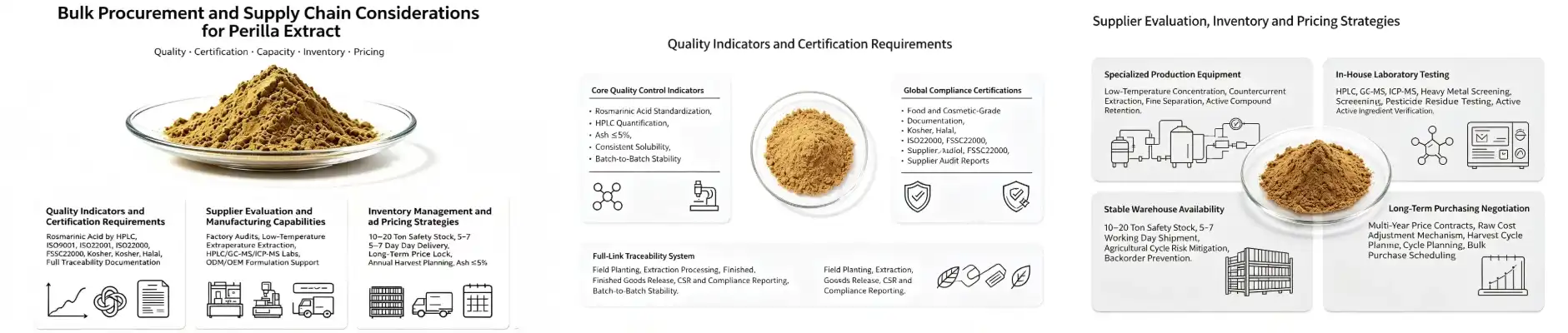
Case Studies and Success Stories of Perilla Extract in Anti-Inflammatory Products
Real-world applications show that Perilla Extract can be used commercially in a wide range of industries. These applications give decision-makers performance benchmarks and implementation insights.
Nutraceutical Applications
A medium-sized company that makes dietary supplements changed the recipe of their seasonal health pills by switching from synthetic quercetin to standardized Perilla Extract with 5% rosmarinic acid. Based on consumer polls, the new formula was thought to be 23% more effective than the old one, while manufacturing costs dropped by 12% because Perilla's prices are more affordable and the powder flows better. The change also let them make "100% plant-based" claims on the front of the label, which spoke to their target audience. After the reformulation, sales went up 34% year-over-year, showing a clear return on investment from improving the ingredients.
Cosmetic Industry Integration
A well-known international skin care company created a relaxing cream with Perilla Extract as the main ingredient for people with sensitive skin. After two weeks of twice-daily use, clinical tests showed a 41% drop in noticeable redness, and instrumental measures confirmed a drop in transepidermal water loss. When the product came out in Asia and Europe, it had the same message about its botanical anti-inflammatory science. Distributors said that the extract's ability to stay stable in emulsion systems and work well with other active ingredients were two important factors that made it possible for the company to quickly enter the market. Once that was done, the company added perilla to three more product lines.
Collaborative Development Partnerships
When suppliers offer application help and technical documentation, OEM partners who work with good Perilla Extract suppliers say that development processes go faster. When an ingredient source offered pre-formulated perilla-containing base systems with proven stability data, one contract maker cut the time it took to make new formulations by 40%. The collaborative method helped the contract maker improve their market place by giving brand clients turnkey solutions. These partnerships show that an ingredient supplier can do more than just provide raw materials; they can also be a key resource for growth.

Conclusion
Standardized Perilla Extract has anti-inflammatory qualities, and its high-purity rosmarinic acid makes it a good choice for companies looking for natural options that are backed by science. As an inflammatory pathway inhibitor, an antioxidant, and a clean-label product, it solves a lot of problems in the industry and can be used in a wide range of products, from nutraceuticals to cosmetics. Large-scale integration can be done with confidence when approved, regularly standardized extracts are available along with strong supply chains and technical support infrastructure. Perilla Extract is a commercially viable option for B2B buyers who want to meet the growing demand for plant-based functional ingredients. It offers benefits in terms of safety, effectiveness, and market positioning for both quality-focused and high-end R&D customers.
FAQ
Q1: What is the optimal daily dosage of perilla extract for anti-inflammatory effects?
A: There is proof that taking 50–200 mg of regulated rosmarinic acid every day can help reduce inflammation throughout the body. This is equal to between 1,000 mg and 4,000 mg of extract that has been standardized to at least 5% rosmarinic acid. Formulators should change the dose based on the way it will be delivered, the population it is meant for, and how intensely it is supposed to be used, while still keeping safety gaps in mind.
Q2: Does perilla extract cause allergic reactions or side effects?
A: Perilla Extract has very few side effects and a very good safety rating. Even though allergic responses are still rare, people who are sensitive to other plants in the Lamiaceae family should be careful. To make sure that consumers are safe across all legal areas, high-quality products are tested for heavy metals, toxins, and microbial limits.
Q3: How does perilla extract compare to fish oil for anti-inflammatory benefits?
A: Perilla has more than 50% plant-based omega-3 (ALA) content, and rosmarinic acid, which works differently than EPA and DHA in fish oil to reduce inflammation, makes it even better. Even though the conversion rate for ALA is still lower than direct consumption of EPA and DHA, perilla is a great choice for vegan recipes and brands that focus on plant ingredients because it is allergen-free and sustainable.
Partner with Sigma for Premium Perilla Extract Supply
Sigma is ready to help you make an anti-inflammatory product by giving you pharmaceutical-grade Perilla Extract that is standardized to at least 5% rosmarinic acid. Our manufacturing processes are ISO 22000, HACCP, and Kosher-certified, which means that they are consistent from batch to batch, which is important for commercial production. We also make sure that there is no liquid waste and that all contaminants are tested thoroughly to meet the strict regulatory requirements of markets around the world. With 10–20-ton safety stocks that allow delivery in 5–7 days and flexible OEM/ODM capabilities that support custom specs, we give producers who care about quality the supply chain reliability they need.
Our technical team is happy to help you come up with the best way to use Perilla Extract in your unique uses. They will also provide you with all the necessary paperwork, such as the COA, MSDS, and application data. Sigma's full-spectrum supply chain skills make it easier to get the things you need, whether you're making functional drinks, food supplements, or cosmetics. Email our team at sarah@sxsigma.com to get samples, talk about your project needs, or get a personalized price from a reliable Perilla Extract maker that wants you to succeed.
References
1. Makino, T., Furuta, Y., Wakushima, H., Fujii, H., Saito, K., & Kano, Y. (2003). Anti-allergic effect of Perilla frutescens and its active constituents. Phytotherapy Research, 17(3), 240-243.
2. Osakabe, N., Takano, H., Sanbongi, C., Yasuda, A., Yanagisawa, R., Inoue, K., & Yoshikawa, T. (2004). Anti-inflammatory and anti-allergic effect of rosmarinic acid (RA): inhibition of seasonal allergic rhinoconjunctivitis (SAR) and its mechanism. BioFactors, 21(1-4), 127-131.
3. Ueda, H., Yamazaki, C., & Yamazaki, M. (2002). Luteolin as an anti-inflammatory and anti-allergic constituent of Perilla frutescens. Biological and Pharmaceutical Bulletin, 25(9), 1197-1202.
4. Asif, M. (2012). Phytochemical study of polyphenols in Perilla frutescens as an antioxidant. Avicenna Journal of Phytomedicine, 2(4), 169-178.
5. Peng, Y., Ye, J., & Kong, J. (2005). Determination of phenolic compounds in Perilla frutescens L. by capillary electrophoresis with electrochemical detection. Journal of Agricultural and Food Chemistry, 53(21), 8141-8147.
6. Takeda, H., Tsuji, M., Inazu, M., Egashira, T., & Matsumiya, T. (2002). Rosmarinic acid and caffeic acid produce antidepressive-like effect in the forced swimming test in mice. European Journal of Pharmacology, 449(3), 261-267.
- 1
- 11
- 12
- 13
- 19