Perilla extract anti-inflammatory effects
Perilla Extract has emerged as a powerful natural alternative for managing inflammatory responses across multiple industries, from dietary supplements to cosmetics. Derived from the Perilla frutescens plant, this botanical ingredient contains rosmarinic acid and polyphenolic compounds that effectively inhibit inflammatory pathways at the cellular level. Its ability to reduce pro-inflammatory cytokines while offering antioxidant protection makes it an attractive choice for formulators seeking clean-label, plant-based solutions that align with consumer demand for natural wellness products.
Understanding Perilla Extract and Its Anti-Inflammatory Properties
Perilla Extract can help with inflammation because it has a lot of different biochemicals. One of the most important ones is rosmarinic acid, which can be found in up to 98% clarity in standardized extracts. This phenolic substance stops the 5-lipoxygenase and cyclooxygenase pathways from working. This stops the enzymes that make inflammatory agents like prostaglandins and leukotrienes.
Botanical Origins and Extraction Methods
The Lamiaceae family includes Perilla frutescens, which is native to East Asia and has been used for hundreds of years. With today's extraction methods, this plant knowledge has been turned into standard chemicals that can be used in industry. The most popular industrial method is to extract the herb using ethanol, which produces a fine, yellow-brown powder that always has a rosmarinic acid content of at least 5%. This method keeps heat-sensitive chemicals intact while leaving no liquid residue, which is very important for following the rules in cosmetic and food uses. The 80-mesh particle size is great for making because it lets the material flow easily. When it's made into finished goods, it still stays bioavailable.
Mechanisms of Anti-Inflammatory Action
Studies show that rosmarinic acid stops the stimulation of nuclear factor-kappa B (NF-κB), which controls the production of genes that cause inflammation. Cells make less tumor necrosis factor-alpha (TNF-α) and interleukin-1 beta (IL-1β) when NF-κB is not active. Studies using cell culture models show that rosmarinic acid concentrations as low as 10–50 µM can greatly lower these inflammatory markers. This shows that it works even at low doses. Besides rosmarinic acid, perilla seed oil also has alpha-linolenic acid (ALA), an omega-3 fatty acid that the body partially changes into EPA and DHA. This helps keep inflammation in check through different metabolic pathways.
Antioxidant Synergy and Additional Benefits
The anti-inflammatory benefits of perilla are boosted by the antioxidant activity of its parts. High ORAC values mean that the body can effectively get rid of free radicals, which protects cell structures from the reactive damage that often comes with long-term inflammation. Because it works on both the cause and the effects of inflammatory stress, perilla-based preparations are very useful for lung health supplements, joint support products, and skin care products for sensitive or reactive skin. The extract's natural food coloring qualities are an added bonus for companies that make functional drinks and want to get rid of manufactured dyes without losing the taste of their products.

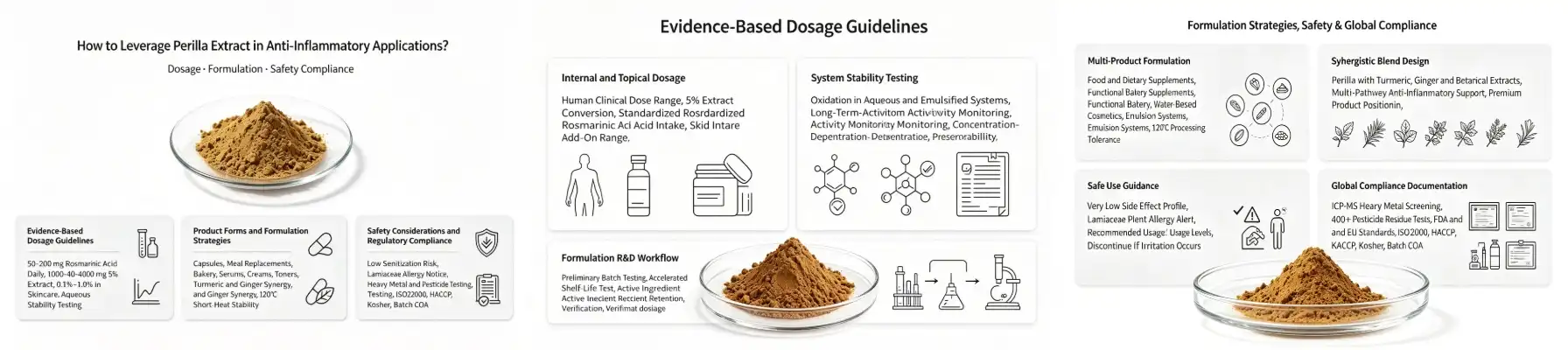
How to Leverage Perilla Extract in Anti-Inflammatory Applications?
When perilla plant ingredients are used in commercial products, they need to be carefully dosed, delivered, and checked for quality standards that make sure they are safe and effective at all production levels.
Evidence-Based Dosage Guidelines
According to clinical studies, daily amounts of 50 to 200 mg of standardized rosmarinic acid can help reduce inflammation throughout the body. This is equal to about 1,000 to 4,000 mg of a 5% rosmarinic acid extract, based on the purpose and strength of action that is wanted. In finished cosmetic products, extract amounts ranging from 0.1 to 1.0% are usually used for topical uses. These ranges give formulators options while still keeping the healing value. R&D teams should test the longevity of rosmarinic acid at the amounts that will be used to make sure that it stays effective throughout the product's shelf life. This is especially important in water-based or emulsion-based systems where oxidation is a risk.
Product Forms and Formulation Strategies
There are a lot of different ways to give Perilla Extract powder extract. Because it dissolves in ethanol and has a fine mesh size, it is easy to add to pills, tablets, and drink mixes. When making functional foods, the extract can be added to baked goods, protein bars, and meal replacements without breaking down much because it is stable up to 120°C during short-term processing. Cosmetics can use the powder because it dissolves easily in both water and ethanol, which lets them be made into serums, creams, and toners. Mineral load stays within acceptable ranges for clean recipes as long as the ash level stays below 5%.
Companies that want to sell high-end products might want to mix perilla with plants that work well together, like turmeric or ginger, to make blends that fight inflammation in more than one way. These kinds of mixtures can help goods stand out in crowded markets while also giving customers more value.
Safety Considerations and Regulatory Compliance
Perilla Extract has been shown in clinical studies to have very few side effects. Even though allergic responses are still very rare, people who are sensitive to other plants in the Lamiaceae family should be careful. ICP-MS screening for heavy metals and pesticide residue tests for more than 400 substances make sure that FDA and EU rules are followed. The ISO 22000, HACCP, and Kosher certifications that come with good Perilla Extracts are important proof for regulatory reports and customer checks. Check that sellers give batch-specific Certificates of Analysis (COA) that show the amount of rosmarinic acid, the limits for microbes, and the results of any contamination screenings.
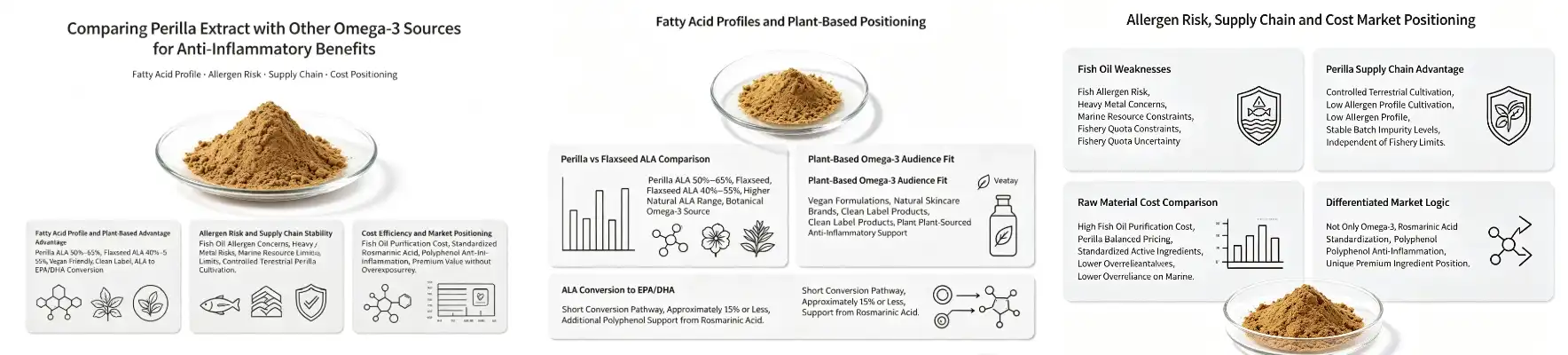
Comparing Perilla Extract with Other Omega-3 Sources for Anti-Inflammatory Benefits
When business-to-business buyers are looking at anti-inflammatory ingredients, they often compare perilla to well-known omega-3 sources. It is important to know the pros and cons of each choice.
Fatty Acid Profiles and Plant-Based Positioning
Alpha-linolenic acid (ALA) levels in perilla seed oil are between 50 and 65%, which is the highest of all popular plant oils and much higher than flaxseed oil's range of 40 to 55%. Even though ALA doesn't convert very well to EPA and DHA (about 5–15% conversion efficiency), this plant-based omega-3 source is very popular with vegans and vegetarians who don't eat foods that come from fish. Perilla Extract's botanical beginning is a strong marketing edge for brands that want to appeal to people who care about clean beauty, plant-based nutrition, or environmental issues.
Allergen Potential and Supply Chain Stability
There are natural allergen issues with fish oil, and the supply line is vulnerable to risks of heavy metal contamination and the loss of marine resources. Growing perilla gives farmers more control over their crops while having less of an effect on the earth. Controlled growth conditions for perilla also make it less likely that contaminant profiles will vary from batch to batch, which is a problem with oils that come from the sea. Contract makers who care about supply security should know that Perilla's model of terrestrial agriculture protects procurement from changes in fishing quotas and ocean pollution events that sometimes disrupt fish oil markets.
Cost-Effectiveness and Market Positioning
Premium fish oils cost more because they need to be concentrated and cleaned more, but regulated Perilla Extracts have prices that are fair and can be used to set them apart. Rosmarinic acid standardization gives a quality standard that is different from fatty acid ratios. This lets brands place perilla products based on their polyphenolic anti-inflammatory effects instead of competing directly in the omega-3 space, which is already very crowded. This stance can help purchasing managers reach price-conscious markets while still sending a premium message about the purity and longevity of botanicals.
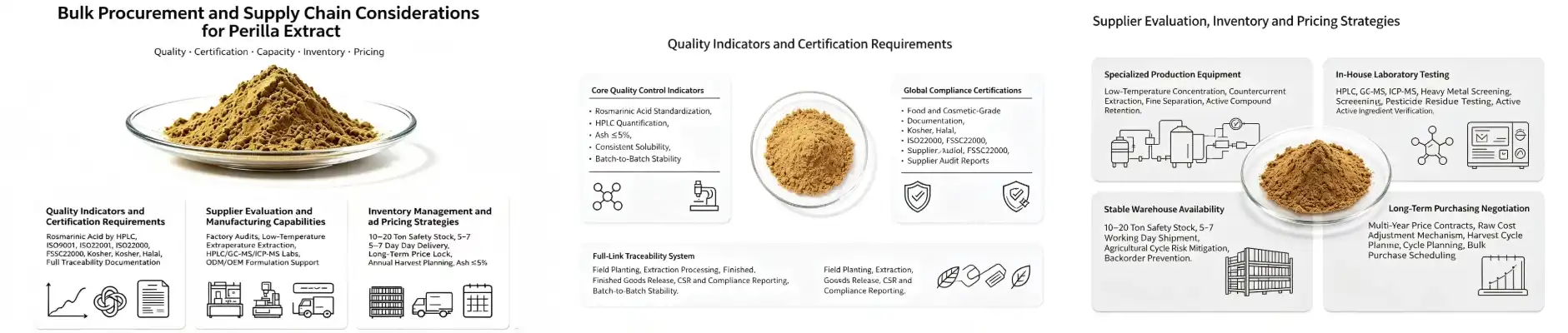
Bulk Procurement and Supply Chain Considerations for Perilla Extract
To get reliable, high-quality perilla goods, you need to carefully look at the skills, quality systems, and logistics infrastructure of suppliers that can support large-scale production that runs smoothly.
Quality Indicators and Certification Requirements
When looking at possible Perilla Extract providers, buying teams should put a high priority on a number of important quality indicators. Rosmarinic acid level is the main active standardization, and HPLC testing gives us a way to check the numbers. When going after certain market groups, certificate packages should have ISO 9001 (quality management), ISO 22000 or FSSC 22000 (food safety), and certifications that are specific to the application, like Kosher or Halal. Origin paperwork that confirms farming areas helps make sure that the right genetic types and growth conditions are used. Suppliers who offer full tracking from the field to the finished extract show that the supply chain is mature, which is necessary for legal compliance and reporting on corporate responsibility.
Supplier Evaluation and Manufacturing Capabilities
Site checks are still the best way to make sure that what a seller says is true, but thorough reviews of all the paperwork can be used as a first step. Check to see if the companies that make the products have special places where they remove the chemicals, complete with countercurrent systems, low-temperature concentration equipment, and fine separation technologies that keep the beneficial compounds safe. Having in-house analysis labs with HPLC, GC-MS, and ICP-MS shows that the company is technically advanced and committed to quality control. Suppliers that offer ODM/OEM services with formula customization can cut down on the time it takes to make a product and the number of vendors that need to be negotiated with.
Inventory Management and Pricing Strategies
When suppliers keep 10–20 tons of standardized Perilla Extract on hand as a safety stock, it shows that they are ready to handle large orders quickly. Usually, in-stock standards can be delivered within 5–7 working days. This level of inventory keeps buyers safe from production delays during busy times or changes in the farming industry. When negotiating prices, people should think about multi-year contracts that lock in good rates and have review terms that are tied to measures of the cost of raw materials. Knowing that spring harvests affect the yearly supply can help people plan when to make big purchases. The ash content requirement of ≤5% and the solubility characteristics should stay the same from batch to batch, and providers should provide written promises that the requirements will be met.
Case Studies and Success Stories of Perilla Extract in Anti-Inflammatory Products
Real-world applications show that Perilla Extract can be used commercially in a wide range of industries. These applications give decision-makers performance benchmarks and implementation insights.
Nutraceutical Applications
A medium-sized company that makes dietary supplements changed the recipe of their seasonal health pills by switching from synthetic quercetin to standardized Perilla Extract with 5% rosmarinic acid. Based on consumer polls, the new formula was thought to be 23% more effective than the old one, while manufacturing costs dropped by 12% because Perilla's prices are more affordable and the powder flows better. The change also let them make "100% plant-based" claims on the front of the label, which spoke to their target audience. After the reformulation, sales went up 34% year-over-year, showing a clear return on investment from improving the ingredients.
Cosmetic Industry Integration
A well-known international skin care company created a relaxing cream with Perilla Extract as the main ingredient for people with sensitive skin. After two weeks of twice-daily use, clinical tests showed a 41% drop in noticeable redness, and instrumental measures confirmed a drop in transepidermal water loss. When the product came out in Asia and Europe, it had the same message about its botanical anti-inflammatory science. Distributors said that the extract's ability to stay stable in emulsion systems and work well with other active ingredients were two important factors that made it possible for the company to quickly enter the market. Once that was done, the company added perilla to three more product lines.
Collaborative Development Partnerships
When suppliers offer application help and technical documentation, OEM partners who work with good Perilla Extract suppliers say that development processes go faster. When an ingredient source offered pre-formulated perilla-containing base systems with proven stability data, one contract maker cut the time it took to make new formulations by 40%. The collaborative method helped the contract maker improve their market place by giving brand clients turnkey solutions. These partnerships show that an ingredient supplier can do more than just provide raw materials; they can also be a key resource for growth.

Conclusion
Standardized Perilla Extract has anti-inflammatory qualities, and its high-purity rosmarinic acid makes it a good choice for companies looking for natural options that are backed by science. As an inflammatory pathway inhibitor, an antioxidant, and a clean-label product, it solves a lot of problems in the industry and can be used in a wide range of products, from nutraceuticals to cosmetics. Large-scale integration can be done with confidence when approved, regularly standardized extracts are available along with strong supply chains and technical support infrastructure. Perilla Extract is a commercially viable option for B2B buyers who want to meet the growing demand for plant-based functional ingredients. It offers benefits in terms of safety, effectiveness, and market positioning for both quality-focused and high-end R&D customers.
FAQ
Q1: What is the optimal daily dosage of perilla extract for anti-inflammatory effects?
A: There is proof that taking 50–200 mg of regulated rosmarinic acid every day can help reduce inflammation throughout the body. This is equal to between 1,000 mg and 4,000 mg of extract that has been standardized to at least 5% rosmarinic acid. Formulators should change the dose based on the way it will be delivered, the population it is meant for, and how intensely it is supposed to be used, while still keeping safety gaps in mind.
Q2: Does perilla extract cause allergic reactions or side effects?
A: Perilla Extract has very few side effects and a very good safety rating. Even though allergic responses are still rare, people who are sensitive to other plants in the Lamiaceae family should be careful. To make sure that consumers are safe across all legal areas, high-quality products are tested for heavy metals, toxins, and microbial limits.
Q3: How does perilla extract compare to fish oil for anti-inflammatory benefits?
A: Perilla has more than 50% plant-based omega-3 (ALA) content, and rosmarinic acid, which works differently than EPA and DHA in fish oil to reduce inflammation, makes it even better. Even though the conversion rate for ALA is still lower than direct consumption of EPA and DHA, perilla is a great choice for vegan recipes and brands that focus on plant ingredients because it is allergen-free and sustainable.
Partner with Sigma for Premium Perilla Extract Supply
Sigma is ready to help you make an anti-inflammatory product by giving you pharmaceutical-grade Perilla Extract that is standardized to at least 5% rosmarinic acid. Our manufacturing processes are ISO 22000, HACCP, and Kosher-certified, which means that they are consistent from batch to batch, which is important for commercial production. We also make sure that there is no liquid waste and that all contaminants are tested thoroughly to meet the strict regulatory requirements of markets around the world. With 10–20-ton safety stocks that allow delivery in 5–7 days and flexible OEM/ODM capabilities that support custom specs, we give producers who care about quality the supply chain reliability they need.
Our technical team is happy to help you come up with the best way to use Perilla Extract in your unique uses. They will also provide you with all the necessary paperwork, such as the COA, MSDS, and application data. Sigma's full-spectrum supply chain skills make it easier to get the things you need, whether you're making functional drinks, food supplements, or cosmetics. Email our team at sarah@sxsigma.com to get samples, talk about your project needs, or get a personalized price from a reliable Perilla Extract maker that wants you to succeed.
References
1. Makino, T., Furuta, Y., Wakushima, H., Fujii, H., Saito, K., & Kano, Y. (2003). Anti-allergic effect of Perilla frutescens and its active constituents. Phytotherapy Research, 17(3), 240-243.
2. Osakabe, N., Takano, H., Sanbongi, C., Yasuda, A., Yanagisawa, R., Inoue, K., & Yoshikawa, T. (2004). Anti-inflammatory and anti-allergic effect of rosmarinic acid (RA): inhibition of seasonal allergic rhinoconjunctivitis (SAR) and its mechanism. BioFactors, 21(1-4), 127-131.
3. Ueda, H., Yamazaki, C., & Yamazaki, M. (2002). Luteolin as an anti-inflammatory and anti-allergic constituent of Perilla frutescens. Biological and Pharmaceutical Bulletin, 25(9), 1197-1202.
4. Asif, M. (2012). Phytochemical study of polyphenols in Perilla frutescens as an antioxidant. Avicenna Journal of Phytomedicine, 2(4), 169-178.
5. Peng, Y., Ye, J., & Kong, J. (2005). Determination of phenolic compounds in Perilla frutescens L. by capillary electrophoresis with electrochemical detection. Journal of Agricultural and Food Chemistry, 53(21), 8141-8147.
6. Takeda, H., Tsuji, M., Inazu, M., Egashira, T., & Matsumiya, T. (2002). Rosmarinic acid and caffeic acid produce antidepressive-like effect in the forced swimming test in mice. European Journal of Pharmacology, 449(3), 261-267.


_1776308368292.webp)