Is Fucoxanthin Extract Powder Effective for Weight Loss and Health?
Yes, fucoxanthin extract powder can support weight management and general wellness, although the evidence is moderate and depends on quality and dose. Animal studies link this brown seaweed carotenoid to higher UCP1 expression in white fat tissue, a pathway tied to energy expenditure. A 16-week human trial in obese women paired fucoxanthin with pomegranate seed oil and reported lower body weight and liver fat than placebo. Results vary with purity, formulation, and daily amount. I recommend that buyers verify the HPLC assay and safety data before building a product claim around any lot.
What Is Fucoxanthin Extract Powder?
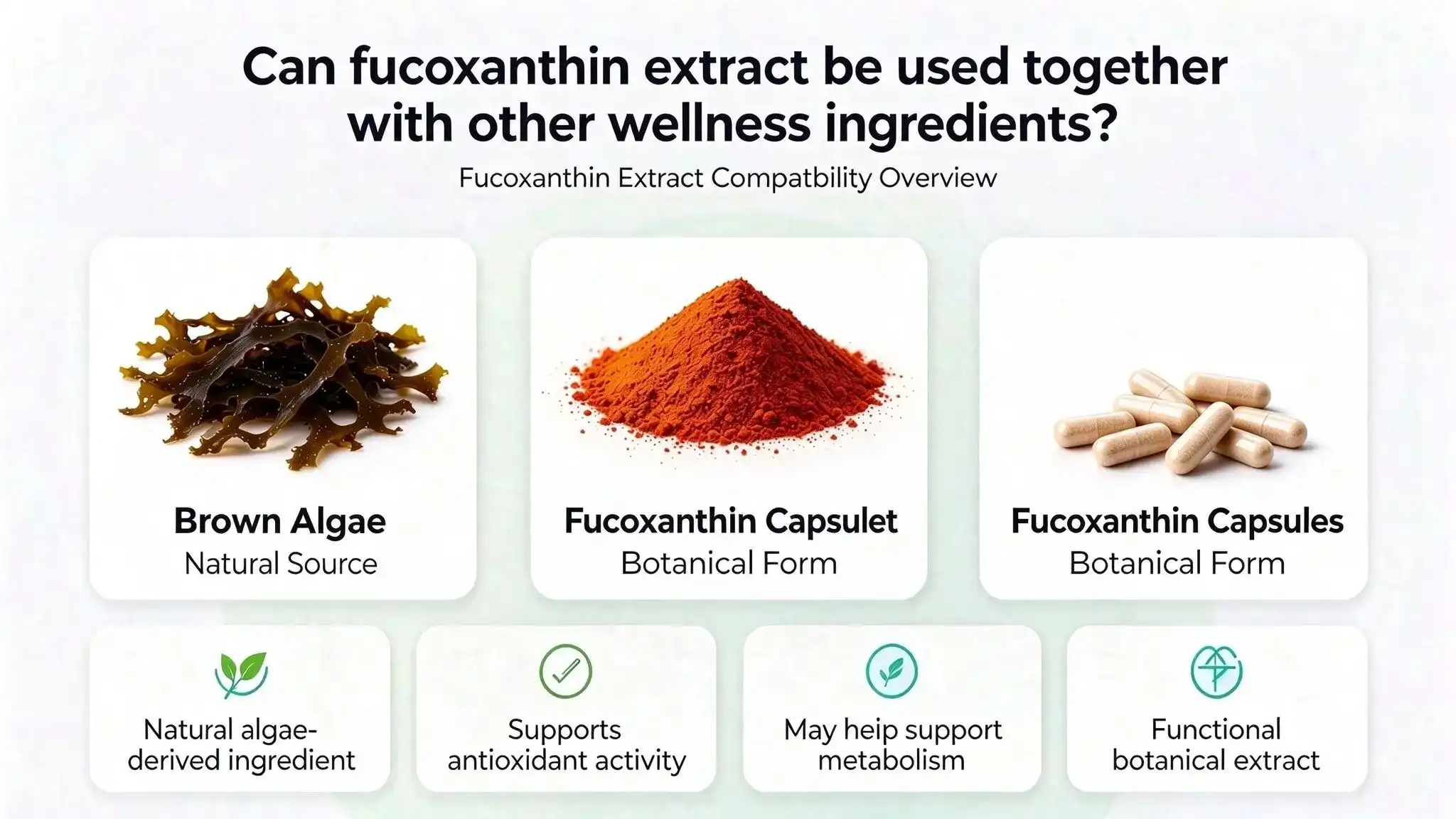
Fucoxanthin extract powder is a concentrated marine ingredient used in functional food recipes to help people lose weight and look better from the inside out. It also acts as an antioxidant. I'll describe it and show how it differs from other similar seaweed products.
Fucoxanthin Extract Powder Comes Primarily From Brown Seaweed
One type of marine carotene that you can find in brown seaweeds (Undaria pinnatifida) and microalgae (Phaeodactylum tricornutum) is this one. It gives these living things their golden-brown color and helps them take in light. Dried seaweed only has very small amounts of fucoxanthin in it, so it needs to be taken out and concentrated to a useful level. Supercritical CO2 extraction is one way to do this job. Carbon dioxide under pressure is used as the solvent, which doesn't leave behind any organic liquid and works at temperatures that are good for molecules that don't like being hot. Sigma's fucoxanthin extract is made in this way. It is made from only brown seaweed that comes from the ocean.
How It Differs From Seaweed Powder and Brown Seaweed Extract
Salty seaweed powder is made from seaweed that has been dried and ground up. Fiber, vitamins, and iron are all in it, but the fucoxanthin level is too low and out of reach. Because brown seaweed extract is more concentrated, there may not be a fucoxanthin percentage on the label. Standardized fucoxanthin extract powder is different because it has a known test and a known base or carrier. This test is usually done with HPLC. Labels are only as true as the information they hold, so this is important for brands that make claims. It also changes how it's dealt with. The way a powder works in pills, softgels, or mixes relies on how it was made, what kind of carrier it is mixed with, and the size of the particles. Fucoxanthin dissolves in fat. People who want to buy should always use the same HPLC method to compare samples and never just look at the name of the plant.
Key Specifications B2B Buyers Should Check
A specification sheet should be asked for before samples are sent out. First, check for fucoxanthin with HPLC. Next, check out the carrier ingredient, the particle size, heavy metals, microbial limits, and iodine data. Also, see how much was lost during drying. There are also international trade certificates on the sheet, such as ISO, HACCP, and Halal, along with details about where the goods came from and how they were used. At the US launch stage, having a proof of analysis for each batch along with GMO and safety statements makes the approval process go a lot faster. Before a trial order is placed, the review process by the R&D and regulatory teams goes faster when the specification sheet is short and full.
Does Fucoxanthin Extract Powder Work? Benefits and Evidence
The science is still being worked on, but it looks good. The things I trust and the limits are written below.
What Animal and Lab Research Shows About Fat Metabolism
Most of what we know about how things work comes from working with animals. A study from 2005 fed mice that were too heavy fucoxanthin from Undaria pinnatifida. Their white fat had more UCP1 and less white fat around the middle. So that mitochondria don't store energy, UCP1 tells them to give off heat. After that, more reviews talked about more impacts on insulin signaling and lipid metabolism in both cell and animal models. People who make medicines are interested in these results, but data from mice don't show that people have the same reaction. They push me to study, not to make a label claim.
What Human Trials Report
Data about people are smaller. A product made by Abidov and her colleagues was given to overweight women before menopause. It had pomegranate seed oil and brown seaweed extract (about 2.4 mg of fucoxanthin per day). In 2010, the study came out. It helped women lose more weight than a sugar pill, and it made liver fat go down in women who already had it. In 2017, Hitoe and Shimoda did a study on Japanese people who were mildly obese. They found that some measures linked to obesity got better. Fucoxanthin alone can't be blamed, though, because the sample size was small and the first test used a mix formula. There should be more trials because the case would be stronger that way.
Wider Health Interest and Claim Boundaries
Tests in the lab have shown that fucoxanthin can quench singlet oxygen and act as an antioxidant and anti-inflammatory. The fact that most of that proof comes from cell and animal models means that it doesn't back up claims about finished goods as much as it backs up claims about studies. You can only put honest structure/function comments on supplement labels in the US. They can't lie or claim to cure health problems. Brands also need to include the FDA warning and report any claims within 30 days of the product going on sale. I think you should use wording that is based on written study and have your regulatory counsel look it over before you go public. If the powder doesn't work in the end product, it doesn't matter how well it works on paper. That's all there is to it.
Uses, Solubility, and Stability of Fucoxanthin Extract Powder
Formulation Uses
Fucoxanthin extract powder can be put in some healthy foods, softgels, pills, and tablets. Blends are often used to help people lose weight or speed up their metabolism. It is often mixed with things that work well together, like pomegranate seed oil in the 2010 test. Health and beauty brands can use it as an antioxidant, and sports nutrition brands can add it to daily wellness stacks. A 10% test makes it easier to figure out how much to take. To get to 2.4 mg of fucoxanthin, you need 24 mg of powder. That makes room in the capsule for other substances that work. Always check to see if it works in your own plan before you grow.
Solubility and Absorption
Fucoxanthin breaks down in fat, not water. A study that came out in 2011 in Marine Drugs says that digestive enzymes change it to fucoxanthinol in the gut. In the end, the liver makes amarouciaxanthin A. A lot of brands say to eat these things with food because fat helps the body take in the carotenoids better. The powder will mix with the filling if you use softgels that are made from oil. A blend that is good for lipids can help if you use dry capsules. To get water-based drinks to customers, you should talk to the supplier early on about the best way to package them. We need an 80-mesh fine brown powder right now.
Stability, Storage, and Handling
Light, heat, and air are the key things that stop fucoxanthin from working. And this is why the direction of storage is important. Don't let light or heat touch our fucoxanthin extract. Keep it cool and dark. People who buy opened bags should do the same thing. A ≤3% loss on drying is what we need to keep the amount of wetness in check. To add to that, I believe that finished capsules or softgels should go through faster stability tests in clear bottles or package packs, and that fucoxanthin should be regularly kept track of by HPLC. The expiration date on your sign is backed up by these results, which also back up what you said.
Buying Guide: How to Choose a Fucoxanthin Extract Powder Supplier?
A good supplier keeps extra stock on hand to handle high demand and show that the quality is good. Follow these steps to get the best deal.
Verify Quality and Safety Documents
It's important to keep brown seaweed clean because it can take in heavy metals and salt from the water. It is important to get the HPLC test, an analysis report, heavy metal results, microbial results, information on where the product came from, and iodine data from each seller. Readings of UV light alone are not enough; they can also show other colors. Ask for results that are unique to a batch, not just one report as an example. Sigma does a full physical and chemical analysis on every batch they test. They also do strict heavy metal and microbial testing. We need ≤10 ppm of heavy metals. Still, your lab should check the results on its own.
Sigma Fucoxanthin Extract Specifications
Here are the core features of our fucoxanthin extract, based on our current specification.
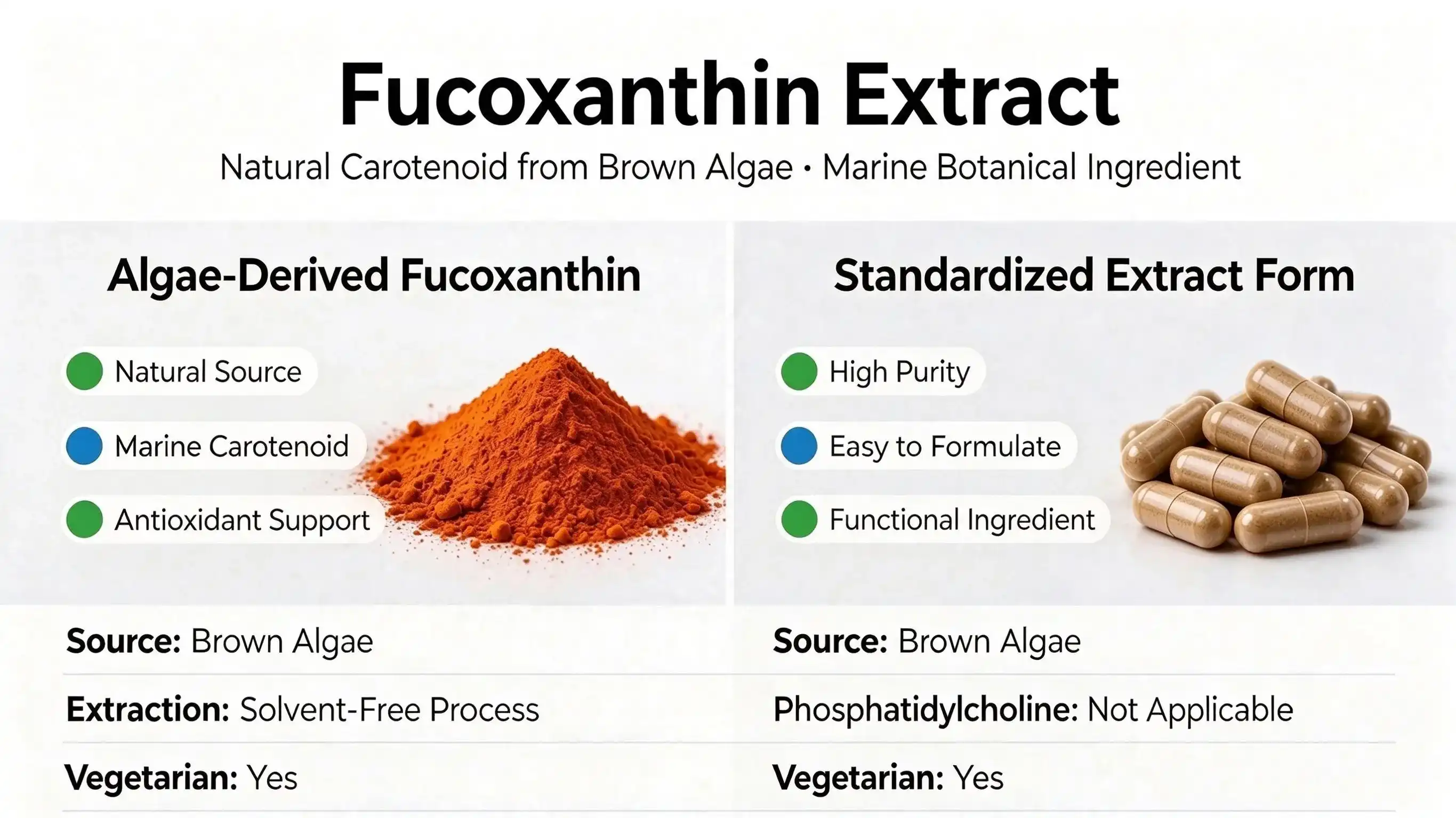
- Specification: The powder is fine and brown, with particles that are 80 mesh, about 3% loss when dried, and about 10 parts per million of heavy metals. When you're vetting sources for fucoxanthin extract powder, these numbers help your R&D team set clear dosing goals and see how well arriving lots meet your requirements.
- Process and sourcing: The extract is made by supercritical CO2 extraction of brown seaweed that comes from the ocean. It doesn't leave behind any solvents and isn't GMO. For a carotenoid that doesn't like heat, this method works well. It also helps brands tell a natural sea story for their clean-label goods.
- Testing and certificates: Each batch goes through HPLC purity tests, physical and chemical analyzes, heavy metal and microbe tests, and so on. These are some of the certificates we have: ISO, HACCP, and Halal. We also keep the item in stock, so the paperwork and goods can move around while your seller looks over them.
These features address the three concerns brand teams think about the most: how accurate the test is, how to keep contaminants under control, and how to keep track of everything. Since they aren't the same as lab tests, we suggest that you do sample tests instead.
Supply Timing, Samples, and Qualification Steps
Most buyers pick three to five suppliers, test samples to make sure they can be identified and that the goods will stay stable quickly, put a 20–50 kg trial lot on the production line, and then sign a contract that lasts for a year. Start early to stay healthy during the first three months of the year; that road usually takes 8–12 weeks. Sigma helps with every step by giving away free samples, keeping fucoxanthin extract in stock, aiming for delivery in 5–7 business days, and guaranteeing quality for a year. We also do OEM/ODM work for labels, packaging, and specifications. We can help you with customs and ship by sea, air, or express.
Conclusion
Animal studies on UCP1 and a few human trials, such as a 16-week study of a fucoxanthin and pomegranate seed oil blend, make the case for fucoxanthin extract powder as a good way to lose weight and improve health in general. Since there isn't much proof, claims must stay true and meet the rules for US organization and function. Fucoxanthin breaks down in fat and is affected by light, heat, and air. The HPLC test of a product must be confirmed, the amount of contaminants must be low, and it must be handled carefully for it to work well. Also, batch papers can help you figure out what heavy metals and iodine are in brown seaweed. Before placing a big order, buyers can get a good idea of a seller by comparing specs, testing samples, and making sure the product is stable.
FAQ
How much fucoxanthin do human studies use?
A mix of about 2.4 mg of fucoxanthin was used every day for 16 weeks as part of a study. For a 10% powder, 24 mg equals 2.4 mg. To find the right dose, you should use your formula, any research that backs it up, and a review by the regulatory body.
Is fucoxanthin extract powder water-soluble?
Since fucoxanthin dissolves in fat, it works well in oil-based softgels and pills. Water-based drinks need a good way to get to customers. Our staff can talk to you about your style.
How should I store it?
Keep it somewhere cool and dark. Opaque packaging helps protect the product's effectiveness, and quick stable tests on the finished item show that it will last on the shelf.
Which documents should I request?
Ask for the ISO, HACCP, and Halal licensing, as well as the HPLC test, the proof of analysis, and the results for bacteria and heavy metals. Delta checks every batch they make for bacteria, heavy metals, and HPLC purity.
Request Fucoxanthin Extract Powder Samples From Sigma
Sigma has certificates for ISO, HACCP, and Halal, and they make fucoxanthin extract powder. They also have stock, give away free samples, do OEM/ODM work, and promise quality for a year from now. Our team will get back to you with a COA and sample information if you email sarah@sxsigma.com with your needs, target volume, and format.
References
1. Marine Drugs, 2015 – Gammone MA, D'Orazio N. "Anti-obesity activity of the marine carotenoid fucoxanthin."
2. Biochemical and Biophysical Research Communications, 2005 – Maeda H, et al. "Fucoxanthin from edible seaweed, Undaria pinnatifida, shows antiobesity effect through UCP1 expression in white adipose tissues."
3. Diabetes, Obesity and Metabolism, 2010 – Abidov M, et al. "The effects of Xanthigen in the weight management of obese premenopausal women with non-alcoholic fatty liver disease and normal liver fat."
4. Marine Drugs, 2011 – Peng J, et al. "Fucoxanthin, a marine carotenoid present in brown seaweeds and diatoms: metabolism and bioactivities relevant to human health."
5. Functional Foods in Health and Disease, 2017 – Hitoe S, Shimoda H. "Seaweed fucoxanthin supplementation improves obesity parameters in mild obese Japanese subjects."
6. Evidence-Based Complementary and Alternative Medicine, 2015 – Zhang H, et al. "Fucoxanthin: a promising medicinal and nutritional ingredient."