How Is Butterfly Pea Flower Extract Used as Natural Color?
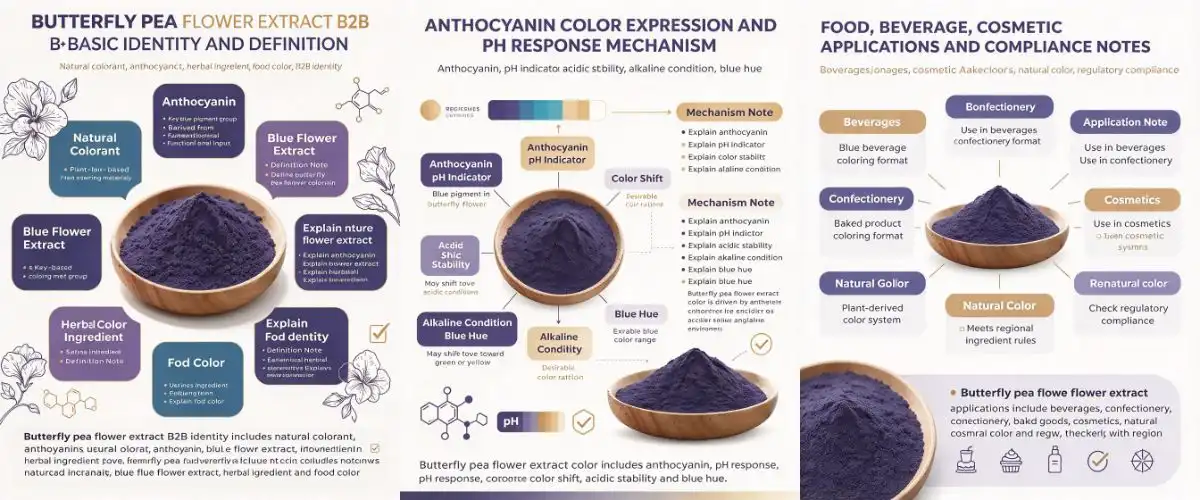
Butterfly Pea Flower Extract is employed as a natural colorant by leveraging its rich anthocyanin content, which delivers vibrant blue pigmentation in neutral to slightly alkaline formulations. When added to beverages, confectionery, cosmetics, or baked goods, the extract provides clean-label coloring that shifts dynamically with pH variations—turning purple or pink in acidic environments. This pH-sensitive mechanism allows formulators to create interactive consumer experiences without synthetic dyes, addressing the growing demand for natural alternatives that maintain regulatory compliance and batch-to-batch consistency across industrial production scales.
Understanding Butterfly Pea Flower Extract as a Natural Color
Butterfly Pea Flower Extract, which comes from Clitoria ternatea, is a big step forward in the technology of natural coloring. The process of extraction usually uses water-ethanol mixtures that protect the delicate anthocyanin compounds that give it its unique color. It's becoming more popular among buying teams that are looking for alternatives to FD&C Blue No. 1. This is especially true as rules about manmade additives get stricter.
Botanical Origins and Chemical Composition
The main ingredient is made up of ternatins, which are a type of anthocyanin that makes this extract different from other forms of anthocyanin. Anthocyanins from berries or red cabbage are not as stable under processing conditions as these polyacylated flavonoid complexes. According to research, ternatins can keep their shape for a long time at temperatures up to 80°C. This means they can be used in heat-processed products where other natural blues break down quickly.
Forms and Standardization
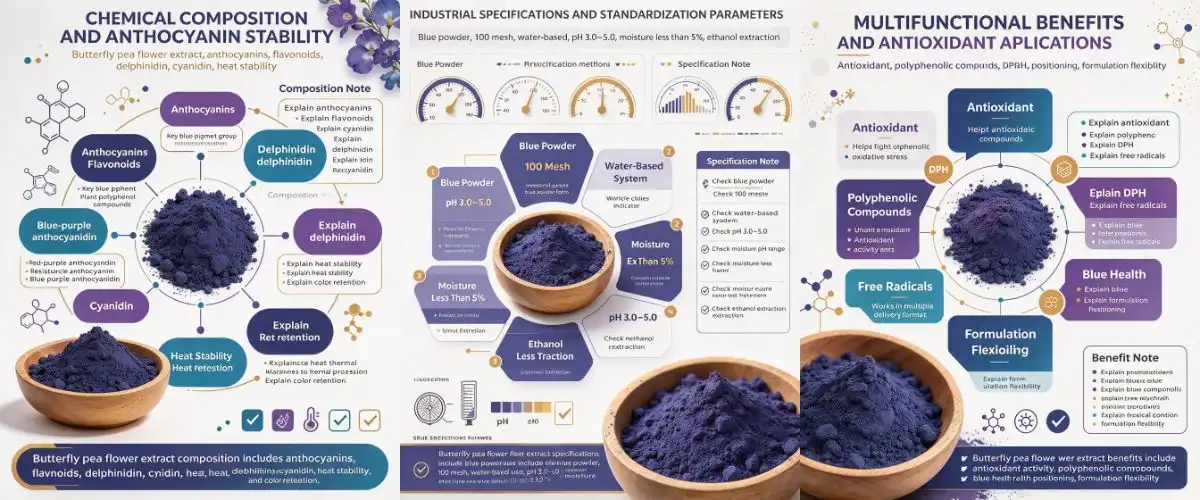
Industrial-grade butterfly pea powder is usually a fine blue powder with particles that are about 100 mesh in size. This makes sure that the powder mixes evenly in both water-based and water-based mixtures. To make sure the quality standards are met, the anthocyanin content must be at least 25%, the amount lost when dried must be less than 5%, and the pH level must be between 3.0 and 5.0. The water-ethanol extraction method concentrates beneficial substances while getting rid of unwanted plant materials that could cause bad tastes or cloudiness.
Multifunctional Benefits
In addition to coloring, the polyphenolic makeup of the extract makes it an antioxidant. Studies that measure the ability of DPPH radicals to scavenge free radicals show values that are similar to those of well-known antioxidants. This gives products a functional health positioning. This ability to serve two purposes is appealing to formulation teams working on goods with "clean plus" claims—ingredients that offer multiple benefits in a single unit instead of needing long stacks of additives.
Core Applications of Butterfly Pea Flower Extract as a Natural Colorant
The Butterfly Pea Flower Extract is useful in many different industries, and its unique properties are used to solve specific formulation problems in each one. We've written about uses for everything from drinks that can be left out at room temperature to frozen desserts, showing how well they work in a wide range of processing environments.
Food and Beverage Sector
In drinking uses, the extract makes it possible to make teas and lemonades that change color, which is interesting to customers because they can see the change. When lemon juice comes in touch with a blue butterfly pea drink, the pH changes right away, turning the color purple-pink. This creates a moment that people want to share on social media, which leads to more purchases and more activity. Functional drink companies put it in sports drinks and enhanced waters. The natural blue makes the drinks stand out on store shelves that are already full of other products without causing artificial color declarations.
The extract is used by candy makers to make gummies, hard sweets, and coatings that need to be stable at high temperatures. The anthocyanin complex can handle the high temperatures used to make candy and keeps the color intensity the same from batch to batch. Its neutral flavor profile makes it good for both dairy and non-dairy alternatives. Yogurts, ice creams, and plant-based creamers get nice blue or purple colors without the metallic notes that come with blues made with spirulina.
Cosmetic and Personal Care Integration
Skincare formulators like the extract because it has both cosmetic and cosmeceutical benefits. Masks and serums for the face use both the beautiful blue color and the known antioxidant benefits that back up claims of anti-aging. Quality extracts contain proanthocyanidins that help protect collagen and maintain the skin's barrier function. This lets brands market products that actually do something useful instead of just being pretty.
The extract is used in specialty shampoos and treatments for the head to give hair a natural tint without leaving a lasting stain. Bath products take advantage of the way blue bathwater looks when the chemistry of the water changes, making elite product lines feel like you're in a spa.
Industrial and Textile Applications
Butterfly pea extracts are used to color fabrics naturally by textile companies that are looking for environmentally friendly ways to dye them. The product sticks well to protein fibers and can be mordanted onto plant materials, making eco-friendly dyes that don't come from petroleum. Biodegradable films and papers are made with it by packaging designers. This is in line with efforts to create a cycle economy and keeps the look of the product appealing for a long time.
Comparative Insights: Butterfly Pea Flower Extract vs. Alternatives
Before buying something, you need to know how Butterfly Pea Flower Extract stacks up against other natural colorants. We did side-by-side tests that show different performance patterns that are needed to match ingredients to application needs.
Performance Against Other Natural Blues
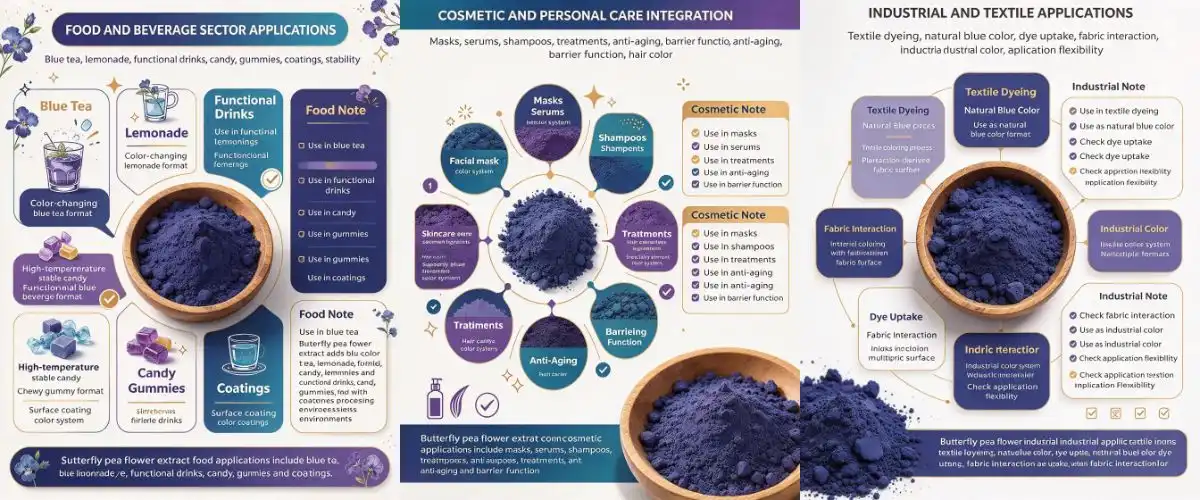
The most common natural blue alternative, spirulina extract, has problems with taste and stability that butterfly pea solves well. When mixed with fruit or flower flavors, spirulina adds strong oceanic or seaweed notes that don't go well, but butterfly pea stays neutral even at concentrations that make it color food. Temperature sensitivity is another important difference. Spirulina breaks down significantly above 60°C, which means it can't be used in sterilized or cooked foods while butterfly pea keeps its color.
Gardenia blue needs to be treated with enzymes and makes a greenish-blue color. Butterfly pea, on the other hand, makes real blue colors and is easier to process. Butterfly pea is usually more cost-effective for medium- to high-volume uses, but gardenia may be more cost-effective for industrial uses that go over several tons per year.
Organic Certification Considerations
The choice between organic and conventional affects both how much things cost and where they stand in the market. Butterfly peas that are certified organic cost more, but they let you buy goods that are labeled USDA Organic and EU Organic, which is important for brands that want to sell in natural retail outlets. Food companies that want to cut costs without sacrificing safety can use conventional extracts that meet strict pesticide residue limits that are in line with FDA and EU standards.
Protocols for testing both grades should make sure that the amount of heavy metals is below the allowed levels by law, that the amount of microbes is within the acceptable range for the intended use, and that there are no hidden processing aids. Third-party certificates, such as ISO 22000, HACCP, and religious certifications (Halal, Kosher), make it easier to get into markets in many different areas.
Form Factor Analysis
With the right storage, powder extracts can last for 24 months or more, and their concentrated color loads cut down on shipping costs and storage space. Because it dissolves in water, it can be added directly to dry mixes or reconstituted at the point of use. For continuous processing lines, liquid concentrates are easier to use, but they need to be kept in the fridge and have shorter stability windows.
Freeze-dried versions keep more of the bioactive ingredients and are better at reconstituting than spray-dried versions, but they are more expensive and can only be used in high-end applications. Ultra-fine grinding technologies that make particles smaller than 100 mesh ensure quick dissolving without leaving behind any residue, which is a typical problem with plant powders that are too coarse.
Procurement Guide: Sourcing Butterfly Pea Flower Extract for Industrial Use
Setting up reliable supply chains for Butterfly Pea Flower Extract takes more than just comparing prices to do a systematic review of suppliers' skills. Our buying system takes into account the fact that decisions in B2B settings usually involve a lot of different people.
Supplier Qualification Criteria
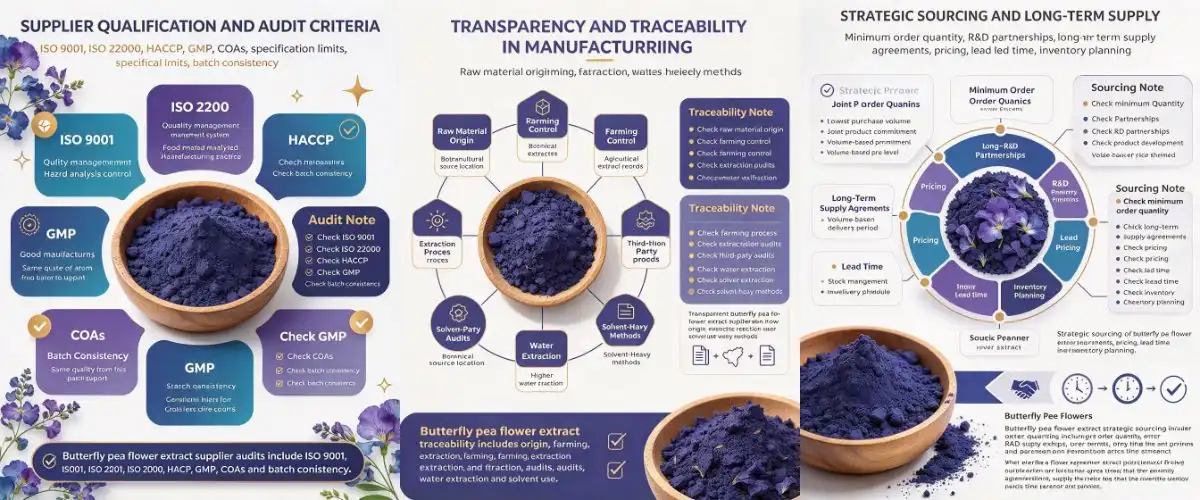
Quality badges are like entry barriers. For example, ISO 9001 shows that you can control processes, and ISO 22000 and HACCP prove that your food safety management systems are up to par. For pharmaceutical and nutraceutical uses, suppliers who work under GMP conditions offer extra assurance. Ask for up-to-date certificates of analysis (COAs) that show actual test results instead of specification sheets to make sure that the anthocyanin content, moisture levels, and lack of contaminants are the same from batch to batch.
Transparency in manufacturing is very important. Traceability is better when suppliers control the whole process of getting raw materials, from growing them to extracting them. For relationships with yearly volumes over 500 kilograms, we suggest site checks or third-party factory assessments. Checking the methods used for extraction shows that water-ethanol processes work better than solvent-heavy methods that might leave behind chemicals.
Strategic Purchasing Approaches
For custom specifications, the minimum order quantity is usually between 25 and 100 kilograms. However, for R&D purposes, smaller initial purchases of stock products may be possible. When setting prices, the amount of anthocyanin should be taken into account. For example, a 25% standardized extract costs more per kilogram than a 10% material, but it uses less of the color and works better, which could lower the total cost of the product.
When production forecasts back up commitment, long-term supply agreements are good for both sides. Pricing based on volume, guarantyd availability during busy times, and specs that stay the same for 12 to 24 months give suppliers the security they need to invest in specialized production runs. Payment terms that are in line with industry standards (30 to 60 days net terms for established relationships) and that take into account the cash flow needs of the supplier make partnerships that are good for both sides.
Quality Verification Protocols
Third-party testing from a different company verifies what the seller says and keeps specifications from changing over time. We set up testing protocols for incoming materials that include confirming their identity (using HPLC fingerprinting), confirming their effectiveness (by measuring anthocyanin levels), and making sure they are safe (checking for pesticides, heavy metals, and microbiological limits). Keep reference samples from each lot in case there are problems with performance during the scale-up of production.
Before making a final choice, sample evaluation programs should try several providers under the same formulation conditions. Color stability tests that mimic real-life storage conditions, pH sensitivity mapping across application ranges, and sensory panels that test flavor effect are all data-driven selection factors that go beyond just looking at the certificate.
Ensuring Quality and Performance in Butterfly Pea Flower Extract Use
For Butterfly Pea Flower Extract execution to go well, you need to know what affects color expression and stability over the span of a product. Our technical teams have found key control points that separate launches that go well from cycles of reformulation.
Optimization of the Formulation
Managing pH is the main thing that affects both color tone and stability. In neutral to slightly alkaline environments (pH 6–8), the color stays blue. In acidic environments (pH 3–5), the color changes to purple and pink. Color stability is achieved by buffering systems that stop pH changes during storing. This is especially important for protein-based drinks, as fermentation or oxidation can make them more acidic over time.
Photochemical processes speed up the breakdown of anthocyanin when it is exposed to light. Formulations meant for clear packaging need higher initial pigment loads or light-blocking co-ingredients like analogs of ascorbic acid (although ascorbic acid itself can cause color changes that aren't desired). Because opaque packing or amber glass keeps colors much longer, choosing the right container is an important part of the creation process, not just a business decision.
Changing temperatures during distribution put a lot of stress on color stability. Accelerated shelf life testing at 40°C for 3 to 6 months predicts performance for 12 to 24 months at room temperature. Products that make it thru faster processes without losing a lot of color show that they have strong formulas that are good for tropical markets or lines of distribution that aren't controlled.
Regulatory Compliance and Safety
The extract is a natural color additive that doesn't need to be certified by the FDA as long as it was made using natural processes and no chemicals were added. According to EU rules, it is a type of food product that can be used in certain types of food at certain amounts. Plant identification proof, processing flow charts, and safety studies that look at possible allergenicity should all be included in documentation packages.
For cosmetic uses, ingredients must follow local rules, such as the FDA's standards for color additives in cosmetics and the EU's Cosmetic Regulation (EC) No 1223/2009. These rules must also be followed in target markets. Safety data sheets (MSDS) and product information files help with filing with the government and getting goods thru customs.
Implementation Best Practices
Pilot-scale trials are the link between research in the lab and mass production. Before committing to full production runs, we suggest making at least 50–100 kilogram batches using real manufacturing equipment to find problems with scaling up. Using standard ways to measure color (CIE Lab* values) sets objective standards that get rid of subjective color matching arguments.
Common mistakes can be avoided by teaching production teams the right way to handle materials. For example, instead of dumping large amounts, they should mix powder into liquid while mixing, spread out small amounts of liquid before adding the main batch, and avoid too much air, which speeds up oxidative degradation. Standard operating procedures that write down these details lower batch-to-batch differences caused by changes in how the operators do their jobs.
Conclusion
Adopting the Butterfly Pea Flower Extract strategically meets a number of industry needs, including the need to follow clean-label regulations, the desire of consumers for easily identifiable ingredients, and functional benefits that go beyond just looking good. A successful application relies on carefully screening suppliers, formulating in a way that takes stability into account, and regularly checking the quality of all parts of the supply chain.
Because the extract reacts differently to different pH levels, it makes products stand out and earn higher prices while still meeting strict safety standards around the world. When procurement teams use these insights in their sourcing strategies, their companies will be better positioned in a market where natural ingredient solutions are becoming more popular because they are reliable and set them apart from other products.
FAQ
What causes the color-changing effect in butterfly pea applications?
The anthocyanin molecules in Butterfly Pea Flower Extract exist in different structural forms depending on pH levels. When the pH level is neutral to slightly alkaline (7-8), the flavylium cation structure is most common and looks blue. The molecule structure changes to quinoidal forms that absorb different wavelengths of light, giving the substance a purple to pink color as the pH drops toward acidic ranges (pH 3-5). This change can be undone right away when the pH level changes, which lets you make interactive drinks and candy with different colors by changing the acidity levels in specific areas.
How does powder form compare to liquid extract for industrial use?
Powder extracts have better shelf life (24 months or more), a higher concentration of pigments that lowers shipping costs, and the ability to be mixed in with dry ingredients in a variety of ways. Liquid forms are easier to work with on constant production lines, but they need to be kept in the fridge and have stable windows of 6 to 12 months. When figuring out how much something costs, it's important to look at how much it costs to make all of its different forms. For example, powders may be cheaper per kilogram because they are more concentrated, so they can be used more often.
Partner with Sigma for Premium Butterfly Pea Flower Extract Supply
Shaanxi Sigma Biotechnology Co., Ltd. delivers pharmaceutical-grade Butterfly Pea Flower Extract backed by comprehensive quality systems and reliable inventory positioning. Our manufacturing capabilities include ISO 22000 and HACCP-certified production facilities and keeps 10–20 tons of safety stock on hand to make sure that urgent manufacturing needs are met within 5–7 working days.
The special ultra-fine grinding and low-temperature drying methods keep the highest amount of anthocyanins while allowing instant water dissolution without leaving any residue, which is important for high-end cosmetic and beverage uses. We give you all the technical information you need, like certificates of analysis, allergen statements, and regulatory support files, so that the process of qualifying ingredients goes smoothly.
You can email Sarah at sarah@sxsigma.com to get product samples, talk about unique specifications, or get cheap quotes that are made to fit your production needs. Visit sxsigma.com to see our full range of botanical extracts and learn how our streamlined production process ensures uniform quality that supports your brand's natural ingredient claims.
References
1. Neda, G.D., Rabeta, M.S., and Ong, M.T. (2013). Chemical Composition and Anti-Proliferative Properties of Flowers of Clitoria ternatea. International Food Research Journal, 20(3), 1229-1234.
2. Chusak, C., Thilavech, T., and Adisakwattana, S. (2018). Acute Effect of Clitoria ternatea Flower Beverage on Glycemic Response and Antioxidant Capacity in Healthy Subjects. BMC Complementary and Alternative Medicine, 18(1), 6-14.
3. Jeyaraj, E.J., Lim, Y.Y., and Choo, W.S. (2021). Extraction Methods of Butterfly Pea (Clitoria ternatea): A Review. Journal of Food Science and Technology, 58(6), 2054-2066.
4. Lakshan, S.A.T., Jayanath, N.Y., and Abeysekera, W.P.K.M. (2019). A Commercial Potential Blue Pea (Clitoria ternatea L.): A Review. International Journal of Agriculture and Biology, 11(1), 12-17.
5. Pasukamonset, P., Kwon, O., and Adisakwattana, S. (2016). Alginate-Based Encapsulation of Polyphenols from Clitoria ternatea Petal Extract Enhances Stability and Biological Activity under Simulated Gastrointestinal Conditions. Food Hydrocolloids, 61, 772-779.
6. Terahara, N., Saito, N., Honda, T., Toki, K., and Osajima, Y. (1990). Structure of Ternatin D1, an Acylated Anthocyanin Isolated from Clitoria ternatea. Tetrahedron Letters, 31(19), 2921-2924.