Can Senna Leaf Extract Powder Support Digestive Health Naturally?
True, senna leaf extract powder can naturally help your digestive health, but only in a certain way. Because it has sennosides, it stimulates the colon and may help with occasional constipation within hours. It works best when used for a short time and not every day as a digestive tonic. I talk about how senna leaf extract powder works, how it can be used in supplements and teas, the safest amounts, and how to choose a supplier in this guide. This article should help you compare specs with confidence if you are in charge of getting raw materials for a brand.
What Is Senna Leaf Extract Powder?
It's helpful to know what the ingredient is and how it's different from raw senna before comparing quotes.
Botanical Source and Extraction
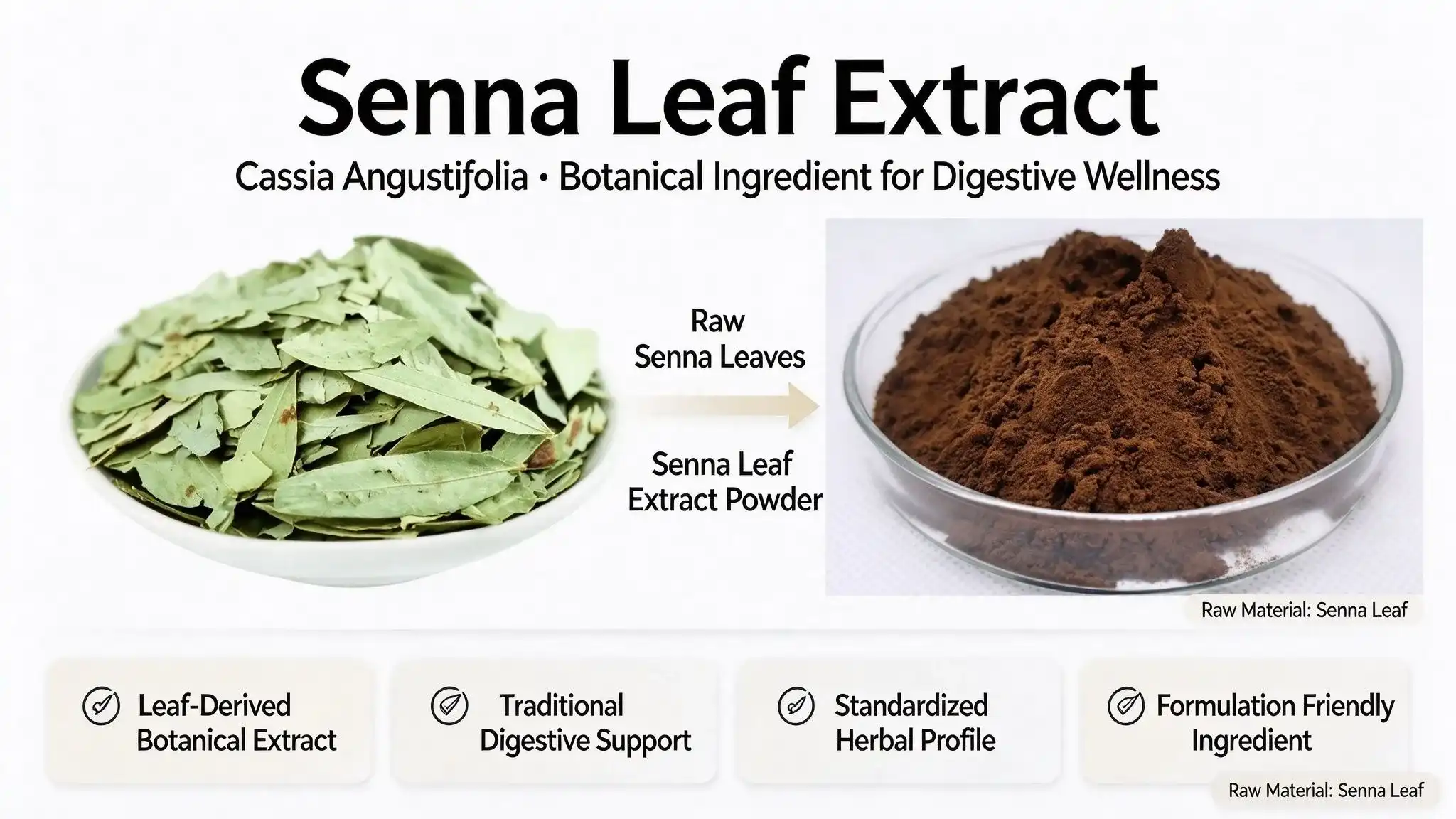
Dried Senna alexandrina leaves form senna leaf extract powder. Cassia angustifolia (Indian or Tinnevelly senna) and Cassia acutifolia (Alexandrian senna) are the same plant in earlier texts. We smash the leaves, extract the oils using a solvent, filter, concentrate, and dry the powder. Sigma dewaters. More sennosides, the hydroxyanthracene glycosides that give senna its action, and less plant materials are desired. Labels may read "sennosides," "Cassia angustifolia extract," or "Senna Leaf Extract." That's why I advise purchasers to verify Latin name and plant part first.
Extract Powder vs. Whole Leaf Powder and Pods
Whole leaf powder is powdered leaf, therefore its sennoside level depends on the season, soil, and storage. Sennosides are found in senna pods, albeit in less amounts than in leaves. A predetermined extract powder makes dose management and labelling easy. This reduces capsule and tablet size and weight since each serving is smaller. You must ask the supplier how they standardise the material and pay more per kilogram. Concentrated extracts allow tea manufacturers to manage flavour by using fewer leaves.
Why Sennoside Content Matters
Lab techniques like HPLC identify stereoisomers like sennosides A and B. A sennoside percentage tells formulators how much active chemical each pill or sachet contains. Sigma's Senna Leaf Extract has at least 20% sennosides, so formulators may water it down. Estimating fill weight when material is inconsistent yields inconsistent results. Each supplier should provide the test technique and reference standard. You can only compare two "20%" reports properly if you utilise the same procedure. Senna monographs, a standard among US purchasers, are sold by USP-NF.
How Does Senna Leaf Extract Powder Support Digestive Health?
Next, I'll talk about what happens after someone takes a senna dose and how the ingredient fits in with other ways to digest food.
How Sennosides Act in the Colon
Senna leaf extract powder contains sennosides that mostly stay whole as they go through the stomach and small intestine. Gut bacteria change them into rheinanthrone, which is the active form. Rheinanthrone changes how fluids and electrolytes are transported and moves the colon, which makes the bowel contract and keep more water in the stool. Since the change takes place in the colon, the effects usually show up 6 to 12 hours after taking the pill. Because of this, many labels say to take senna in the evening. It's a real pharmacological effect, not a mild nutritional effect, and the label should say so.
A Stimulant Laxative, Not a Fiber
Senna plant is laxative and stimulating. Bulk-forming psyllium husk absorbs water and softens faeces. They work with various items and are different. Clinical evaluations like the 2013 American Gastroenterological Association constipation technical review classify senna as a stimulant laxative. Doctors use these medications when fibre and lifestyle modifications fail. The phrase "natural" merely indicates where the item originates from, not its safety in any quantity or duration. Brands should promote senna as a one-time aid together with fibre, water, and exercise.
Benefits and Uses in Finished Products
Sigma claims its extract may be utilised in food and health supplements. Common forms include capsules, pills, powder sachets, digestive mixes, and herbal tea. Our product description mentions acute or heat-related constipation, occasional or frequent constipation, and a full stomach. The labelling should indicate occasional usage, as I read. Many companies appreciate the plant-based extract since it's versatile. Formulators should evaluate the base's flavour, dispersibility, moisture pickup, and dosage uniformity before moving on. Senna doesn't substitute fibre, water, exercise, or medical attention if symptoms persist.
Senna Leaf Extract Powder Dosage, Safety, and Compliance
Senna products get repeat customers or complaints based on how safe they are, so this section talks about dosage, side effects, and US laws.
Dosing by Sennoside Content
Weight doesn't provide enough information. The 2% leaf powder provides 0.2 mg of sennosides per 10 mg, whereas the 20% extract has 2 mg. To calculate the dosage, I sum up all the sennosides in the dish. Extract ratio, test technique, dose form, and market rules determine the label. Raw-material and consumer doses differ. Consumer doses are taken by one individual, whereas batch doses go into a batch. Tea, pills, and powders aren't gram-comparisonable. To test each recipe, use pilot batches and stability data, then follow market-specific processes.
Side Effects and Who Should Avoid Senna
Gastric pains, diarrhoea, nausea, and need to use the toilet are frequent adverse effects. Heavy or prolonged usage might dehydrate and lower potassium. Senna is intended for short-term usage, according to the 2018 European Medicines Agency evaluation report. It's not recommended for children under 12, those with intestinal obstructions, undiagnosed stomach discomfort, inflammatory bowel disease, or pregnancy. According to a 2005 "Annals of Pharmacotherapy," senna abuse may damage the liver and kidneys. Extended usage may induce melanosis coli, a harmless colon colour change. Consult a chemist before using corticosteroids, diuretics, or cardiac medications.
US Claims and Labeling
The FDA's laxative monograph regulates US OTC constipation medications containing senna leaf extract powder. Without a doctor's guidance, over-the-counter laxative stimulants should not be used for more than a week. A regulatory lawyer should review claims and label wording before a supplement or tea brand goes on sale. The 2002 FDA cascara sagrada and aloe final regulation reveals how attentively they monitor stimulant plants. Brands should avoid sickness claims and utilise particular terminology. Request quality documentation and specification sheets from providers for your regulatory team to submit.
How to Choose High-Quality Senna Leaf Extract Powder
When I buy something, I look at more than just price and looks. Here are the things I look at and how the main options compare.
Specifications and Documents to Check
For identification, check the Latin name, plant portion, and extraction process. Next, check the sample's sennoside percentage, testing method, drying loss, particle size, heavy metals, pesticide residues, and microbiological limitations. For instance, Sigma's extract has an 80-100 mesh size, ≤5% drying loss, and ≤10 ppm heavy metal level. Request a batch-specific COA, specification sheet, SDS, and certifications. Next, compare your first and later lots. The base's flavour, solubility, colour, and sedimentation should also be checked by formulation teams. Low prices mean nothing if sennoside levels vary.
Senna vs. Psyllium and Cascara Sagrada
Based on function, choose an ingredient. Fibres like psyllium increase bulk and last 12–72 hours, making them suitable for regularity products. Due to a 2002 FDA ruling, US over-the-counter laxatives no longer include cascara sagrada, another stimulant. So regulatory scrutiny is much more crucial. While ready-made senna pills are handy, the consumer loses formula and dosage control. Your team may determine the dose, blend it with other plants, and utilise how much extract powder they purchase. Your team then builds and tests. These ingredients aren't interchangeable.
Sigma Senna Leaf Extract: Specs and Process
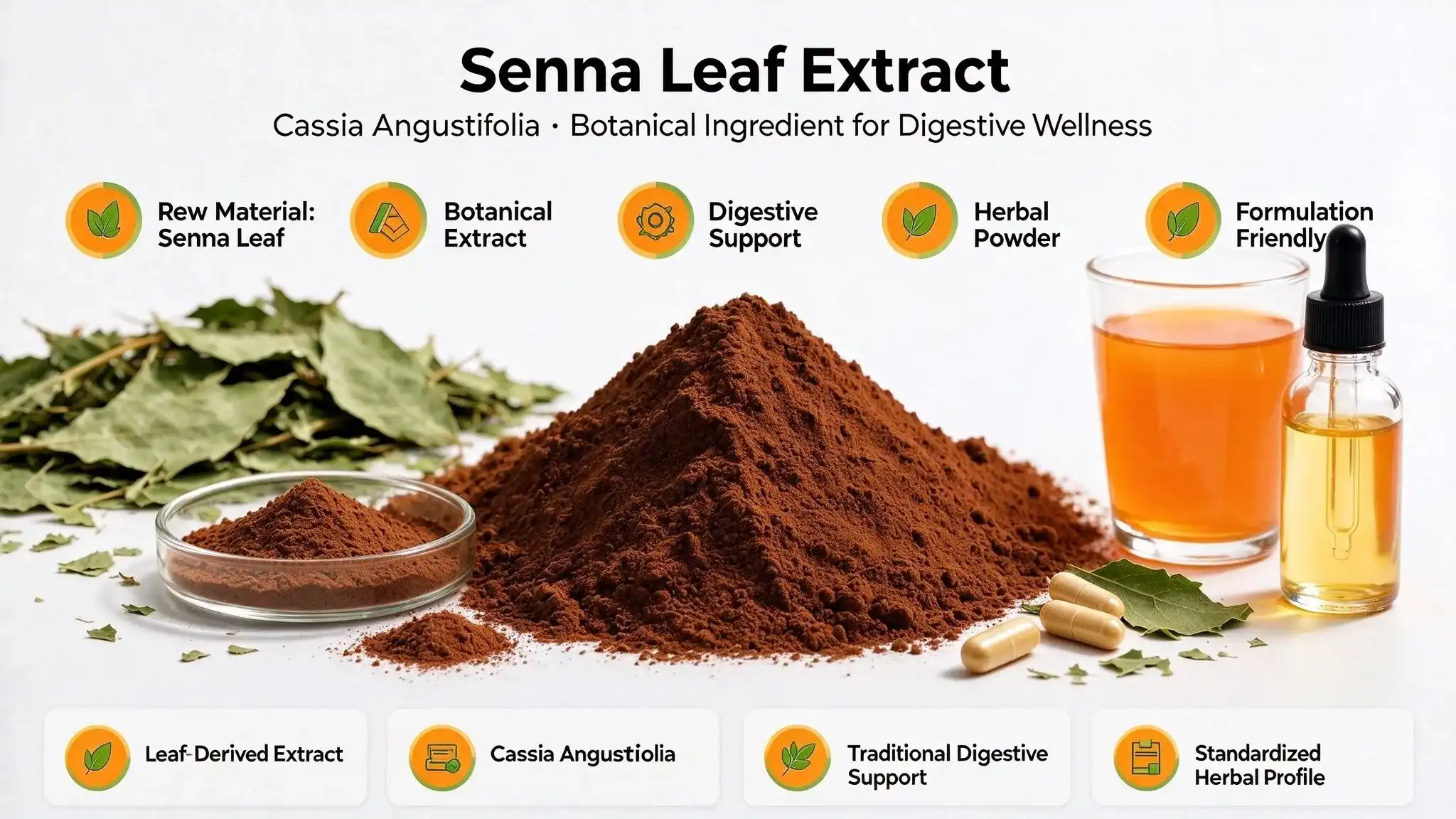
Water-extracted Senna Leaf Extract is a fine, brown-yellow powder. Minimum 20% sennosides. Choose raw materials, crush and sieve them, extract them, filter them, vacuum-concentrate them, purify them, dry them, re-crush, sieve, and mix them, test them, and package them. This item is ISO, HACCP, and Kosher certified. Cool, dry, and out of the light. Sigma's Shaanxi countercurrent extraction lines operate continuously. ISO 9001, ISO 22000, and HACCP are our certifications. Current supply of the extract.
Buying Senna Leaf Extract Powder in Bulk
With a clear process, sourcing stays predictable once you know what to look for, and your production schedule is safe.
A Practical Qualification Workflow
Most teams operate similarly when sourcing senna leaf extract powder. First, choose the sennoside's characteristics, dose, packaging, annual production, and market. Make a small list of vendors and get samples and papers. Check the material's sennoside content and dissolution in the lab. Try it on your line in a trial batch. Finally, review the COA, certifications, and quality agreement before ordering a test. The overall value should include sennoside, testing, freight, MOQ, lead time, and shelf life, not simply the price per kilogram. Start early and test samples and pilot runs over many weeks before your busy season.
Supply Continuity and OEM Support
During busy times, stockouts are the worst. Sigma keeps 10 to 20 tons of safety stock for important products. An efficient ex-factory system lets them deliver in 5 to 7 business days. We can ship by sea, air, or express, and we can help with paperwork and customs. Custom extraction ratios, particle sizes, packaging, and labeling are all part of our OEM/ODM service. This helps private-label brands match a certain formula. We offer free samples, can be reached 24 hours a day, seven days a week, and guaranty the quality for a year. This service lets your team test early and reorder without having to wait a long time.
Monitoring Quality After Approval
Not the end, but the beginning of a relationship. Set ranges for sennosides, moisture, particle size, color, smell, and microbial results that are acceptable, and then test each new lot against those ranges. Keep samples of retention so that you can look into any complaint. You should agree to change control in writing so that the supplier can let you know before they change the extraction method, site, or carriers. Set up regular reviews of performance and keep a qualified second source on hand in case something goes wrong. Last but not least, go over the rules in each market you serve. Senna is regulated differently in the US, Canada, the EU, and the UK.
Conclusion
Senna leaf extract powder may aid digestion. Sennosides may relieve occasional constipation by altering gut flora in the colon. Psyllium fibres operate differently, and senna's plant origin doesn't make it safe to take daily. Labels should state that the medicine is for short-term use, and US regulators must examine claims. Quality requires verified botanical identification, a defined test procedure, and COAs and certifications. Formulators may compare standards like Sigma's ≥20% sennosides, 80-100 mesh, low moisture, and heavy metal restrictions. Continuous monitoring and consistent lots ensure product performance.
FAQ
Is senna leaf extract powder the same as senna leaf powder?
No, extract powder is made to a certain level of sennosides, but leaf powder is made from ground leaves that have different amounts of sennosides.
How long can people use senna?
Senna is only meant to be used for a short time. Over-the-counter laxative labels say not to use them for more than a week unless your doctor tells you to.
What are the specifications of Sigma's extract?
The powder is brown-yellow and very fine. It is made by extracting sennosides with water. It has ≥20% sennosides, an 80–100 mesh size, ≤5% loss on drying, and ≤10 ppm heavy metals.
Does Sigma offer samples and OEM service?
Yes. We offer free samples and OEM/ODM options, which let you choose your own particle sizes, packaging, labeling, and extraction ratios.
Request a Senna Leaf Extract Powder Specification and Sample from Sigma
Sigma has senna leaf extract powder in stock, and they offer free samples, OEM/ODM options, and a quality guaranty for a year. If you want to compare senna leaf extract powder suppliers, email sarah@sxsigma.com with your desired sennoside level, dosage form, target market, and annual volume. Our team will get back to you with sample information and specifications. You can also look at more of our plant extracts at sxsigma.com.
References
1. American Gastroenterological Association Technical Review on Constipation, Gastroenterology, 2013
2. Assessment Report on Senna alexandrina Mill. (Cassia senna L.; Cassia angustifolia Vahl), Folium and Fructus, European Medicines Agency, 2018
3. Laxative Drug Products for Over-the-Counter Human Use; Cascara Sagrada and Aloe Ingredients, U.S. Food and Drug Administration, Federal Register, 2002
4. Acute Liver Failure with Renal Impairment Related to the Abuse of Senna Anthraquinone Glycosides, Annals of Pharmacotherapy, 2005
5. Efficacy and Safety of Traditional Medical Therapies for Chronic Constipation: Systematic Review, American Journal of Gastroenterology, 2005
6. Chronic Constipation, Nature Reviews Disease Primers, 2017