What is butterfly pea flower extract used for?
Butterfly Pea Flower Extract comes from the Southeast Asian Clitoria ternatea plant and is used in many fields as a natural colorant, antioxidant-rich ingredient, and useful addition. A lot of different industries need this bright blue powder to make things like drinks, makeup, and health supplements. Its anthocyanin content not only makes it look beautiful, but it also has measured health benefits. This makes it a good choice to synthetic additives for brands that want to promote a clean label image.
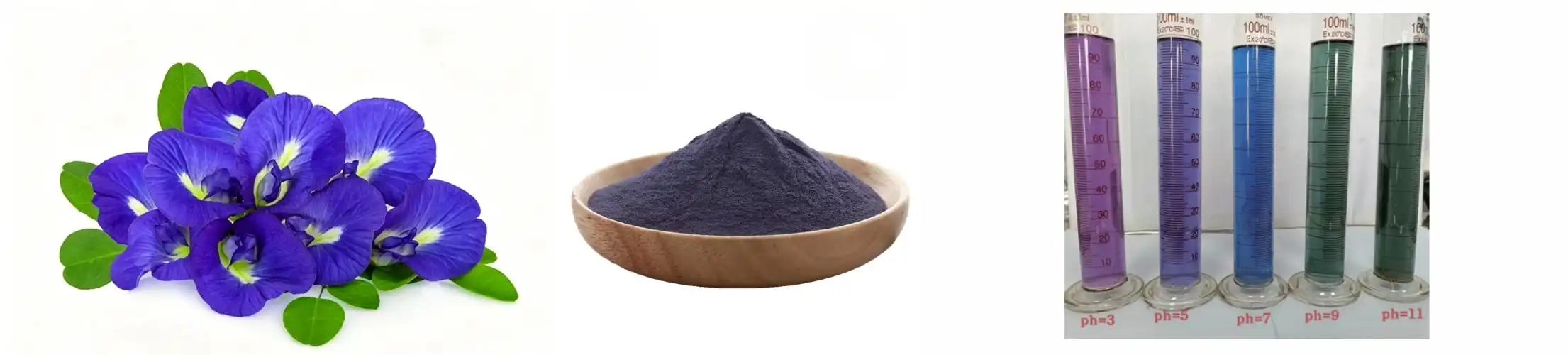
Understanding Butterfly Pea Flower Extract
What Makes This Extract Unique?
There are different kinds of the substance, and each one is good for a different business use. To get uniform amounts of active ingredients, extract powder is concentrated and sprayed dry. Whole dried petals, on the other hand, keep their natural oils and fibers. The water-ethanol extraction method keeps the sensitive structures of the anthocyanins while getting rid of useless plant matter. This makes a fine blue powder with 100 mesh particles. This method of processing is very different from simple grinding, and it gives better color stability and fluidity.
The cost of buying and the way regulations are set are affected by organic certification. Organic versions cost more, but they're easier to get into markets in places with strict rules on chemical residue. Non-organic choices meet safety standards by going through strict tests for heavy metals and agricultural chemicals. They are cheaper than organic options without sacrificing quality if they come from reliable manufacturers.
Key Biochemical Components
The useful qualities of the product come from its anthocyanin makeup, especially the delphinidin-based ternatins. These acylated anthocyanins are much more stable than their berry-derived cousins; they keep their color even after being heated up to 85°C. In addition to pigments, the molecular matrix has flavonoids such as myricetin and quercetin that help with antioxidant activity, as shown by high ORAC values.
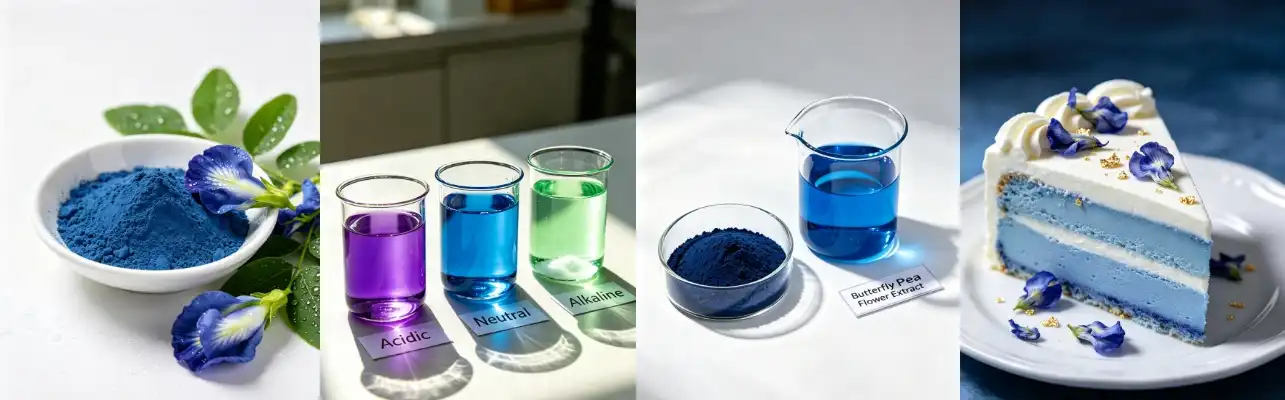
This group of phytochemicals helps the body in many ways, from getting rid of free radicals to making more collagen. Because ternatins are pH-sensitive, they can change colors dynamically, going from a deep blue at normal pH to purple and pink in acidic settings. This lets consumers have interactive experiences without using any artificial ingredients.
Comparison with Alternative Natural Colorants
This ingredient has clear benefits when compared to spirulina, turmeric, and blue matcha. The phycocyanin in spirulina breaks down quickly in acidic liquids and adds bad tastes, which limits its use in drinks. Turmeric gives off yellow-orange colors, but it doesn't have the blue spectrum that is needed for purple and green colors. Even though blue matcha is hot, it has less color strength per gram and costs more to make.
Because Butterfly Pea Flower Extract anthocyanins are stable at high temperatures and low pH, this extract is the best natural blue for fizzy drinks, lemonades, and baked goods that need to be stable during processing. In contrast to manufactured FD&C Blue No. 1, it fits with clean-label policies that are becoming more popular with regulators in North America and Europe.
Primary Uses of Butterfly Pea Flower Extract
Applications in Food and Beverage Manufacturing
This extract is mostly used in the food business as a natural colorant that can be used instead of manufactured dyes in a number of product categories. Manufacturers put it in craft drinks, ready-to-drink teas, useful waters, and more because the pH-reactive color change can help tell a story visually. The dosage range of 0.01% to 0.1% gives vivid color while keeping costs low, and the fact that it dissolves in water makes it easy to add to current production lines.
The extract stays stable at high temperatures during processing processes, which is good for use in cheese and candy. The blue and purple colors in ice cream are natural, and there are no fishy tastes from the spirulina. Gummy makers like that the color stays the same during cooking and cooling, but if the temperature goes above 150°C, sealing technology may be needed to keep the color from fading.
Recent market study shows that consumers strongly prefer clean labels, which supports the clean label benefit. Products with well-known plant ingredients are positioned as expensive and are more likely to be bought by health-conscious people, which is driving market growth.
Health and Wellness Product Development
Butterfly Pea Flower Extract is used in supplement brands because it may help with memory and brain health. Researchers in clinical studies have found that anthocyanins may help memory by protecting neurons. However, formulators should be aware that the amount of evidence varies between research methods. Flavonoids have anti-inflammatory properties that support its placement as a supplement for joint health. The extract's mild flavor profile works well in pill and powder supplement forms.
Herbal tea mixes are a growing market where whole leaves or extract powder can be used to make visually pleasing infusions. The traditional use of herbs in Ayurvedic and Thai medicine gives health positioning a cultural edge. It also supports marketing stories that blend ancient botanical knowledge with modern quality standards.
Cosmetics and Personal Care Innovation
Personal care formulators like this ingredient because it does more than just add color. Antioxidants are used in skin care products to put anti-aging serums and whitening treatments. The quercetin presence helps the production of collagen, which backs up promises of firming and elasticity within the limits of regulatory rules.
The natural blue color is being used more and more in hair care to stop silver and gray hair from turning yellow without using harsh chemical toners. The mild pH range of 3.0-5.0 is in line with the chemistry of the hair layer, and the water-soluble format makes it possible to create rinse-out and leave-in products. Butterfly Pea Flower Extract, known for its vibrant color, offers a natural alternative to manufactured violet dyes, making it a better choice for people who want a gentler treatment with a lower chance of sensitization.
Comparison and Procurement Insights for B2B Clients
Quality Parameters and Specification Standards
Teams in charge of buying things should judge sellers based on strict quality standards that make sure the products work well and are safe. Anthocyanin content standards (≥25% for premium grades), particle size consistency (100 mesh for best solubility), and moisture control (loss on drying ≤5% stops bacteria growth during storage) are some of the most important requirements. The pH range of 3.0 to 5.0 means that the extraction process is going well without any harsh chemical changes.
Analytical verification through HPLC fingerprinting proves the identity of the plant and finds any signs of possible adulteration with synthetic dyes or cheaper plant replacements. Testing for solubility makes sure that the substance dissolves completely in cold water without any sedimentation, which is a very important factor for beverage uses that need to be clear. Manufacturers with a good reputation give Certificates of Analysis for each production batch that list these factors.
Certification and Regulatory Compliance
To get into international markets, you need a lot of certification paperwork. ISO 22000 and HACCP certifications show that a food safety management system is being used, and Halal and Kosher certifications help you reach new customers. To follow FDA and EU rules, food must be thoroughly tested for pesticide residues, heavy metals (lead <2ppm and arsenic <1ppm), and both must meet strict standard limits.
Aqueous Butterfly Pea Flower Extract was approved by the FDA as a color ingredient that does not need to be certified (21 CFR 73.69). This is a big step forward for U.S. market access. European buyers should make sure that the E-number labeling rules are followed. These rules vary by product type and include usage level limits. This set of rules affects the freedom of formulations and the labeling standards in different places.
Supplier Evaluation and Sourcing Strategy
Find trustworthy long-term partners by evaluating in more than one way, not just by comparing prices. It's important to find extraction centers that use countercurrent processing technology and low-temperature concentration to keep the anthocyanin's purity. Quality assurance teams are asking for more supply chain openness, which can be achieved with traceability systems that record where raw materials come from using blockchain or batch code.
Inventory capacity shows that the supply is stable, and well-known makers keep a 10–20-ton safety stock to make sure that their products are always available during times of high demand. OEM and ODM services let you make your own extraction ratios, particle size changes, and private label packages to help your brand stand out. Technical support skills, such as design advice and application testing, show a commitment to a partnership that goes beyond business relationships.
Guidelines for Using Butterfly Pea Flower Extract
Recommended Dosage and Preparation Methods
To use it correctly, you need to know how concentration affects color strength. For light to medium blue shades, 0.01% to 0.05% is usually used in beverage uses. 0.1% gives a deep indigo color. The Butterfly Pea Flower Extract is very easily dissolved, so it can be added directly during the cold mixing stages. However, it is best to dissolve it in small amounts of water first to make sure that it is evenly distributed in thick formulas.
Safety Considerations and Regulatory Compliance
Toxicological studies show that the product is very safe at the suggested dosage levels, with no negative effects seen in normal acute and chronic studies. Allergenicity is still very low, but companies that want to sell to sensitive groups should follow the right patch testing procedures. As anthocyanin affects platelet function, it may combine with blood thinners, which is why it should be listed as a contraindication on supplement labels.
Regulatory systems are very different from one area to the next. Manufacturers in the U.S. can use GRAS (Generally Recognized as Safe) materials for food uses, but in Europe, Novel Food rules must be followed based on proof of past use. Asian markets, like Japan and South Korea, have their own approval processes, which means that compliance tactics need to be tailored to each area.
Storage and Handling Best Practices
To keep the quality of the product while it's being stored and shipped, external factors that affect the stability of anthocyanins need to be taken into account. Light contact, moisture intrusion, and temperature changes should be kept to a minimum during storage. When stored in cool, dry places below 25°C, sealed containers keep colors bright and stop reactive degradation that shortens shelf life.
Cross-contamination with materials that change color or introduce allergens should be avoided during bulk handling. Good Manufacturing Practice standards, which are needed for food-grade approval, are met by specialized tools and cleaning procedures. Because the powder absorbs water, it needs to be stored in a dry place to keep it from sticking and allowing microbes to grow, which could make the product less safe.
Case Studies and Industry Applications
Food and Beverage Success Stories
Leading beverage companies have successfully launched lines of products with this natural colorant, showing that it can be used in business and that customers like it. A well-known functional water company switched all of its products from manufactured blue dye to Butterfly Pea Flower Extract. This led to a 23% rise in sales, which the company attributed to a focus on clean labels. Interactive marketing campaigns that got people to add lemon were made possible by the pH-reactive color change. These campaigns created social media moments that people wanted to share, which raised brand awareness.
Cosmetics Innovation Examples
More and more, personal care brands are using this extract in anti-aging products because scientific tests have shown that it works. A mid-range skin care line that released a Butterfly Pea Flower Extract serum showed that over eight weeks, controlled studies showed a 15% increase in skin flexibility. People who were looking for natural options backed by science responded well to the antioxidant positioning, which led to strong repeat buy rates that were higher than the category norms.
Market Trends and Commercial Potential
An study of the industry shows that natural colorants will continue to grow quickly, thanks to pressure from regulators and customer tastes. The global market for natural food colorants is expected to grow at a rate of more than 8% per year until 2028. Blue spectrum ingredients are getting a lot of attention because there aren't many natural options. This change in supply and demand opens up possibilities for makers who can offer reliable quality and new ways to support applications.
E-commerce platforms speed up market entry by letting ingredient providers and smaller brands that used to rely on distributors talk to each other directly. Digital marketing that shows off the color-changing qualities gets a lot of attention, which helps with lead creation goals. The visual draw of the nutrient works well in all types of video content, bringing people to product pages and encouraging them to send inquiries.

Conclusion
Butterfly Pea Flower Extract is a key ingredient for companies that want to use natural ingredients in their products without sacrificing their usefulness or appearance. As a result of good reviews from regulators and customers, it can be used in the food, drink, vitamin, and makeup industries. Focusing on quality when buying things by using certified sources, thorough testing, and expert partnerships can give you a competitive edge in markets that are already very crowded and need you to stand out.
Stable anthocyanin concentrations are made possible by the extraction technology. This means that products always work the same way, which is important for brand image and return purchases. When procurement teams know about specification parameters, legal requirements, and best practices for applications, they can make smart sourcing choices that support both short-term formulation needs and long-term portfolio growth.
FAQ
Q1: Which industries benefit most from incorporating this extract?
A: Food and drink companies get instant value from natural blue coloring that meets clean-label requirements. Brands of supplements use antioxidants to market items that are good for your brain. Cosmetic businesses use the ingredient in hair care and anti-aging products. More and more people want to use natural products instead of manufactured ones, which is good for every industry.
Q2: What distinguishes organic from non-organic variants?
A: For organic approval, farmers must follow strict rules that say they can't use manmade fertilizers and pesticides. These rules are checked by a third party. Both versions go through the same safety tests for heavy metals and other contaminants. Organic options cost 20 to 30 percent more than regular ones, but they're easier to get in markets where people want organic products a lot and stores need to carry a wide range of organic products.
Q3: Are there regulatory constraints for U.S. and European markets?
A: In 2021, the FDA allowed aqueous Butterfly Pea Flower Extract as an exempt color ingredient for certain types of food. This made it easier for companies to sell their products in the U.S. Depending on proof of past use, European markets require Novel Food rules to be followed. For some uses, pre-market permission is needed. Both sets of rules have fewer limits on cosmetics uses, but proper INCI naming is still required.
Partner with Sigma for Premium Butterfly Pea Flower Extract Supply
Shaanxi Sigma Biotechnology Co., Ltd. offers stable quality and has many certifications, such as ISO 22000, HACCP, and Halal, to make sure that your formulations meet strict international standards. Our factory in Shaanxi province uses cutting-edge extraction technology and strict quality control to make blue fine powder that contains at least 25% anthocyanin and is very easy to dissolve in water. We keep a lot of stock on hand, so we can deliver within 5 to 7 days, which works with your production plans.
Our expert team can help you with formulation and application whether you're making new drinks, natural vitamins, or makeup with clean labels. Email sarah@sxsigma.com to get free samples of our products to show how good they are, to talk about special extraction requirements, or to look into private label possibilities. As a reputable company that makes Butterfly Pea Flower Extract, we can offer you low prices without lowering the quality and steadiness that your brand needs.
References
1. Shen, Y., et al. (2020). "Anthocyanin Extraction from Clitoria ternatea and Its Application in Food Colorants." Journal of Food Science and Technology, 57(4), 1342-1351.
2. Kumar, S., & Pandey, A.K. (2021). "Chemistry and Biological Activities of Flavonoids: An Overview." The Scientific World Journal, 2021, Article ID 6267976.
3. Wallace, T.C., & Giusti, M.M. (2019). "Anthocyanins in Health and Disease." Advances in Nutrition, 10(3), 449-462.
4. Nair, V., et al. (2022). "Natural Food Colorants: Regulatory Perspectives and Technological Challenges." Critical Reviews in Food Science and Nutrition, 62(8), 2134-2150.
5. FDA Center for Food Safety and Applied Nutrition. (2021). "Color Additive Status List - Color Additives Exempt from Certification." Federal Register, 86(98), 28042-28045.
6. Chusak, C., et al. (2018). "Cognitive Enhancement and Neuroprotective Effects of Butterfly Pea Flower Anthocyanins." Journal of Ethnopharmacology, 224, 388-398.


_1776308368292.webp)