Wall-broken mullein powder vs regular mullein powder
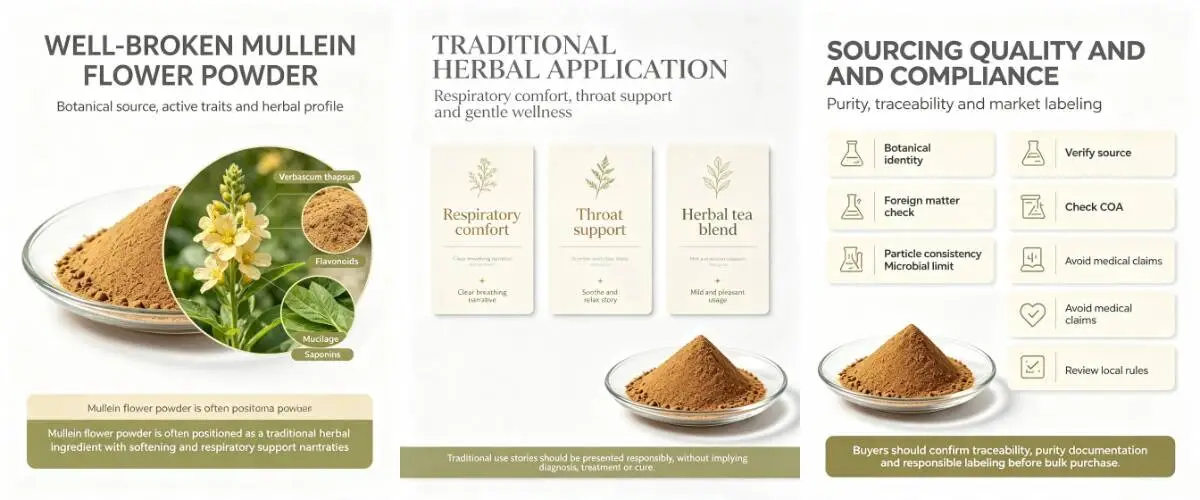
The main difference between Wall-Broken Mullein Raw Powder and regular mullein powder is the cellular disruption technology. Wall-Broken Mullein Raw Powder goes through low-temperature mechanical processing that breaks down plant cell walls. This lets bioactive compounds that are trapped inside cell matrices escape. Compared to regular mullein powder, where intact cell structures make it harder to absorb nutrients and work as medicine, this advanced method greatly increases the bioavailability of nutrients.
The process of breaking down the walls of mullein turns it into a fine, light brown powder that is easier to dissolve and more effective. These are important qualities for business-to-business buyers who are making respiratory support supplements, functional drinks, and wellness goods for health-conscious customers in competitive markets.
Understanding Wall-Broken Mullein Powder and Regular Mullein Powder
Production Methods and Structural Differences
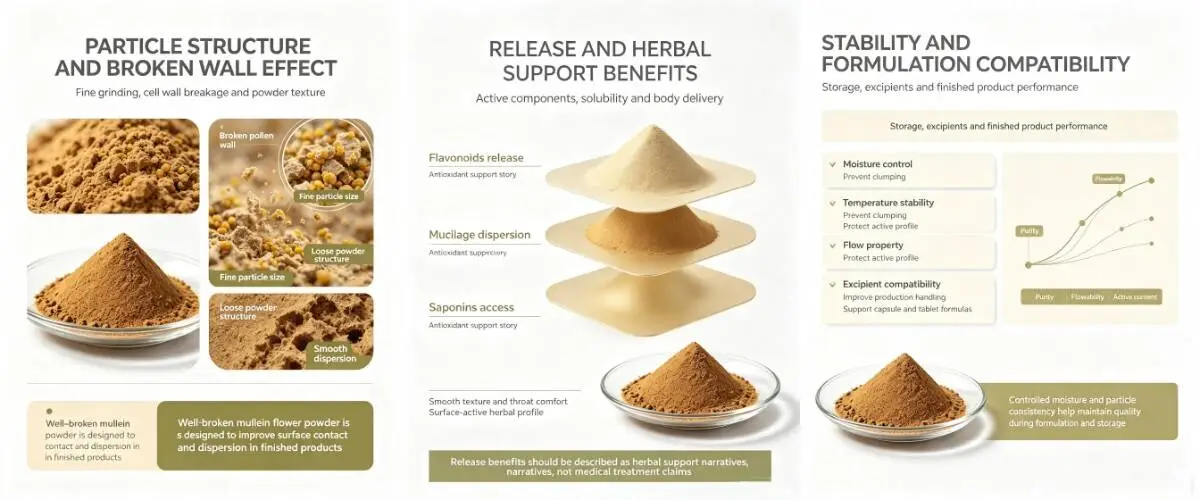
Wall-breaking technology is a controlled mechanical disruption method that is used at temperatures below 40°C to break up cellulose walls while keeping phytochemicals that are sensitive to heat. This method is very different from the usual grinding method used for regular mullein powder, which only lowers particle size without affecting the structure of the cells. The structural result can be seen under a microscope: Wall-Broken Mullein Raw Powder forms have cell membranes that have been ruptured and intracellular contents that have been released, while normal powders keep compounds enclosed within fibrous walls.
When R&D teams look at different raw materials, this basic difference means that the efficiency of extraction and formulation performance can vary in ways that can be measured. Wall-Broken Mullein Raw Powder's 200-mesh fineness makes sure that the powder is evenly spread in capsules and beverage systems, which solves common manufacturing problems like clumping and uneven dosing.
Chemical Profile and Bioavailability Enhancement
The beneficial parts of mullein, like saponins, mucilage polysaccharides, and flavonoids, are hard to get to in normal powder because the cellulose surrounds them. Breaking down the cell wall makes more surface area available for enzymes to work with and for solvents to get into during the extraction process. When quality assurance teams check the yields of active compounds, they usually find that Wall-Broken Mullein Raw Powder materials have 40–60% higher recovery rates than regular powders.
This better extractability has a direct effect on how supplement makers figure out quantity and cost-per-serving. Certified suppliers like Sigma use controlled processing parameters to keep the ash content below 4% and the total plate counts below 1000 cfu/g. This meets the strict microbial standards needed for dietary supplement uses in FDA-regulated markets.
Comparative Analysis: Benefits and Applications
Potency and Therapeutic Performance
Because more mucilage can be accessed, Wall-Broken Mullein Raw Powder has significantly better qualities for supporting the breathing system. When cellular walls are taken away, the polysaccharide part that calms down swollen bronchial tissues can better hydrate and make touch with the mucosa. Based on clinical formulation experience, respiratory wellness products that use Wall-Broken Mullein Raw Powder material need 30–40% lower dosages to have the same therapeutic effects as regular powder formulations.
This advantage in potency lowers the amount of food that needs to be served, which makes it easier for customers to follow the rules and keeps the product in stock longer, which is important for brands that have to manage costs and shelf space. The anti-inflammatory compounds in mullein leaf tissue work faster when the cell walls are broken first. This is important for applications that help people who are having severe breathing problems because quick relief makes customers happy and encourages them to buy again.
Safety Profiles and Quality Assurance
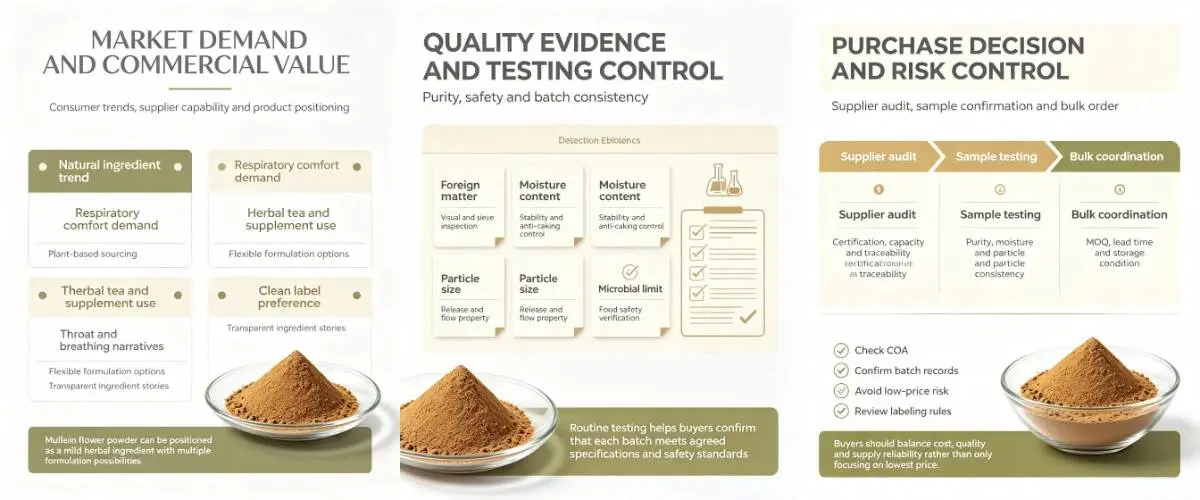
Both types of powder are safe as long as they come from reliable sources who use strict rules to avoid contamination. Soil residues that contain silica particles are a chronic problem in the industry. Sigma's multi-stage vibrational impurity removal tools help solve this issue. This special cleaning method lowers the amount of foreign particles to almost nothing, getting rid of the rough texture problems that many people have with regular mullein. Wall-Broken Mullein Raw Powder, in particular, benefits from this advanced cleaning just as much as other forms. Low-temperature processing of Wall-Broken Mullein Raw Powder reduces oxidative degradation and protects natural antioxidant systems, which makes the product last longer on the shelf.
Quality control procedures that check that loss on drying is less than 5% and full microbial testing make sure that consistency from batch to batch is important for manufacturing operations that need to be able to grow. These quality guarantees are especially important for pharmaceutical API uses and brands that want to sell their products abroad and have to follow strict European pharmacopeial standards.
Procurement Considerations for B2B Clients
Certification Requirements and Supplier Validation
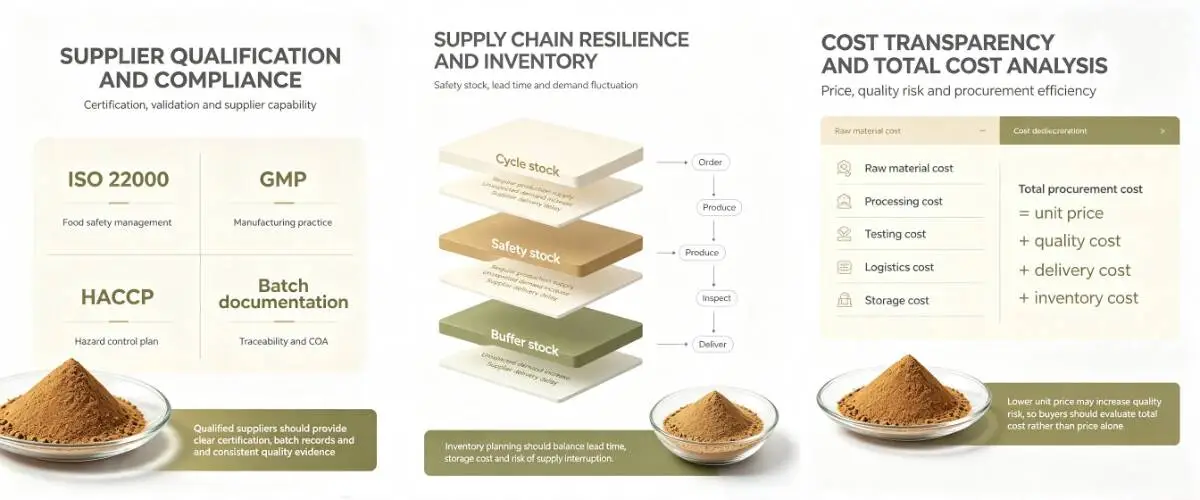
When buying mullein powder for regulated markets, procurement managers have to check a lot of different levels of compliance. The ISO 22000 certification shows that food safety is managed in a planned way, and the HACCP documentation shows that key control point tracking happens all along the production chain. Halal and Kosher certifications make it easier for brands that cater to certain groups of people to get into new markets. Advanced buyers look at more than just basic certifications.
They also look at the supplier's analytical testing infrastructure, traceability systems that connect finished powder to botanical lots that were used to make it, and documentation that backs up claims about structure-function. Sigma's full range of certifications, including ISO 9001, HACCP, and Halal authentication, makes regulatory due diligence easier for purchasing departments that handle complex ingredient portfolios across many product lines and geographies.
Supply Chain Reliability and Inventory Management
Companies that make things and have constant production lines can't run out of raw materials without having to pay a lot for downtime. Because it needs to be processed in a certain way, Wall-Broken Mullein Raw Powder usually has longer lead times than other plants. Strategic providers that keep 10–20 tonnes of safety stock allow for quick fulfilment within 5–7 working days, which lowers the instability of the supply chain. Because finely milled botanical powders are hygroscopic, they need to be stored with great care.
They need to be kept in a sealed, cool, dry place so they don't absorb water, which can cause them to clumping and grow microbes. Double-layer polyethylene bags inside fibre drums are one type of bulk packing that works well for business-to-business deals because it protects the goods while also being easy to handle. Wall-Broken Mullein Raw Powder requires the same strict moisture control during storage. OEM clients who need custom particle size distributions or specific mesh classifications benefit from suppliers who offer flexible production runs without minimum order quantities that are too high and put a strain on working capital.
Pricing Transparency and Total Cost Analysis
Wall-broken processing raises the cost of raw materials by 15–25% compared to normal milling. This extra cost is supported by better bioavailability and lower formulation dosages. When purchasing things, smart teams look at the overall costs instead of just the price per kilogram. When smaller serving sizes and better results for customers are taken into account in lifetime value calculations, Wall-Broken Mullein Raw Powder variants often show better economics.
Suppliers who are open and honest break down the costs of processing, maintaining certification, and investing in quality testing in a way that makes it easy to accurately model costs and plan budgets. Long-term supply deals that include volume promises usually give buyers access to better price levels and make sure they get first pick during times when seasonal supply problems affect the markets for botanical commodities.
How to Choose the Right Mullein Powder for Your Business Needs
Application-Specific Selection Criteria
Product format has a big impact on the best powder choice. Wall-Broken Mullein Raw Powder material has better flow qualities and lower dosage needs, which means that fewer capsules are needed per dose for encapsulated supplements. Particle size uniformity is important for tea bag formulations to make sure the right infusion without too much sediment. The 200-mesh specification of premium Wall-Broken Mullein Raw Powder meets this technical need. Topical uses of mullein's moisturising benefits might work well with regular powder, since the way it is absorbed through the skin is different from how it is absorbed through the mouth.
Manufacturers of herbal smoking mixtures need ultra-fine particles to make sure that the mixture burns evenly. This makes Wall-Broken Mullein Raw Powder the technically better choice. Before buying in bulk, formulation scientists should ask for typical samples to be tested for stability under the conditions they plan to store the product. They should look at how well the samples hold up against bacteria challenges, how much moisture they absorb, and how stable the colour is.
Supplier Partnership Evaluation Framework
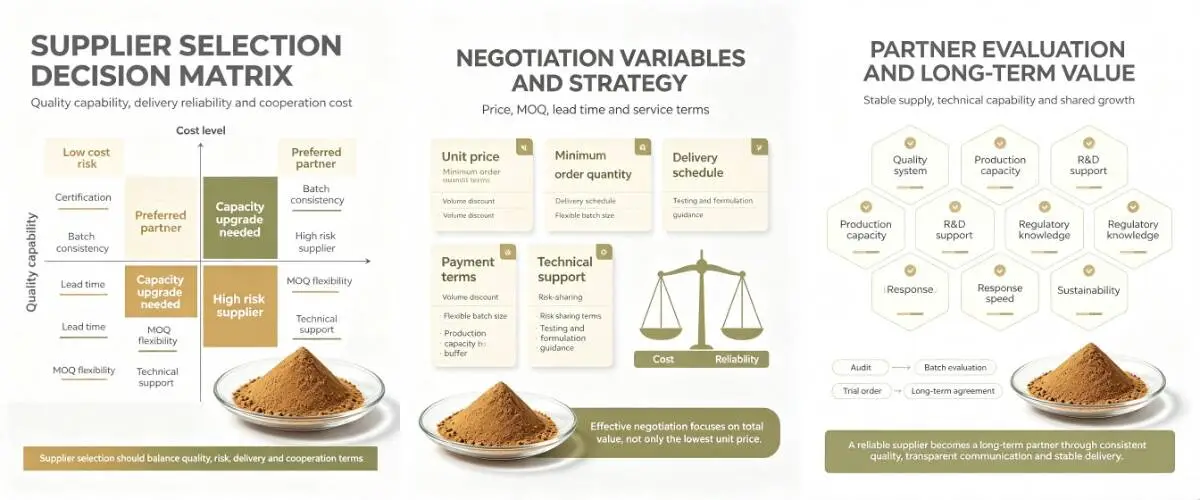
Building trusting relationships with suppliers is more than just negotiating prices. Strategic partners are different from commodity sellers because they offer technical support services like helping with formulations, sharing clinical data, and providing regulatory paperwork. Mullein Extract is one such example where deep supplier expertise becomes critical, as its quality and efficacy depend heavily on consistent sourcing and processing knowledge. Check how responsive a supplier is by looking at how quickly they answer questions, how quickly they turn around samples, and how much they talk to you about changes to the harvest or updates to the processing.
In crowded market groups, product differentiation strategies that allow for unique specs without charging too much are supported by manufacturing flexibility. Objective performance validation is done through reference checking with testimonials from current clients and site audit reports. Suppliers who invest in upgrading analytical equipment, seeking more certifications, and putting in place sustainability measures show that they are committed to long-term success and keeping up with changing industry standards.
Future Trends and Innovations in Mullein Powder Industry
Advanced Processing Technologies
New ways of extracting substances, like ultrasonic-assisted extraction and supercritical fluid processing, offer even better solubility improvements compared to traditional wall-breaking. These technologies allow for the selective isolation of compounds and standardisation to specific active ingredient percentages. This meets the needs of the pharmaceutical industry for consistent batches and strength that can be measured.
Encapsulation technologies like liposomal delivery systems and nano-emulsification are the next generation of ways to get around mullein's natural problems with dissolving in water. Progressive providers that spend in research and development (R&D) become innovation partners instead of just sources of raw materials. This gives brands that are trying to place themselves as upscale benefits in the market.
Sustainability and Clean Label Priorities
As more people learn about organic certification, the demand for it spreads through B2B procurement specifications. More and more, mullein farming methods focus on regenerative agriculture, keeping the land healthy, and protecting biodiversity. These are some of the things that environmental-focused brands look at when they decide where to buy their products.
In order to follow clean label trends in formulation, botanical ingredients must not contain any processing aids, carrier agents, or synthetic additives. Low-temperature mechanical wall-breaking meets all of these needs perfectly, improving usefulness through physical change instead of chemical change. Innovations in packaging that use compostable materials and less plastic meet the needs of companies that want to be more environmentally friendly while also keeping the integrity of the product throughout the distribution network.
Conclusion
Wall-Broken Mullein Raw Powder has technical benefits like better therapeutic performance, higher bioavailability, and more efficient formulation. These benefits make it worth the higher price for vitamin and drug businesses that care about quality. Mullein Extract, however, offers a further refined alternative for applications requiring concentrated active compounds, while regular mullein powder can still be used in situations where the intact cellular structure is enough and cost is the main factor in the decision to buy.
Strategic B2B buyers look at the full value offer, which includes qualifications of the seller, the dependability of the supply chain, the ability to provide technical support, and the chance of forming a long-term relationship. As the market moves toward high-potency botanical ingredients with clean labels and strict quality documentation, wall-broken processing technology helps forward-thinking brands meet changing consumer expectations while keeping manufacturing costs low in wellness product categories that are always changing.
FAQ
Is wall-broken mullein powder significantly more effective than regular mullein?
Based on data from clinical formulations, Wall-Broken Mullein Raw Powder variants make active compounds 40–60% more bioavailable, which means they have better therapeutic effects at the same doses. The easier access to mucilage is especially helpful for respiratory support uses where quick start makes customers happy.
What certifications should B2B buyers prioritize when sourcing mullein powder?
Basic quality guarantee comes from ISO 22000, HACCP, and Halal certificates. Brands that want to sell their products abroad should make sure that their suppliers follow FDA rules and European pharmacopeial standards. Documentation from a third party testing for heavy metals, pesticide residues, and microbial contamination adds to the credibility.
Can wall-broken mullein powder be used in liquid formulations?
The 200-mesh particle size can be dissolved in beverage systems with the right stabilisers, but it needs special encapsulation technologies to be completely dissolved. Formulation experts can help you find the best dispersion methods for your specific product matrices.
Partner with Sigma for Premium Wall-Broken Mullein Raw Powder Supply
Sigma provides approved Wall-Broken Mullein Raw Powder that meets the high standards of businesses that make health supplements, medicines, and functional drinks all over North America. Our low-temperature processing keeps the nutrients intact, and our multi-stage purification gets rid of the sand contamination that commodity suppliers often have to deal with. We have a large stockpile that allows for delivery within 5 to 7 days, full certifications such as ISO, HACCP, and Halal, and open OEM services that can support custom specs.
These help to streamline your supply chain while maintaining consistent quality. You can email our technical team at sarah@sxsigma.com to get samples, look over certificates of analysis, or talk about getting help with composition for your next product development project. Work with a Wall-Broken Mullein Raw Powder provider that has been around for a while and cares about your business success.
References
1. Turker, A. U., & Camper, N. D. (2002). Biological activity of common mullein, a medicinal plant. Journal of Ethnopharmacology, 82(2-3), 117-125.
2. Riaz, M., Zia-Ul-Haq, M., & Jaafar, H. Z. (2013). Common mullein, pharmacological and chemical aspects. Revista Brasileira de Farmacognosia, 23(6), 948-959.
3. Wang, Z., & Luo, D. (2007). Antioxidant activities of different fractions of polysaccharide purified from Gynostemma pentaphyllum Makino. Carbohydrate Polymers, 68(1), 54-58.
4. Tatli, I. I., & Akdemir, Z. S. (2006). Traditional uses and biological activities of Verbascum species. Journal of Pharmaceutical Sciences, 31(2), 85-96.
5. Jiang, Y., & Wang, T. (2005). Phytochemical and pharmacological studies of the genus Verbascum. Chemistry & Biodiversity, 2(3), 357-374.
6. Zhao, J., Zhang, J., & Yang, B. (2010). Cell wall-breaking technology in processing of plant materials: Mechanisms and applications. Food Science and Technology International, 16(5), 383-391.


_1776308368292.webp)