Saudi Date Syrup Benefits for Food Manufacturers
Saudi Date Syrup has emerged as a breakthrough natural sweetener that addresses multiple manufacturing pain points while meeting growing consumer demands for clean-label products. This 100% pure fruit extract delivers predictable functionality, nutritional value, and versatile application potential across bakery, beverage, and confectionery sectors.
As food manufacturers navigate the shift away from refined sugars and synthetic additives, date syrup sourced from premium Saudi varieties offers batch-to-batch consistency, comprehensive certifications, and documented purity—transforming formulation challenges into competitive advantages through a single, traceable ingredient.
Understanding Saudi Date Syrup: Composition and Nutritional Benefits
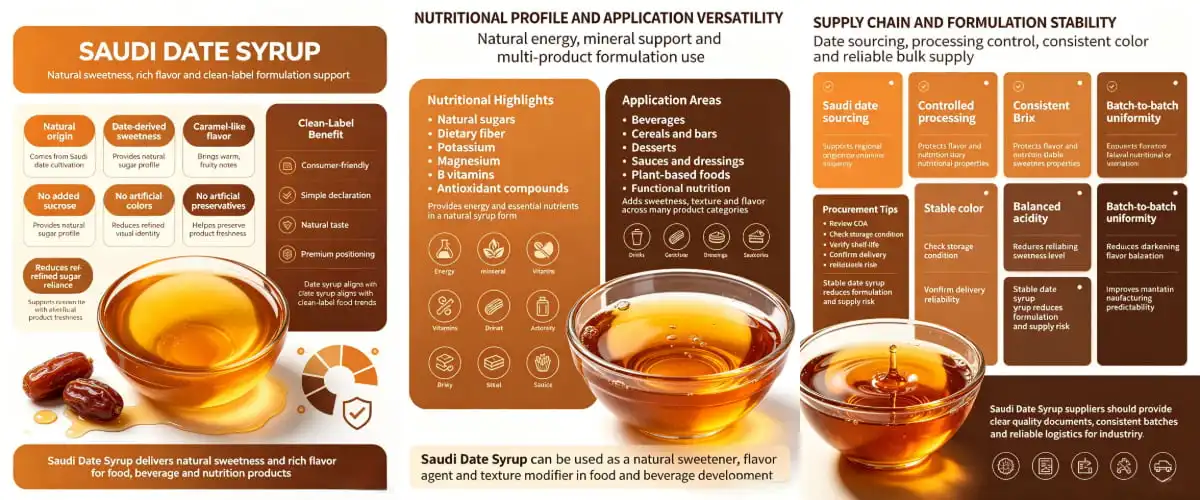
What is Saudi Date Syrup and Why It Matters for Industrial Formulation
Saudi Date Syrup, sometimes called "Debs," is made by adding water slowly, cooking the dates slowly, and filtering them very finely. The best date types used are Khalas, Sukkary, and Fardh. This is a major fruit extract that keeps the natural mineral balance of the fruit it comes from instead of refined sugars or leftover sweeteners like molasses.
It is used in the production process to keep nutrients that can't handle high temperatures safe and to reach a Brix concentration of 70° to 75°. Microbes can't grow because of the high osmotic pressure, so it can be stored without any chemicals. Most of the time, the pH level is between 4.0 and 5.0, which means that the environment is slightly acidic and can be used with many types of food. It can also be used for things that are neutral or acidic.
It's a thick, brown liquid that's mostly made up of invert sugars like fructose and glucose. This makes it very easy to process and keeps it from being gritty like syrups made from sucrose. There are about 70% solids in it and about 65% sugar in it all together. This mix makes it easier for things to brown and raises the chance of a Maillard reaction happening when cooking or baking.
Nutritional Profile That Elevates Clean Label Claims
Date syrup has minerals like iron, magnesium, calcium, and potassium that are good for you. It also has B vitamins and antioxidants like polyphenols and carotenoids. The fact that these bioactive compounds are useful for more than just sweetness helps the product's image as naturally healthy and high in nutrients. Companies that want to sell to people who are interested in health or sports nutrition like it because it has a lot more potassium than sugar or honey.
Date syrup tastes like rich caramel with fruity notes. It goes well with both sweet and spicy foods. It tastes not the same as honey, maple syrup, or agave nectar. It has a unique smell that makes finished goods stand out in crowded markets and lets brands tell stories about real Middle Eastern history and traditional craftsmanship.
Why Food Manufacturers Should Choose Saudi Date Syrup: Core Benefits and Applications
Functional Advantages That Solve Real Production Challenges
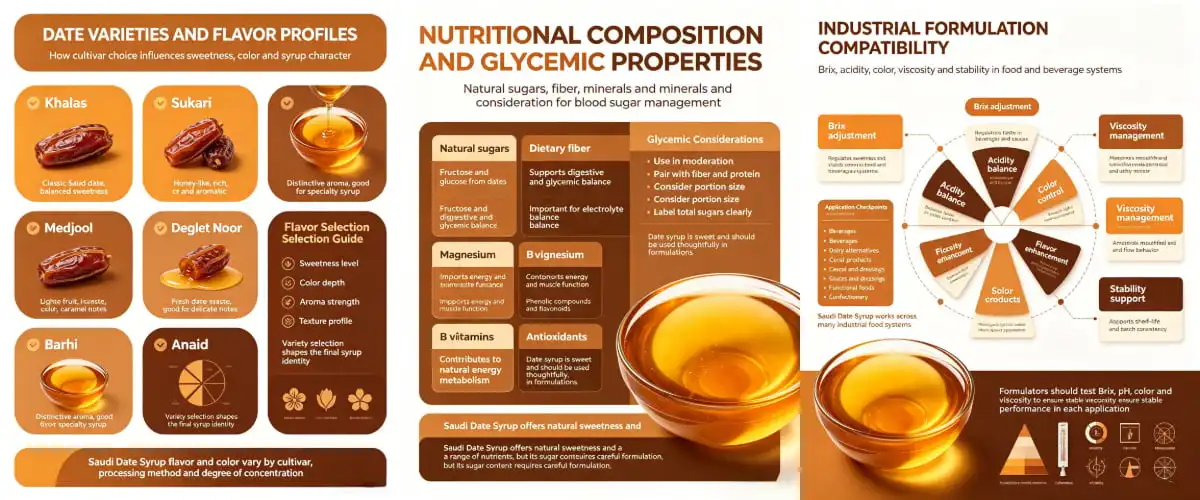
Taste, shelf life, and being able to see the materials are all problems that manufacturers always have with recipes. This can be fixed in a number of ways with Saudi Date Syrup. Its natural humectant traits keep baked goods moist, so they don't stick together. This also makes them last longer without using any added chemicals. Because it has a lot of fructose, it gives sweetness at lower rates than sucrose. This lets claims be made about less sugar while keeping the taste.
The syrup has a low glycemic index (about 47 to 50), which helps keep blood sugar in check. This is very important because the world's diabetes rate is going up. With this useful benefit, companies can make foods for health-conscious customers without changing the way they taste or feel. The thick texture makes drinks feel better in your mouth and helps plant-based milks and protein shakes stay stable by stopping sedimentation and phase separation.
Here are the core advantages that differentiate date syrup in industrial settings:
- Natural preservation capabilities: Organisms that make food go bad can't live in places with a lot of sugar and not much water activity. This means that there is less need for chemical preservatives, which helps clean-label goals.
- Processing consistency: At standard store temps, date syrup keeps liquid, while sweets turn into crystals. This makes it easier to handle, pump, and dose in automatic lines, which lowers waste and downtime.
- Versatile application range: The syrup integrates seamlessly into bakery products (cookies, energy bars, bread), beverages (smoothies, cold brew coffee, flavored water), dairy alternatives (yogurt, ice cream), confectionery (caramels, chocolate fillings), and savory applications (glazes, marinades, sauces).
- Enhanced flavor complexity: Tastes are deeper and more complex when you use date syrup instead of artificial sugars or high-intensity sweets. This is because date syrup is sweet, but it also adds other flavors.
These functional advantages translate into tangible production benefits—reduced formulation complexity, simplified ingredient decks, and improved finished product performance.
Alignment with Consumer-Driven Market Trends
In the food industry, natural alternatives to synthetic additives are becoming more and more important. People carefully read ingredient lists to find well-known parts that are usually good for them. To do this, date syrup is used, which is a simple sweetener that shows honesty and openness. High-end product lines aimed at health-conscious customers look even better when they come with organic certification options.
Date syrup is naturally gluten-free, vegan, and non-GMO, so it can be used by a lot of different types of people. This lets more people get certified and makes it easy to get certified. Once you're known to be naturally Halal, you can go into niche markets where compliance is important.
How to Source High-Quality Saudi Date Syrup for Manufacturing Needs
Critical Quality Parameters and Screening Criteria
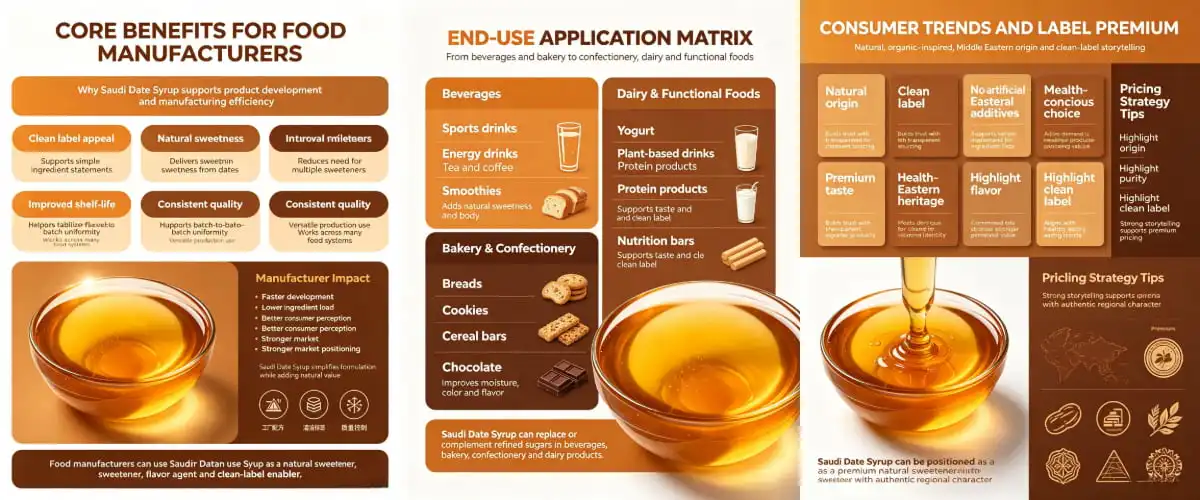
Sourcing decisions for industrial sweeteners demand rigorous evaluation beyond price considerations. Quality assurance teams should prioritize five critical inspection items when evaluating Saudi Date Syrup suppliers:
- Brix measurement: Refractometry shows that the consistency of the sweetness and stickiness is maintained. This stops recipe shift and makes sure that every batch of the product works the same way.
- HMF testing: High amounts of hydroxymethylfurfural (HMF) in food indicate that it was harmed by heat during processing. High-quality sources keep HMF levels low by following strict rules about temperature. This keeps the food's taste and nutritional value.
- Sugar profile analysis: With high-performance liquid chromatography (HPLC), you can find out how much fructose, glucose, and sugar are in a sample. This can find corn syrup or other less expensive ingredients that don't work as well for the product.
- Microbiological screening: Testing for osmophilic yeasts, molds, and total plate count is part of microbiological screening. It makes sure that products will stay stable on the shelf and keeps finished goods from getting contaminated.
- Sensory evaluation: Standardized testing finds unwanted off-notes like burned or fermented tastes that come from bad processing by measuring the strength of the color (absorbance at 420nm) and identifying color intensity.
Supplier Selection and Supply Chain Considerations
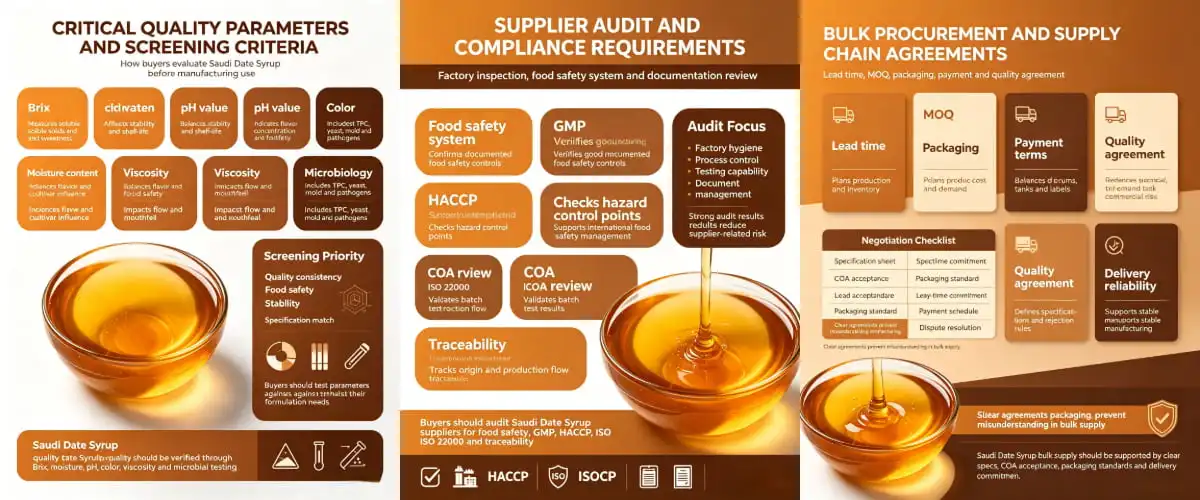
When a provider is reliable, they show that they can do vertical integration. This means that they can handle the whole process, from getting the raw materials to delivering the finished goods. Partner with people who can give you all the information you need, such as Material Safety Data Sheets (MSDS), Certificates of Analysis (COA), and records of how each batch was made. ISO 22000, HACCP, Halal, and Kosher certificates are needed for entry-level jobs. To go above and beyond these needs, preferred providers use extra quality management systems such as FSSC 22000.
If companies in the US and Europe want to bring things into the country, they need to know the rules. Health certificates, phytosanitary papers, and compliance statements that follow FDA and EU food safety rules should be given by suppliers to help clear customs. It's important to know about logistics. Partners who offer different shipping methods, like sea freight for big orders and air freight for urgent needs, help keep things going easily and keep landed costs low.
Minimum order quantities vary by supplier. Industrial-scale operations typically require bulk packaging options ranging from 25kg to 200kg drums or totes, while product development teams benefit from smaller sample sizes (250g to 1kg) for R&D trials before committing to full-scale procurement.
Enhancing Product Performance and Cost Efficiency with Saudi Date Syrup
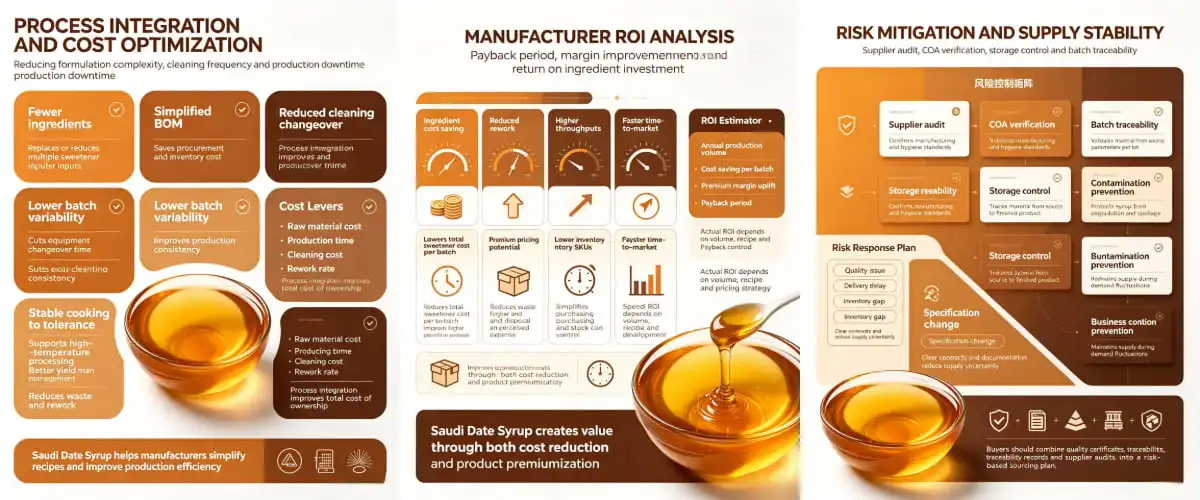
Production Integration and Process Optimization
If you want to add Saudi Date Syrup to production lines that are already working well, you need to pay attention to the processing factors. If you want to pump and measure the syrup, you need the right tools because it is thick. It is easier to work with than alternatives that crystallize, tho, because it stays stable across a wide range of temperatures. Viscosity goes down when you warm it up to 35–40°C ahead of time. This makes it easier to pour without lowering the quality.
In bakery applications, date syrup can partially or fully replace liquid sweeteners at ratios determined through pilot testing. Typical substitution rates range from 25% to 100%, depending on desired flavor profile and functional requirements. The syrup's moisture content must be factored into hydration calculations to maintain consistent dough or batter properties.
Beverage manufacturers appreciate the syrup's high solubility, which enables cold-fill processes without high-temperature mixing. This characteristic preserves heat-sensitive ingredients in formulations like probiotic drinks or vitamin-enriched beverages, protecting functional claims throughout shelf life.
Economic Analysis and Return on Investment
A full cost study shows that the economics are good for luxury date syrup even tho it costs more per unit than refined sugar. This is because there are many value drivers. Because the syrup is so sweet, people use 20–30% less of it by weight. This helps even out price differences. More finished goods that stay on the shelf longer mean less trash and customer complaints. This saves the brand's image and cuts down on the cost of replacement.
Market research shows that products with natural sweeteners can sell for 15% to 35% more than regular ones. This directly raises the profit margins. More and more people are willing to pay more for clean-label goods, especially in high-end stores and delivery networks that focus on health.
Case evidence from beverage manufacturers shows that date syrup integration reduced formulation ingredient counts from twelve components to eight, simplifying procurement and inventory management while accelerating regulatory approval processes. Bakery clients report texture improvements that extended shelf life from fourteen to twenty-one days, enabling broader geographic distribution and reducing product returns.
Best Practices for Storing and Using Saudi Date Syrup in Industrial Settings
Storage Requirements and Shelf Life Management
If you store Saudi Date Syrup the right way, it will stay good for as long as you can use it. Keep the item in boxes that can't be opened at room temperature (below 25°C) and away from direct sunlight and water. Keep it in these conditions, and it will last up to 18 to 24 months without getting much worse. Because they don't use enzymes, high temps can change the color and make flavors taste bad.
Crystallization is rare because it has a lot of sugar, but it can happen at low temperatures. It is possible to undo this change in shape by slowly heating it up to 45°C. This will not affect its nutritional value or usefulness. Manufacturers should use the first-in, first-out (FIFO) inventory cycle to optimize freshness and minimize storage duration.
Formulation Techniques and Regulatory Compliance
For batch consistency, it's very important to dose the right amount. Accurate metering systems make sure that the rates of addition are always the same. This stops recipe variability that can change how something feels and how healthy it is said to be. You should think about how thick and sticky the syrup is when you blend it. Dense syrups need more time to mix than powders that dissolve in water, but not as much time as very thick honey.
Regulatory compliance demands attention to labeling requirements specific to target markets. In the USA, the syrup qualifies as a single-ingredient food ("date syrup" or "date juice concentrate"), simplifying declarations. EU regulations require compliance with Novel Foods assessments if making specific health claims beyond basic nutritional content. Manufacturers must maintain documentation supporting any marketing claims, including clinical data for functional benefits and organic certification where applicable.
Conclusion
Saudi date syrup represents a strategic ingredient solution for food manufacturers navigating consumer demands for natural, nutritious alternatives to refined sugars. Its functional benefits—moisture retention, extended shelf life, processing consistency, and versatile application potential—solve real production challenges while enabling clean-label positioning.
The technical specifications, including standardized Brix levels, controlled pH, and comprehensive microbiological safety, provide the reliability essential for industrial-scale operations. By partnering with certified suppliers offering traceable purity, complete documentation, and flexible packaging options, manufacturers secure a competitive advantage through ingredient innovation that resonates with health-conscious consumers across global markets.
FAQ
Does date syrup crystallize like honey during storage?
Crystallization is uncommon due to the high fructose-to-glucose ratio, but minor crystal formation may occur at temperatures below 10°C. This physical change reverses with gentle warming to 40-45°C, restoring original consistency without quality loss.
How does date syrup compare to molasses in formulation performance?
Unlike molasses, which is a sugar refining byproduct, date syrup is a primary fruit extract with milder, fruitier flavor notes and significantly higher potassium levels. It lacks the bitter undertones sometimes present in molasses, making it more versatile across sweet and savory applications.
Is date syrup suitable for vegan and organic product certifications?
Yes, the syrup is naturally vegan, gluten-free, and non-GMO. Organic certification depends on supplier sourcing practices; many premium suppliers offer certified organic options that meet USDA and EU organic standards.
Can date syrup integrate into cold-fill beverage processes?
Absolutely. The syrup's high solubility allows complete dissolution in cold liquids without heat application, making it ideal for temperature-sensitive formulations containing probiotics, enzymes, or vitamins that degrade at elevated temperatures.
Partner with Sigma for Premium Saudi Date Syrup Supply
Shaanxi Sigma Biotechnology Co., Ltd. delivers industrial-grade date syrup manufactured through low-temperature concentration processes that preserve nutritional integrity and functional properties. As an established Saudi Date Syrup supplier, we maintain ready inventory supporting rapid delivery within five to seven working days, backed by comprehensive certifications including ISO 22000, HACCP, and Halal compliance. Our product guarantees 100% pure date juice concentration with lab reports for pesticide residues and sugar content provided for every batch, addressing the industry pain point of diluted or adulterated alternatives.
We offer flexible packaging from 250g retail customization to 200kg industrial drums, supporting both product development trials and full-scale manufacturing requirements. Our technical team provides formulation support, complete documentation for customs clearance, and ongoing partnership through responsive communication at sarah@sxsigma.com. Visit sxsigma.com to explore our complete range of natural ingredients and request sample availability for your next product innovation.
References
1. Al-Farsi, M., & Lee, C. Y. (2018). Nutritional and Functional Properties of Dates: A Review. Critical Reviews in Food Science and Nutrition, 48(10), 877-887.
2. Bouhlali, E. T., Ramchoun, M., Alem, C., Ghafoor, K., & Zegzouti, Y. F. (2017). Functional Composition and Antioxidant Activities of Eight Moroccan Date Fruit Varieties. Journal of the Saudi Society of Agricultural Sciences, 16(3), 257-264.
3. Tang, Z. X., Shi, L. E., & Aleid, S. M. (2013). Date Fruit: Chemical Composition, Nutritional and Medicinal Value, Applications. Journal of the Science of Food and Agriculture, 93(10), 2351-2361.
4. Mrabet, A., Rodríguez-Arcos, R., Guillén-Bejarano, R., & Jiménez-Araujo, A. (2016). Date Seeds: A Promising Source of Oil with Functional Properties. Foods, 5(3), 51-62.
5. Haider, M. S., Khan, I. A., Jaskani, M. J., Naqvi, S. A., & Hameed, M. (2014). Biochemical Attributes of Date Palm Fruit at Different Stages of Maturity. International Journal of Agriculture and Biology, 16(5), 1024-1028.
6. Vayalil, P. K. (2012). Date Fruits: A Review of the Chemical and Nutritional Compounds, Biological Activities, and Health-Promoting Effects. Journal of Food Science, 77(6), R105-R115.