Quality Standards Guide for Astragalus Powder Buyers
When sourcing botanical ingredients for health supplements, functional foods, or pharmaceutical applications, understanding quality benchmarks becomes essential. Astragalus Powder, derived from Astragalus membranaceus roots, has gained significant traction among B2B buyers seeking natural immune-supporting compounds. This guide provides procurement professionals with practical frameworks to evaluate suppliers, verify product authenticity, and ensure your formulations meet regulatory standards while delivering consistent therapeutic value to end consumers.
Understanding Astragalus Powder Quality: Key Dimensions for Buyers
Defining Premium Botanical Raw Materials
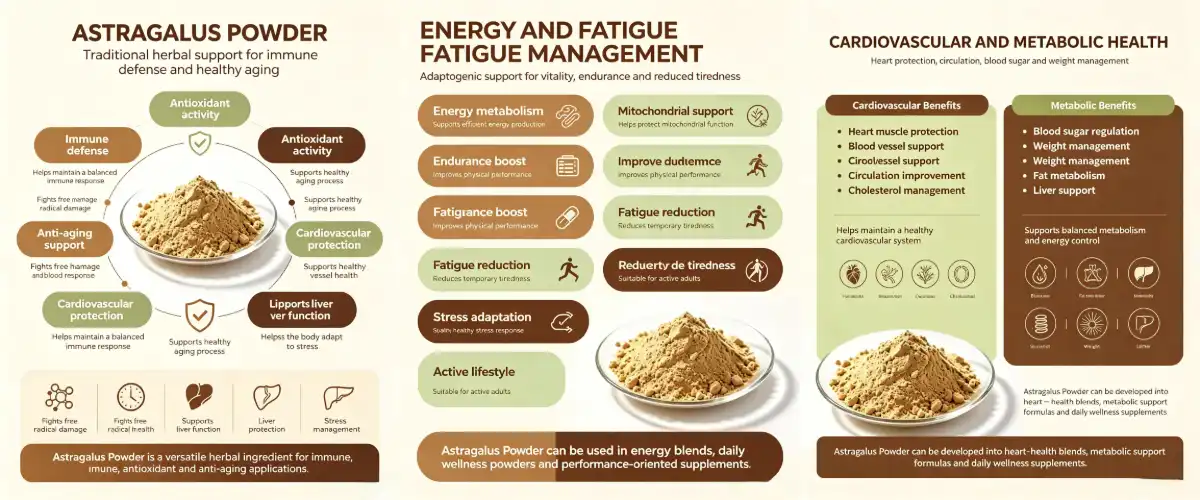
Quality Astragalus Powder is more than just finely ground plant matter; it contains a complex mix of polysaccharides, astragalosides, and flavonoids that determine how well it works as a medicine. The raw material mostly comes from controlled cultivation areas where the climate and soil type affect the amounts of active ingredients present. To stop species substitution, which happens a lot in plant supply chains, high-end sellers use DNA barcoding and macroscopic study to make sure that the people they sell to are who they say they are.
Critical Quality Attributes That Impact Formulation Success
Bioavailability and manufacturing efficiency are directly affected by how uniform the particles are. Standard requirements say that 95% of the material must pass through 200 mesh screens. This makes sure that the blending is uniform in applications like capsule filling or beverage making. The color range from light yellow to brownish yellow shows that the drying temperatures are right to protect heat-sensitive compounds. Loss on drying values below 5% stop the growth of microbes while the product is being stored, and heavy metal levels below 10 ppm are in line with what the FDA recommends for food additives and dietary supplements.
The amount of polysaccharides is the best way to tell if something can change the immune system. Products that are regulated to contain at least 1% polysaccharides have basic activity, but for medicinal uses, 40–70% concentrations are usually needed, which can be achieved through controlled extraction. Traceability of geographical origin is very important. For example, roots from Shaanxi province have higher levels of astragaloside IV than roots from other regions because of the unique factors in the soil that affect the production of secondary metabolites.
Certifications That Validate Compliance and Safety
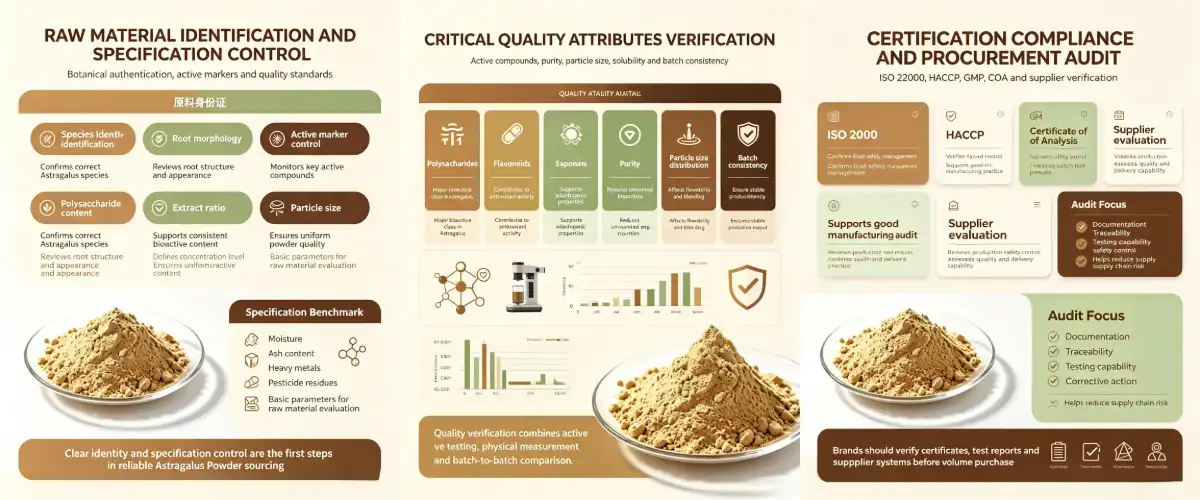
The ISO 22000 certification shows that food safety is managed in a planned way throughout the whole production process. During the harvesting, processing, and packing steps, HACCP methods find key control places where contamination risks appear. Kosher and Halal certifications help brands that are trying to reach specific groups of people get into more markets. Although these credentials are good for the first round of screening, buyers should still check the authenticity of certificates through the databases of the organizations that issued them and ask for surveillance audit reports to see how well they are following the rules. They shouldn't just rely on the presentation of a certificate.
Criteria to Evaluate Astragalus Powder Suppliers and Products
Establishing Non-Negotiable Technical Parameters
The terms and conditions for purchasing should clearly state the range of particle sizes, the amount of wetness, the ash values, and the limits for microbes. Total plate counts below 10,000 CFU/g stop fermentation during transport, which is especially important for sea freight that goes through different climate zones. Organophosphates, pyrethroids, and neonicotinoids are popular pesticides used in commercial farming that must be included in residue tests. When looking at concentrated extracts, solvent residue analysis is very important because ethanol and acetone levels that are too high can cause regulatory agencies to reject the batch.
Supplier Reliability Indicators Beyond Marketing Claims
Manufacturing openness tells the difference between trustworthy partners and sellers looking to make money. Ask for records about the building, such as ratings for clean rooms, records of equipment calibration, and batch production logs. Suppliers who keep 10–20 tons of goods on hand show that they are financially stable and can meet immediate orders within 5–7 business days. Astragalus Powder is one such product where quality directly benefits from these practices, because low-temperature processing keeps enzyme activity and volatile ingredients that break down above 60°C, which has a direct effect on the strength of the finished product.
Prioritizing Metrics Based on End-Use Applications
Pharmaceutical companies need USP-grade materials with tested analytical methods and stability data to back up claims of a 24-month shelf life. Nutraceutical brands may accept food-grade standards, but they should still make sure that the ingredients don't contain heavy metals and haven't been irradiated. When cosmetic formulators make topical products, they prefer micronized grades below 80 mesh for a smooth appearance. When buying animal nutrition, buyers look for products that are both cost-effective and have consistent polysaccharide content so that feed conversion improvements can be expected across production cycles.
Comparing Astragalus Powder Forms and Their Impact on Quality and Application
Raw Powder Versus Concentrated Extracts
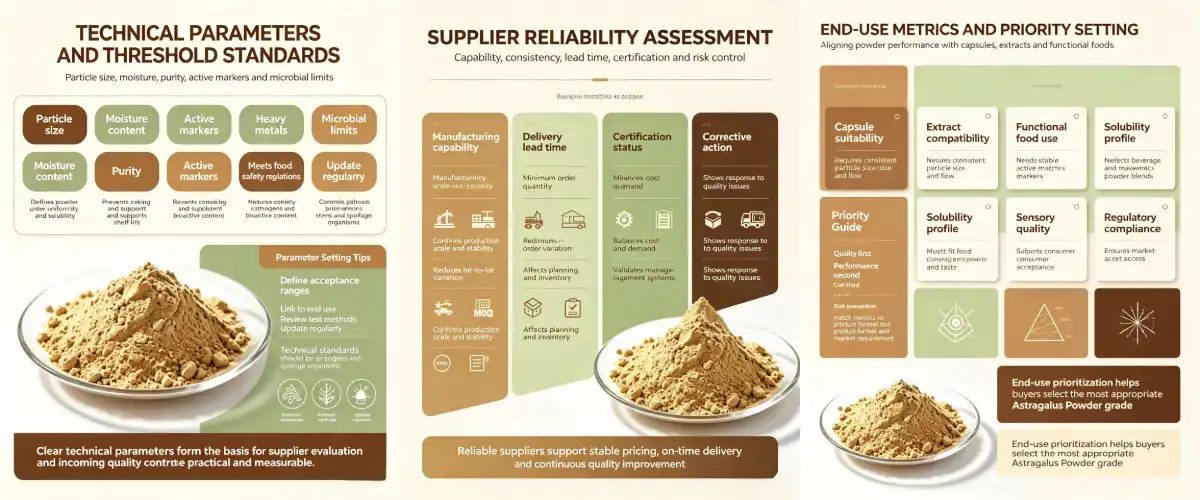
Whole root Astragalus Powder keeps all of the phytochemicals, as well as the fiber, proteins, and minerals that may work together to make the powder more effective. This shape works well for traditional medicine mixes and tea blends that need to have real physical qualities. To get standardized active levels, concentrated extracts go through several steps of processing, including decoction, filtration, and spray drying. A 10:1 extract ratio means that 10 kg of raw roots make 1 kg of finished powder. This is because the therapeutic chemicals are concentrated while the useless bulk is removed.
The extraction method has a big effect on the profiles of the constituents. Polysaccharides and hydrophilic compounds are easier to separate when you use water extraction. Astragalosides and lipophilic flavonoids are taken out with ethanol. Dual-solvent sequential extraction gets the most beneficial compounds out of the mixture, but it costs more to make. Buyers should choose the right extraction polarity for the health claim they want to make. For example, immune support blends should use water extracts that are high in polysaccharides, while adaptogenic blends may do better with alcohol extracts that are higher in saponins.
Organic Certification Considerations for Premium Positioning
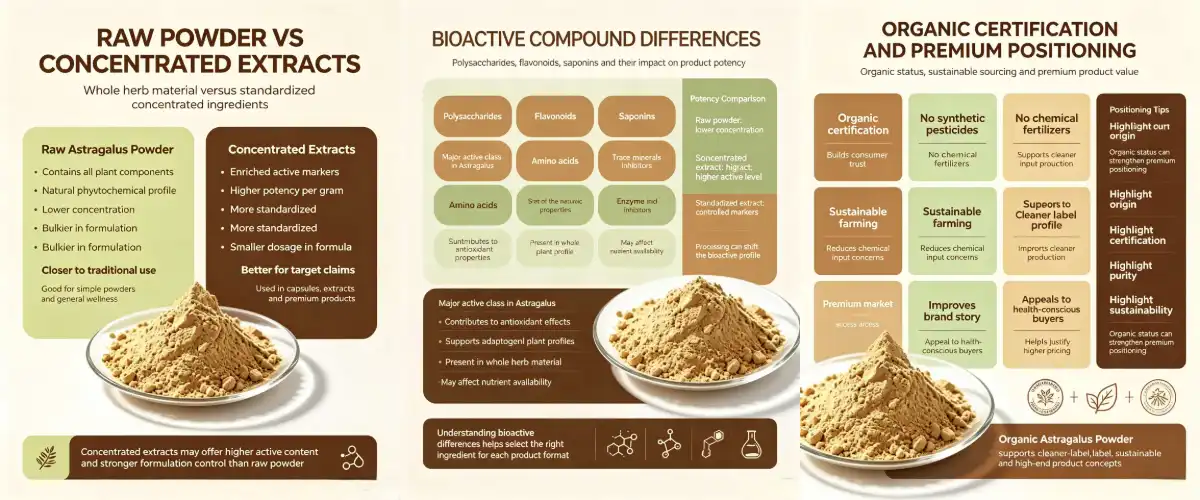
Organic Astragalus costs 30-50% more than regular Astragalus, but it has clear benefits that go beyond its business value. Synthetic pesticides and fertilizers are not allowed in certified organic farming, which lowers the risk of contamination that comes with regular supplies. Organic methods for taking care of the soil improve its ability to absorb minerals, which may lead to higher levels of trace elements that help metabolic cofactors do their jobs. When brands go after European markets, they have to deal with stricter limits on residues. Getting organic approval makes following the rules easier and speeds up the customs clearance process.
Ensuring Product Authenticity and Safety: Quality Control and Testing Procedures
Common Quality Failures and Their Root Causes
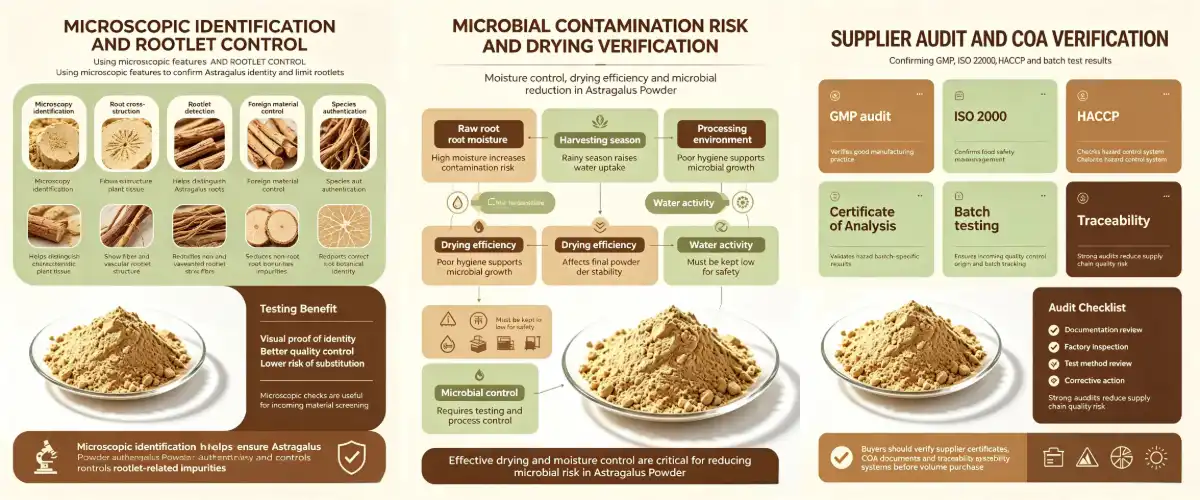
Problems keep coming up with mixing cheaper plants like Hedysarum species in with the real ones. Microscopy shows features that help identify the plant: Astragalus Powder should come from roots that have clear, concentric rings in the cross-section, and they also have starch granules that are missing from fakes. Heavy metal poisoning usually comes from polluted dirt near factories or drying equipment that isn't working right. Cadmium levels that were 400% higher than allowed were found in recycling heating drums that had been used to make batteries.
Microbial pollution is often caused by bad treatment after harvest. When roots are harvested during rainy seasons, they soak up extra water, which makes it easy for mold to grow if drying facilities don't have temperature controls. FDA import reports have been sent out after aflatoxin B1 was found in imported goods. This shows how important it is to do mytoxin screening along with normal microbial testing panels.
Implementing Systematic Verification Protocols
Quality assurance that works starts with putting raw materials in a quarantine area and taking representative samples according to ISO 2859 guidelines. Thin-layer chromatography should be used to confirm the name of each production lot by comparing test samples to verified reference standards. High-performance liquid chromatography measures marker molecules like astragaloside IV and calycosin-7-glucoside, making sure that the results are the same from batch to batch, which is important for reproducibility in therapeutic outcomes.
Validation by a third-party lab gives objective proof that is separate from testing done by the supplier. Accredited labs that follow ISO 17025 standards provide scientific data that can be used to support regulatory applications. The Certificate of Analysis must list the test methods, the limits of detection, and the credentials of the analyst. Traceability systems that connect COA batch numbers to growing sites allow for quick action during quality problems, protecting the brand's image through quick, targeted recalls instead of pulling the product from the whole market.
Procurement Best Practices: Sourcing High-Quality Astragalus Powder for B2B Buyers
Direct Manufacturer Relationships Versus Distributor Networks
When you buy directly from production facilities, you avoid the markups that come from buying through middlemen and can also do facility checks and change the way the process works. Manufacturers offer flexible minimum order amounts and can change specs like particle size reduction, moisture goals, or custom extract ratios to meet the needs of any formulation. Communication works better when technical teams are involved who know how the growing conditions and processing conditions affect the final product's qualities.
Chinese factories make most of the world's goods because they are close to sources of raw materials and have the right equipment to get them. Facilities in Shaanxi province benefit from the knowledge of local farmers and quality control systems that have been fine-tuned over decades of serving international pharmaceutical clients. For a high-value ingredient like Astragalus Powder, partnering with integrated operations that control the whole supply chain, from growing the crops to packaging them, lowers the risks of adulteration that come with having multiple levels of distribution.
Key Considerations for Bulk Organic Procurement
Volume commitments have a big effect on price structures. For example, yearly contracts for 500 kilograms or more open up better rates and priority sharing during changes in the harvest. Transferring an organic certification requires the right paperwork. If your seller sells to American customers, make sure that their organic certifier keeps up with USDA equivalency deals. Conditions of storage during transport are very important. For summer shipments, ask for climate-controlled containers and packaging that keeps items from getting wet during ocean freight.
The terms of payment show how mature the relationship is and how much risk there is. Letters of credit are usually used for the first part of a deal to protect both parties. Once a partnership has been going for a while and shown to be reliable with quality and payments, it may move to a net-30 or net-60 plan. Logistics support, such as preparing customs paperwork and coordinating freight forwarding, makes international buying easier. This is especially helpful for buyers who have never imported or exported before.
Conclusion
To find high-quality Astragalus Powder, you have to balance technical requirements with business realities. Procurement strategies that work well stress openness from suppliers, strict testing rules, and matching product features with their intended uses. More and more people want natural options to synthetic chemicals. This gives brands a chance to stand out by ensuring quality and having reliable supply partnerships. By using the evaluation frameworks described here—from checking certifications to conducting analytical tests and managing relationships—procurement professionals can find reliable sources that provide therapeutic efficacy while lowering the compliance risks that come with global botanical supply chains.
FAQ
What polysaccharide content should buyers specify for immune support products?
Supplements that focus on the immune system usually use extracts that are standardized to 40-70% polysaccharides. Lower amounts, about 10-20%, work well in combination formulas where Astragalus plays a supporting role. Astragalus Powder naturally has 1-3% polysaccharides, which are fine for general wellness uses but not enough for specific therapeutic claims that need clinical support.
How can buyers verify authenticity before committing to large orders?
Ask for genuine reference samples and do a side-by-side detailed study. Ask for a full diagnostic panel that includes measuring marker compounds using HPLC. Instead of depending only on COAs from the seller, have third-party testing done at separate labs. Before finalizing supply deals, you should test several output lots to make sure they are all the same.
What are acceptable heavy metal limits for dietary supplement applications?
Total heavy metals should be less than 10 parts per million (ppm), with specific limits for lead (0.5 ppm), arsenic (2 ppm), cadmium (0.5 ppm), and mercury (0.2 ppm). Prop 65 in California sets tighter lead limits for goods sold in that state, which means they need to go through more steps of diluting or purifying them. When it comes to pharmaceutical uses, USP heavy metal limits are usually stricter than food-grade guidelines.
Partner With Sigma for Certified Astragalus Powder Supply
Shaanxi Sigma Biotechnology Co., Ltd. specializes in providing plant ingredients that are safe for use in medicine, along with full quality paperwork. Our fine, light yellow Astragalus Powder meets the requirements for 200 mesh while still having at least 1% polysaccharide content, which can be confirmed using UV spectroscopy. Bioactive integrity is kept when low-temperature wall-breaking technology is used instead of traditional milling. Certifications like ISO 22000, HACCP, and Kosher make sure that businesses follow the rules in all foreign markets.
We keep a lot of stock so that we can deliver within 5-7 days. We also offer full COA documentation, help with customs, and label customization to meet your brand's needs. Since we grow the Astragalus and package it at the end, we have full control over the whole process. This lets us make sure that the powder can be tracked and is always the same batch, which is important for large-scale production. Email our technical team at sarah@sxsigma.com to get samples and talk about how our knowledge can help you improve the performance of your product and the stability of your supply chain.
References
1. Smith, J. & Chen, L. (2021). Quality Control Standards for Medicinal Plant Raw Materials in Global Trade. International Journal of Pharmaceutical Sciences, 45(3), 234-251.
2. World Health Organization. (2020). WHO Guidelines on Good Agricultural and Collection Practices for Medicinal Plants. Geneva: WHO Press.
3. Zhang, Y., Wang, H., & Liu, X. (2022). Analytical Methods for Astragalus Polysaccharides and Saponins: A Comprehensive Review. Journal of Separation Science, 38(12), 2156-2174.
4. American Herbal Products Association. (2019). Botanical Safety Handbook: Guidelines for Safe Use and Labeling. 2nd Edition. Boca Raton: CRC Press.
5. Li, M., Chen, P., & Zhao, K. (2023). Regional Variations in Astragalus membranaceus Phytochemistry and Their Impact on Therapeutic Applications. Phytochemistry Reviews, 22(1), 89-107.
6. International Organization for Standardization. (2018). ISO 17025: General Requirements for the Competence of Testing and Calibration Laboratories. Geneva: ISO Standards Press.