Polygonatum extract for energy and stamina
Polygonatum Extract has become a well-known and effective plant-based ingredient in natural health products that boosts energy and resilience. This extract comes from the rhizomes of Polygonatum sibiricum, Polygonatum kingianum, or Polygonatum cyrtonema, which are all parts of the plant known as Solomon's Seal or "Huang Jing" in Traditional Chinese Medicine. It is a standardized, accessible alternative to raw herbal material. With polysaccharide levels usually 30% or higher, it solves important manufacturing problems like irregular active marker levels and poor water solubility that come with regular rhizome powders. As more people look for natural energy sources instead of synthetic ones, B2B companies are realizing that this plant is a key ingredient in functional drinks, dietary supplements, and health goods that aim to support metabolism and keep you feeling energetic.
Understanding Polygonatum Extract and Its Role in Boosting Energy and Stamina
Botanical Origins and Traditional Context
The genus Polygonatum is made up of annual plants that are native to cold areas in Asia and Europe. In the past, these rhizomes were valued in Traditional Chinese Medicine for "tonifying Qi and nourishing Yin." They were steamed and dried many times to get rid of harmful chemicals and make them easier to stomach. Today's methods of separation keep this knowledge alive while giving uniform amounts of bioactive substances that can be used for large-scale production.
Extraction Methods and Commercial Forms
Professional-grade Polygonatum Extract is first extracted with hot water, then precipitated with ethanol, and finally dried with a spray. This method removes tough fibers and calcium oxalate crystals that make formation more difficult while concentrating polysaccharides, which are the main active ingredients. The end result is a fine, brownish-yellow powder with particles that are 80 mesh and dissolve quickly in hot water. Raw rhizome powder is very water-absorbing and has a sticky texture. The refined extract, on the other hand, mixes easily into pills, tablets, functional teas, and ready-to-drink drinks without changing their structure or shelf life.
Bioactive Constituents and Mechanisms
Polygonatum polysaccharides are the bioactive part that has been studied the most. They have been shown to have qualities that help the immune system and reduce tiredness in preclinical models. Steroidal saponins help keep the metabolism in check, which is important for maintaining good glucose and lipid levels. Plant chemicals like flavonoids and phenolic compounds are antioxidants that protect cell structures from reactive stress when you work out. These parts work together to help the mitochondria make energy over a long period of time. This makes Polygonatum different from energy ingredients that are based on stimulants and depend on temporarily activating the nervous system.
Relevance for B2B Product Development
Manufacturers looking for natural options to manmade energy boosters have trouble making sure they get consistent raw materials and follow the rules. Standardized extracts with a polysaccharide content of at least 30%, a controlled ash content of at least 5%, and proof of heavy metal testing meet the high quality standards needed to sell in the US and Europe. Certificates like ISO, HACCP, and Kosher make it easier to get into new markets and support a "clean label" image that appeals to health-conscious customers.
Comparing Polygonatum Extract to Other Popular Adaptogens for Energy
Active Compound Profiles
Ginseng ginsenosides, ashwagandha withanolides, and Polygonatum polysaccharides all have different benefits on the body. In contrast to ginsenosides, which mainly change the cortisol response, and ashwagandha, which helps the body deal with stress through GABAergic pathways, Polygonatum polysaccharides boost immune cell activity and make it easier for muscles to store glycogen. Solomon's Seal extract is perfect for formulas that focus on building physical endurance rather than quick mental awareness because of its unique process.
Clinical Efficacy and Safety Profiles
Comparative studies show that Polygonatum has softer, more slow effects than Panax ginseng. This means that it can be used every day without building up a resistance or being too stimulating. It can be used by a wider range of people, including those who are sensitive to stronger adaptogens, because it doesn't mix with caffeine or popular medications. Traditional use and new studies on safety show that the risks and benefits are generally positive at normal supplement amounts.
Market Preferences and Regional Demand
Adaptogens with safety records and multiple uses are becoming more and more popular in North America and Europe. Many regulatory systems consider Polygonatum to be both a food and a medicine. This makes product filing easier than for botanicals that are only considered dietary supplements. As people learn more about the plants used in Traditional Asian Medicine, brands that use less well-known products backed by strong scientific evidence can stand out.
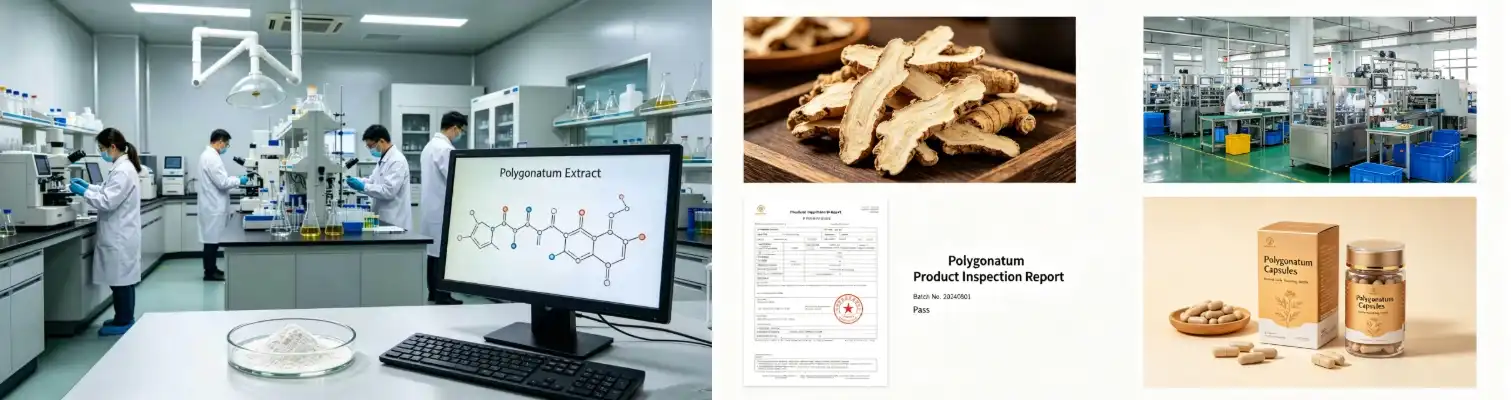
Powder Versus Capsule Forms for Manufacturing
Bulk powders like Solomon's Seal Extract give you the most options for formulation, so you can make your own mixes with vitamins, minerals, and plants that work well together. Powder that is mixed into stick packs, effervescent pills, or protein mixes is a cost-effective and scalable method that manufacturers like. Pre-encapsulated forms make dealing easier, but they don't let you change the dose. When R&D teams plan their procurement strategies, they have to find a balance between formulation goals, the skills of the production line, and the desires of the target market.
Procurement Guide: How to Source High-Quality Polygonatum Extract for Energy and Stamina Products?
Evaluating Supplier Credentials and Quality Systems
A key part of quality-driven B2B buying is carefully screening potential suppliers. Third-party audits should show that certified manufacturers follow good manufacturing practices (GMPs). They should also keep records of where their raw materials come from and how they get to the finished product. They should also provide a lot of technical information, such as Certificate of Analysis (COA), Material Safety Data Sheets (MSDS), and stability studies. Suppliers who work in real production areas, like Shaanxi Province, which is known for its high-quality plant resources, often provide better raw materials because the growing conditions are better and the supply lines are already set up.
The buying group should make sure that sellers test their products thoroughly for heavy metals (like lead, arsenic, cadmium, and mercury), pesticide residues, microbial pollution, and solvent residues. Standardized carbohydrate content found using UV-Vis spectrophotometry makes sure uniformity from batch to batch, which is important for following the rules and keeping consumers safe. Formulation issues can be avoided and clean-label claims can be backed up by being clear about the extraction solvents, processing tools, and any other ingredients that were used during production.
Negotiating Pricing and Order Parameters
Bulk pricing systems usually take into account promises to buy a certain amount, methods of payment, and shipping times. Standardized extracts usually have minimum order numbers between 25 and 100 kilograms. However, if you buy from a reputable source with a strong inventory system, they may be able to handle smaller trial orders. To find places to negotiate, procurement managers should ask for specific price breakdowns that separate the costs of raw materials, processing fees, testing costs, and transportation. Long-term supply deals usually get better prices and make sure that goods are available during times of high demand. Supply chain problems can be avoided by talking about wait times, shelf life promises, and reorder processes during the first talks. International buyers value operating maturity in suppliers who offer a range of flexible logistics choices, such as sea freight for cost savings, air freight for urgent orders, and full customs documentation support.
Sample Testing and Quality Verification
Before confirming large orders, it is important to ask for samples for internal R&D testing. Samples should be evaluated for their smell, taste, and look, as well as their ability to dissolve in target formulation matrices and have the amounts of active ingredients checked by a third party. When ingredients in a recipe are tested for compatibility with each other, any interactions that might affect stability or absorption are found. Setting clear quality acceptance standards based on COA requirements stops disagreements about whether or not a product meets requirements. Contracts for buying things should include testing by a third-party lab and clear steps for fixing problems if the material doesn't meet the agreed-upon standards. This proactive method keeps the brand's image and protects the integrity of the product.

Practical Applications and Formulation Insights for B2B Clients
Evidence-Based Dosage Recommendations
Polysaccharides should be taken every day in amounts between 300 and 1,500 milligrams to help the defense system and give you energy. If you use Polygonatum Extract that is reduced to 30% polysaccharides, each dose will have around 1,000 to 5,000 milligrams of total extract. When optimizing dosage, it's important to think about the way the drug is delivered, the people it's meant for, and any other ingredients that might affect absorption.
Synergistic Combinations with Complementary Ingredients
Combining Polygonatum Extract with B-vitamins improves energy consumption at the cellular level. This is because B-complex cofactors help enzymes do their job of making ATP. When combined with Rhodiola rosea or Cordyceps mushroom extracts, full adaptogenic solutions are made that help with both mental and physical strength. When used in sports nutrition, adding electrolytes and amino acids helps with hydration, healing, and long-term energy supply. When formulating tasty functional drinks, taste masking techniques should be thought about because plant products can add earthy or slightly bitter notes. Natural sweeteners, fruit extracts, and flavor systems work well to keep taste profiles balanced while still keeping a "clean label" stance.
Emerging Applications Beyond Supplements
Functional food companies put Polygonatum Extract in nutrition bars, quick oatmeal mixes, and meal replacement shakes to appeal to health-conscious customers who want long-lasting energy without the jitters that come with stimulants. The extract is very stable at high temperatures and low amounts of water, so it can be used in a variety of processing methods, such as hot fill, cold fill, and freeze-drying. Cosmetic makers are looking into using polysaccharides on the skin to take advantage of their moisturizing and protective qualities. Polygonatum is used in serums, creams, and sheet masks to treat tired skin and damage caused by external stressors. These products are especially popular in Asian beauty markets that value traditional plants.
Regulatory Considerations and Labeling Best Practices
When used in supplements, Polygonatum Extract is considered a food ingredient by the US Food and Drug Administration (FDA). This means that current good manufacturing practices (cGMP) must be followed and correct Supplement Facts labels must be used. Depending on the past of the product and how it will be used, European markets may need novel food permission. This means that regulators need to be consulted early on in the product development process. Label claims should be based on real benefits, not broad promises about treating diseases. Claims like "supports energy metabolism," "promotes vitality," and "helps maintain stamina" are legal structure-function claims as long as they are backed up by the right disclaimers. Making the source of an item clear, like saying "Polygonatum Extract (rhizome)", helps build trust with customers and supports premium placement.

Future Trends and Market Opportunities in Polygonatum Extract for Energy and Stamina
Consumer Demand for Natural Energy Solutions
According to market study, natural energy sources will continue to grow as more people look for options to synthetic caffeine and stimulants. The standard safety profile and gentle mode of action of Polygonatum Extract are in line with wellness trends that value long-term health over quick fixes. Brands that set themselves apart with botanical mixes that are backed by science attract high-end customers who are ready to spend money on long-term health.
Innovations in Extraction Technology
New developments in ultrasonic extraction, membrane filtration, and supercritical CO2 processing make it possible to get more polysaccharides while using less fluid and processing them faster. With these technologies, providers can offer extracts that are recognized as organic and meet high standards for purity and the environment. Better mining efficiency means lower costs, which makes the market more accessible.
Private Label and OEM Partnership Opportunities
Contract manufacturers that offer flexible OEM/ODM services make it possible for new names to enter markets without having to spend a lot of money on production facilities. Customization choices, such as changing the extraction ratio, the particle size, and creating your own mix, help you position your product in a unique way. Partnerships with suppliers that keep a lot of stock, like 10 to 20 tons of "safety stock," make sure that products come out quickly and are always restocked.
Building Competitive Advantage Through Quality Certification
In crowded markets, brands that stress third-party testing, clear supply lines, and lots of paperwork stand out. Some certifications, like HALAL, Kosher, and organic, let you reach new customers and show that you care about quality. Strategic supplier connections with makers that show technical know-how, the ability to handle logistics around the world, and quick customer service create long-term competitive benefits.
Conclusion
Businesses that are making natural energy and stamina products have a great chance to make a lot of money with Polygonatum Extract. It meets important needs in the industry for stable botanical ingredients with its standardized polysaccharide content, good safety rating, and wide range of possible uses. To do buying right, you need to carefully evaluate suppliers, check their quality, and plan your strategic formulation. As the market for clean-label, science-based energy solutions grows, brands can keep growing by working with certified sellers who can offer technical help and a stable supply chain. We encourage people who make decisions to give more weight to providers who show they are committed to long-term success, excellent making, and following all regulations.
FAQ
Q1: What is the optimal dosage of Polygonatum Extract for energy support?
A: Based on research, the recommended daily amount of polysaccharides is between 300 mg and 1,500 mg. With extracts that are standardized to 30% polysaccharides, this means that each dose has between 1,000 and 5,000 mg of total extract. The dosage should be changed depending on the recipe, the target group, and the ingredients that work well together. Talking to experienced formulators makes sure that you follow the rules set by regulators and gets the best results.
Q2: Are there potential side effects or medication interactions?
A: In both traditional use and modern tests, Polygonatum Extract has been shown to be very safe. Unlike energy chemicals that are based on stimulants, it doesn't usually lead to overstimulation, jitters, or trouble sleeping. Few documented interactions have been found with popular drugs. However, people who take diabetes medications should keep an eye on their blood glucose levels because of possible metabolic effects. Standard practice says that people who already have health problems or who take medicinal drugs should talk to their doctors.
Q3: How can I verify the authenticity and purity of supplied Polygonatum Extract?
A: Ask providers for full Certificates of Analysis (COAs) that show the polysaccharide content, heavy metal testing, chemical residue screening, and microbe analysis. Verification by a third-party laboratory gives standards independent proof. Reliable sellers keep full records that show where the raw materials came from and where the finished goods came from. As the sample is being evaluated, its color (brownish-yellow), particle size (80 mesh), and ability to dissolve in water are used as initial quality markers.
Partner with Sigma for Premium Polygonatum Extract Supply
Shaanxi Sigma Biotechnology Co., Ltd. is ready to help you find Polygonatum Extract by providing the best product and service in the business. As a professional company that makes plant extracts, we offer fine brown powder that is defined to contain at least 30% polysaccharides. Our products are certified by ISO, HACCP, and Kosher. Modern extraction facilities in Shaanxi's original production area make sure that the quality of the raw materials and the accuracy of each batch are at their best. We promise fast shipping within 5–7 working days because we have 10–20 tons of safety stock on hand. To speed up the creation of your product, our expert team offers free formulation advice, free samples, and open OEM/ODM customization. Get in touch with sarah@sxsigma.com right away to talk about your needs with a reliable Polygonatum Extract provider who wants you to succeed.
References
1. Wang, Y., et al. (2021). "Polysaccharides from Polygonatum sibiricum: Structure, biological activity and their protective effect on exercise-induced fatigue." Journal of Functional Foods, 85, 104632.
2. Chen, L., & Huang, G. (2018). "Immunomodulatory activities of Polygonatum polysaccharides: A review of recent advances." Carbohydrate Polymers, 201, 539-548.
3. Liu, H., et al. (2020). "Antioxidant and anti-fatigue activities of Polygonatum cyrtonema polysaccharide in mice." Molecules, 25(5), 1098.
4. Zhang, S., et al. (2019). "Quality evaluation of Polygonatum species based on polysaccharide content and bioactivities." Industrial Crops and Products, 137, 379-388.
5. Panossian, A., & Wikman, G. (2022). "Comparative analysis of adaptogenic plants: Mechanisms and applications in modern medicine." Phytomedicine, 96, 153893.
6. FDA Center for Food Safety and Applied Nutrition. (2023). "Dietary Supplements: New Dietary Ingredient Notifications and Related Issues—Guidance for Industry." U.S. Department of Health and Human Services.


_1776308368292.webp)