L-Carnosine - Everything You Need To Know
L-Carnosine Powder represents a breakthrough dipeptide compound combining beta-alanine and L-histidine that delivers powerful anti-glycation and antioxidant properties essential for modern B2B manufacturers. This naturally occurring bioactive ingredient addresses critical formulation challenges in nutraceuticals, cosmetics, and functional foods by preventing Advanced Glycation End-products (AGEs) formation while supporting cellular health. Procurement professionals recognize its strategic value across health supplement brands, pharmaceutical companies, and cosmetic manufacturers seeking high-purity, batch-consistent active ingredients that meet stringent regulatory standards and deliver measurable efficacy in finished products.
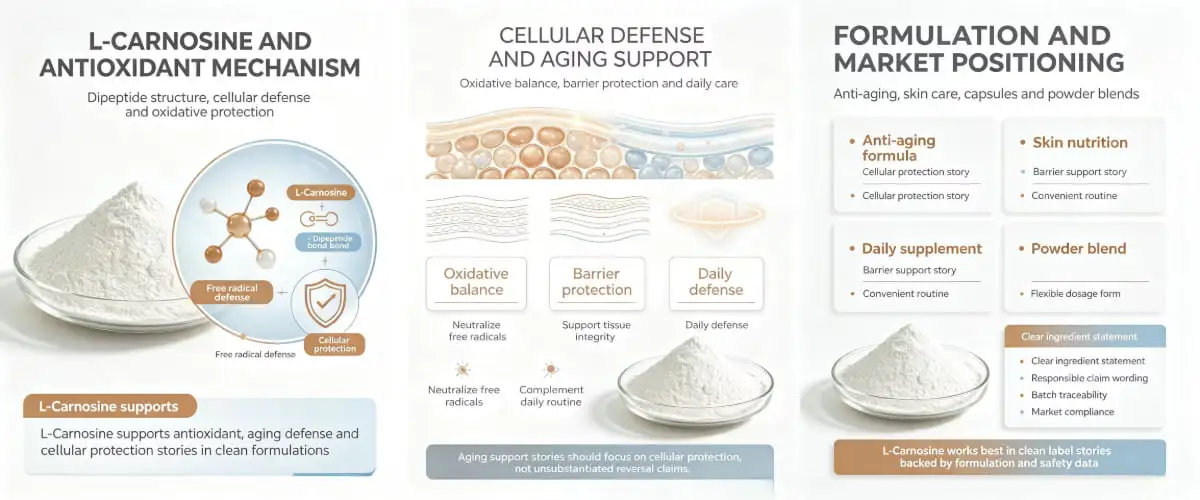
What Is L-Carnosine Powder and Why Does It Matter?
L-Carnosine is a white, solid powder (CAS Number: 305-84-0) that is made up of two amino acids that work together in the brain, heart, and muscles of humans. The molecular structure of the compound makes it possible for it to do biological functions that synthetic alternatives can't do as well. In contrast to antioxidants that work on their own, this dipeptide protects by binding to reactive carbonyl groups before they damage important proteins. Because of this, it is an essential ingredient for formulators trying to stop cells from breaking down and metabolism from being stressed with age.
Natural Occurrence and Biochemical Function
The body mostly makes carnosine in skeletal muscle tissue, where healthy adults can find levels of 20 to 30 mmol/kg. As people get older, this endogenous production decreases, which creates a market need for L-Carnosine Powders in many fields. Beta-alanine is the precursor whose rate is limited, and histidine helps keep the pH level at the right level during high-intensity metabolism exercise. Research shows that lower levels of carnosine are linked to higher levels of pro-inflammatory cytokines, which has a direct effect on heart health and muscle repair. These scientifically proven processes are especially valuable to manufacturing clients in the sports diet and anti-aging markets.
Industrial Applications Across B2B Sectors
Due to its clinically proven effects on cellular senescence, L-Carnosine is used by drug companies in neuroprotective formulations and metabolic health products. Cosmetic companies use its anti-glycation qualities to make high-end skin care lines that target problems like dryness and loss of flexibility in older skin. It is added to fitness drinks by functional beverage makers to balance the pH and help with endurance. Scientists who study animal diet look into how to use certain substances in animal feed to help animals build muscle and deal with stress better. This ability to work in a variety of industries is what keeps quality-conscious B2B buyers looking for ingredients that can do more than one thing and have safety ratings that can be verified.
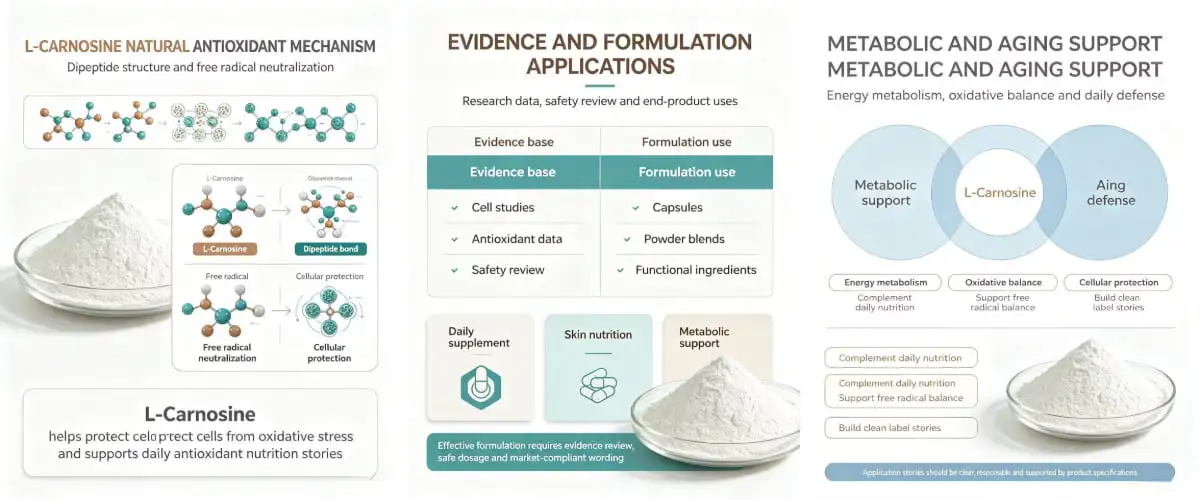
Comprehensive Benefits and Usage Guidelines for L-Carnosine Powder
Understanding L-Carnosine Powder's many benefits helps purchasing teams defend formulation costs and put goods in a competitive situation. The compound is known to protect against free radicals, bind metals, and keep proteins from breaking down. All of these effects are backed up by peer-reviewed research that is important for regulatory submissions.
Core Functional Benefits for Product Development
Antioxidant and Anti-Glycation Activity: The main benefit comes from stopping the formation of AGE by competing with structural proteins for sugar molecules. In beauty uses, this process keeps collagen intact. In cardiovascular supplements, it protects vascular tissue. Heavy metal chelation properties, especially copper and zinc sequestration, stop Fenton-type oxidative reactions that make cells age faster. When pharmaceutical-grade materials with purity levels at or above 99% are used, formulators can see measured changes in how well their products work.
Muscle Performance and Recovery Support: Beta-alanine helps make intracellular carnosine, which makes lactate buffering better during intense exercise. Sports nutrition companies that make pre-workout and recovery products use this to make their products stand out. Clinical studies show that taking supplements raises the amount of carnosine in muscles by 40–80% over 4–10 weeks. This means that people can do more intense exercise. Business-to-business buyers in the sports performance market give more weight to sellers who can show proof of batch consistency and third-party testing.
Neuroprotective and Cognitive Health Applications: New research backs up L-Carnosine's role in protecting neuronal tissue from oxidative stress and protein aggregation, which are linked to neurodegenerative diseases. Pharmaceutical businesses that are making products for brain health like that it can cross the blood-brain barrier and keep neurotransmitters stable. The compound's ability to buffer pH helps keep brain tissue in balance when metabolism is stressed. Quality control teams ask sellers to give full Certificates of Analysis (CoA) that prove purity, heavy metal limits (≤10ppm), and germ safety compliance.
Formulation Integration and Dosage Considerations
The usual daily dose for food supplements is between 500 mg and 2000 mg. For cosmetic uses, smaller amounts (0.5 to 2%) are used in topical preparations. Being able to dissolve in water at 25°C in amounts greater than 200 mg/mL makes it easier to add to drinks, capsules, and tablets without using complicated carrier systems. When processed at high temperatures, the compound stays stable, which makes it good for functional food extrusion and tableting. When coming up with standard manufacturing protocols, manufacturers need to take into account its specific optical rotation (+20.0° to +22.0°). Regulatory compliance documents, such as HACCP, ISO 22000, and Kosher certification, speeds up the approval process for B2B clients who want to ship.
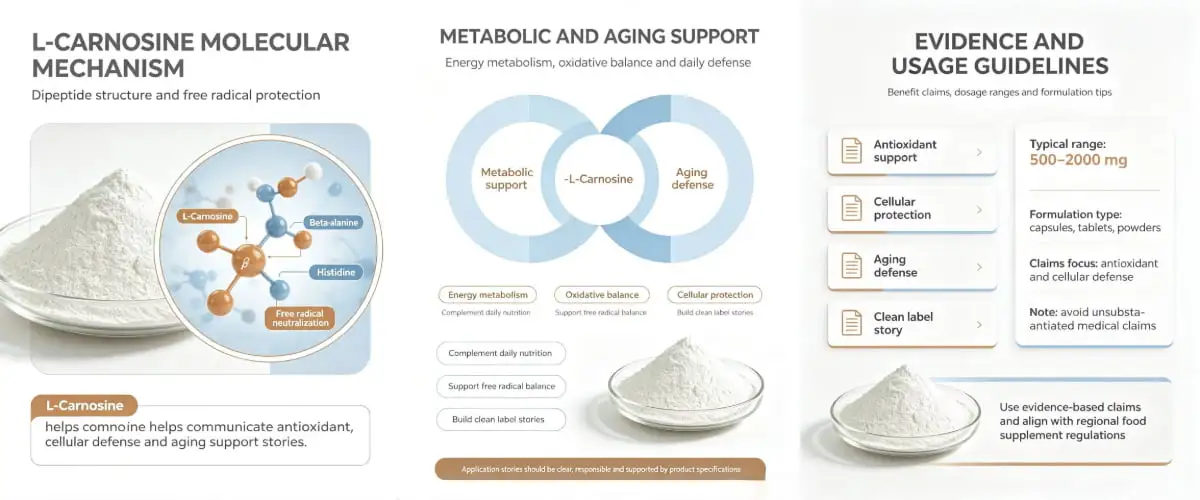
Comparing L-Carnosine Powder with Other Supplement Forms and Ingredients
People who make decisions about purchases should know how L-Carnosine Powder is different from other forms of delivery and ingredients that work well with it in formulation matrices.
Delivery Format Analysis
OEM makers who need custom blending ratios and dose forms can get the most formulation freedom in the raw powder form. When compared to handling bulk powder in finished goods, encapsulation allows for more accurate dosing and better stability. Tablets are convenient for customers, but they need extra ingredients that might lower the active concentration.
When it comes to buying things from other businesses, pharmaceutical-grade powder has the best cost-per-gram for mass production while still keeping the consistency between batches that is needed for regulated products. Buyers who keep track of inventory change like it when suppliers keep 10–20 tonnes of safety stock and offer shipping windows of 5–7 days.
Functional Comparison with Related Compounds
L-Carnitine's metabolic role is different from L-Carnosine's protein protection mechanisms; as a result, they work together rather than against each other in formulations. Beta-alanine is a precursor to carnosine, but it doesn't have the direct antioxidant effects of the dipeptide. This is why many sports supplements contain both compounds. Collagen supports structural proteins, and L-Carnosine stops glycation damage to existing collagen networks.
Cosmetic brands often mix the two to get anti-aging benefits that work better together. Whey protein gives you amino acid building blocks, and L-Carnosine protects your metabolism specifically. This lets formulators work on several biochemical processes at the same time. Knowing these differences helps R&D teams improve how they position products and come up with clinical claims.
Supplier Selection Criteria for Quality Assurance
Material that is pharmaceutical-grade and meets AJI, USP, or EP standards is the minimum quality level that serious B2B buyers expect. To make sure that the product stays stable on the shelf while it's being stored and shipped, purity tests must show that it has at least 99.0% active ingredients by HPLC analysis and no more than 0.5% moisture. Heavy metal tests should show amounts well below 10ppm, especially for cosmetic and supplement uses that are closely watched by regulators.
Suppliers with patented cleaning methods that lower endotoxin and solvent residues below industry standards give clients that are trying to reach high-end market segments a competitive edge. Verification by a third-party lab, full documentation of traceability, and GMP certification are what set reliable long-term partners apart from commodity brokers who don't have good infrastructure.
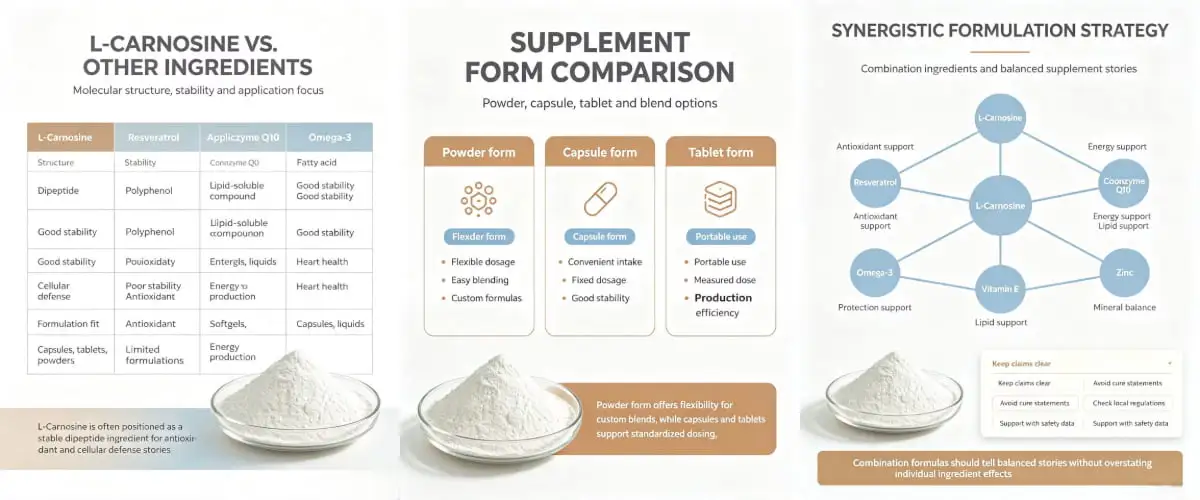
Procurement and Sourcing of L-Carnosine Powder for B2B Buyers
When you do strategic procurement, you have to find a balance between quality standards, the reliability of the supply chain, and the total cost of ownership over a number of years.
Bulk Pricing Structures and Volume Planning
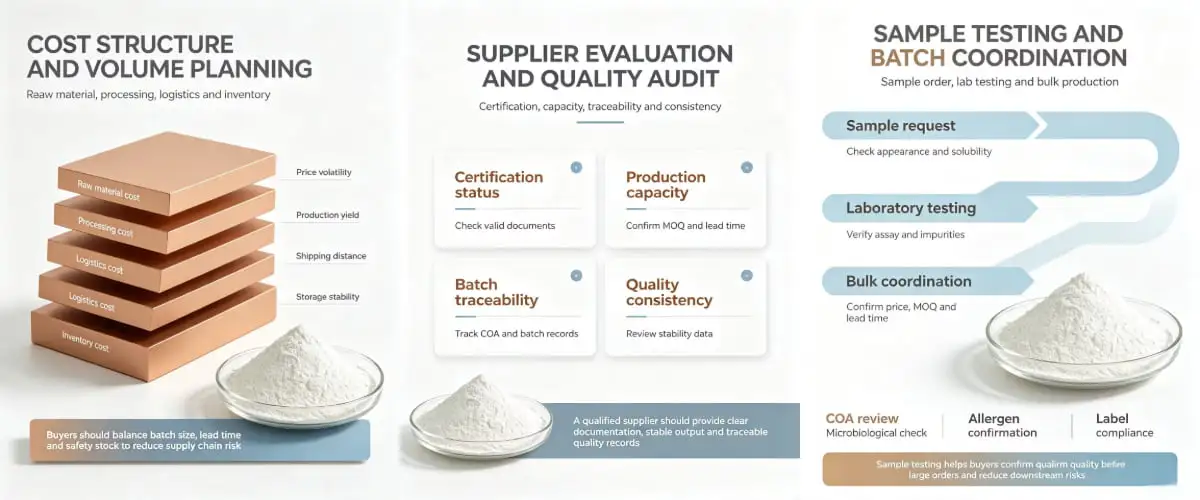
The cost of ingredients makes up a big part of the cost of goods sold (COGS), so tier-based volume pricing is very important for making the most of your profit margins. Prices are usually set so that orders over 100 kg get a 10-15% discount, and orders over 500 kg and 1000 kg get even bigger discounts. Forward buying deals lock in prices for 6 to 12 months and make sure that supplies don't run out when demand changes.
Procurement managers have to guess how much a product will be used, taking into account when it will be released, how demand changes with the seasons, and how much it costs to keep supplies on hand. Suppliers who keep large safety stocks (10–20 tonnes for key SKUs) reduce the chances of running out of stock, which can mess up production plans and hurt relationships with customers.
Evaluating Supplier Credentials and Testing Protocols
The study of the Certificate of Analysis is the first step in the seller qualification process. For each batch, there should be an identity check (FTIR/NMR), a purity check (HPLC), a moisture check, a heavy metals panel, microbe limits, and a specific optical rotation. Certifications like ISO 22000, FSSC 22000, and ISO 9001 show that quality management is systematic, not inconsistent from batch to batch.
Customs delays and regulatory problems can be avoided by registering your facility with the FDA and following the rules for importing goods into the US and EU. Third-party testing from ISO/IEC 17025)-accredited laboratories gives extra security over the supplier's own certification. Buyers who care about quality look for partners who can fully track their products from the time they are made to the time they are delivered, including production date codes and data from stable tests.
Sample Requests and Logistics Coordination
Professional sellers offer 50–100g samples for very little money so that R&D can test them before making large purchases. Sample testing should be done under conditions that are similar to those used in full-scale production to find any composition problems or processing problems that might arise. For first commercial orders, the minimum order quantity is usually 25 kg. For established production runs, it rises to pallet quantities (500–1000 kg). There are a lot of different shipping options, such as fast messenger services, air freight (3-5 days), sea freight (25–35 days), and express courier services.
These options can be used to meet pressing needs and save money. Documentation packages including commercial bills, packing lists, certificates of origin, and sanitary certificates simplify customs clearing across international borders. Premium sellers of L-Carnosine Powder are different from transactional commodity vendors because they have responsive customer service teams that can track orders in real time and communicate ahead of time about production plans.
Why Partner with Sigma for Pharmaceutical-Grade L-Carnosine Powder
Shaanxi Sigma Biotechnology Co., Ltd. is an integrated manufacturer that gets its real raw materials from the botanical regions of Shaanxi and uses cutting-edge technologies for extraction and purification. Our pharmaceutical-grade L-Carnosine Powder stays ≥99% pure and has a heavy metal content well below 10ppm.
This is possible with a patented purification process that gets rid of endotoxins and solvent residues. ISO 22000, HACCP, and Kosher certifications make sure that the product meets the strictest international rules, and batch-to-batch consistency makes it possible to go from research and development to mass production without having to change the recipe.
Our 10–20-ton safety stock is popular with procurement teams because it is always available and can be delivered in 5–7 days, which helps with just-in-time manufacturing strategies. Flexible OEM/ODM services can meet specific needs, such as changing the particle size (100 mesh is standard), creating custom packaging, and private labelling that fits with your brand's image.
Our global logistics network handles paperwork, working with customs, and a variety of sending choices by air, sea, and express carriers that combine speed and cost. Comprehensive technical support includes advice on formulation, suggestions for stability testing, and help with regulatory documentation that shortens the time it takes to make a new product.
We have a modern production base with continuous countercurrent extraction lines. We use strict quality control methods when choosing raw materials, processing them, and checking them one last time. Full traceability paperwork and full COA packages help you meet the standards for quality assurance and regulatory applications. The advanced "Technology + Origin" advantages give you higher purity at a low price, which sets up your finished goods to succeed in markets that are very picky. Our responsive customer service (sarah@sxsigma.com) and 12-month quality guarantee give quality-conscious B2B buyers the dependability and partnership approach they need for long-term success.
Conclusion
In conclusion, L-Carnosine Powder is an important nutrient in useful foods, cosmetics, nutraceuticals, and pharmaceuticals because it has benefits that have been proven by science and can be used in a variety of ways. In markets that are getting more complex, procurement professionals who put an emphasis on pharmaceutical-grade purity, thorough quality documentation, and reliable supply chain partnerships have an edge over their competitors.
The compound's special anti-glycation process, along with its antioxidant and metal chelation qualities, solves important formulation problems that regular ingredients can't. Instead of just looking at price, smart B2B buyers judge suppliers based on how many certifications they have, how consistent their batches are, how well they can help with technical issues, and how reliable they are in the long term. Decisions made today about strategic sourcing will affect the effectiveness of a product, its ability to meet legal requirements, and its image for years to come.
FAQ
What purity level should B2B buyers specify for L-Carnosine Powder?
HPLC research should show that pharmaceutical-grade L-Carnosine Powder is at least 99% pure, with heavy metals below 10ppm and moisture below 0.5%. Because of government oversight, cosmetic uses must meet the same cleanliness standards. On the other hand, industrial uses may be able to handle slightly lower grades, based on the needs of the end use.
How does L-Carnosine compare to beta-alanine in sports nutrition formulations?
Beta-alanine is a building block for making carnosine, and L-Carnosine makes the active dipeptide available directly to cells. Many formulas contain both compounds because they work better together. Beta-alanine raises muscle carnosine levels over time, and L-Carnosine protects cells from free radicals and balances pH levels right away.
Which certifications are essential when selecting an L-Carnosine supplier?
Some of the most important certifications are ISO 22000 or FSSC 22000 for managing food safety, GMP compliance for pharmaceutical uses, and product-specific certifications like Kosher or Halal for different markets. International buyers can be even more sure of the quality of a product when it is registered with the FDA and tested by a third party lab.
Partner with a Trusted L-Carnosine Powder Manufacturer
Sigma sells L-Carnosine Powder that is of pharmaceutical grade and has been tested to be ≥99% pure. It comes with full regulatory certifications and quality documentation. As an established L-Carnosine Powder supplier with B2B clients around the world, we keep a large inventory available for immediate delivery and offer flexible OEM/ODM customisation to meet your specific formulation needs. Email our team at sarah@sxsigma.com to get free samples or talk about bulk buying options that are perfect for your business needs. You can look at our full list of ingredients at sxsigma.com and learn how our unified production capabilities, technical know-how, and quick service can give your brand the stability it needs.
References
1. Boldyrev, A.A., Aldini, G., & Derave, W. (2013). Physiology and Pathophysiology of Carnosine. Physiological Reviews, 93(4), 1803-1845.
2. Sale, C., Artioli, G.G., Gualano, B., Saunders, B., Hobson, R.M., & Harris, R.C. (2010). Carnosine: From Exercise Performance to Health. Amino Acids, 38(4), 1221-1228.
3. Hipkiss, A.R. (2009). Carnosine and Its Possible Roles in Nutrition and Health. Advances in Food and Nutrition Research, 57, 87-154.
4. Bellia, F., Calabrese, V., Guarino, F., Cavallaro, M., Cornelius, C., Leonardi, R., & Rizzarelli, E. (2014). Carnosinase Levels in Aging Brain: Redox State Induction and Cellular Stress Response. Antioxidants & Redox Signaling, 20(15), 2485-2498.
5. Stuerenburg, H.J. (2000). The Roles of Carnosine in Aging of Skeletal Muscle and in Neuromuscular Diseases. Biochemistry (Moscow), 65(7), 862-865.
6. Gariballa, S.E. & Sinclair, A.J. (2000). Carnosine: Physiological Properties and Therapeutic Potential. Age and Ageing, 29(3), 207-210.


_1776308368292.webp)