Is Pine Bark Extract Worth Buying for Skin and Circulation Support?
Yes, pine bark extract is worth buying when your product targets skin and circulation support and your supplier can document what is in the bag. This botanical ingredient carries oligomeric proanthocyanidins (OPCs), plant polyphenols studied for antioxidant activity, skin hydration, and leg comfort. The strongest evidence comes from the branded French extract, so a generic material needs its own specification and paperwork. I wrote this guide for purchasing managers and formulators who want clear answers on benefits, dosage, formats, and sourcing before they request a sample. Pine bark extract supports wellness. It does not replace medical care.
Pine Bark Extract Benefits for Skin and Circulation Support
How Proanthocyanidins Work as Antioxidants
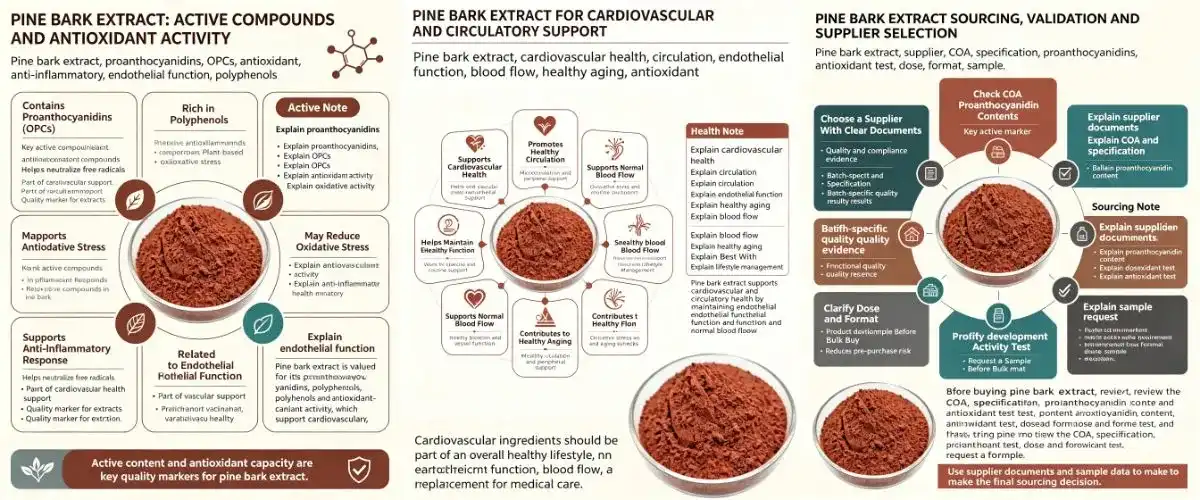
Pine bark extract has many different chemicals in it, such as proanthocyanidins, flavonoids, phenolic acids, and more. These polyphenols can get rid of free radicals. A 1999 article in Free Radical Biology and Medicine said that a pine bark extract that was high in procyanidins could get rid of radicals in the lab. That's what I want to make clear. In a test tube, you can see how well an antioxidant works. In the real world, it doesn't show that it works on people. Good product copy doesn't mix those two ideas. Lab data can be used to explain the science, and then human study data can be used to back up any health claims on the label.
Skin Support: Hydration, Elasticity, and Environmental Stress
One reason brands add pine bark extract to their lines is to take care of the skin from the inside out. Sixteen women took part in a 12-week study that was published in Skin Pharmacology and Physiology. The branded French extract made their skin more flexible and hydrated. I don't think that study proves that all pine bark extract is safe because it was done with a different product. I see it as background information. Our pine bark extract can be used in health items and as a supplement to food. The idea behind it is to make skin better, fight glycation, and stop wrinkles from forming. It is mixed with hyaluronic acid, vitamin C, or collagen peptides in a lot of face creams. Check each claim against the structure-function rules that the FDA set up before the product came out.
Circulation Support and Microcirculation
The second main use is to move blood around. In 2002, Phytotherapy Research released a study that looked at how the branded French extract affected people with chronic venous insufficiency, a condition that caused leg pain and swelling. Some good signs were found in a 2012 Cochrane review, but it called for bigger, better-designed trials. It is important to have that balance for marking. Our pine bark extract is made to improve cardiovascular health and microcirculation. This means it works well with things that help with leg pain, staying healthy as you age, and living a busy life. There should be no disease-related words in US names like "treats venous insufficiency," and the FDA-required warning should be added.
Pine Bark Extract Dosage, Uses, and Possible Side Effects
Typical Uses in Finished Products
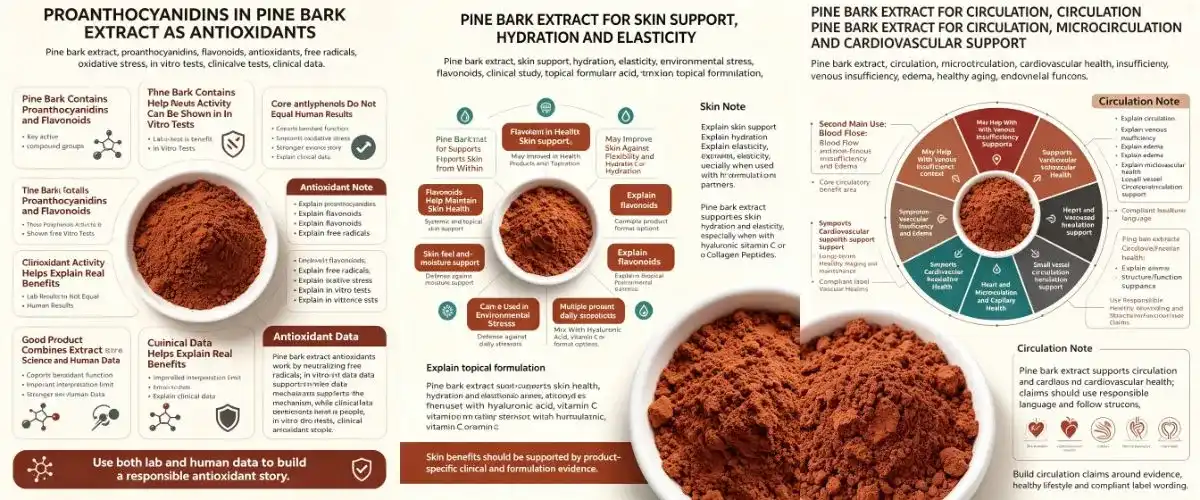
Pine bark extract is used by companies to make mixed drinks, hard pills, tablets, bags, stick packs, and antioxidant blends. Private label teams put it in lines like "heart health" and "beauty from the inside out." Because it has been ground to 80 mesh, the pine bark extract can be used both dry and wet. The format should be chosen first by your R&D team. After that, the pine bark extract should be put to the test in the real matrix. In a pill, something might mix well, but in a drink, it might not. An early test batch, which is a long time before a full production run, has issues with flow, taste, and color.
How to Think About Serving Size
There isn't a single dose that works for all items. The International Journal of Clinical Pharmacology and Therapeutics published a review in 2002 that said studies on the branded French extract range from tens of milligrams to about 200 mg a day. The amount of OPC, the way it was measured, where the plant material came from, how it was delivered, and the study that backs up your claim will all affect your dose. To get the same amount of active ingredient, a grade with 95% OPC needs less fill weight than a grade with less OPC. What does your seller say you should use and how stable are their goods? Your formulator and legal advisor should decide on the end dose.
Safety, Interactions, and Label Warnings
Pine bark extract is safe for most people to take. A lot of people report mild side effects, like headaches or stomachaches. Labels should still say that people who take blood thinners, diabetes drugs, blood pressure drugs, or drugs that make the immune system weak should talk to their doctor. The same advice is good to follow before surgery, while pregnant, or while nursing. Also, people who are allergic to pine or pine pollen should look around first. It's important that the rules of the people you want to reach match the instructions and warnings. Before each start, you should go over them with regulators.
Pine Bark Extract Powder, Capsules, and Water-Soluble Formats
Reading the Powder Specification
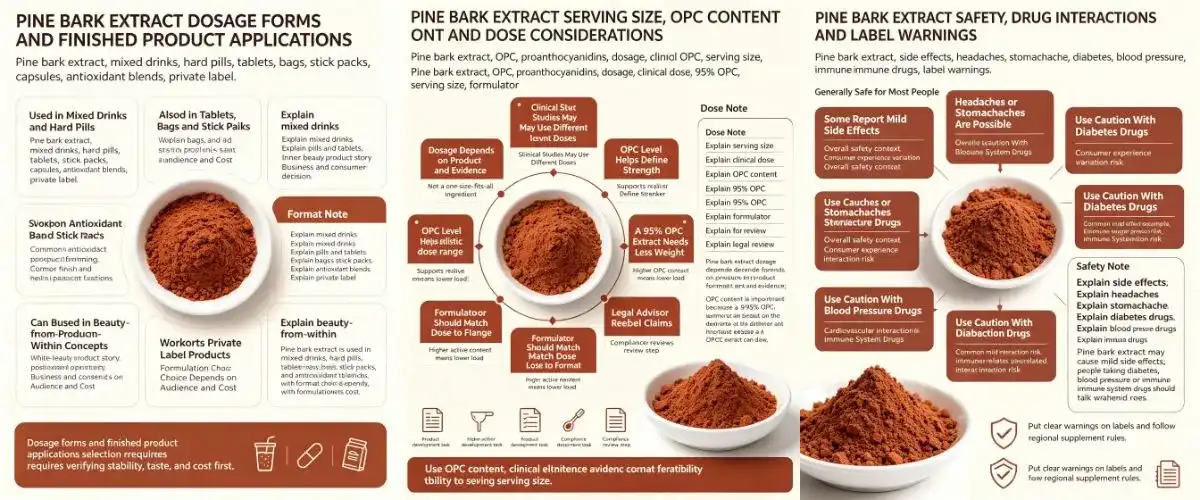
We use ethanol to cut the bark into small pieces and get a fine, reddish-brown pine bark extract in return. It should be at least 95% OPC, 80 mesh, and have less than 3% ash. It should also be water-soluble. Always check the OPC figure to see which test method works. UV-VIS and HPLC are the two ways to find the proanthocyanidin number for the same lot. Your quality team should pick a method and write it down. Put the pine bark extract in a cool, dry place that is well covered. In the sealed drums it comes in, it stays strong for 24 to 36 months.
Capsules and Tablets
Pine bark extract works well with hard pills and tablets, and capsules are simple for people to take. Make sure the fill weight, flowability, how well it picks up water, and shell material meet your needs. Proteins and polyphenols mix well, so if your blend has protein or similar fillers, make sure it works with the polyphenols. It works well with most common fillers. Do a distribution test in your oil fill for softgels because the pine bark extract can settle and make them less even. The lines don't have to wait for these checks, which don't take long and cost a lot of money.
Water-Soluble Use in Drinks and Sachets
It's possible to make drink mixes, shoots, and stick packs with pine bark extract that can dissolve in water. In the long run, polyphenols can turn liquids dark or make them drop to the bottom, so you might need buffers or chelating agents. During the whole shelf life, check the pH, color, sedimentation, and heat exposure. A batch's color can easily change from light red to dark brown because the raw wood and the temperature at which it was taken out of the tree are different. Since the OPC level stays the same, color by itself does not mean the quality is bad. Make sure you have peace of mind by setting a color range.
Pine Bark Extract Comparison: How Does It Differ from Other Polyphenols?
Pine Bark Extract and Grape Seed Extract
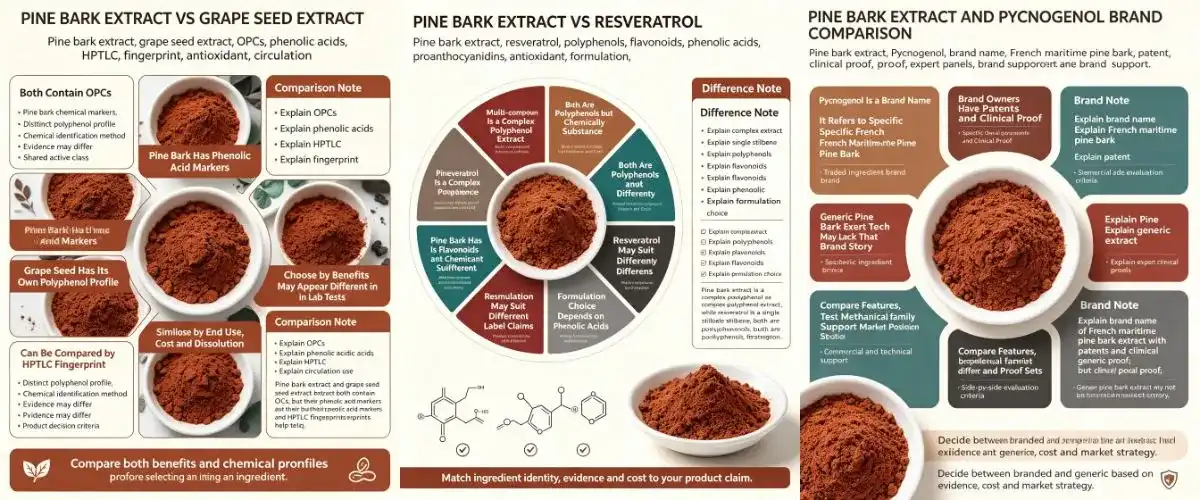
Both pine bark extract and grape seed extract have OPCs, so buyers often hold them next to each other. They're not the same. The phenolic acid markers in pine bark extract, such as ferulic acid and caffeic acid, can be used in HPTLC to tell them apart. It has been a long time since grape seed extract was used in circulation and antioxidant products, so it is still a good choice. If you want to choose something, think about where it will go, how well it dissolves, taste, color, and cost. You can compare the two since each provider will give you a fingerprint and a test method.
Pine Bark Extract and Resveratrol
There is only one stilbene substance, and its name is resveratrol. Polyphenols, flavonoids, phenolic acids, and proanthocyanidins are all things that can be found in pine bark extract. What study is used, how well it dissolves, and what you can say on the label are all affected by this difference. To send a stronger antioxidant message, some brands mix the two. However, each ingredient needs its own review of safety and evidence. To begin, pick the ingredient that fits your claim. It's then time to compare the price per working unit.
Generic Extract and Pycnogenol®
You can legally use the brand name Pycnogenol® for a specific French maritime pine bark extract, and it has its own clinical program. Plain pine bark extract should never have that name or be called the same thing without first being checked by lawyers, tech experts, and brand experts. You can compare the features, test methods, and proof sets side by side. If patents and freedom to operate are important to your market, talk to your lawyer about them. Don't just look at the price per kilogram; also look at the price for each confirmed gram of OPC. This makes sure that both the legal and finance teams are telling the truth about the choice.
How to Choose and Buy a Standardized Pine Bark Extract?
Specification and Testing Checks
Start with what you want to happen. Pick whether you need pine bark extract for your skin, your blood flow, as a vitamin, in a drink, or for your own business. Then look at the testing lab, the way the measurements were taken, the batch range, and the OPC amount. For three sets of new certificates of analysis, ask. Pay attention to the heavy metals, bacteria, allergens, leftover ethanol, and GMO status. You should also send your sample to a different lab so that someone else can do the HPLC test on it. You can be sure that the specification is correct when your results match the COA from the supplier.
Certifications, Origin, and Supply Stability
In the US, most people need papers before they can talk about price. For our goods, we show that they are USDA Organic, ISO, and HACCP certified. Also, ISO 22000, FSSC 22000, ISO 9001, HALAL, and KOSHER are all given to the company. Make sure the copies you get are up-to-date and cover your grade. People who care about the environment should ask where the raw materials came from and if they came from forests. Sigma keeps 10 to 20 tons of extra important things in stock and ships them out in 5 to 7 working days. Note that the organic grade is available but there is a wait time.
Price, Samples, and a Sample–Test–Validate–Scale Plan
Price per kg doesn't always show what's going on. Things like the amount of OPC, whether it is organic, the tests, the size of the order, the package, and the shipping terms can all change the real cost. You can compare providers by how much each verified OPC costs, how good the documentation is, how consistent the batches are, and how good the help from experts is. I think you should do these four things. Get a sample, have it checked out by a third-party lab, use a small test order to make sure it works on your production line, and then sign a contract that lasts for a year. Sigma gives you free samples, does OEM/ODM work, lets you choose the particle size and packing, and guarantees the quality for a year.
Conclusion
If the buyer checks the proof against the claim, pine bark extract is a good choice for things that help the skin and blood flow. In the lab, antioxidant results back up the chemistry, and human studies, mostly on the branded French extract, back up the claims of hydration, flexibility, and venous comfort. The dose is based on the OPC's shape, how it is tested, and what it is made of. When there are mild side effects or drug interactions, the label needs to make that clear. If the OPC level is at least 95%, the pine bark extract should be able to mix with water and be used in drinks, capsules, and tablets. But liquids need to be checked to make sure they are stable. It's not okay to market fake Pycnogenol® as the real thing. It is possible to explain the buy after a sample–test–validate–scale method and careful checks of COAs, certifications, location, and cost per confirmed OPC.
FAQ
What does "95% OPC" mean on a specification?
The exact amount of OPC in the pine bark extract will depend on how the test is carried out. What UV-VIS and HPLC show may not always be the same. Get the steps and a batch COA.
Is generic pine bark extract the same as Pycnogenol®?
No, Pycnogenol® is a registered brand name for a certain French maritime pine bark product. The name of generic pine bark extract shouldn't make it sound like it's the same as something else. It should instead have its own proof and details.
Is organic pine bark extract available?
Yes. The USDA has found that Sigma's pine bark extract is organic. Make sure you have the most recent certificate and know how long it will take to get the organic grade before you place your order.
How should I store the powder?
Keep it cool, dry, and closed. In the sealed drums it comes in, the pine bark extract stays strong for 24 to 36 months.
Request Pine Bark Extract Samples from Sigma
Sigma is a business that sells pine bark extract. They have 10 to 20 tons of safety stock for important products, OPC 95% powder, USDA Organic certification, and ISO and HACCP credentials. Send an email to sarah@sxsigma.com with the details of the product, how much you want, and the market you're targeting, and we'll get back to you with a COA, a specification sheet, and a free sample.
References
1. Free Radical Biology and Medicine, 1999: Packer L, Rimbach G, Virgili F. Antioxidant activity and biologic properties of a procyanidin-rich extract from pine (Pinus maritima) bark, pycnogenol.
2. International Journal of Clinical Pharmacology and Therapeutics, 2002: Rohdewald P. A review of the French maritime pine bark extract (Pycnogenol), a herbal medication with a diverse clinical pharmacology.
3. Phytotherapy Research, 2002: Koch R. Comparative study of Venostasin and Pycnogenol in chronic venous insufficiency.
4. Journal of Ethnopharmacology, 2011: Maimoona A, Naeem I, Saddiqe Z, Jameel K. A review on biological, nutraceutical and clinical aspects of French maritime pine bark extract.
5. Skin Pharmacology and Physiology, 2012: Marini A, et al. Pycnogenol effects on skin elasticity and hydration coincide with increased gene expressions of collagen type I and hyaluronic acid synthase in women.
6. Cochrane Database of Systematic Reviews, 2012: Schoonees A, Visser J, Musekiwa A, Volmink J. Pycnogenol for the treatment of chronic disorders.