How to supplement L-carnosine?
To effectively supplement L-carnosine, you need to choose high-purity L-Carnosine Powder with confirmed certifications, figure out the right dosages based on the application type, and add it to your recipe while following the right mixing and storage procedures. Understanding molecular specs, purity standards, and sourcing criteria is important whether you're making anti-aging cosmetics, sports nutrition products, or vitamins for brain health. This will help you make sure that your products are bioavailable and consistent from batch to batch. This guide shows procurement workers how to use technical parameters, form comparisons, quality control benchmarks, and real-world execution strategies to get the most out of ingredients in a wide range of product settings.
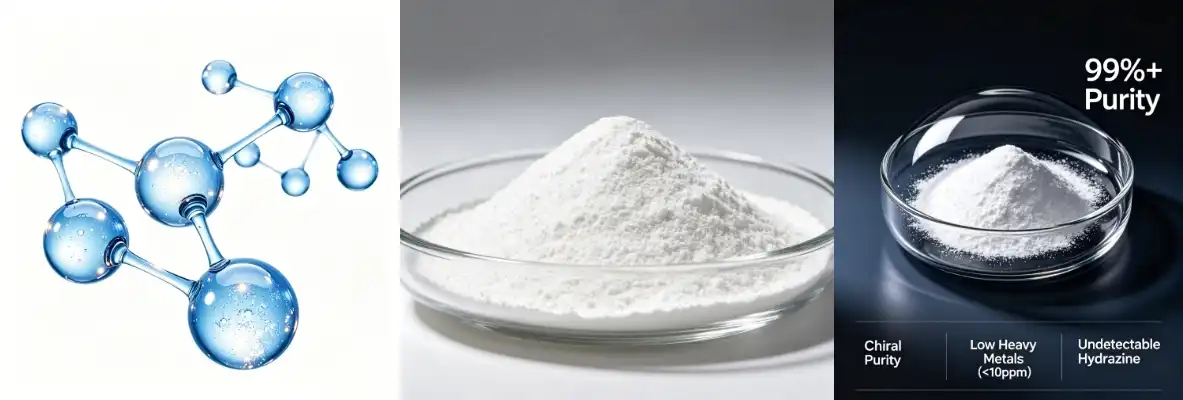
Understanding L-Carnosine Powder and Its Benefits
L-Carnosine Powder is a high-tech material that recipe teams can use to make products that work better according to science. This white solid substance is a dipeptide made up of beta-alanine and histidine. Its molecular weight is 226.23 g/mol and it dissolves in water very well, more than 200 mg/mL at room temperature. The technical standards are very important for making sure that the product is made consistently and works well when it's finished.
Molecular Structure and Biochemical Properties
L-carnosine can work as both a pH buffer and a metal chelator because of the way its molecules are structured. With a pKa number close to 6.8, it keeps the inside of cells stable when metabolic stress is present. The specific optical spin between +20.0° and +22.0° proves the purity of the enantiomers, which sets pharmaceutical-grade material apart from cheaper options. This measurement of visual activity is a key quality sign used for inspecting raw materials as they come in. The range of melting points from 250°C to 265°C shows that the material is thermally stable and can be used in a number of processing situations, such as spray-drying and sealing. L-Carnosine Powder with these characteristics ensures high quality and reliability for use in a variety of applications.
Antioxidant and Anti-Glycation Mechanisms
L-carnosine works in a number of different ways to deal with reactive stress and protein breakdown. It stops Fenton-type processes that make dangerous free radicals by chelating transition metals like copper and zinc. The ability to stop the Maillard process between sugars and skin proteins makes the anti-glycation property very useful in cosmetics. This process keeps the structure of collagen and stops the production of advanced glycation end products (AGEs), which cause obvious signs of aging. Topical preparations with L-carnosine have been shown in clinical studies to improve skin flexibility and brightness when used regularly for eight weeks.
Applications Across Industries
L-carnosine can be used in a lot of different types of products. In sports diet, it helps keep the pH level of muscles stable during intense anaerobic exercise, which makes the time it takes to exhaustion longer. It is used by cosmetic companies in serums and creams for older skin that is stressed out by the climate. Neuroprotective vitamins use its ability to get into the brain from the blood and bind to metals that are harmful to neurons. Our factory keeps a safety stock of 10 to 20 tons so that orders can be filled right away. For regular customers, deliveries are usually made within 5 to 7 working days. This way of managing goods makes sure that large-scale manufacturing businesses that need to know when ingredients will be available always have what they need.
Comparing Different Supplement Forms and Alternatives
Choosing the best transport method affects both how well the product is made and how well it is received by customers. To choose between powder and capsule forms, you need to carefully think about your production skills, your target audience, and the needs of your unique application.
Powder Versus Capsule Forms
Bulk L-Carnosine Powder gives B2B makers the most recipe options. Because it dissolves so easily in water, it can be easily added to liquid supplements, functional drinks, and water-based makeup systems without going through a lot of processing. The powder form lets you make exact changes to the dose while the product is being developed and allows custom concentration profiles. Manufacturing teams can mix it with ingredients that work well together to make unique mixtures that set their goods apart in crowded markets. Capsule forms make things easier for customers, but they require more steps in the manufacturing process and cost more to encapsulate. When procurement teams look at high-volume production runs, powder form usually offers better cost savings and faster wait times.
Comparison with Related Compounds
Understanding the functional differences between L-carnosine and structurally related molecules helps people who buy ingredients make smart choices. Beta-alanine is a building block for making carnosine in the body, but it can't act as a cushion right away like L-carnosine that has already been made. Instead of controlling pH or stopping glycation, creatine works on different metabolic processes linked to regenerating ATP. These ingredients are sometimes found together in sports nutrition products, but they work on different parts of the body. Pure L-carnosine works better than precursor compounds or unrelated ergogenic aids in products that are meant to slow down age, protect against free radicals, or stop glycation than these other substances. Our technical team helps clients choose the right ingredient mixtures based on how they want to place their products and what they want customers to get from them.
Purity Considerations in Formulation
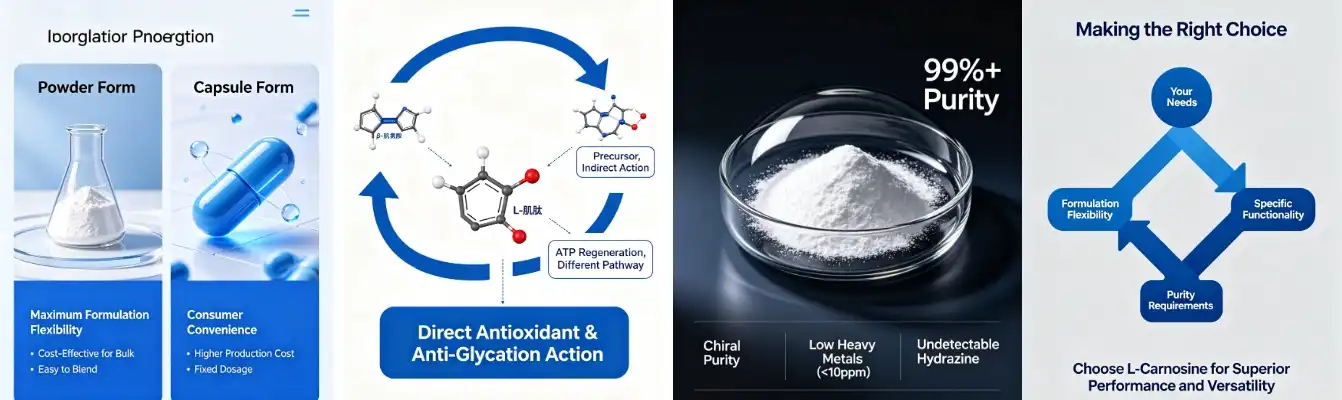
Pharmaceutical-grade L-carnosine that is at least 99% pure provides constant biological activity and keeps unwanted reactions with other ingredients to a minimum. When used in cosmetics, where leftovers of synthesis could cause skin reactions, high purity standards become even more important. The particle size distribution, which is usually set at 100 mesh, affects how quickly things dissolve and how uniform the finished goods are. Quality control procedures should make sure that the chiral purity is correct by measuring specific rotations and making sure that there are no inactive forms of D-carnosine or racemic mixes that would lower the effectiveness. Heavy metal content below 10 ppm and residual solvent analysis finding hydrazine at levels that can't be detected are quality standards that responsible makers serving controlled markets must meet.
How to Choose and Source High-Quality L-Carnosine Powder?
To be successful in the L-carnosine market, buyers must carefully evaluate suppliers and follow strict quality control procedures. Manufacturers with different skills, levels of licensing, and track records can be found in the global supply environment.
Essential Certification and Compliance Requirements
Suppliers who are legitimate give full proof that they follow foreign quality management systems. Getting ISO 9001 approval shows that all of your manufacturing processes have a method for controlling quality. The ISO 22000 and HACCP standards are very detailed about food safety management, which is very important for ingredients that will be used in food products. Kosher and Halal approvals help brands that cater to certain groups of people get into more markets.
All of these licenses are kept up to date by having yearly audits done by reputable third-party groups. Every package should come with a Certificate of Analysis (CoA) that lists the test results, the amount of heavy metals, microbes, and moisture that is still present. Material Safety Data Sheets (MSDS) tell you how to handle and store things in a way that is safe for you and the people who work in the building.
Laboratory Testing and Quality Verification
Advanced buying teams do more than just look over the paperwork that suppliers send them. They also use independent verification testing. High-performance liquid chromatography (HPLC) research checks the purity levels and finds any possible contaminants. Gas chromatography (GC) finds solvents that are left over from chemical processes. It pays special attention to hydrazine molecules that are known to cause cancer. Specific spin readings prove chiral purity, which makes sure the material only has the biologically active L-isomer.
Loss on drying tests below 0.5% show that the right amount of wetness is being controlled, which stops degradation during storage. Testing for microbes limits according to USP and EP monograph guidelines keeps both oral and external uses safe from infection risks. These analytical routines are the technical checks that separate professional buying operations from those that are more likely to have quality problems.

Supplier Evaluation Criteria
When looking at possible L-carnosine providers, you need to look at more than just price quotes. How well a provider can meet your growing needs depends on how much they can produce. Our production lines for continuous countercurrent extraction can handle both small special orders and large-scale contract manufacturing deals. Location affects how hard logistics are and how long lead times are, but our global shipping network and smart freight handling partnerships help to make up for these problems.
When formulation teams run into problems with applications or need stable data for regulatory submissions, being able to provide technical help is very important. Suppliers who offer ODM and OEM services add value by meeting specific brand needs with unique specs, particle size changes, and package configurations. The supplier's thorough quality documentation, quick responses to technical questions, and desire to send samples for testing are all signs of professionalism and the possibility of a long-term relationship. Offering high-quality L-Carnosine Powder is a key indicator of a supplier’s capability to support both immediate and future business needs.
Practical Guidelines for Supplementing L-Carnosine Powder
To make execution work well, dosage guidelines must be matched with the intended uses, and ingredients must stay stable throughout the duration of the product. These real factors have a direct effect on both how well the product works and how happy the customer is with it.
Dosage Recommendations by Application
For intramuscular buffering effects to be effective, sports nutrition usually has between 800 mg and 1500 mg per dose. This dose range is in line with clinical studies that shows performance gains during repeated bouts of high-intensity exercise. Skin care products that fight aging usually have smaller concentrations—usually between 0.5% and 2% by weight—that are enough to fight glycation on the skin without making the recipe unstable. Cognitive health vitamins usually have daily doses of 500 mg to 1000 mg, which help protect neurons by taking the substance for a long time. The exact best dose relies on the other ingredients, the way the drug is delivered, and the type of people who are supposed to be taking it. Our applications team helps formulation experts figure out the right inclusion rates based on the claims they want to make on the label and how they want to place the product.
Incorporation Techniques and Stability Enhancement
L-Carnosine Powder is very well soluble in water, which makes it easier to add to water-based devices. For drinking uses, adding things slowly during the mixing phase with light agitation keeps things from clumping and makes sure they are spread out evenly. Because it can buffer pH, it doesn't change the general pH of the mixture as much as many other bioactive ingredients do. When making makeup emulsions, the best results come from adding the ingredients during the water phase before emulsification.
Stability tests at high temperatures and high humidity for 12 weeks shows that the ingredients are compatible and that the shelf life predictions are correct. Light-induced decline can be stopped by packaging in clear glass or opaque containers. Oxidative stress is kept to a minimum during storing by flushing with nitrogen before closing. These technical issues make sure that finished goods stay as potent as they say they are for as long as they're supposed to, which protects the brand's image and makes sure that the rules are followed.
Storage and Handling Best Practices
The quality of ingredients is kept high from the time they are received until they are used in a product. L-carnosine needs to be kept in cool, dry places with a relative humidity below 60% so that it doesn't absorb water and clump together. Chemicals stay stable when stored at temperatures between 15°C and 25°C that can be managed. When containers are sealed, they keep out air that could introduce contaminants or start reactive processes.
As part of our packing requirements, we use multi-layer barrier films that keep these safe conditions even during foreign shipping. First-in, first-out (FIFO) inventory management should be used by warehouse teams to make sure that materials are rotated and that long holding times are kept to a minimum. Checking for changes in color or the buildup of moisture on a regular basis is an early warning sign of storage condition fails. These practical rules keep quality standards high in manufacturing and protect investments in ingredients.
Conclusion
For L-carnosine supplementation to work well in business-to-business settings, technical understanding needs to be combined with strategic sources. The useful biological qualities of this dipeptide—its ability to fight free radicals, stop sugar from building up, and balance pH levels—can be turned into real product benefits in a wide range of situations if it is properly made and sourced. L-Carnosine Powder, when sourced correctly, can deliver these benefits effectively. Quality control methods, such as checking the supplier's licensing and having the products tested by a third-party lab, keep the products safe from using low-quality materials that don't work as well or follow the rules.
As the market for natural, science-backed ingredients that support healthy aging and performance enhancement continues to grow, procurement professionals who know a lot about L-carnosine specifications, applications, and sourcing strategies put their companies at a competitive advantage. Technical know-how, dependable supply lines, and cooperative relationships with suppliers are what make it possible for new products to be developed and for this ingredient area to continue to grow in popularity.
FAQ
Q1: Is L-carnosine suitable for vegan and vegetarian products?
A: Yes, L-carnosine that is made in a lab meets the standards for vegan formulations. Carnosine is found naturally in animal tissues, but pharmaceutical-grade L-Carnosine Powder made through chemical synthesis doesn't have any parts that come from animals. This way of making products makes sure they are always pure and meets the needs of consumers who care about social sources, which is becoming more important in the supplement and cosmetics markets.
Q2: What are some possible side effects or safety issues?
A: L-carnosine has been shown to be very safe in clinical tests when taken at the suggested doses. Oral supplements rarely have bad effects, but very high amounts that go beyond what is recommended by researchers have been linked to mild stomach pain. Topical cosmetics don't cause a lot of discomfort, even in people with sensitive skin. Regulatory bodies in the US and EU agree that L-carnosine is safe for its intended uses when it comes from producers who follow the rules and keep quality controls in place.
Q3: In what way does L-carnosine's antioxidant system work?
A: Direct free radical scavenging and indirect metal chelation routes are how the antioxidant action works. L-carnosine links to transition metals like zinc and copper, which would otherwise speed up dangerous oxidative reactions. This binding stops Fenton-type reactions from making hydroxyl radicals. The chemical also directly neutralizes reactive oxygen species through its imidazole ring structure. This protects against oxidative stress on multiple levels in both cells and makeup formulations.
Q4: Where can hiring teams get L-carnosine in bulk that they can trust?
A: The most trusted sources are well-known companies that have full certifications and recorded quality systems. Shaanxi Sigma Biotechnology has ISO 22000, FSSC 22000, and ISO 9001 certifications, and they keep 10 to 20 tons of stock on hand at all times so that large orders can be filled right away. Our global logistics network makes it easy to get goods to factories all over the world quickly. Full paperwork makes it easier to clear customs and follow rules in foreign supply chains.
Partner with Sigma for Premium L-Carnosine Powder Solutions
Shaanxi Sigma Biotechnology can help you find L-carnosine by providing pharmaceutical-grade materials that are backed by a wide range of approvals and strict quality control. As a fully integrated producer and seller of high-purity plant extracts and functional ingredients, we use cutting-edge synthesis technology along with decades of experience in the field. Our unique purification methods make sure that the amounts of endotoxin and heavy metals in our L-Carnosine Powder are much lower than the international standards.
This means that it is of the highest quality and can be used in high-demand makeup, dietary supplements, and functional foods. Our immediate inventory makes it possible to complete orders quickly, and our flexible ODM and OEM capabilities let you make specs that are specific to your formulation needs. Talk to our expert team at sarah@sxsigma.com about your needs, ask for samples, and find out how working with a reliable L-Carnosine Powder manufacturer can help your product creation and supply chain.
References
1. Anderson, E. J., & Neufer, P. D. (2016). Carnosine: Biochemical properties and therapeutic potential in age-related diseases. Journal of Applied Physiology, 121(4), 1065-1073.
2. Boldyrev, A. A., Aldini, G., & Derave, W. (2013). Physiology and pathophysiology of carnosine. Physiological Reviews, 93(4), 1803-1845.
3. Hipkiss, A. R. (2018). Carnosine and its possible roles in nutrition and health. Advances in Food and Nutrition Research, 84, 189-225.
4. Kohen, R., Yamamoto, Y., & Cundy, K. C. (1988). Antioxidant activity of carnosine, homocarnosine, and anserine present in muscle and brain. Proceedings of the National Academy of Sciences, 85(9), 3175-3179.
5. Menini, S., Iacobini, C., & Ricci, C. (2020). Protection from diabetes-induced atherosclerosis and renal disease by L-carnosine: Role of glycation and oxidative stress. Diabetes, 69(6), 1207-1218.
6. Stuerenburg, H. J., & Kunze, K. (1999). Concentrations of free carnosine in human muscle and brain tissue. Biochemistry and Molecular Biology International, 47(5), 719-723.


_1776308368292.webp)