Ashwagandha extract benefits for stress and anxiety
Pure Ashwagandha Extract has emerged as a scientifically validated solution for managing stress and anxiety in today's demanding environments. Derived from the root of Withania somnifera through advanced extraction methods, this adaptogenic ingredient contains bioactive withanolides and fatty acids that help regulate cortisol levels and support nervous system balance. Clinical research demonstrates that daily supplementation with standardized Ashwagandha extract significantly reduces perceived stress markers while promoting mental clarity and emotional resilience, making it an essential component for health supplement manufacturers targeting the growing mental wellness market.
Understanding Pure Ashwagandha Extract and Its Role in Stress & Anxiety Relief
Botanical Origin and Traditional Use
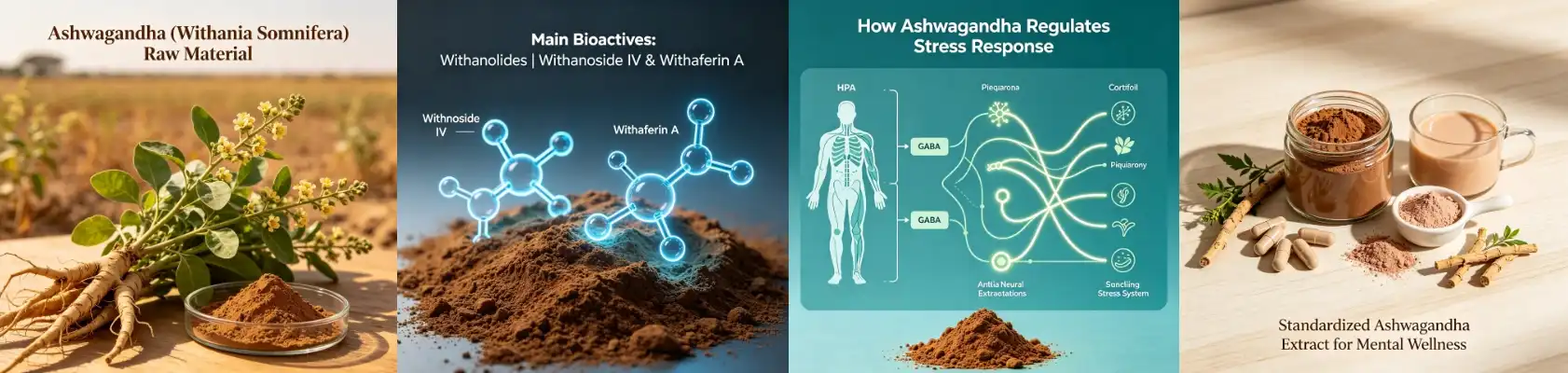
Withania somnifera, which is also known as Ashwagandha or Indian ginseng, has been used for more than 3,000 years in Ayurvedic medicine. There are dry parts of India, Africa, and the Middle East where the plant does best because that's where its roots make the most beneficial chemicals. For a long time, traditional doctors have known that it can give you more energy and help keep your mind calm when you're feeling really stressed out.
Key Bioactive Compounds
As a drug, Pure Ashwagandha Extract mostly works because it has withanolides in it, which are a group of naturally occurring steroids. Withanoside IV and withaferin A are two of these drugs that work with different molecular processes to change how the body reacts to stress. Modern ways of separating these active ingredients make standard items that can be tested for their usefulness. There are fatty acids in the root material that also help the extract dissolve and strengthen membranes. This makes it easier for cells to take in the active ingredients.
Mechanisms of Action in Stress Response
Researchers say that Ashwagandha controls the HPA axis, which is the body's main stress response system, making it an adaptogen. People who are under a lot of stress for a long time make more cortisol in their bodies. This can make them jittery, have trouble sleeping, and forget things. Two things that Pure Ashwagandha Extract does are help nerve systems, especially GABA ways that help you rest, and get cortisol levels back to normal. A study published in 2019 in peer-reviewed journals showed that people who took 240 mg every day had much lower amounts of stress hormones than people who took a fake drug.
Clinical Evidence for Anxiety Management
Ashwagandha has been shown to help with nervousness in a number of well-controlled tests. When people were given 250 to 600 mg of the drug every day, both their self-reported worry scores and bodily stress signs got better. The people who took part said their emotions were more stable and their stress levels went down, but not in the way that pharmaceutical treatments do. The findings suggest that Pure Ashwagandha Extract could be used in natural goods to help people who are dealing with illnesses caused by stress.
How to Use Pure Ashwagandha Extract for Optimal Stress and Anxiety Relief?
Recommended Dosage Parameters
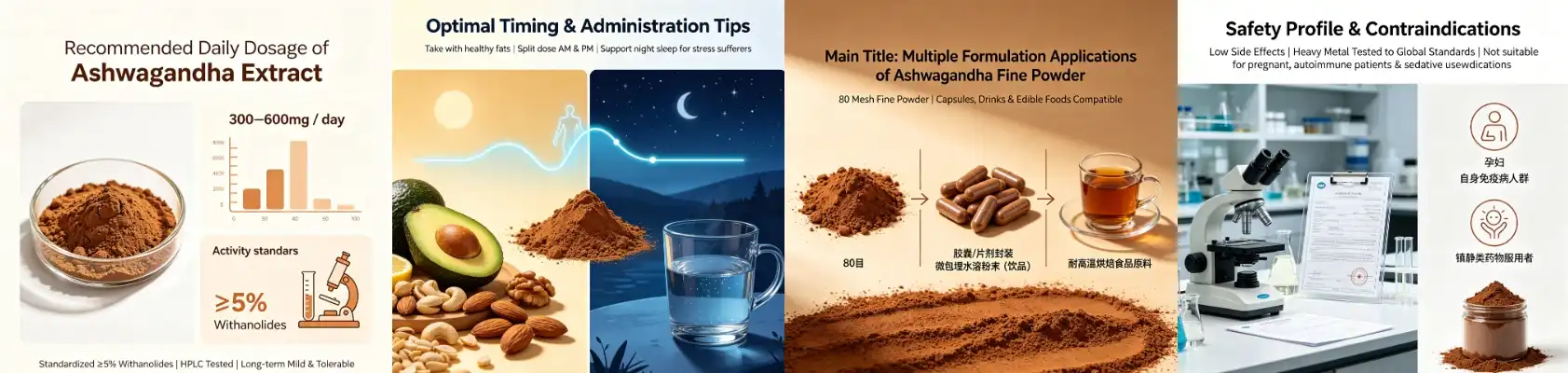
People who want to make stress pills should take 300 mg to 600 mg of a standardized Pure Ashwagandha Extract that has at least 5% withanolides every day, according to clinical data. This extract was tested by HPLC. It may take bigger doses of smaller amounts to reach therapeutic values. You can use the extract for a long time without any problems because it is mild and doesn't make your body against it. It's a good choice for long-term health plans because of this.
Optimal Timing and Administration
Ashwagandha is better taken when eaten with healthy fats. This is because healthy fats make it easier for lipophilic compounds to cross digestive walls. A lot of solutions split the daily amount in two, one in the morning and one in the evening. This is done to keep blood levels steady. Because it helps the body's natural circadian rhythm, taking it in the evening may help people who have the most trouble sleeping because of stress.
Formulation Considerations for Different Delivery Systems
Pure Ashwagandha Extract can be used in a lot of different things in the form of a fine light brown powder. The most common way to send something is still to wrap it up. This keeps it from going bad and hides its earthy taste. When used in drinks, water-soluble chemicals or microencapsulation technology can keep working even when the drinks are acidic, which happens a lot. To work in edible goods, the extracts must be able to handle high temperatures without losing their useful parts. Most of the time, 80 mesh is what manufacturers should say is needed to make sure that particles are spread out properly and that the amount is always correct.
Safety Profile and Contraindications
Clinical tests have mostly shown that Ashwagandha is safe. One mention of a side affect was mild stomach problems when bigger amounts were taken. However, people who make products need to think about who shouldn't use them. Some people who shouldn't use the product are those with autoimmune diseases, women who are pregnant or nursing, and people who are taking sedatives. An important part of quality control is making sure that the amount of heavy metals in something matches international standards. We do this because plants can pick up natural toxins if they come from unsafe places.
Comparing Pure Ashwagandha Extract with Other Forms and Brands
Root Powder Versus Concentrated Extract
There are many chemicals in Ashwagandha root powder, but you need to take a lot more of it (3 to 5 grams) to get enough withanolide to be useful. To separate and standardize the active ingredients in concentrated extracts, selective extraction methods are used. This lets scientists make small doses that are easy for people to take as directed. When the extract ratio is 10:1, it means that 10 kg of raw root material make up 1 kg of extract. This means that the extract, such as Pure Ashwagandha Extract, has a lot of good chemicals in it. Even though extracts cost more per kilogram, the fact that they are more concentrated makes them cheaper for makers, since lower inclusion rates mean lower overall preparation costs.V
Standardization Methods and Quality Markers
High-performance liquid chromatography (HPLC) and gravimetric analysis are the two main ways that the plant extract business makes sure that Ashwagandha is accurate. Gravimetric methods use liquid precipitation to find the total amount of withanolide. However, the readings are often too high because they pick up other chemicals as well. HPLC is more accurate because it can find single molecules of withanolide. This means that the data it gives about strength is more accurate. When shopping from one business to another, people should give more weight to sellers who offer HPLC Certificates of Analysis (COA) that show that withaferin A stays below the safety levels set by toxicology studies and list withanolide profiles.
Organic Certification and Sustainability Factors
People's desire for organic goods has spread to ways that businesses buy from each other, especially those that want to reach high-end customers. Herbicides made from chemicals are not used on organic Ashwagandha farms because they leave behind waste that could make the product unsafe and make it impossible to sell. It costs more to make things, though, so getting organic support might not work with all market placement strategies. Pure Ashwagandha Extract that isn't pure but comes from trustworthy sources can still pass strict residue tests and are cheaper for lines that focus on value.

Extraction Technology Impact on Composition
The end product's qualities are changed a lot by modern ways of extracting it. Most modern manufacturers use supercritical CO2 extraction, which uses forced carbon dioxide as a solvent to avoid strong chemicals and target molecules that like lipids, such as fatty acids and withanolides. With this method, very pure extracts are made that don't have any solvents in them. This helps authorities in places where standards for pharmaceutical-grade goods are very strict. Ethanol extraction is another method that is still cheap and gives good withanolide recovery that can be used in food supplements. That way, procurement teams can match extraction patterns with the claims they want to make about the product and the standards of the people they want to buy it.
Procurement Guide: How to Buy Pure Ashwagandha Extract in Bulk?
Essential Quality Certifications
The first step in smart buying is to look into the manufacturer's credentials. Food safety management systems cover the whole process, from handling raw materials to putting out finished goods, as shown by ISO 22000 and HACCP standards. When a business sells to a lot of different foreign customers, it can reach more religious and cultural customers by getting extra licenses like Kosher and Halal. Companies that provide ingredients, such as Pure Ashwagandha Extract, don't have to be listed with the FDA, but if they do, it shows that they will follow U.S. law. Buyers shouldn't rely on credentials that have already been given. Instead, they should ask for up-to-date certifications and audit reports that show ongoing compliance.
Technical Specifications to Evaluate
Very specific guidelines for products are used to judge their quality. Not only the amount of withanolide, but also the uniformity of the mesh size (80 mesh makes sure it works with automated encapsulation equipment), the amount of moisture (less than 2% loss on drying stops microbes from growing during storage), and the heavy metal levels that meet the limits set by Proposition 65 and the European Pharmacopoeia are all important. The active ingredient content, especially the fatty acids that make up at least 25%, helps the phytochemical matrix do its job. After getting batch analysis certificates, you can check that the real results match the specs. This shows that the source has always been the same.
Minimum Order Quantities and Pricing Structures
Bulk plant extract has different price levels that depend on how much you order, how you want to pay, and if you need any changes made. Most MOQs are between 25 and 100 kilograms, but experienced sellers who keep a lot of stock might be able to handle smaller test quantities. When you hit 500 kilograms, you can save a lot of space. By then, the price of a kilogram might be 15% to 25% less than it was at minimum sales. When procurement teams know these things, they can better plan when and how much to buy, while also making sure that their cash flow limits are met and that there are chances to get unit costs down.
Supplier Capability Assessment
You need to think about more than just price and quality when you judge a seller. You should also check how much they can produce, how much goods they have, and how well they can help you. When the seasons change and plants become less available, manufacturers can make sure that stocks don't run out if they have enough long-term orders for raw materials. Brands that are making new products can benefit from formulation helpers and stable testing data providers because they lower the risk of having to change the recipe after getting the product to market. For example, sending samples and answering technical questions quickly shows that you care about customer service, which is important for building long-term relationships.
Logistics and Storage Requirements
It's hard to trade plant-based ingredients across foreign lines, so it needs to be carefully planned. Pure Ashwagandha Extract needs to be packed in a way that keeps water out because it soaks up water. Most of the time, this is done in bags made of aluminum foil and plastic that are sealed inside fiber drums. When picking a way to get around, you need to think about both speed and cost. For example, sea freight has low rates for large packages, but it takes 4 to 6 weeks to get across the oceans. Air freight, on the other hand, cuts travel times to days, but it costs more. To keep clearance times short, customs papers like phytosanitary certificates and business bills must be made according to the needs of the country that is receiving the goods. Once it is received, it should be kept in a low-temperature, sealed area so that it stays useful for 24 months. It should also be tested regularly to make sure it stays stable.
Conclusion
That being said, Pure Ashwagandha Extract has been shown by scientists to help with stress and worry. Since this comes from plants, it is an important part of making mental health goods. B2B buyers can make smart choices when they know the best dosing settings, how the biological processes work that make it adaptogenic, and the quality difference factors. It is important to carefully check suppliers' qualifications, technical skills, and the dependability of the supply chain. This ensures that buying strategies support both the product's usefulness and the business's long-term success. As the need for natural ways to deal with stress grows, businesses that work with skilled manufacturers who offer consistent quality, legal compliance, and technical teamwork will be able to keep up with the fast-paced market.
FAQ
Q1: What daily dosage of ashwagandha extract effectively reduces stress symptoms?
A: Clinical tests have shown that 300 to 600 mg of a Pure Ashwagandha Extract that has been cleaned up and tested by HPLC to contain at least 5% withanolides works. If the gravimetric values of lower quality goods are higher, you may need to take more of them to get the same benefits. The way that extracts are standardized should be backed up by clinical data that is cited in product formulations.
Q2: How does ashwagandha extract differ from KSM-66 and Sensoril branded ingredients?
A: The KSM-66 and Sensoril extraction methods are different from each other. They each have their own standardization profiles and clinical study portfolios. For KSM-66, only root material with a withanolide level of about 5% is used. For Sensoril, leaf material with a different compound ratio is used. Generic Ashwagandha goods that are standardized using the same ways can have the same bioactivity but cost less. Named products, on the other hand, are better for marketing because they have well-known names and study funds are set aside just for them.
Q3: Can ashwagandha extract maintain stability in beverage formulations?
A: To keep drinks steady, they need to be handled in a certain way. Pure Ashwagandha Extract that is sold in stores doesn't mix well with water, which could cause liquids to separate. Microencapsulation technology keeps particles safe while also making diffusion better. To make goods that dissolve in water, extra steps of processing can be used. The pH of the drink's formula, the temperature it is exposed to during processing, and the presence of stabilization agents can all affect how stable it is over time.
Q4: What verification methods confirm ashwagandha extract quality and potency?
A: Having a lab test it for you is the best way to be sure of its quality. Manufacturers that you can trust will give you batch-specific COAs that show heavy metal screening, microbe testing, HPLC withanolide analysis, and pesticide residue analysis. Regularly, buyers should have tests done by reputable labs that are not connected to the seller. The buyers should then compare the results to the paperwork the seller gives them. The quality control methods are working well if different batches are all the same.
Partner with Sigma for Premium Ashwagandha Extract Manufacturing Solutions
Shaanxi Sigma Biotechnology Co., Ltd. gives health supplement brands, functional food makers, and beauty formulators the best value because we are fully integrated and always put quality first. We follow strict quality standards and use supercritical CO2 extraction technology to make Pure Ashwagandha Extract. It turns into a fine, yellow-brown powder that has normal withanolide patterns and at least 25% fatty acids. We work closely with licensed growers in the famous plant growing area of Shaanxi province to make sure that our raw materials are organic and can be traced.
We have ISO 22000, HACCP, and Halal licenses, which help our production and make it easy for us to sell our goods in North America, Europe, and the Asia-Pacific region. For our most important items, we keep 10–20 tons of safety stock on hand. This lets us send within 5–7 business days and supports just-in-time stocking ideas. Customized OEM/ODM services can change the particle size, pack them in different sizes (from 1-kilogram foil bags to 25-kilogram fiber drums), and private label them with your brand's information. Full COAs, MSDS sheets, and data from stability studies are some of the technical papers that help with regulatory applications and quality assurance processes.
When you work with a Pure Ashwagandha Extract source like Sigma, you can get help from formulators who know how to use the ingredient's traits to make products that people will want to buy. Our team works with R&D to solve problems with solubility in beverages and come up with the best dosage forms. We also offer items that go well together for the best recipes. Making partnerships, making sure products are always of good quality, and getting in touch quickly are all things that will help your business do well in the very competitive natural health market.
Sigma's Ashwagandha extract can improve your products. Business owners, people in charge of getting things, and people who make goods should look into this. You can email sarah@sxsigma.com to get samples, talk about prices for large orders, or set up a technical meeting to talk about your specific recipe needs.
References
1. Chandrasekhar K, Kapoor J, Anishetty S. A prospective, randomized double-blind, placebo-controlled study of safety and efficacy of a high-concentration full-spectrum extract of ashwagandha root in reducing stress and anxiety in adults. Indian Journal of Psychological Medicine. 2012;34(3):255-262.
2. Lopresti AL, Smith SJ, Malvi H, Kodgule R. An investigation into the stress-relieving and pharmacological actions of an ashwagandha extract: A randomized, double-blind, placebo-controlled study. Medicine. 2019;98(37):e17186.
3. Salve J, Pate S, Debnath K, Langade D. Adaptogenic and anxiolytic effects of ashwagandha root extract in healthy adults: A double-blind, randomized, placebo-controlled clinical study. Cureus. 2019;11(12):e6466.
4. Singh N, Bhalla M, de Jager P, Gilca M. An overview on ashwagandha: A Rasayana of Ayurveda. African Journal of Traditional, Complementary and Alternative Medicines. 2011;8(5S):208-213.
5. Pratte MA, Nanavati KB, Young V, Morley CP. An alternative treatment for anxiety: A systematic review of human trial results reported for the Ayurvedic herb ashwagandha. Journal of Alternative and Complementary Medicine. 2014;20(12):901-908.
6. Auddy B, Hazra J, Mitra A, Abedon B, Ghosal S. A standardized Withania somnifera extract significantly reduces stress-related parameters in chronically stressed humans: A double-blind, randomized, placebo-controlled study. Journal of the American Nutraceutical Association. 2008;11(1):50-56.


_1776308368292.webp)